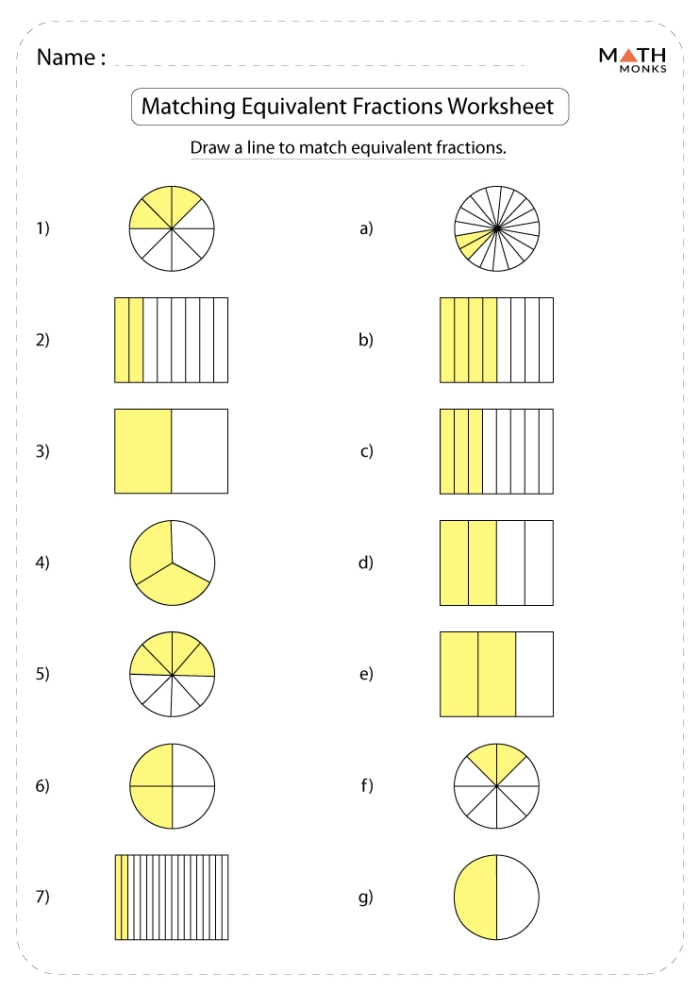
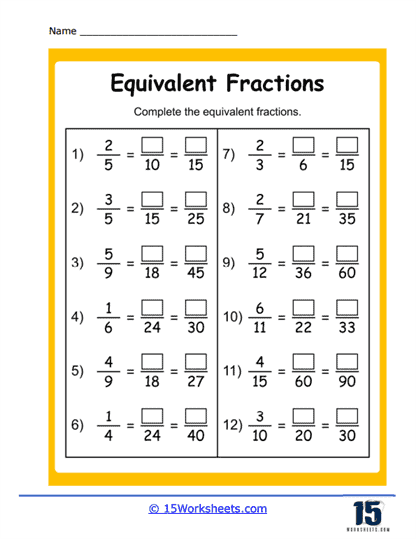
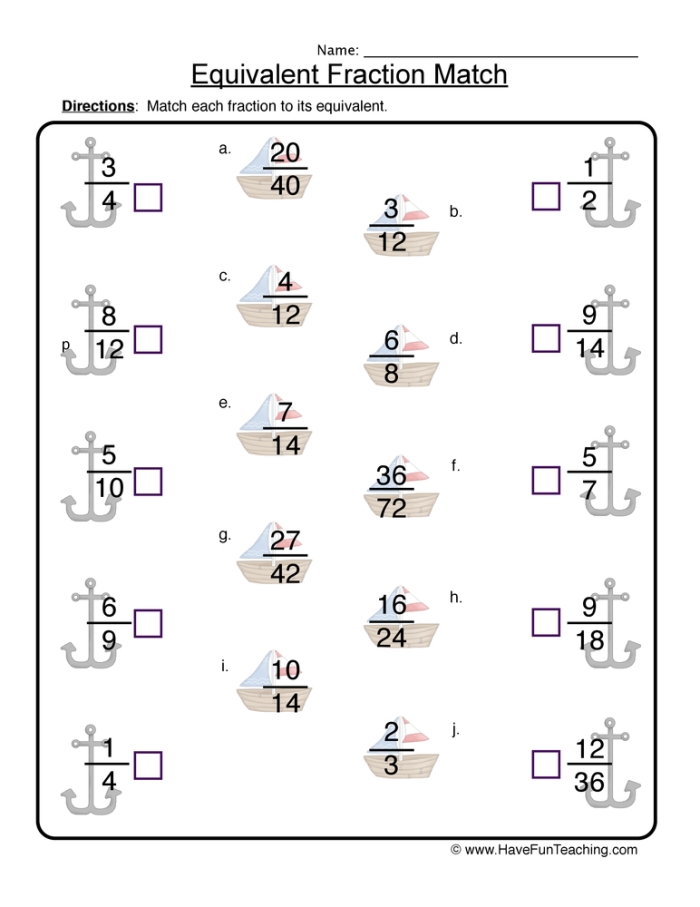
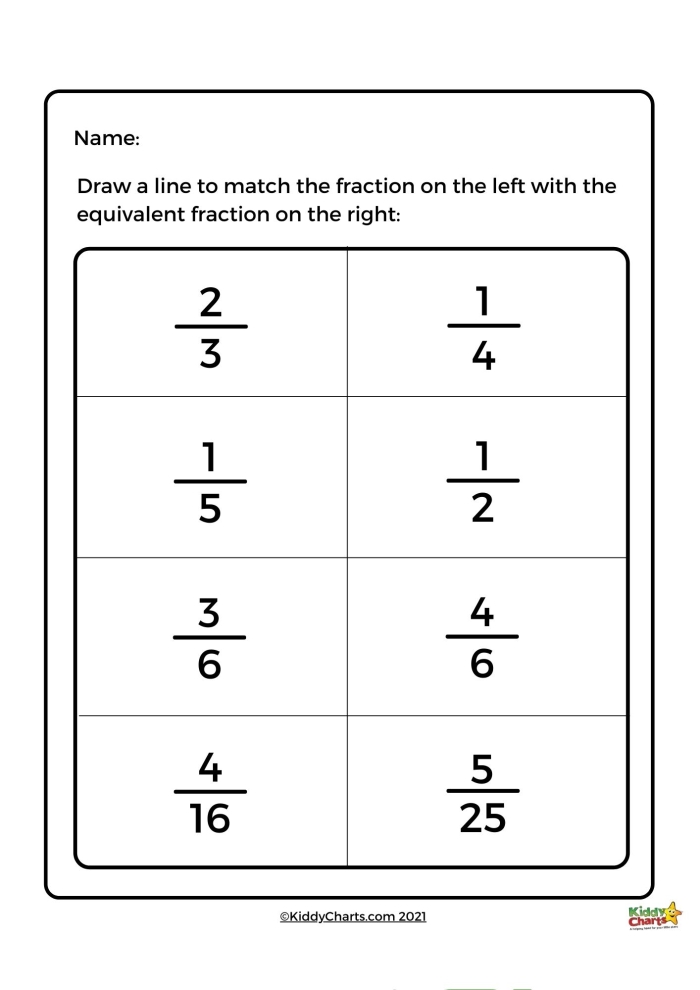
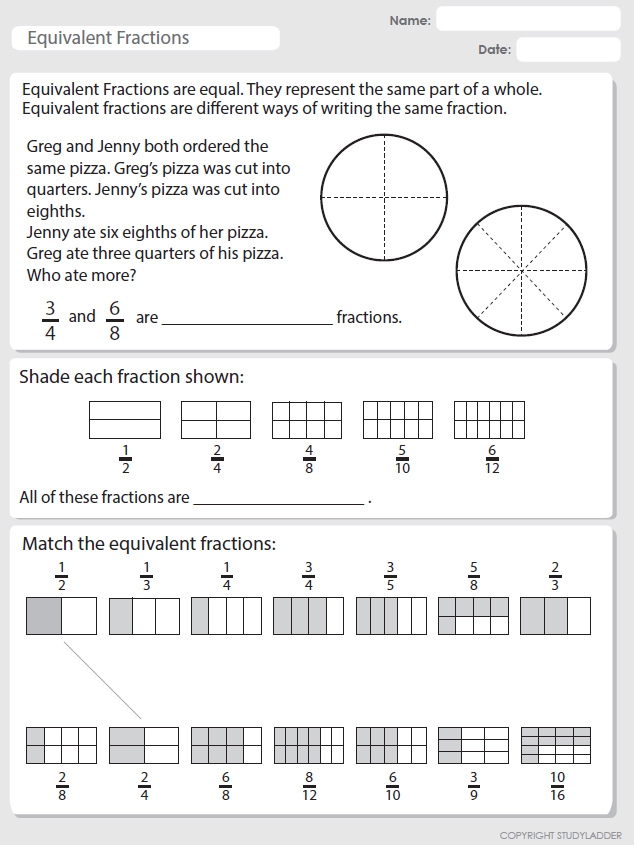
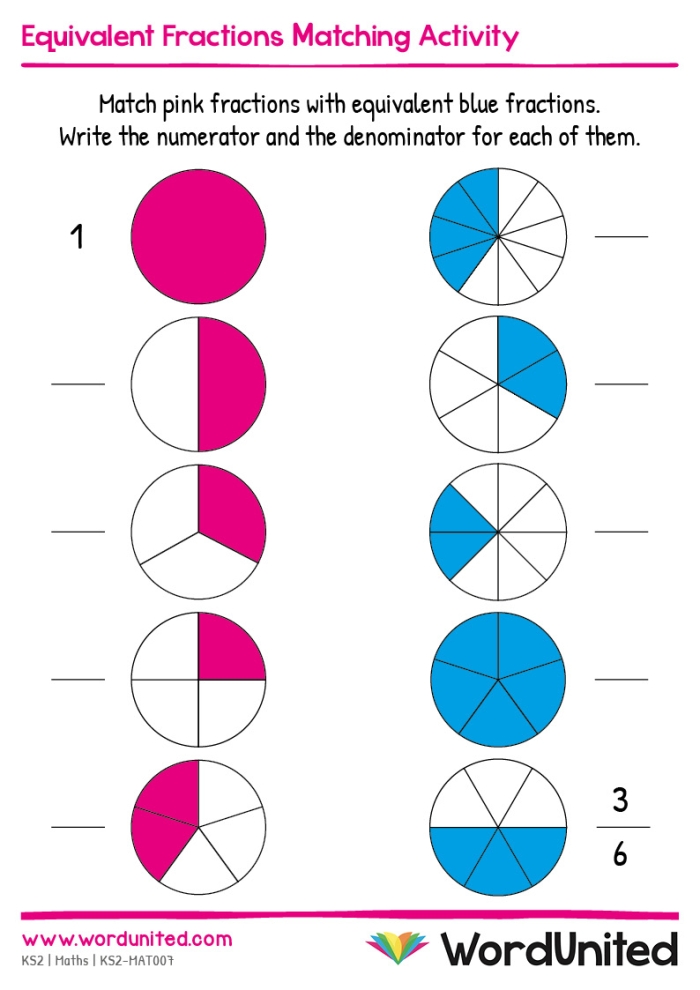
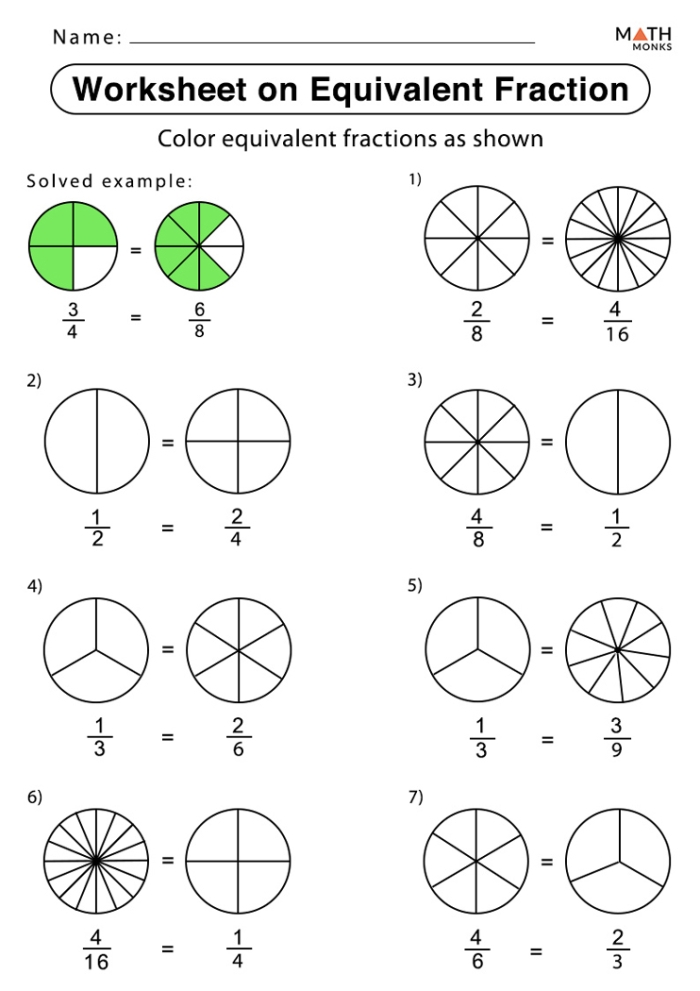
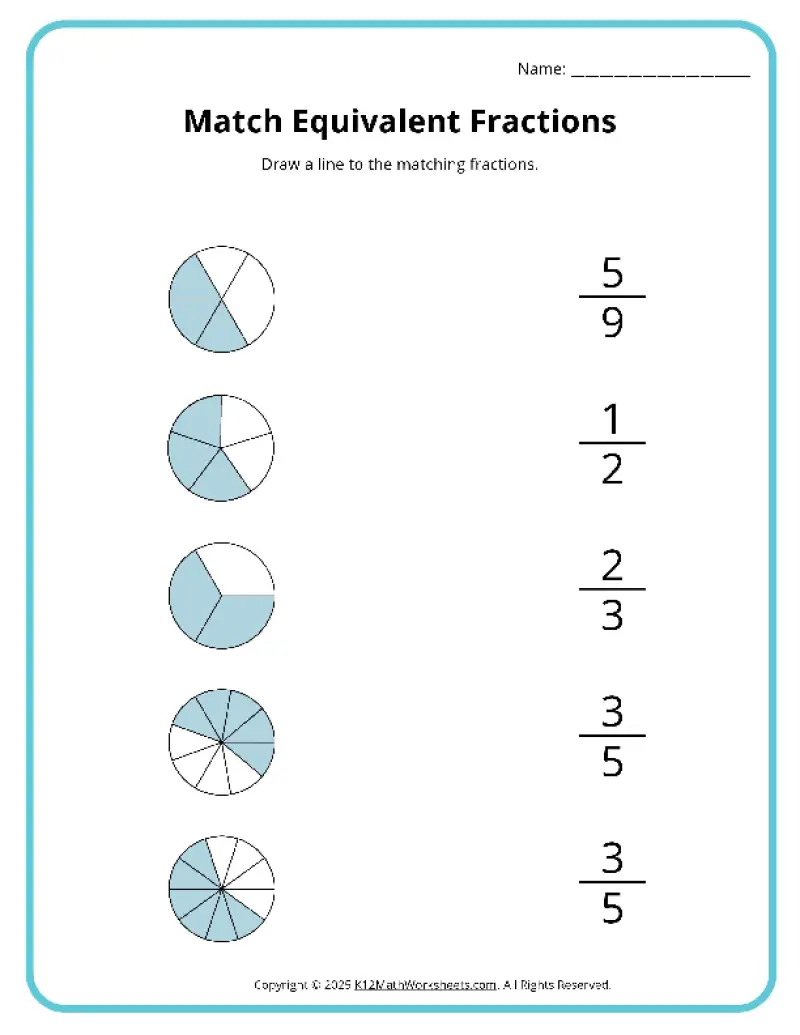
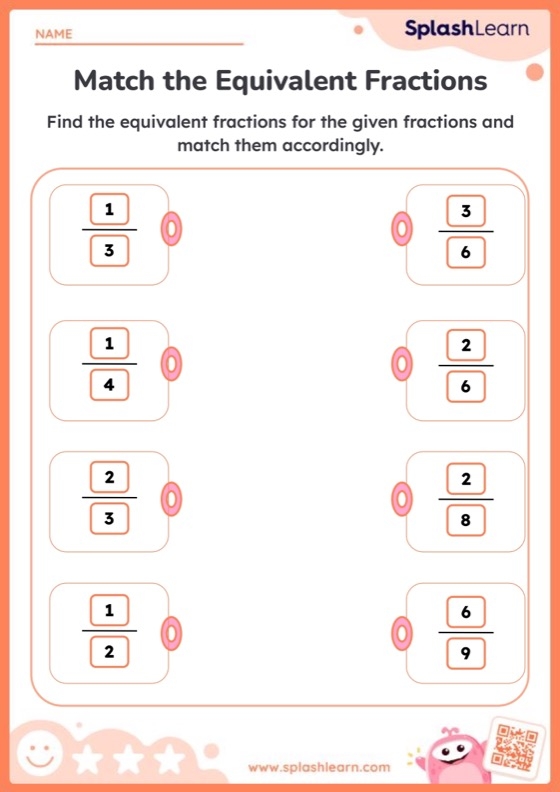
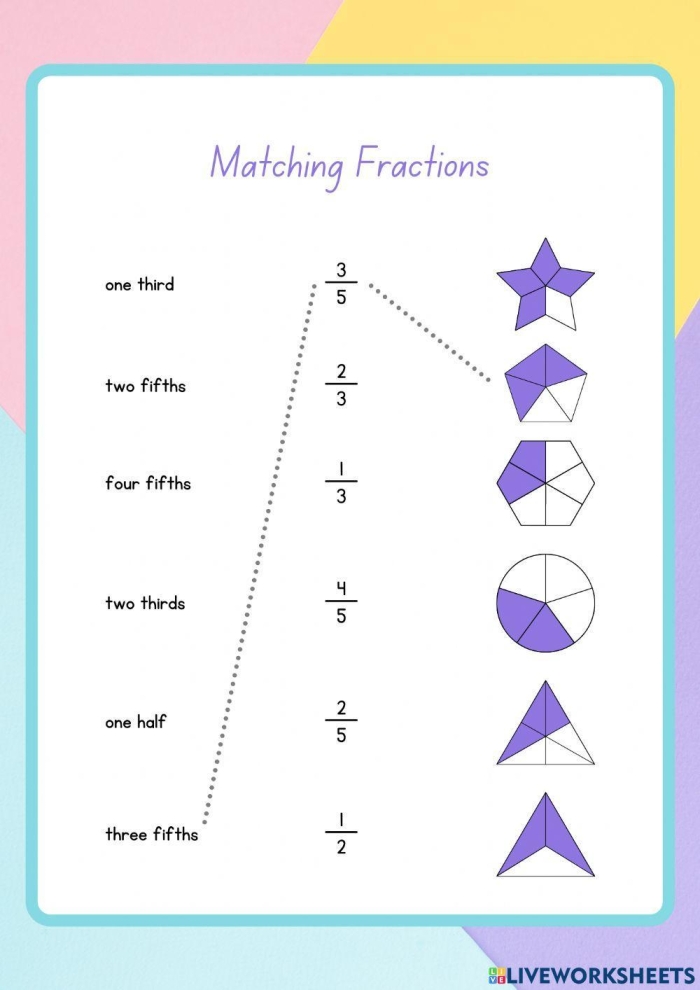
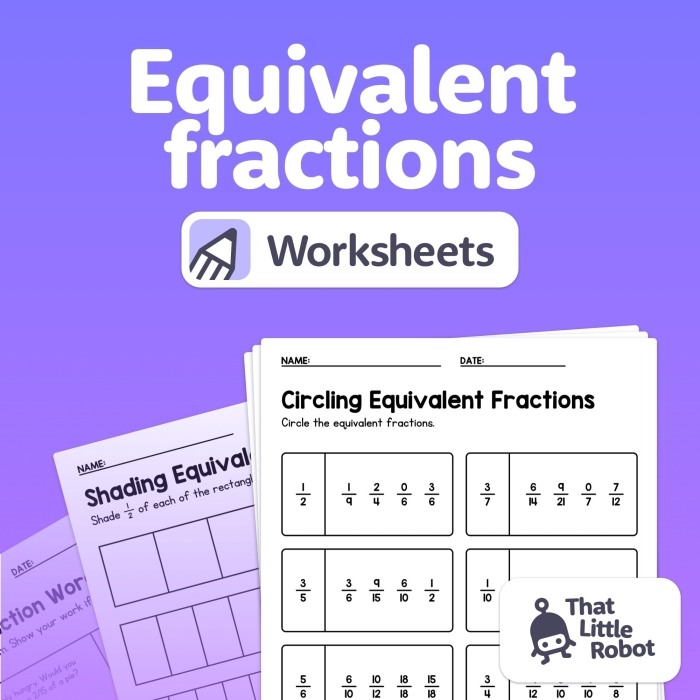
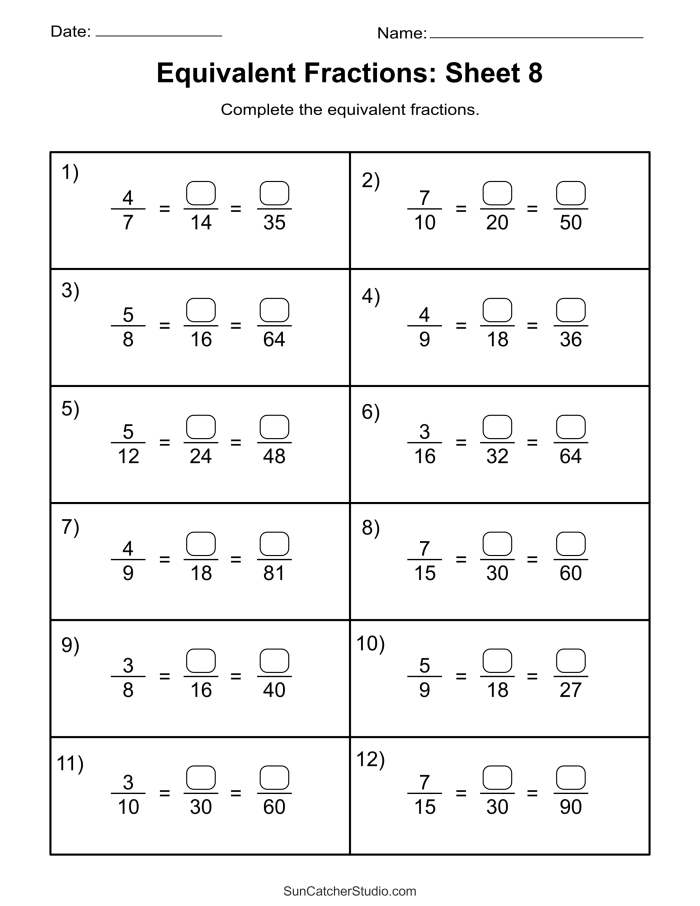
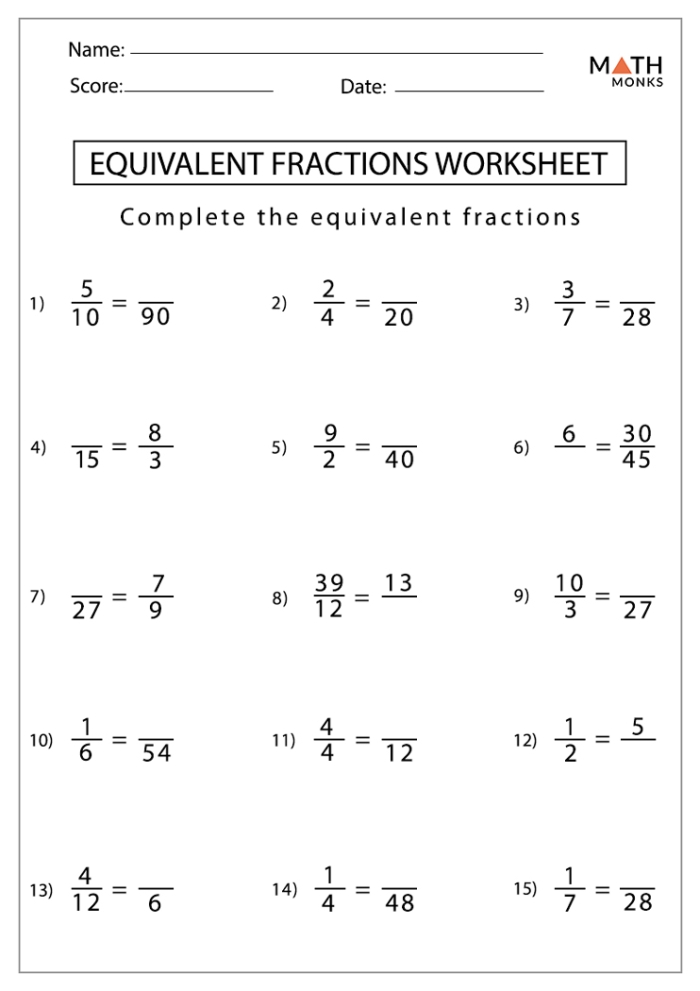
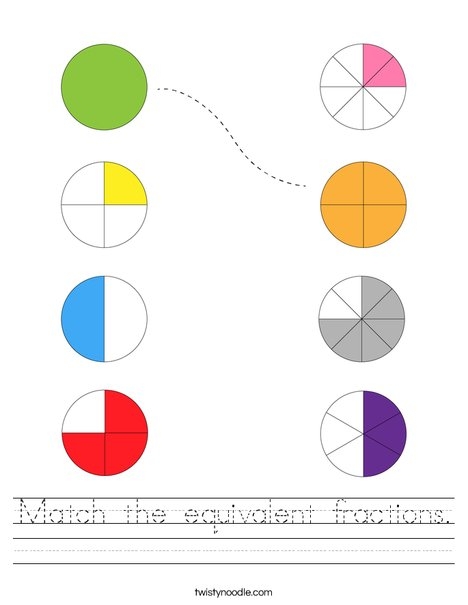
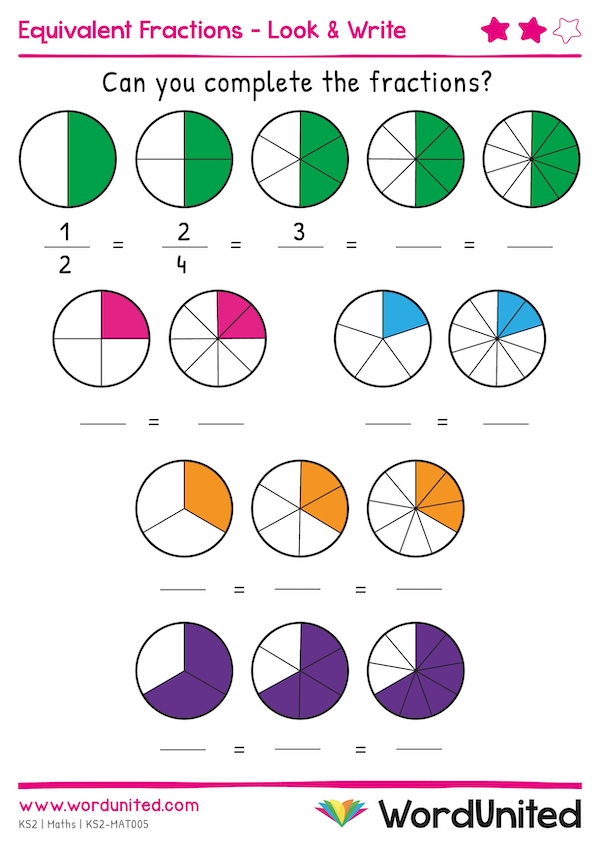
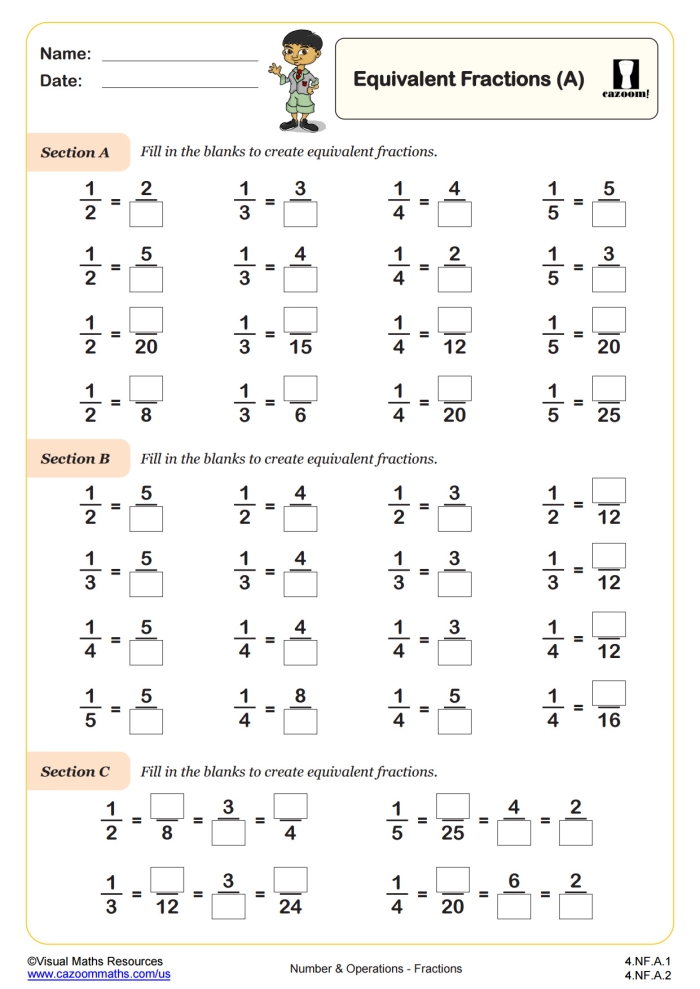
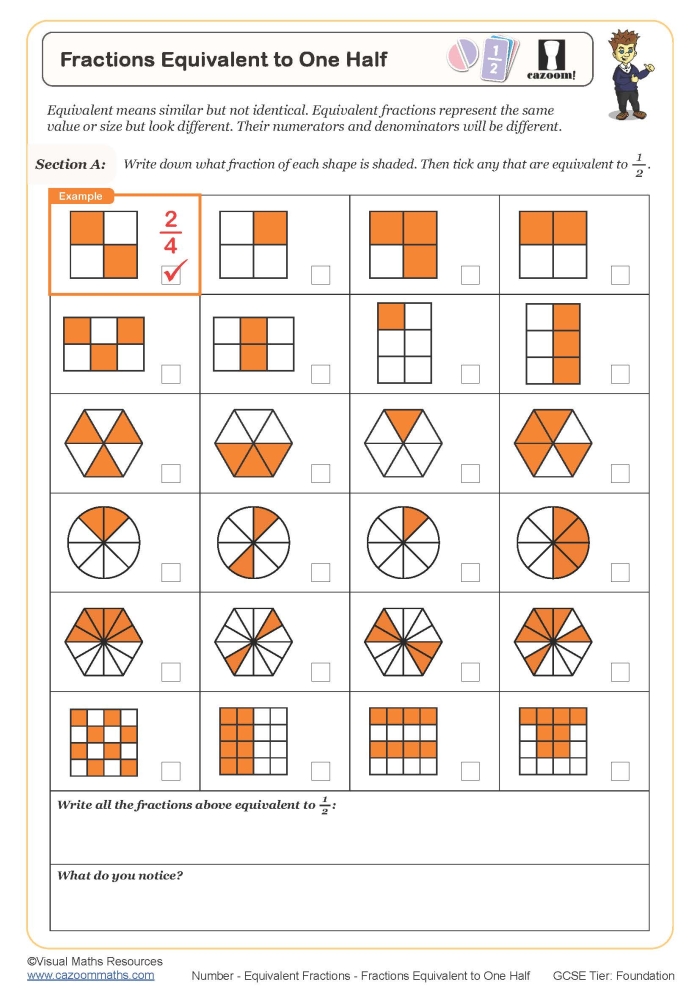
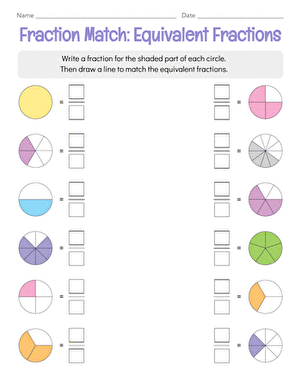
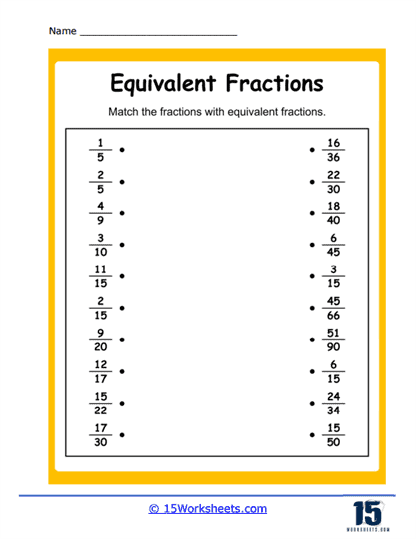
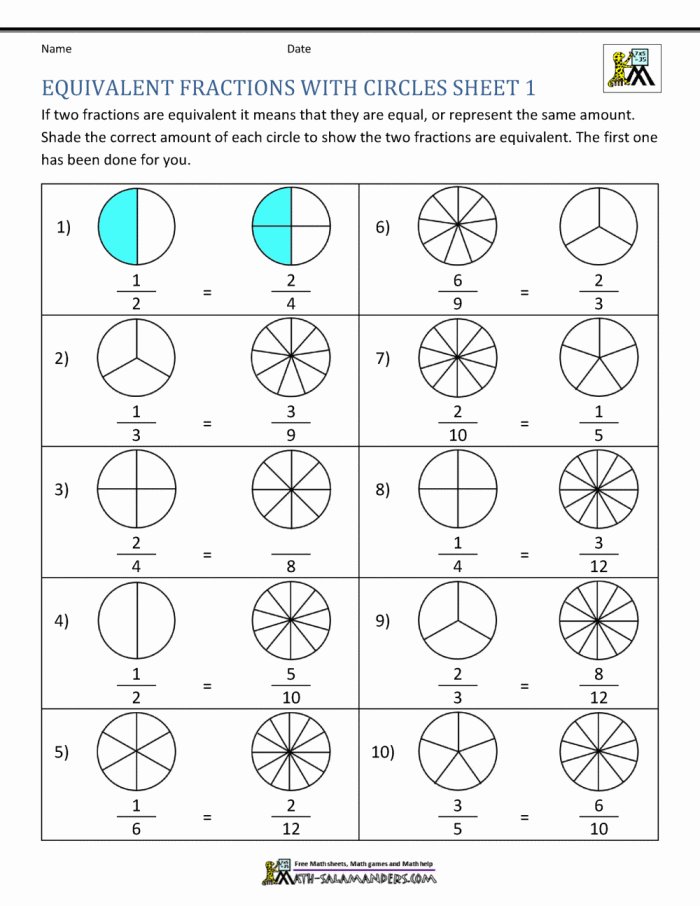
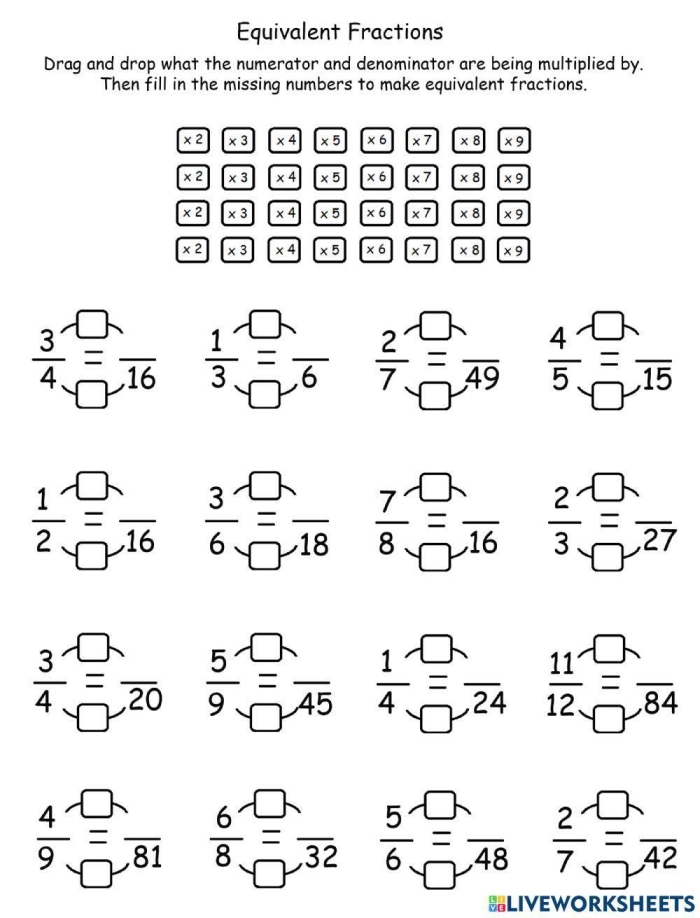
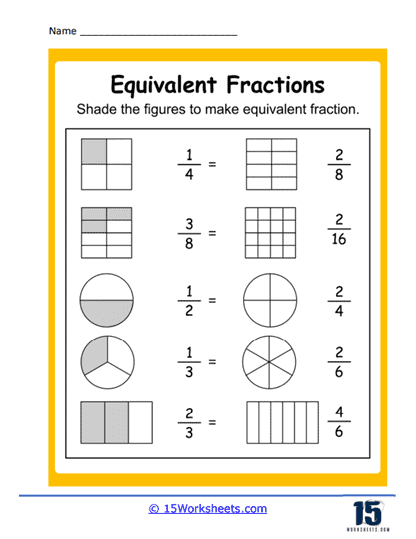
Visual models make fractions click for students in ways that abstract numbers alone never can. When third graders first encounter equivalent fractions, they need concrete representations to understand that 1/2 and 2/4 represent the same amount. A matching worksheet built around visual models addresses this need directly, giving students a hands-on way to see fraction equivalence in action.
The beauty of this approach lies in how it bridges the gap between concrete and abstract thinking. Rather than asking students to memorize rules, matching activities let them observe patterns themselves. When a child sees two pie charts—one divided in half with one part shaded, and another divided into four parts with two shaded—the equivalence becomes obvious. They’re not just accepting what a teacher tells them; they’re discovering the relationship through their own observation.
In a third grade classroom, this type of activity serves multiple purposes simultaneously. It reinforces visual literacy, strengthens pattern recognition, and builds confidence with a concept that often trips up young learners. The matching format keeps engagement high because students move through the worksheet with purpose, connecting fractions that look different but mean the same thing.
The worksheet format also makes assessment straightforward. Teachers can quickly see which students grasp the concept and which ones need additional support with visual representations. Some students might benefit from supplementary practice, such as exploring solving time problems with a number line to strengthen their overall number sense.
Building this foundational understanding now prevents gaps later. Students who truly understand equivalent fractions through visual models find it easier to work with fractions in higher grades, whether they’re comparing, adding, or reducing. The investment in solid conceptual understanding during third grade pays dividends throughout their math journey.
Download These Worksheets for Practice