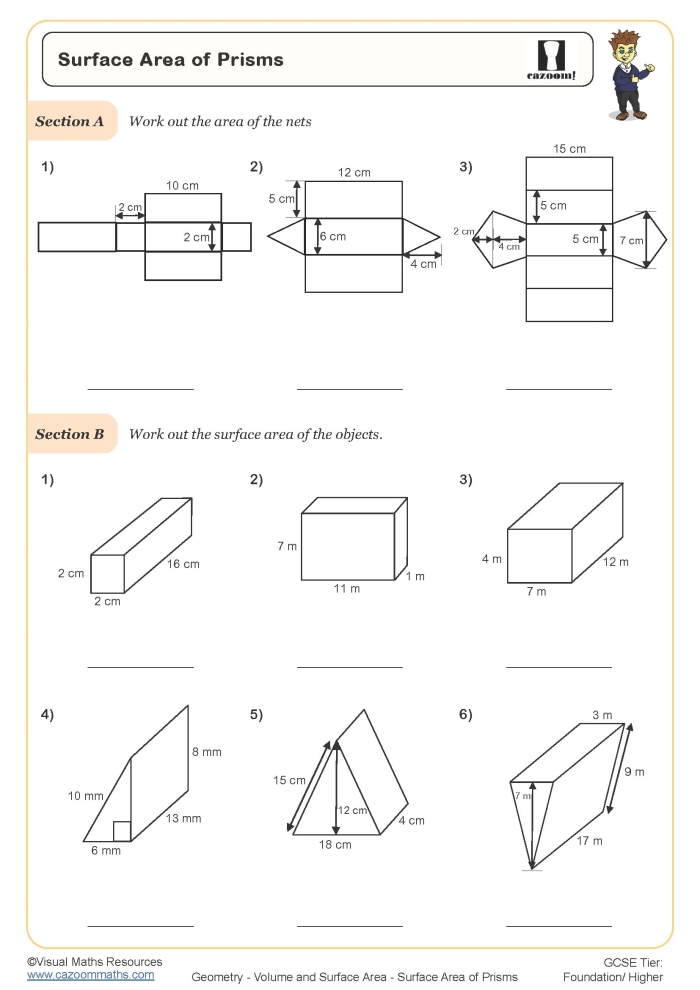
Sixth grade geometry introduces students to three-dimensional shapes in ways that connect abstract math to physical objects they can visualize. Surface area problems sit at the intersection of spatial reasoning and practical calculation, requiring students to understand how flat faces combine to create solid forms.
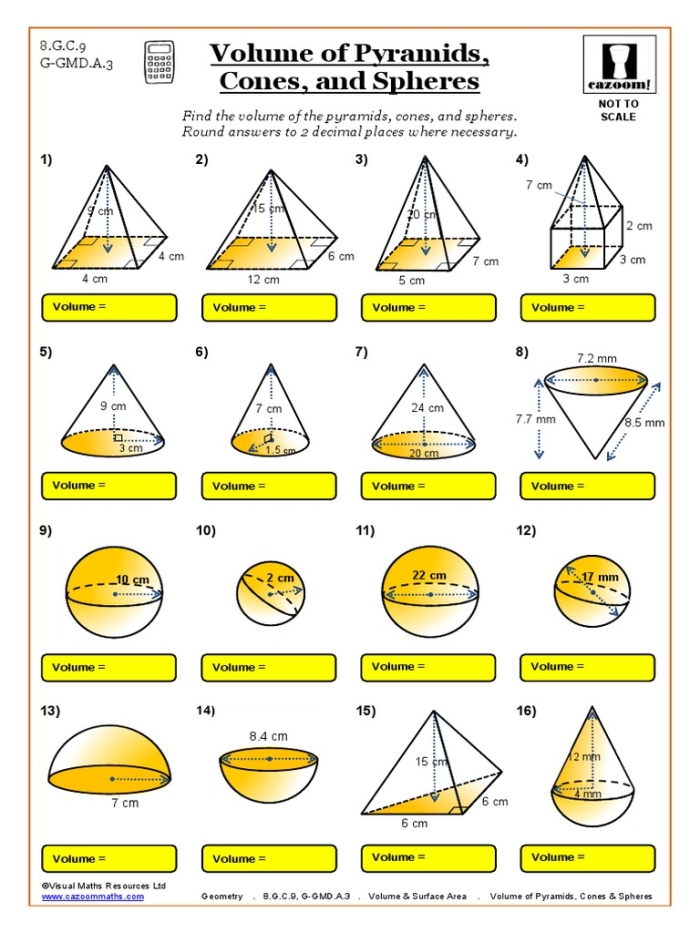
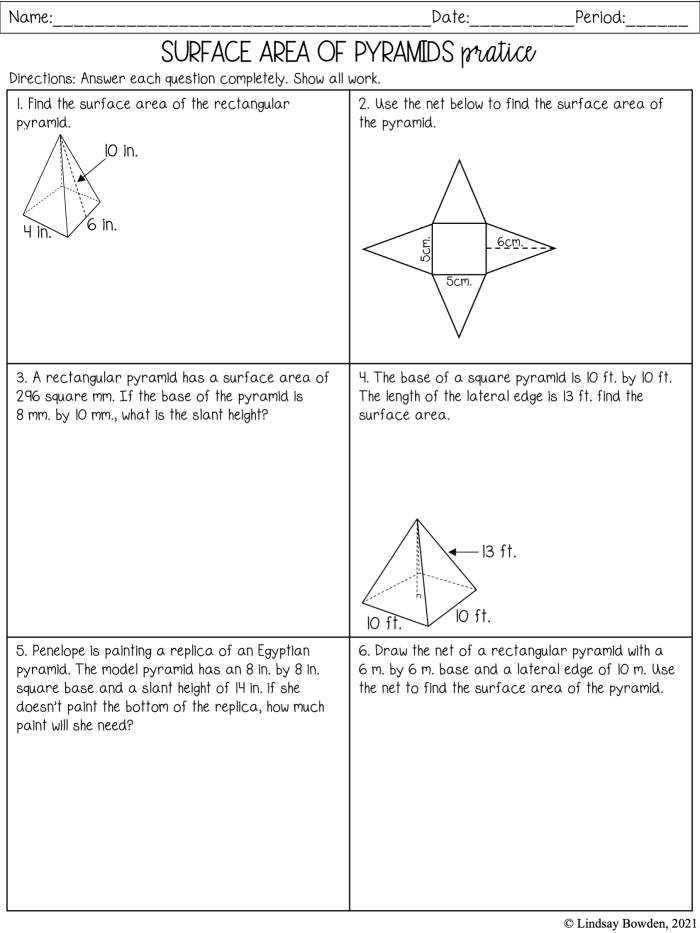
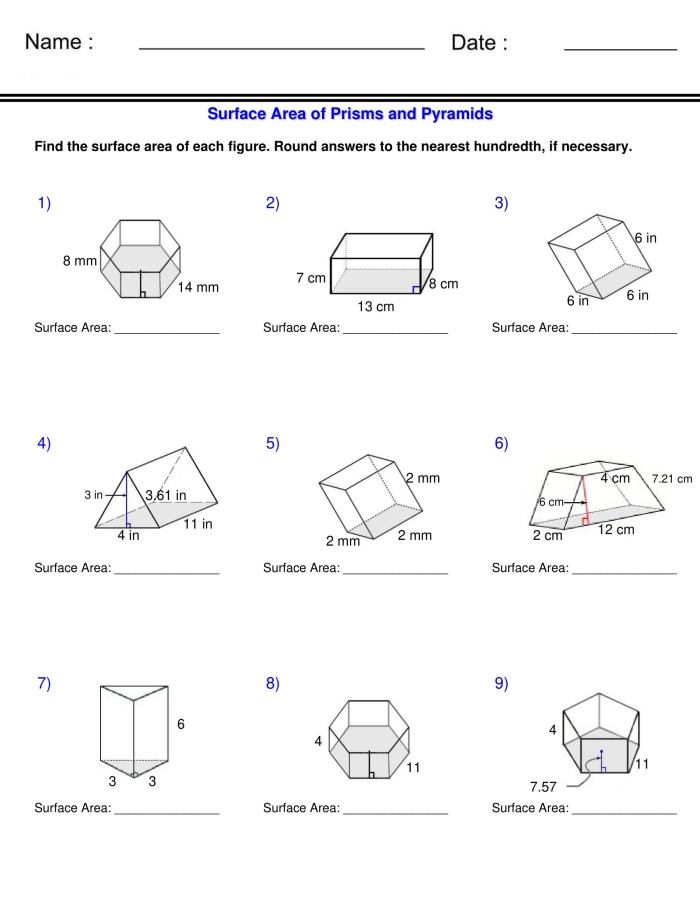
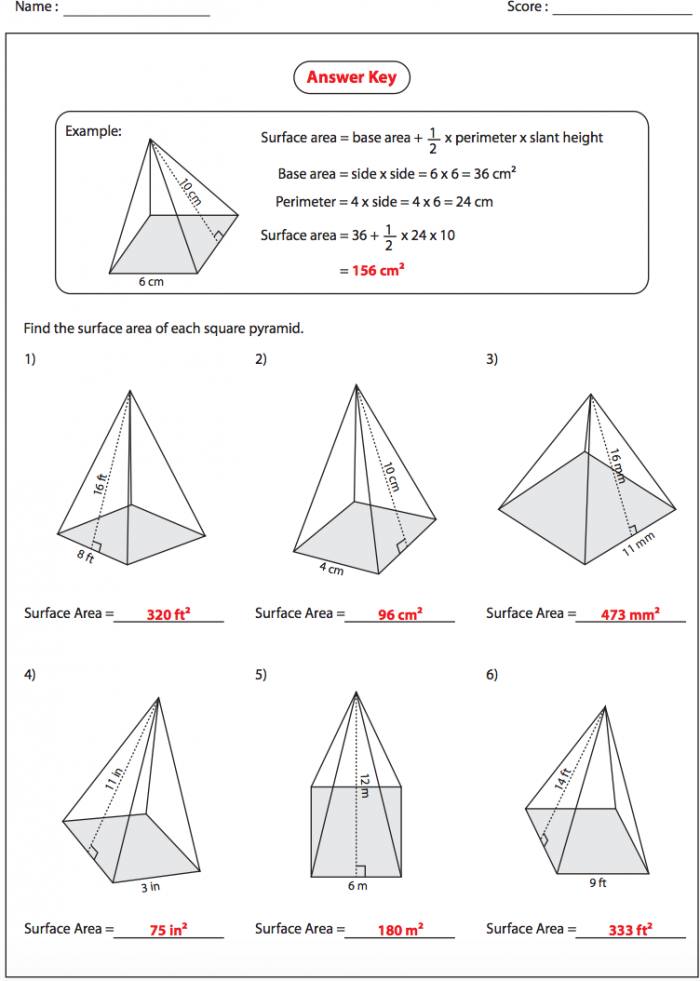
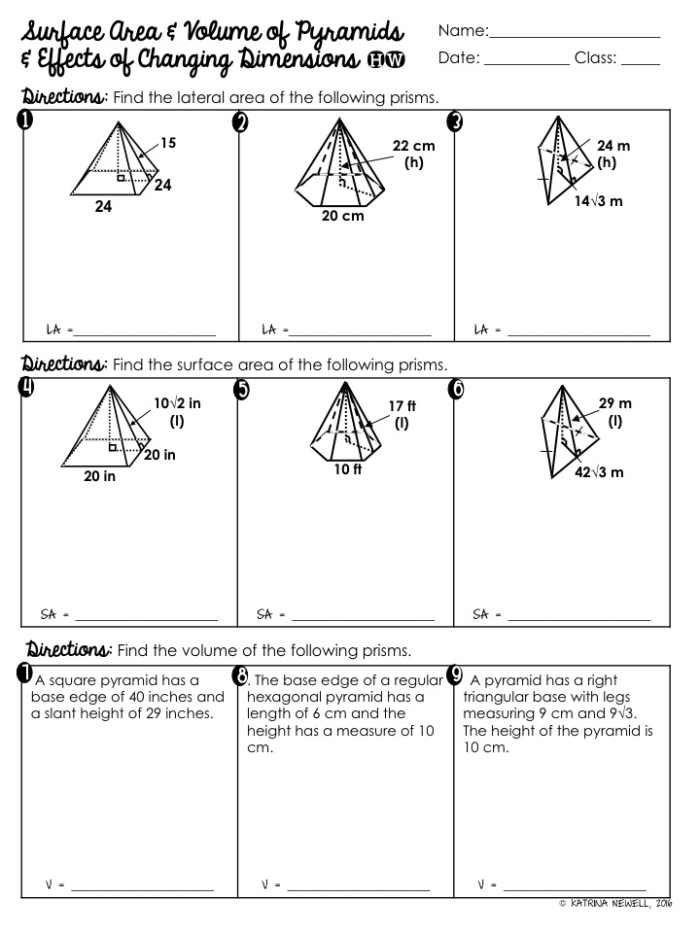
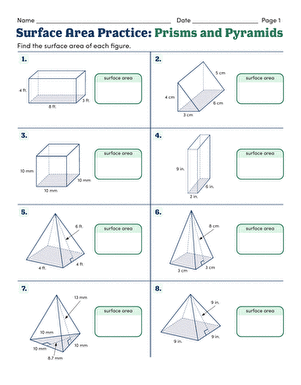
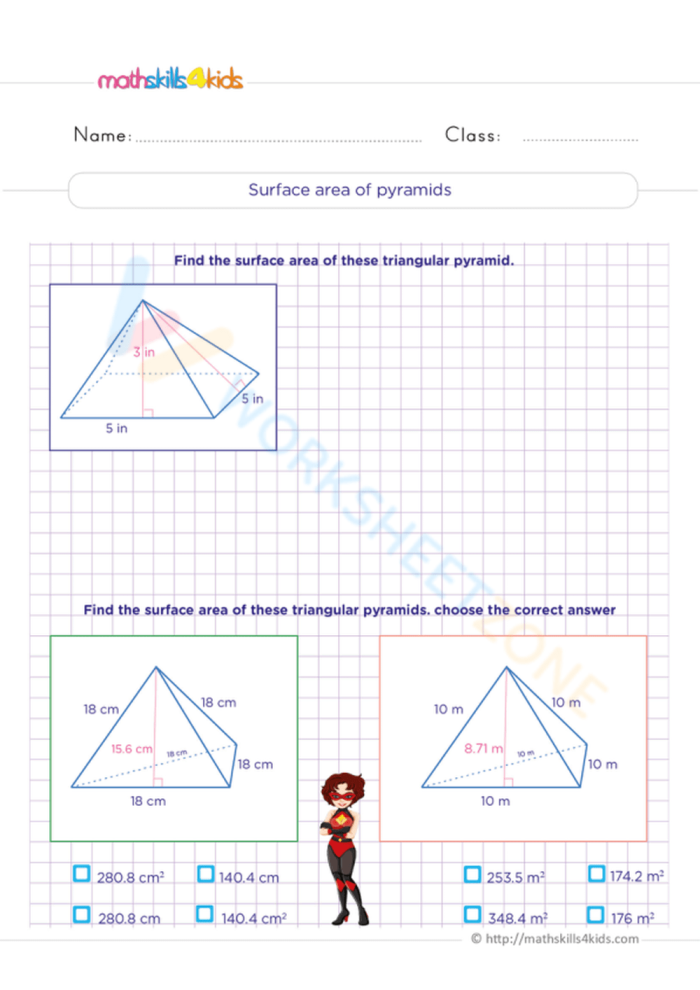
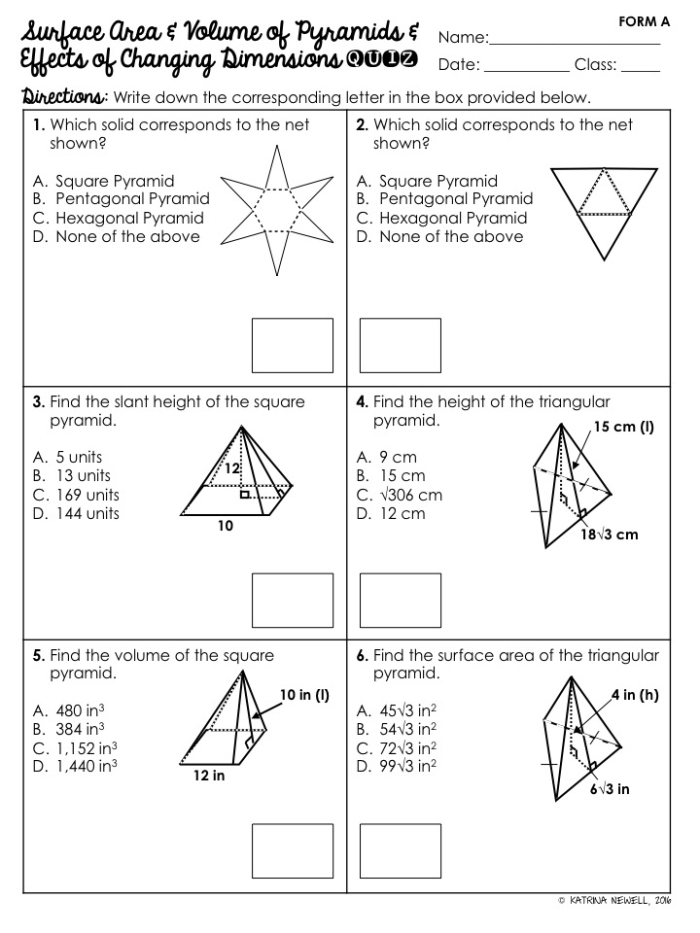
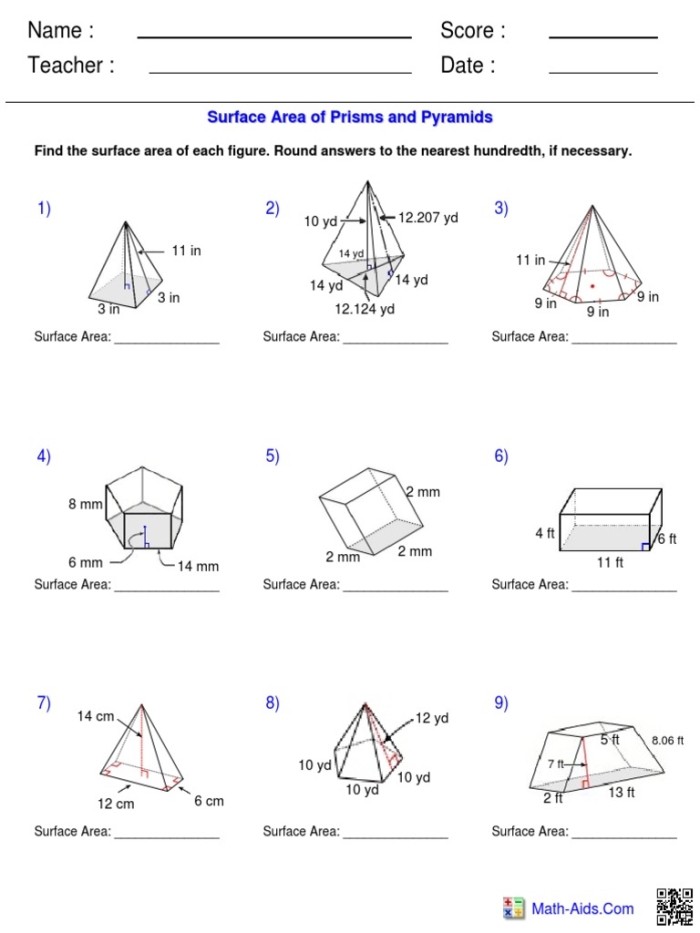
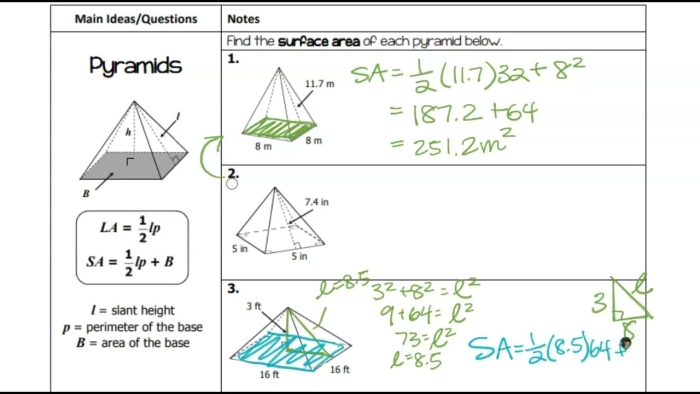
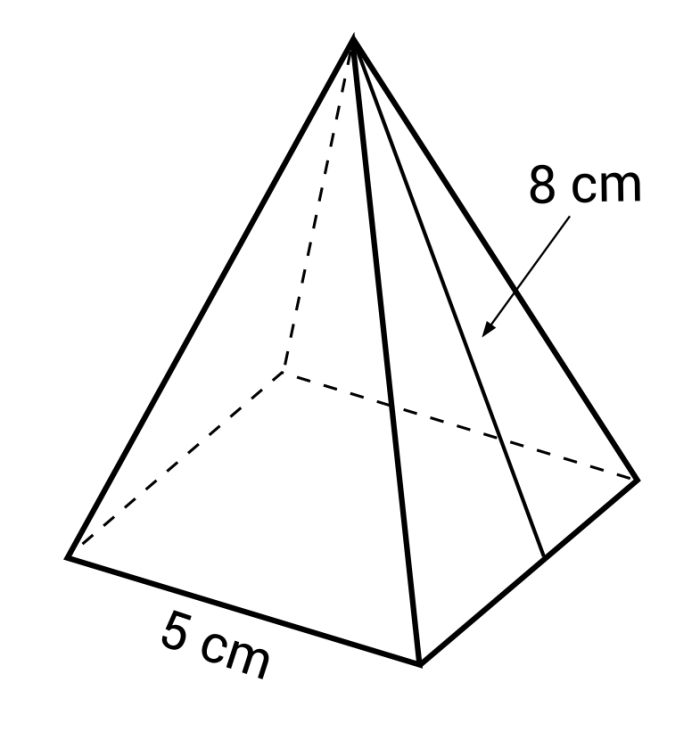
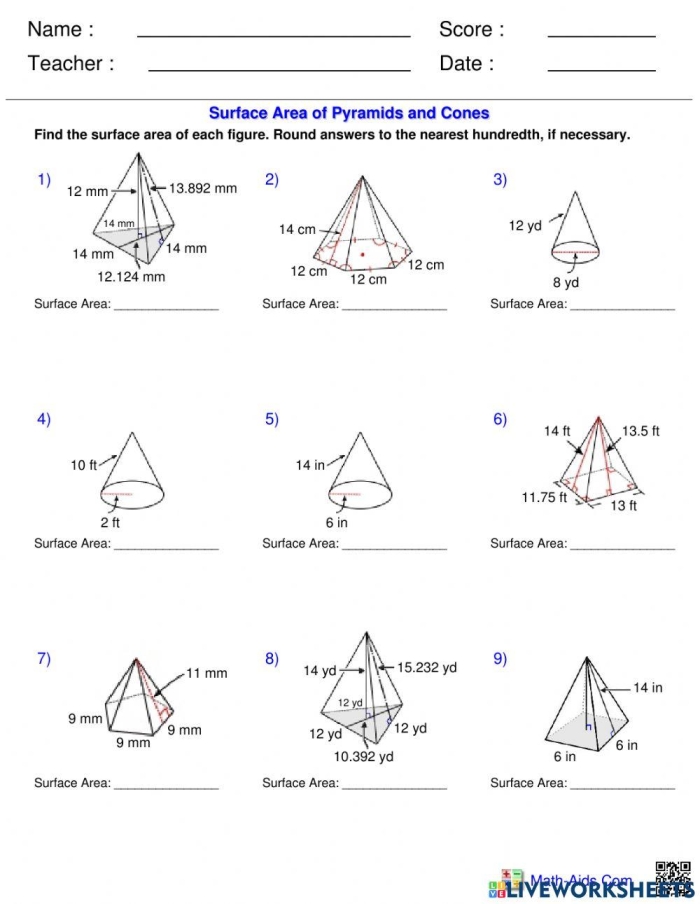
This geometry worksheet focuses specifically on pyramids, which come in two primary types based on their base shape. Square pyramids have a four-sided square base with four triangular faces meeting at a point above, while triangular pyramids (also called tetrahedrons) have a three-sided triangular base with three additional triangular faces. The distinction matters because calculating surface area requires adding the area of every face, and the number of faces changes depending on the pyramid type.
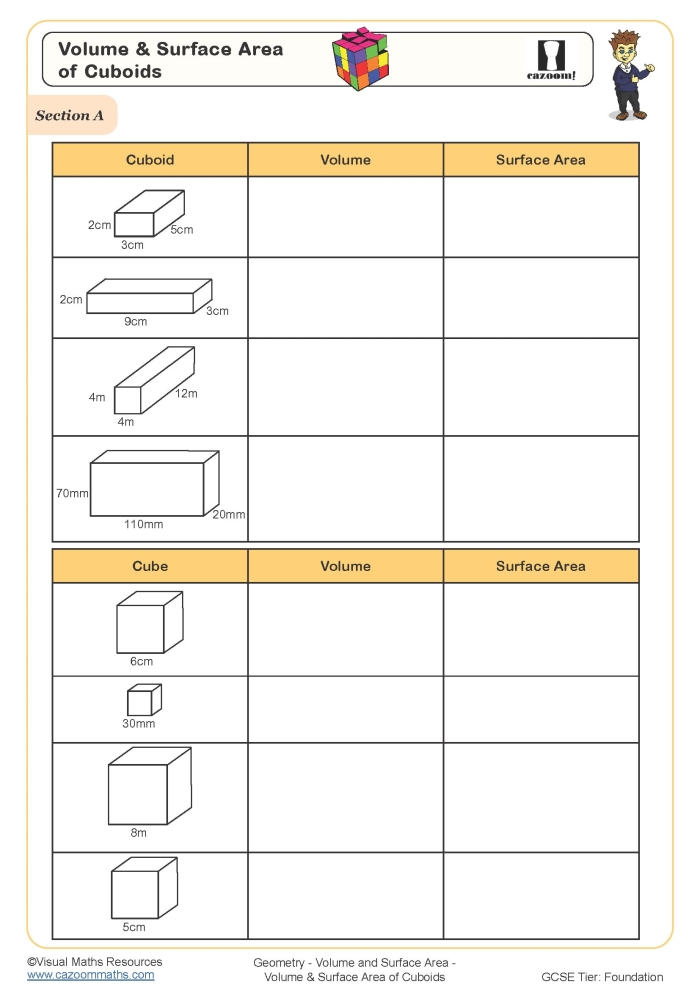
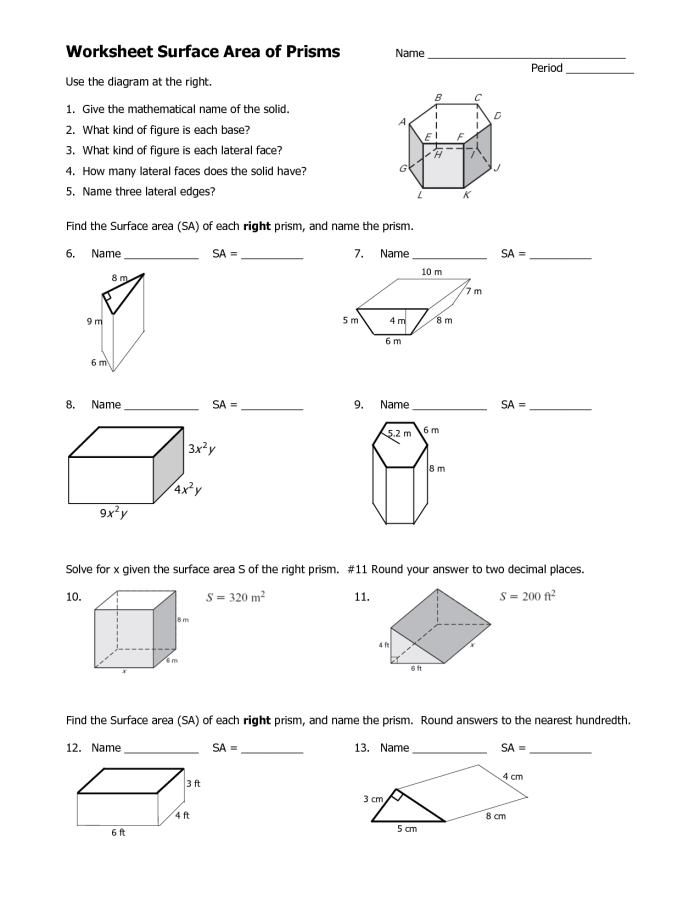
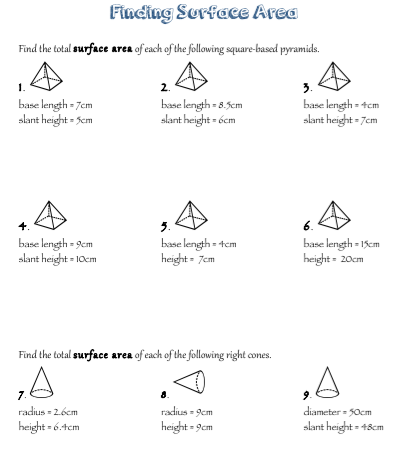
Finding surface area involves breaking down the three-dimensional problem into manageable two-dimensional pieces. Students measure or identify the dimensions of the base and the slant height of each triangular face, then apply area formulas for rectangles and triangles. This process strengthens their ability to visualize how shapes decompose, a skill that extends beyond geometry into reading comprehension and problem-solving across subjects.
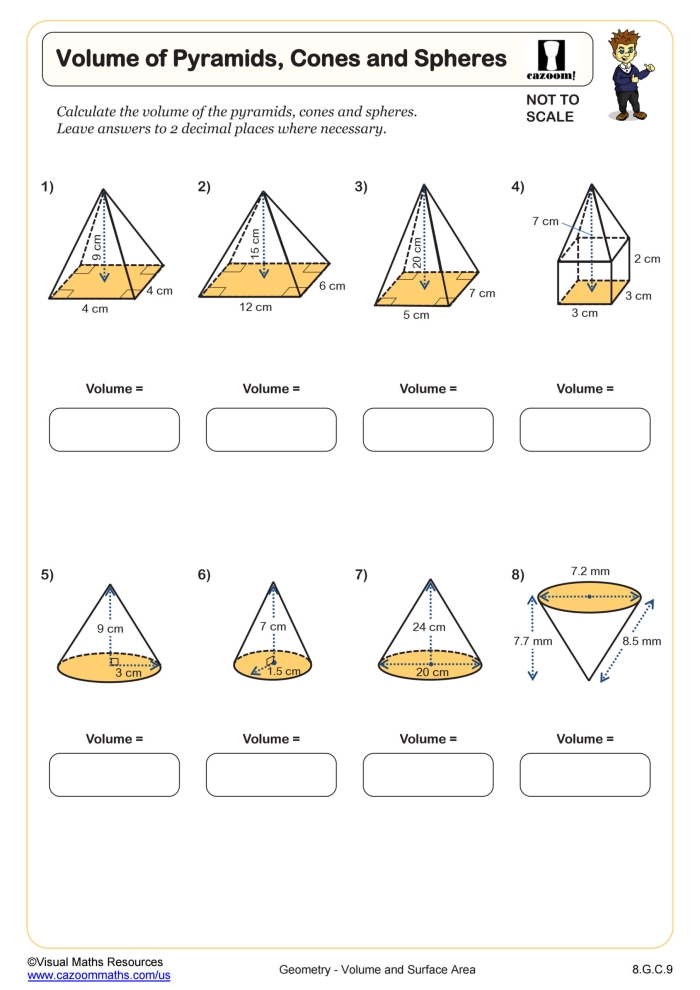
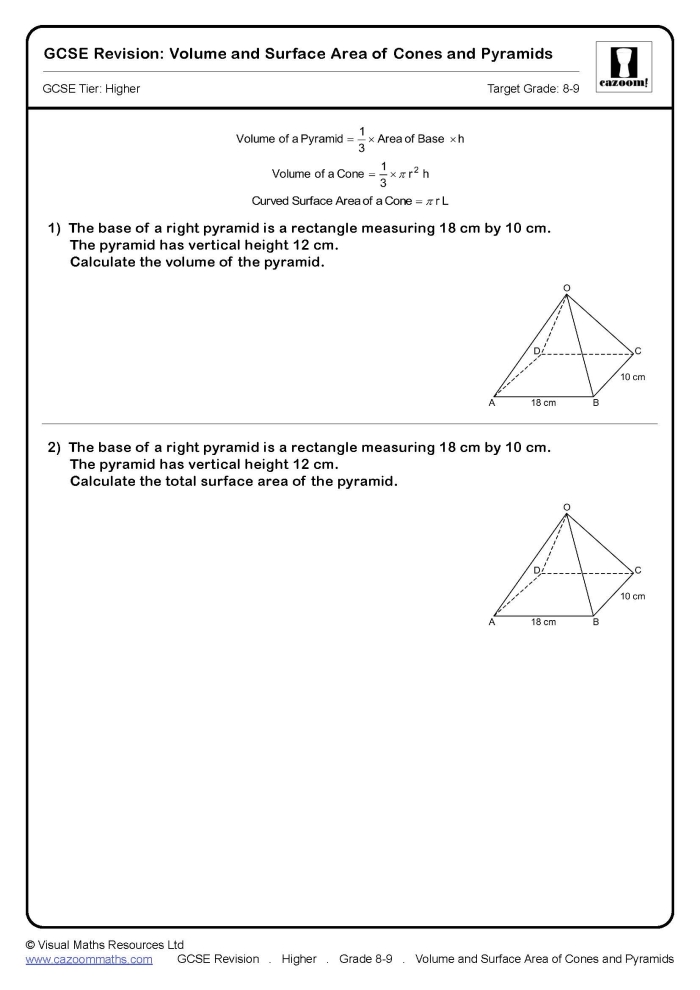
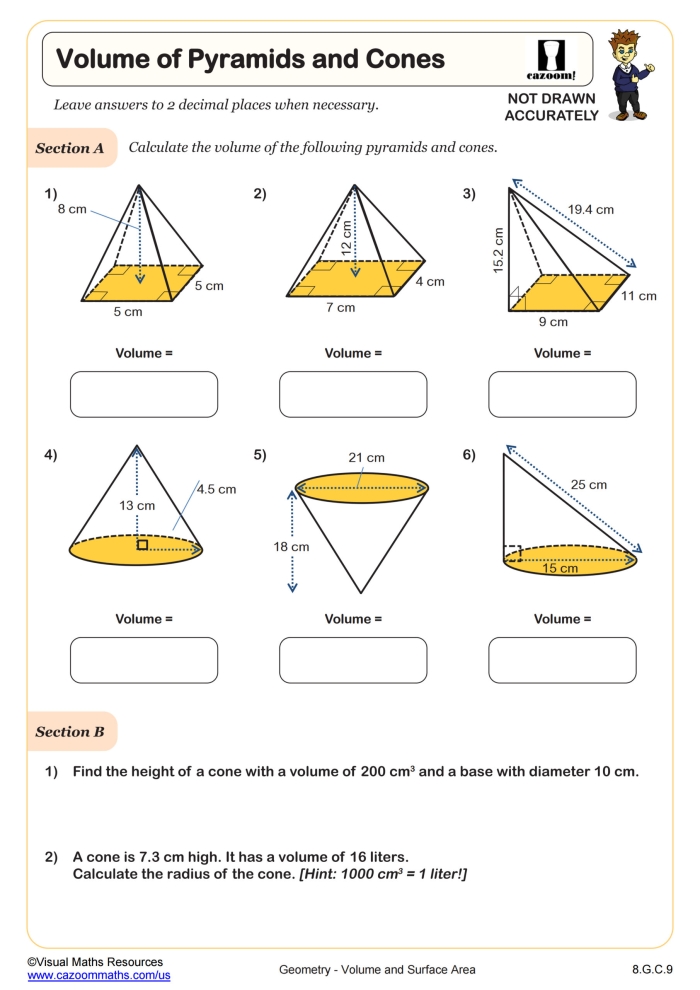
The worksheet typically presents pyramids with varying dimensions, so students practice the same method repeatedly with different numbers. Some problems provide all necessary measurements directly, while others require students to identify which measurements they need. This repetition builds confidence and automaticity, allowing seventh graders to move toward more complex spatial reasoning tasks.
Working through these problems also prepares students for related concepts. Understanding how to calculate surface area of pyramids connects naturally to finding dimensions from scale drawings and word problems, skills that strengthen their ability to interpret mathematical information from multiple sources.
Printable Worksheets for Practice