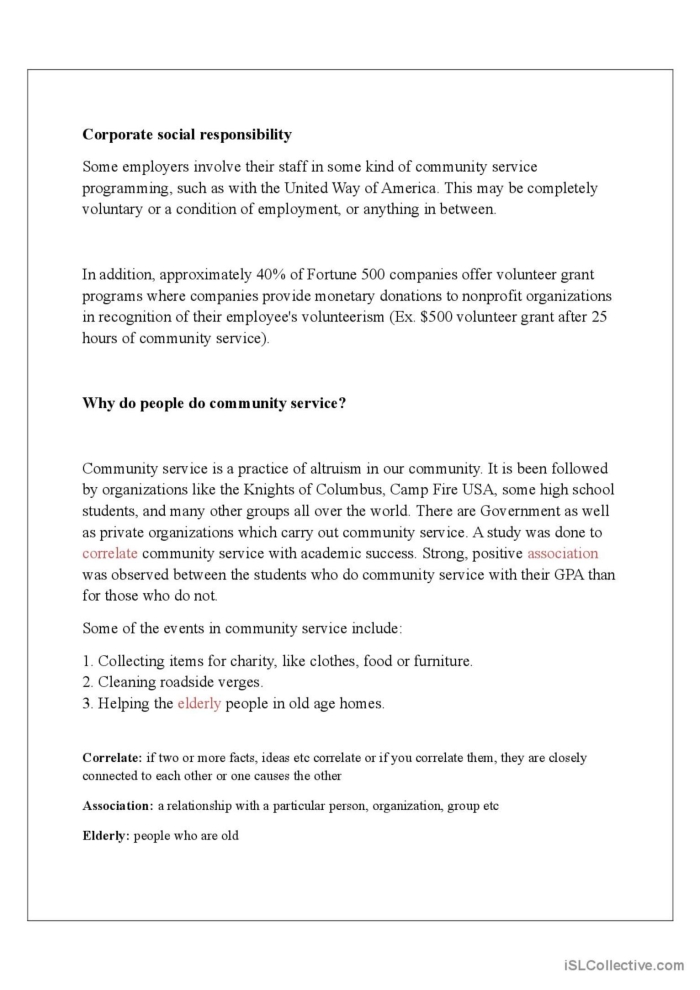
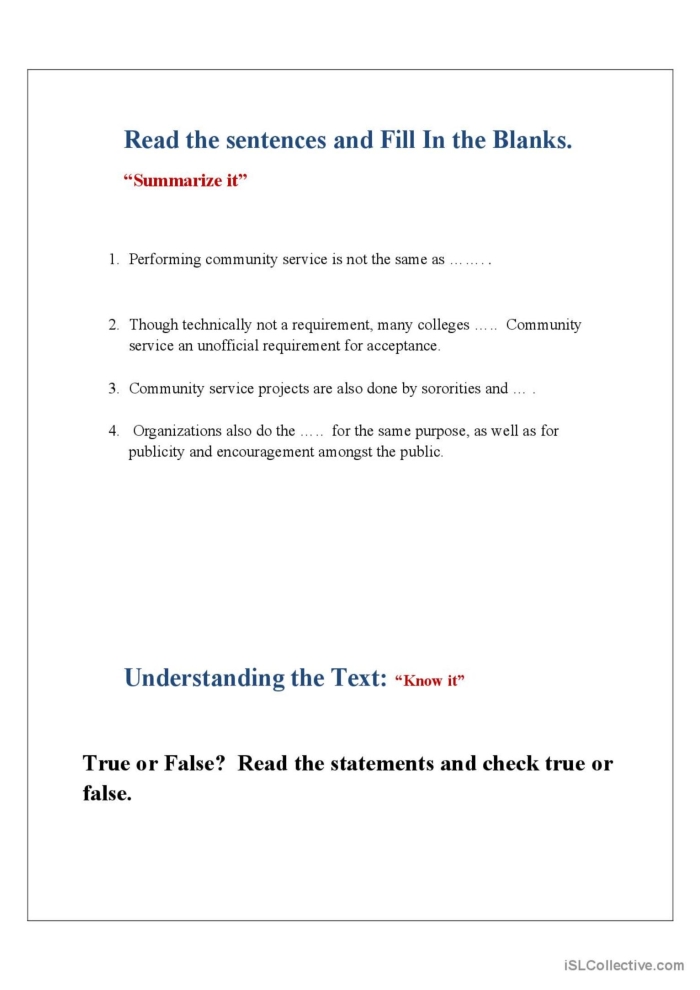
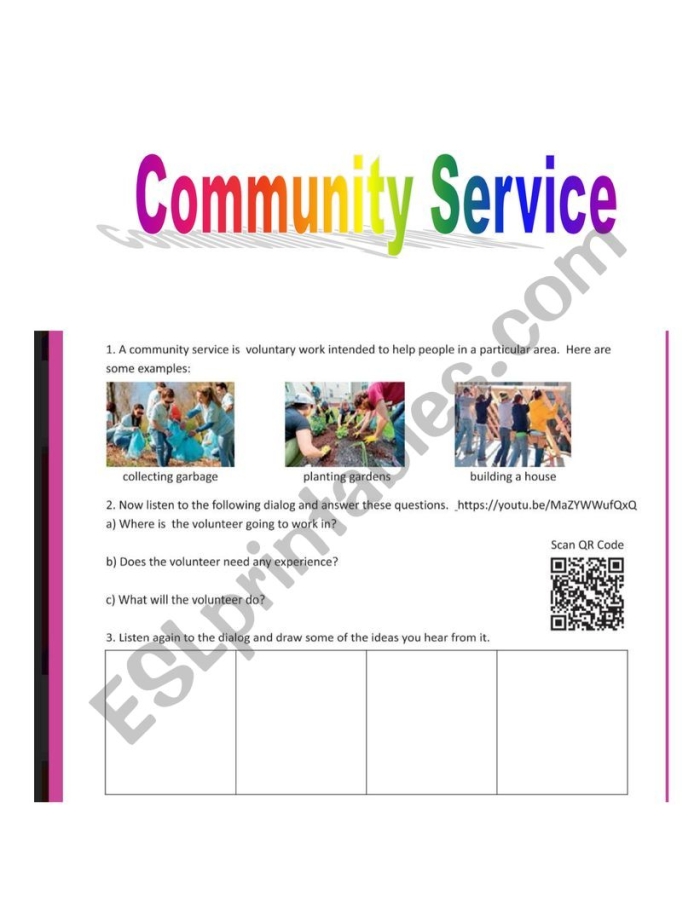
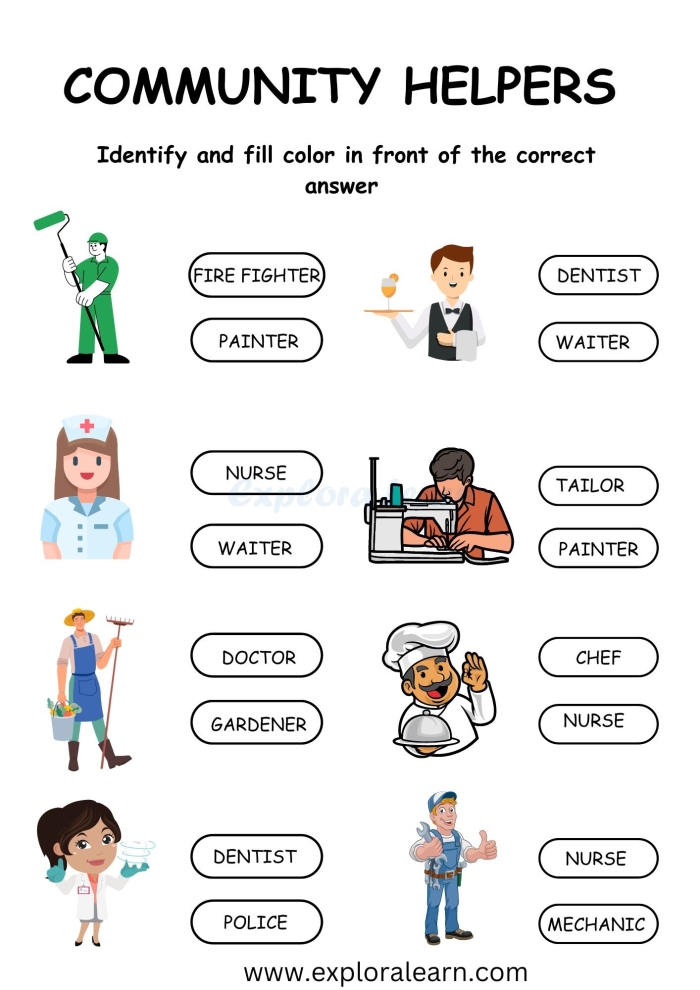
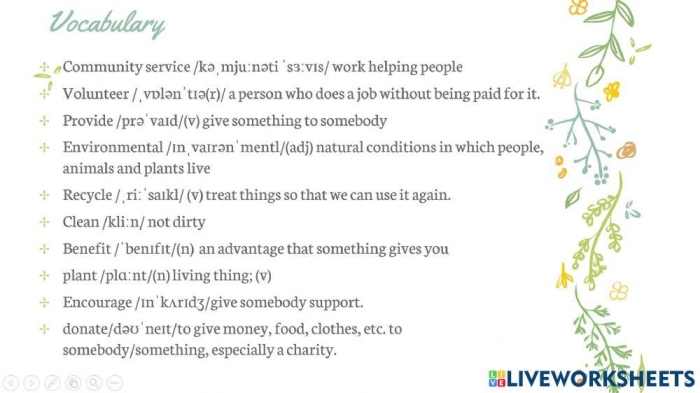
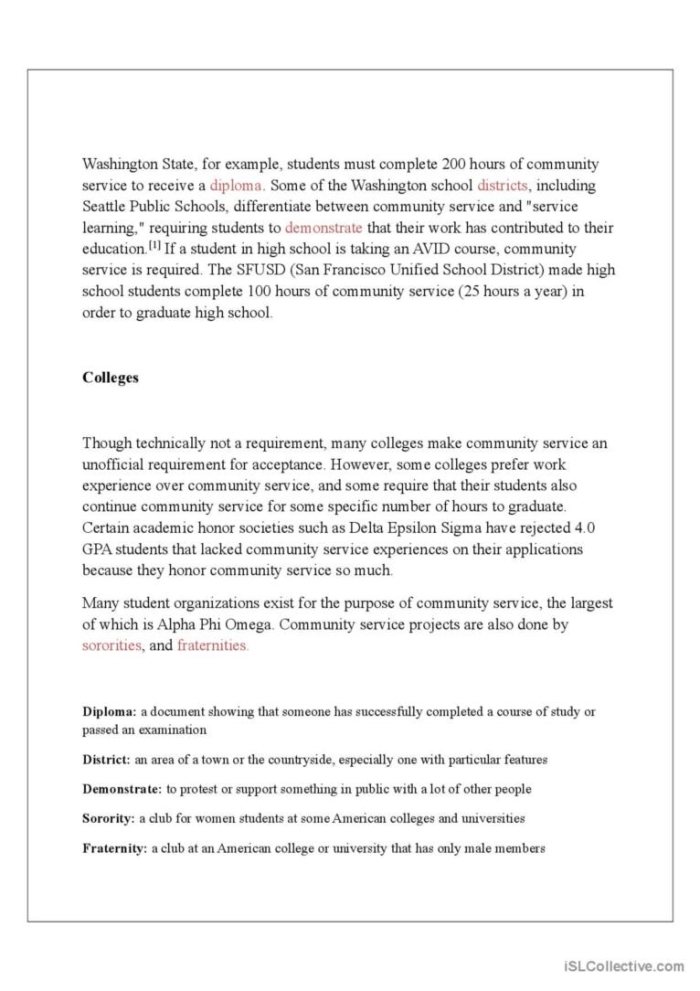
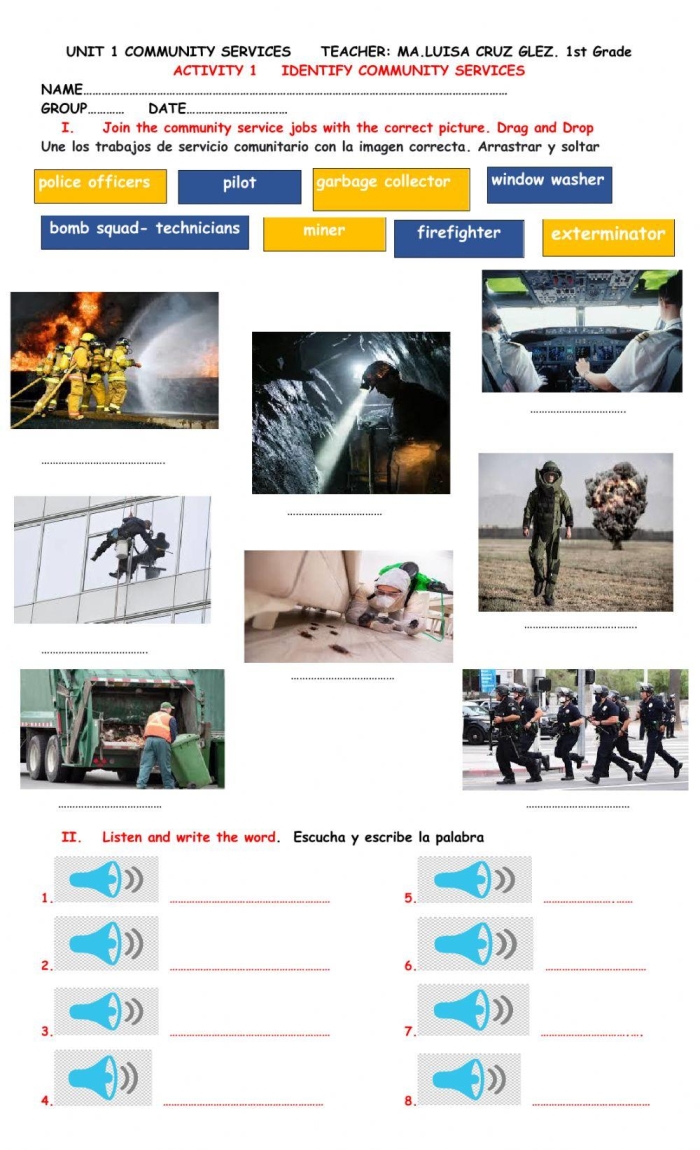
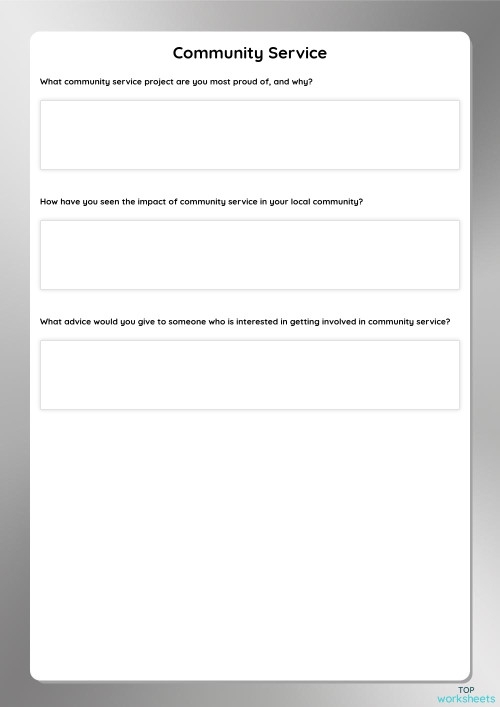
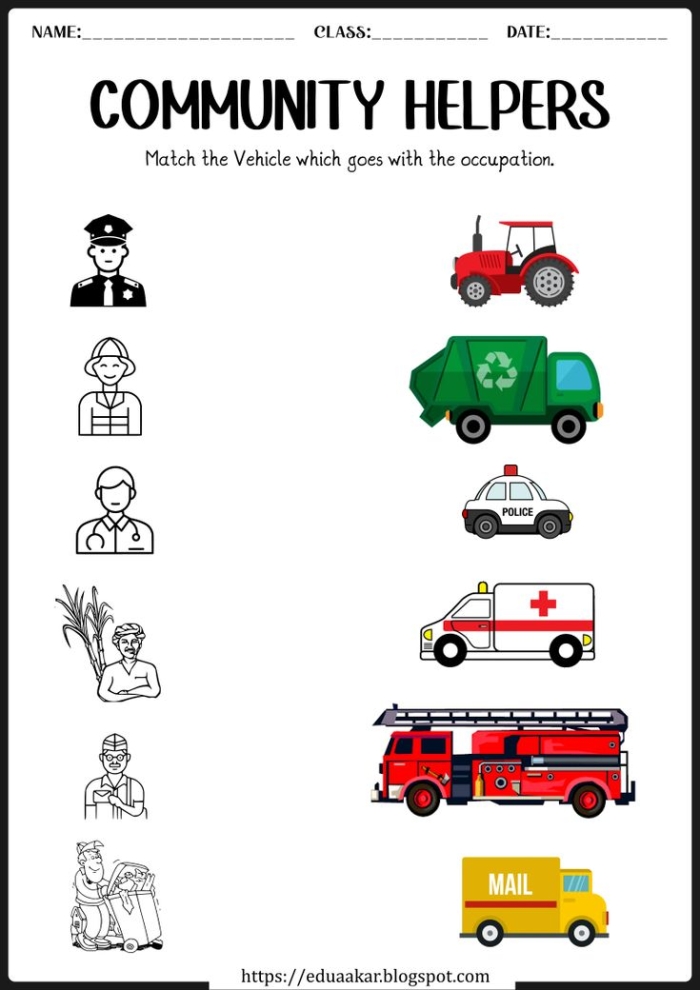
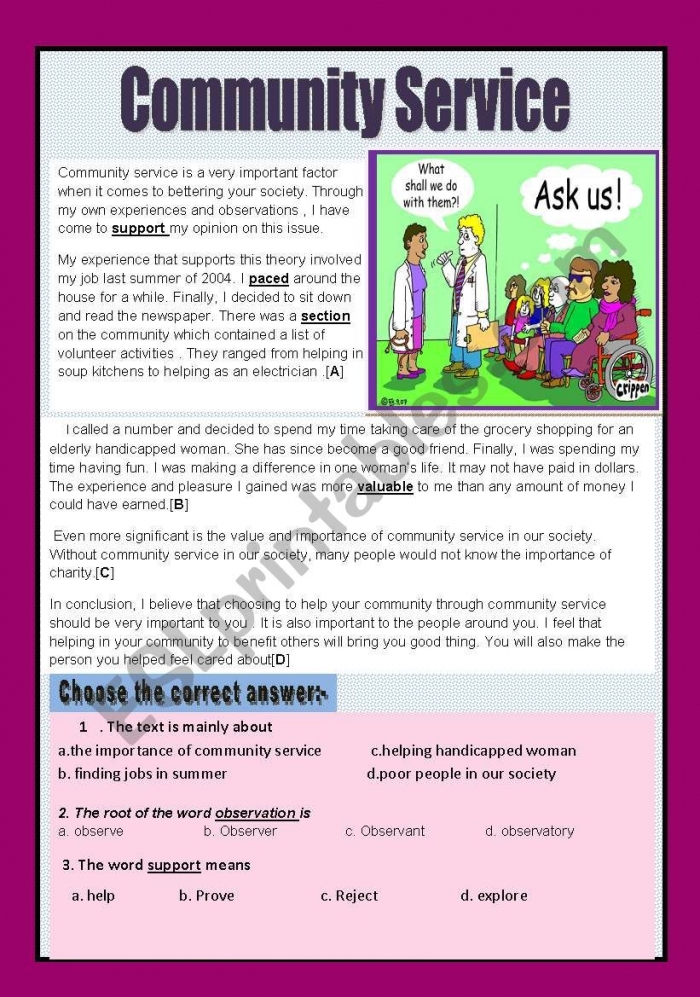
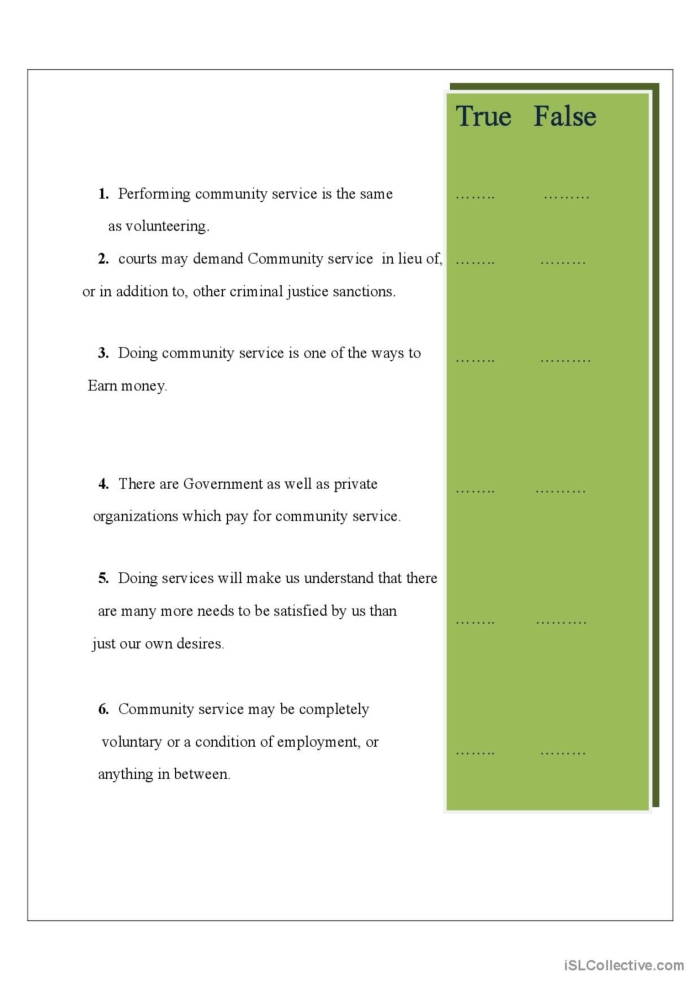
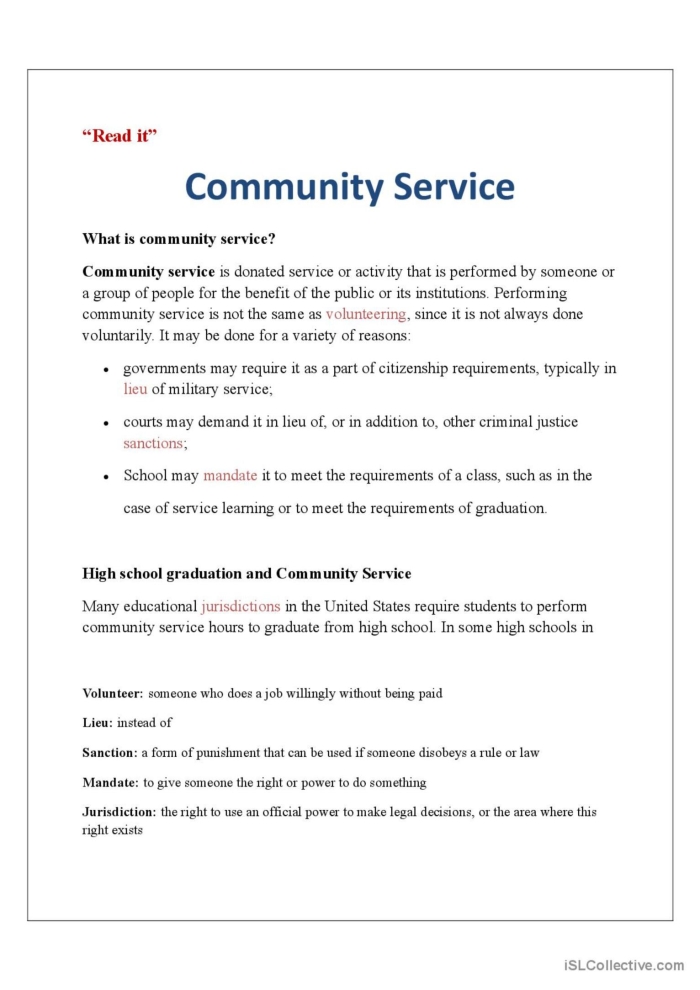
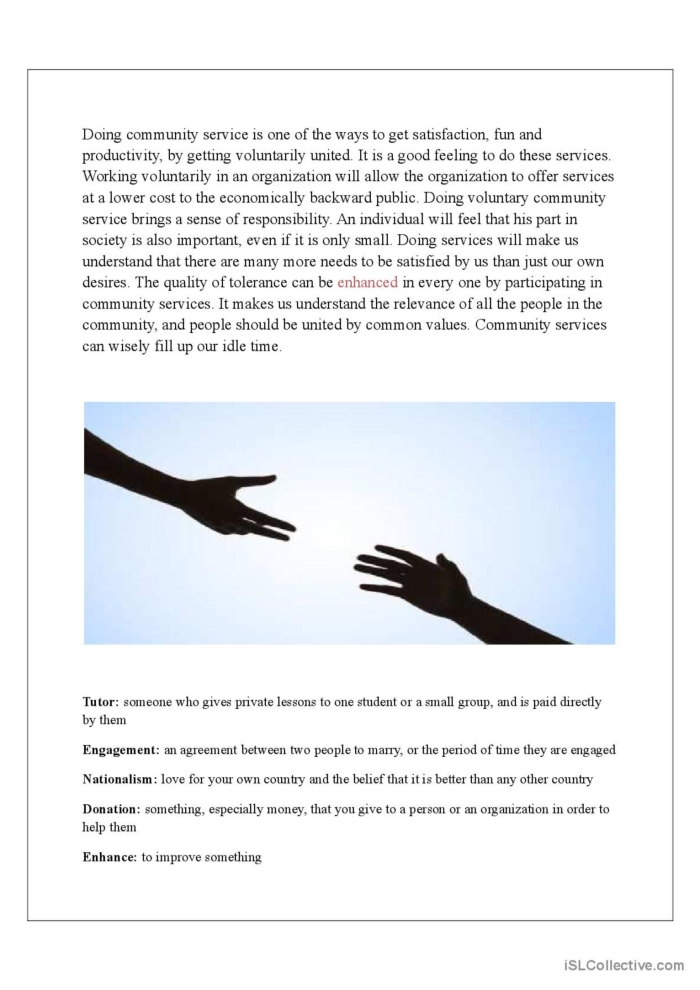
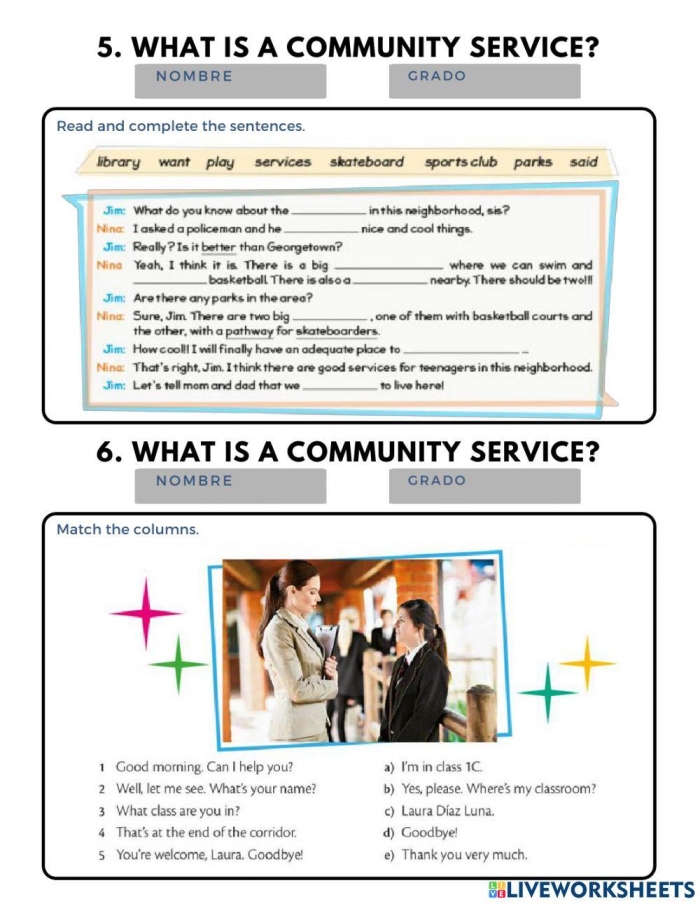
Introducing second grade students to the concept of community service can be both meaningful and accessible when paired with the right learning tools. A thoughtfully designed worksheet that explains what community service is helps children grasp the idea through simple language and relatable examples. This approach encourages young learners to see how small actions, like helping a neighbor or cleaning up a park, contribute to the well-being of their community.
One effective way to engage children at this level is by using printable What is Community Service? worksheets that connect the concept with familiar school subjects like multiplication. For instance, the worksheet might include problems where students calculate how many bags of trash are collected if each group picks up a certain number, combining math practice with real-world thinking.
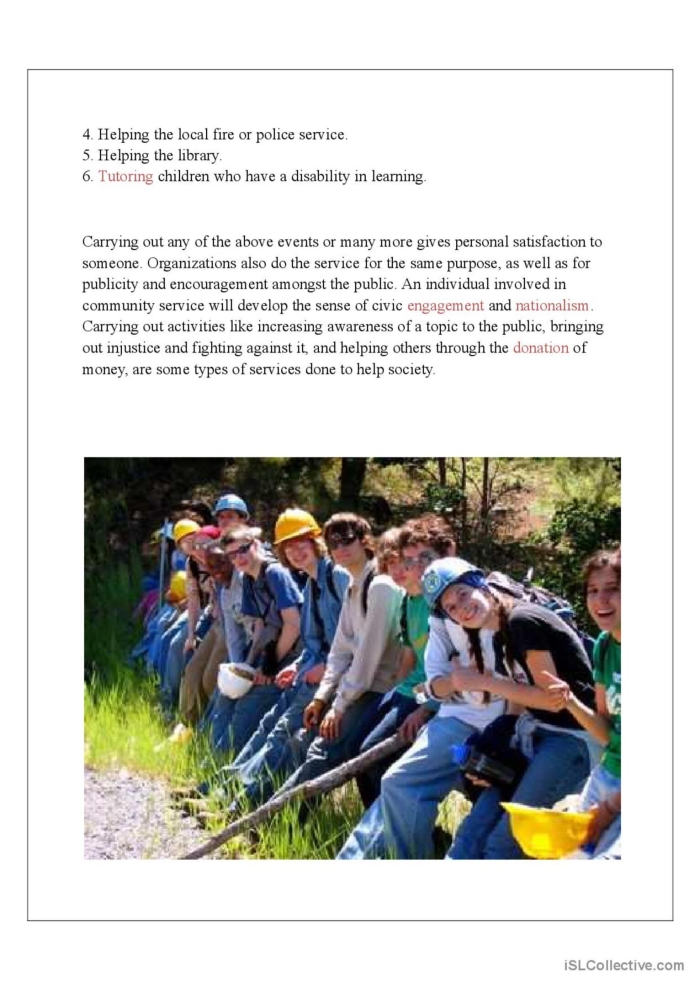
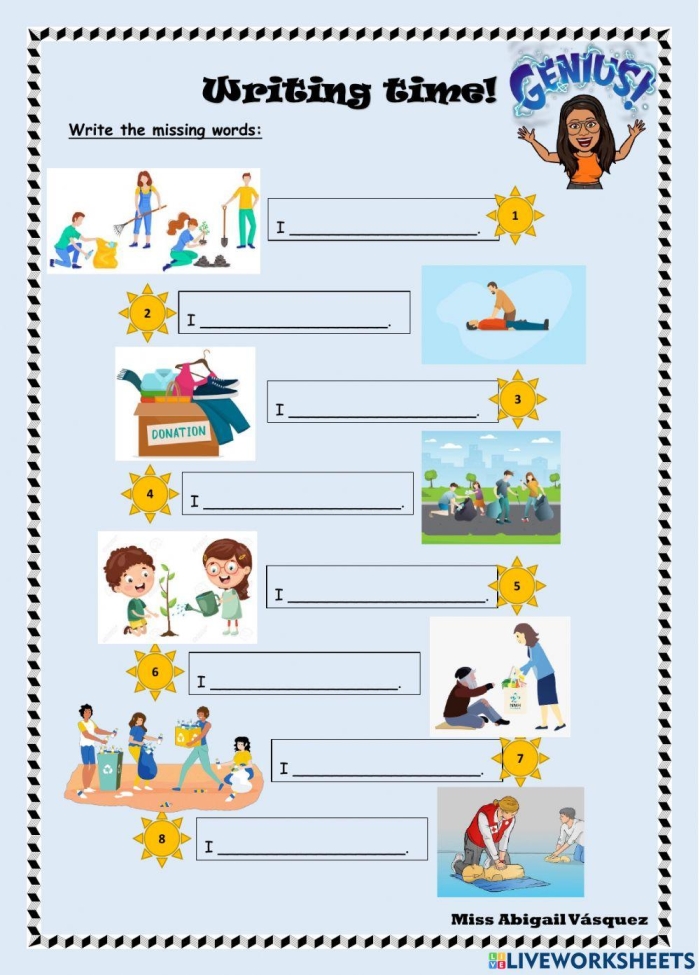
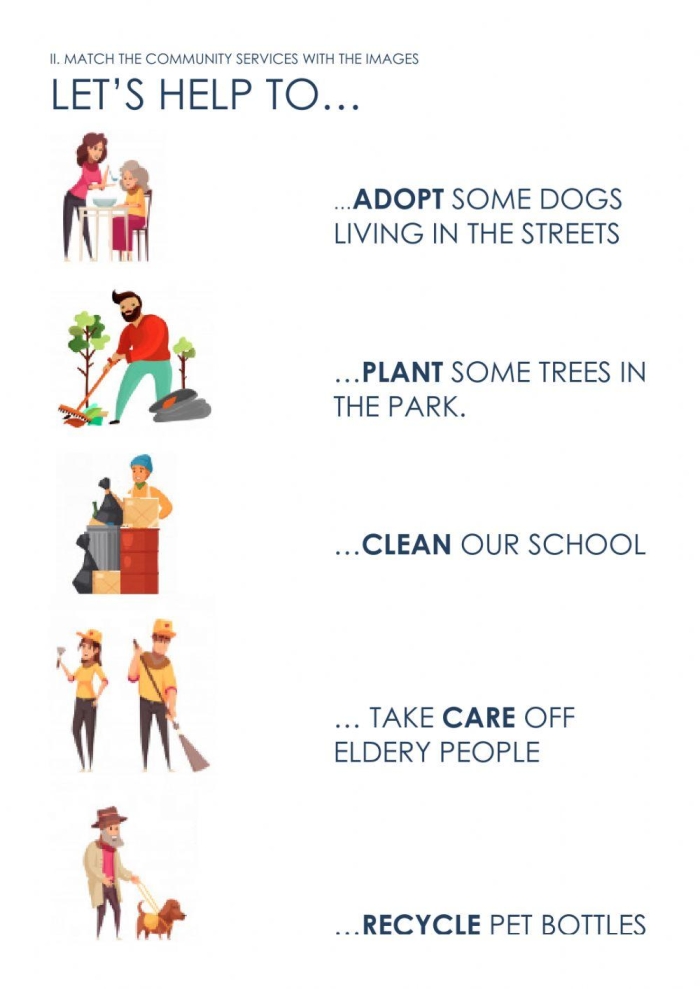
Giving examples tailored to their daily experiences makes the idea clearer. Activities such as helping in a school garden, participating in food drives, or volunteering to distribute books show practical ways children can contribute. These examples allow students to connect their academic skills with acts of kindness and responsibility.
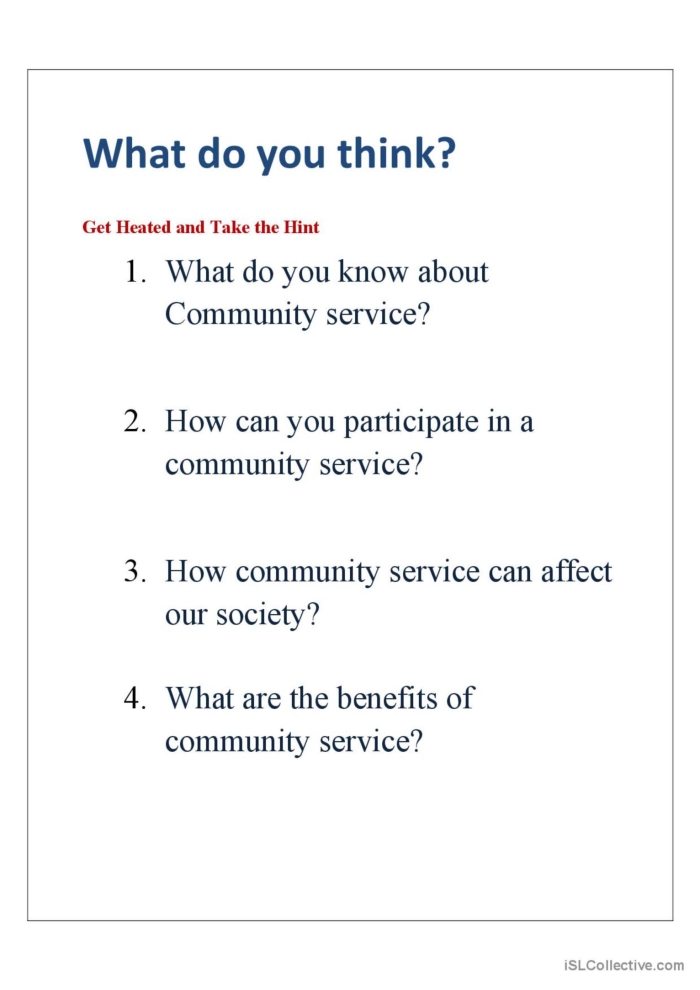
Incorporating community service topics into second grade multiplication worksheets not only strengthens math skills but also fosters empathy and awareness. Teachers and parents can complement these lessons by discussing local events or encouraging students to brainstorm their own community service ideas. This dual focus helps children understand that learning extends beyond the classroom.
For educators looking to expand this learning, integrating related materials like worksheets about US rivers or world map activities can build a broader sense of place and community. These resources highlight how communities connect geographically and culturally, enhancing the meaning behind service efforts.
Ultimately, a worksheet that clearly defines what community service is and provides tangible examples helps second graders understand their role in making a positive impact. Combining this with multiplication practice makes learning both practical and purposeful, laying a foundation for responsible citizenship from an early age.
Boost Skills with These Worksheets