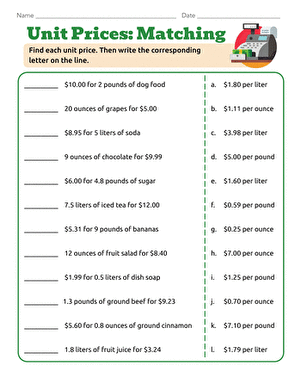
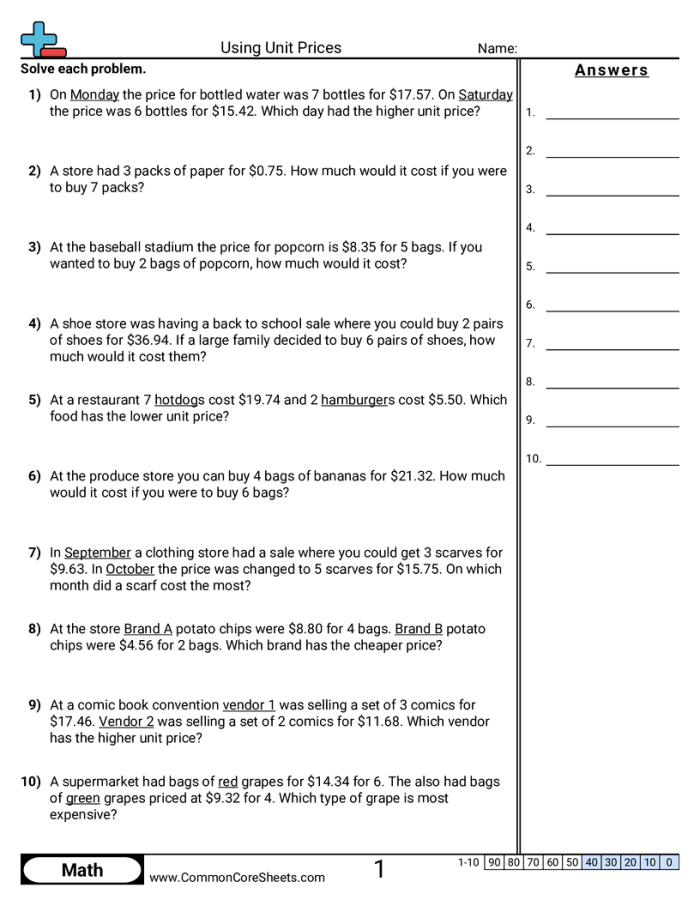
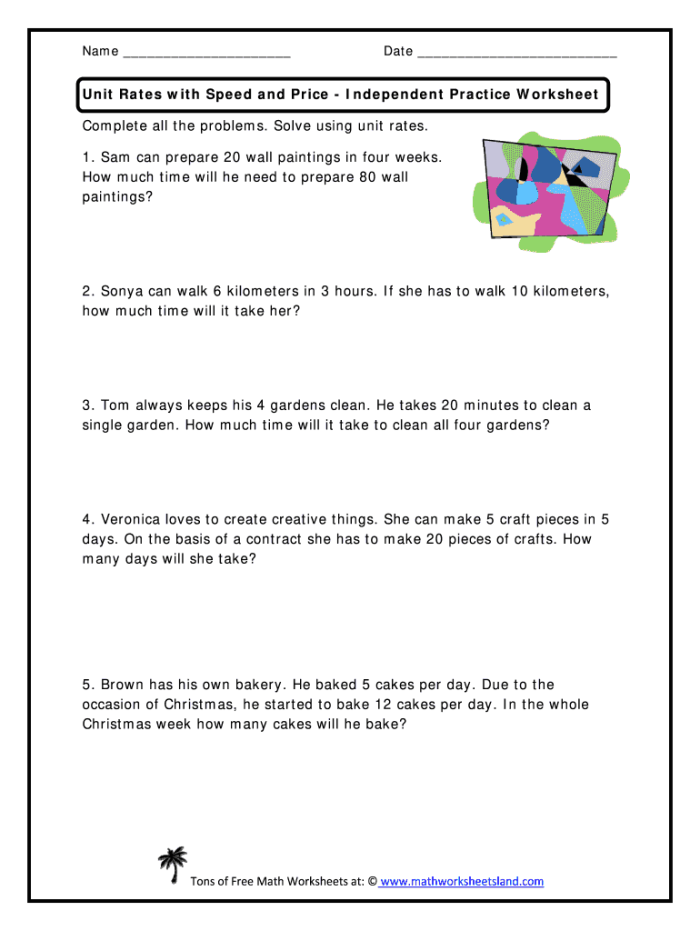
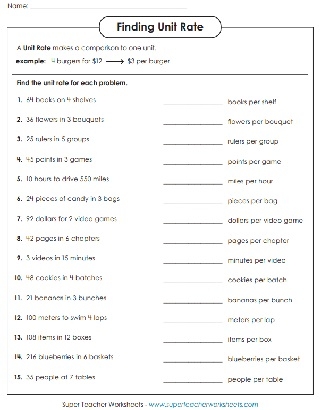
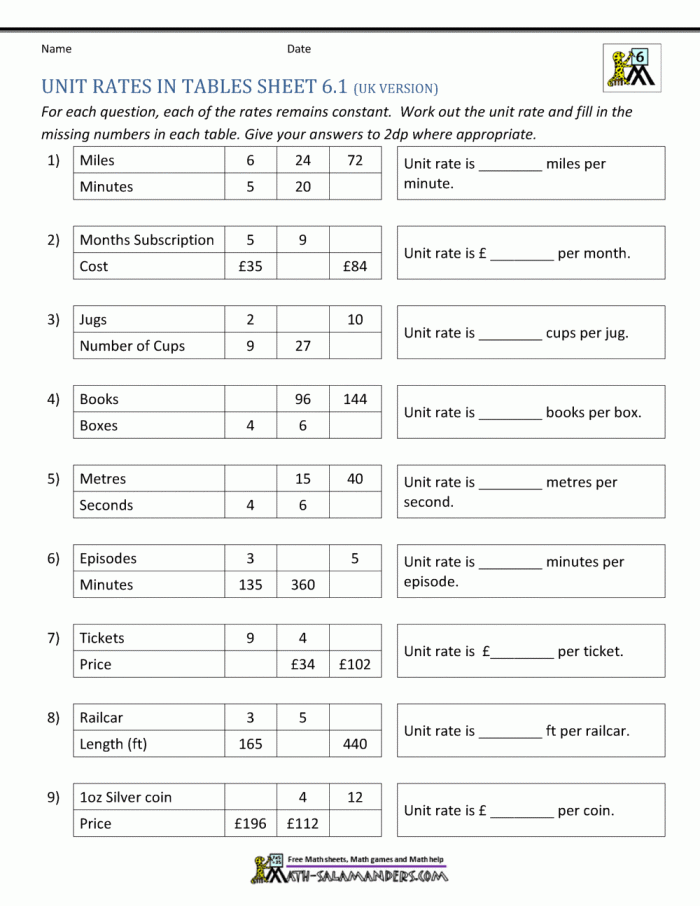
Unit prices trip up more sixth grade students than you’d expect, even though the concept itself is straightforward. When you’re standing in a grocery store comparing a 12-ounce bottle of shampoo priced at $4.80 against a 16-ounce bottle for $6.40, you need to know which one actually costs less per ounce. That’s where unit price calculations come in, and matching worksheets turn this practical skill into something students can actually engage with rather than just memorize.
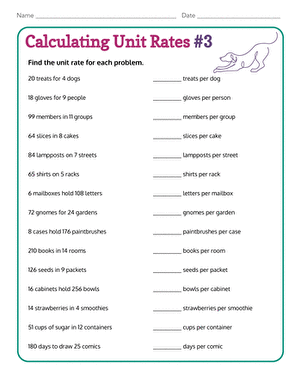
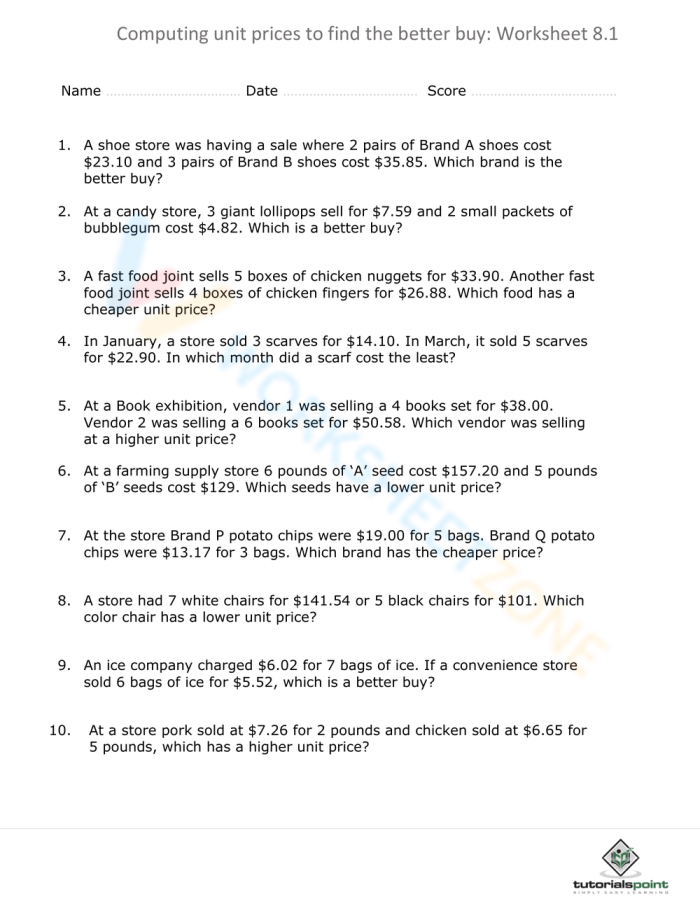
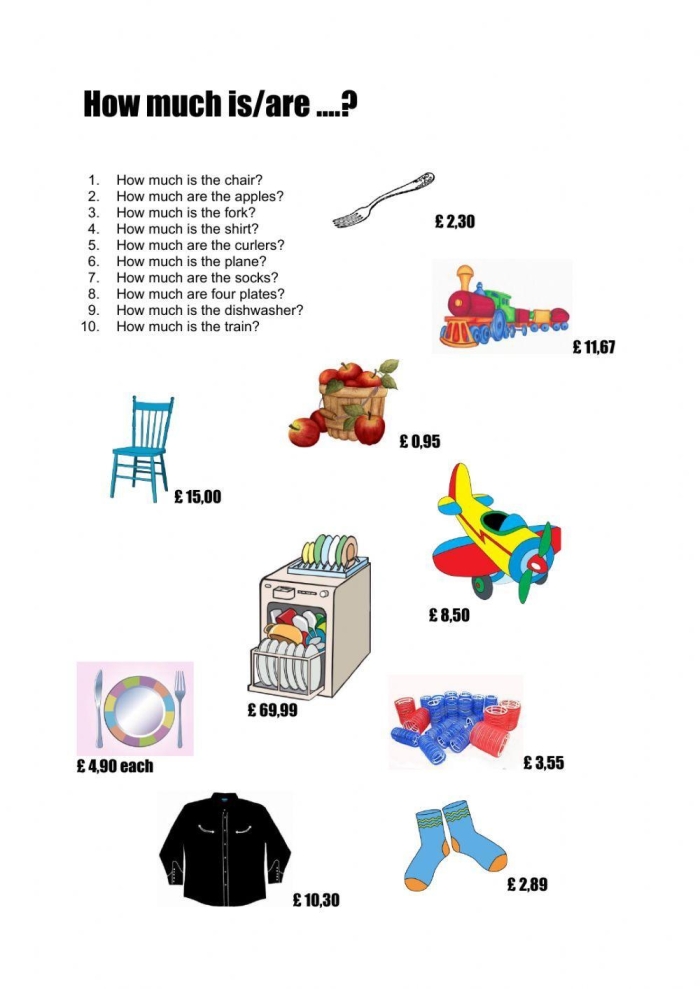
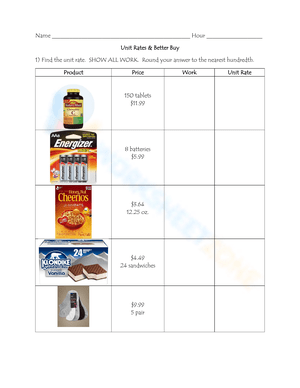
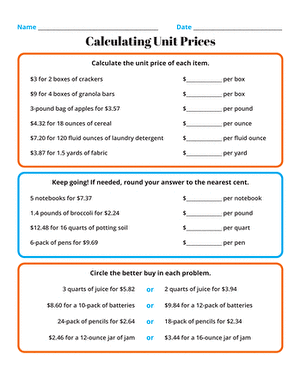
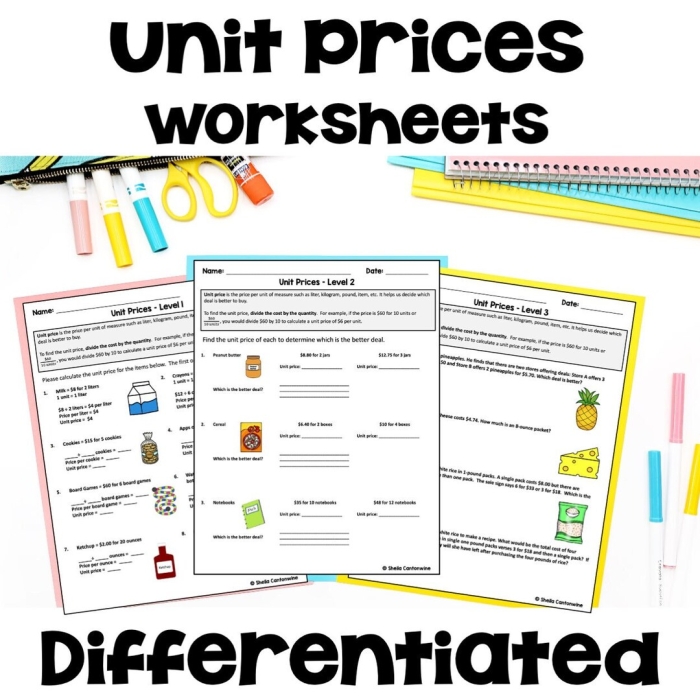
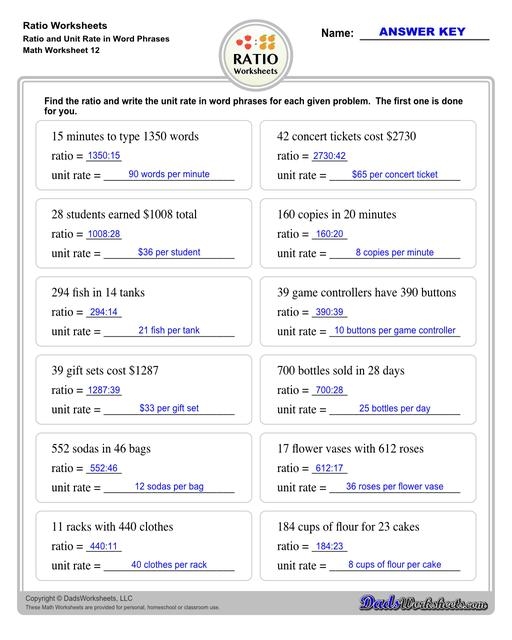
A matching worksheet presents real-world pricing scenarios alongside their corresponding unit prices, asking students to connect each product with its correct calculation. This format works because it forces active thinking. Rather than passively reading an explanation, students must compare numbers, do the math, and verify their answers make sense. The matching structure also provides immediate feedback, which matters for building confidence in sixth grade math.
The beauty of this approach lies in its flexibility. You can include items students recognize: snacks, sports drinks, school supplies, or household products. One student might match a cereal box priced at $3.60 for 18 ounces with a unit price of $0.20 per ounce, while another calculates whether buying in bulk actually saves money. These aren’t abstract problems anymore, they’re decisions students make or see their families make regularly.
Beyond basic arithmetic, unit price practice connects to ratio understanding. When sixth graders work through equivalent ratios, they’re building the same proportional reasoning skills needed for unit pricing. The matching format also complements other sixth grade writing activities, including work on writing with a formal tone, where students learn to explain their mathematical reasoning clearly.
Printable unit prices matching worksheets save classroom time while keeping students engaged with material that actually matters to their lives.
Hands-On Worksheet Activities