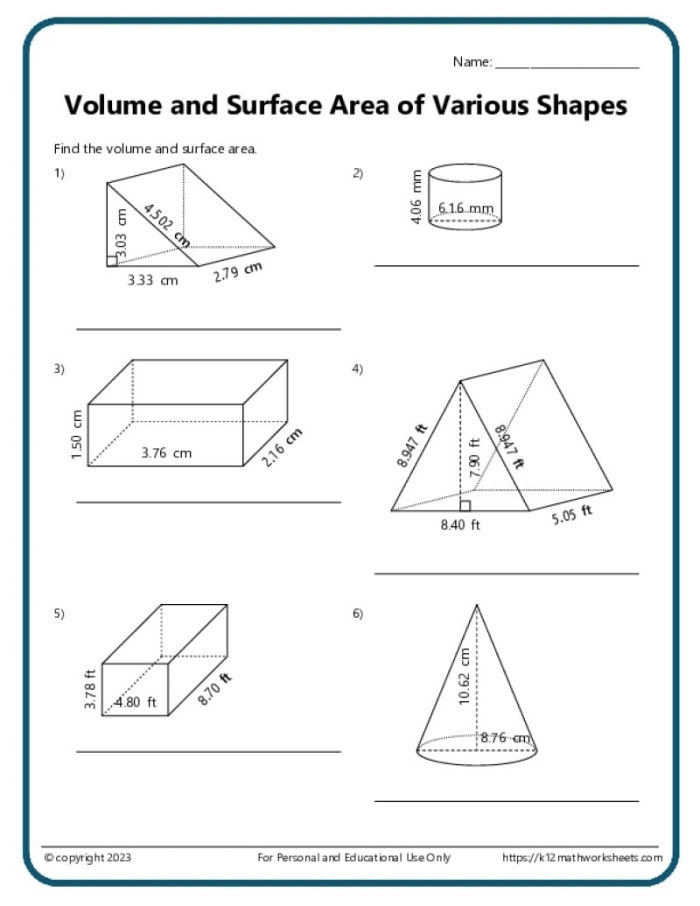
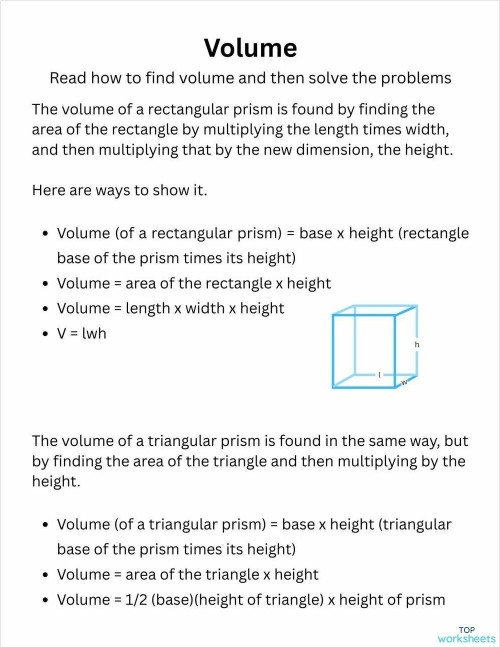
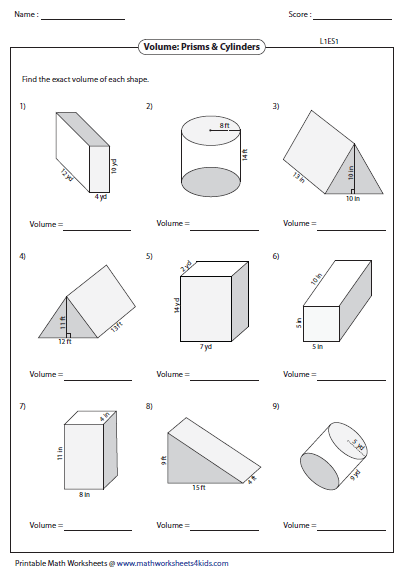
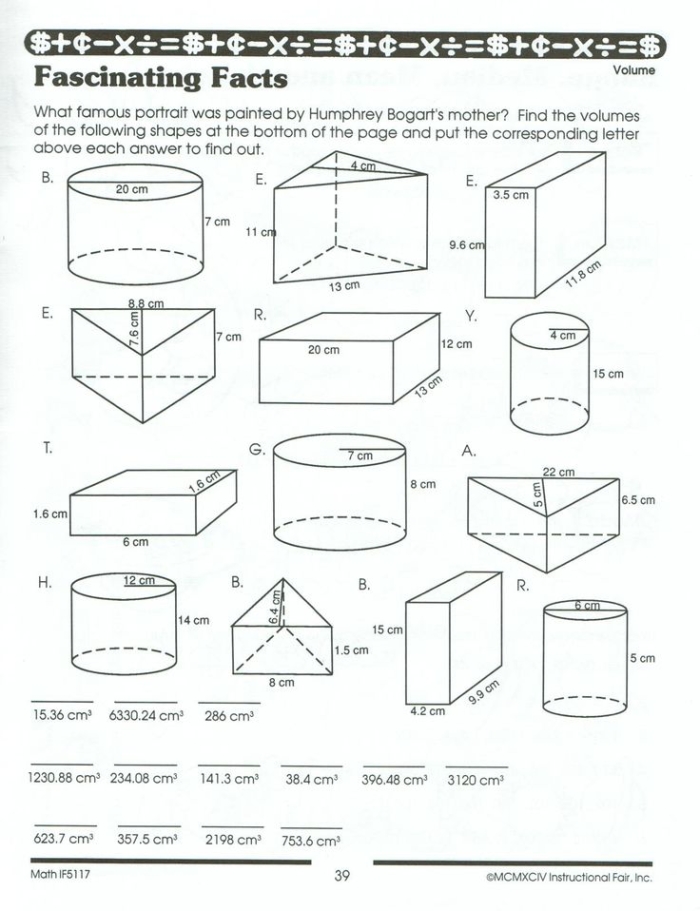
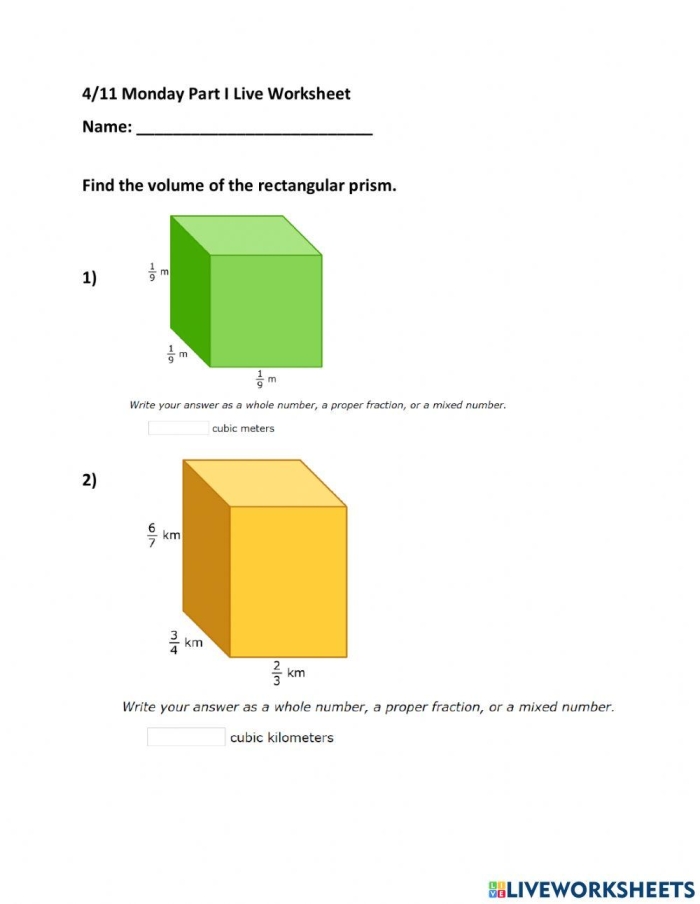
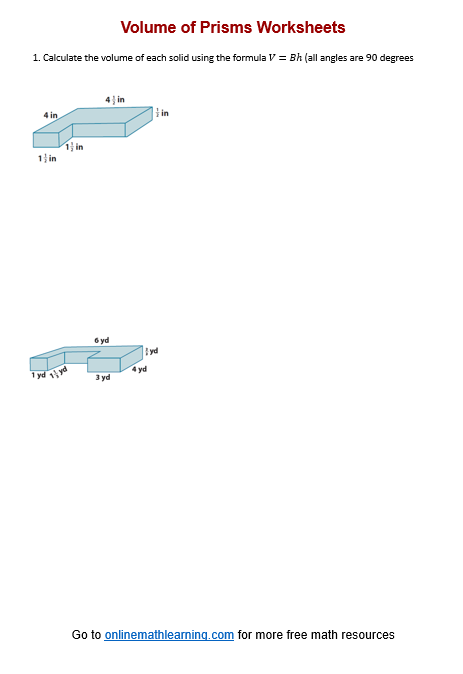
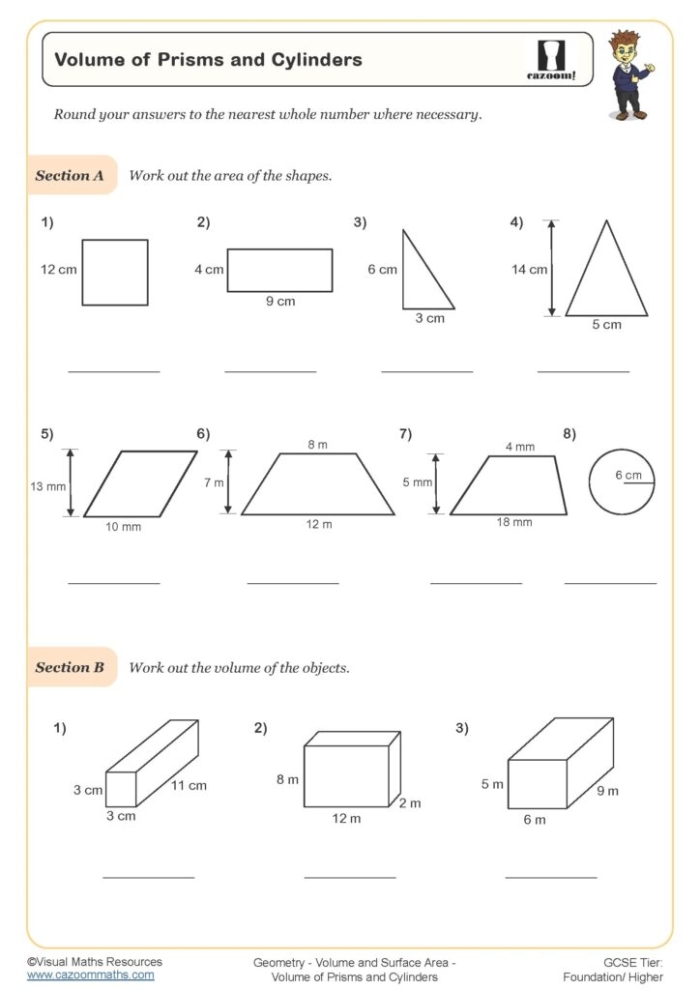
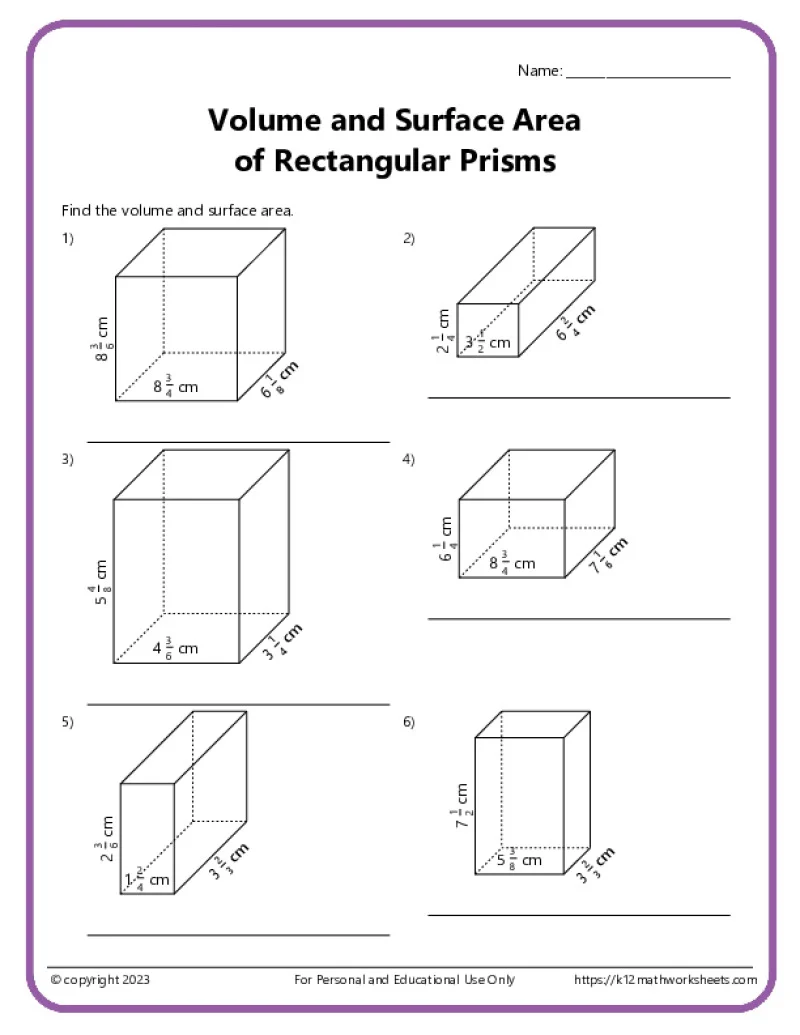
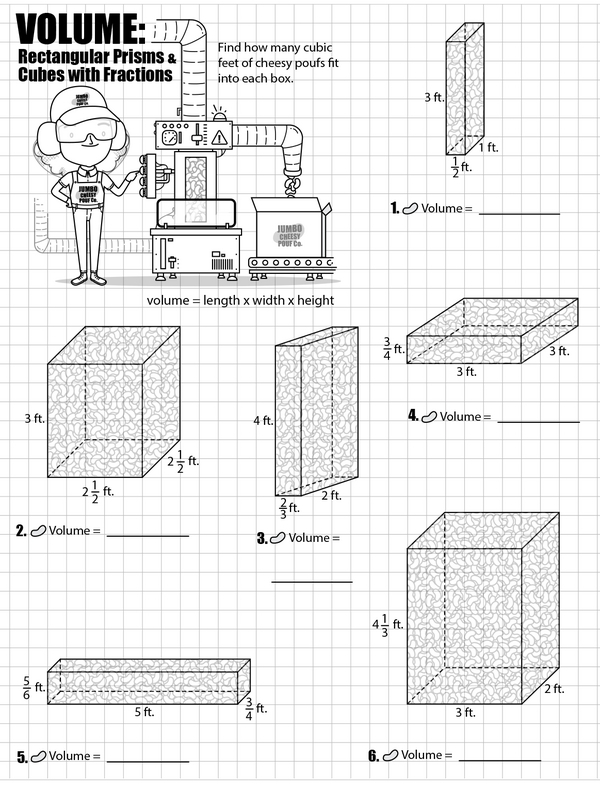
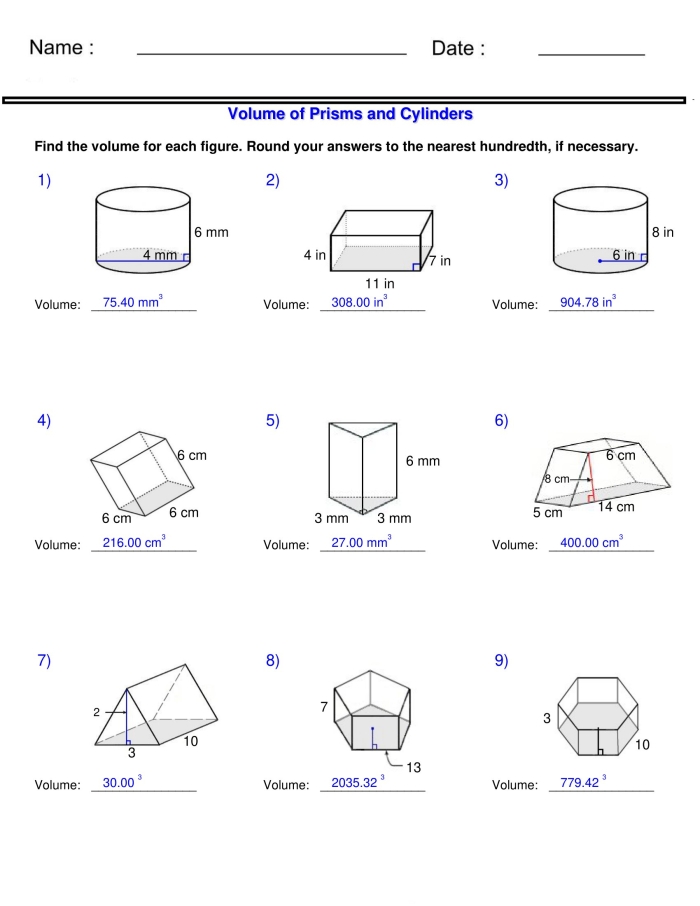
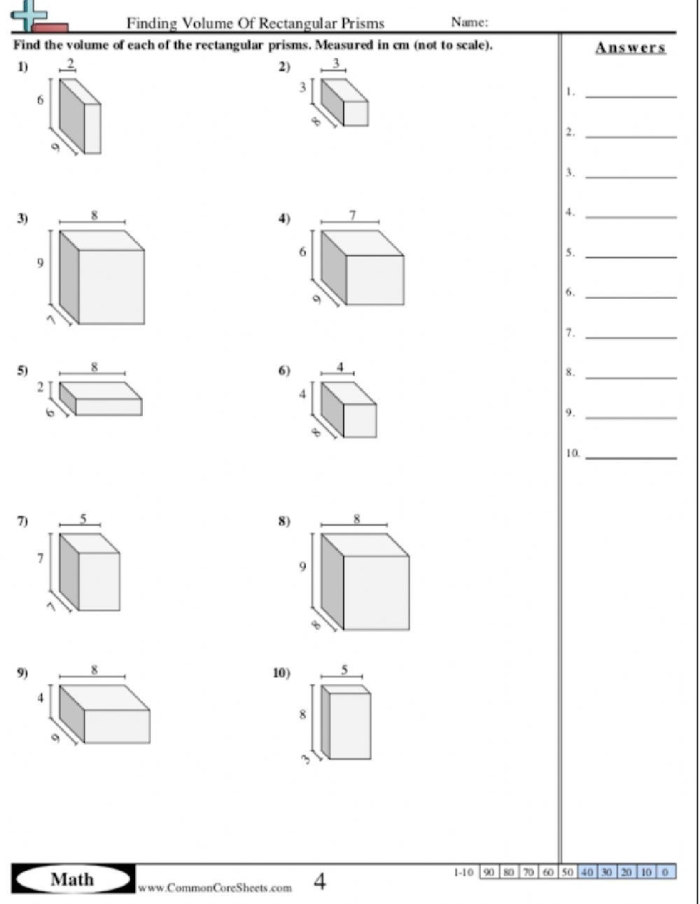
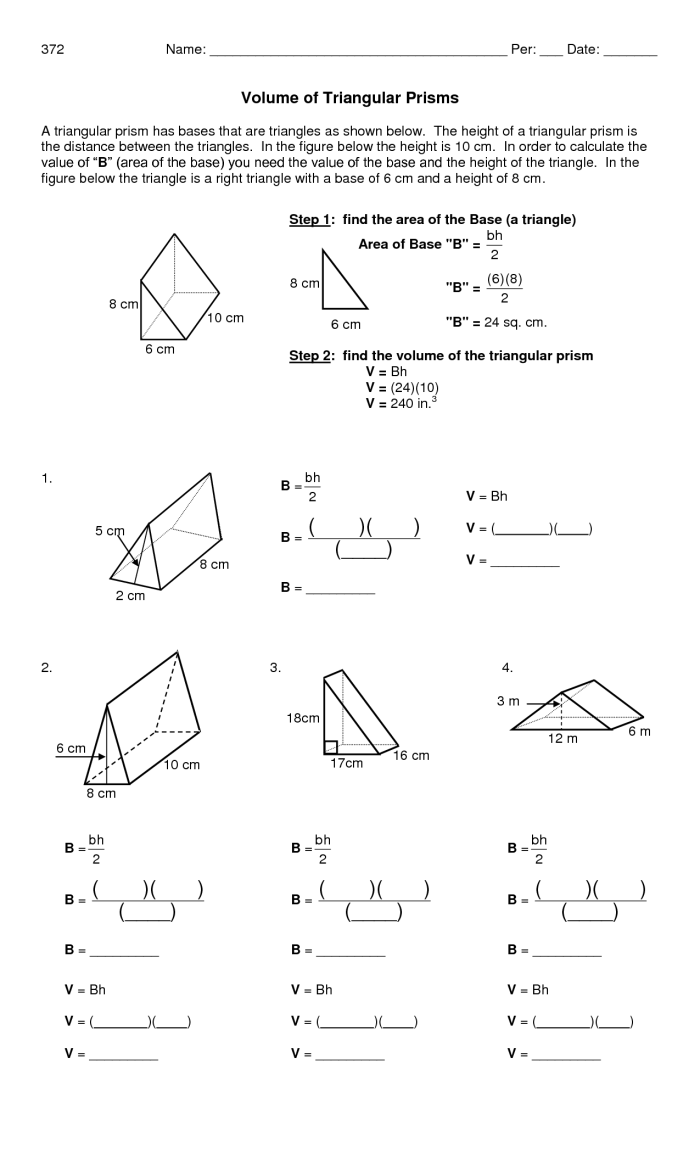
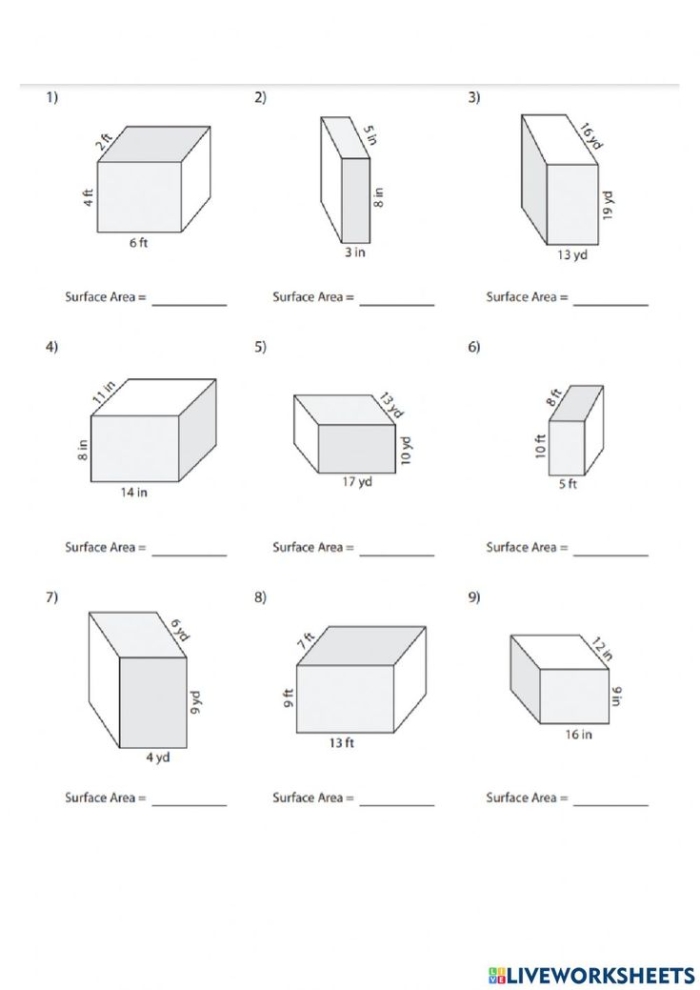
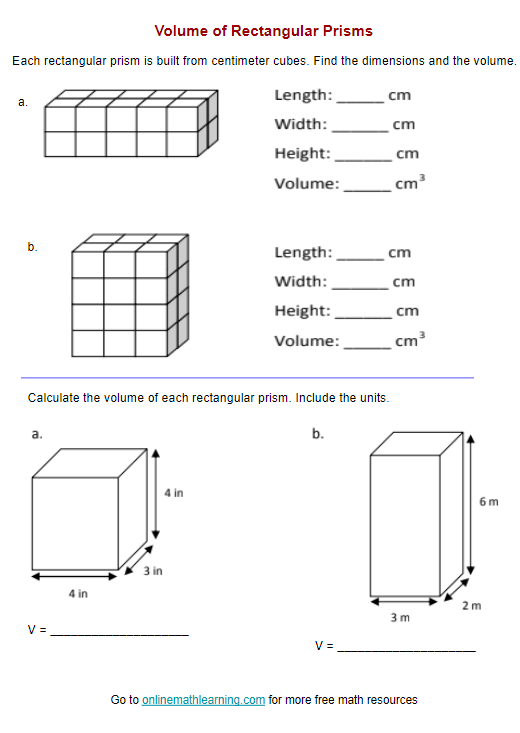
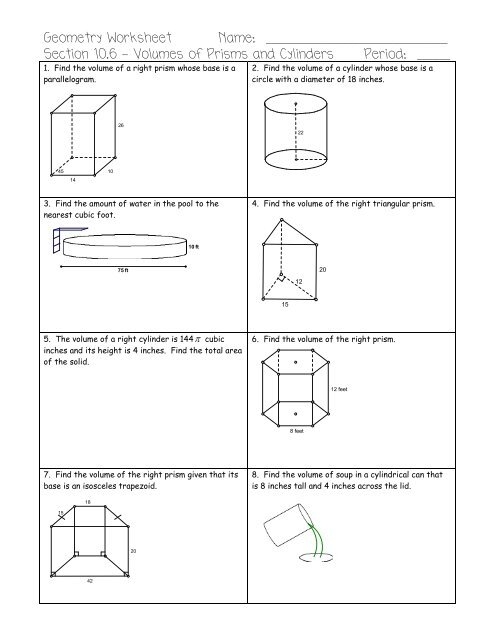
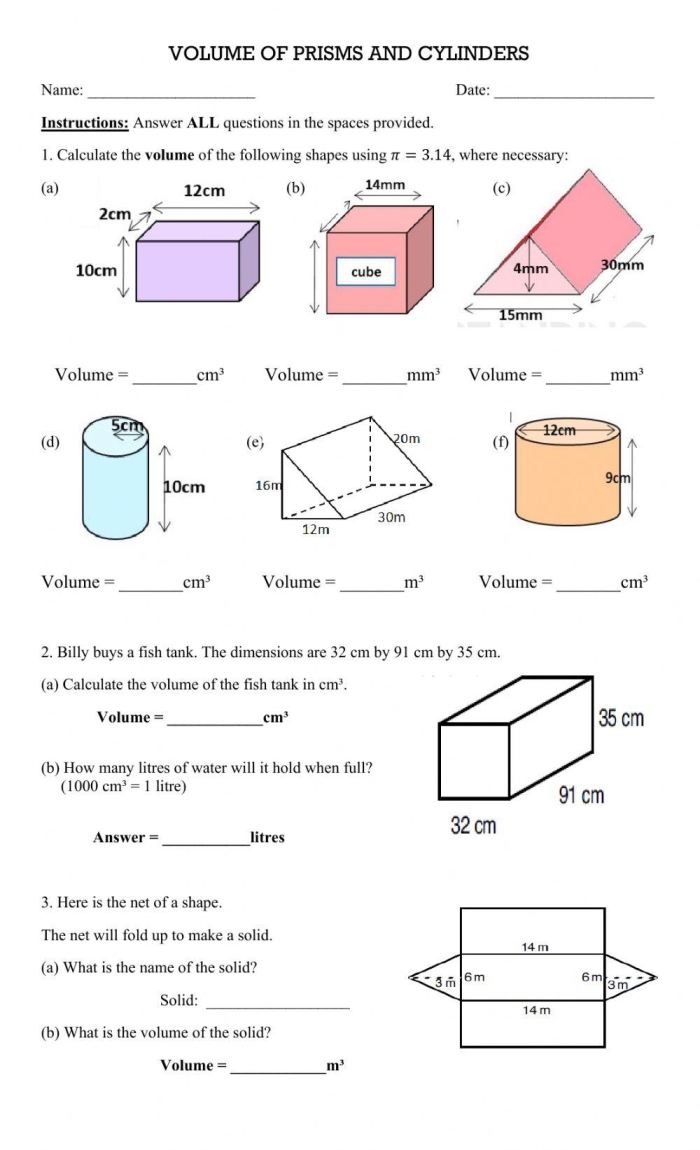
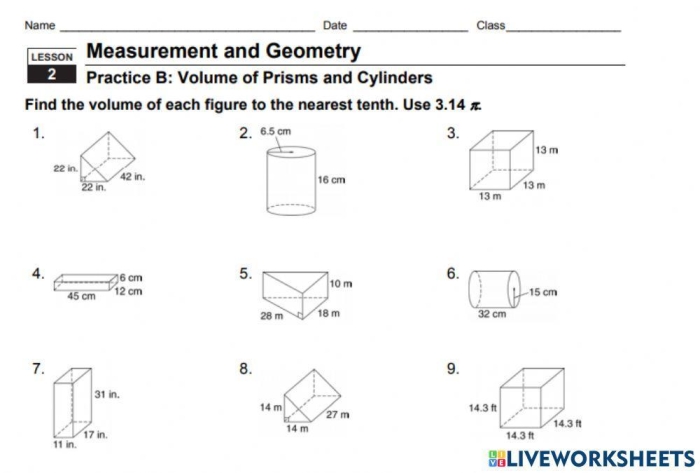
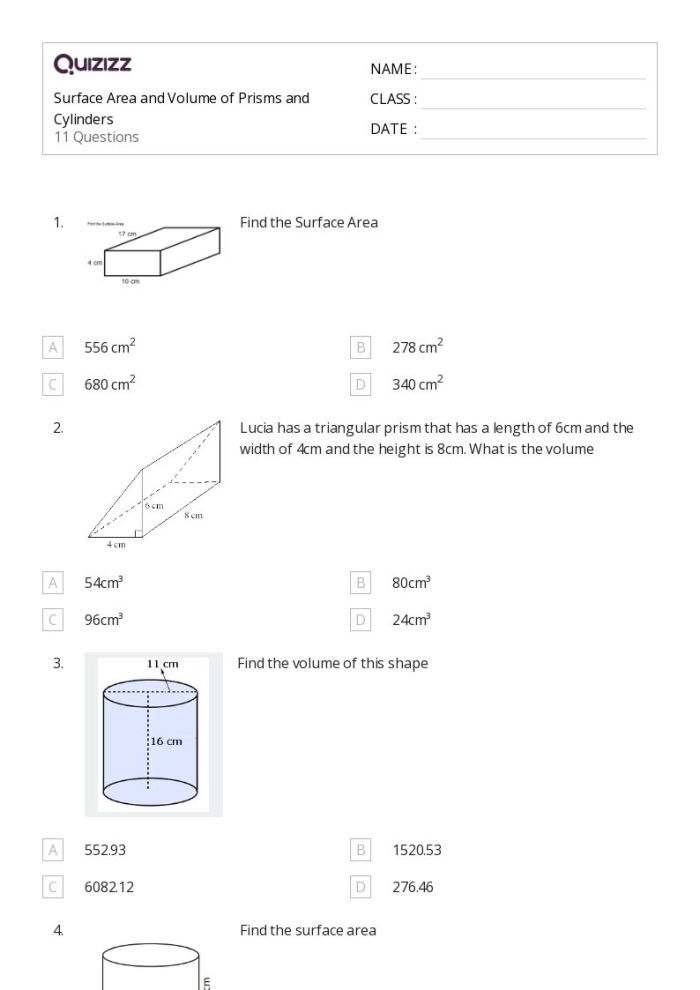
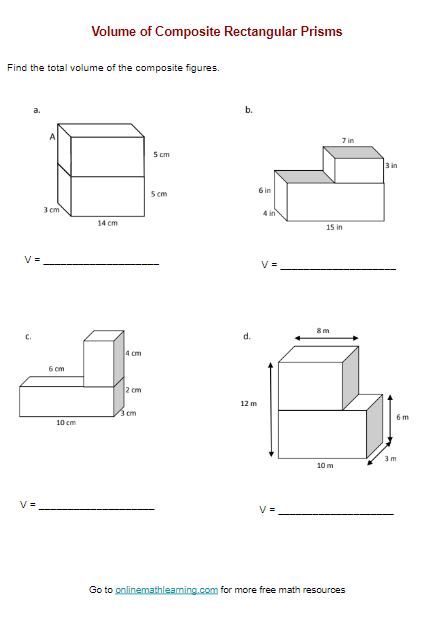
Understanding how to find the volume of a rectangular prism is a fundamental skill in sixth-grade geometry, especially when dealing with fractional side lengths. Many students find this concept challenging, yet it’s crucial for building a solid foundation in math. Utilizing a sixth-grade geometry worksheet can be an effective way to reinforce these concepts.
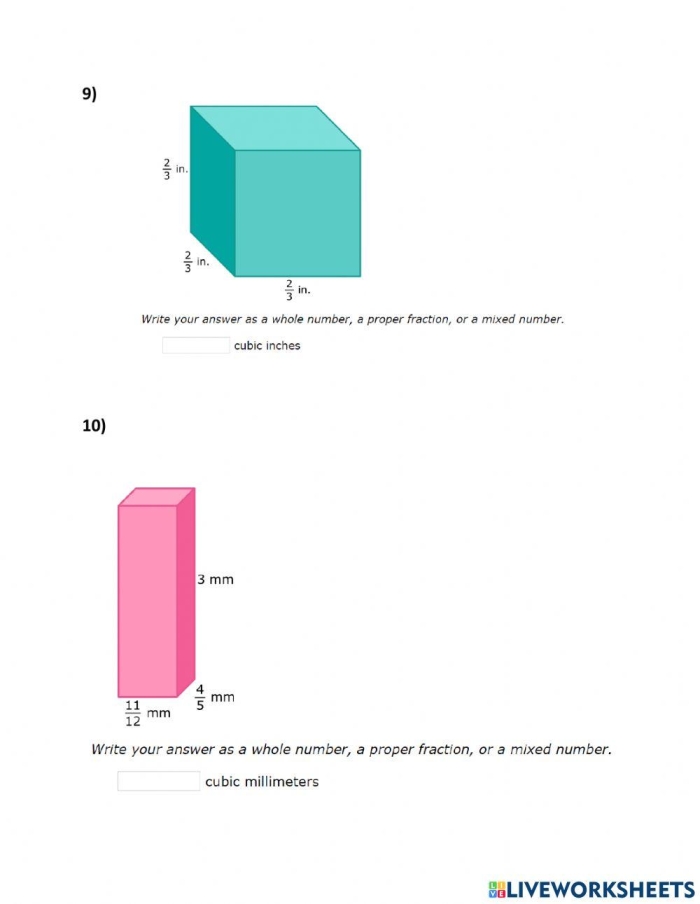
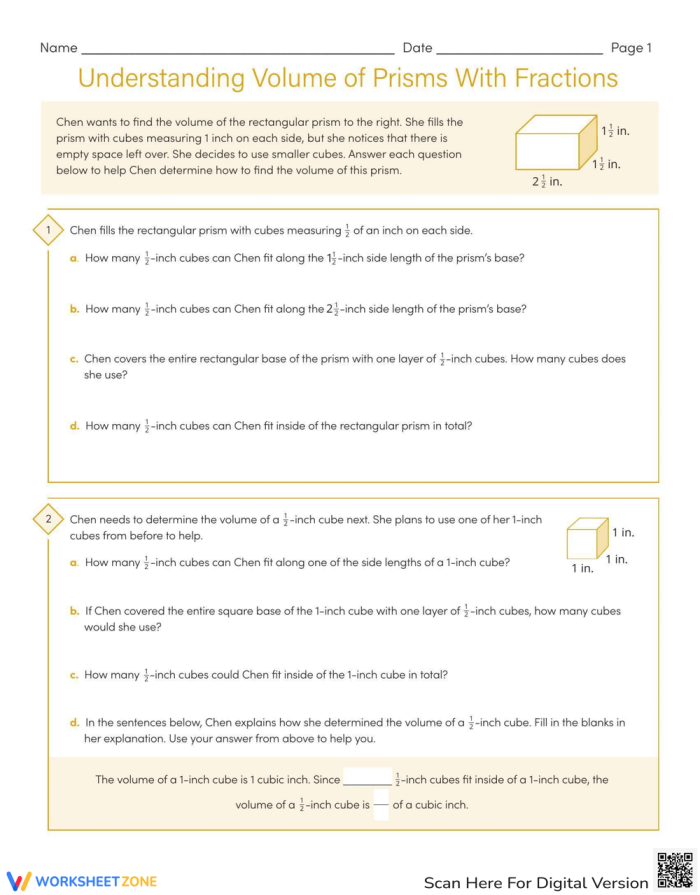
When calculating the volume of a rectangular prism, students can use the formula: Volume = length × width × height. This formula remains the same regardless of whether the dimensions are whole numbers or fractions. For instance, if a prism has a length of 3/4, a width of 1/2, and a height of 2/3, students can practice multiplying these fractions to find the volume. This exercise not only helps in mastering multiplication of fractions but also deepens their understanding of volume.
One practical example that can be included in the worksheet is a real-world scenario where students calculate the volume of a box. Imagine a box that measures 3/4 feet long, 1/2 feet wide, and 2/3 feet high. By guiding students through the steps of finding the volume, they can visualize how this math applies outside the classroom. This approach emphasizes the relevance of geometry in daily life.
Moreover, worksheets like these can enhance engagement by including visual aids or manipulatives. Drawing the prisms or using blocks can help students better grasp the concept of volume. By completing these exercises, they will solidify their understanding of calculating volumes with fractions and gain confidence in their math skills.
For additional practice, educators can also incorporate related topics such as writing equivalent expressions or using integers in real-world word problems. These subjects complement the understanding of volume and fractions, ensuring students develop a well-rounded mathematical skill set. Explore more on writing equivalent expressions and using integers in real-world problems for further enrichment.
Worksheet Practice Section