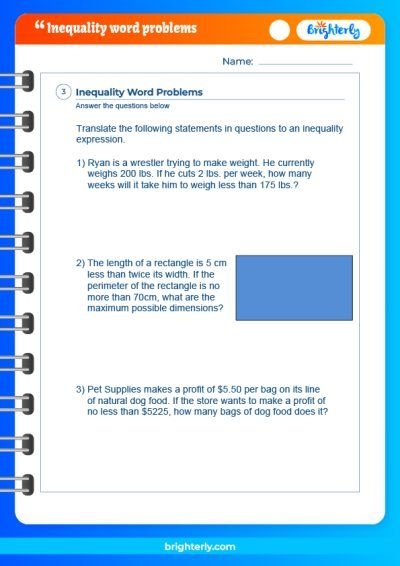
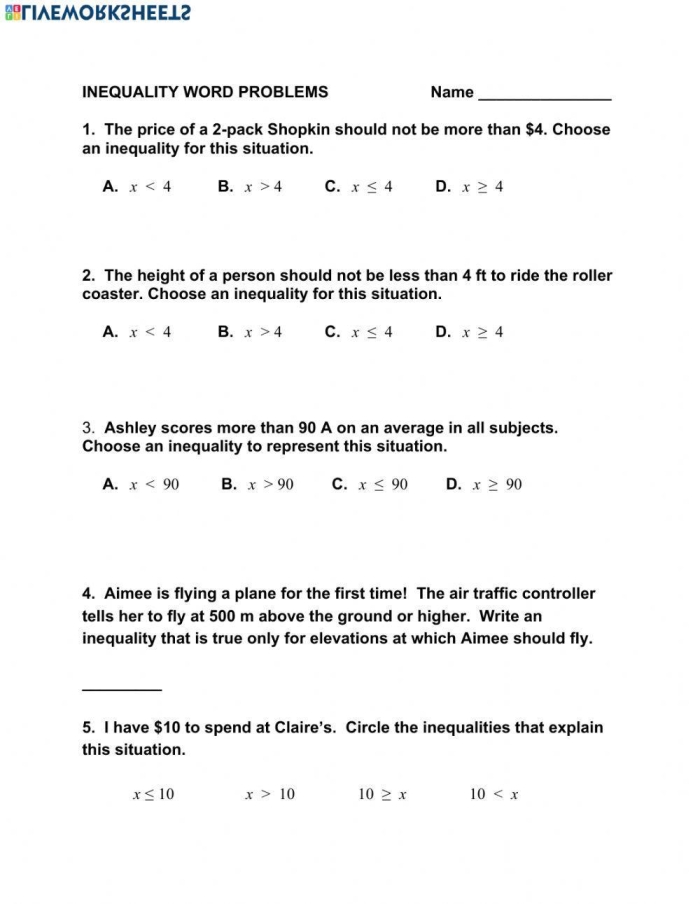
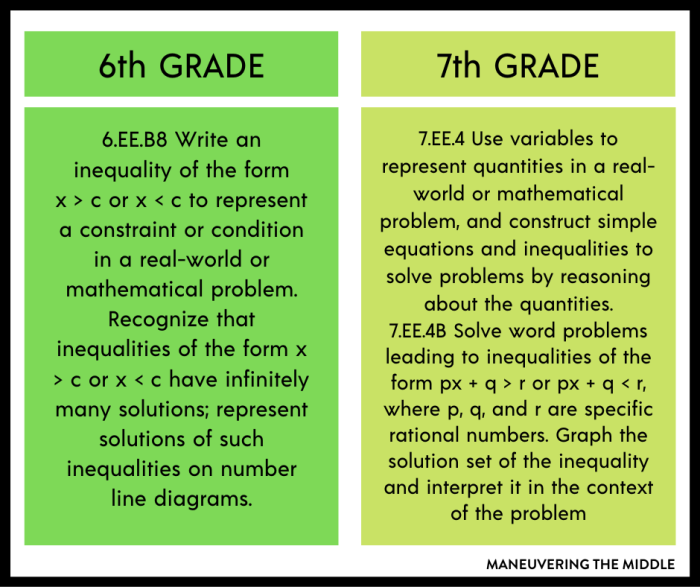
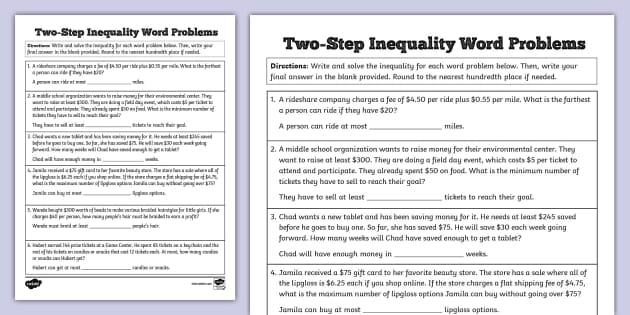
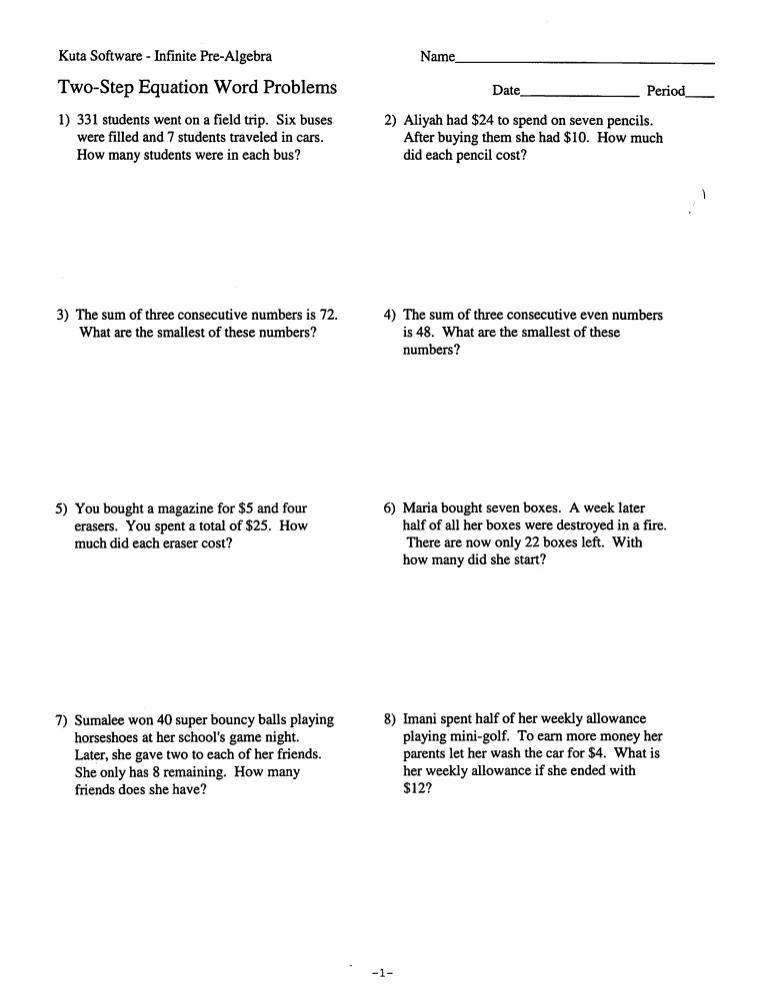
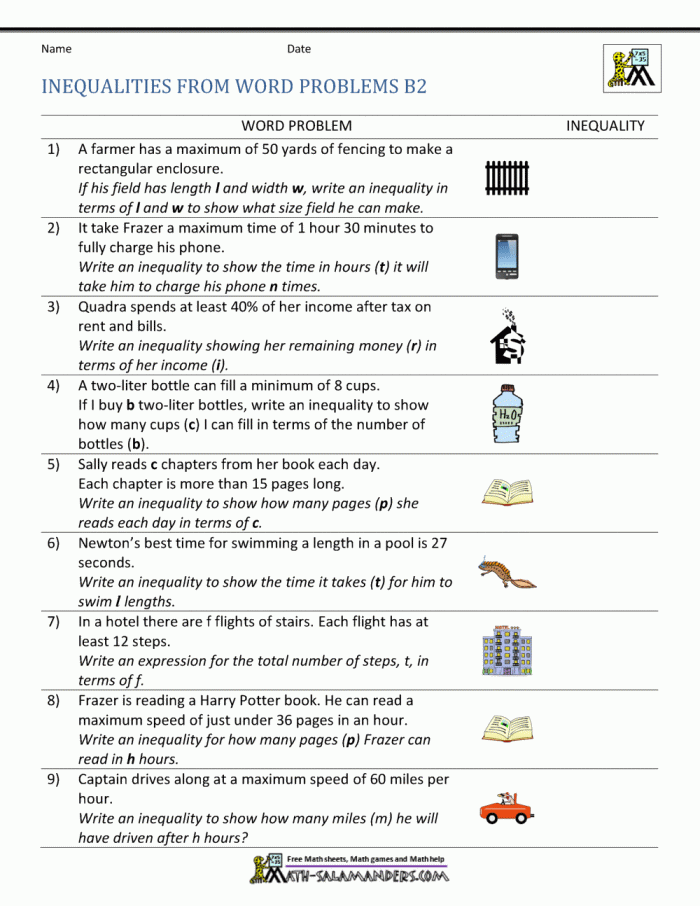
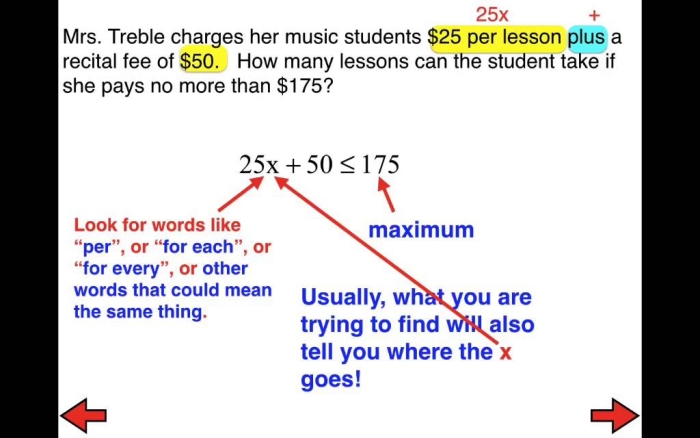
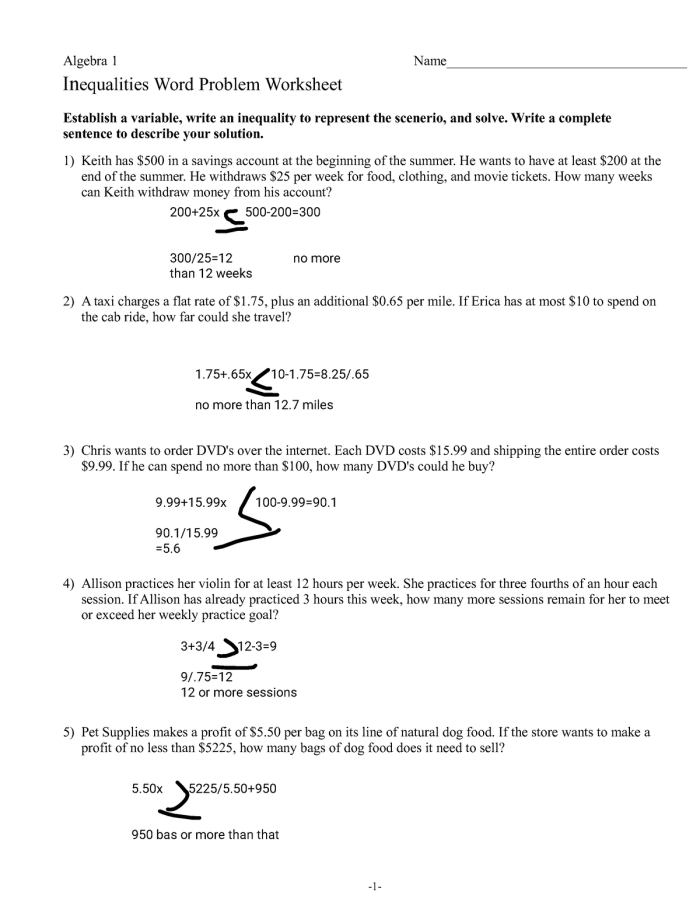
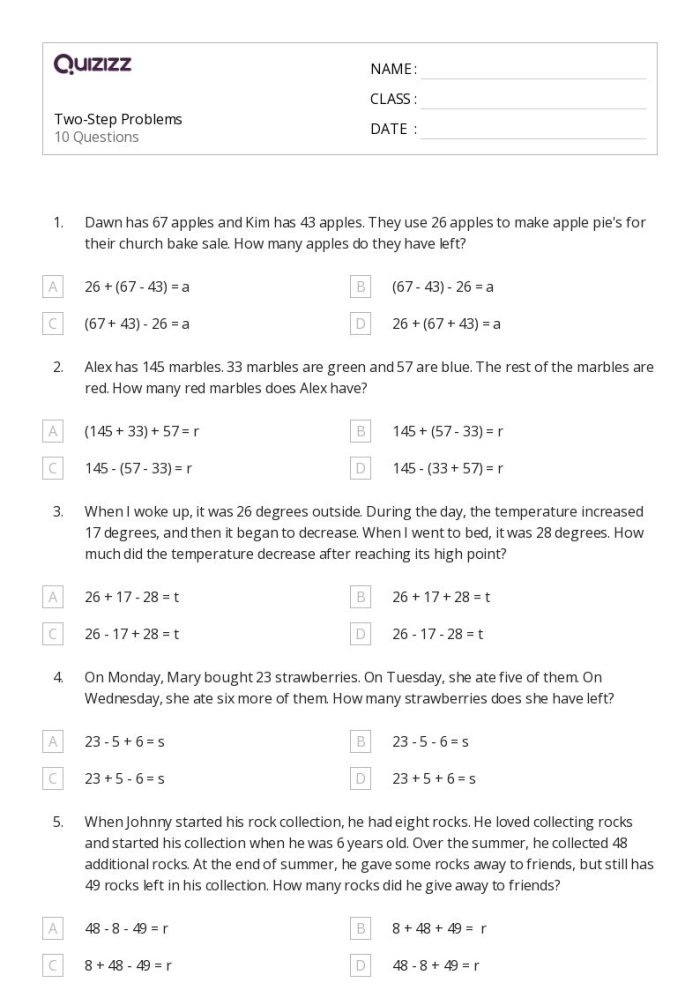
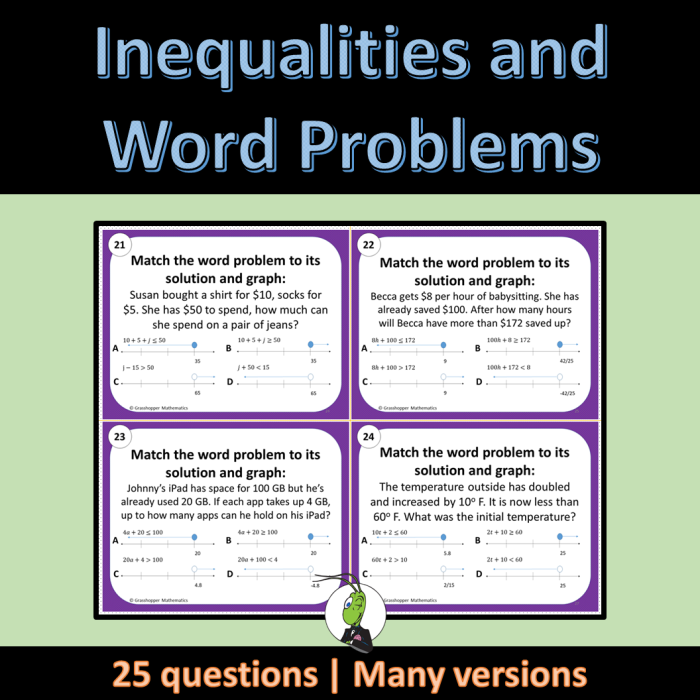
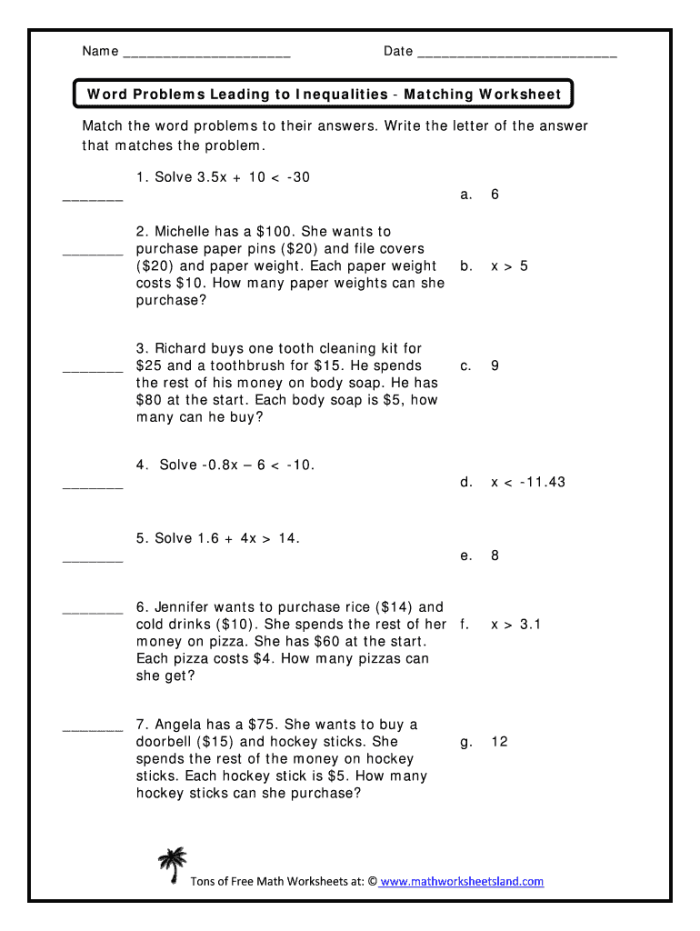
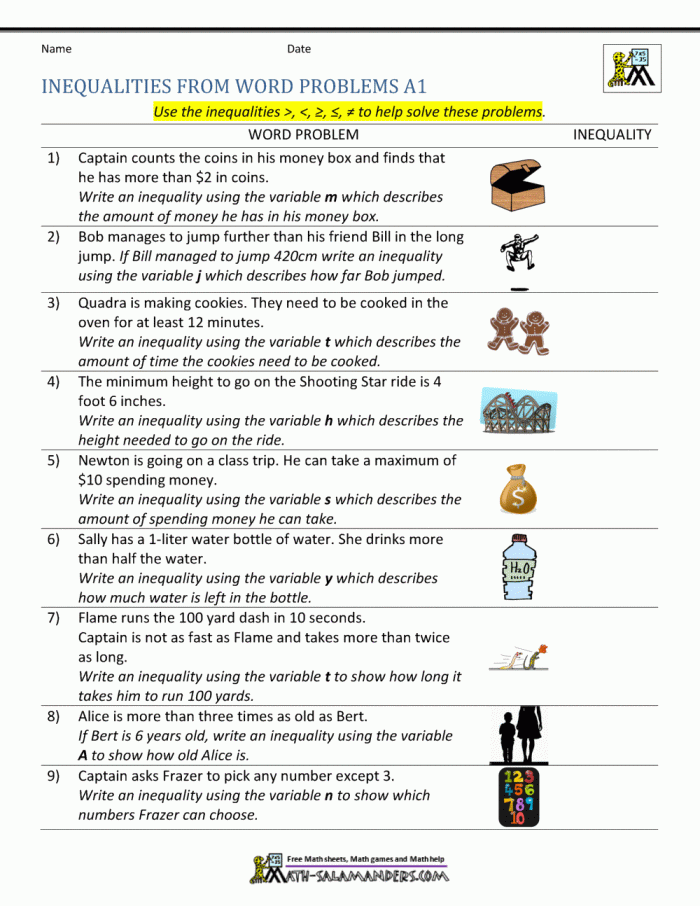
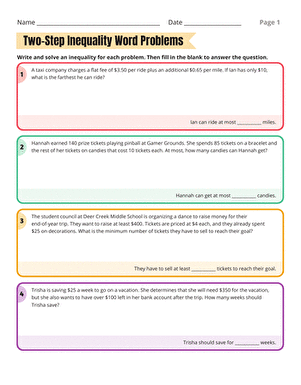
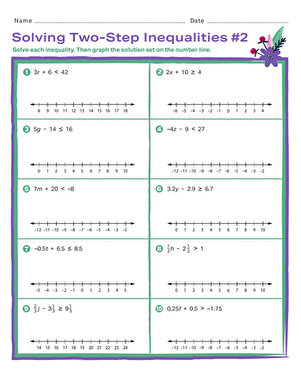
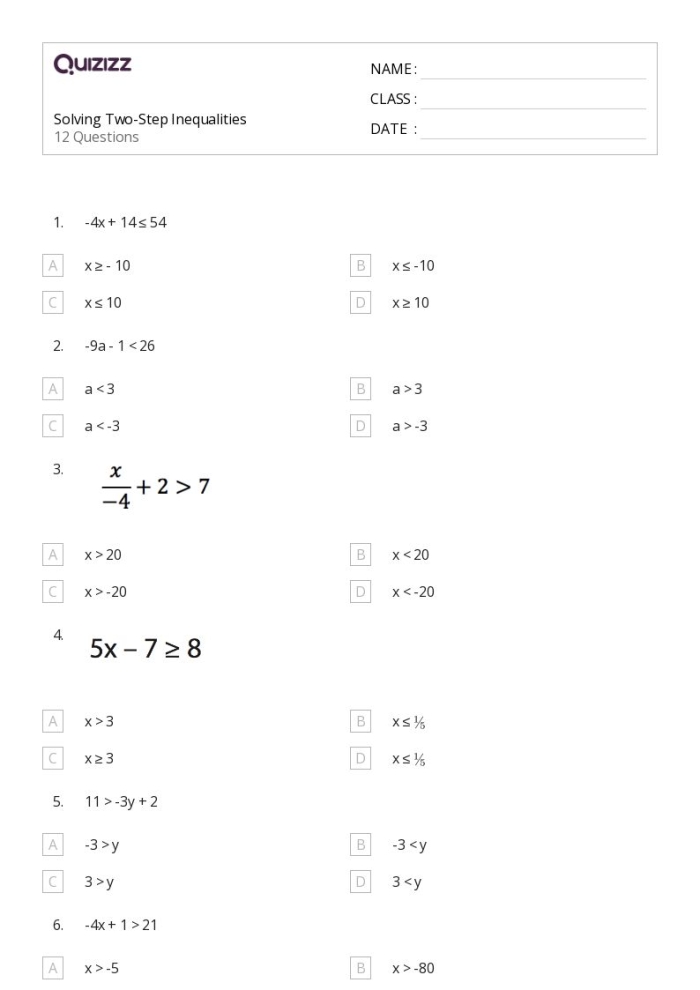
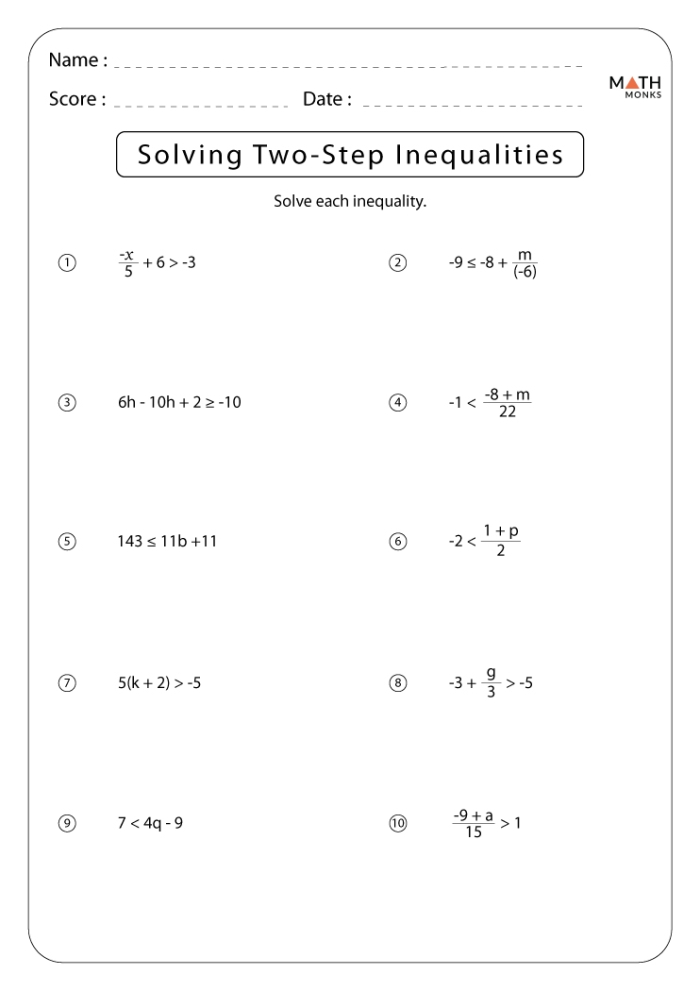
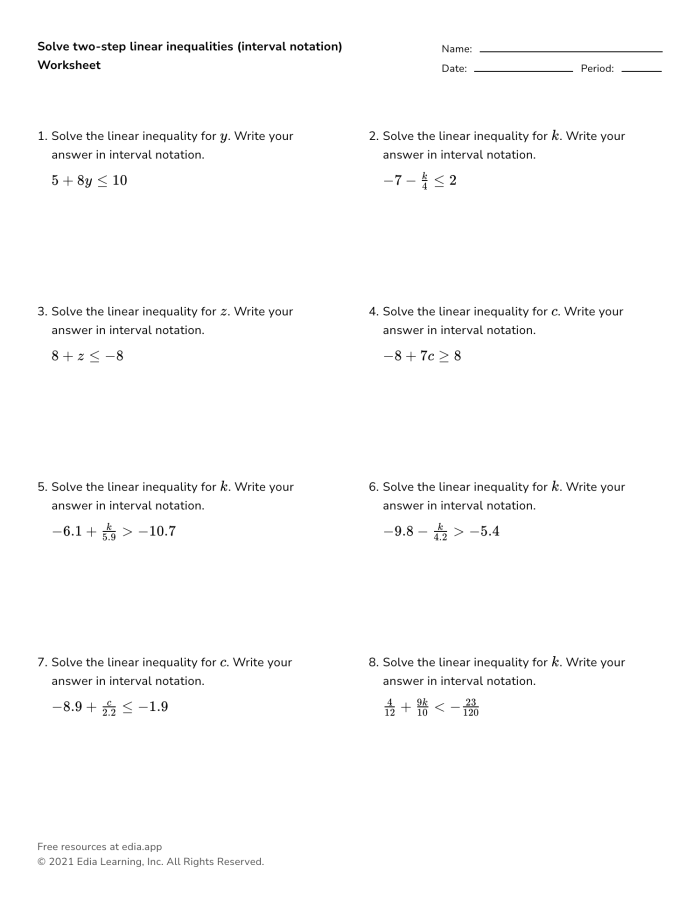
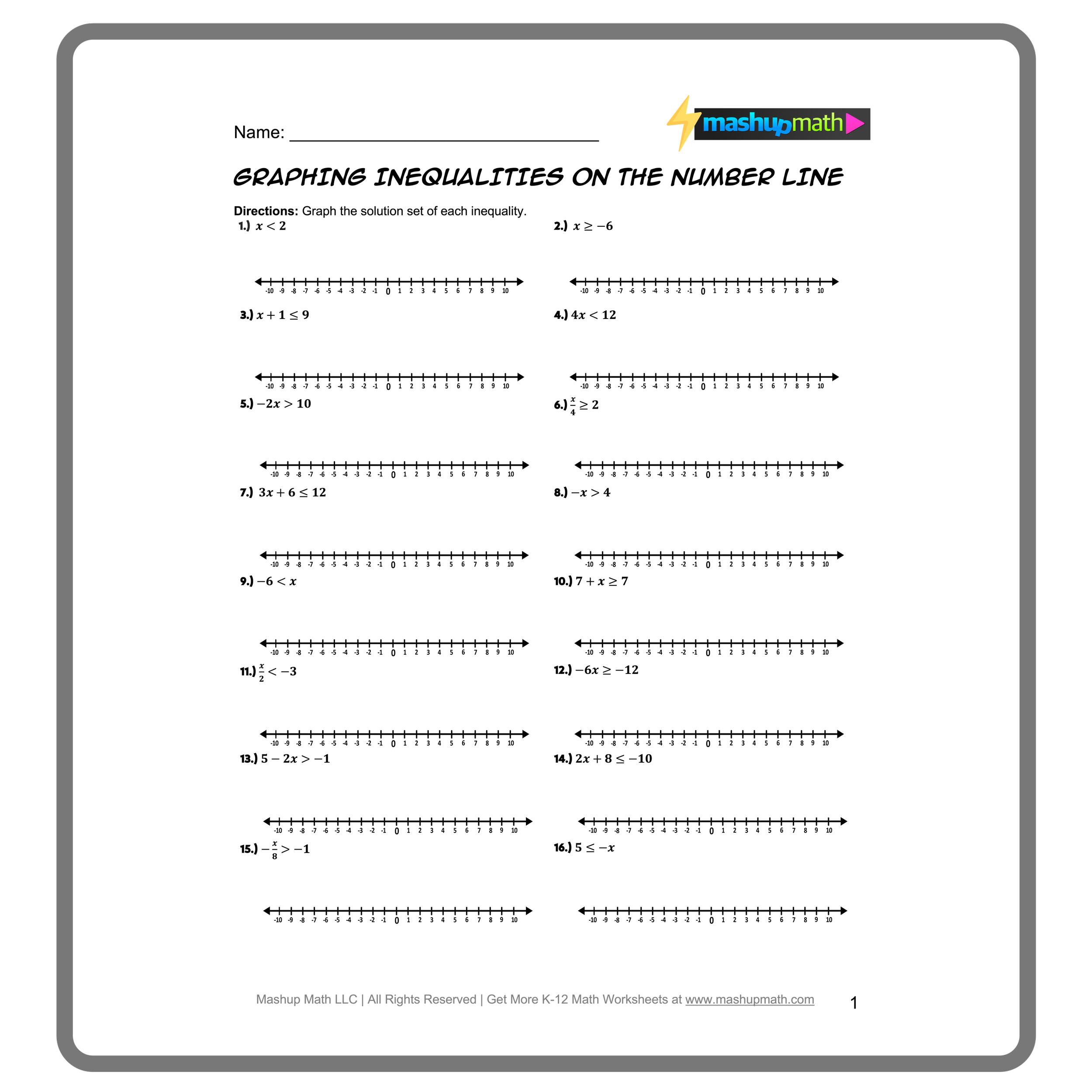
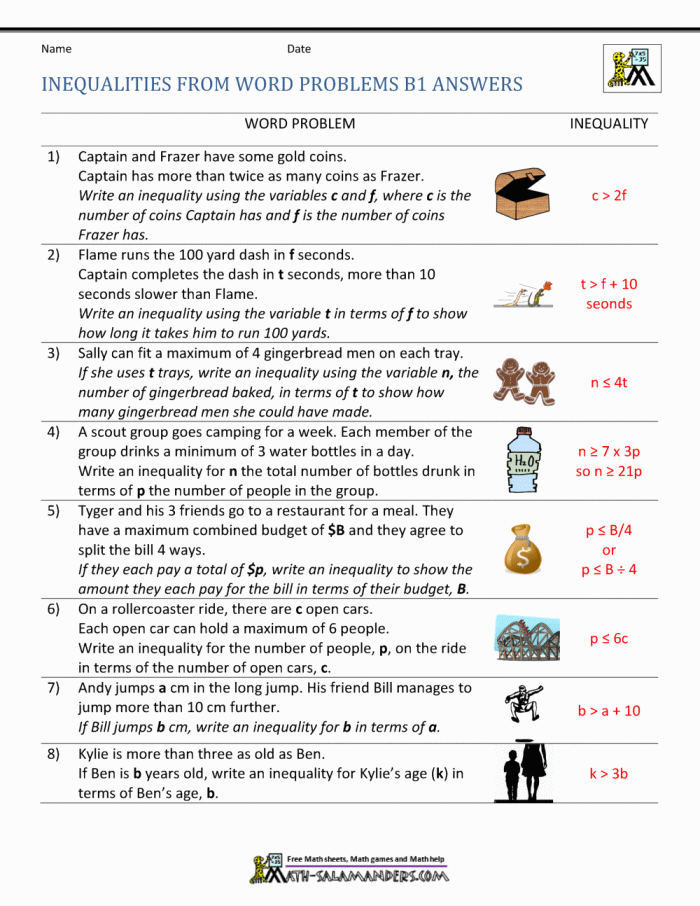
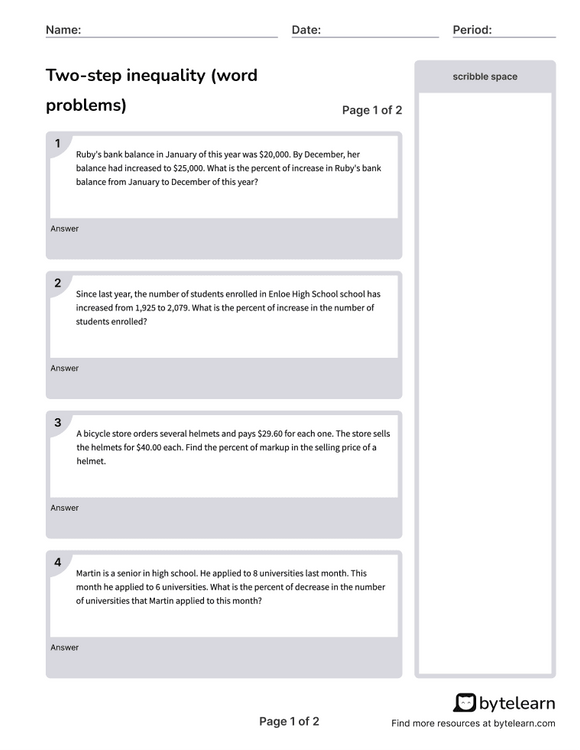
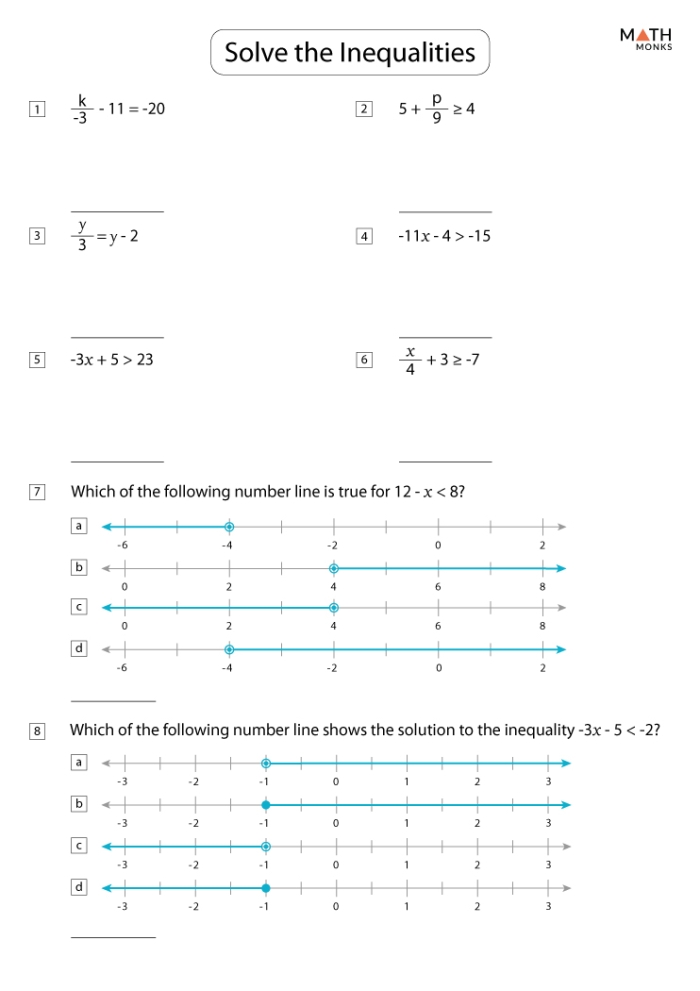
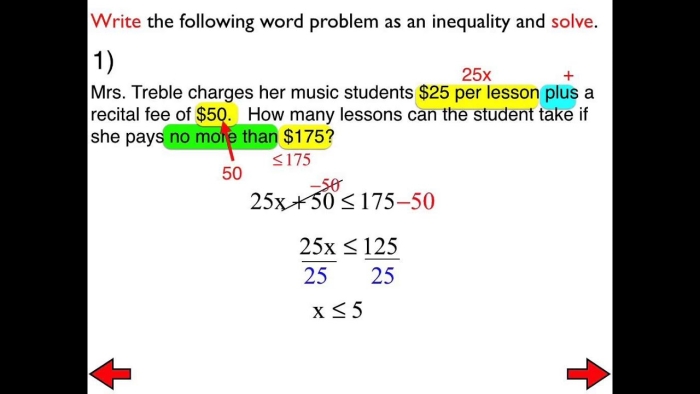
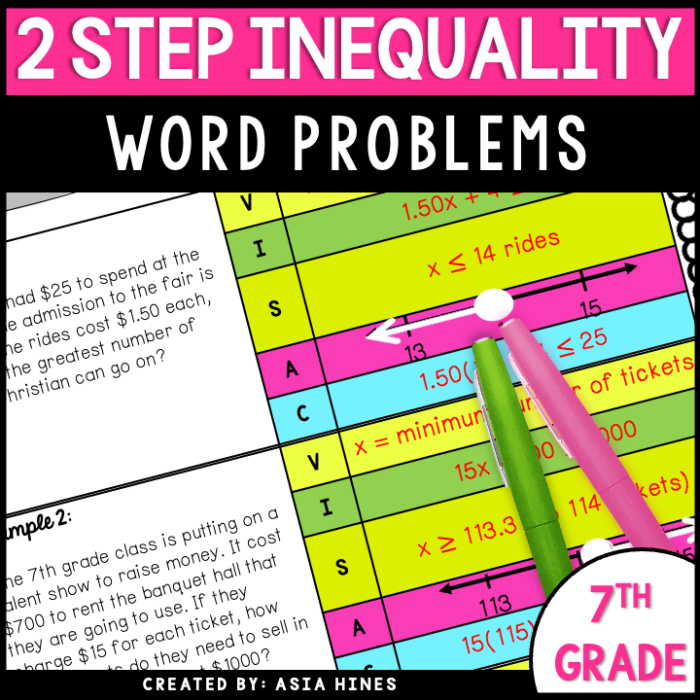
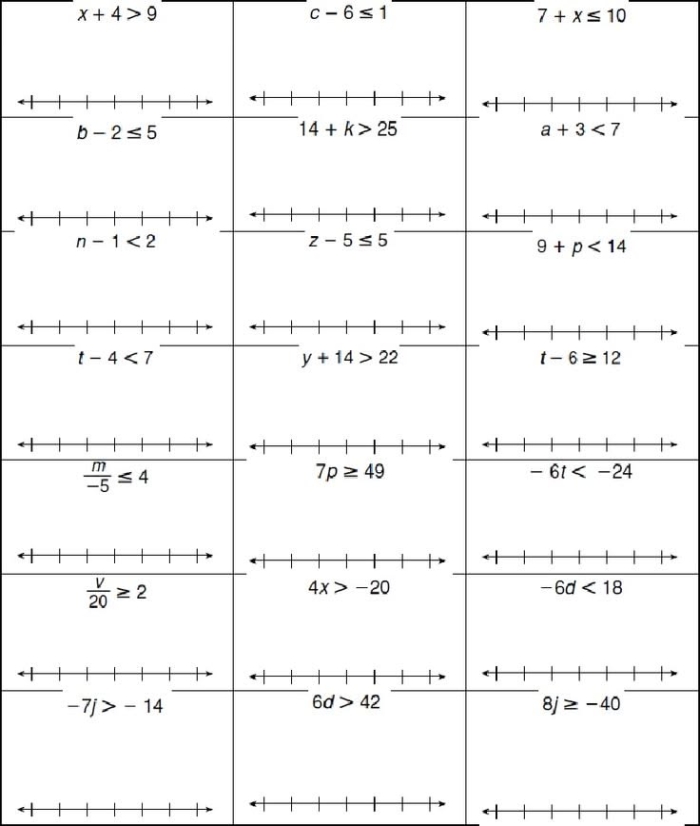
Understanding inequalities is a crucial skill for seventh-grade students as they navigate the world of algebra. One effective way to engage students is through real-world contexts that make these concepts relatable. Worksheets that focus on two-step inequality word problems can bridge the gap between abstract math and everyday situations. By employing these worksheets, teachers can provide students with the opportunity to practice and refine their skills in a meaningful way.
Consider a scenario where students must determine the minimum amount of money they need to save for a concert ticket. They might encounter a problem like, “If a concert ticket costs $50 and you already have $20, how much more do you need to save?” This question can be framed as a two-step inequality: x + 20 ≥ 50. Solving this type of problem teaches students not only how to manipulate inequalities but also how to apply them in practical situations.
Incorporating practical examples into math lessons helps to enhance student engagement. When students see the relevance of their studies, they are more likely to participate actively. Worksheets that present scenarios they can relate to—like budgeting for a new video game or planning a party—can make a significant difference in their learning experience. These real-world applications reinforce the importance of math in daily life and encourage critical thinking.
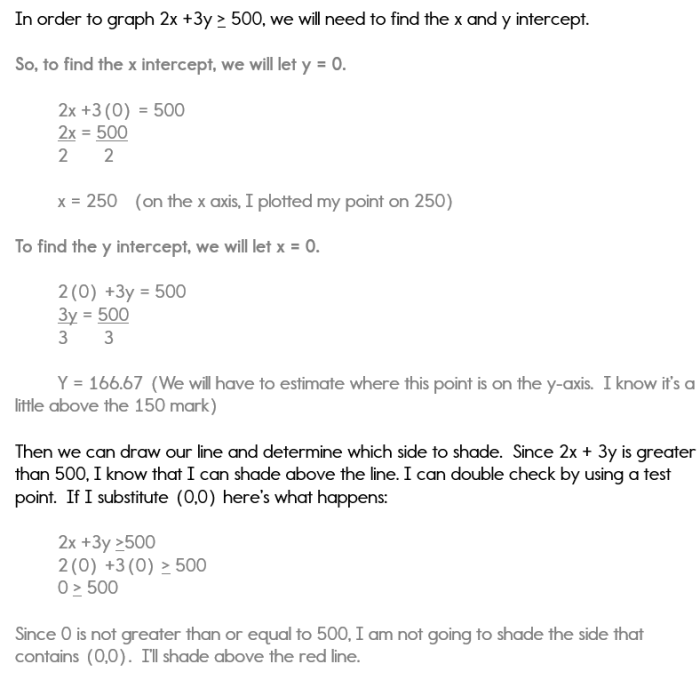
Furthermore, integrating these problems with other concepts, such as finding the constant of proportionality from graphs or exploring angle relationships, can provide a comprehensive learning experience. For instance, students may benefit from activities that combine inequalities with graphing skills or even geometry-related tasks.
By utilizing printable two-step inequality word problems worksheets, educators can create a dynamic classroom environment where students develop their algebra skills while enjoying the learning process. The key is to present these problems in a way that feels relevant and engaging, promoting not only understanding but also a passion for mathematics.
Practice with These Worksheets