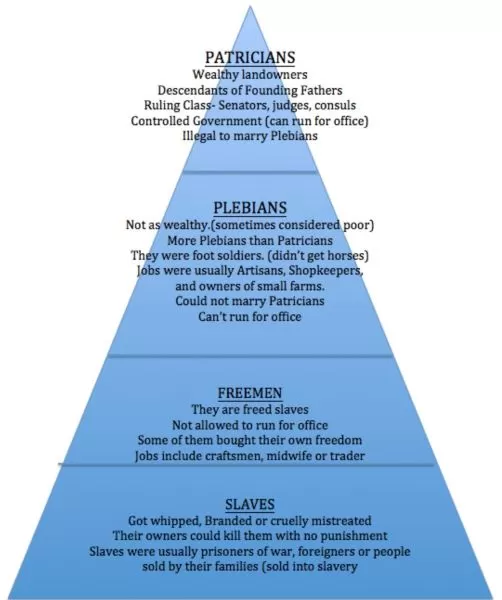
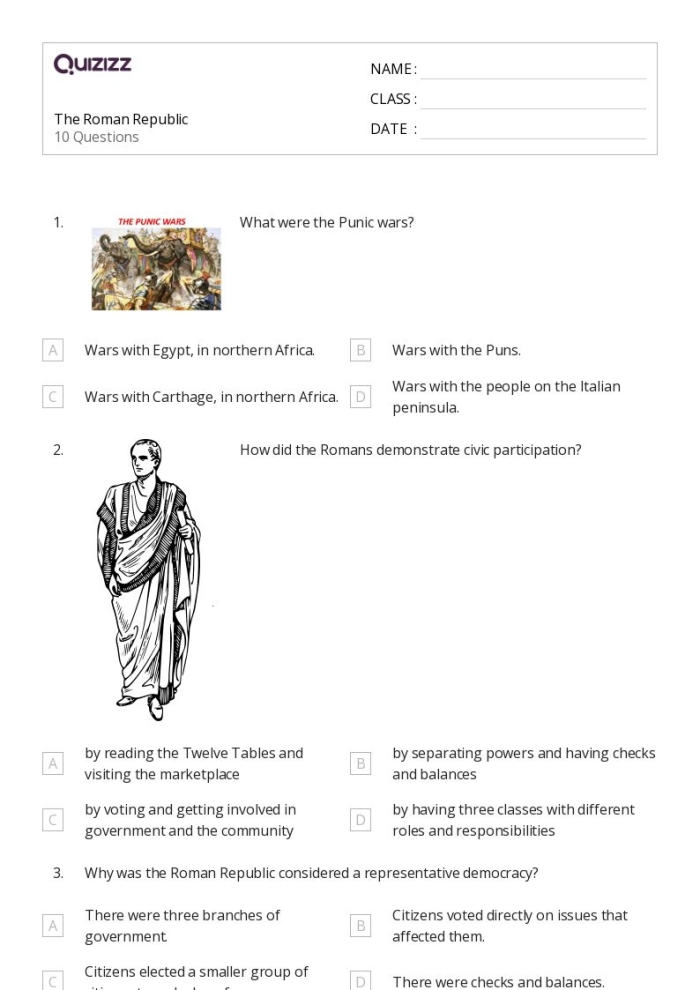
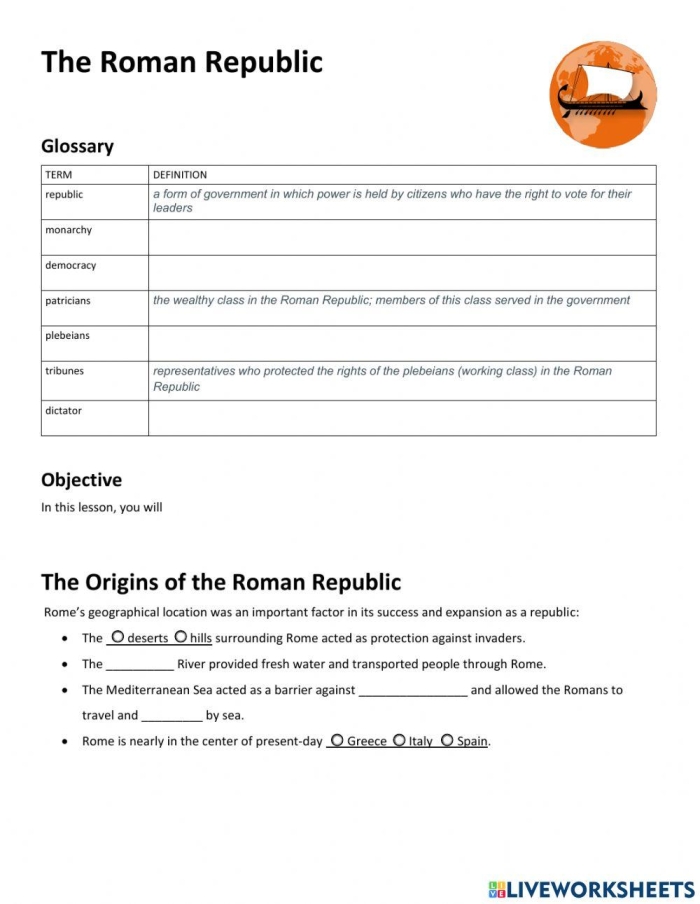
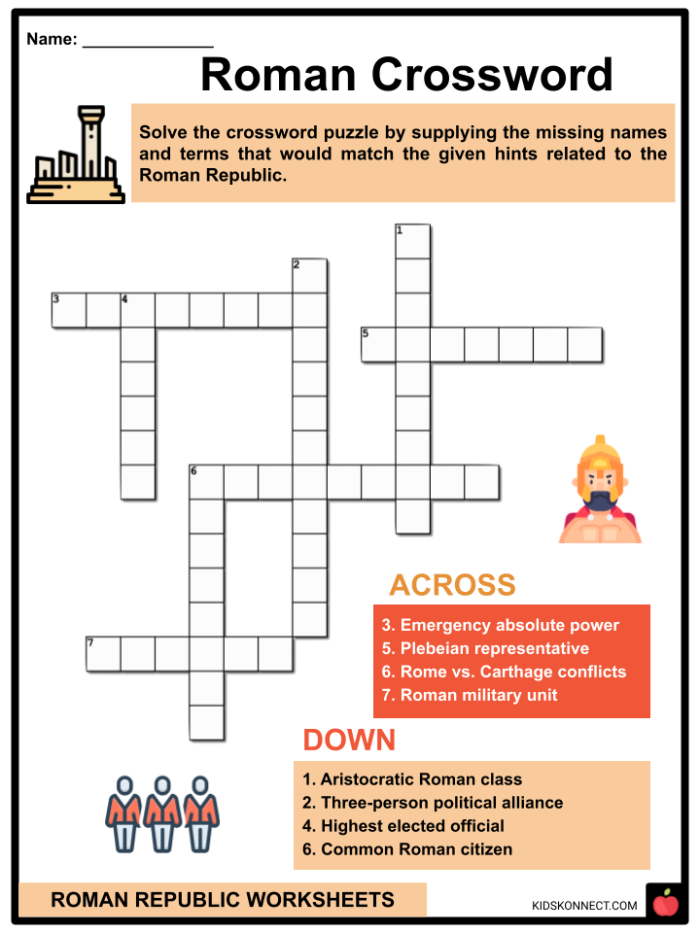
The Roman Republic was a pivotal era in ancient history, characterized by a unique structure that shaped its governance and society. Understanding this structure can provide valuable insights into the development of modern democracies. For sixth graders studying social studies, engaging with a worksheet focused on the Roman Republic can make these complex ideas more accessible and intriguing.
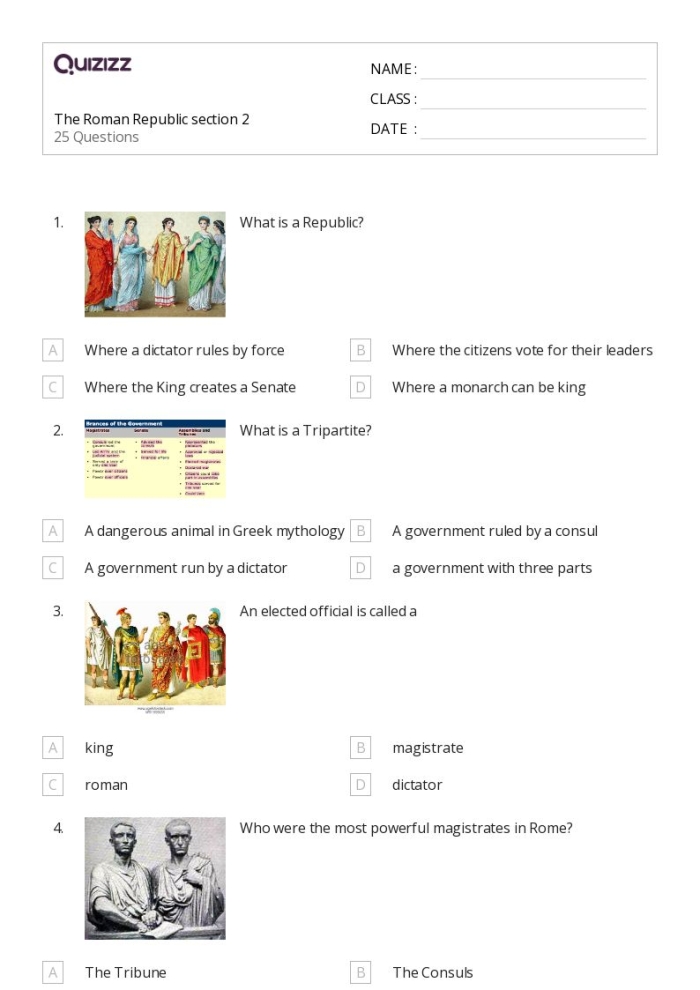
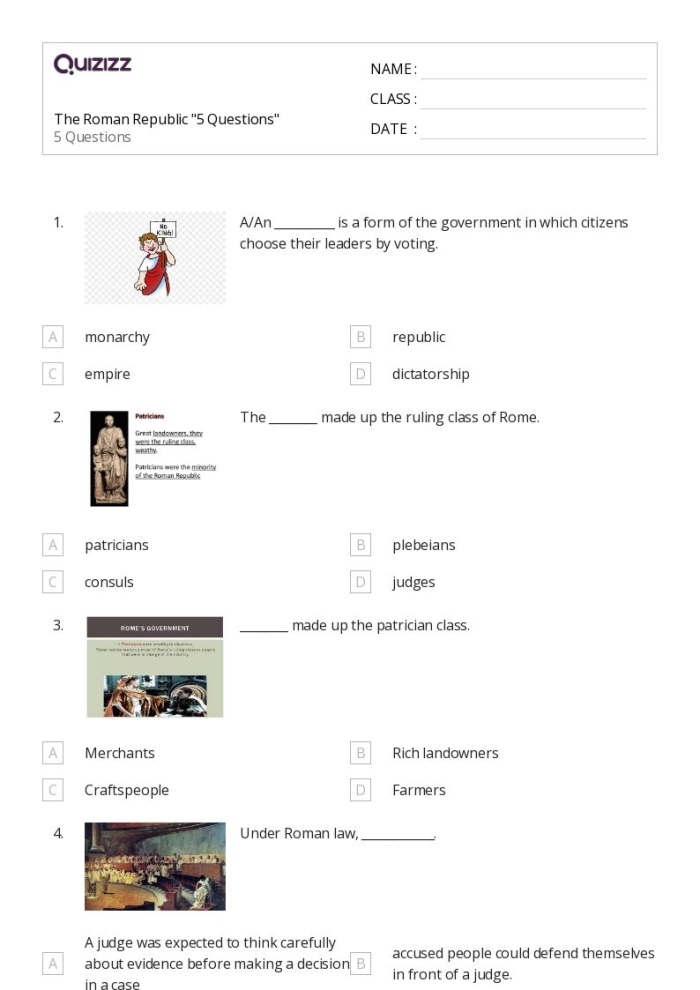
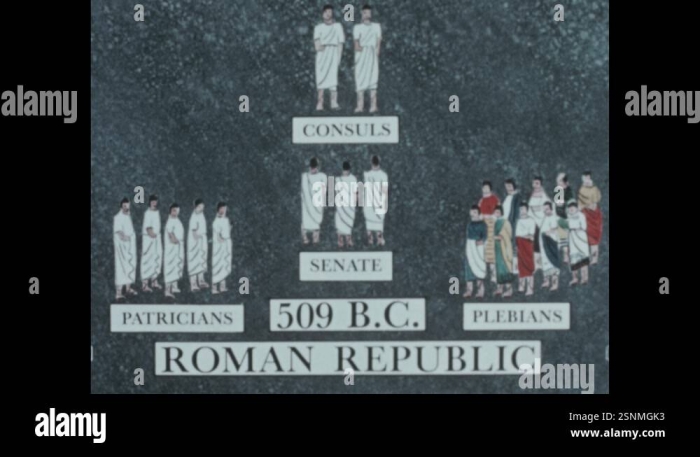
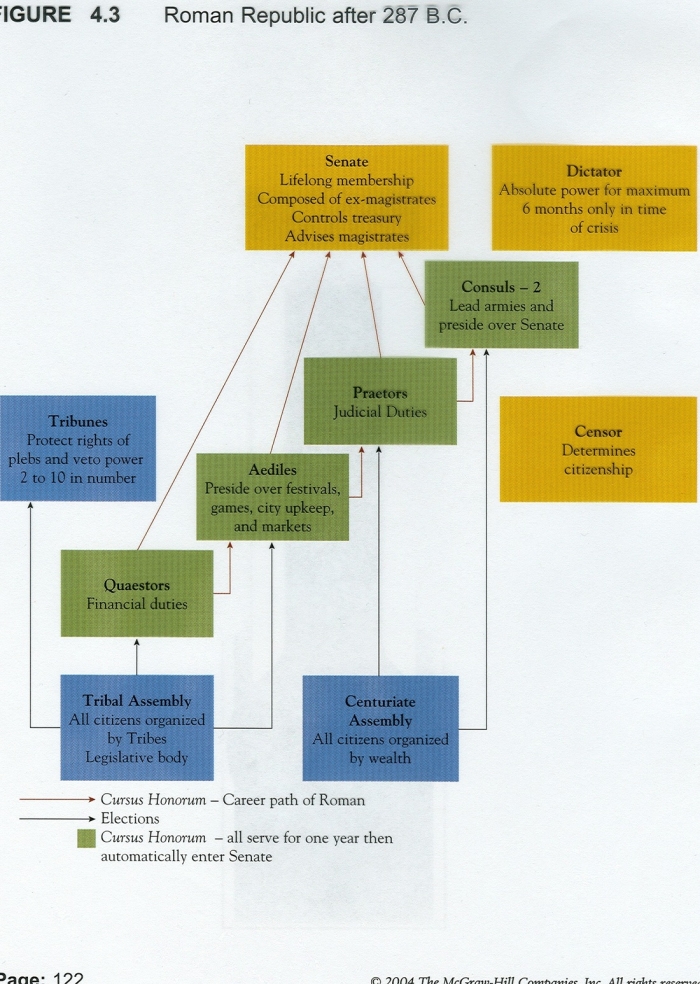
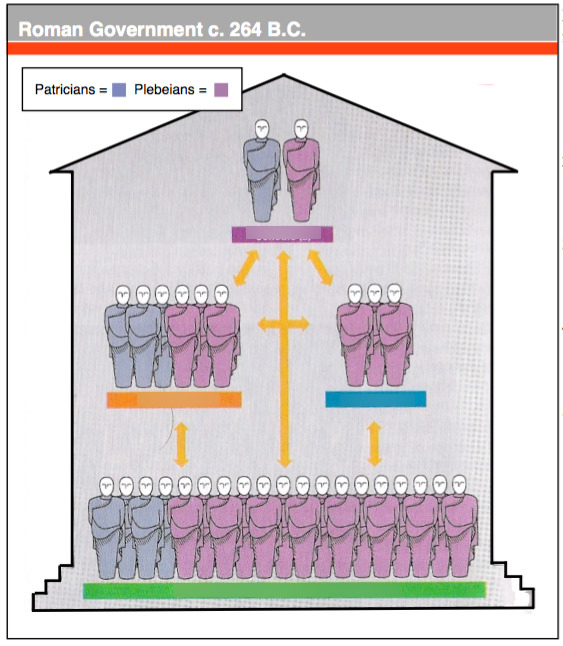
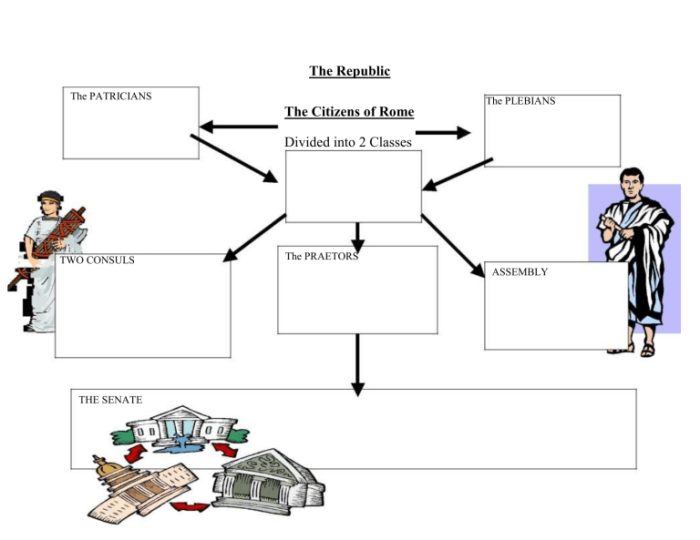
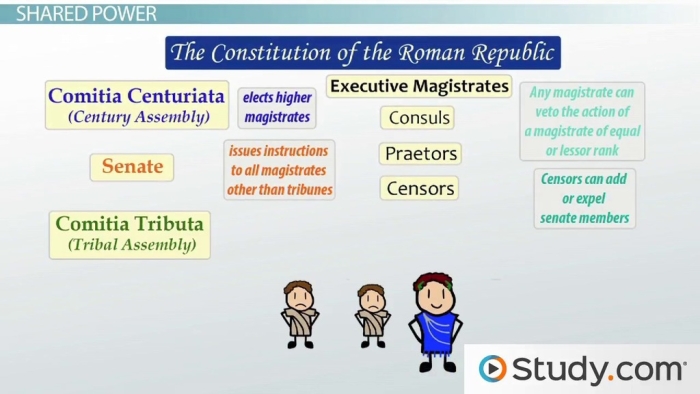
At its core, the Roman Republic was defined by a system of checks and balances among various governing bodies. The Senate, composed of wealthy and influential men, played a key role in shaping laws and policies. Meanwhile, the Consuls, elected leaders who served for one year, executed these laws and commanded the military. This separation of powers helped prevent any one individual from gaining too much control, a concept that resonates with contemporary democratic practices.
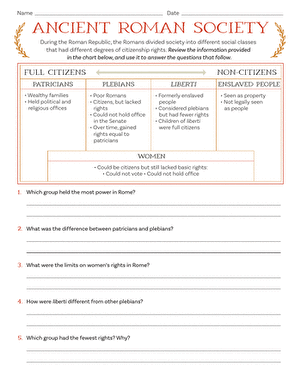
In addition to the Senate and Consuls, the Roman Republic featured the Assemblies, where citizens could vote on important issues. This was an early form of direct democracy, enabling the populace to have a voice in governance. By studying the roles of these different branches, students can appreciate the importance of civic engagement and representation, themes that are still relevant today.
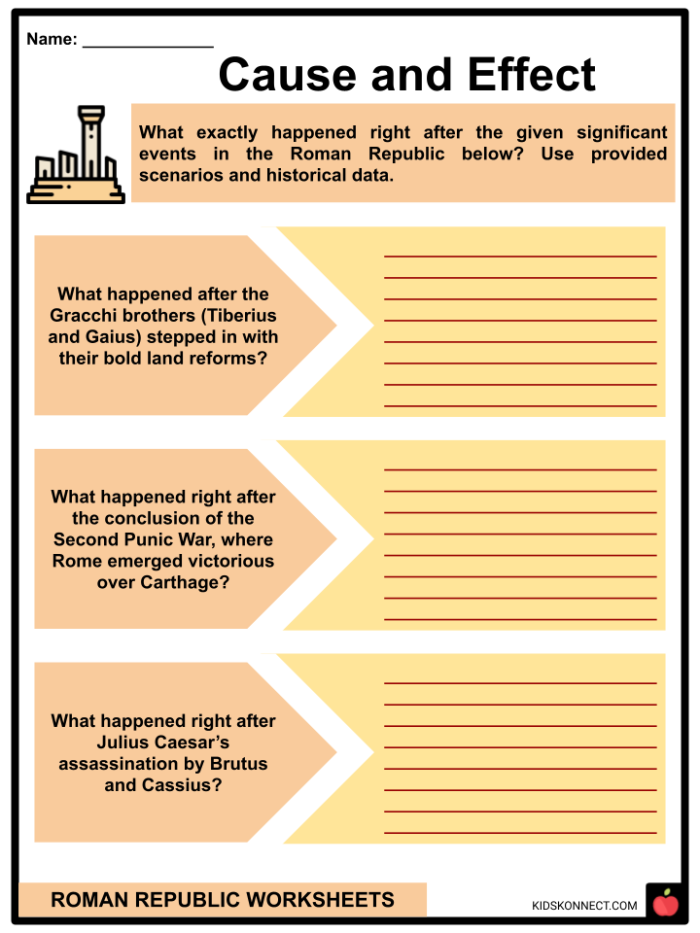
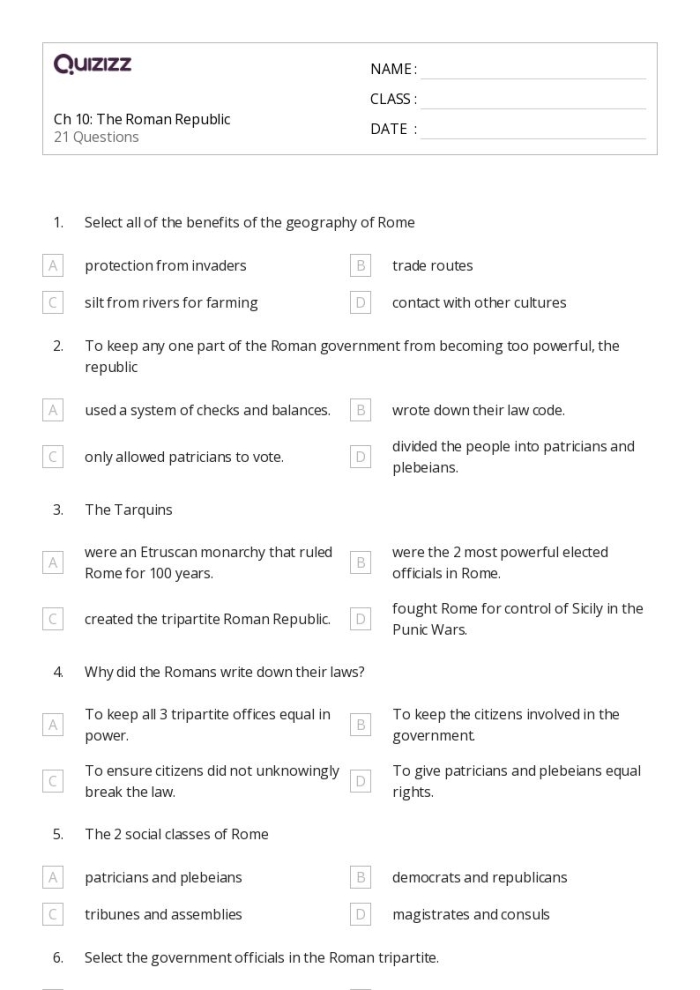
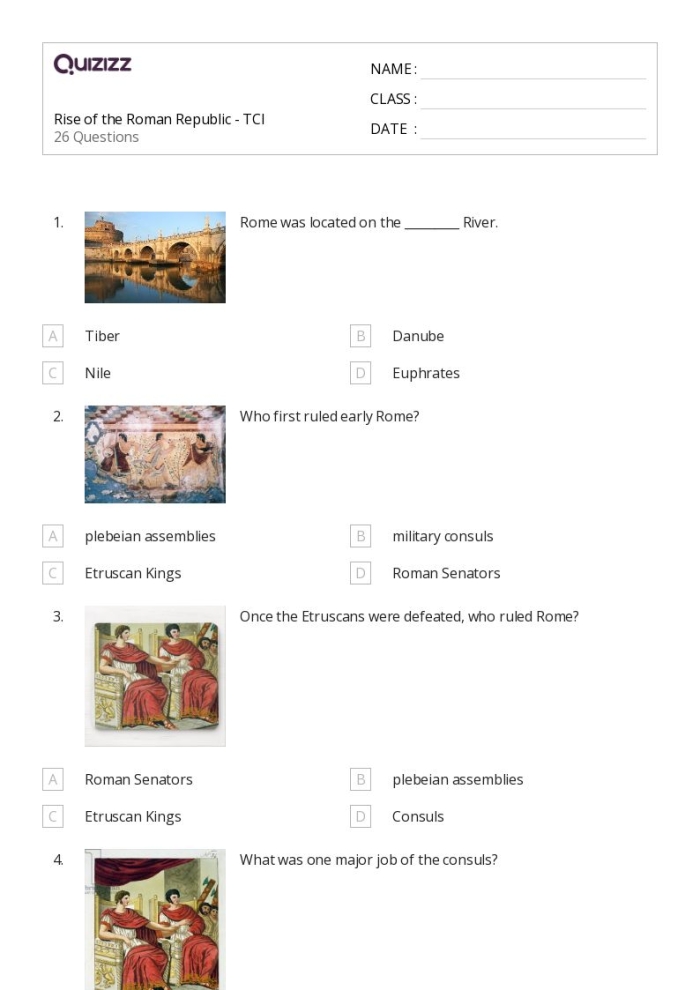
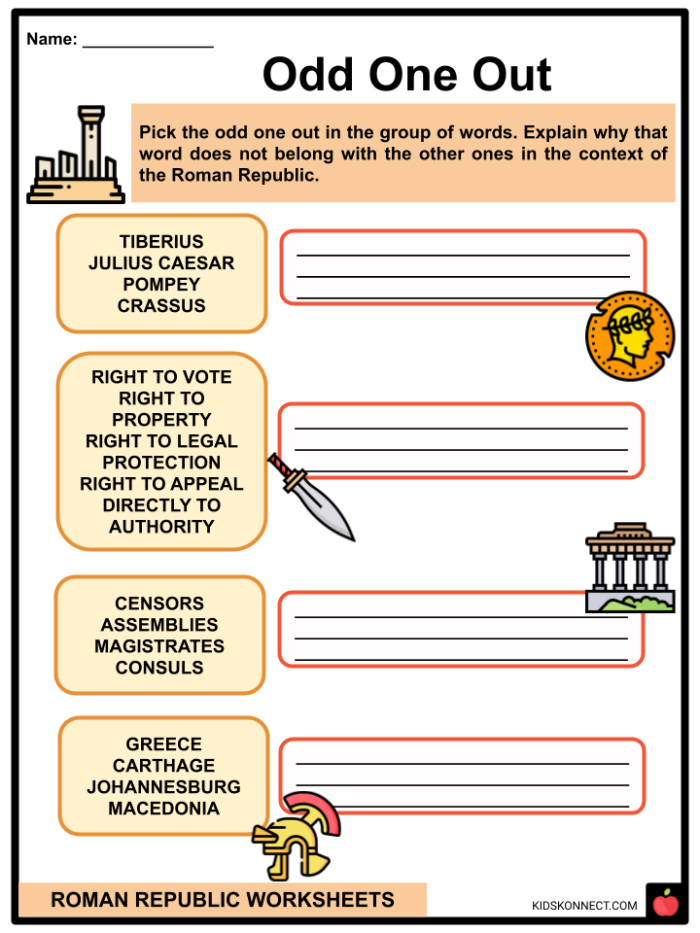
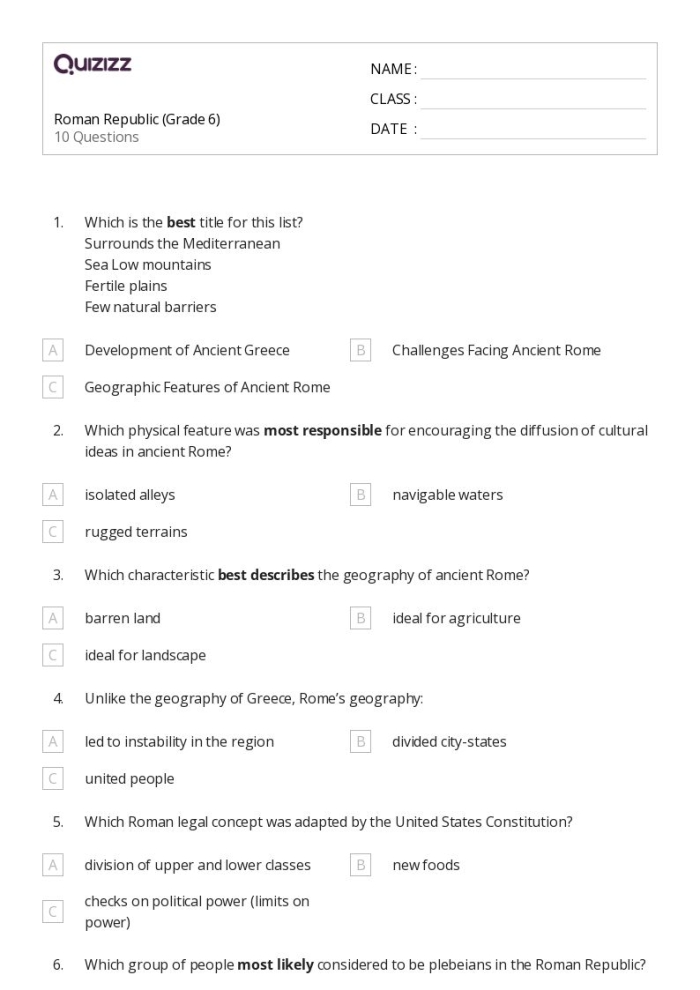
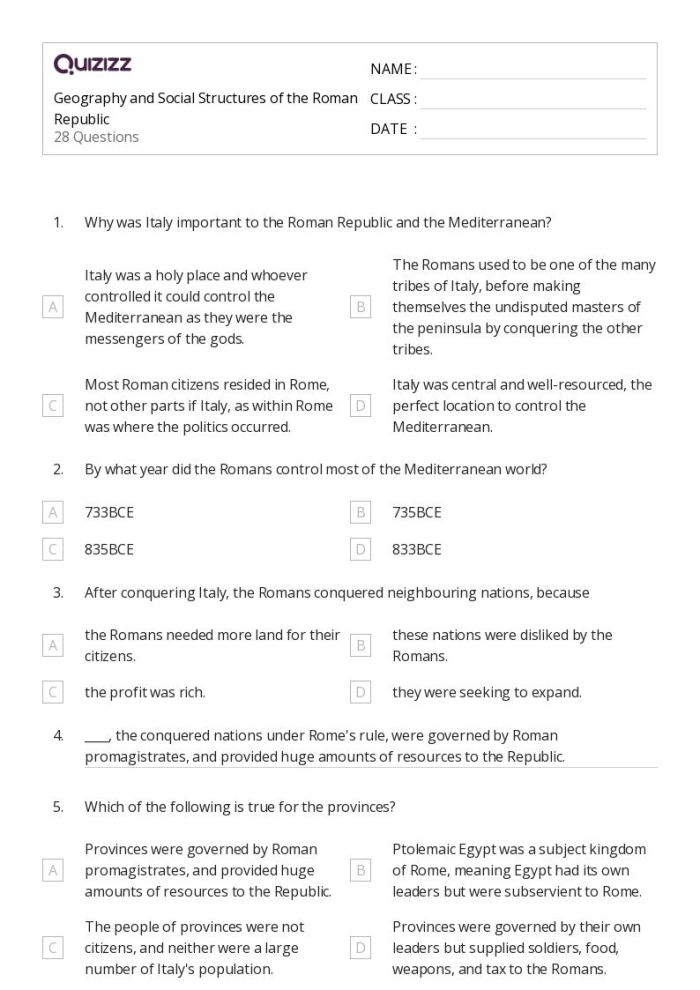
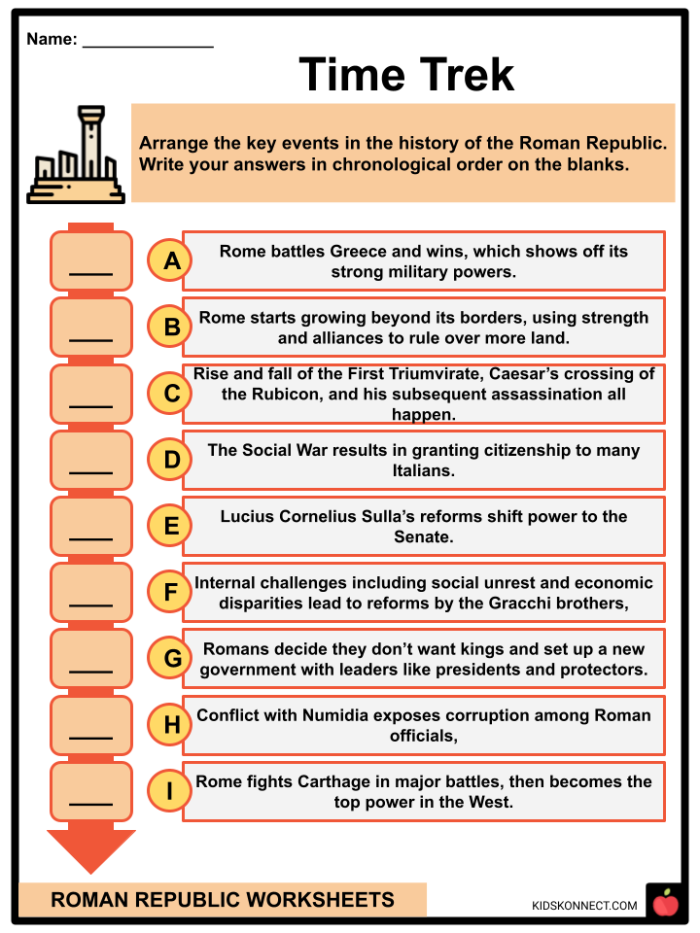
Worksheets focused on the structure of the Roman Republic can include activities that challenge students to think critically about these systems. They might analyze how the Republic’s framework influenced later governments or explore the significance of citizenship in ancient Rome. Such exercises not only bolster understanding of historical content but also enhance skills in analysis and critical thinking.
For those looking to expand their learning, related social studies worksheets, such as those on the cycling of matter and flow of energy or kinetic energy, can further enrich a sixth grader’s educational experience. By connecting the past with the present, students will gain a deeper appreciation for the evolution of governance and its impact on society.
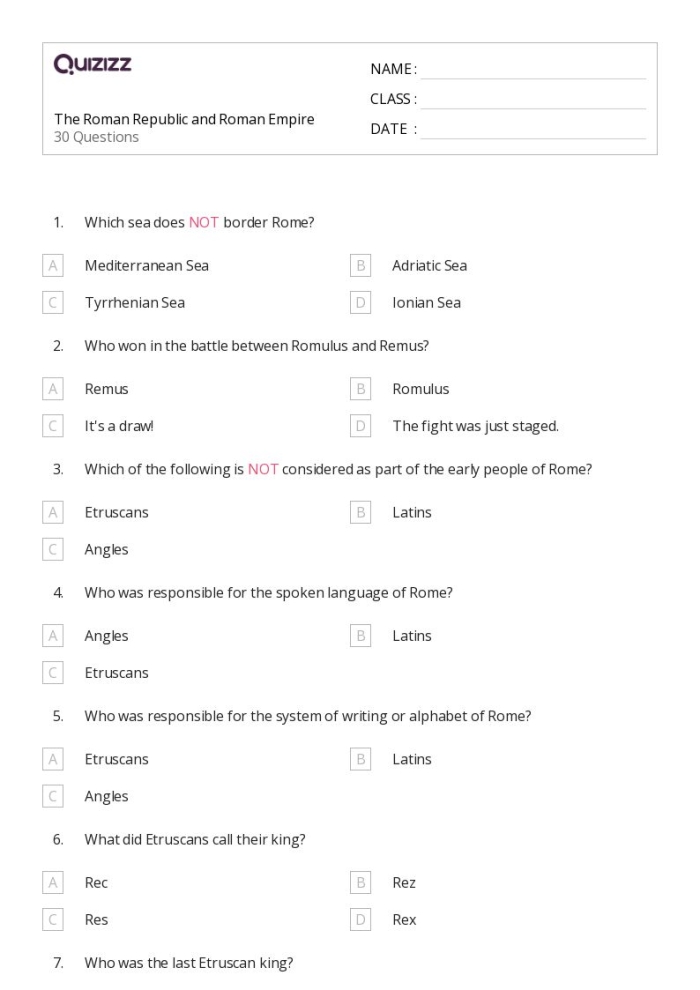
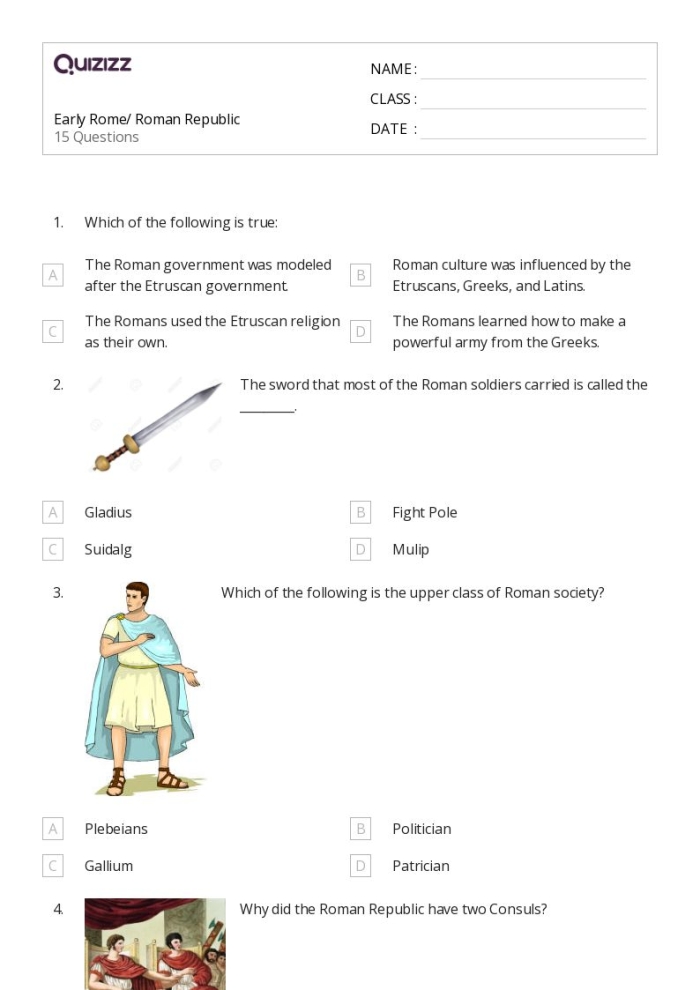
Worksheet Practice Section