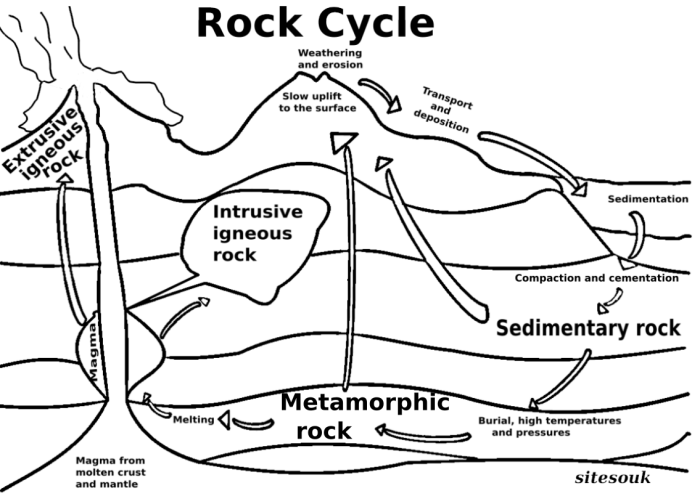
When sixth grade students work through a rock cycle worksheet, they’re actually engaging with one of Earth’s most fundamental processes. The rock cycle describes how rocks transform from one type to another over geological time, driven by energy from the sun and heat from within the planet. A well-designed worksheet helps students visualize these transformations and understand the mechanisms behind them.
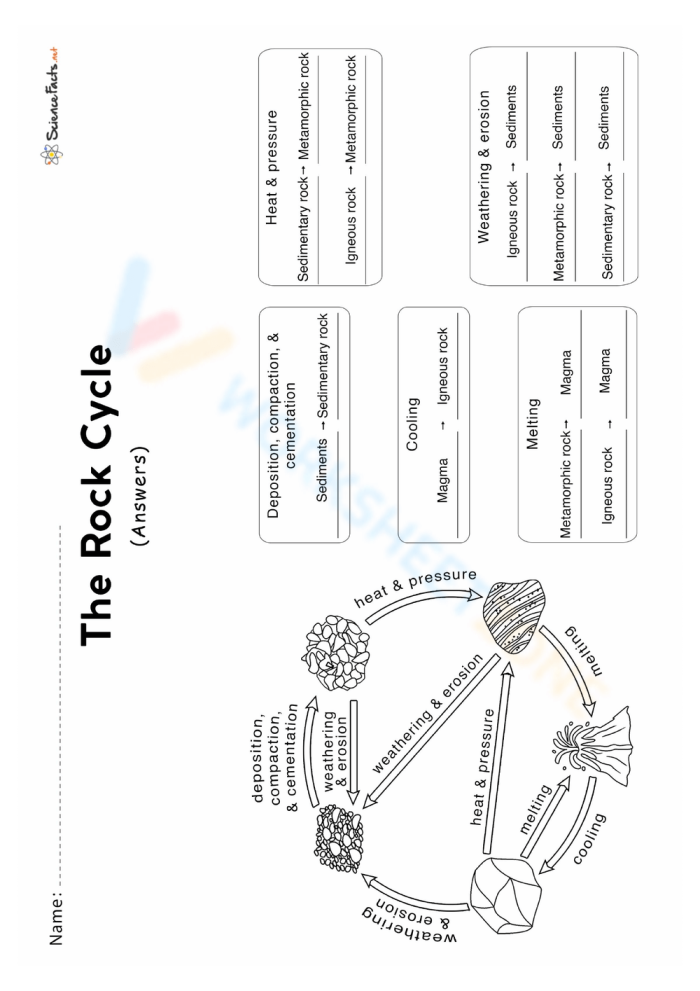
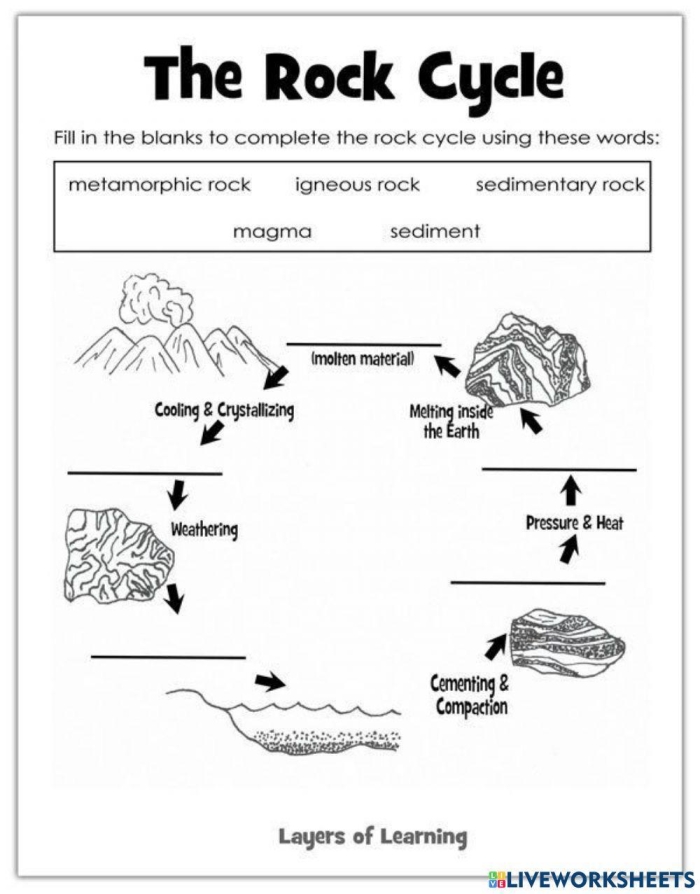
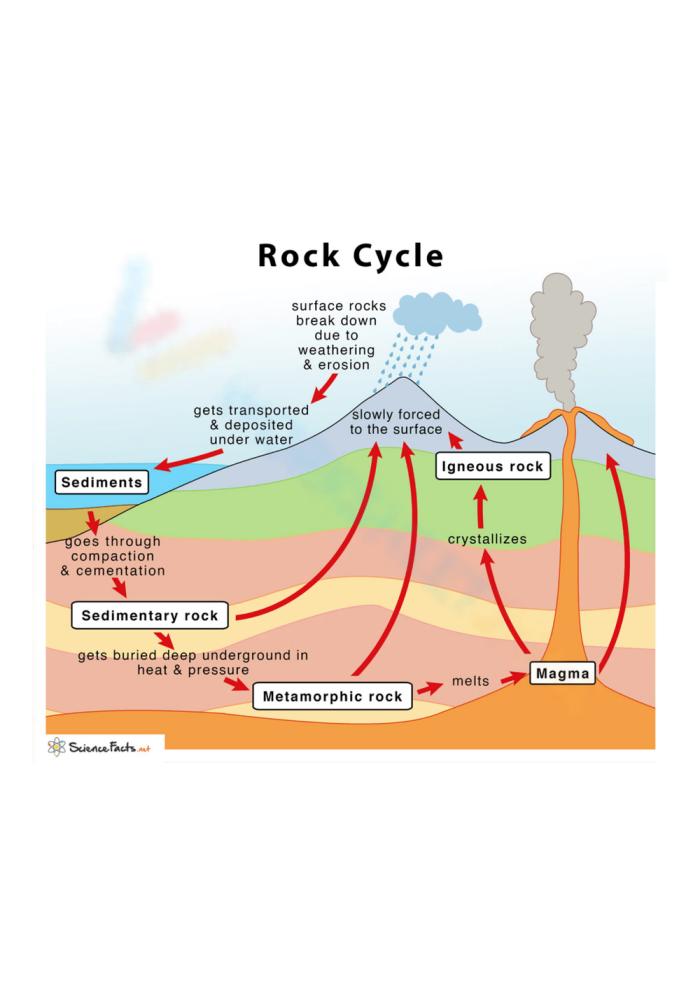
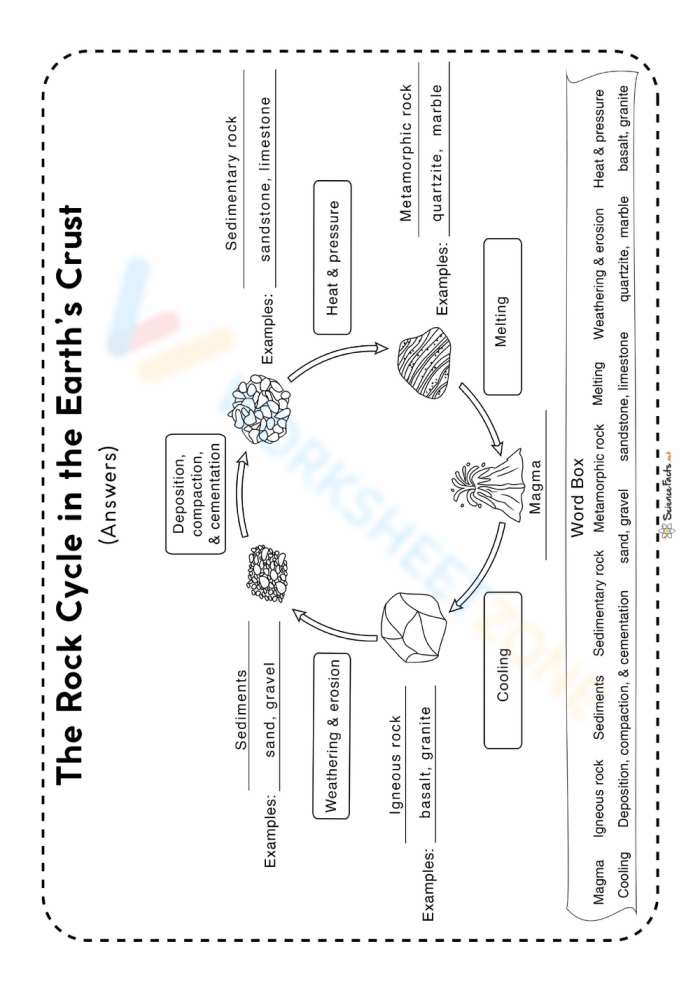
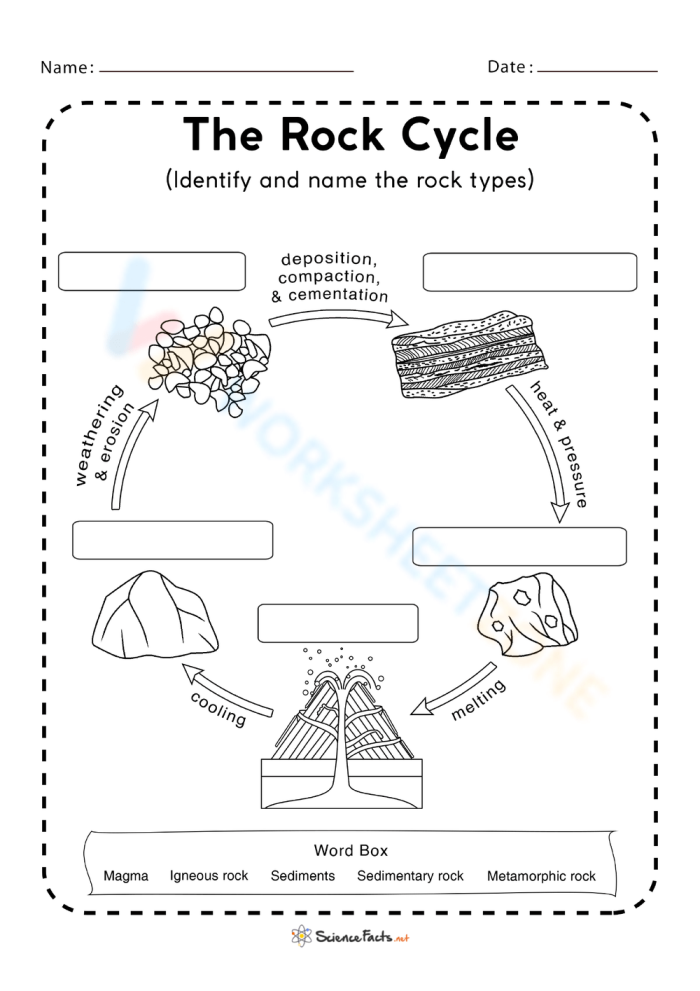
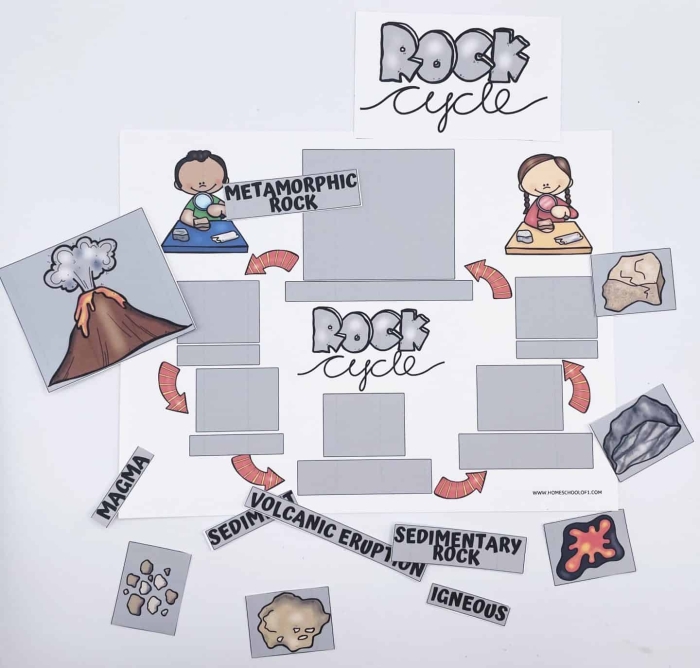
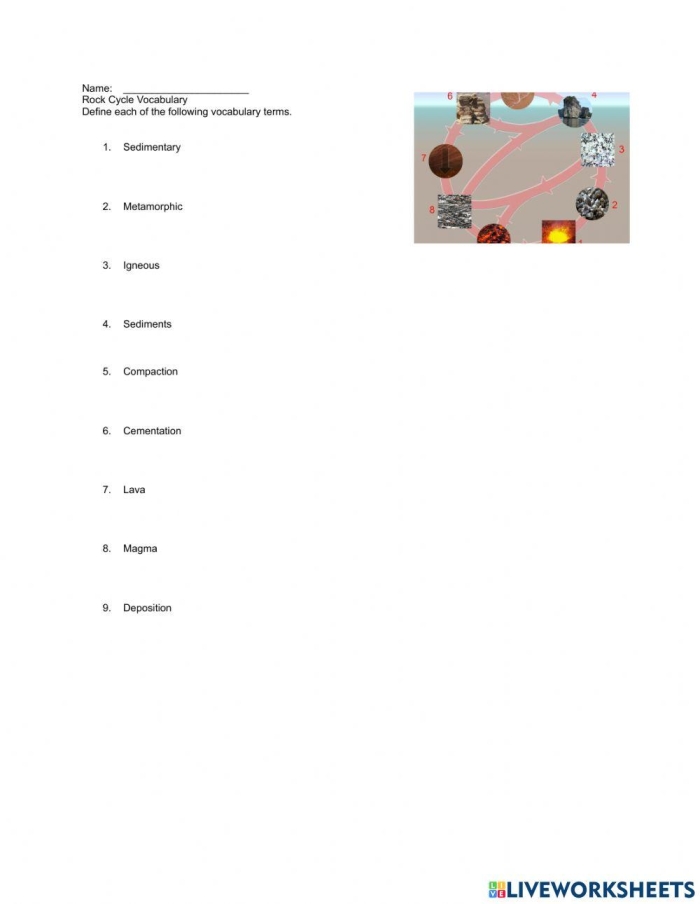
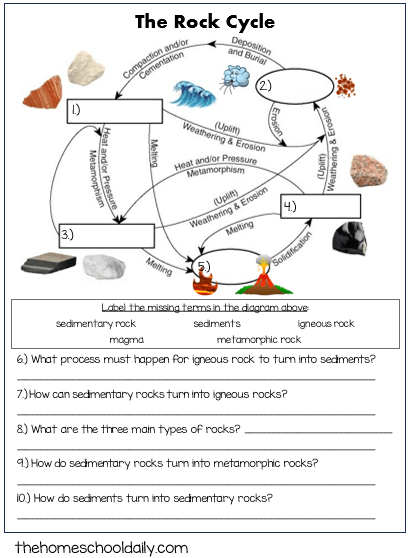
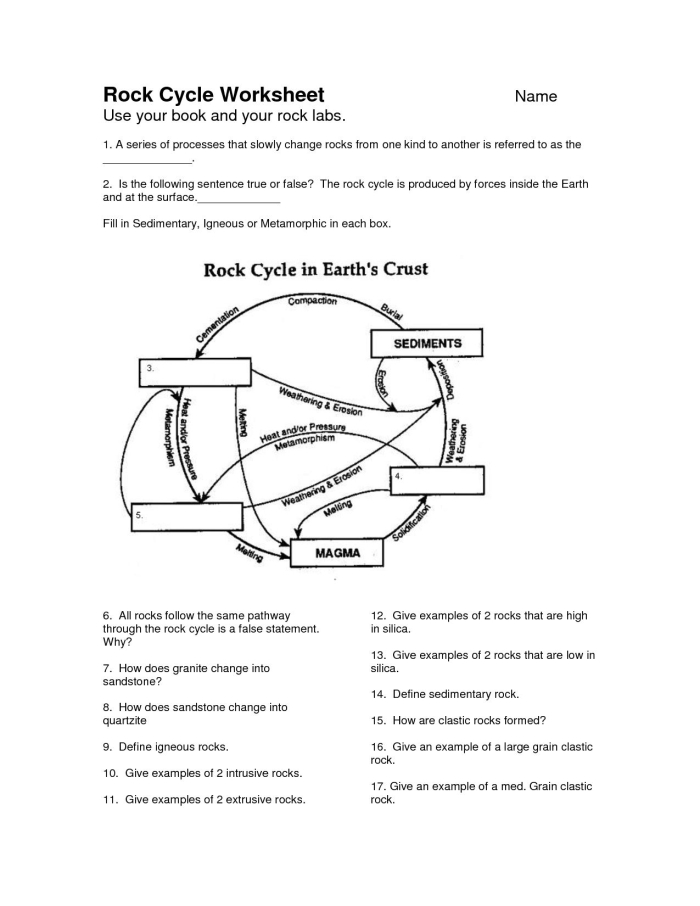
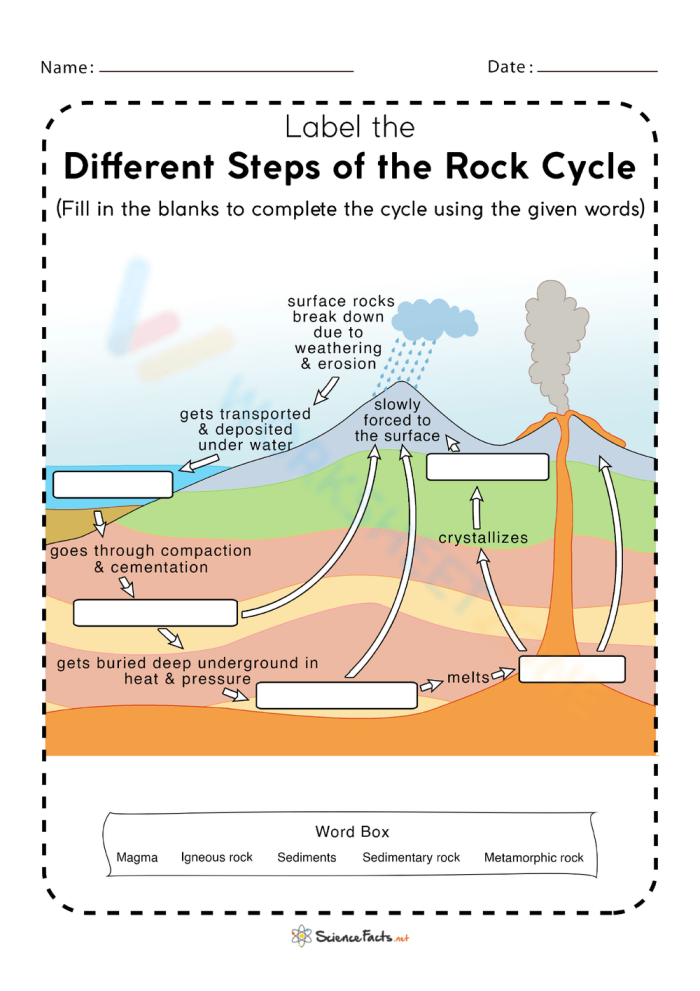
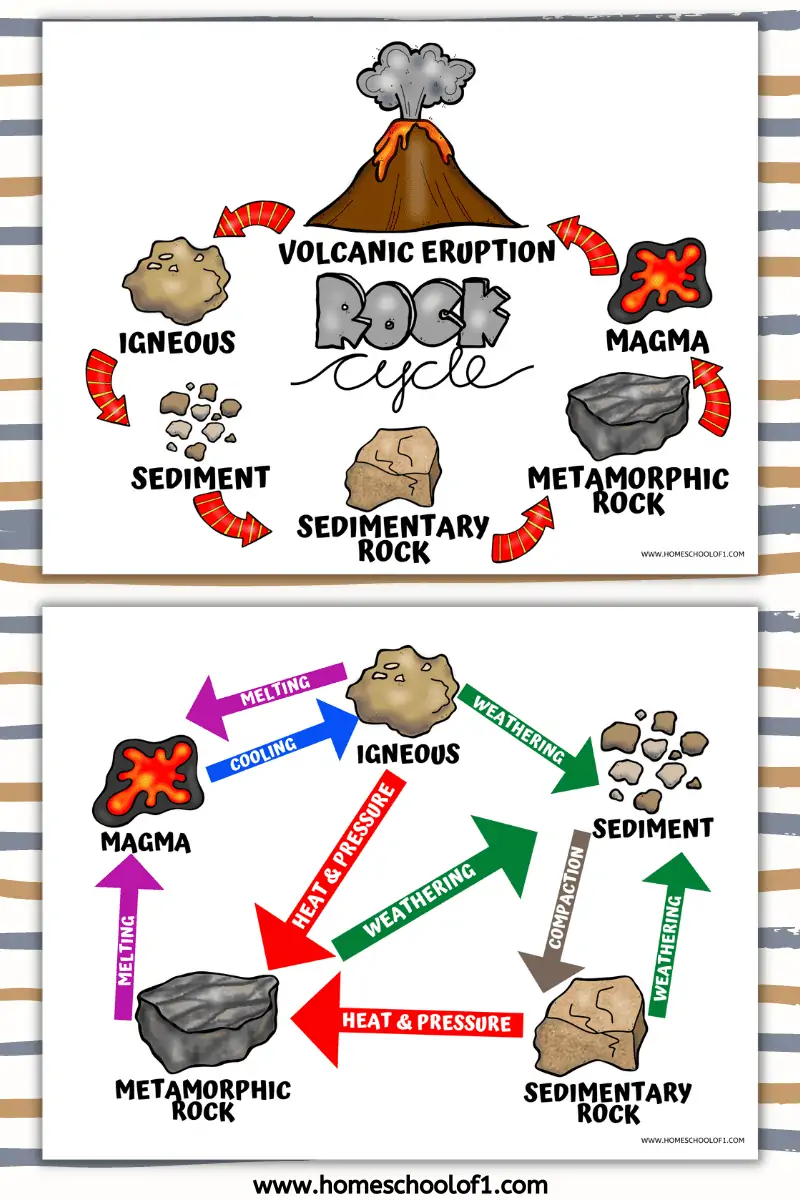
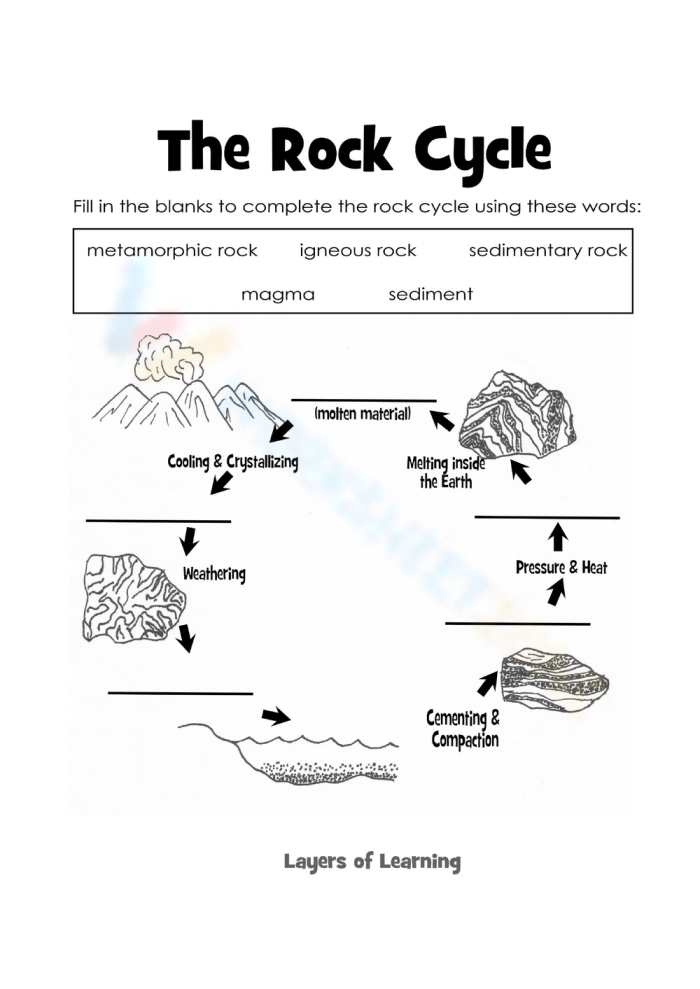
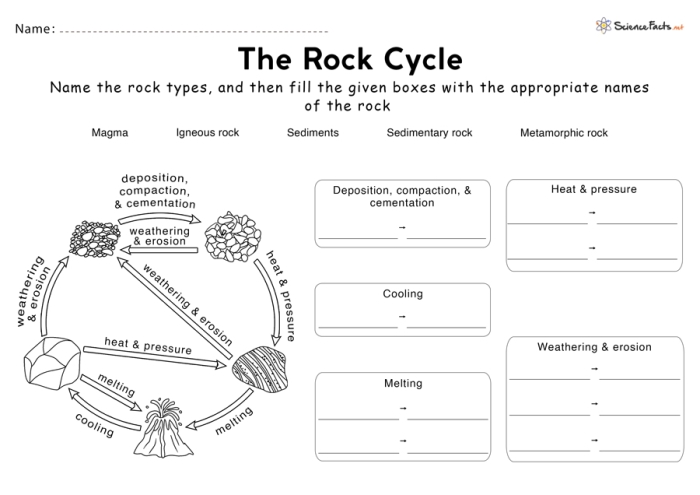
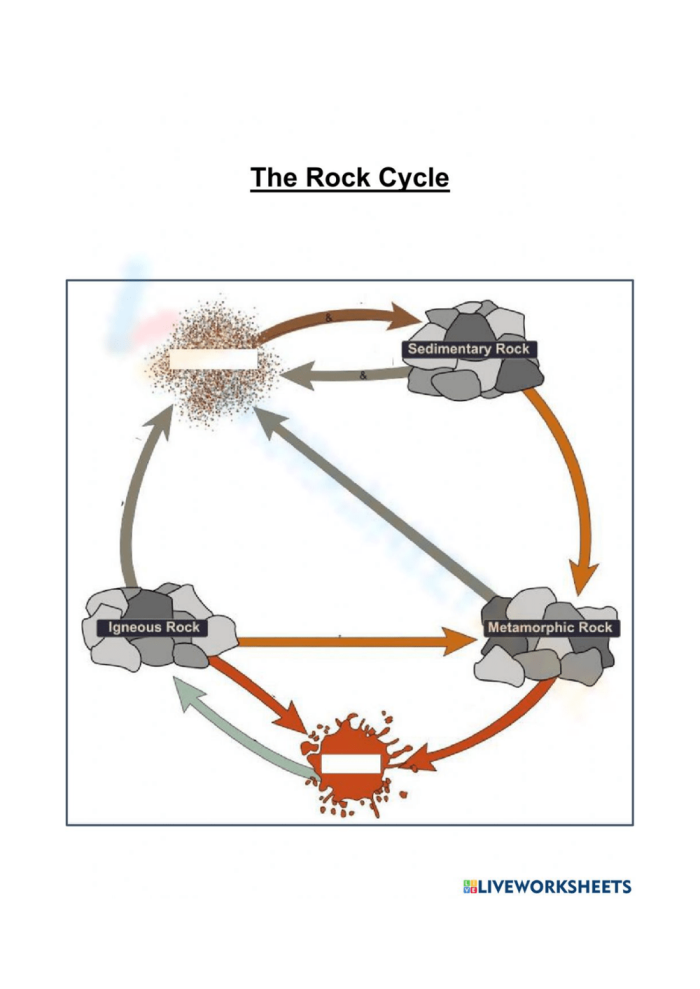
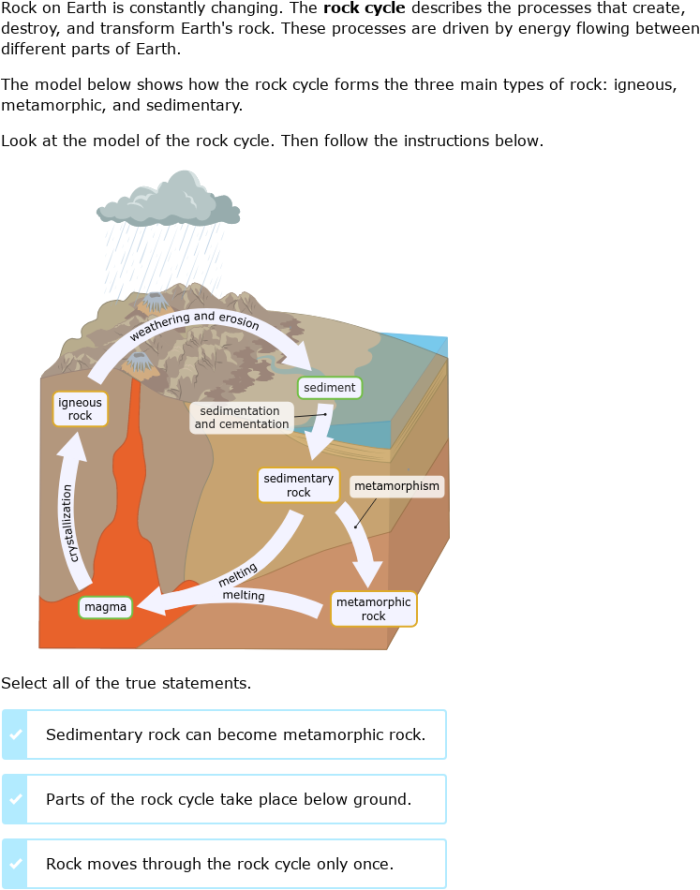
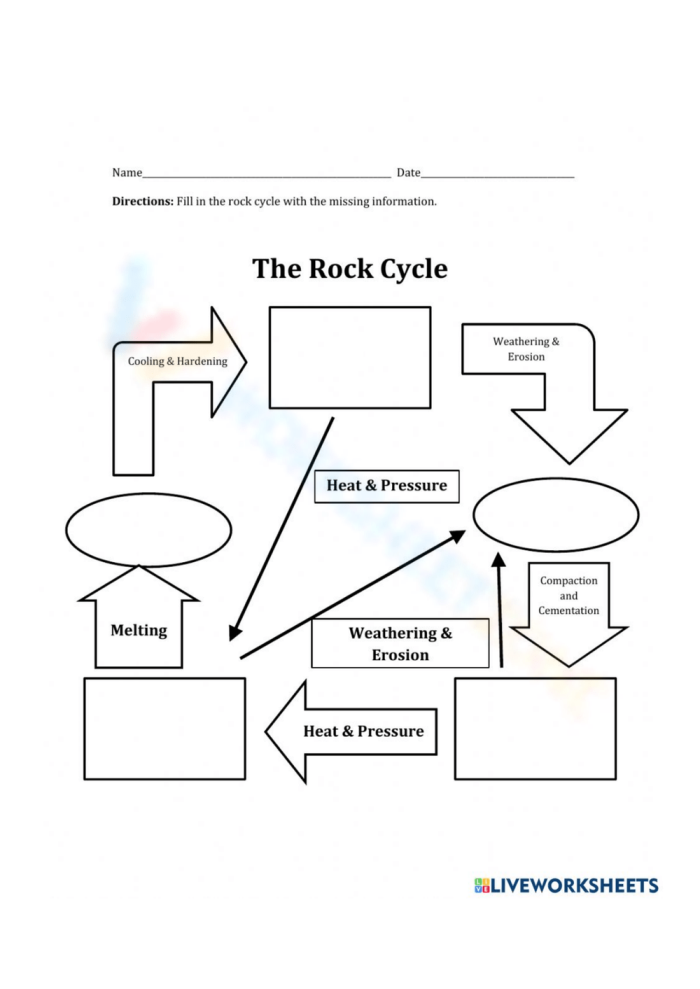
The rock cycle involves three main rock types: igneous, sedimentary, and metamorphic. Igneous rocks form when magma cools and solidifies, either beneath the surface or after volcanic eruptions. Sedimentary rocks develop when weathered rock fragments compress and cement together over time. Metamorphic rocks result from existing rocks exposed to intense heat and pressure deep underground, transforming their mineral composition and structure without melting completely. Students grasp these concepts more effectively when they can trace pathways on a diagram, labeling each stage and the forces at work.
What makes these worksheets particularly effective is their ability to connect abstract geological processes to observable phenomena. Students learn that a granite countertop in their kitchen was once molten magma, and that limestone cliffs formed from compressed shells and sediment. This concrete connection helps the material stick in their minds far better than memorization alone.
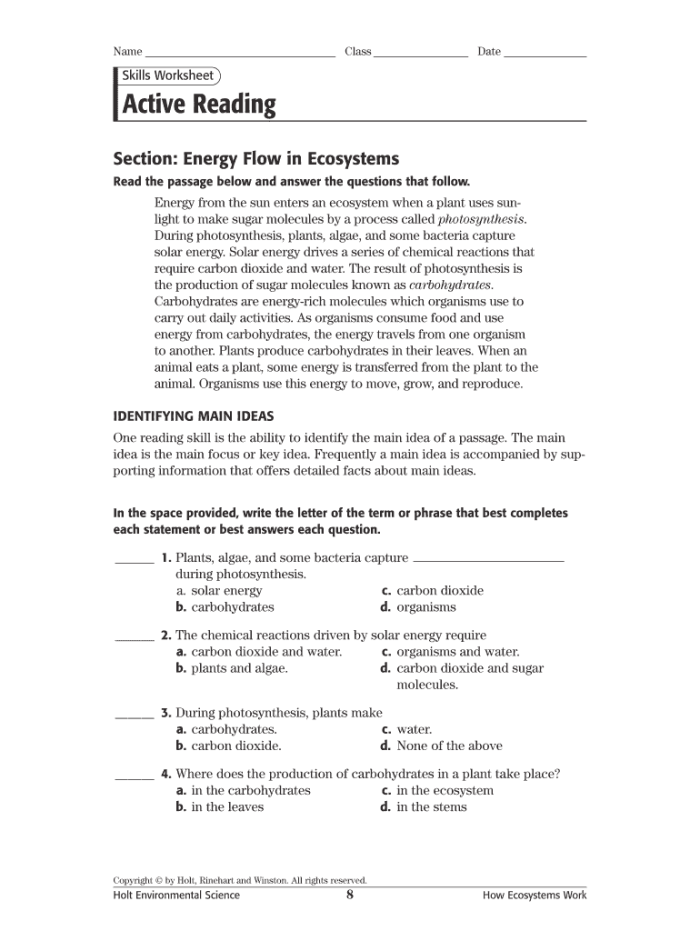
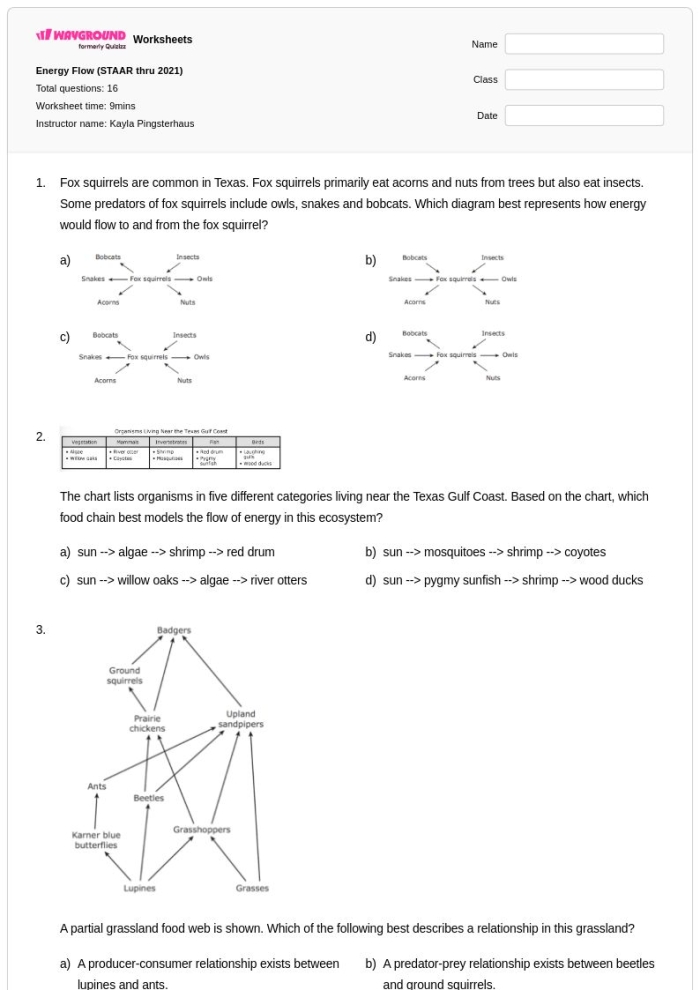
Sixth grade science curricula often pair rock cycle worksheets with other learning activities. Some teachers combine them with worksheets that build analytical skills, encouraging students to interpret diagrams and answer questions that require reasoning rather than simple recall. Others integrate the rock cycle into broader earth science units exploring plate tectonics and mineral formation.
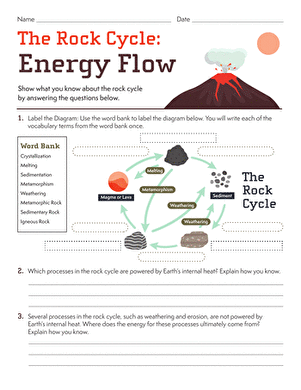
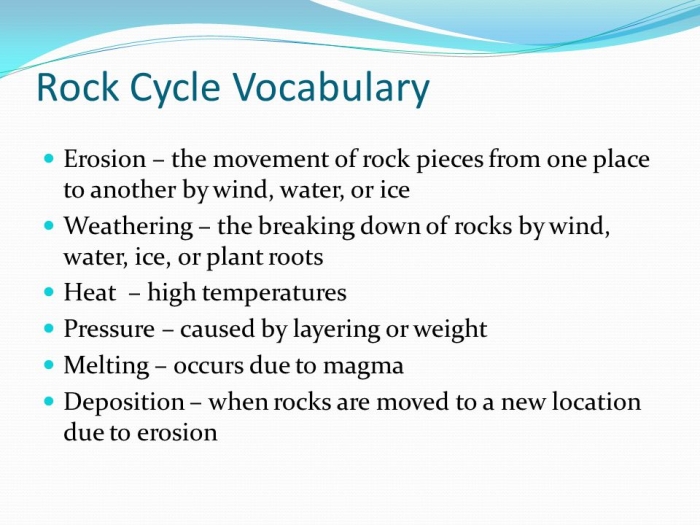
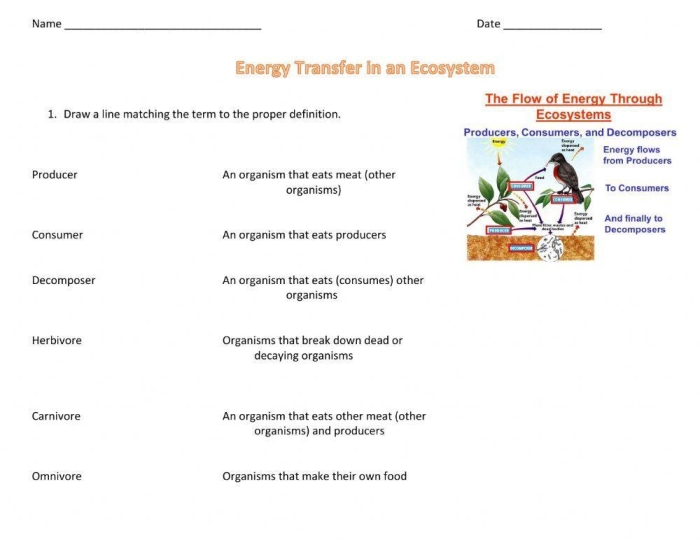
The energy flow aspect of the rock cycle becomes clearer when students understand that solar energy drives weathering and erosion, while geothermal energy powers the processes occurring beneath Earth’s crust. A comprehensive worksheet addresses both energy sources, helping students see the rock cycle not as isolated events but as an interconnected system powered by multiple energy inputs.
Practice with These Worksheets