West Africa’s gold and salt trade fundamentally shaped the region’s economy, politics, and cultural development between roughly the 8th and 16th centuries. This wasn’t simply a commercial exchange, it was a system that built empires and connected distant parts of the world.
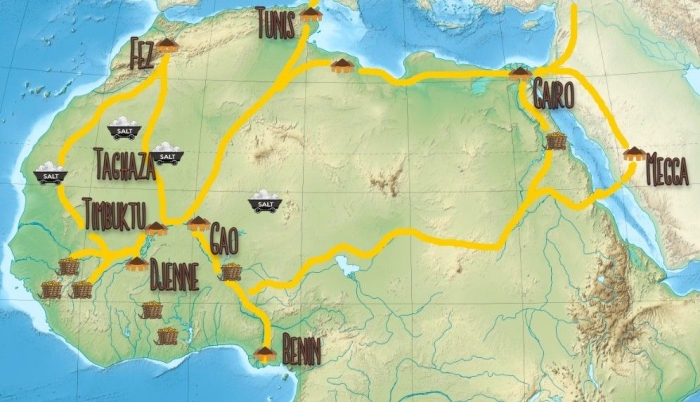
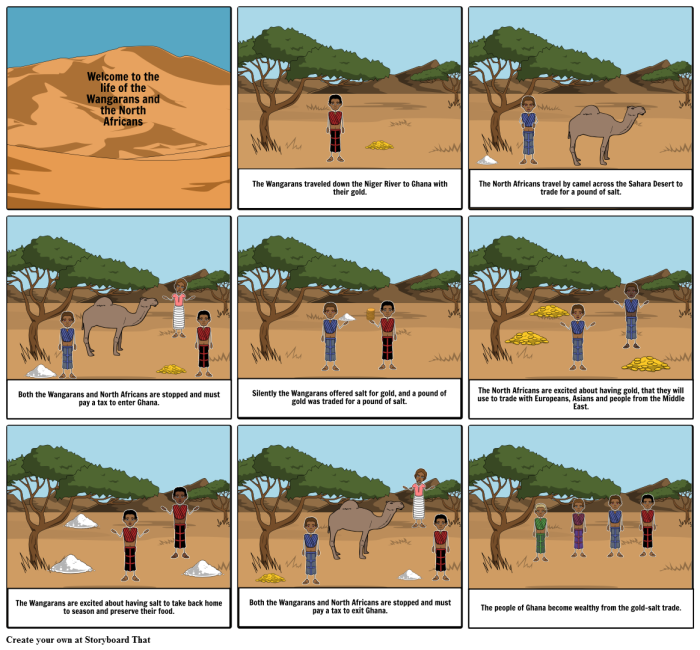
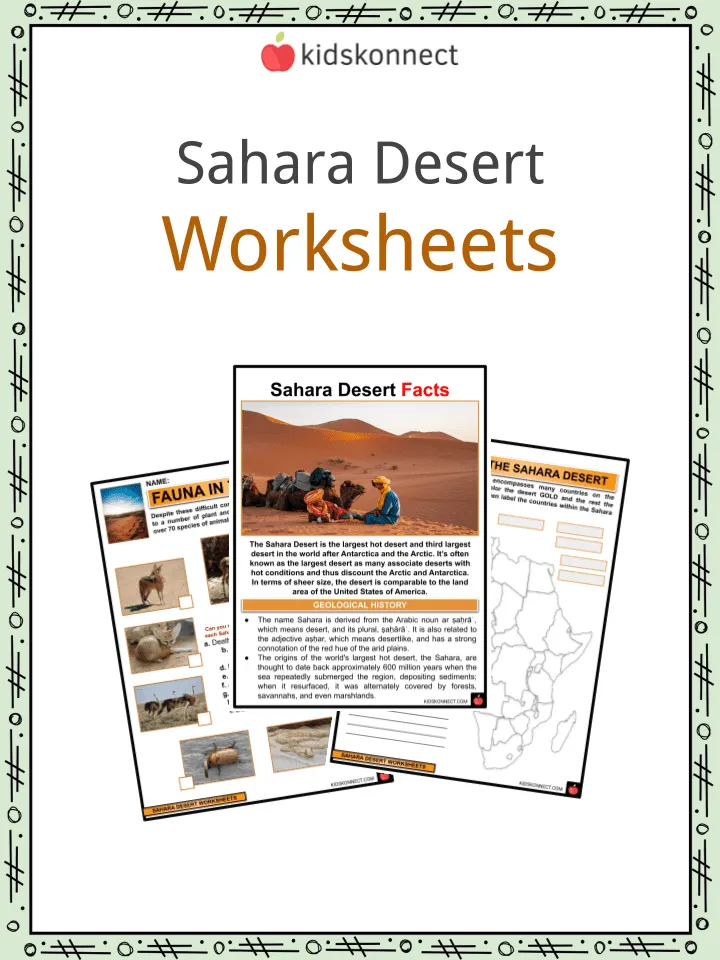
Salt came from the Sahara Desert, where miners extracted it from dried lake beds and salt pans. Gold flowed from mines in present-day Mali, Burkina Faso, and Guinea. What made this trade remarkable was the extreme value imbalance: in some periods, salt was literally worth its weight in gold. Merchants traveled dangerous caravan routes across the Sahara, taking weeks or months to transport goods between the salt sources in the north and the gold-rich kingdoms in the south.
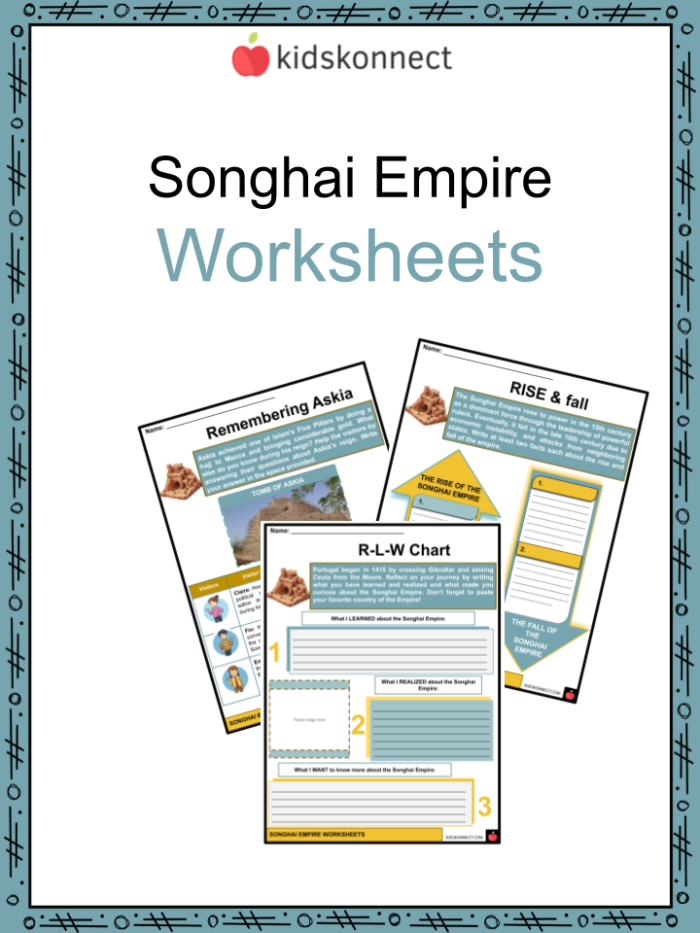
Cities like Timbuktu and Gao became wealthy centers because they controlled these trade routes. Rulers taxed merchants passing through their territories, which funded armies, built mosques, and supported scholars. The Mali Empire and later the Songhai Empire rose to prominence largely because they dominated this commerce.
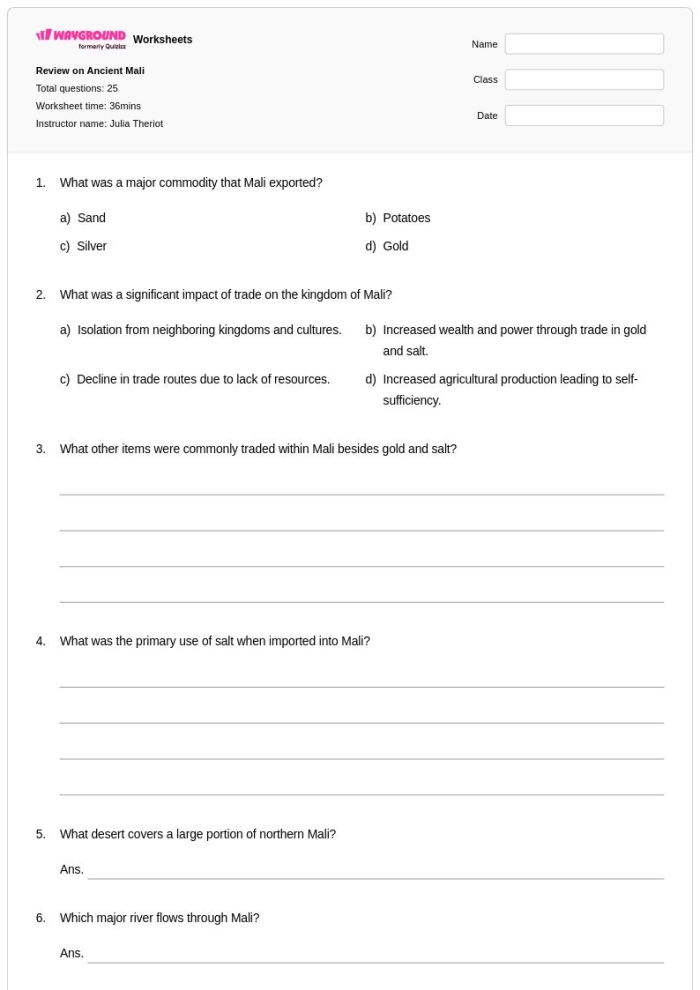
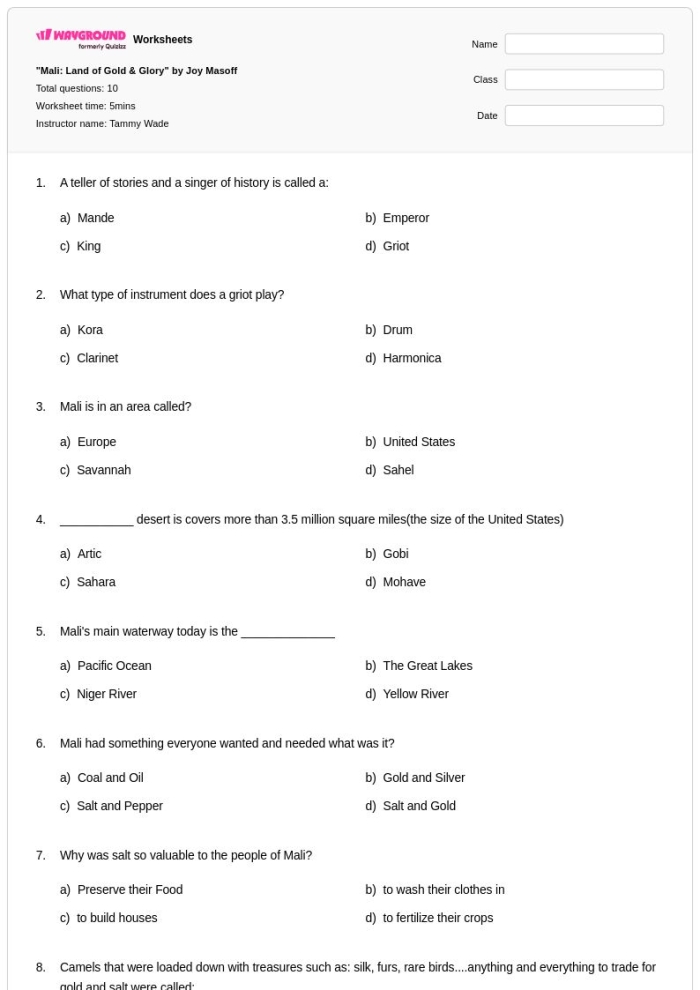
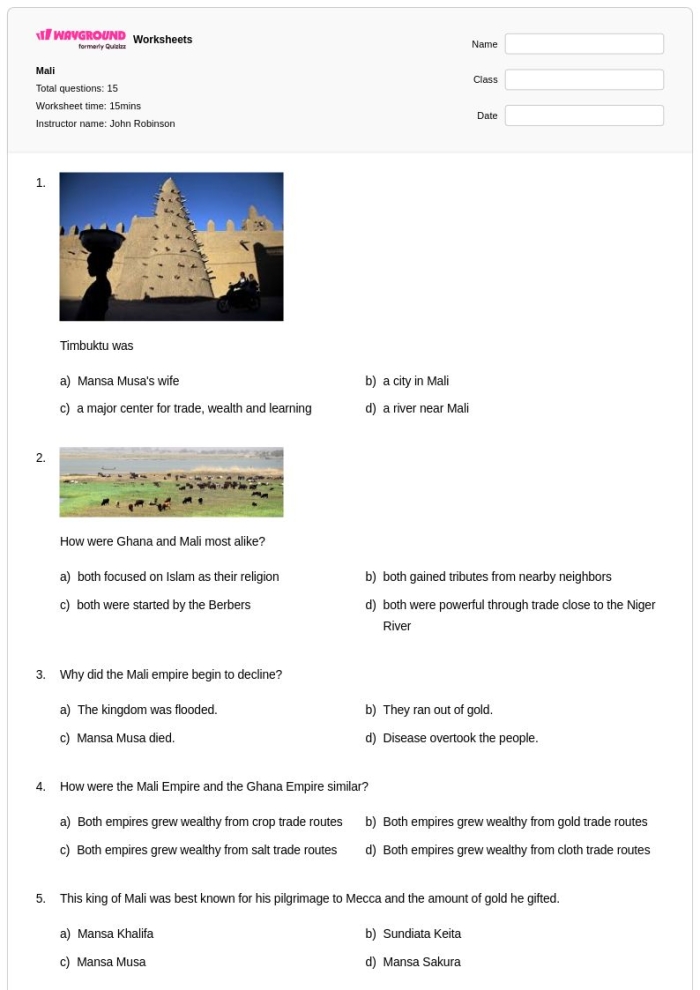
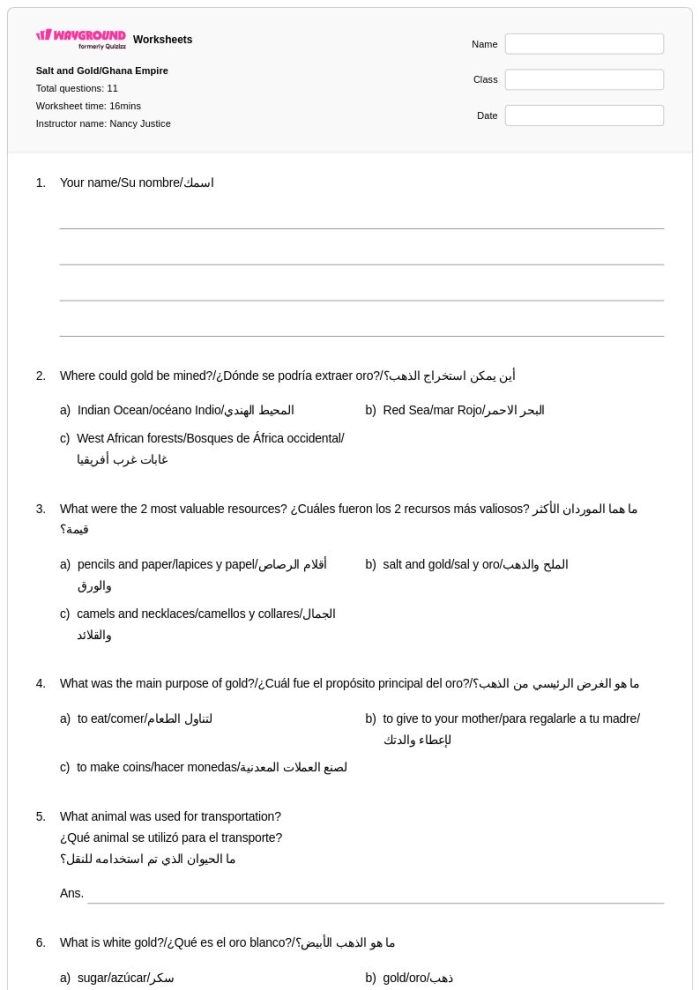
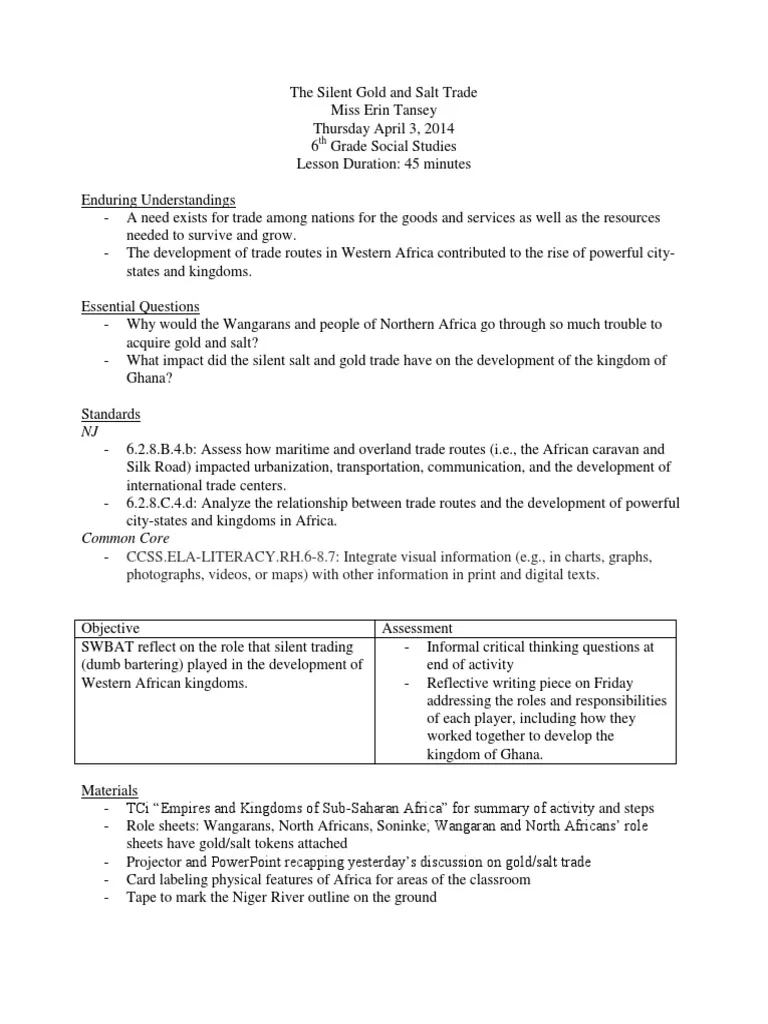
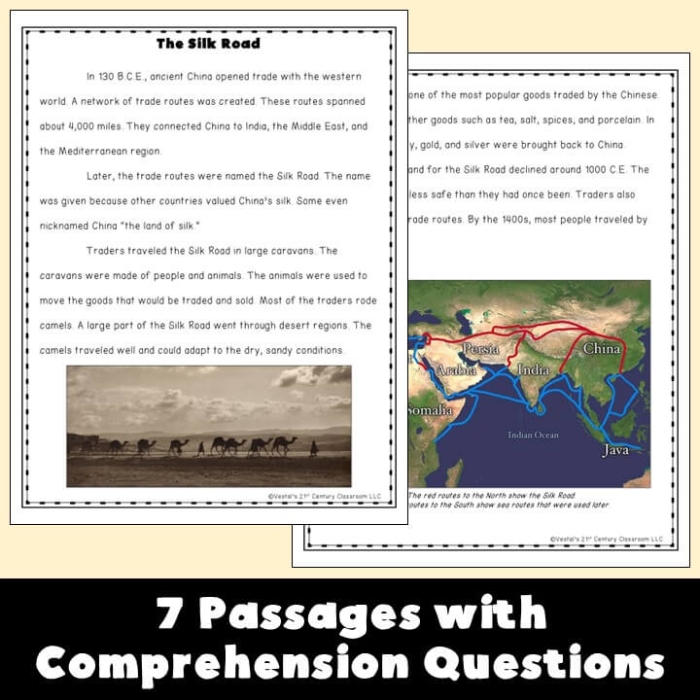
For sixth grade students learning about trade systems and economics, understanding the gold and salt trade provides concrete historical context. Teachers often use printable worksheets about the gold and salt trade to help students analyze primary sources and map trade routes.
These educational materials work well alongside other sixth grade resources. Students studying fractions can apply those skills to calculate trade quantities and profit margins. Many educators combine this content with tools like a character analysis graphic organizer to examine the perspectives of different traders and rulers involved in this historical exchange.
Exploring this trade system helps students recognize how geography, resources, and commerce create power structures that last for centuries.
Practice with These Worksheets