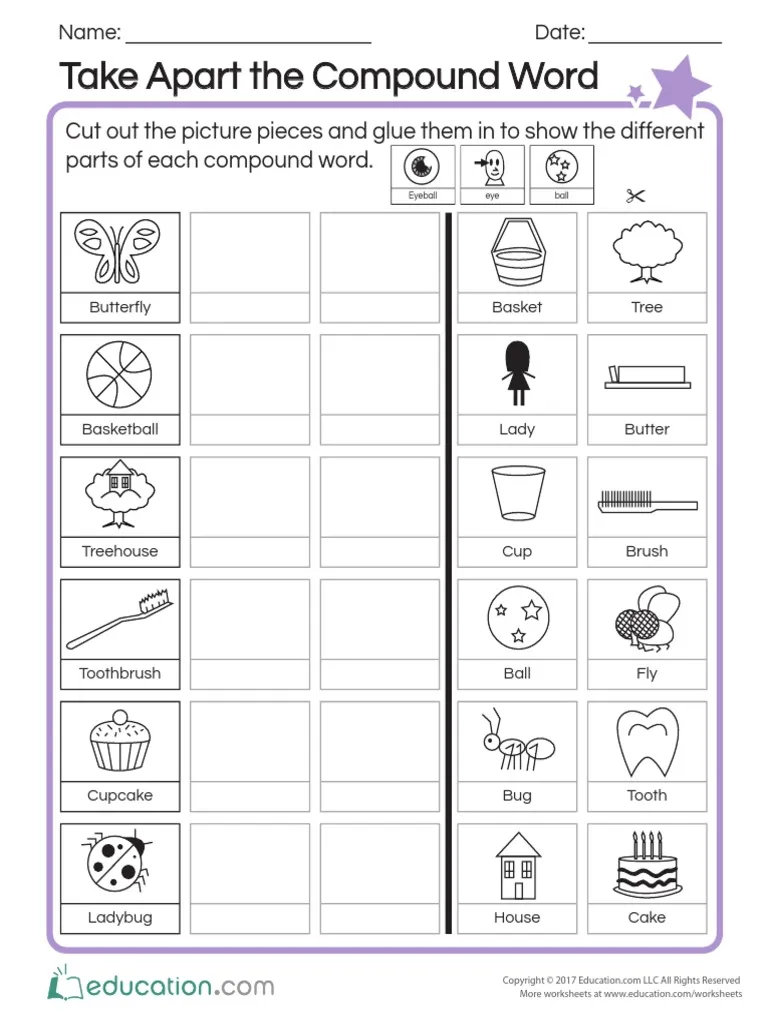
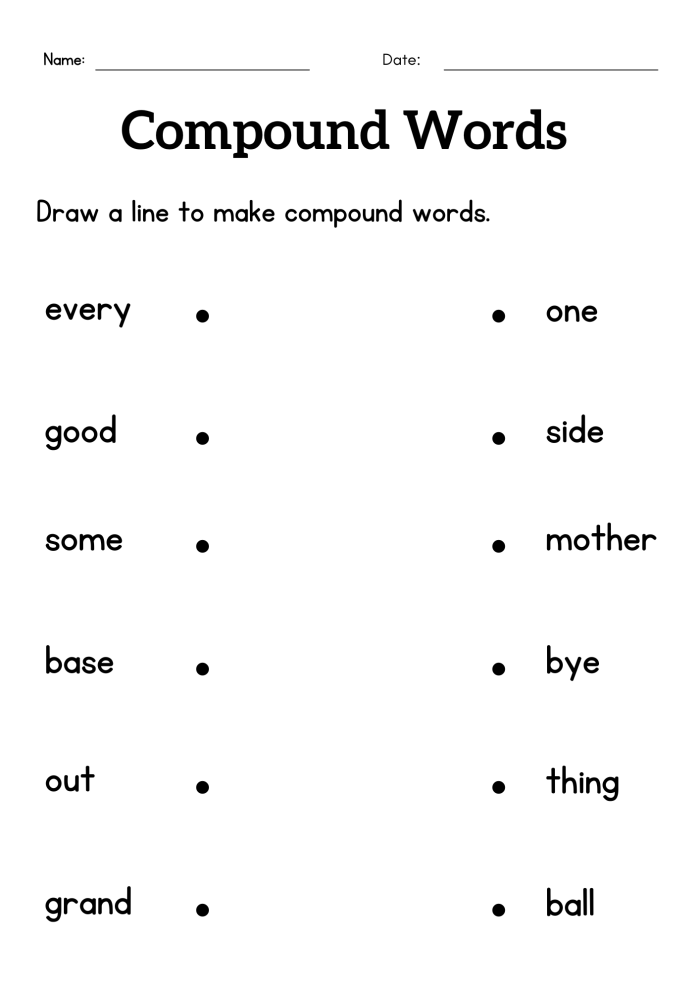
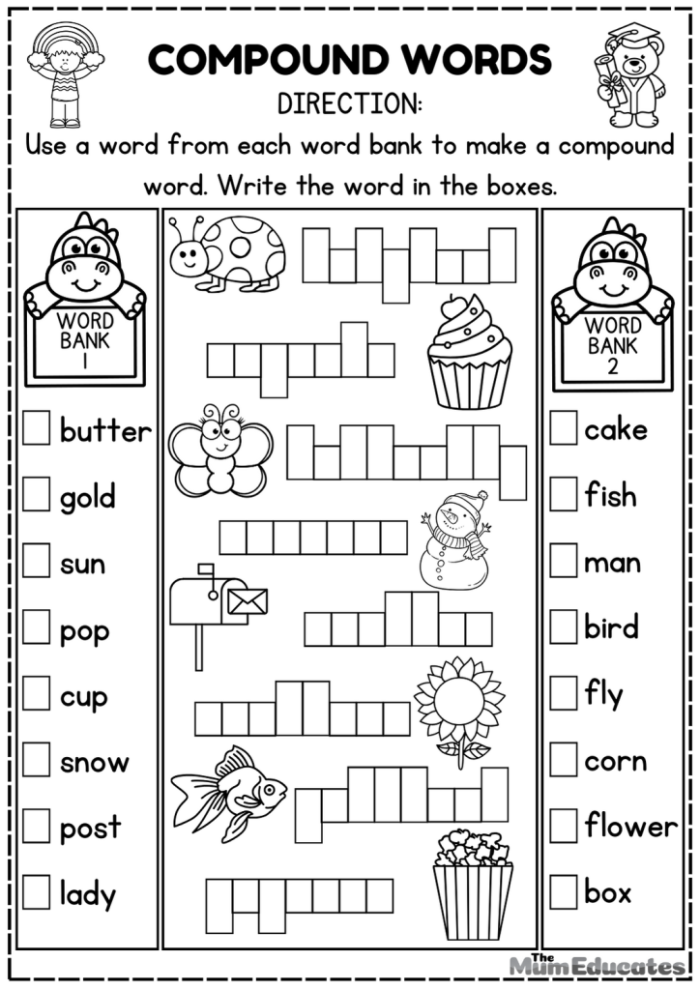
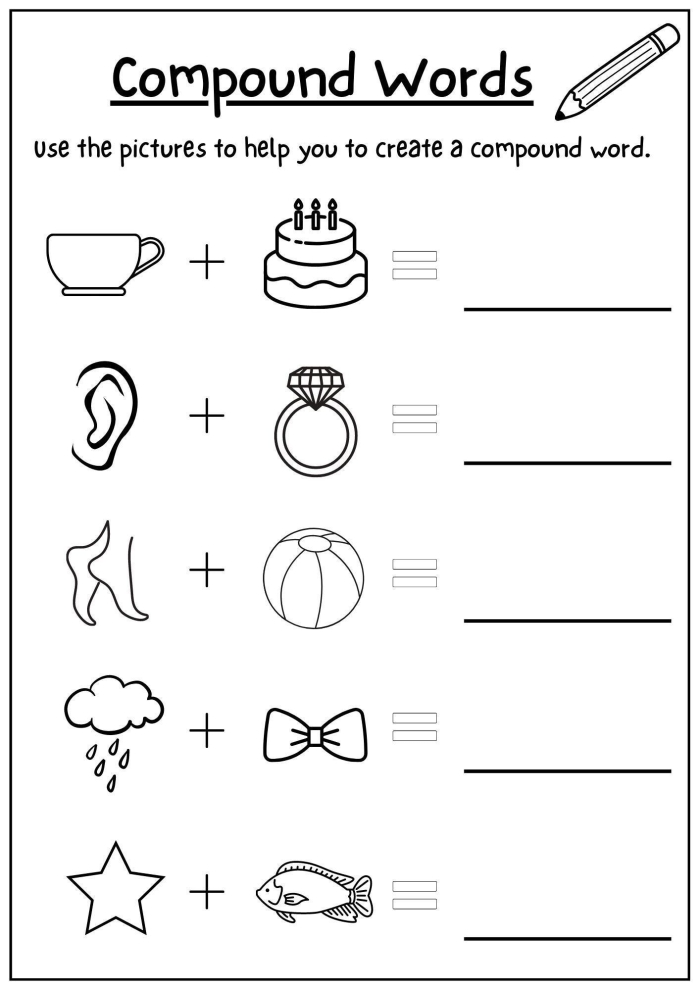
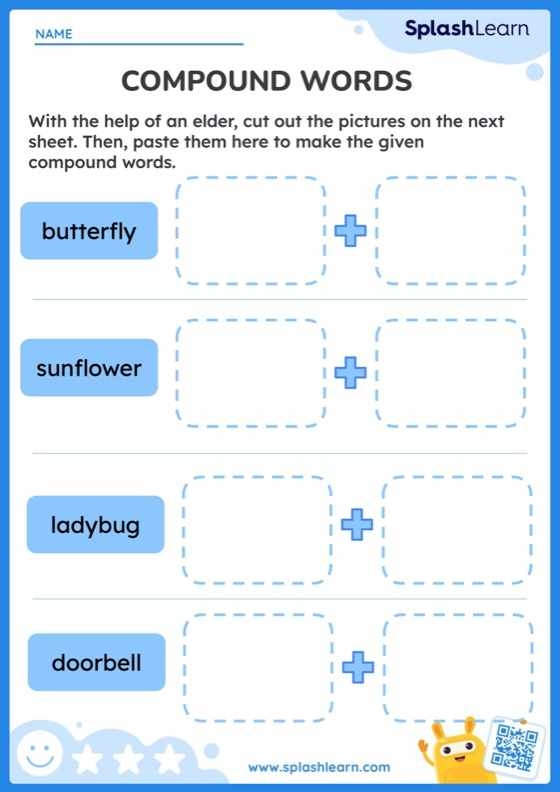
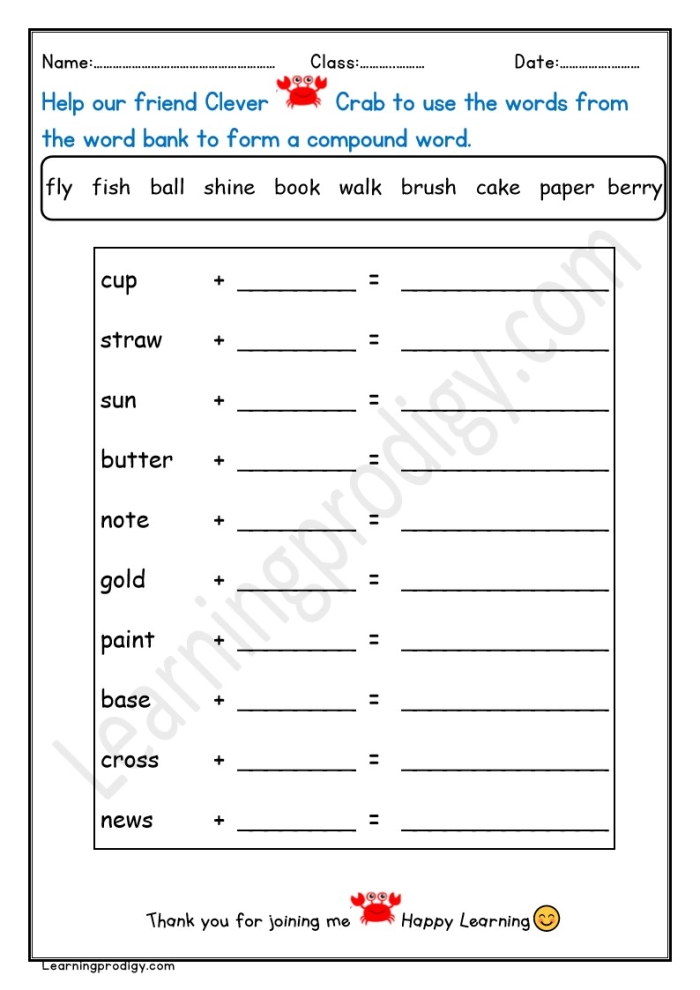
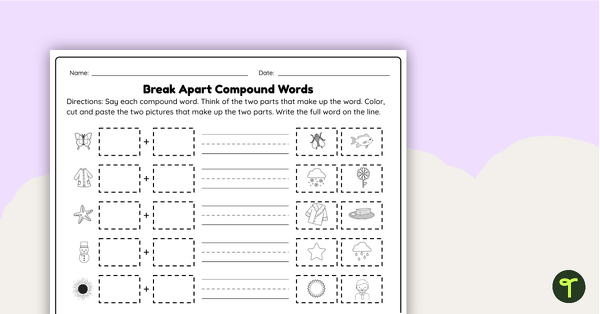
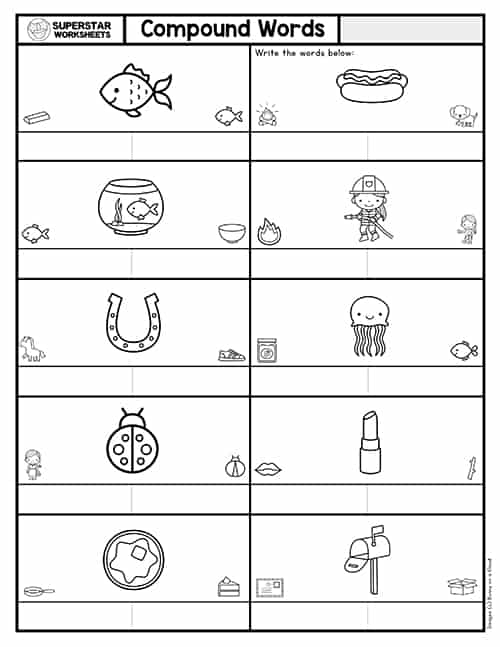
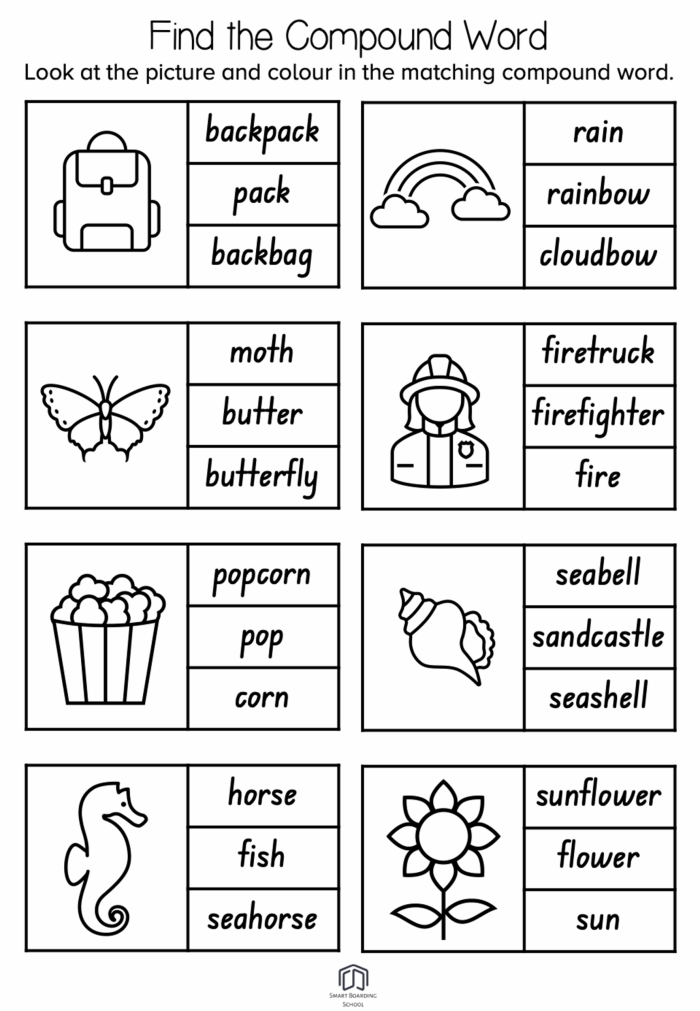
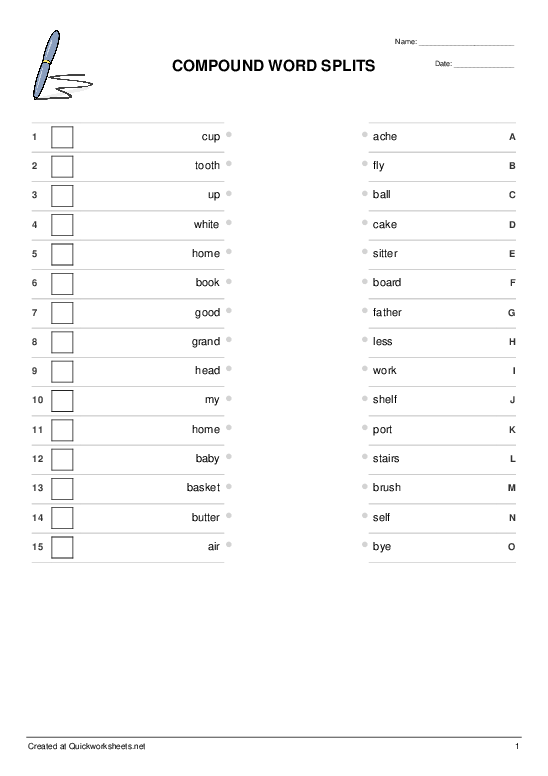
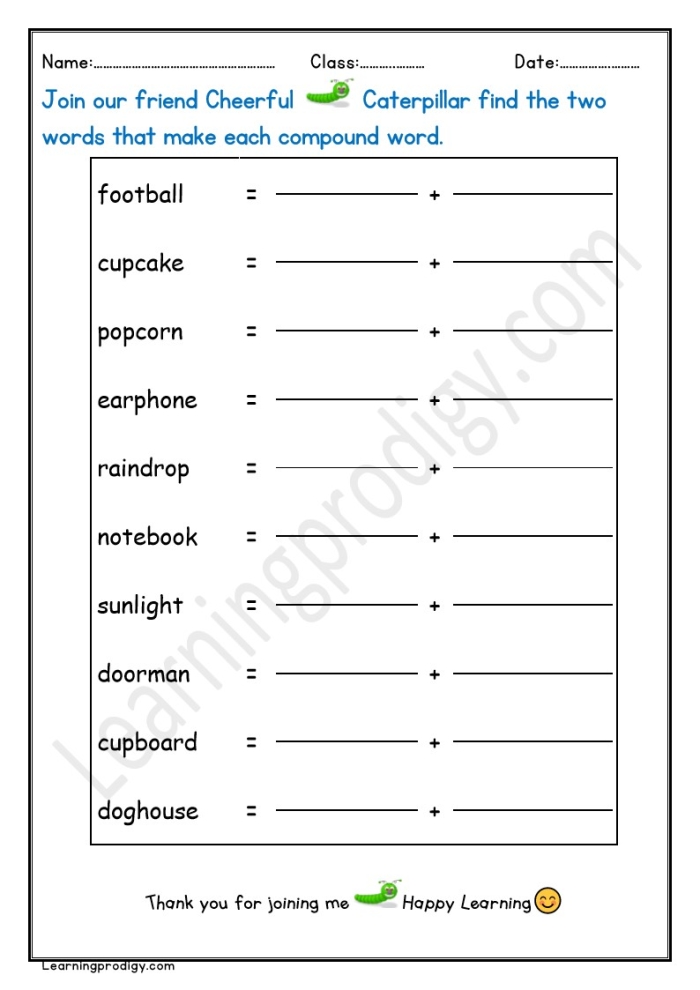
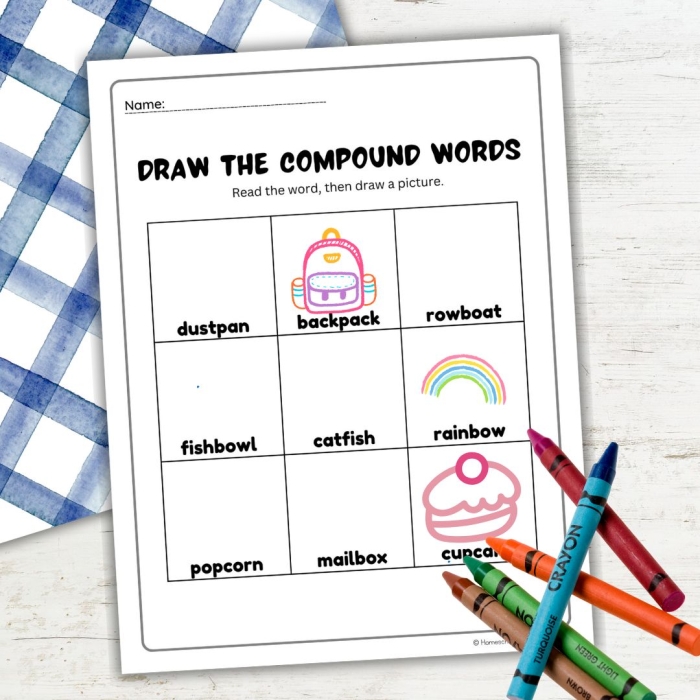
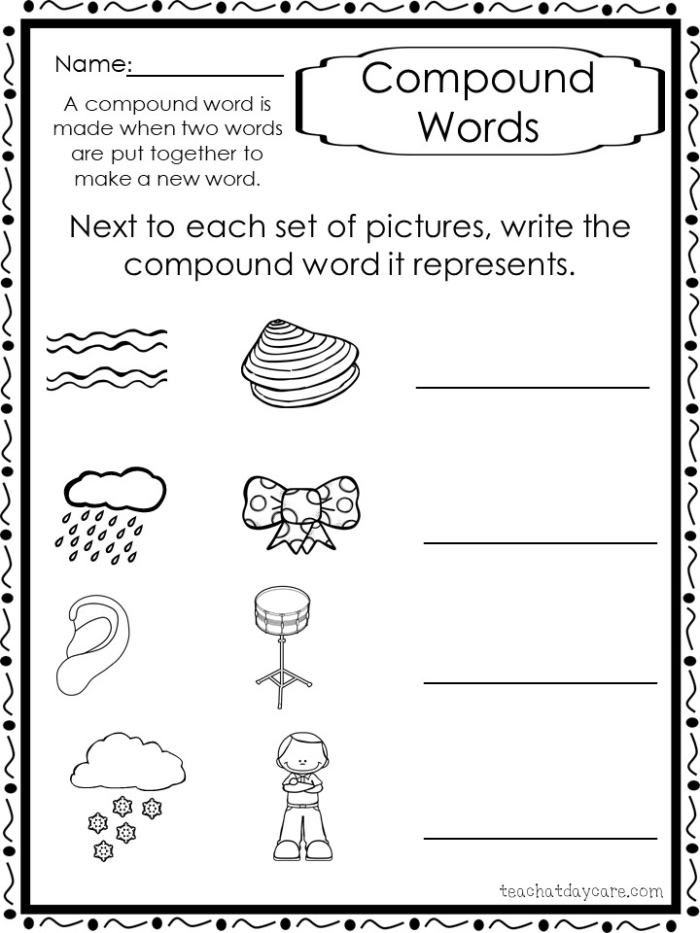
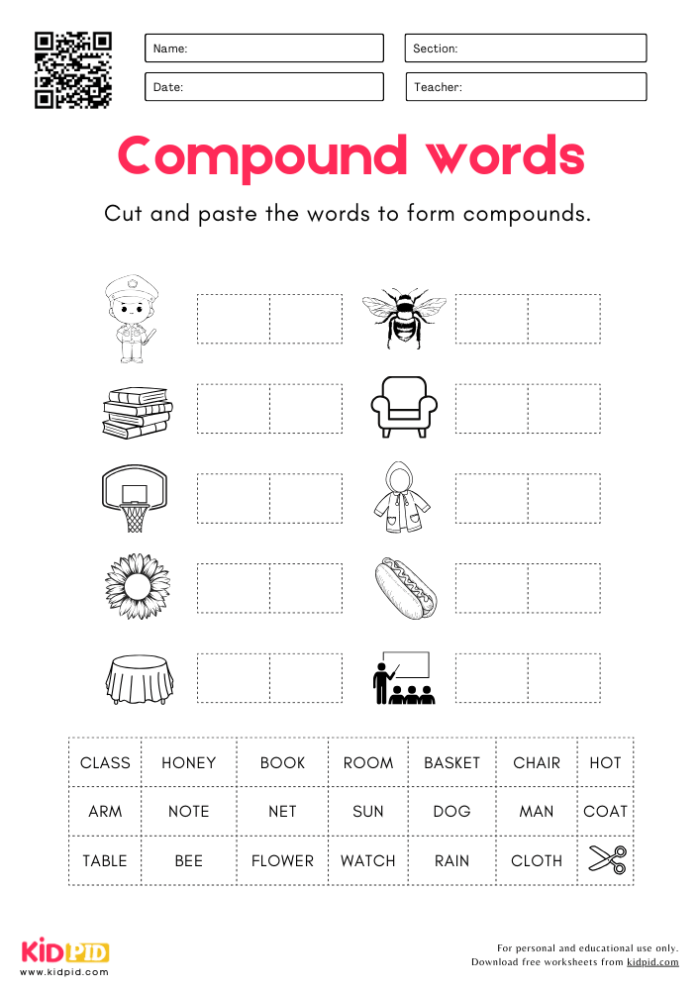
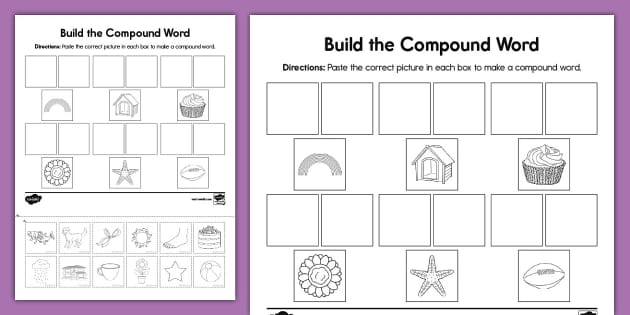
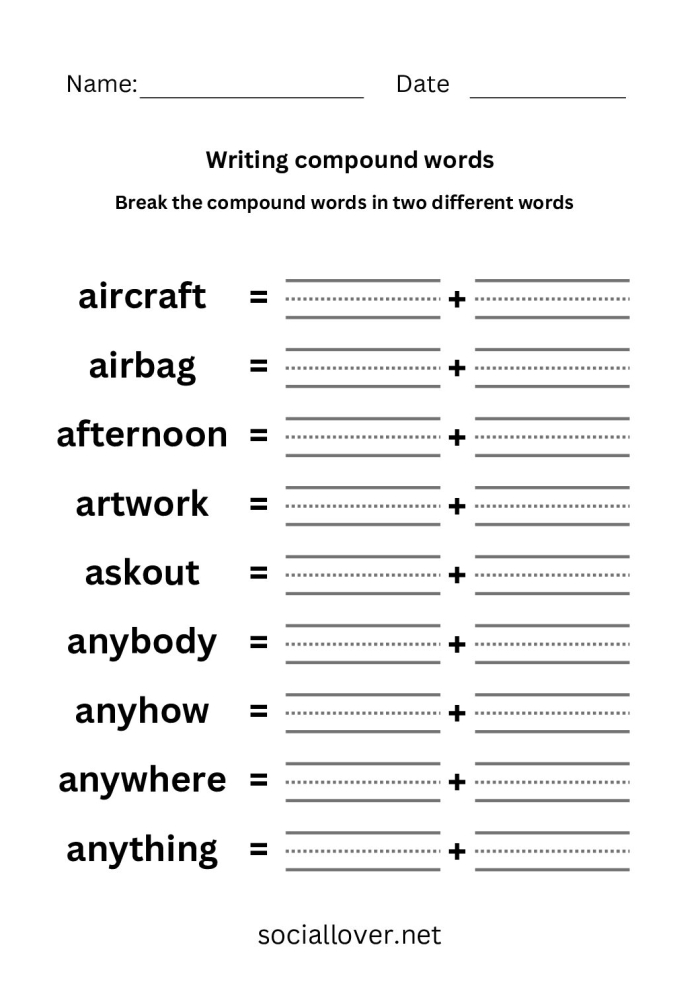
Engaging young learners can be a delightful challenge, especially when it comes to teaching them about compound words. One effective method is through a fun cut-and-paste worksheet that allows students to physically take apart and reconstruct these words. This hands-on activity not only reinforces their understanding of how two words can come together to create a new meaning, but it also keeps them actively involved in the learning process.
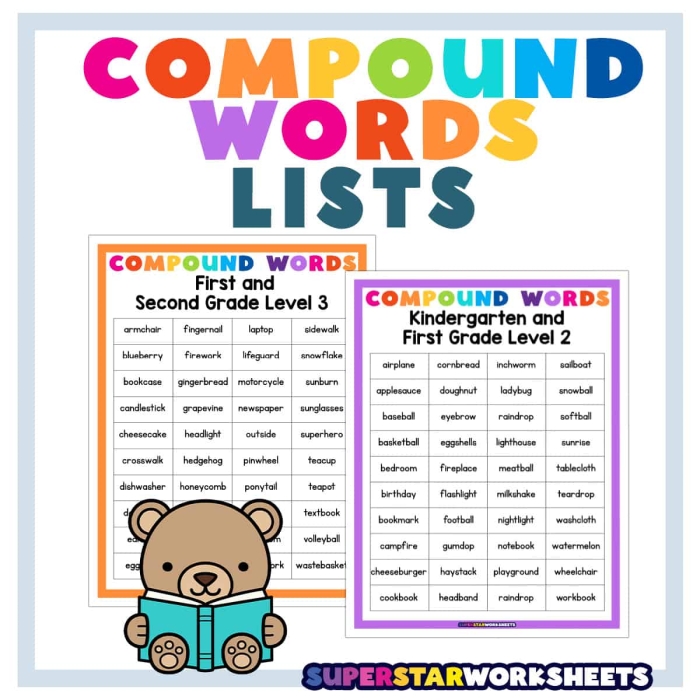
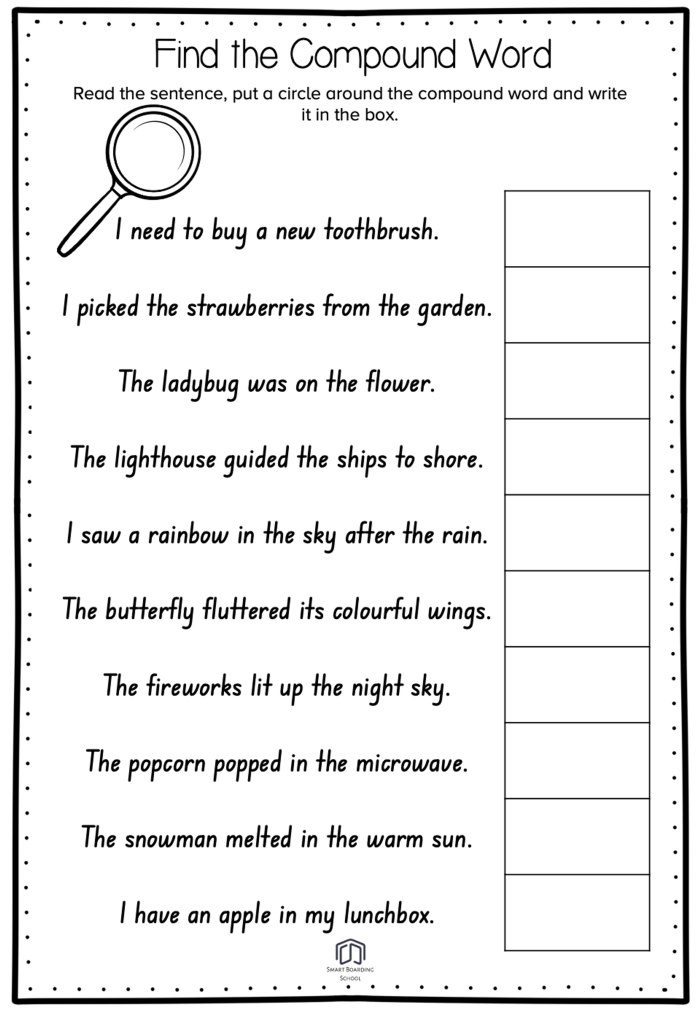
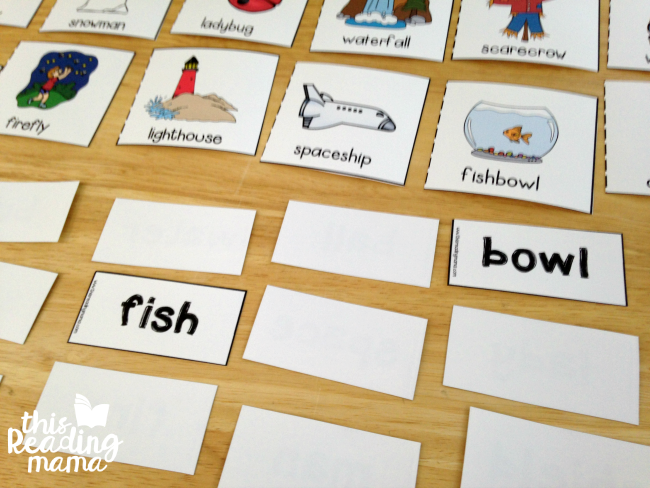
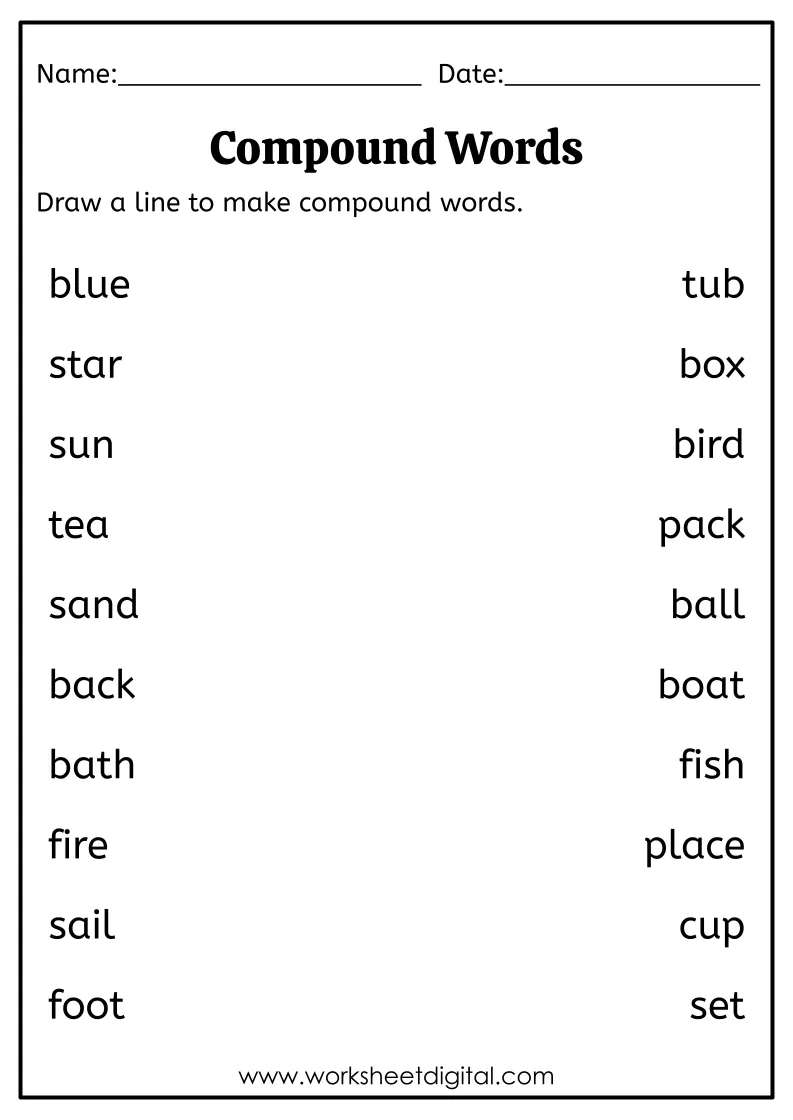
Compound words, like “notebook” or “sunflower,” are formed by combining two individual words. For kindergarten students, grasping this concept can be made easier with visual and tactile activities. A cut-and-paste worksheet encourages students to cut out word parts and paste them together. This simple task helps them visualize how words are built, making the learning experience both interactive and memorable.
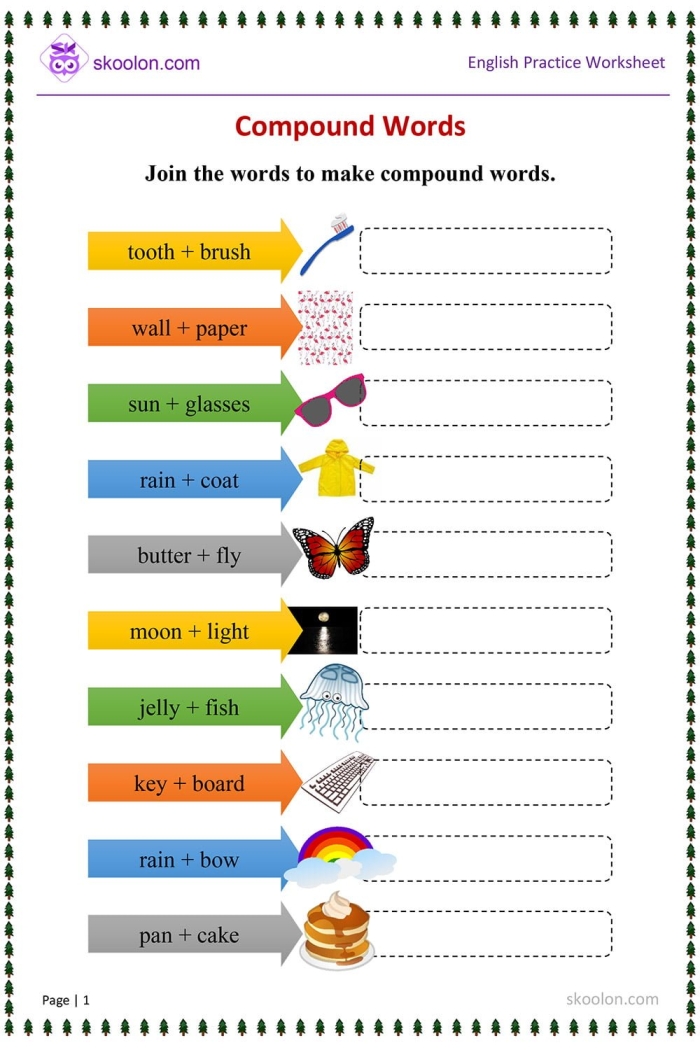
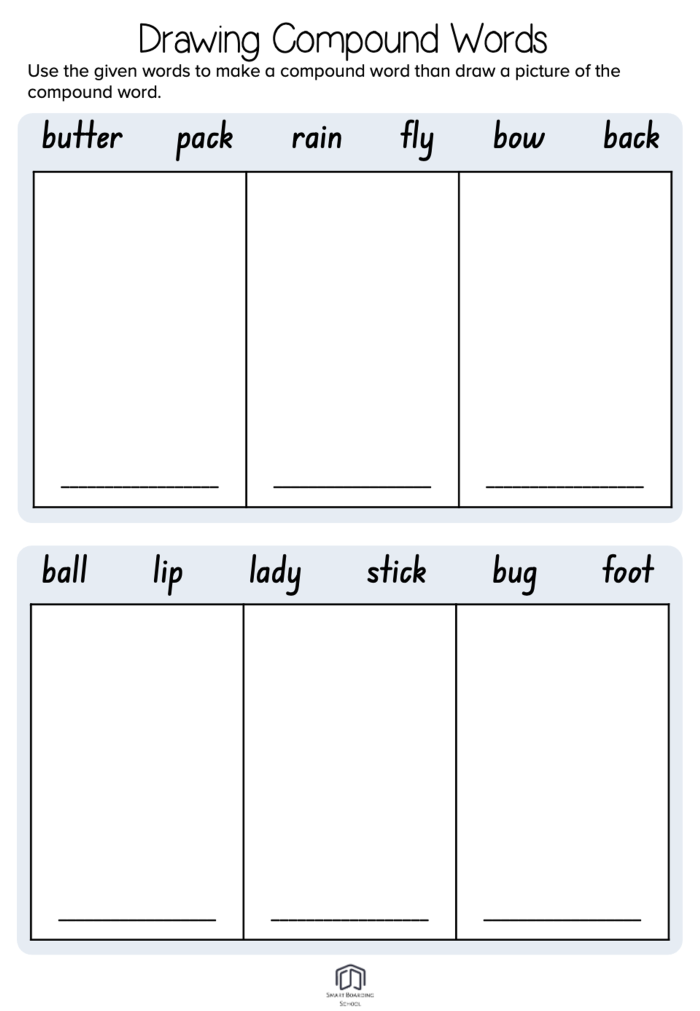
As children manipulate the paper pieces, they can explore the meanings of each part. For example, when they see the words “rain” and “bow,” they can understand that together they make “rainbow,” a term they likely already know. By relating these components to familiar concepts, students can enhance their vocabulary and comprehension skills simultaneously.
Additionally, worksheets like this can serve as a great supplement to other grammar and mechanics activities. For instance, after working on compound words, students can advance to activities focused on recognizing uppercase letters or writing short vowel words. Resources such as those found on Luminaworksheets offer a variety of engaging worksheets that can help reinforce foundational skills in kindergarten.
Incorporating playful elements into learning not only makes the classroom more dynamic but also fosters a love for language at an early age. By using a cut-and-paste worksheet, teachers can effectively introduce compound words, making this essential area of grammar and mechanics both enjoyable and educational for young learners.
Hands-On Worksheet Activities