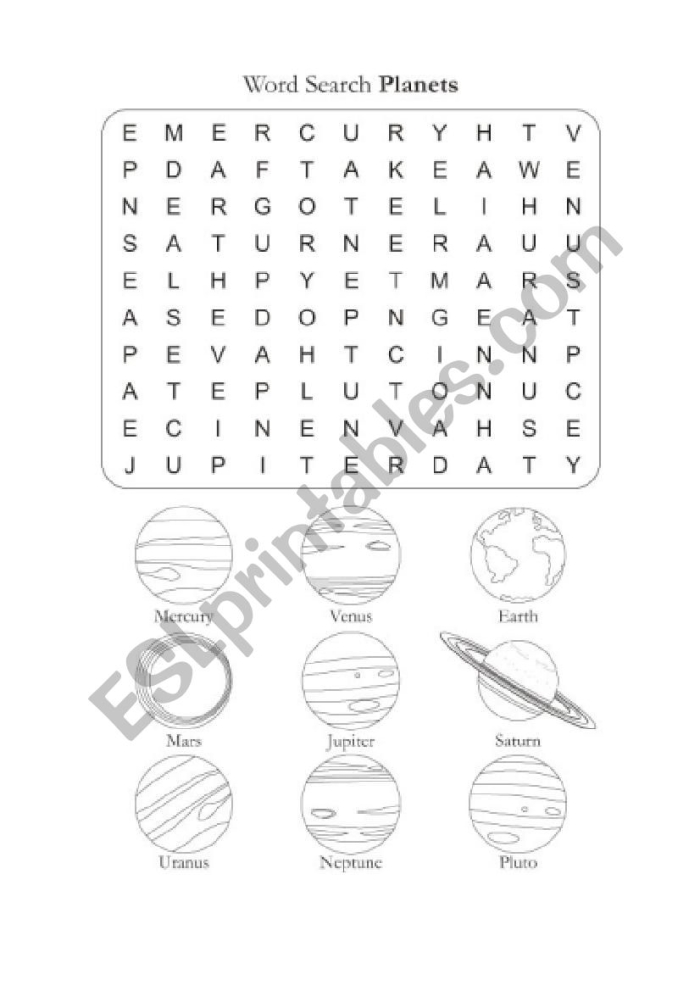
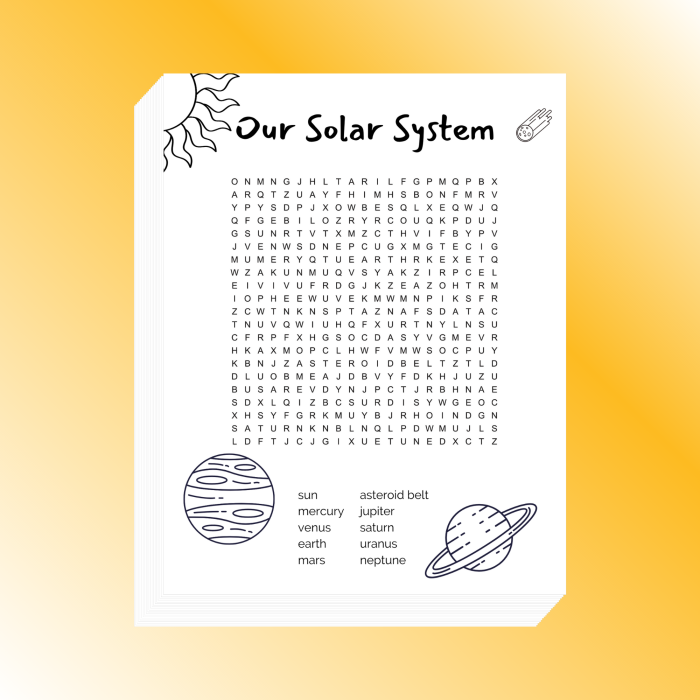
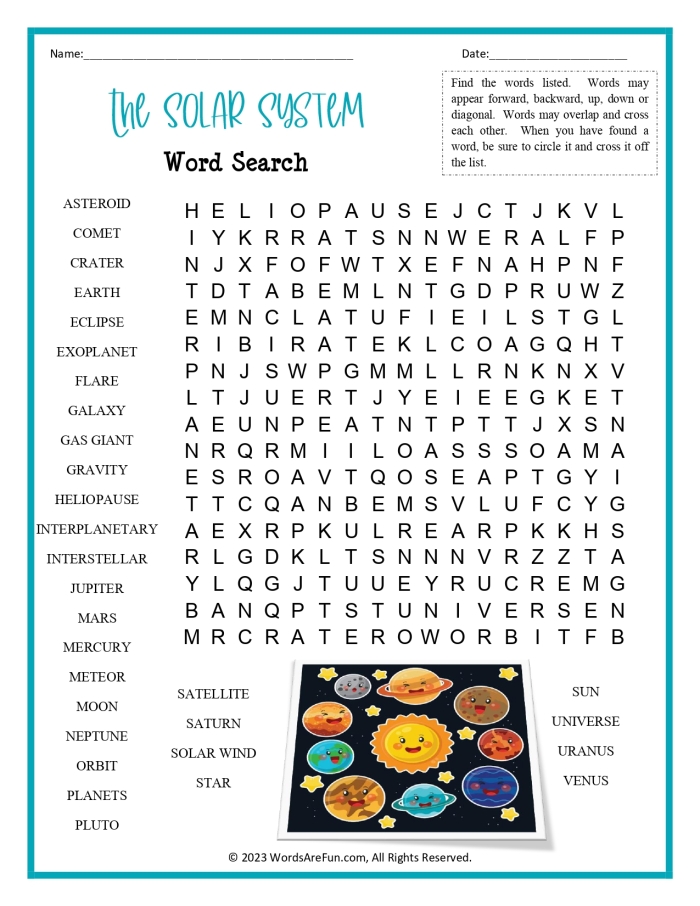
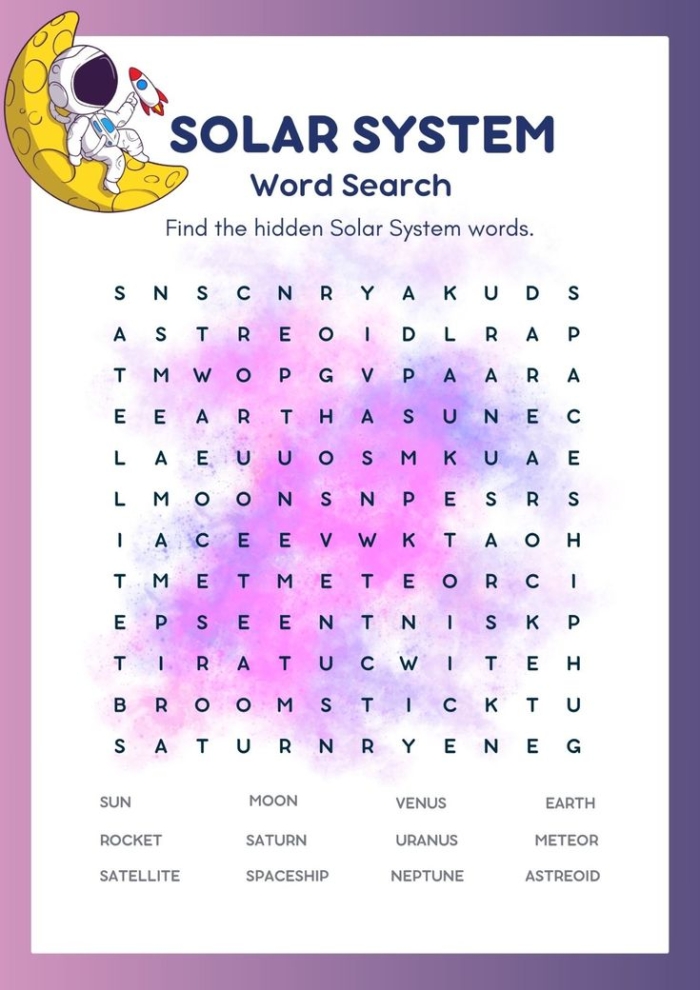
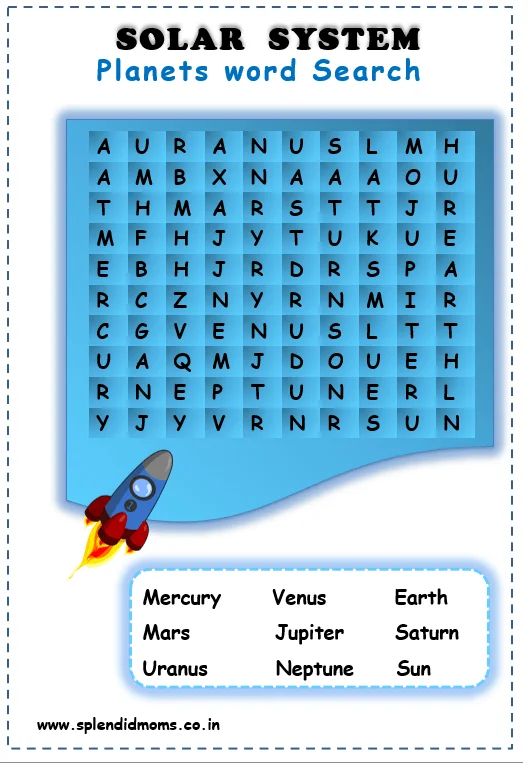
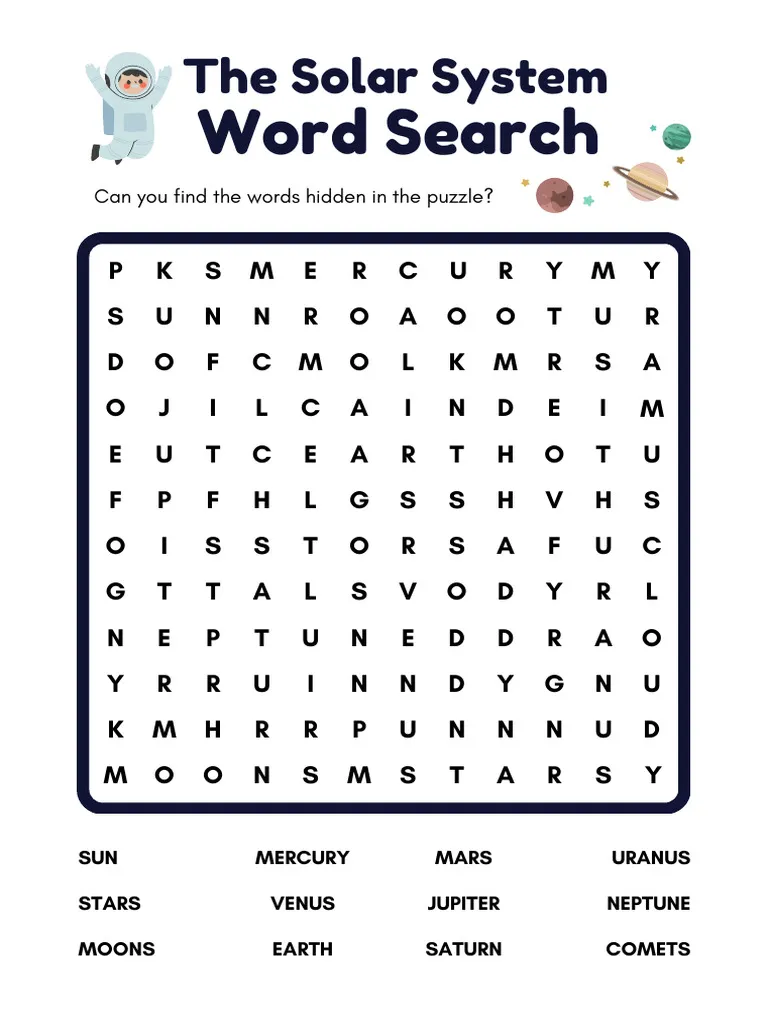
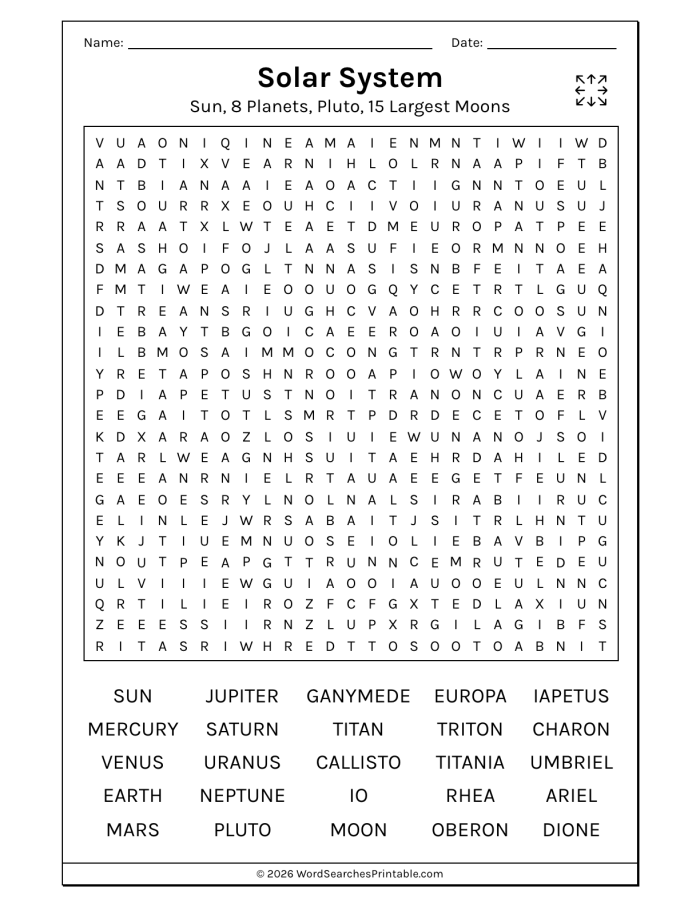
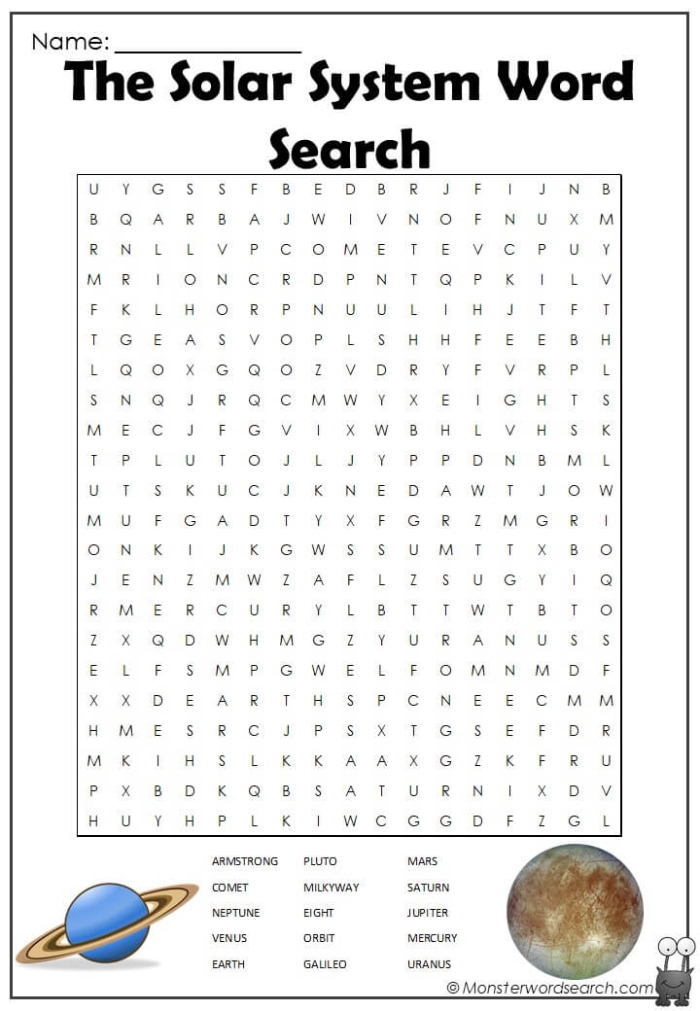
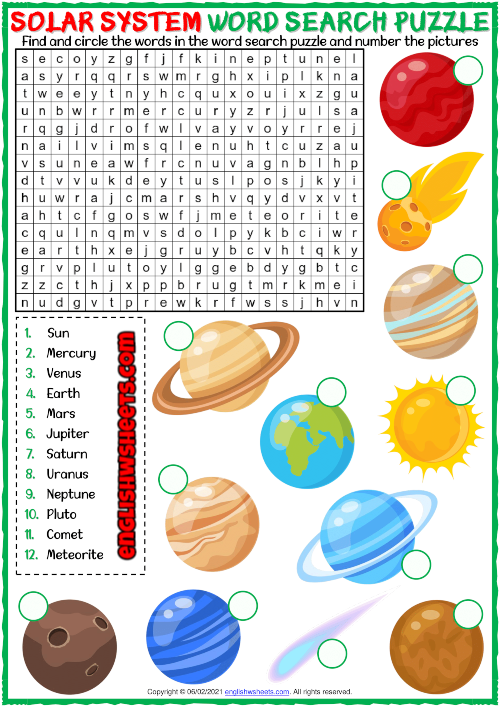
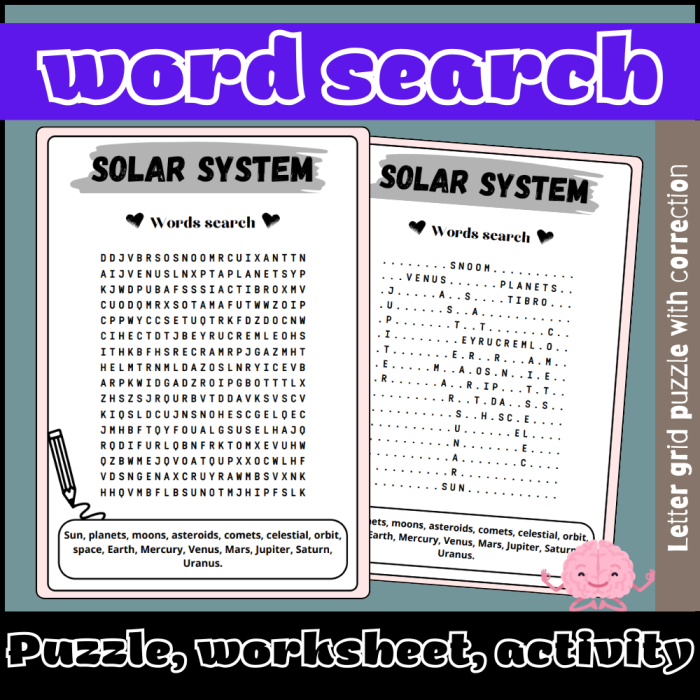
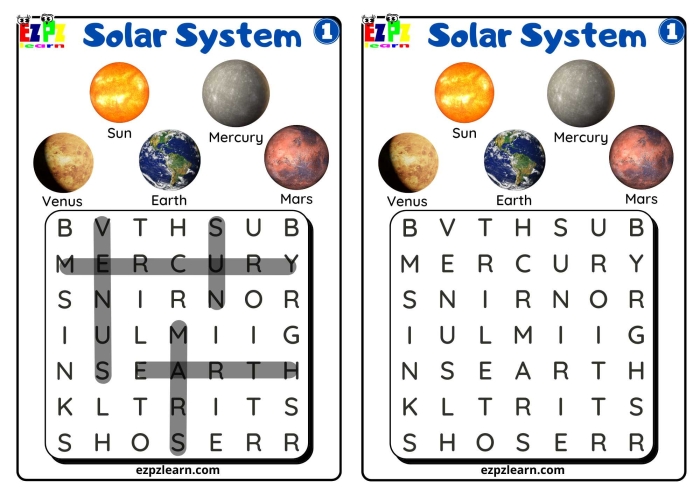
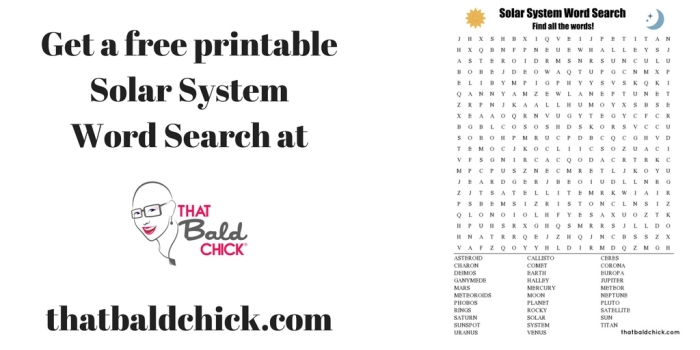
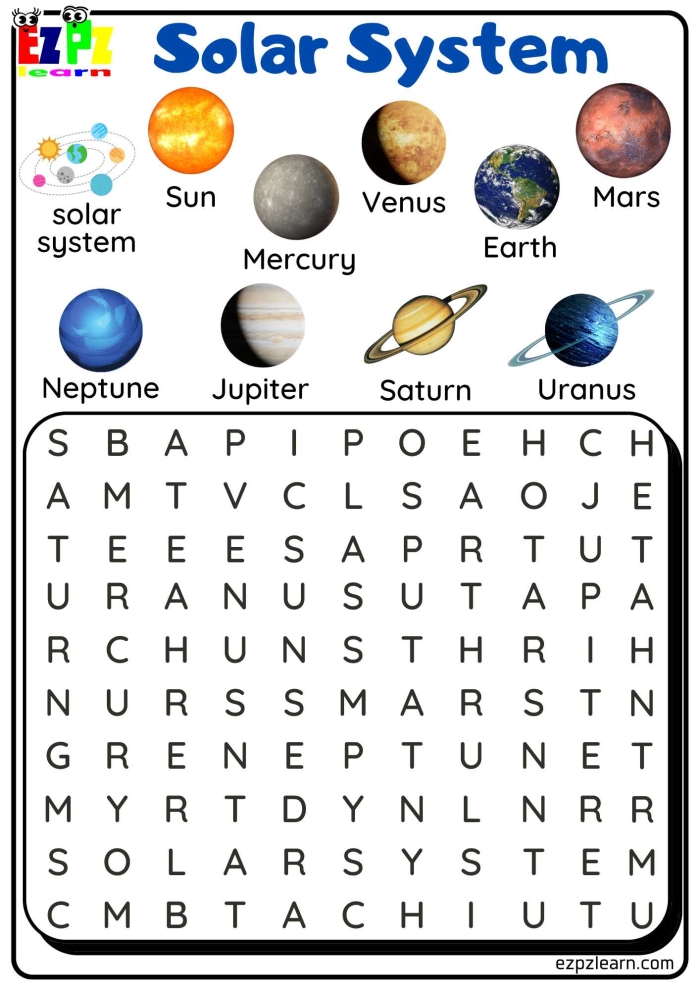
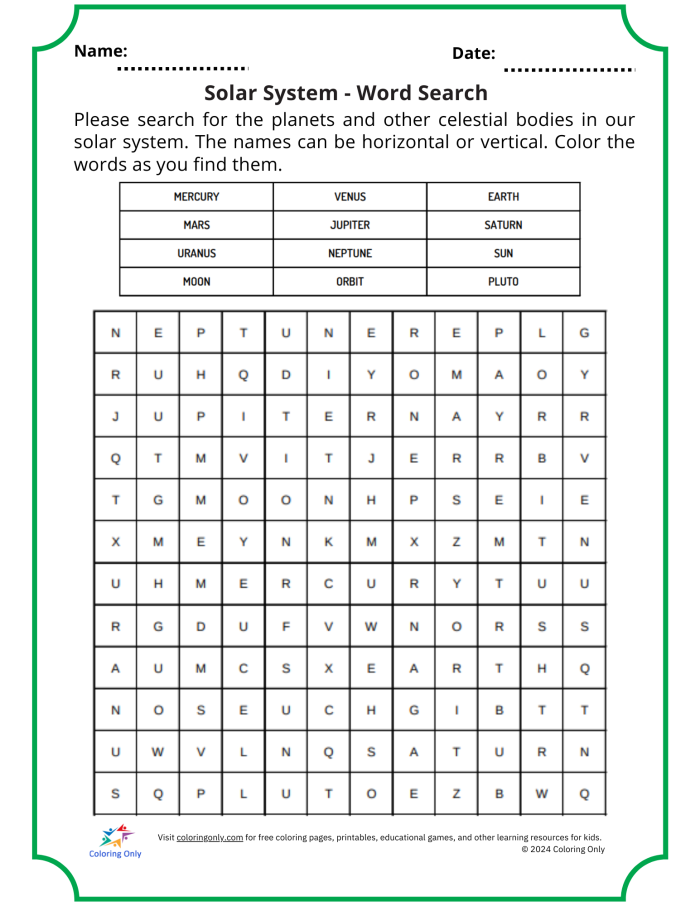
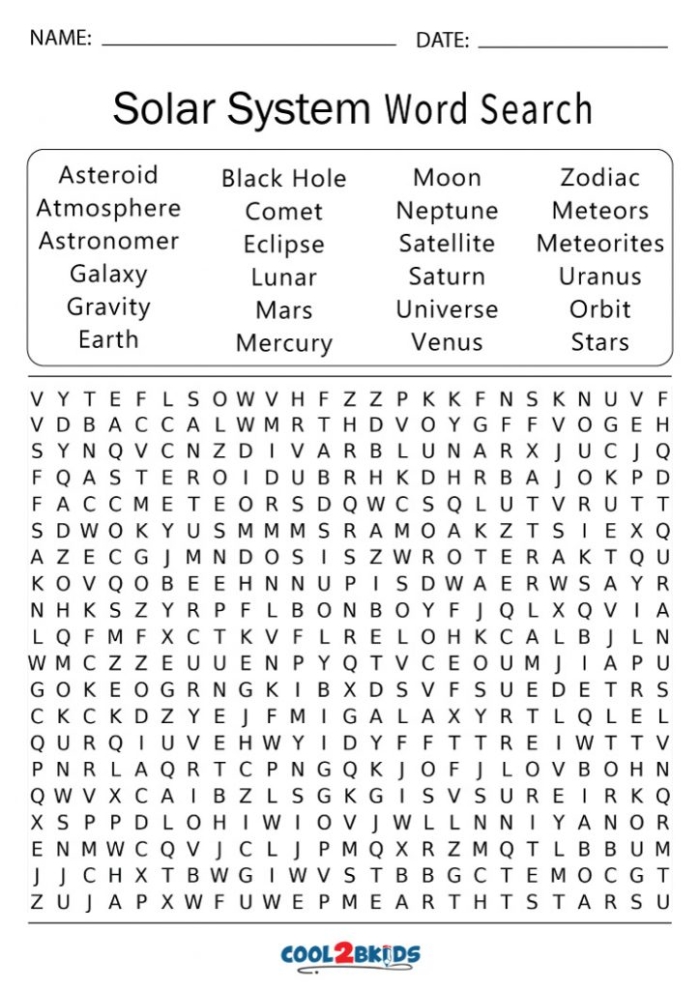
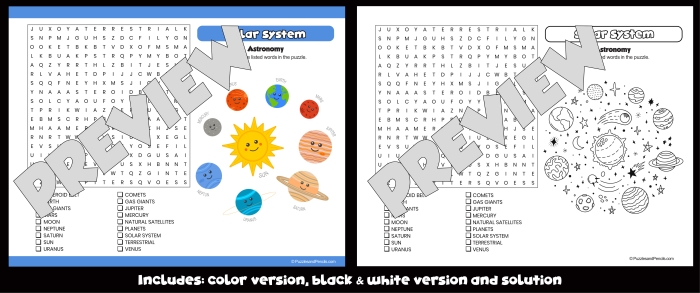
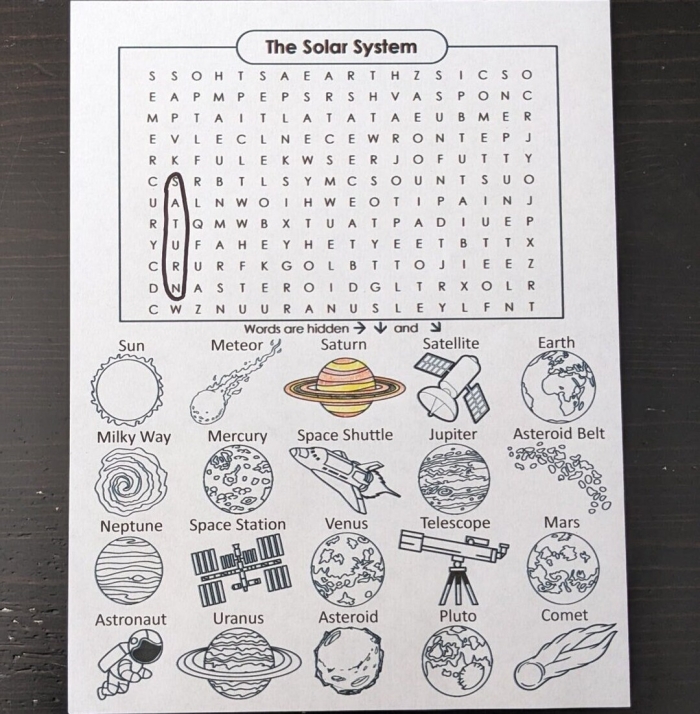
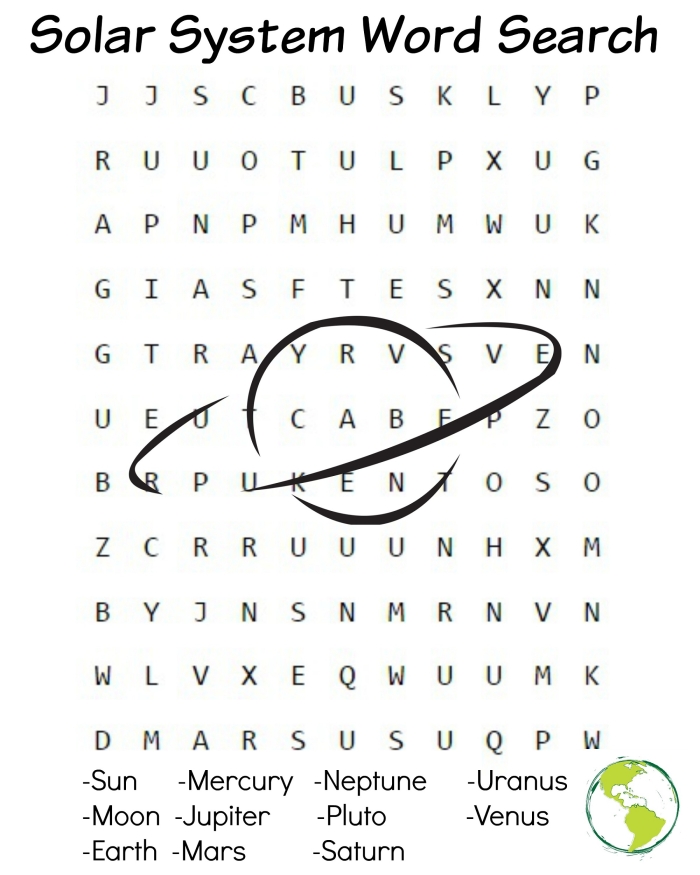
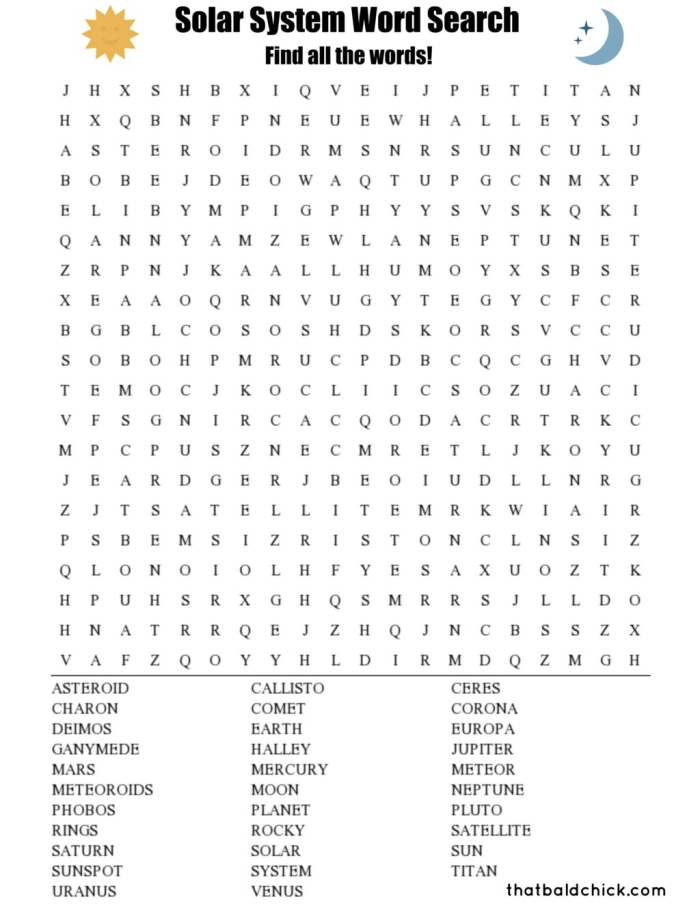
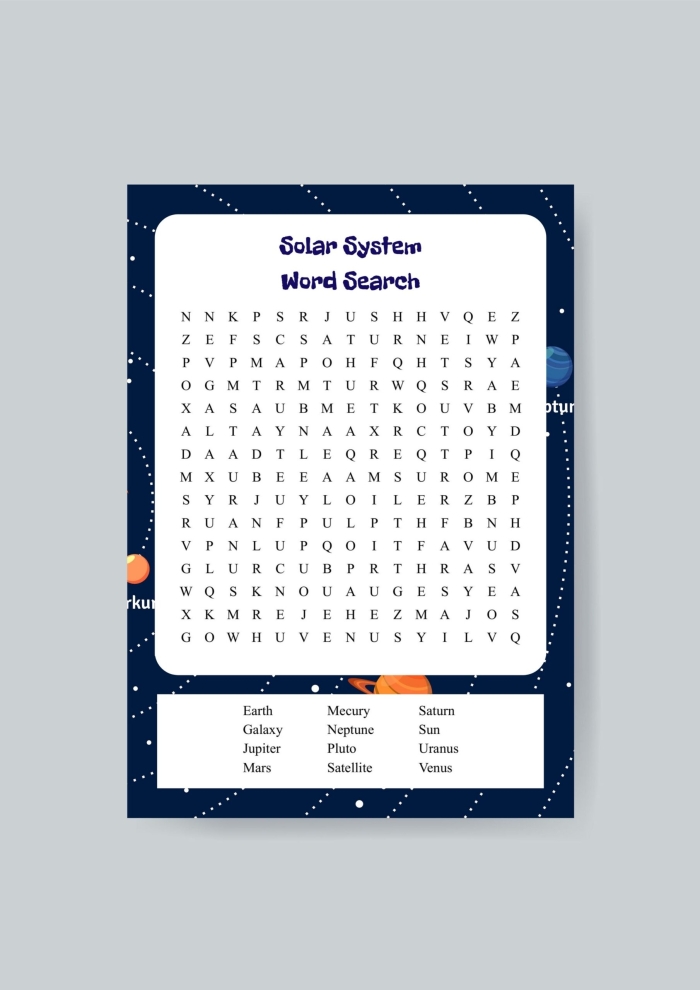
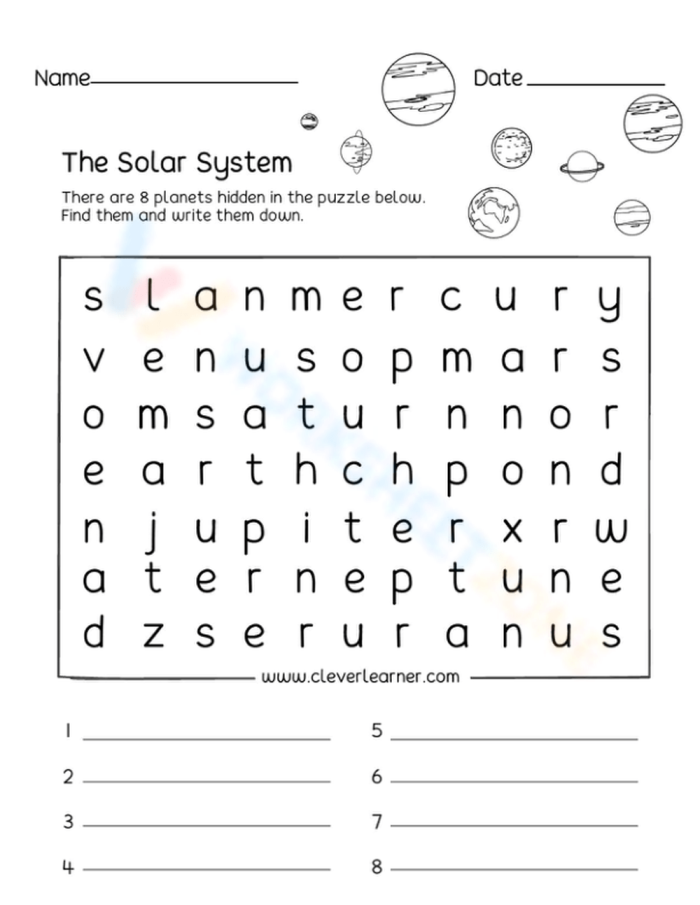
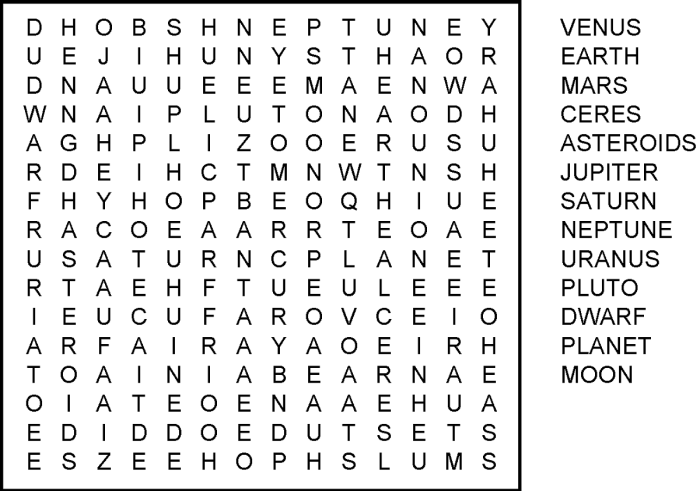
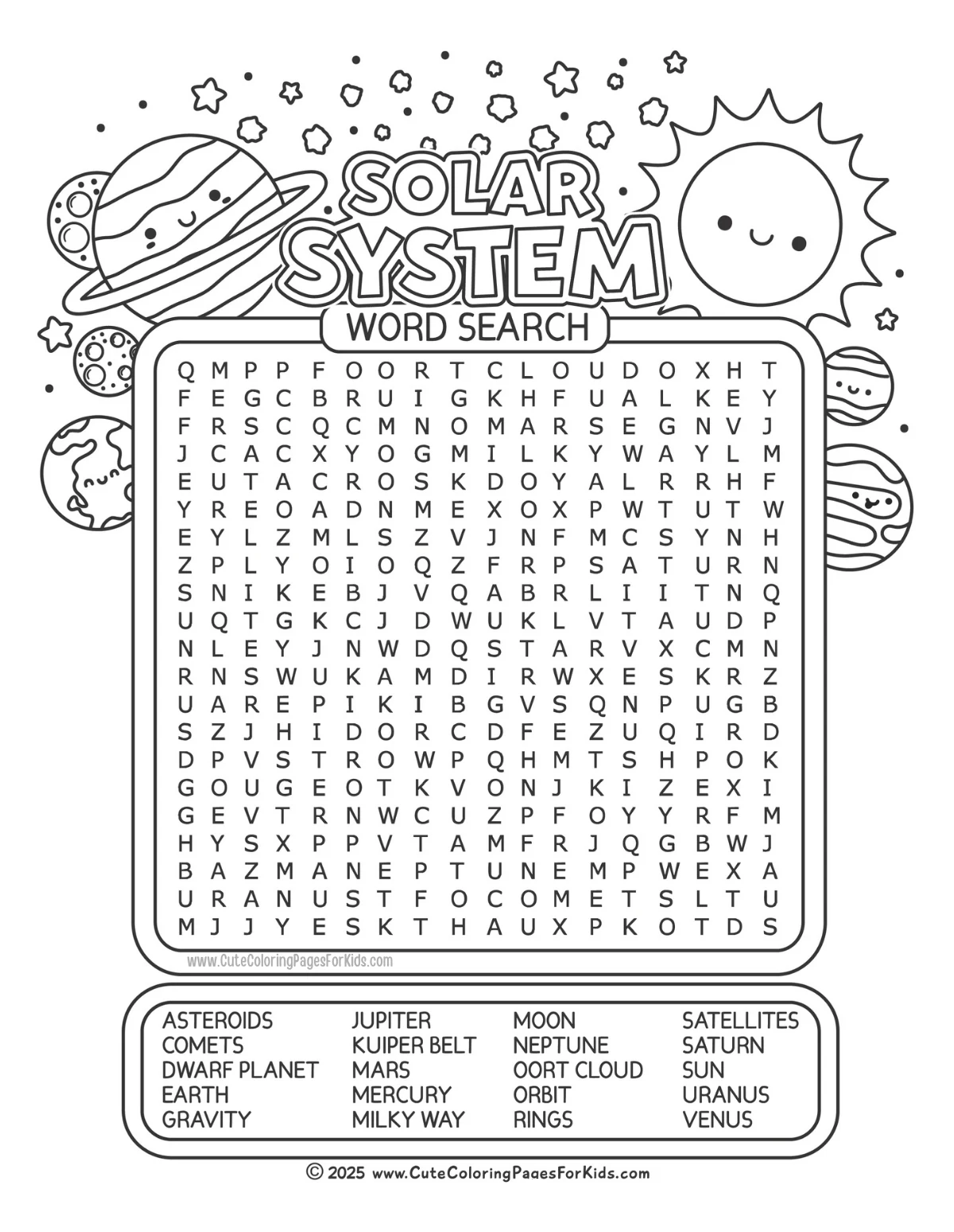
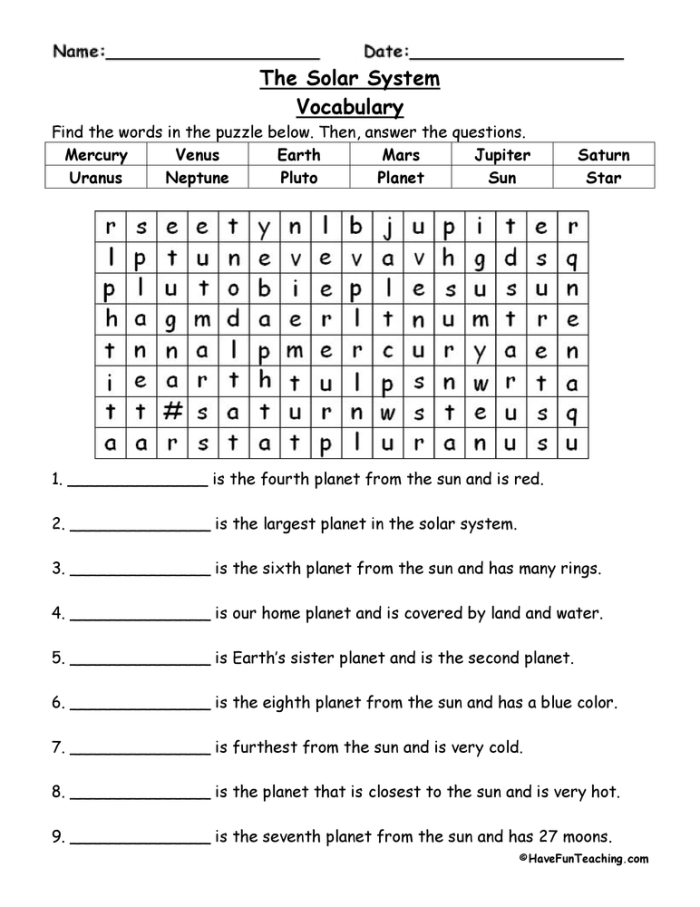
A solar system word search offers second grade students a chance to explore the names of planets and celestial objects while building vocabulary skills. When children search for words like Mercury, Venus, Earth, Mars, Jupiter, Saturn, Uranus, and Neptune hidden among scattered letters, they’re doing more than just finding words. They’re becoming familiar with the actual names they’ll encounter in science lessons, and that familiarity creates a foundation for deeper learning.
The beauty of this activity lies in what happens between the searching. As your child’s eyes scan the grid looking for each planet name, their mind naturally begins to wonder about these distant worlds. What makes Saturn special? Why do we call Earth our home? These questions emerge naturally from the activity itself, without feeling forced or overly academic.
For second grade learners, word searches serve a practical purpose beyond entertainment. They develop focus and fine motor skills as children trace letters with a pencil or finger. The alphabet-based format helps reinforce letter recognition and sequencing, skills that remain important at this grade level. Unlike more abstract alphabet activities, a space-themed word search connects learning to a topic that genuinely captivates many young minds.
You can extend this activity by discussing each planet as your child finds it. After completing a solar system word search, consider pairing it with other learning materials. For instance, exploring types of rocks can connect to understanding planetary composition, or practicing suffixes and word parts can help your child understand terms like “asteroid” or “lunar.”
The combination of structure and imagination makes word searches particularly effective for this age group. Your child gets the satisfaction of completing a task while their curiosity about the universe quietly expands.
Printable Worksheets for Practice