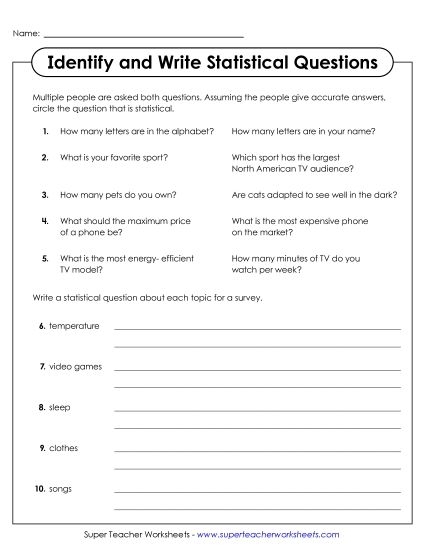
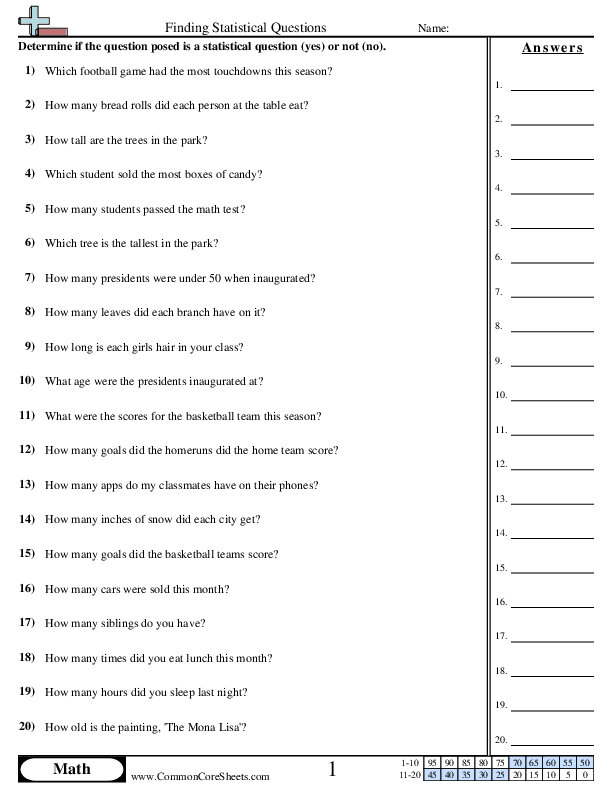
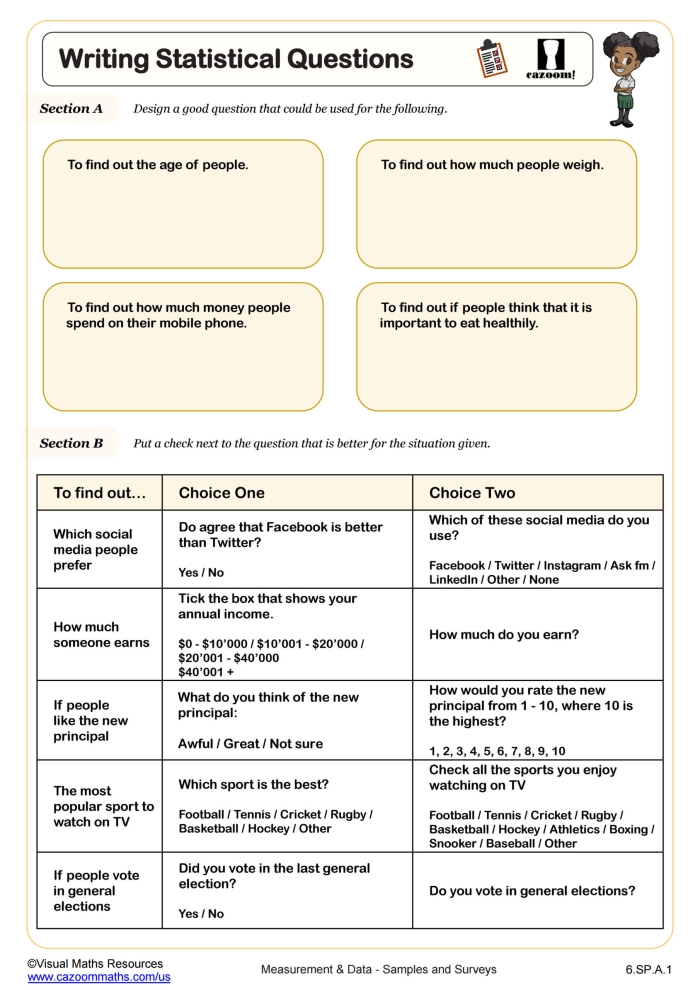
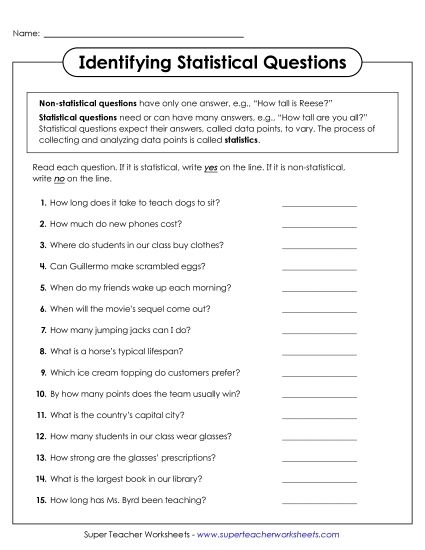
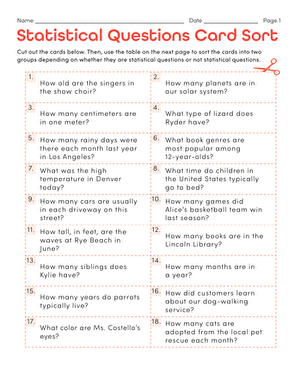
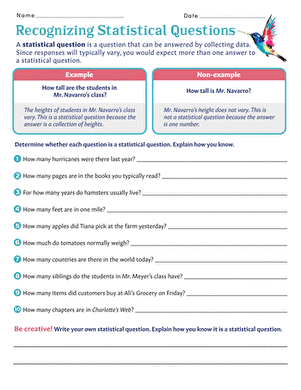
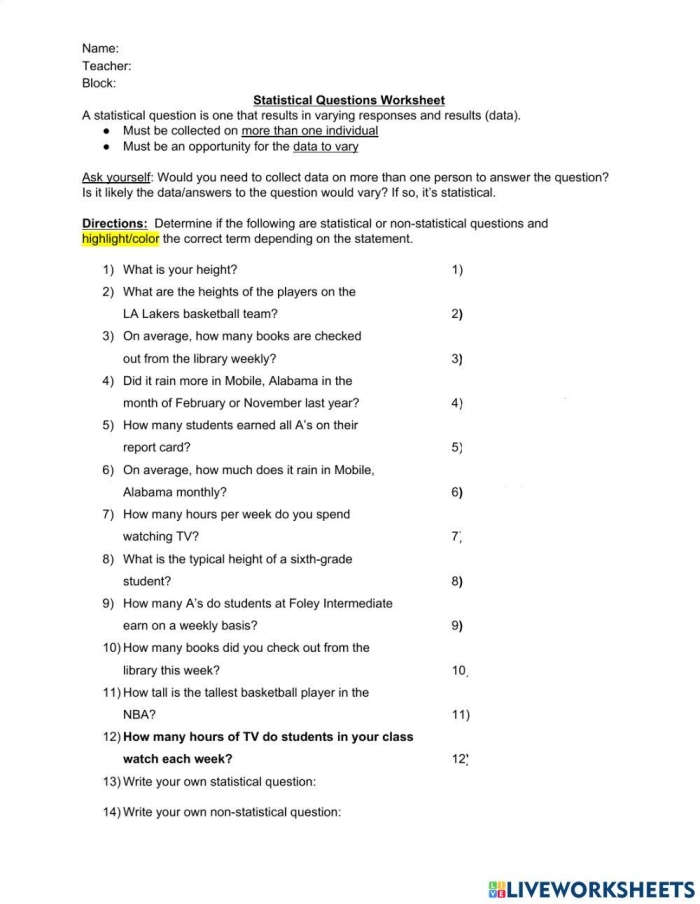
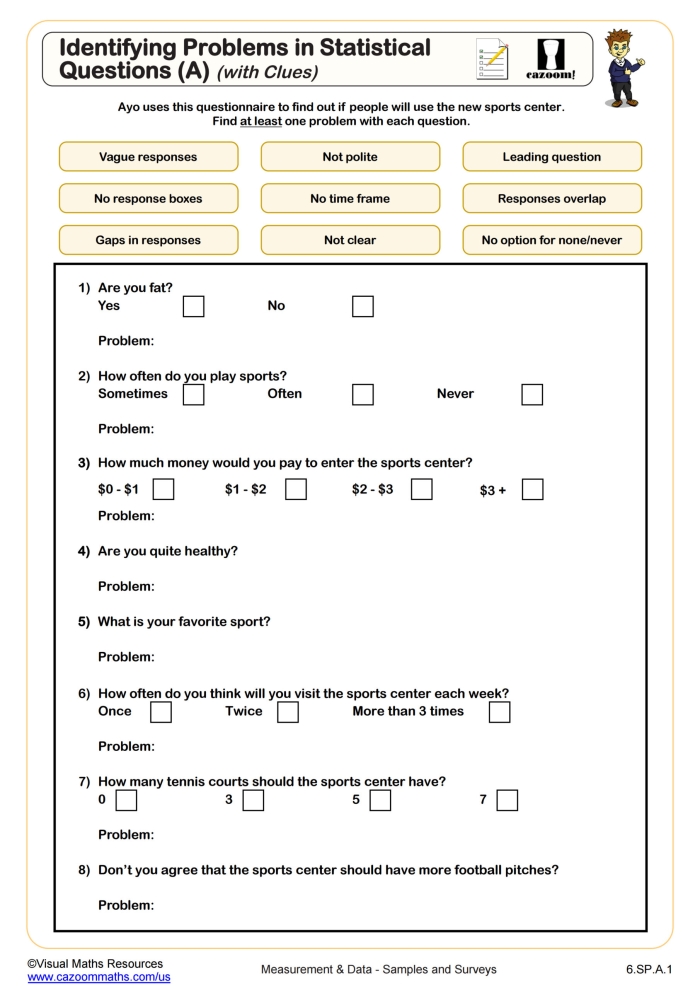
Most sixth-grade students encounter math questions every day, but they rarely stop to think about what makes a question mathematical in the first place. A printable recognizing statistical questions worksheet introduces a crucial distinction that shapes how students approach data and analysis: the difference between statistical and non-statistical questions.
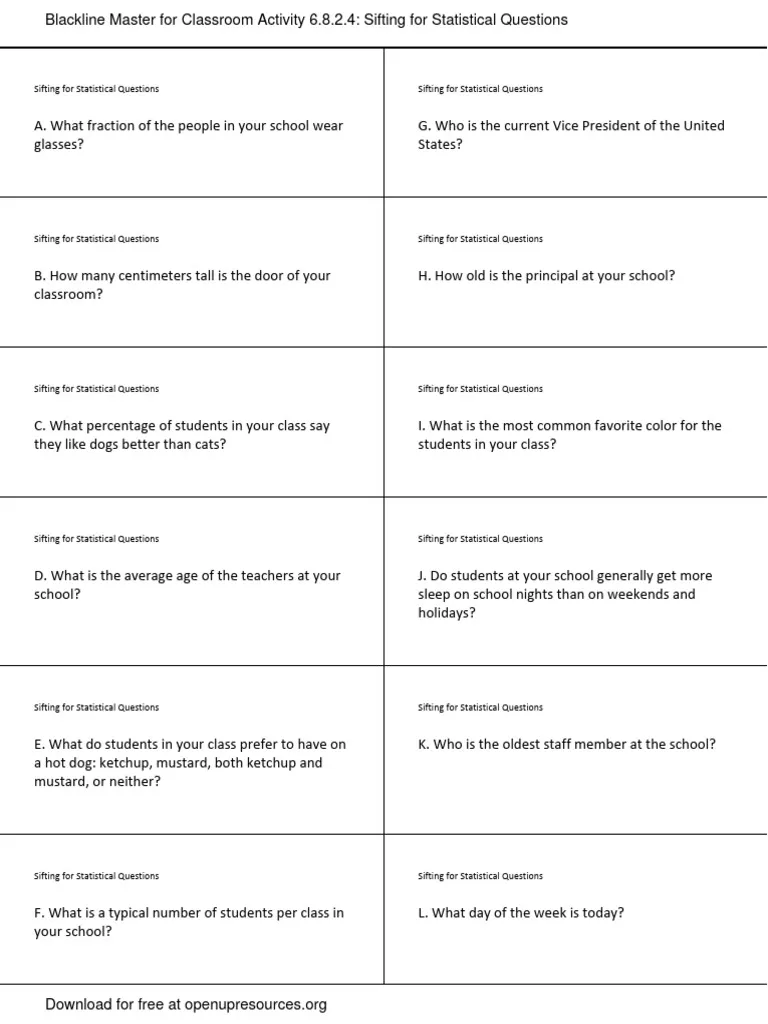
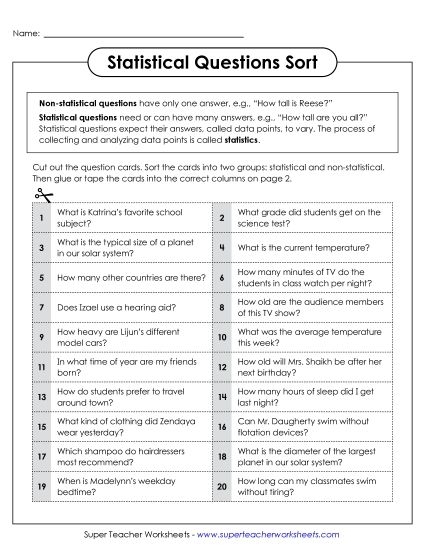
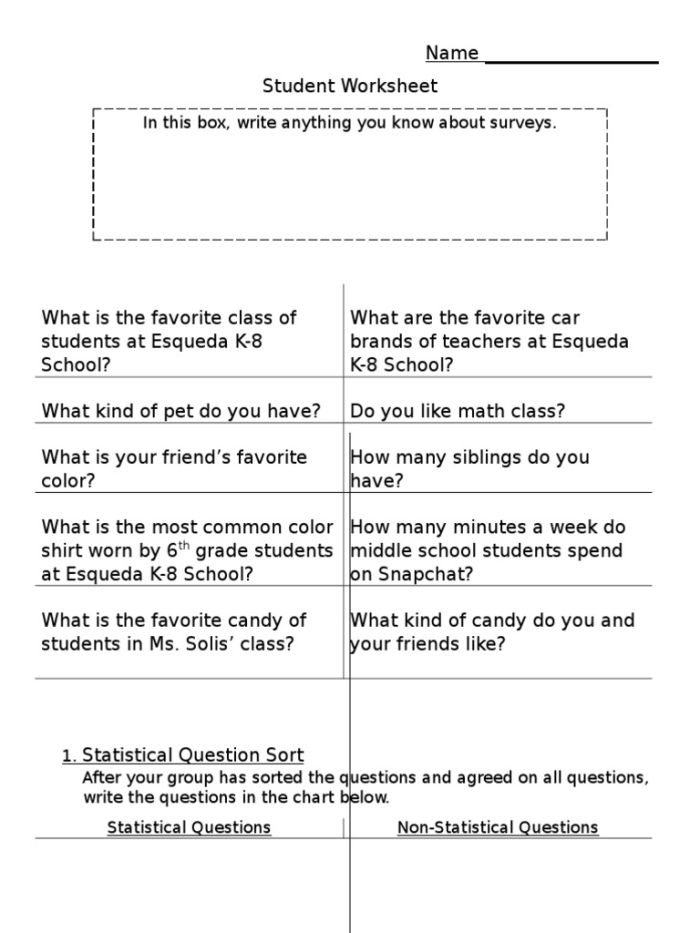
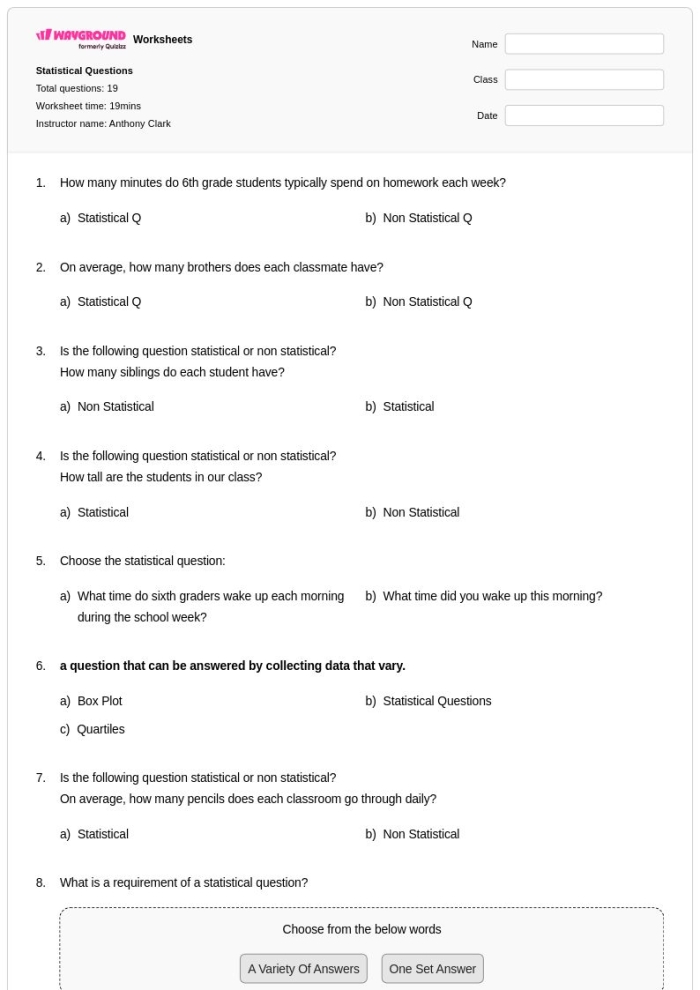
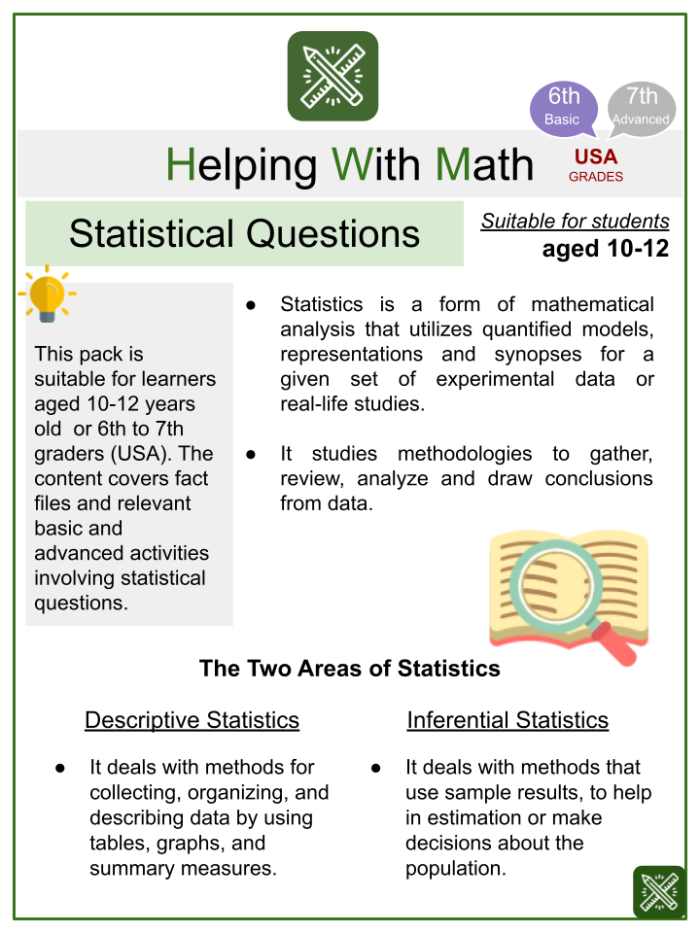
Statistical questions are those that anticipate variability in their answers. When a student asks “How tall are the students in my class?” they’re asking a statistical question because different students will have different heights. The answer isn’t a single number but a collection of responses that can be analyzed, compared, and described. Non-statistical questions, by contrast, have a single, definite answer. “How tall is my best friend?” produces one answer, not a range of values.
This distinction matters because it teaches sixth-grade writers and mathematicians to think critically about data collection. Once students recognize statistical questions, they understand why surveys, polls, and experiments exist. They begin to see that certain questions require multiple data points to answer meaningfully.
Working through exercises that ask students to classify questions helps solidify this concept. A question like “What is the most popular lunch choice at our school?” is statistical because preferences vary among students. Questions about specific facts, like “Who is the principal of our school?” are not statistical because there’s only one correct answer.
These worksheets often pair well with other sixth-grade math skills. Students working on GCF and crack the code problems benefit from understanding how to frame questions about numerical data. Similarly, those exploring opposites and absolute value strengthen their overall mathematical reasoning.
The ability to distinguish statistical questions from non-statistical ones prepares students for more advanced data literacy. It’s a foundational skill that supports everything from reading graphs to conducting surveys, making it an essential focus in sixth-grade mathematics curriculum.
Try These Printable Worksheets