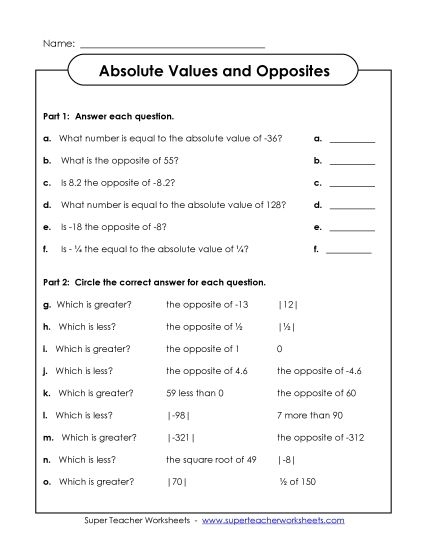
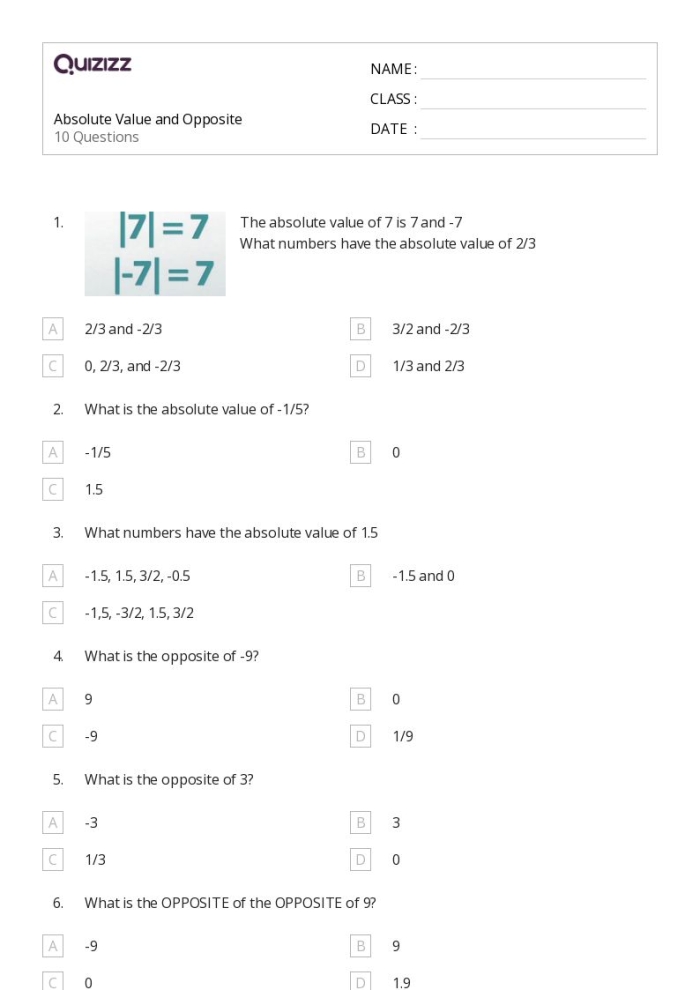
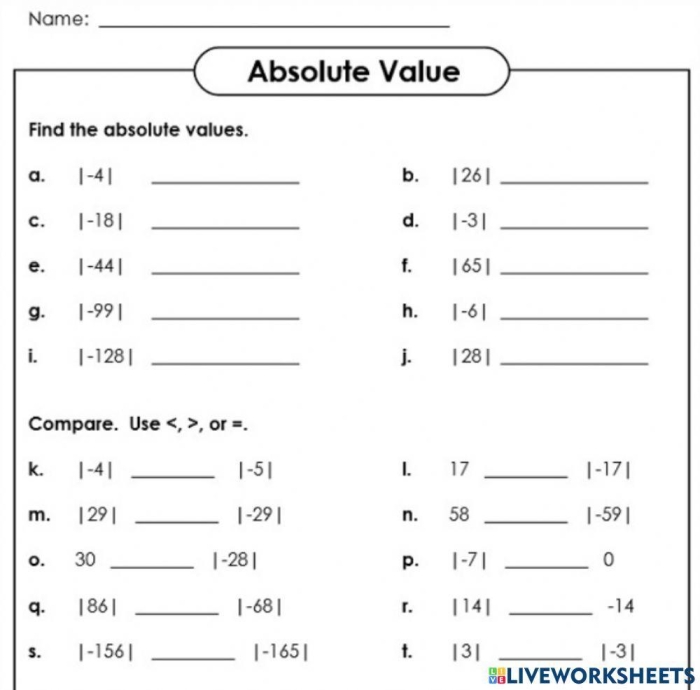
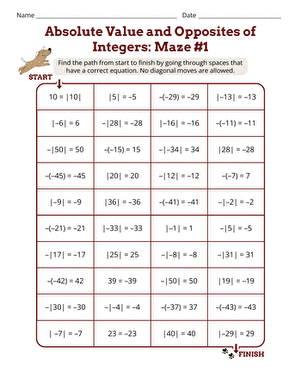
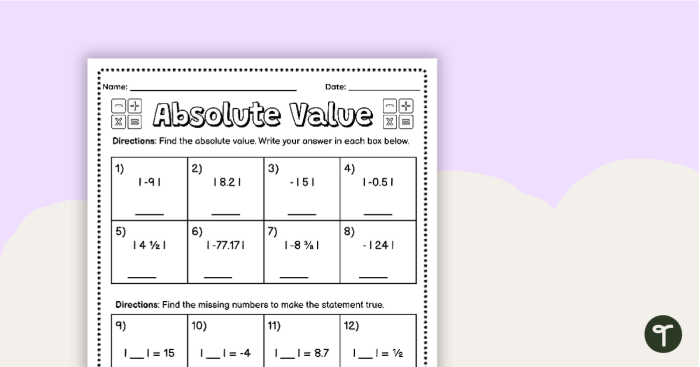
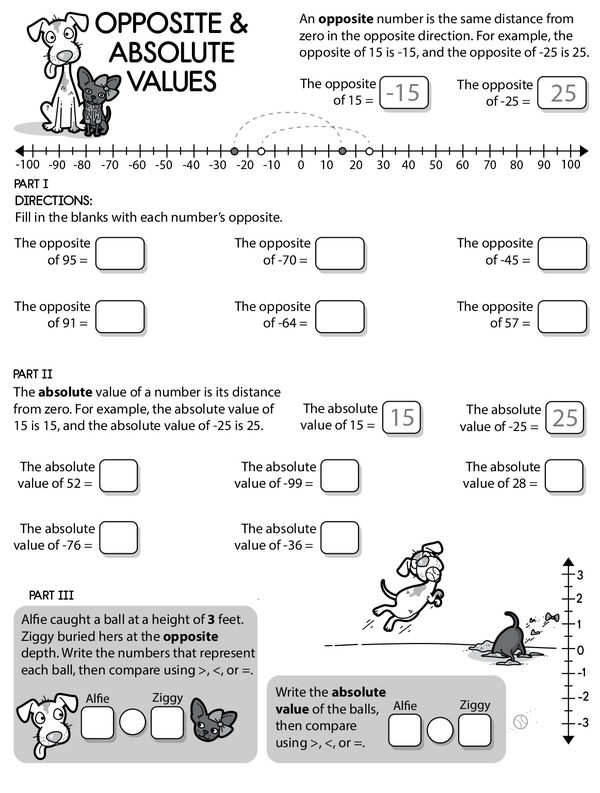
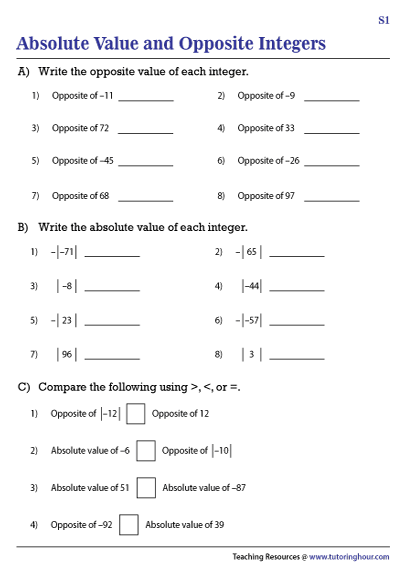
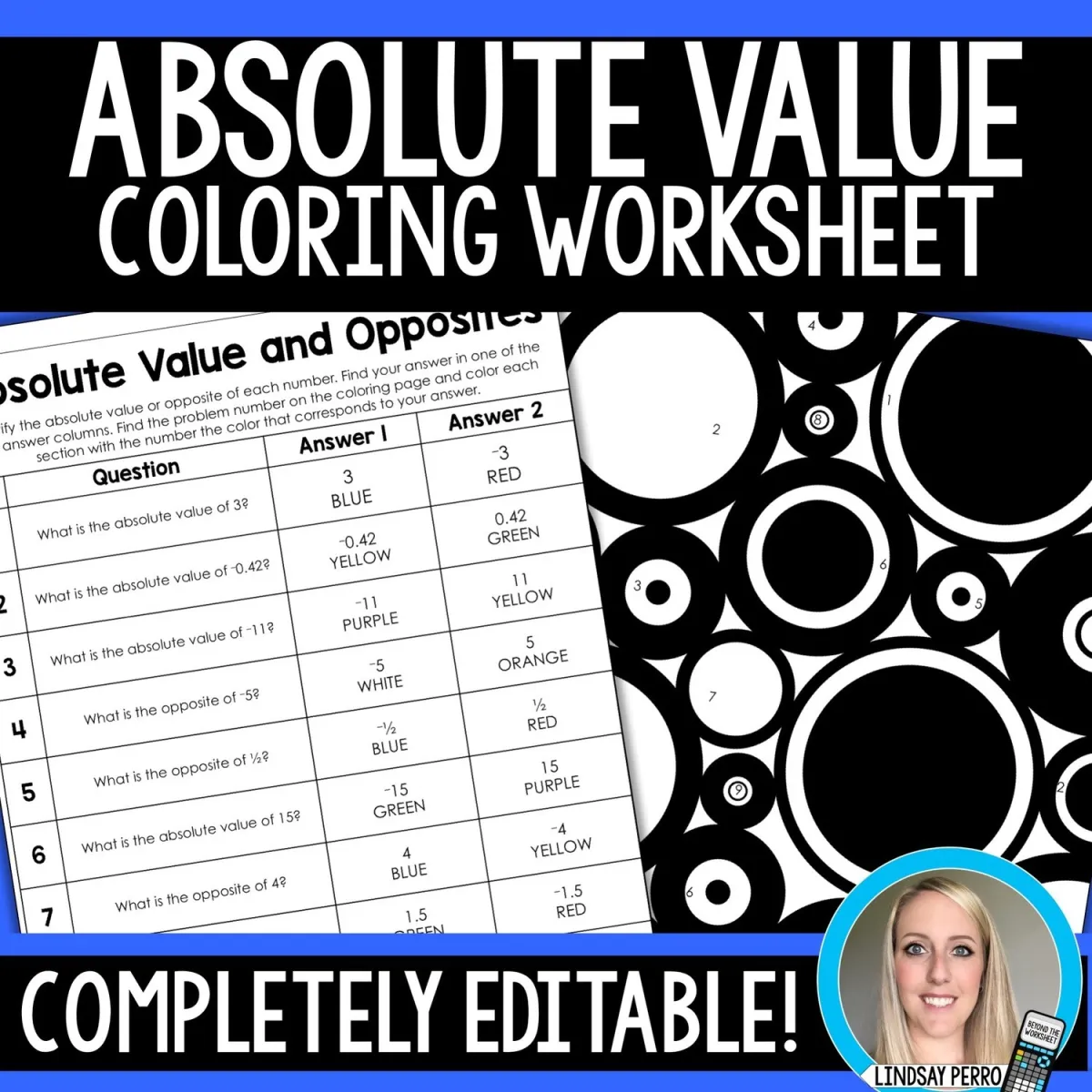
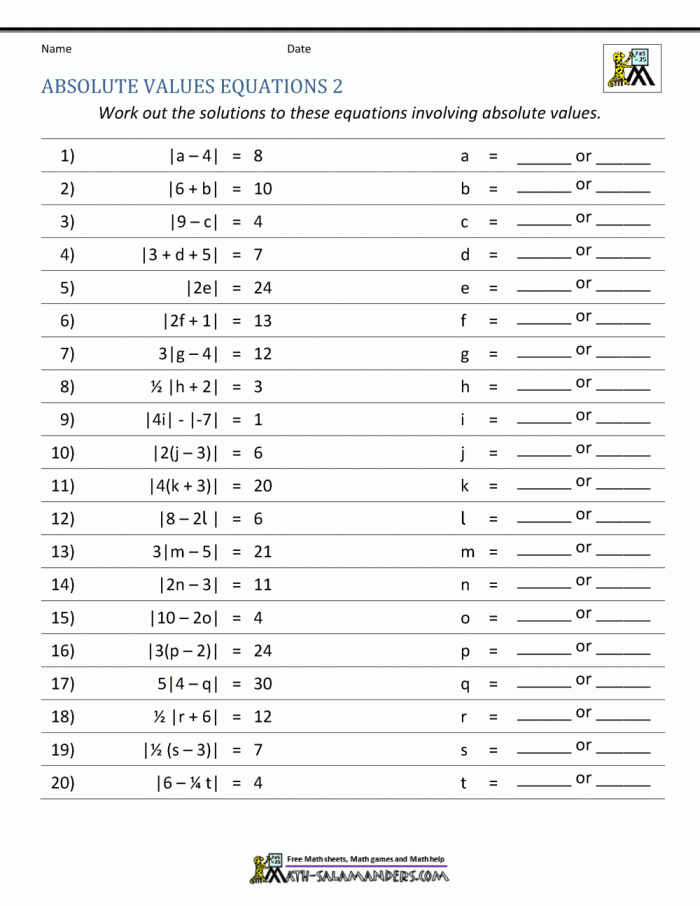
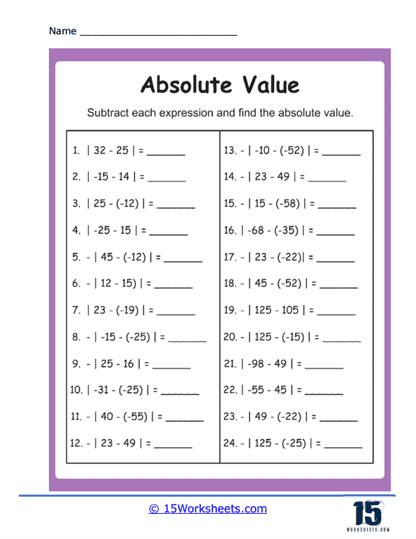
Understanding opposites and absolute values is essential for sixth graders as they navigate the world of rational numbers. These concepts not only enhance mathematical skills but also foster critical thinking. When working on a worksheet that focuses on finding opposites and absolute values, students can sharpen their ability to think analytically about numbers.
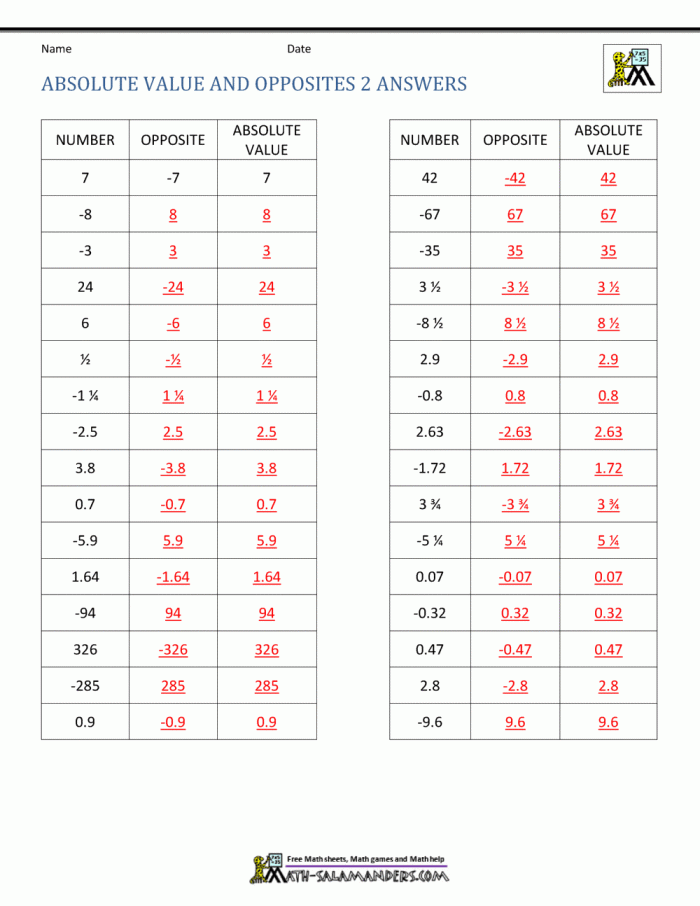
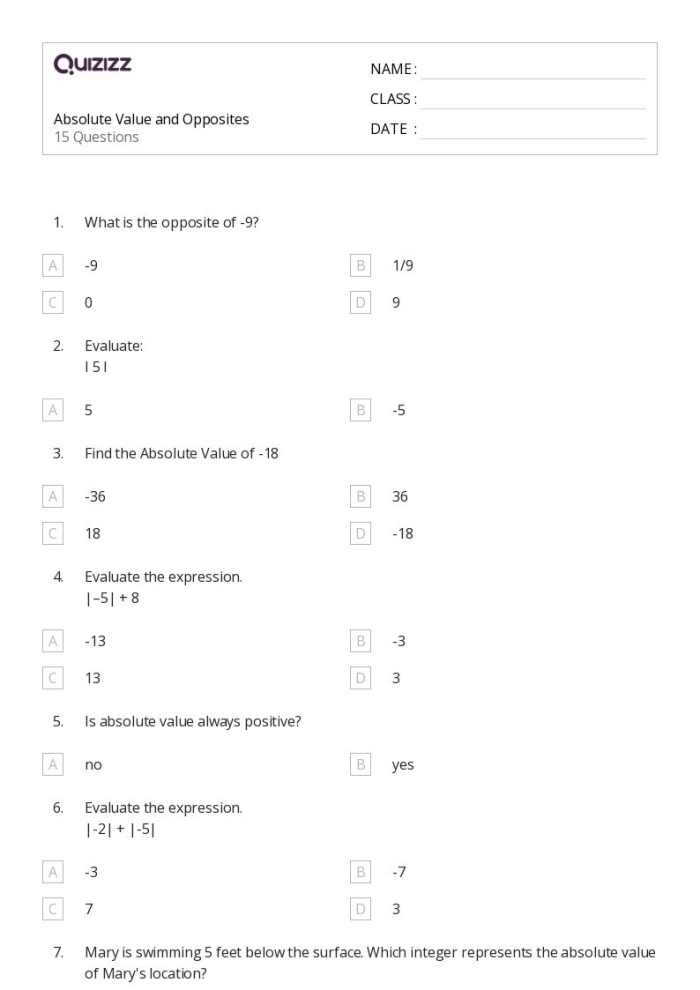
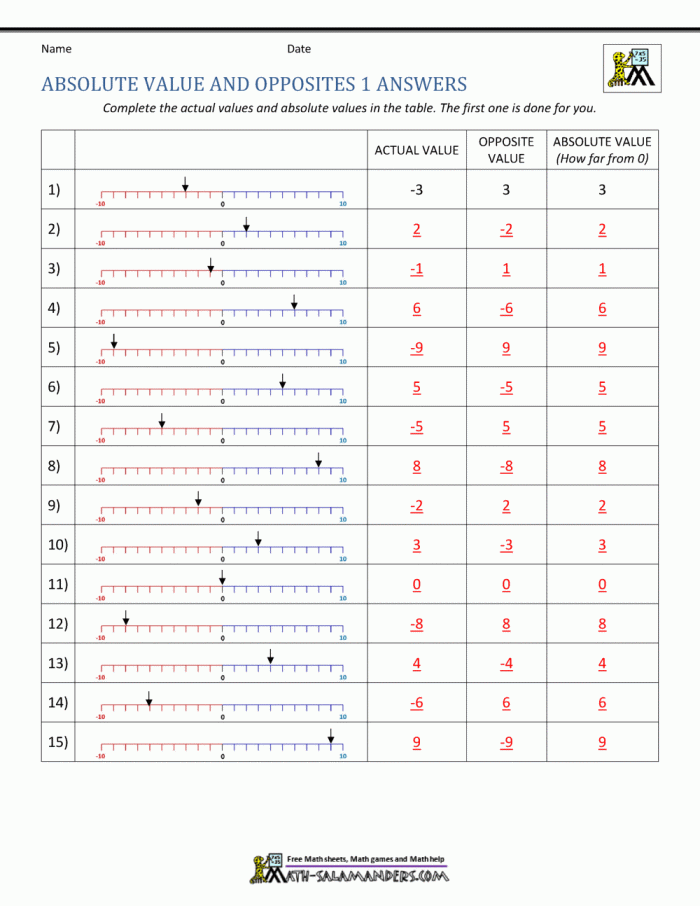
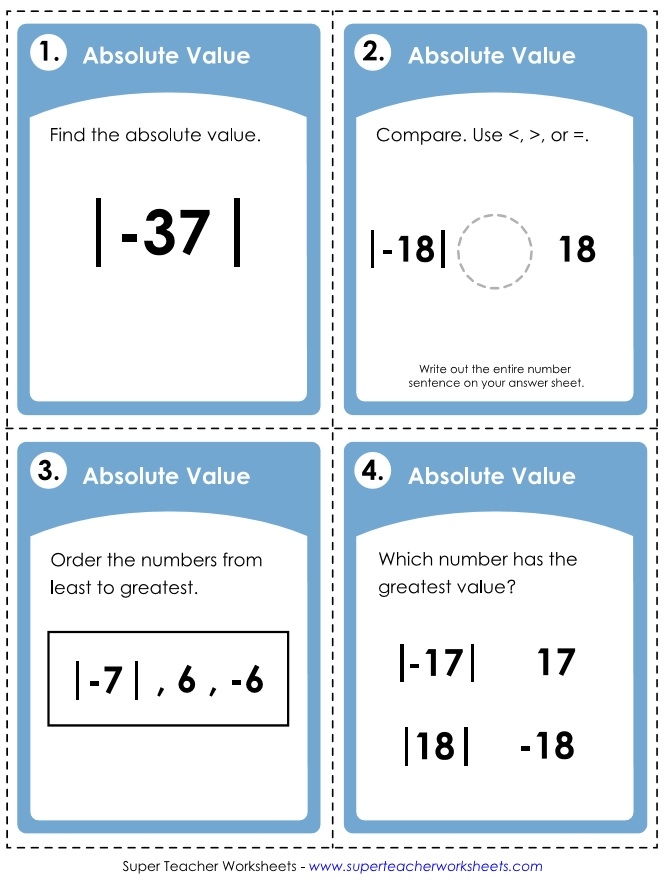
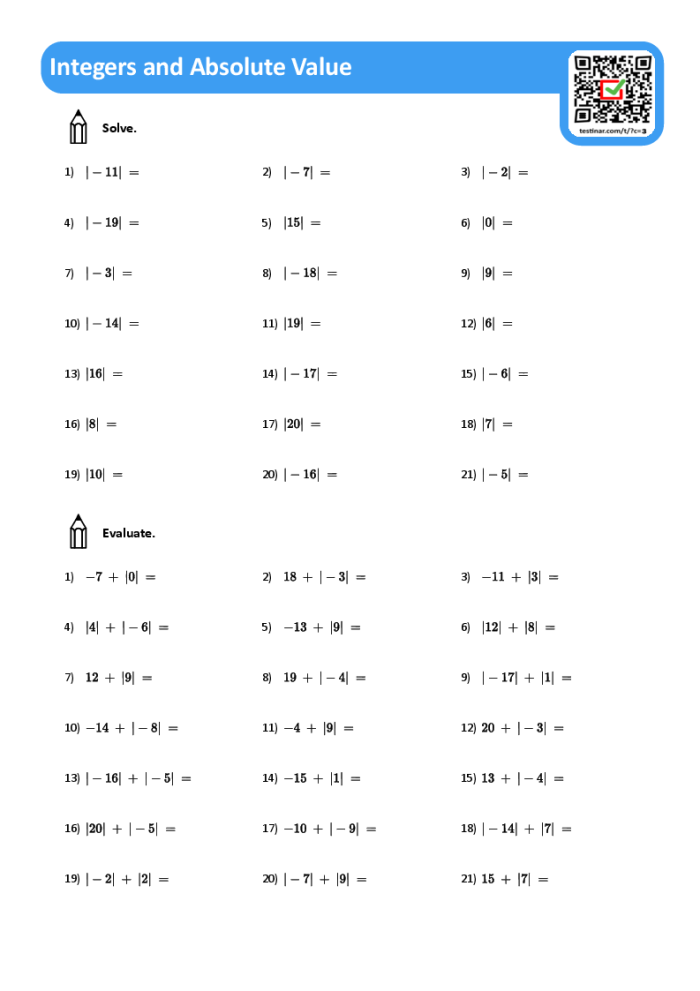
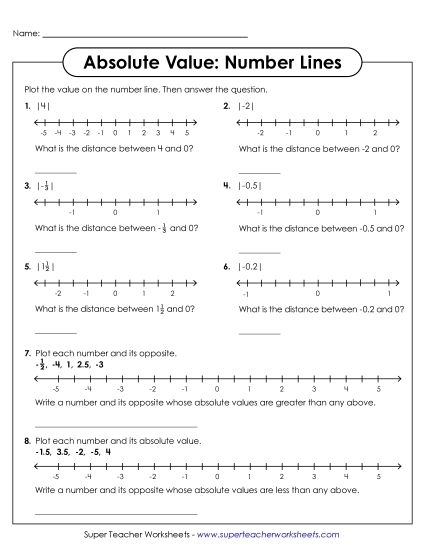
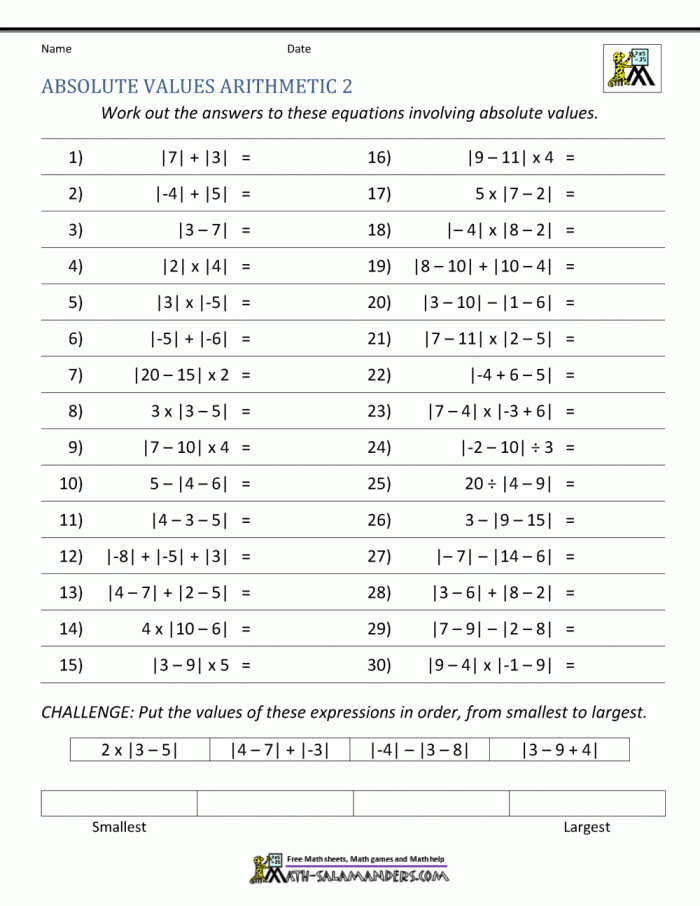
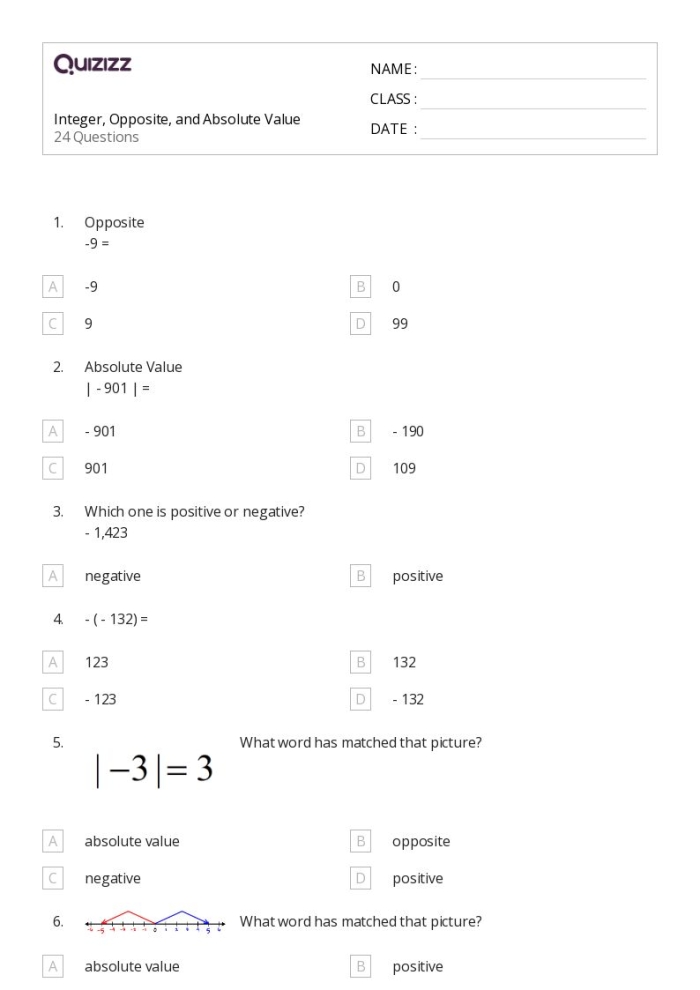
To find the opposite of a rational number, you simply change its sign. For instance, the opposite of 5 is -5, and the opposite of -3.2 is 3.2. This exercise helps students grasp the idea that numbers have a dual nature, which is a fundamental concept in mathematics. Meanwhile, the absolute value of a number refers to its distance from zero on the number line, always expressed as a positive value. For example, the absolute value of both 4 and -4 is 4. This distinction is crucial, especially when working with equations and inequalities.
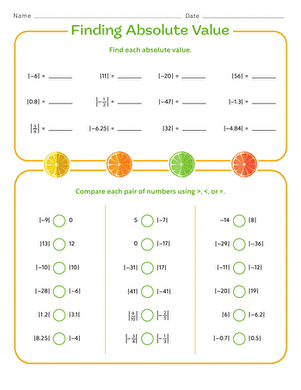
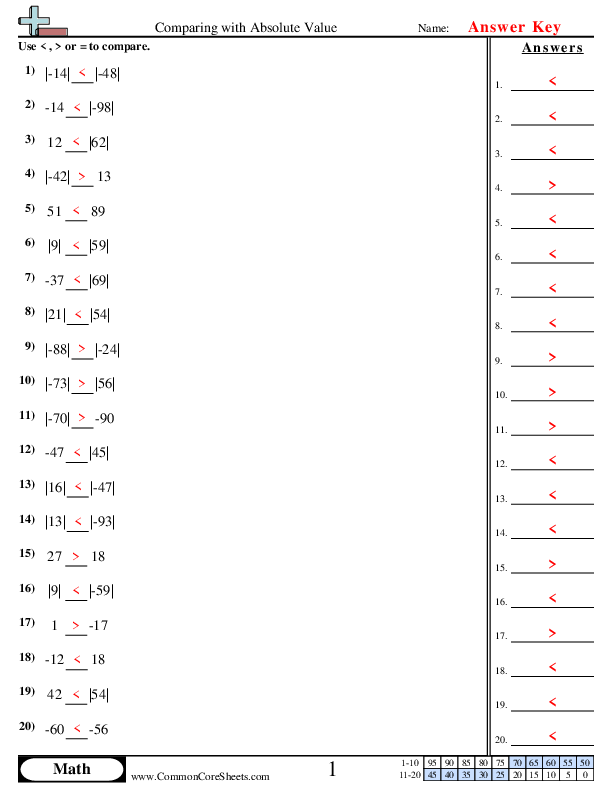
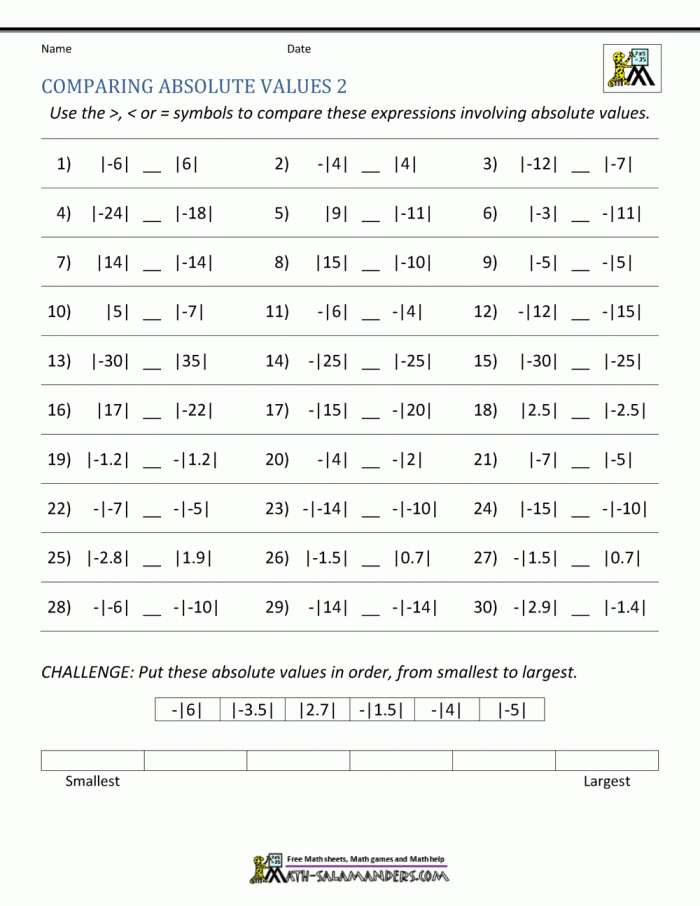
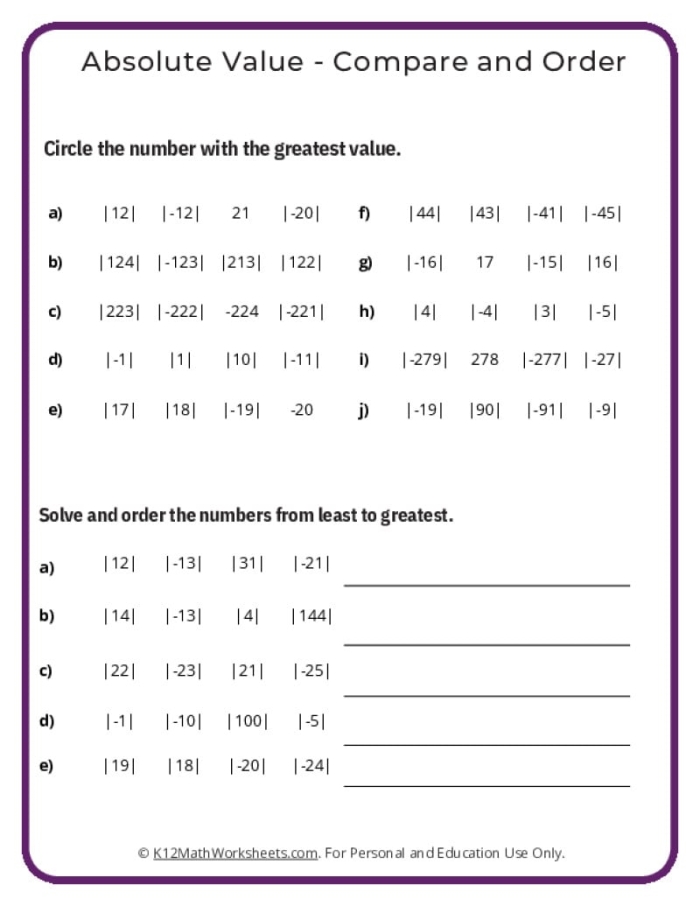
When students engage with worksheets that combine both opposites and absolute values, they also get the chance to compare these values. This comparison can lead to a deeper understanding of the relationships between numbers. For instance, if a student compares the absolute values of -7 and 7, they learn that both have the same absolute value, yet they occupy opposite positions on the number line. Such insights are vital in developing strong mathematical reasoning.
Incorporating practical exercises, such as those found in worksheets for finding the range, can further enhance a sixth grader’s skills. These activities encourage students to apply what they’ve learned about opposites and absolute values in various contexts, making the learning process more engaging and effective. The ability to manipulate and understand numbers is a foundational skill that will serve students well as they advance in their education.
Boost Skills with These Worksheets