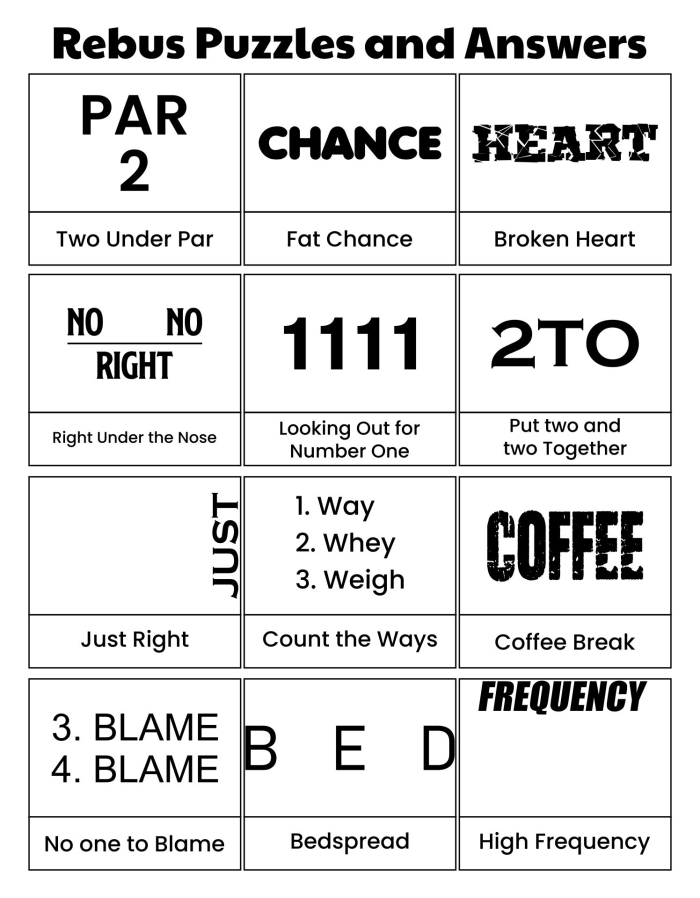
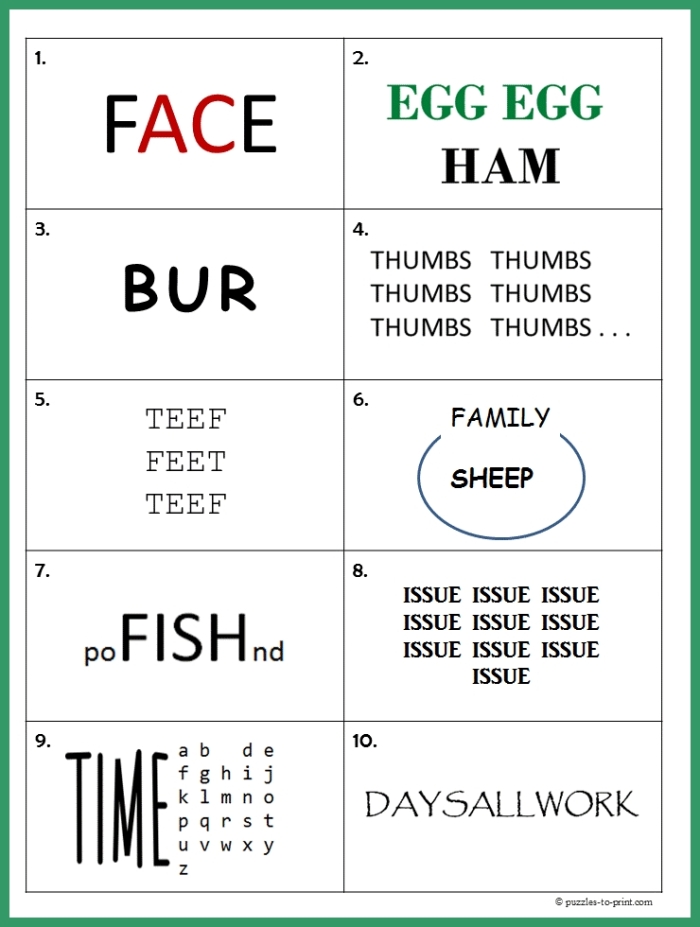
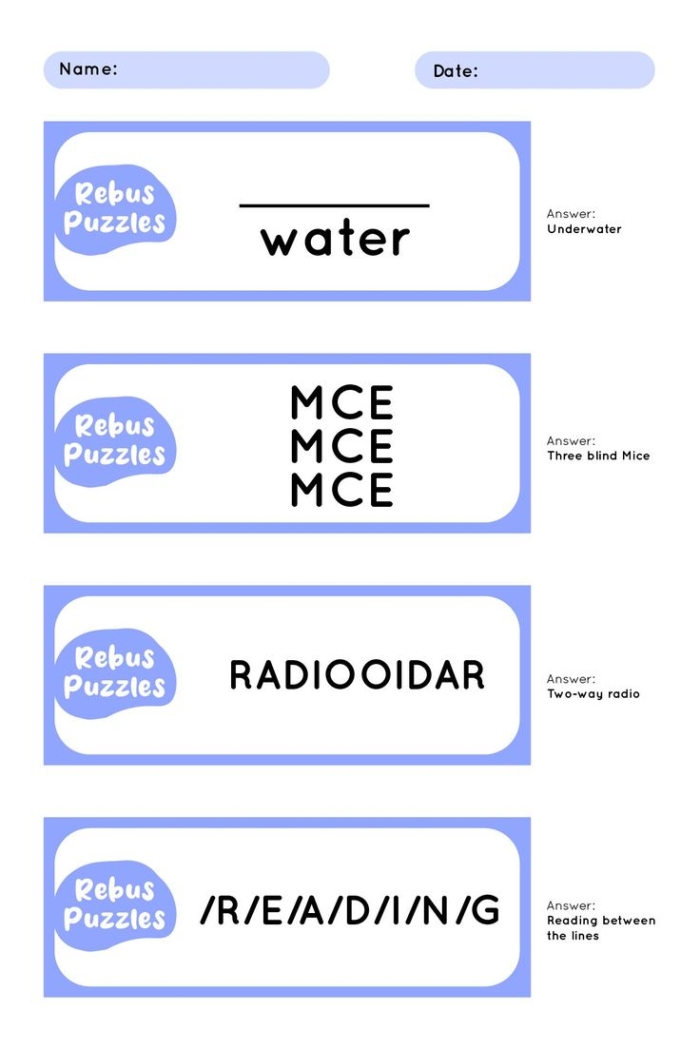
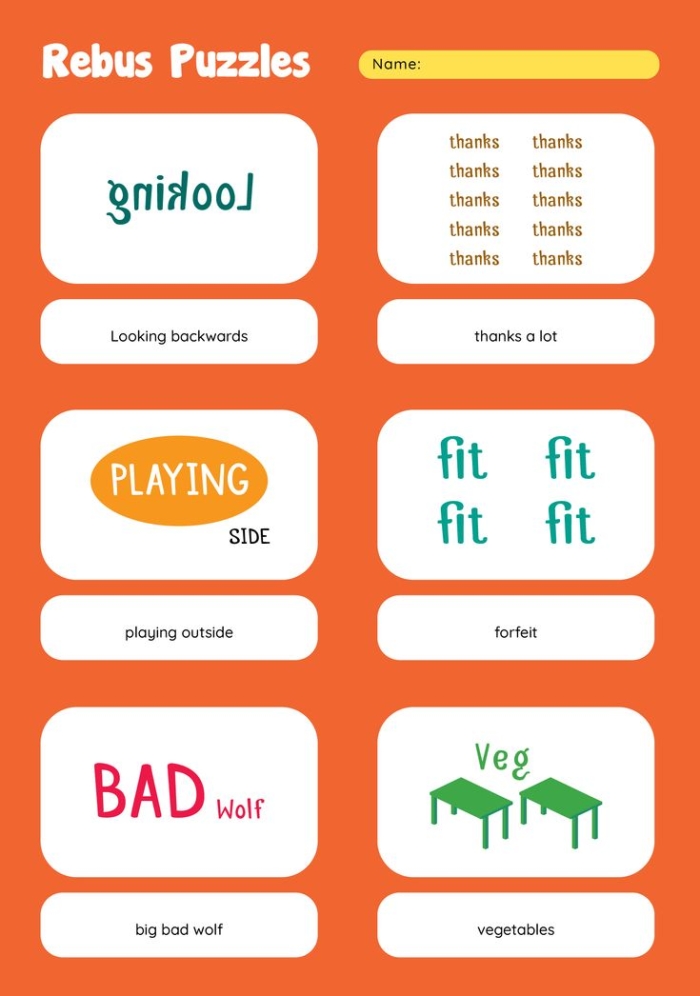
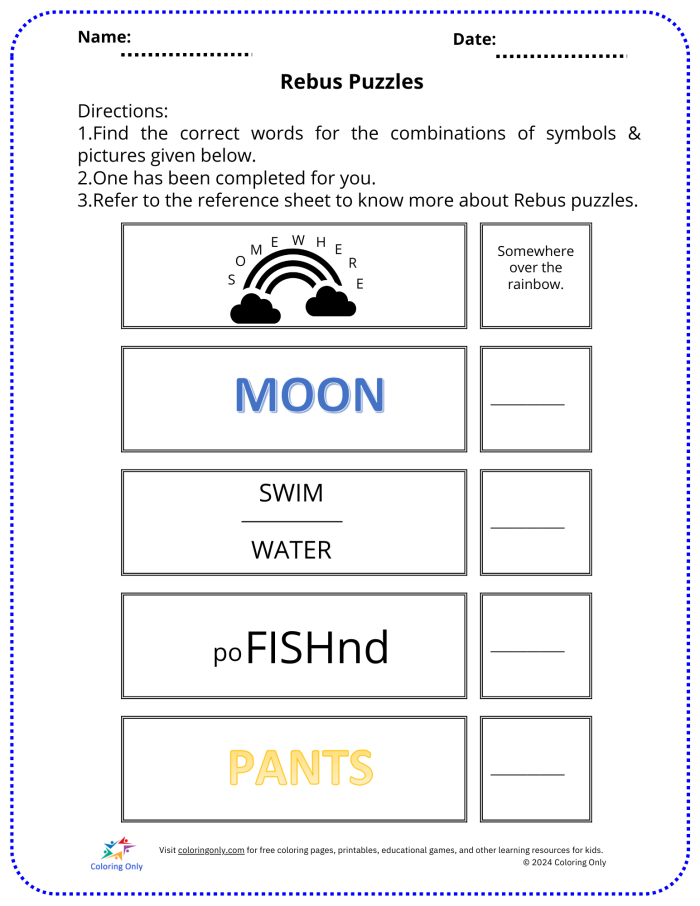
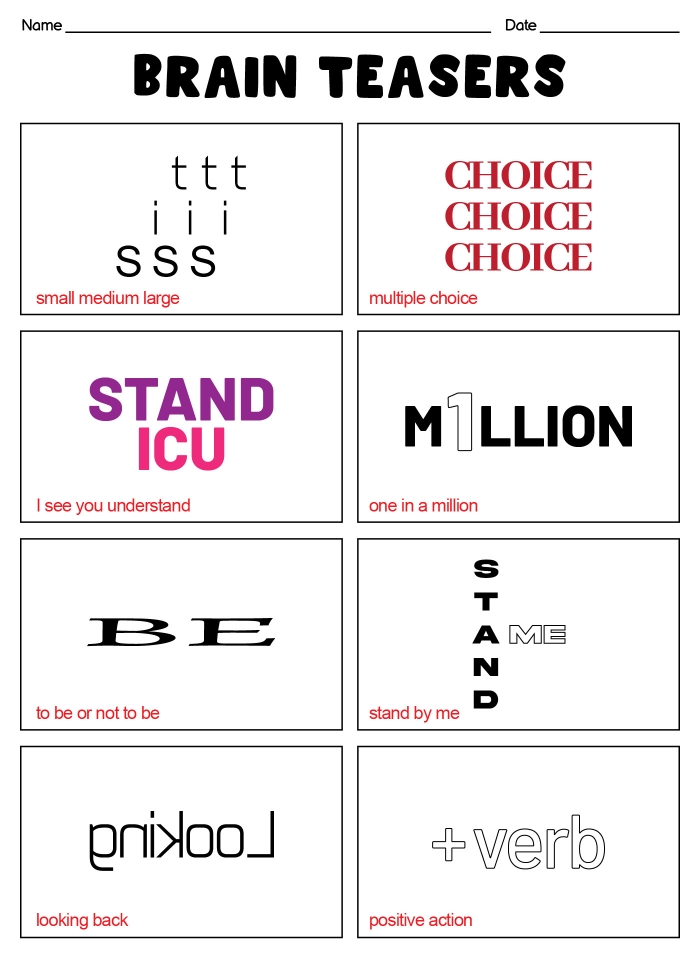
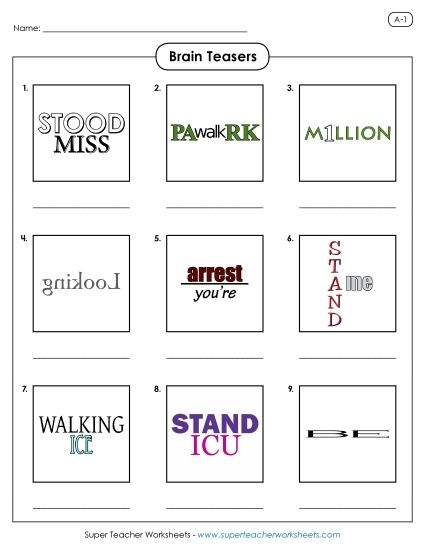
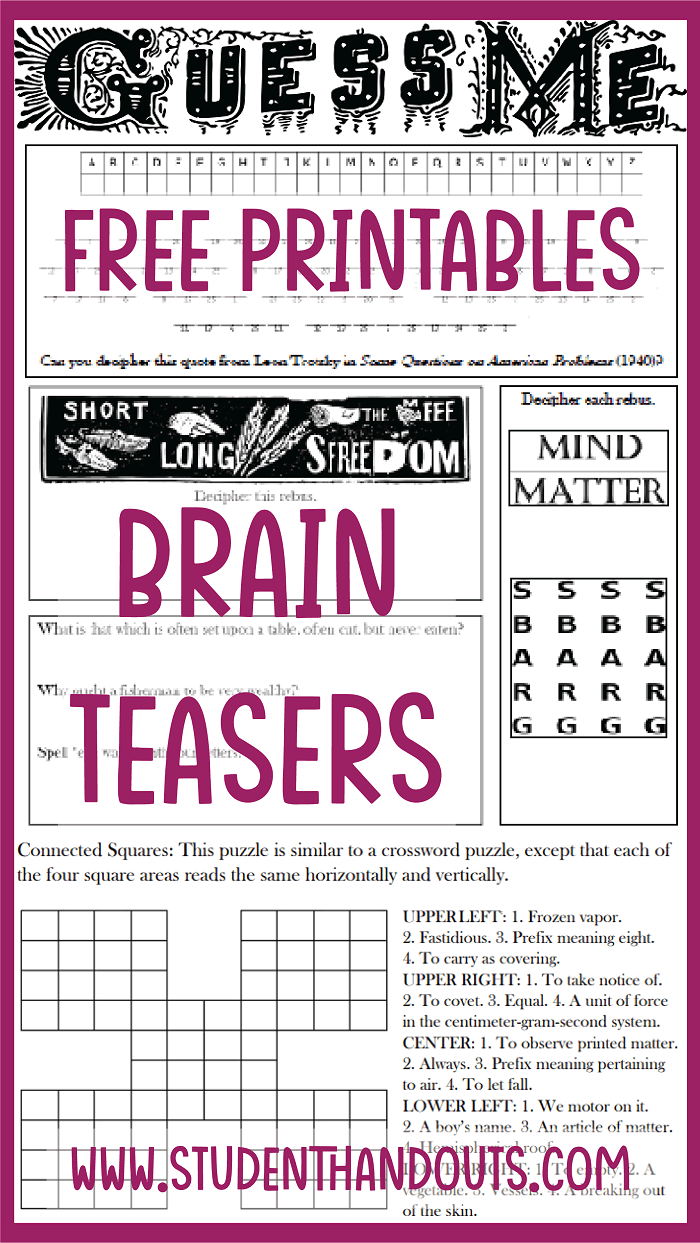
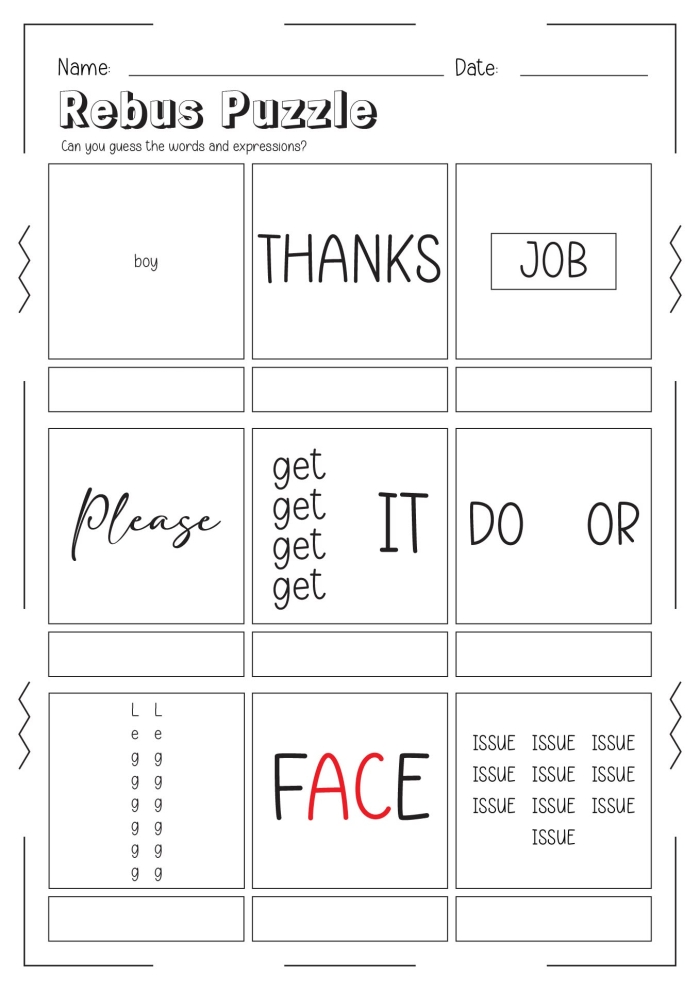
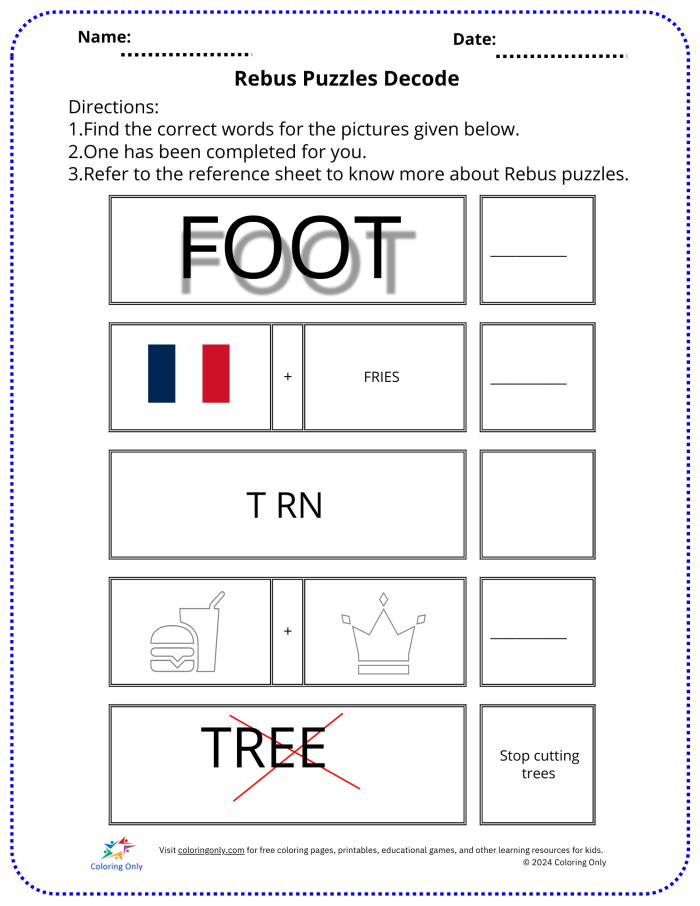
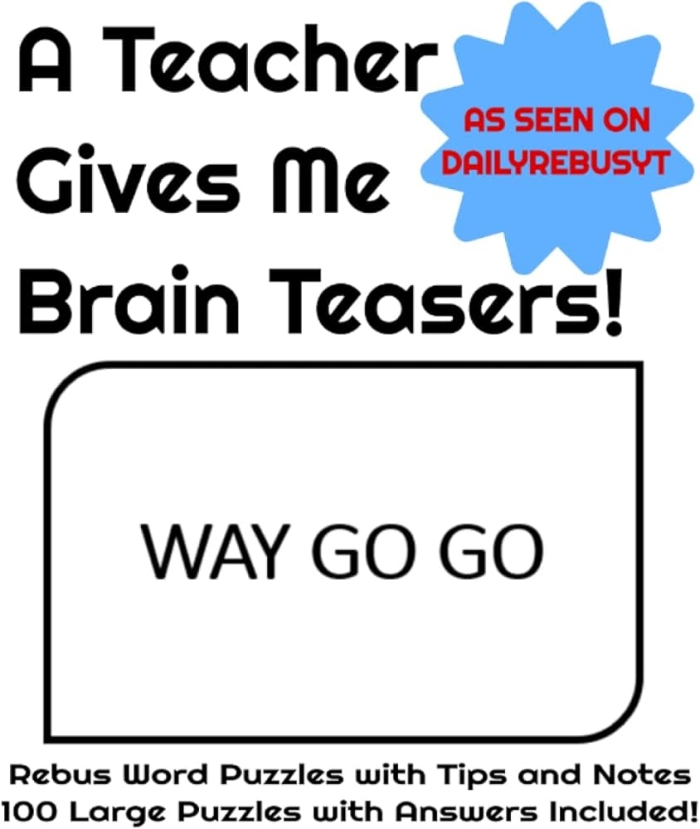
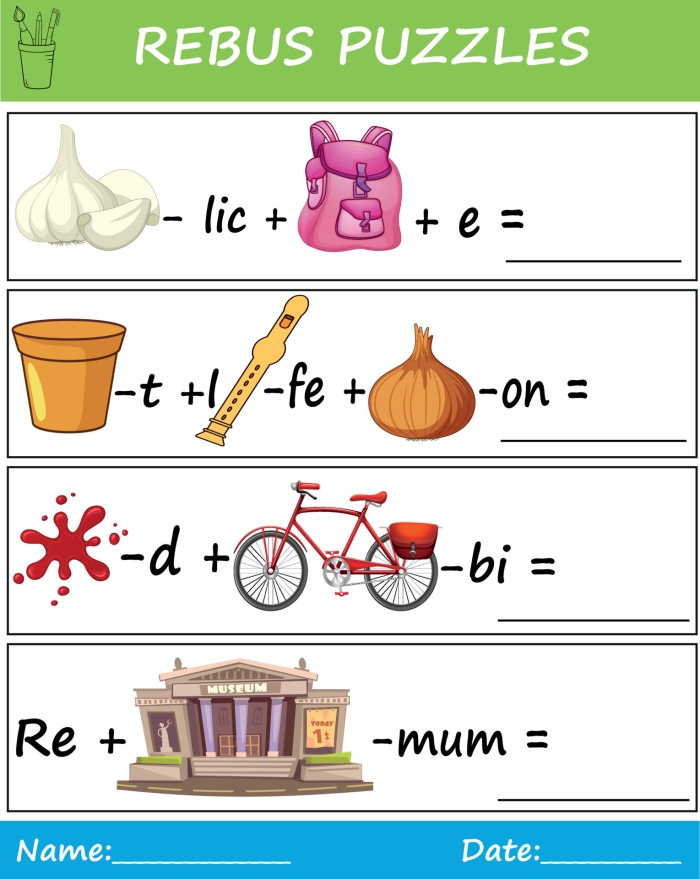
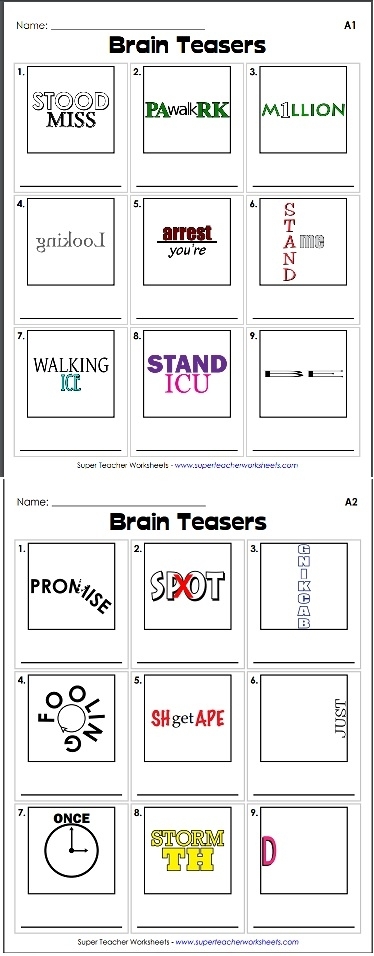
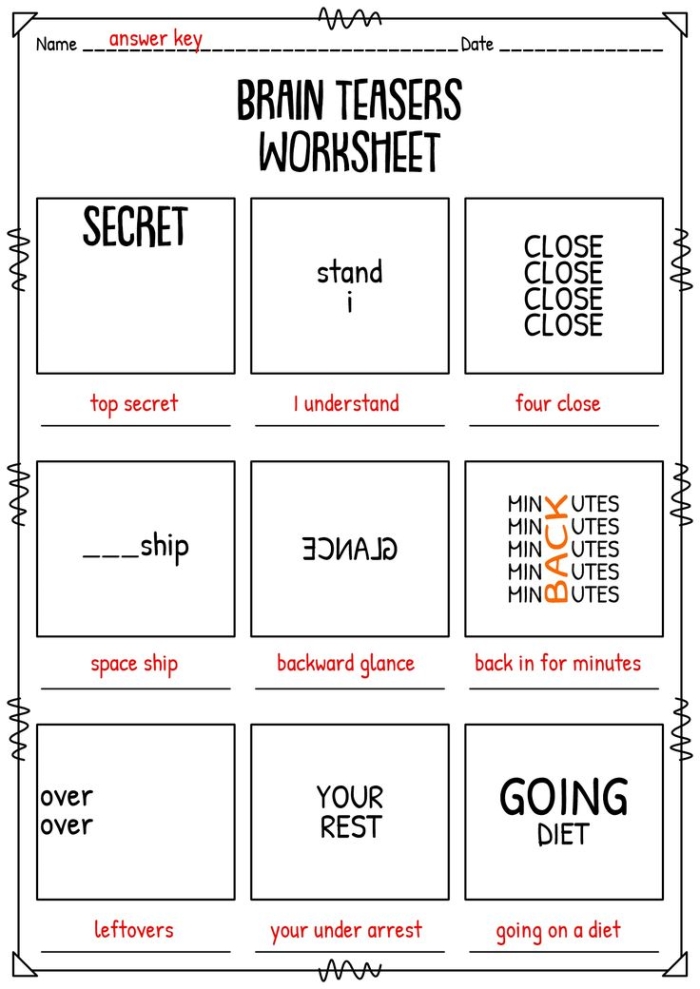
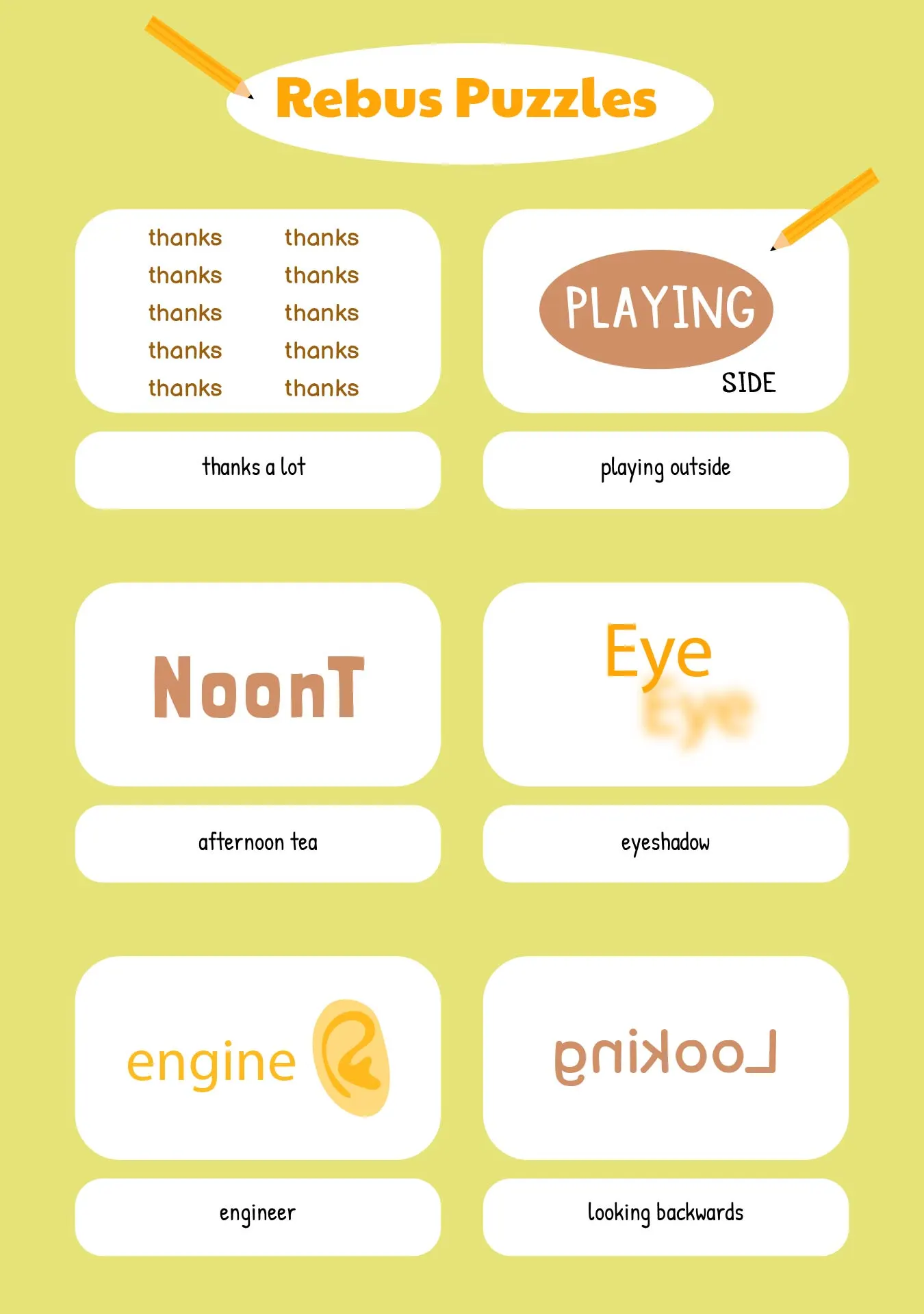
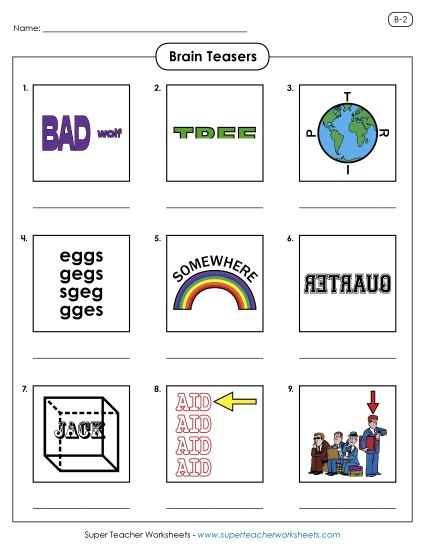
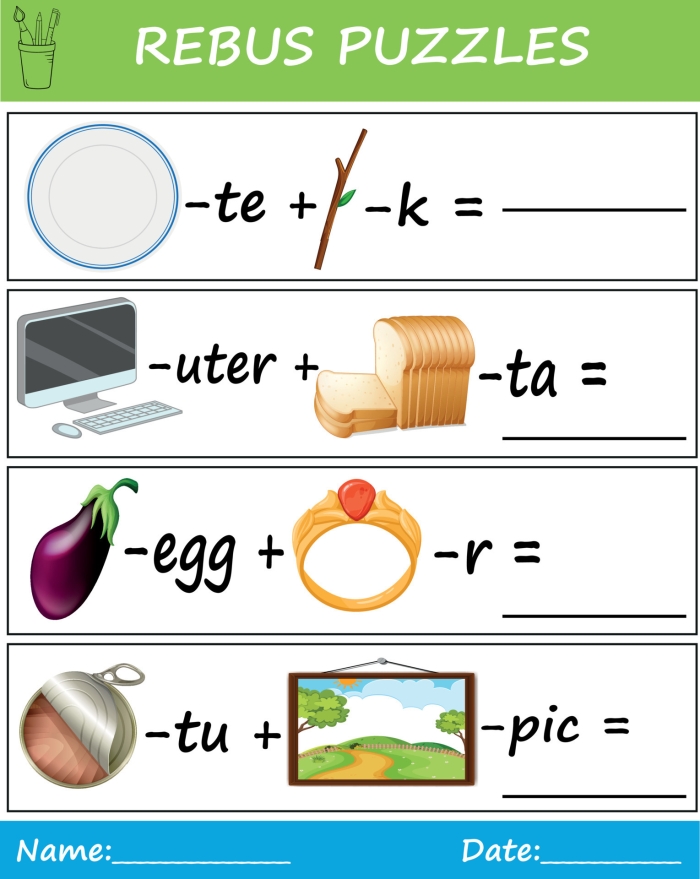
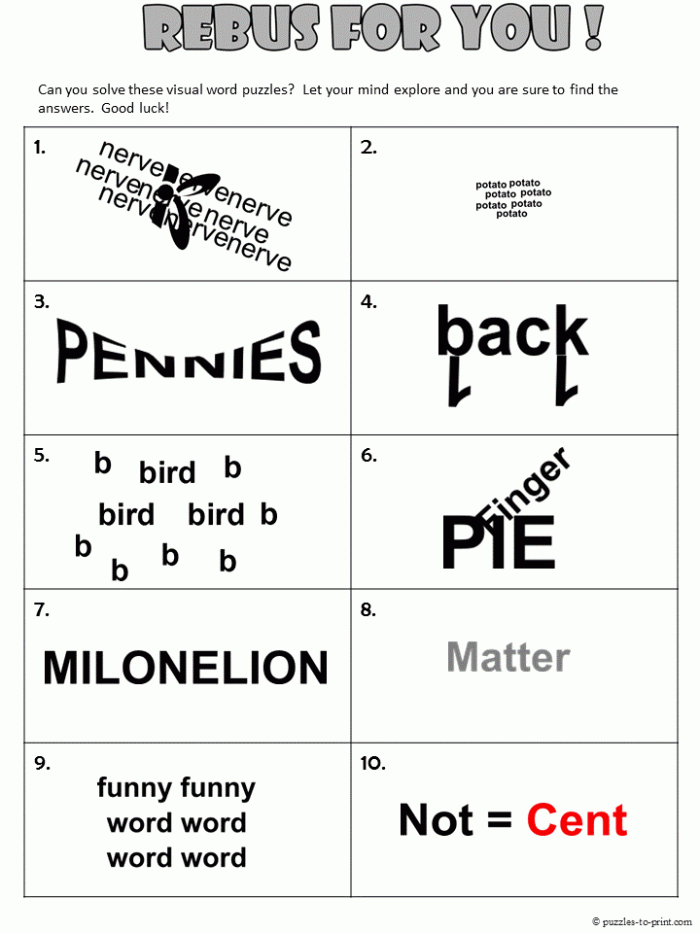
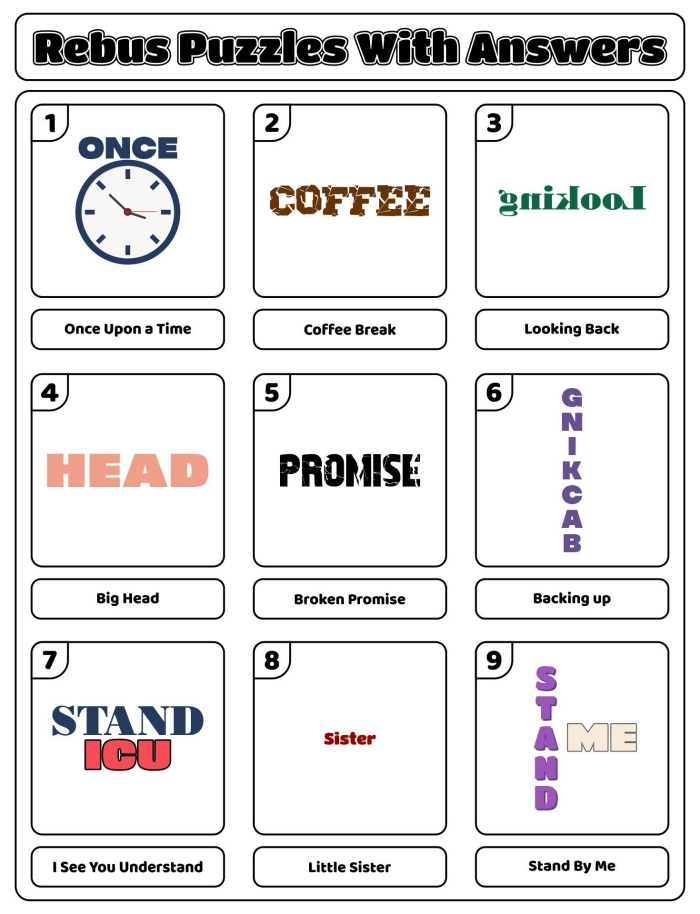
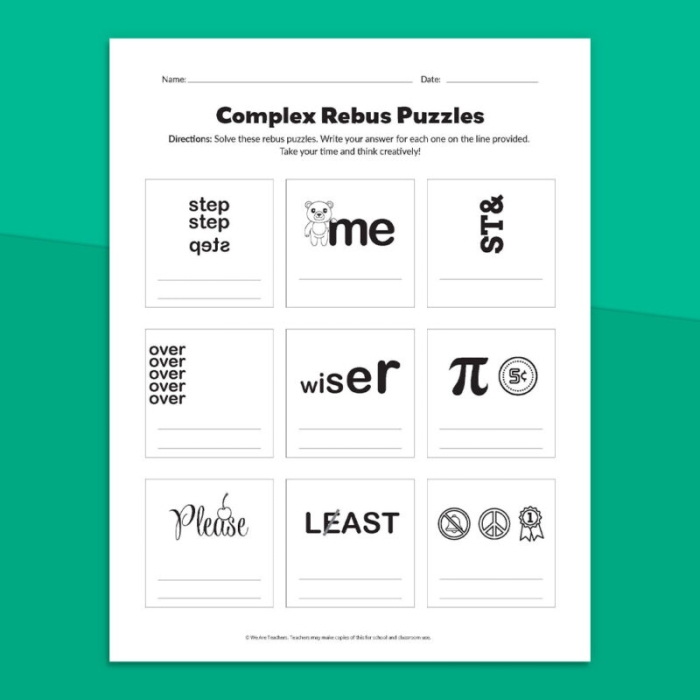
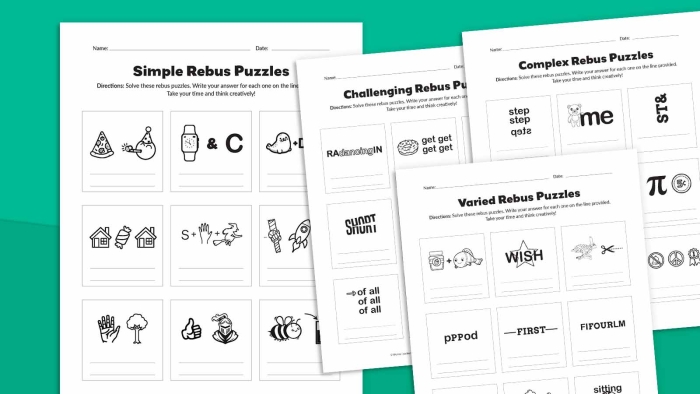
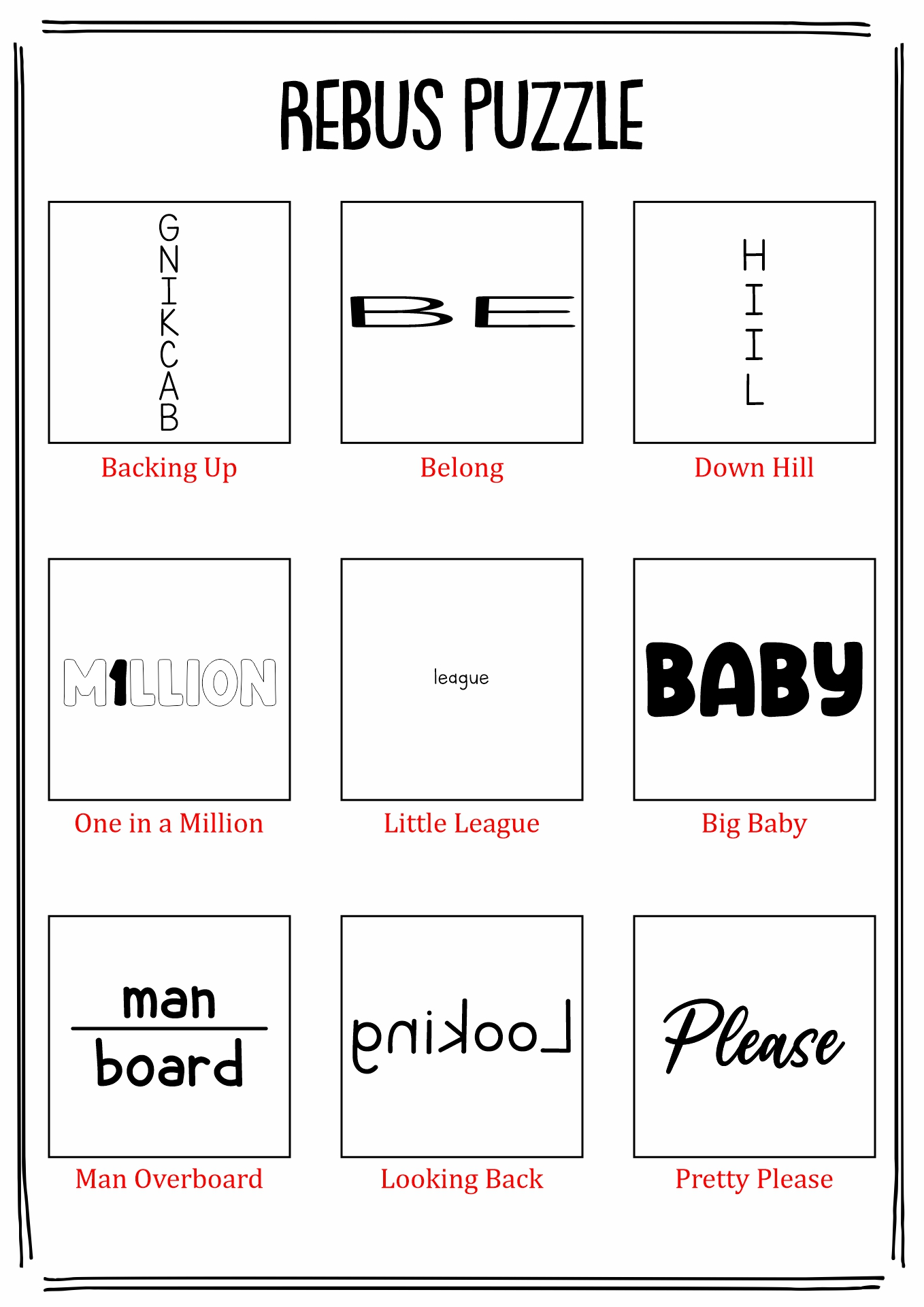
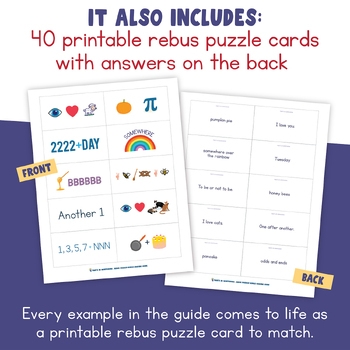
Engaging sixth graders in learning can often be a challenge, but incorporating rebus puzzle brainteasers into your lessons is a delightful way to spark their creativity and critical thinking. These puzzles, which use pictures and symbols to represent words or phrases, not only tickle the funny bone but also encourage students to think outside the box. Imagine your classroom buzzing with laughter as students race to decode clever clues, all while honing their grammar and mechanics skills.
One of the beauties of rebus puzzles is their versatility. They can be tailored to suit various themes or subjects, making them an excellent addition to any lesson plan. For example, you might create a rebus that incorporates vocabulary words related to a recent reading assignment. This not only reinforces their understanding of the text but also creates a fun and interactive way to review essential concepts. Plus, printable rebus puzzle brainteasers worksheets can easily be found online or created by teachers, allowing for endless customization.
Moreover, using rebus puzzles can enhance students’ problem-solving abilities. As they decipher each puzzle, they practice logic and reasoning skills. This can be particularly beneficial during grammar and mechanics lessons, where understanding context and wordplay is crucial. For instance, a rebus might depict “time flies,” encouraging students to think about idiomatic expressions and their meanings. These connections can deepen their understanding of language.
Incorporating rebus puzzles into the curriculum also promotes collaboration among students. Working in pairs or small groups to solve these brainteasers fosters teamwork and communication skills, which are invaluable in the classroom and beyond. As they share ideas and strategies, learners are not just having fun; they are developing social skills that will serve them well throughout their education.
So, if you’re looking for a way to get learners giggling and their wheels turning, consider integrating fun rebus puzzle brainteasers into your lessons. Not only will they enhance engagement, but they’ll also support important learning objectives. For more resources, you can explore worksheets related to grammar and mechanics, like those that focus on human impact on water pollution or analyzing poetry.
Worksheet Practice Section