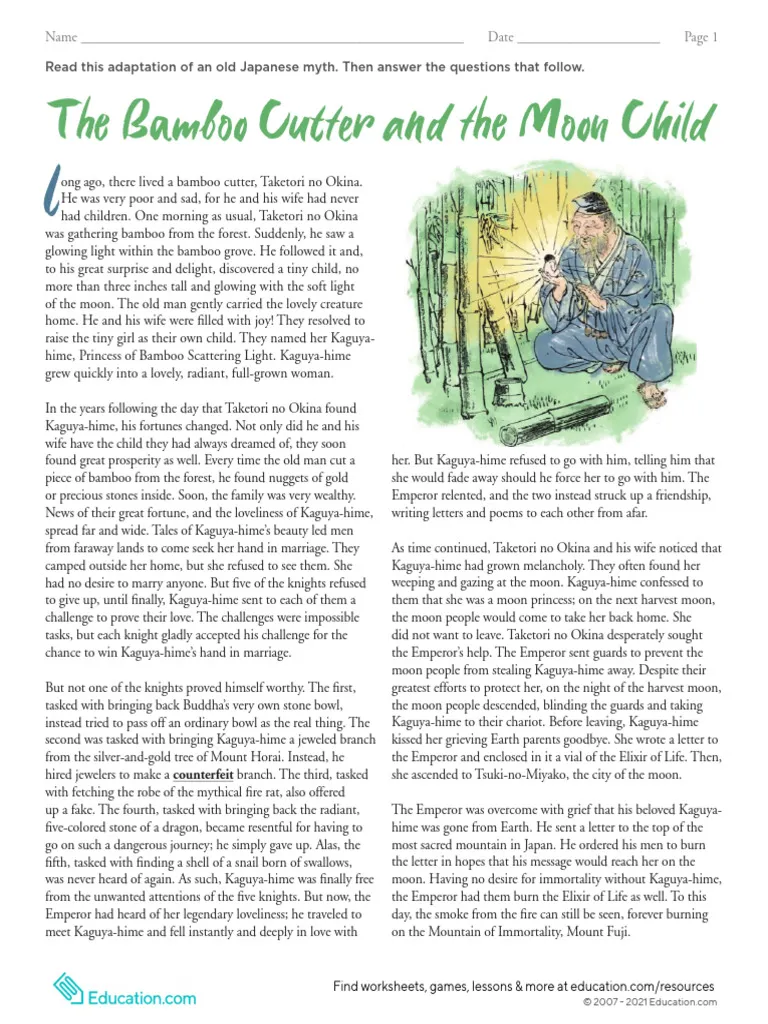
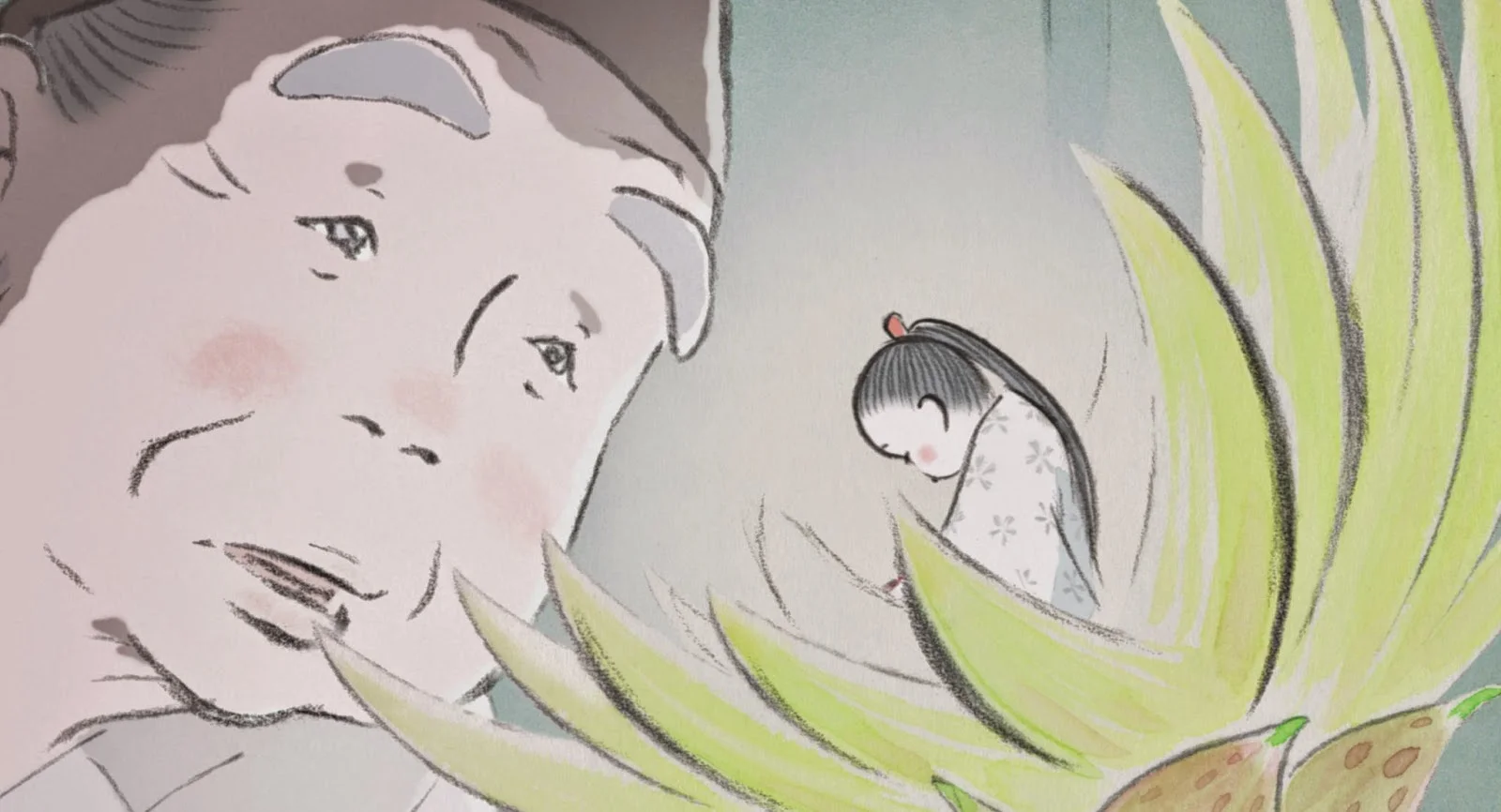
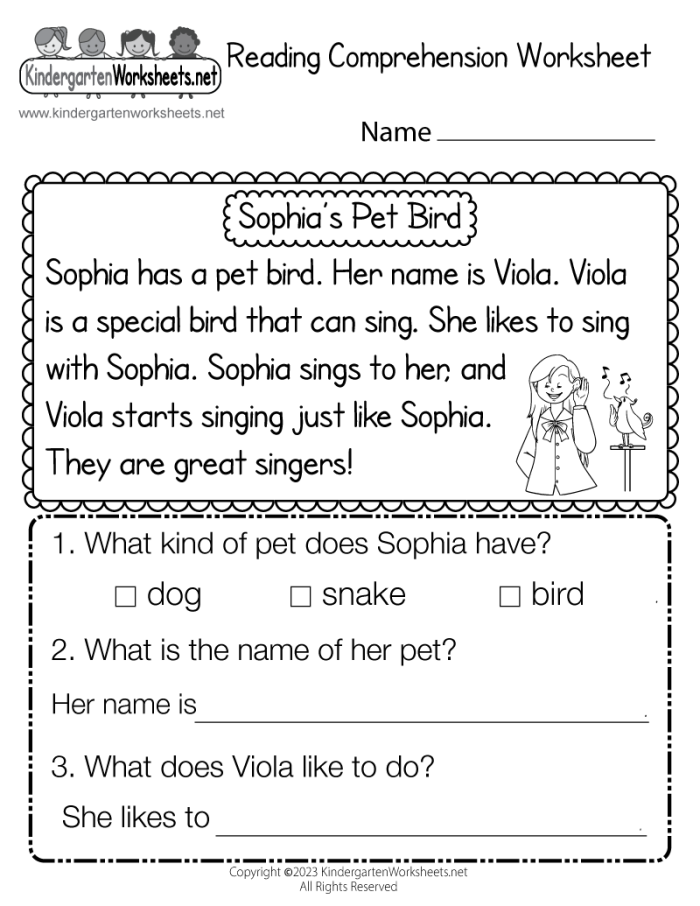
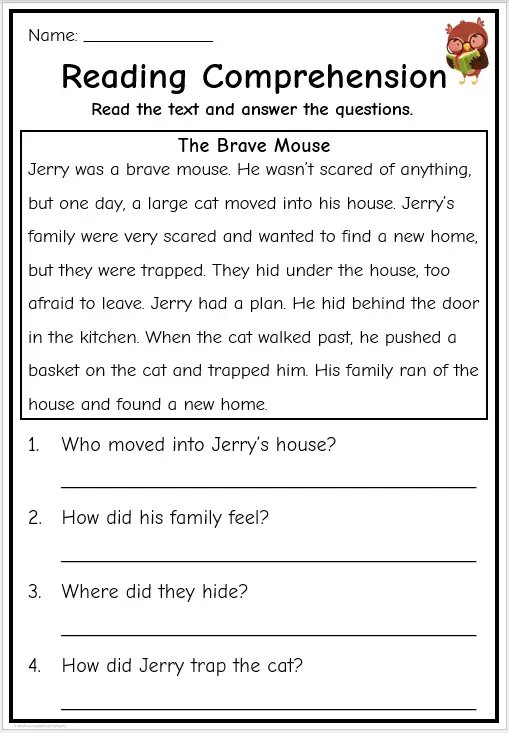
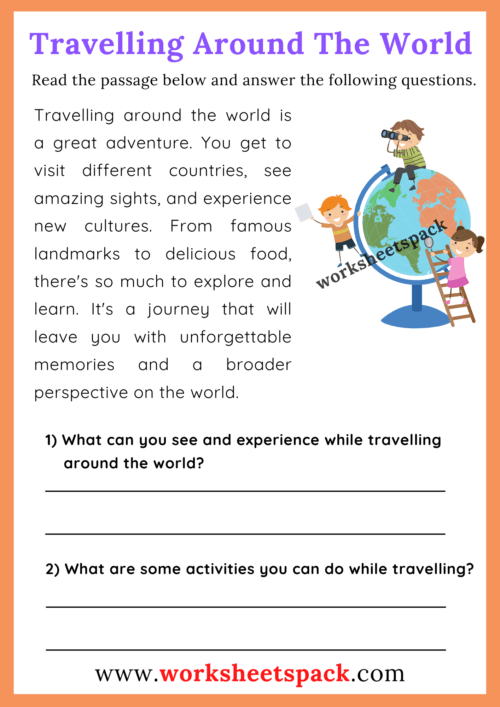
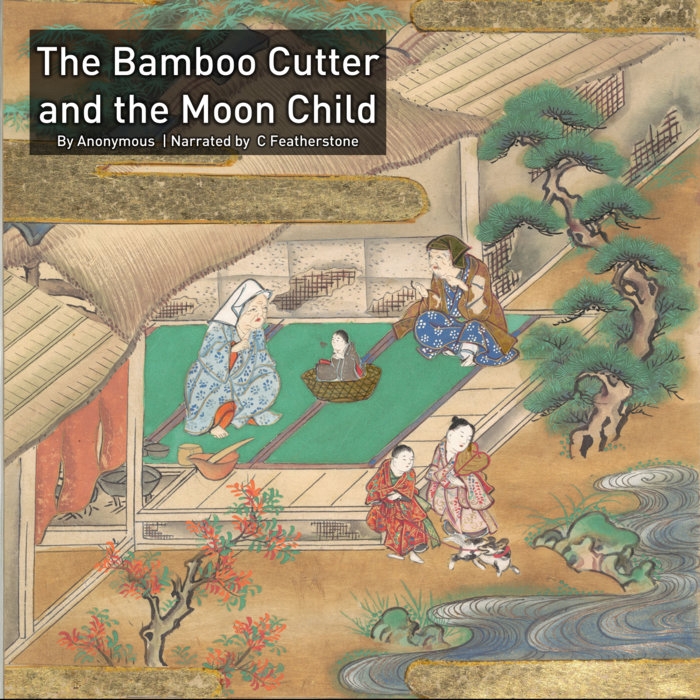
Exploring myths like “The Bamboo Cutter and the Moon Child” offers a unique opportunity to enhance reading comprehension skills for eighth graders. This tale, originating from Japan, intricately weaves themes of love, loss, and the quest for identity. By engaging with a one-page adaptation of this myth, students not only enjoy a captivating story but also sharpen their analytical abilities through targeted comprehension questions.
Reading comprehension plays a crucial role in understanding literature, especially at the eighth-grade level. When students read this adaptation, they encounter rich imagery and complex characters, which can stimulate thoughtful discussion. After reading, they can tackle questions that challenge them to think critically about the narrative. For example, they might explore why the bamboo cutter chose to keep the moon child, or what the story reveals about human relationships. These questions encourage deeper engagement with the text and promote a better understanding of its themes.
The beauty of using this myth in a classroom setting lies in its ability to connect cultural storytelling with essential reading skills. Eighth graders can draw parallels between the myth and their own experiences, making the story more relatable. Additionally, educators can incorporate activities that align with math concepts, such as solving problems related to volume or linear functions, which can be found in resources like Finding the Volume of Cones and Linear Function Word Problems worksheets.
Ultimately, reading “The Bamboo Cutter and the Moon Child” is not just about enjoying a story; it’s about developing skills that will benefit students in various subjects. By answering comprehension questions, they practice critical thinking and improve their ability to analyze texts. This method of learning makes the reading experience enriching and enjoyable for eighth graders, laying a strong foundation for future literary exploration.
Use These Worksheets Today