Teaching poetry to fourth graders works best when students experience the building blocks directly rather than simply reading about them. A comprehensive exercise that walks your students through twelve elements of poetry and six types of poems gives them hands-on practice with real examples they can immediately understand and use.
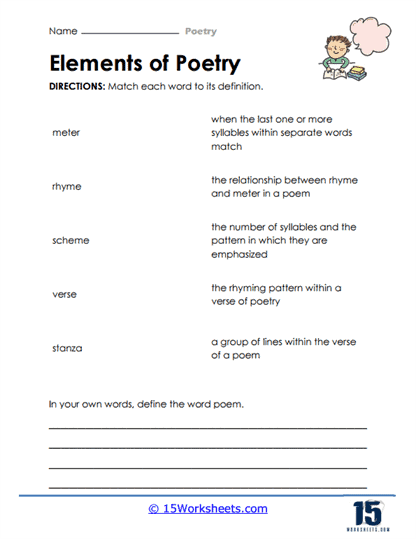
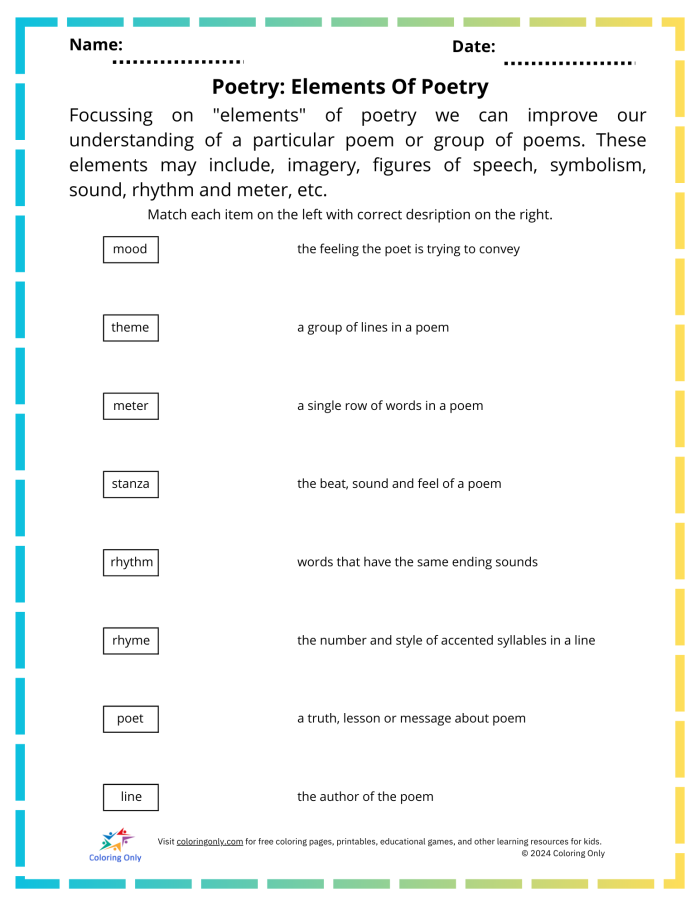
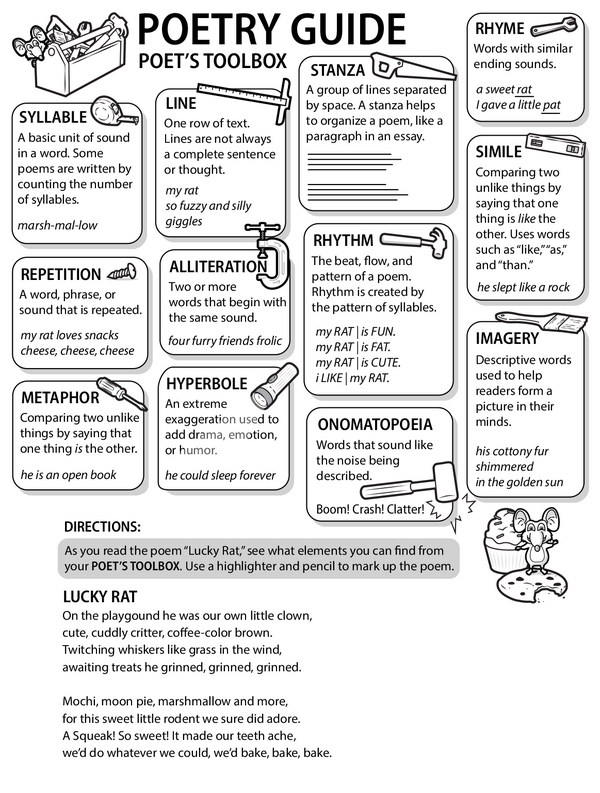
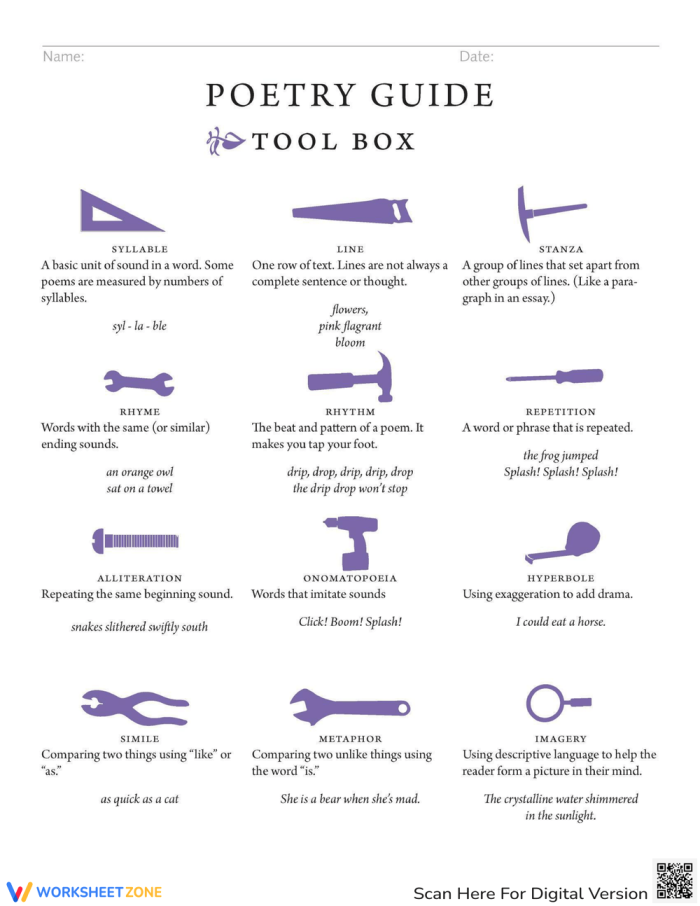
The twelve elements typically include rhyme, rhythm, meter, alliteration, metaphor, simile, personification, imagery, stanza, line break, tone, and theme. When fourth graders work through these one at a time with guided examples, they begin recognizing these techniques in poems they read. Instead of treating poetry as something mysterious, students see it as a craft made up of specific, learnable tools.
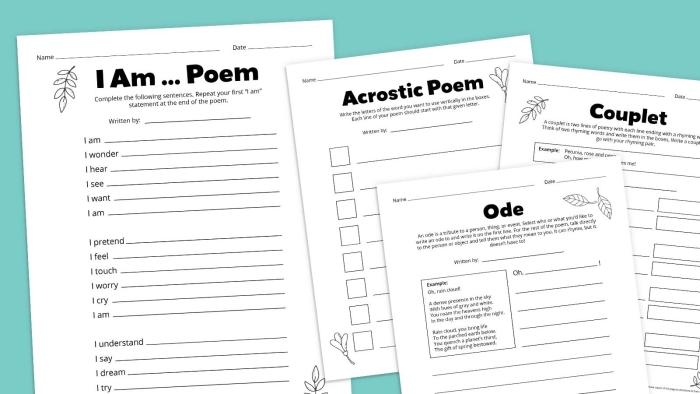
The six poem types usually covered are haiku, acrostic, free verse, limerick, cinquain, and narrative poetry. Each type has distinct characteristics that make it useful for different purposes. A haiku teaches syllable counting and nature observation, while an acrostic poem lets students work with alphabet patterns in a creative way. Limericks introduce humor and strict rhyme schemes, and narrative poetry shows how stories can be told through verse.
When you structure this exercise progressively, students first learn each element in isolation. Then they encounter it within different poem types to see how elements combine and interact. A fourth grader might notice alliteration in a limerick, then spot the same technique in a haiku they read the next day. This repetition across different contexts helps the concepts stick.
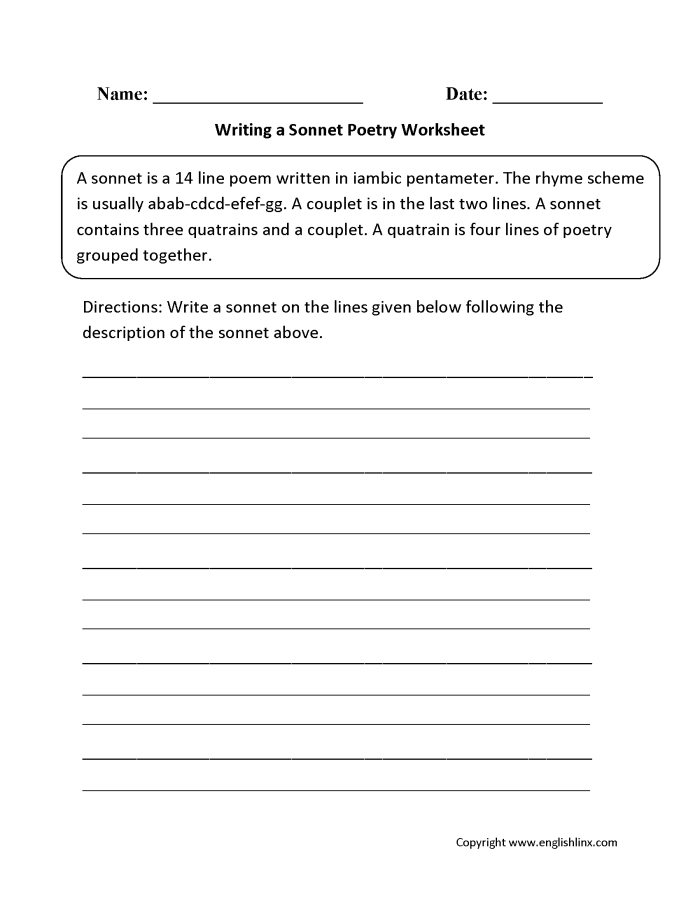
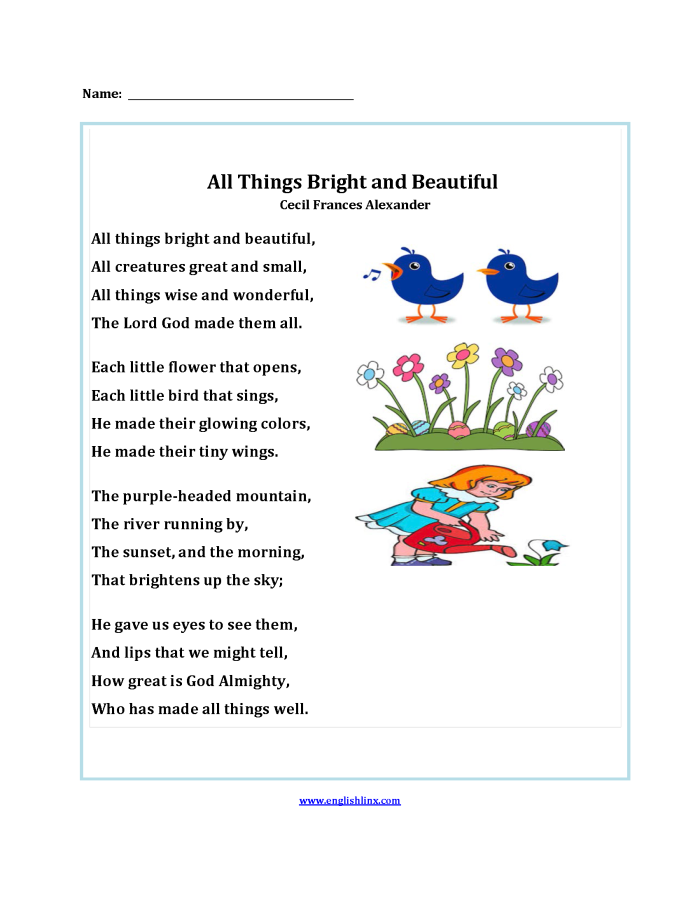
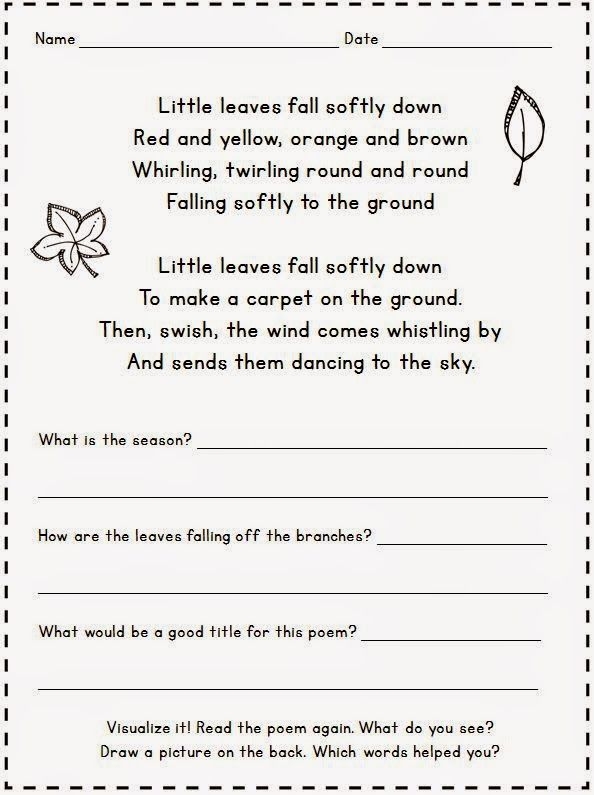
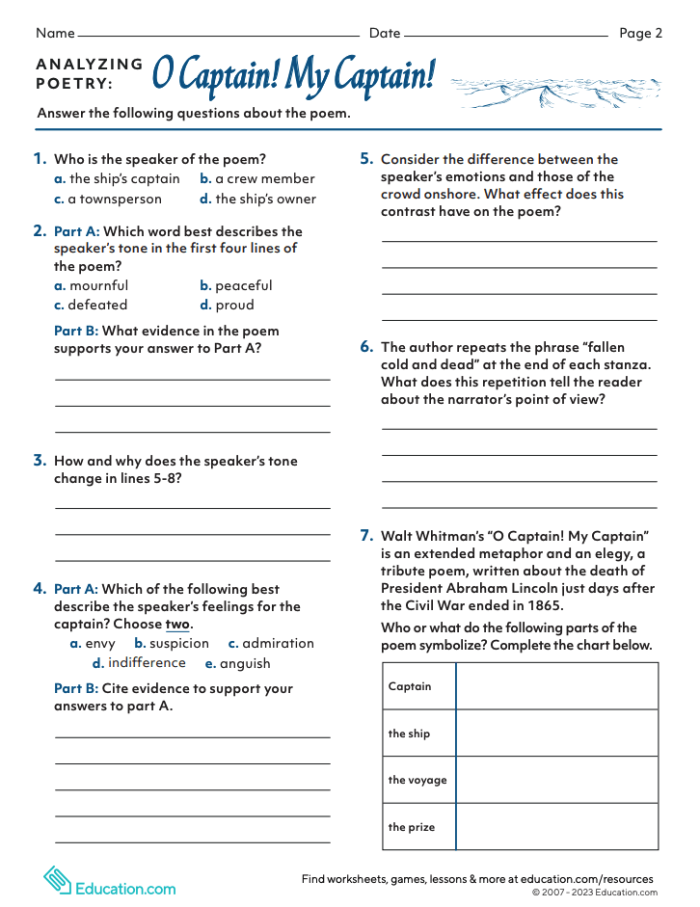
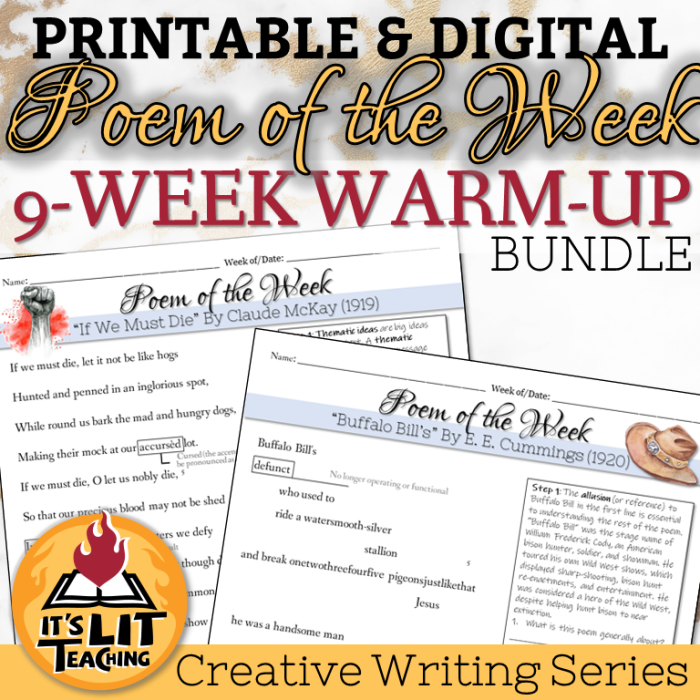
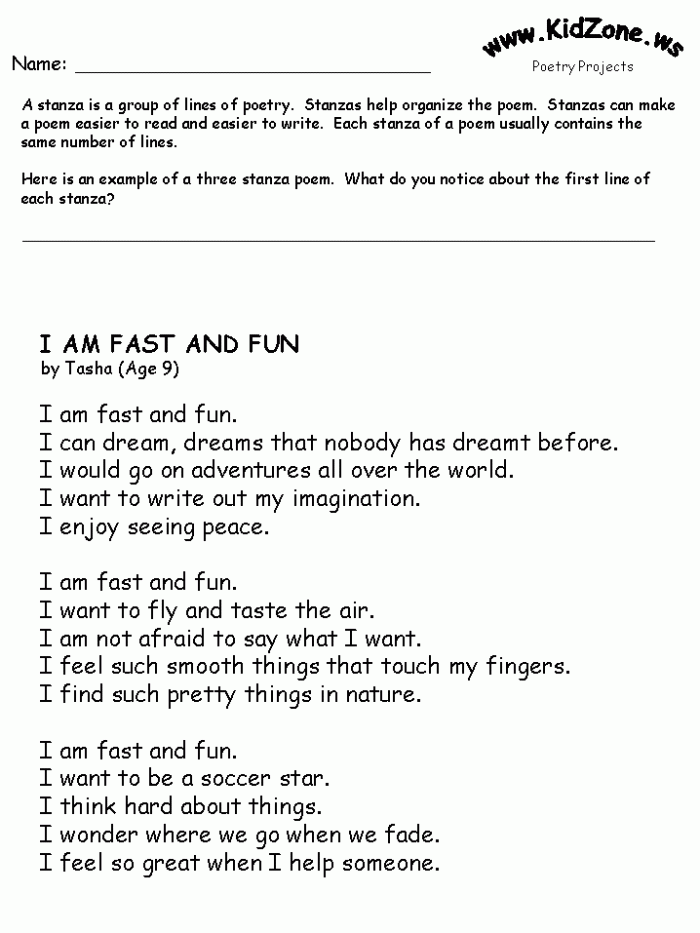
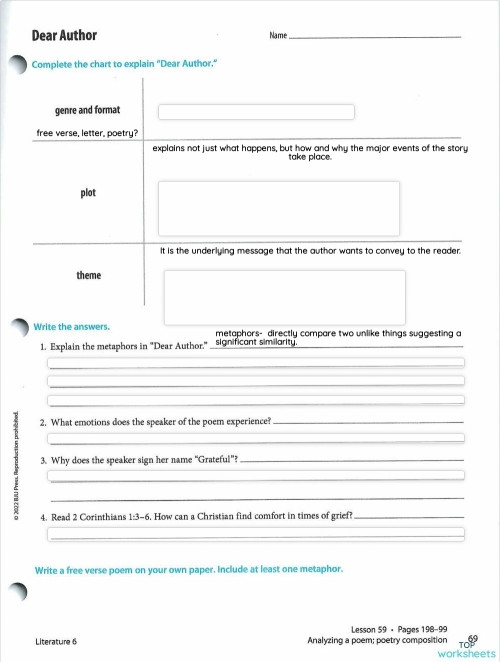
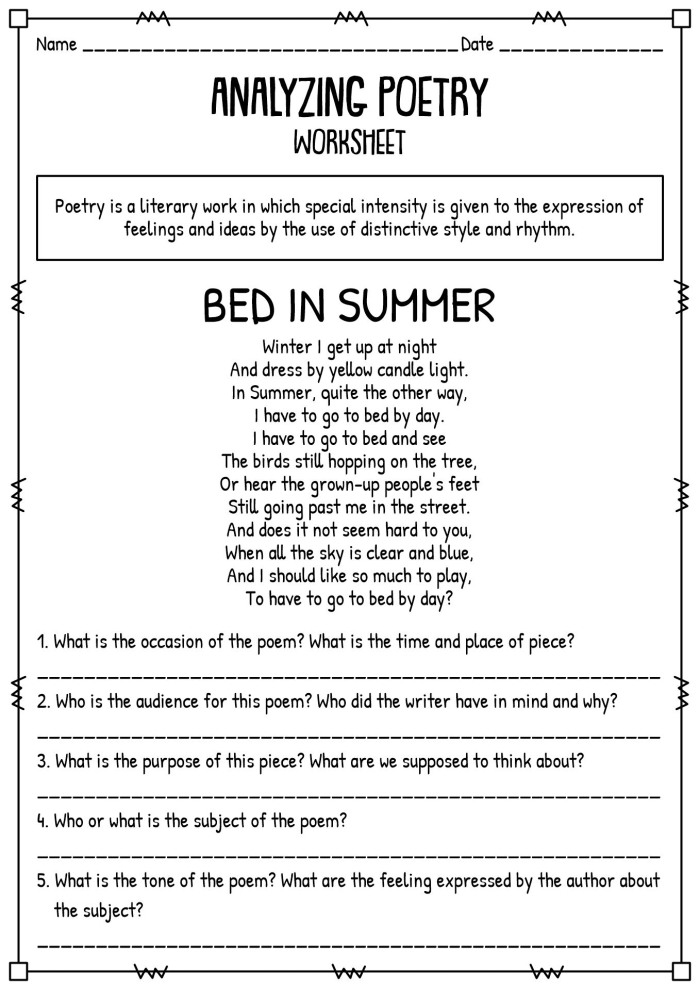
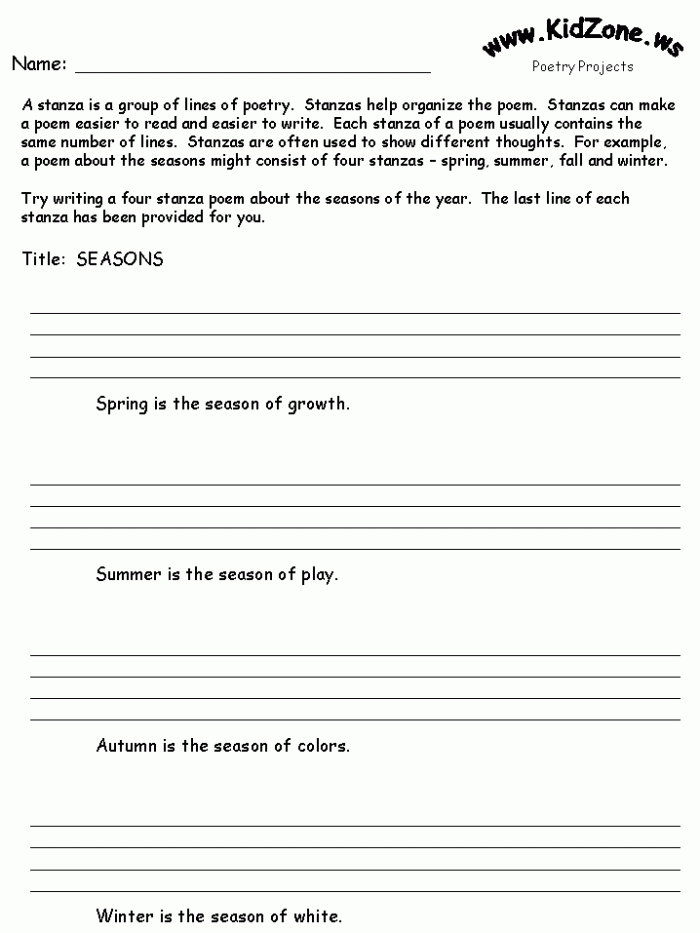
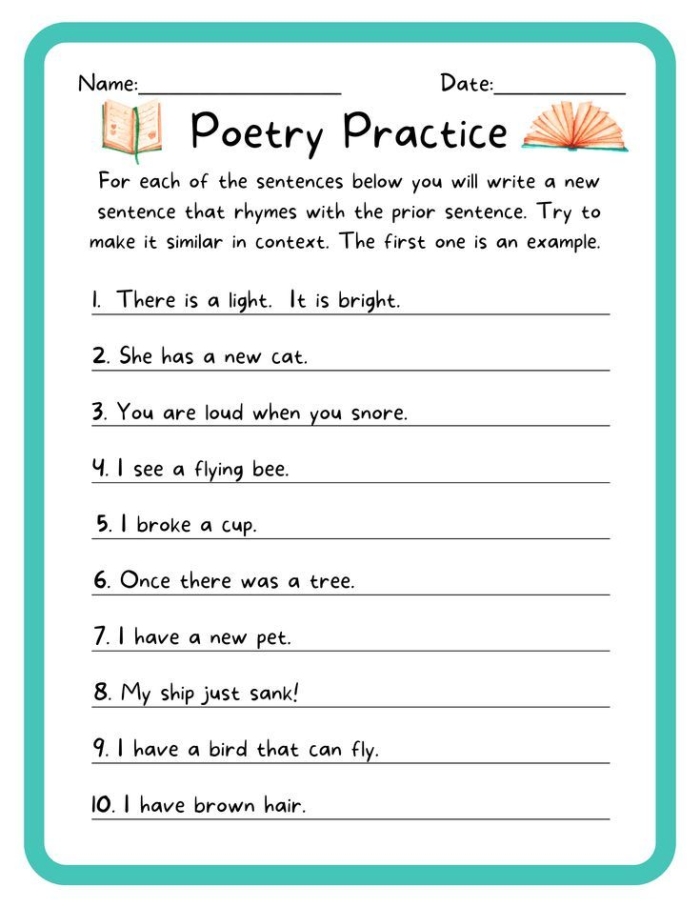
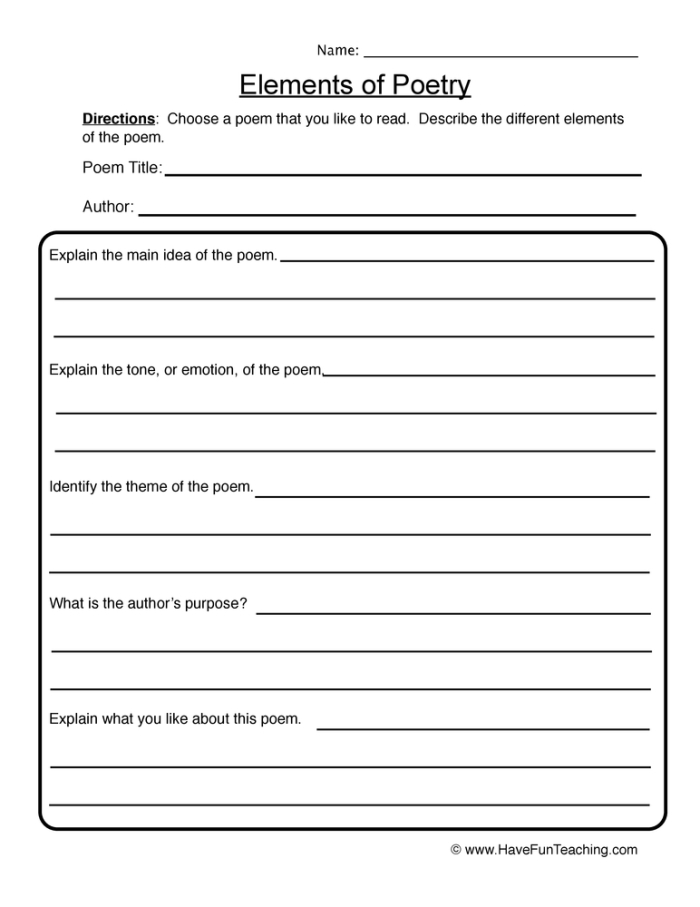
Printable poetry guide worksheets designed for this age group make the learning more concrete. Students can annotate poems, identify elements, and try writing their own pieces. Similar to how worksheets help students identify obtuse triangles and other geometric shapes, poetry worksheets give students a framework for noticing patterns and structure in language.
The real benefit emerges when your fourth graders finish the exercise and realize they can read any poem and understand what the poet chose to do. They see poetry not as decoration but as deliberate choice, which changes how they approach both reading and writing.
Printable Worksheets for Practice