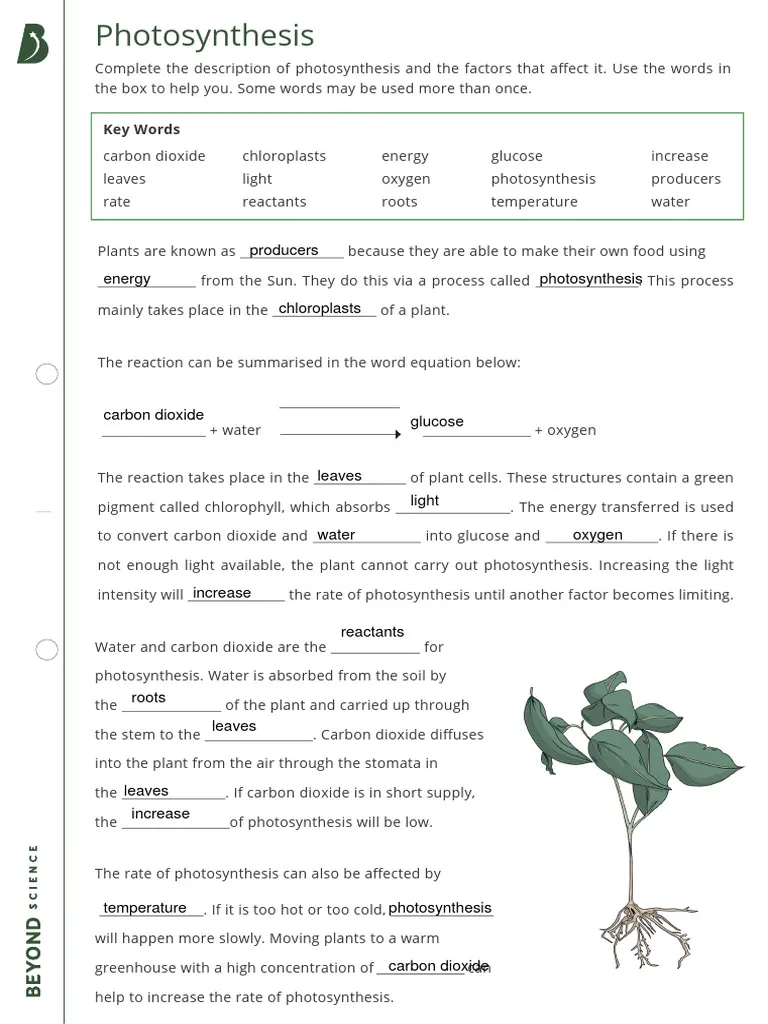
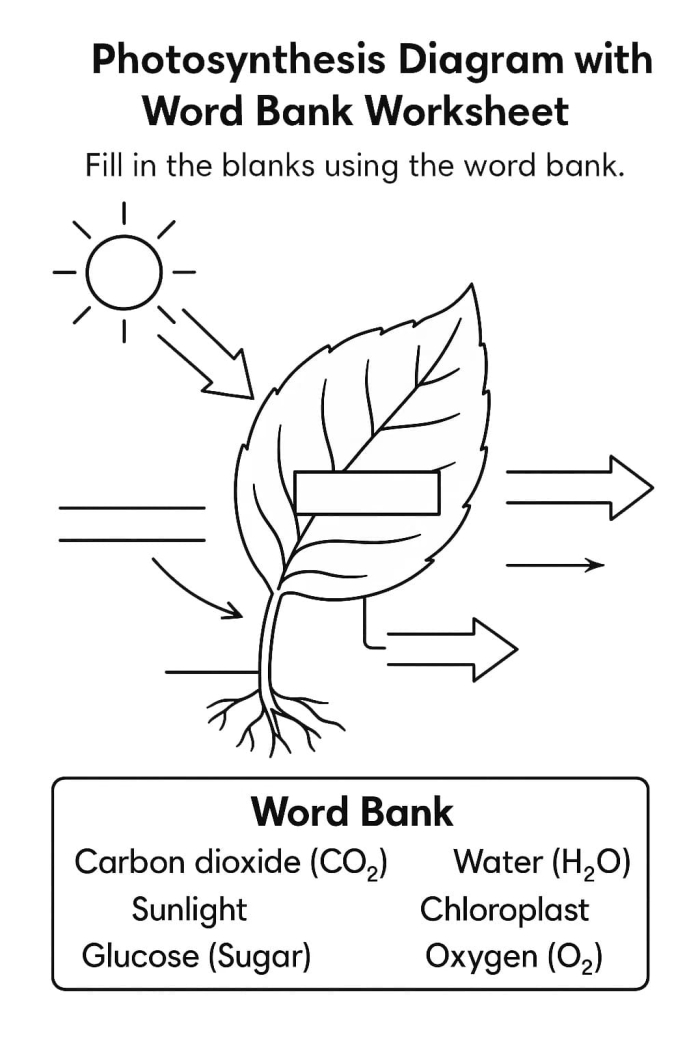
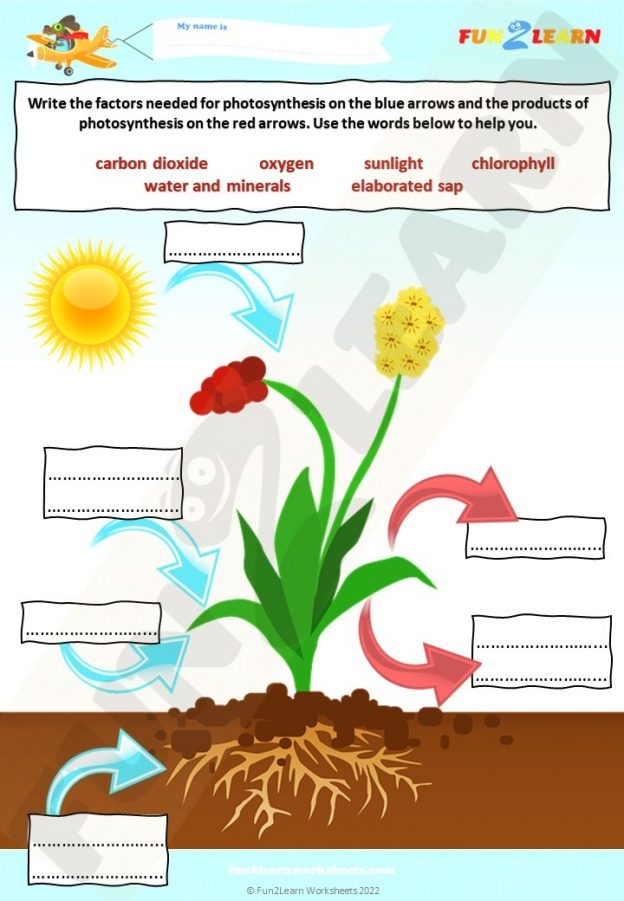
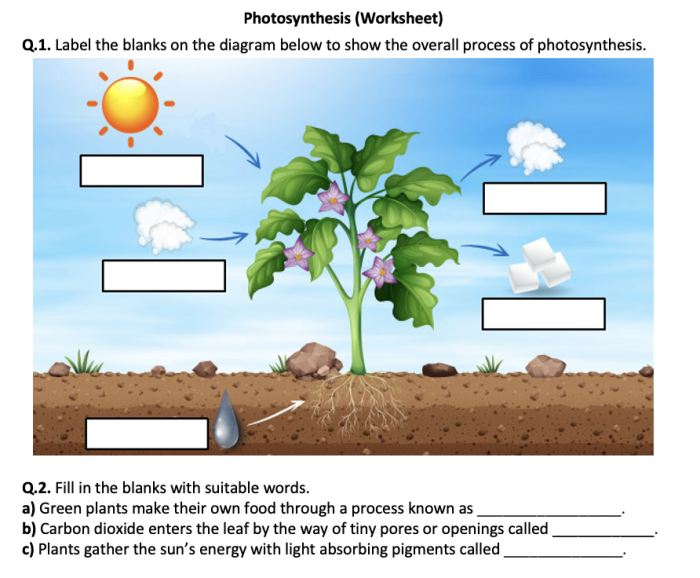
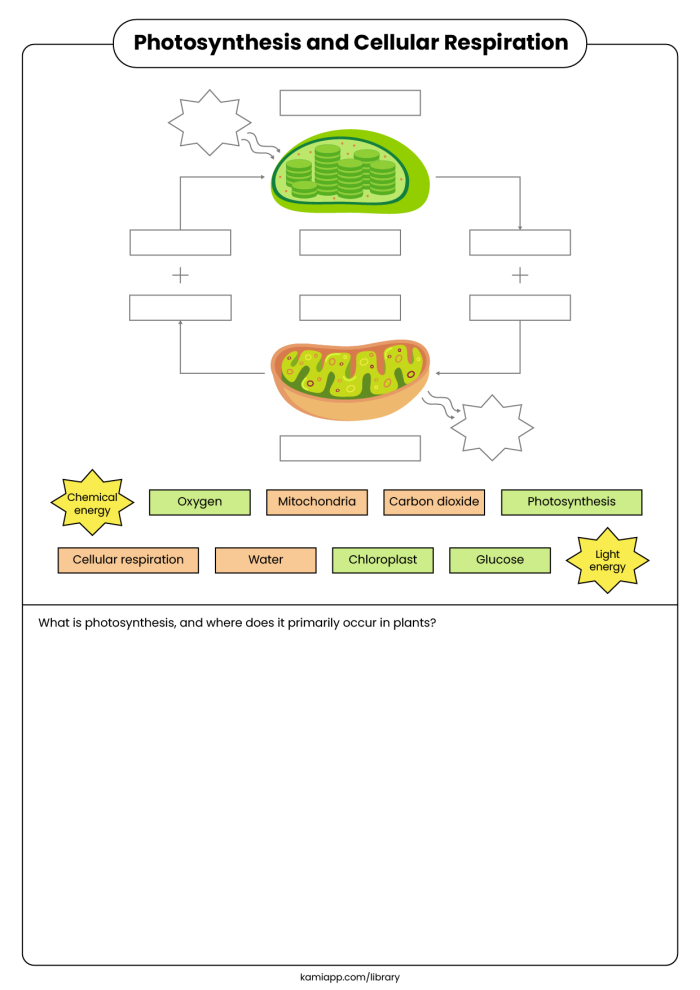
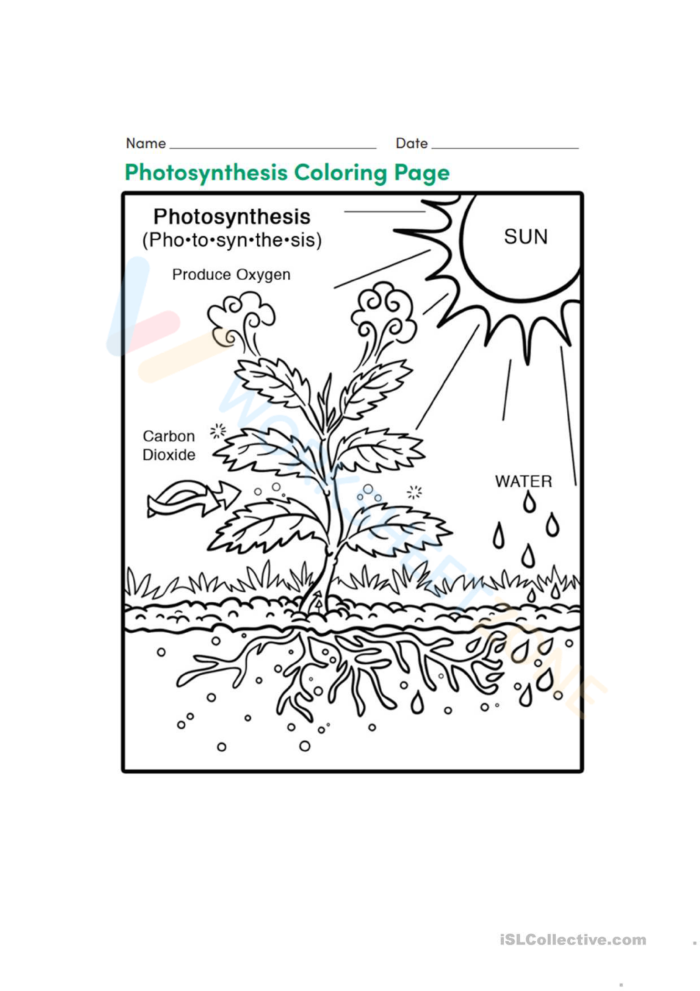
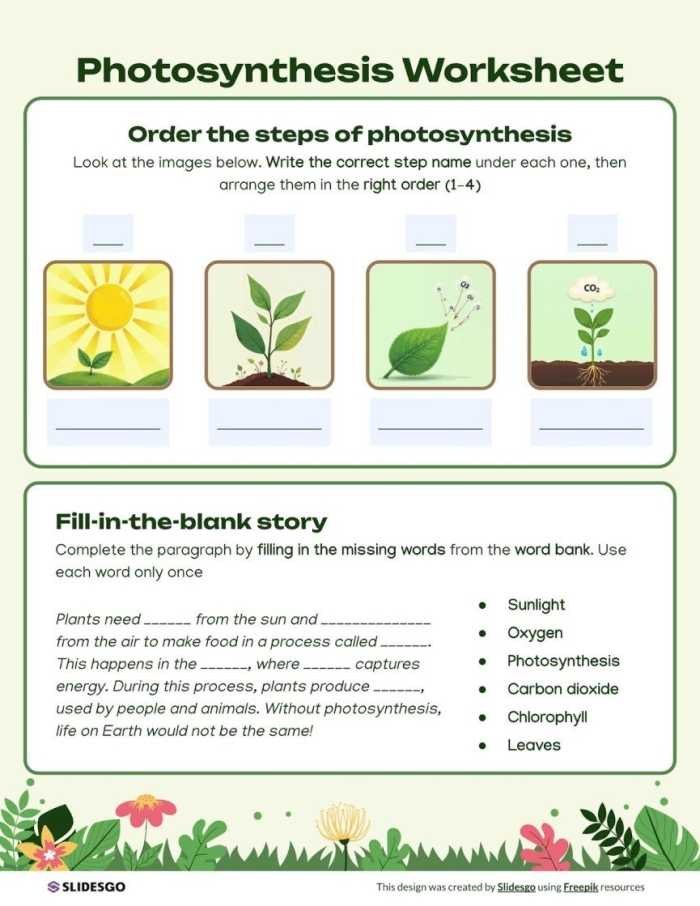
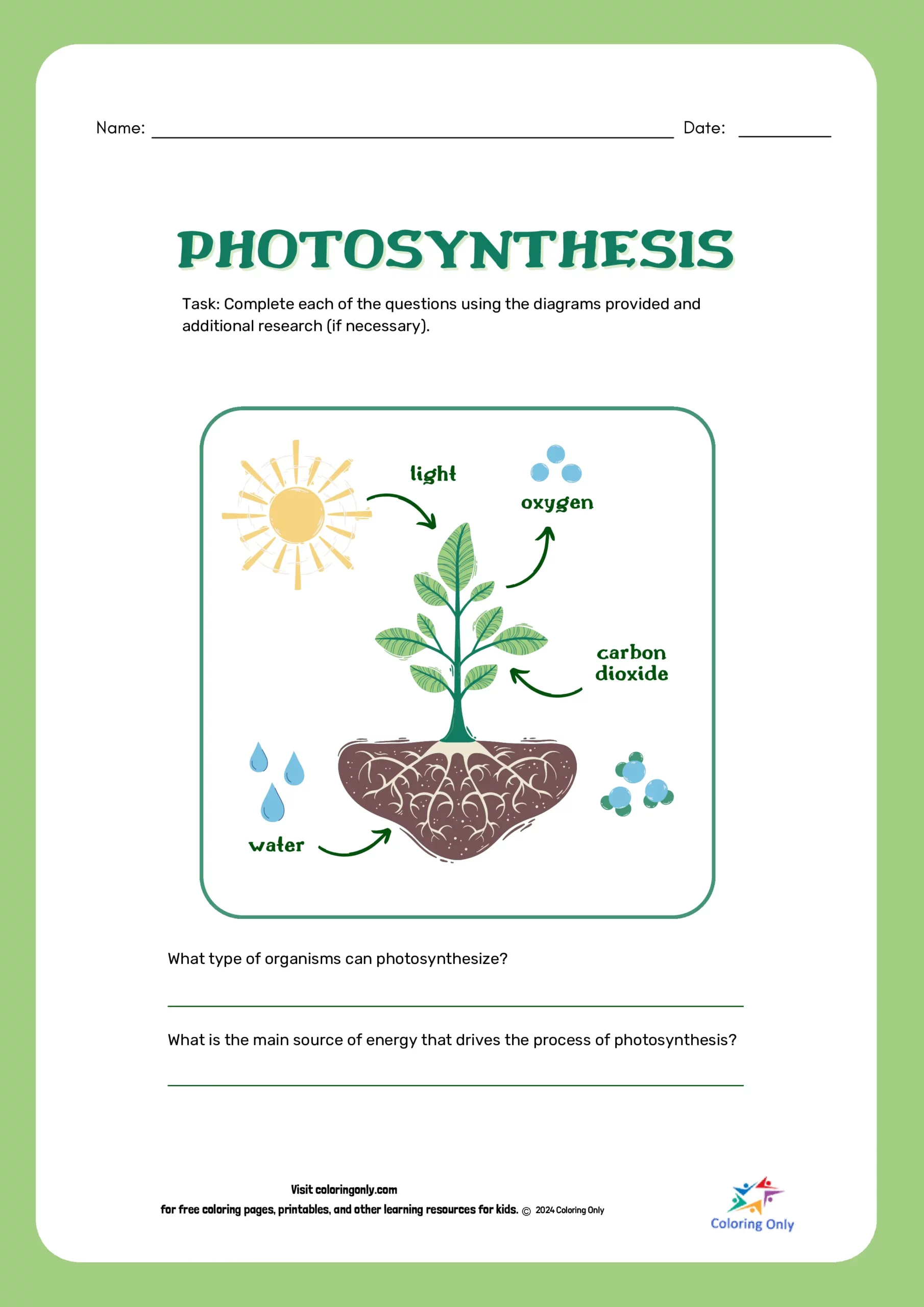
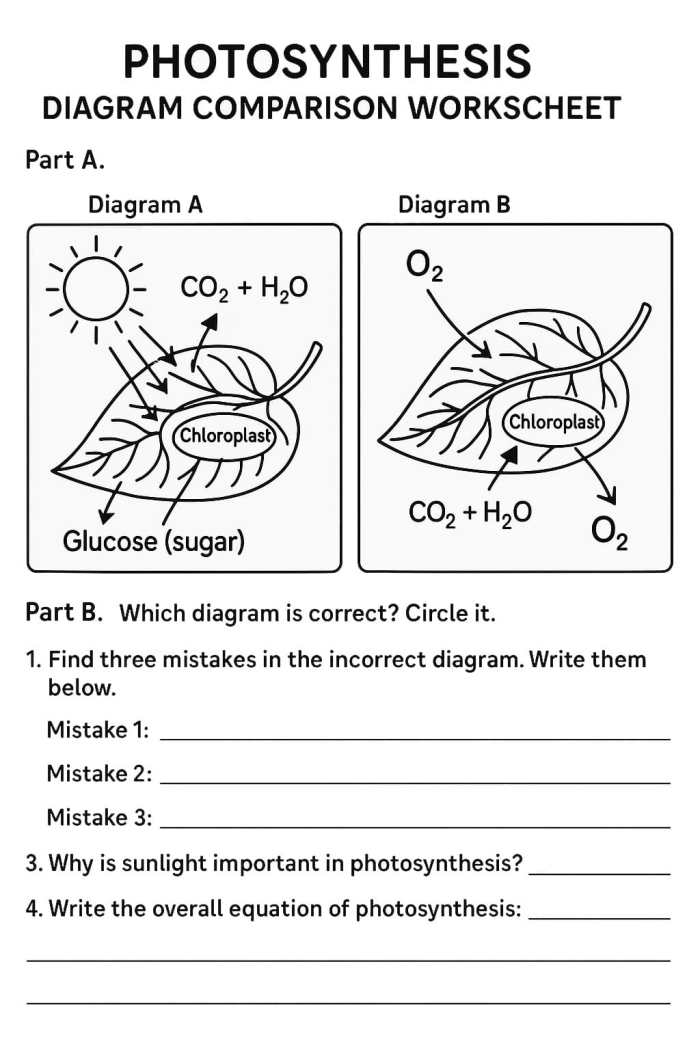
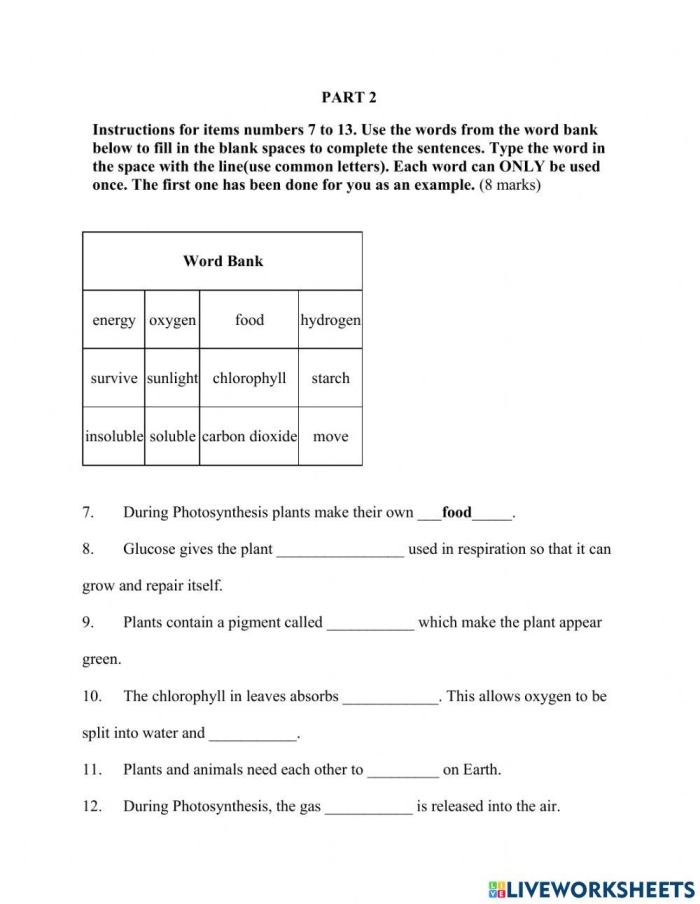
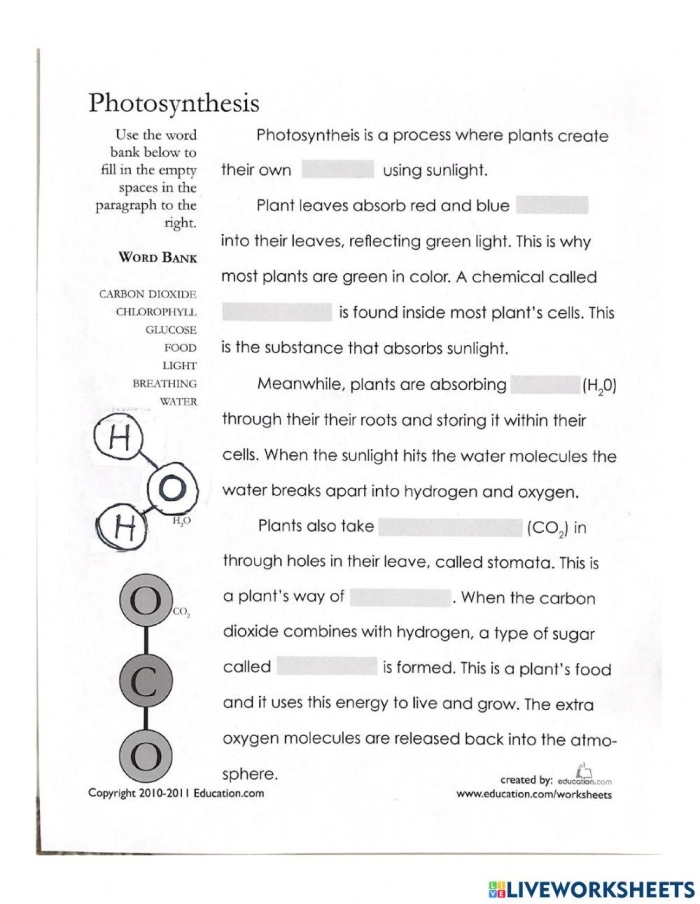
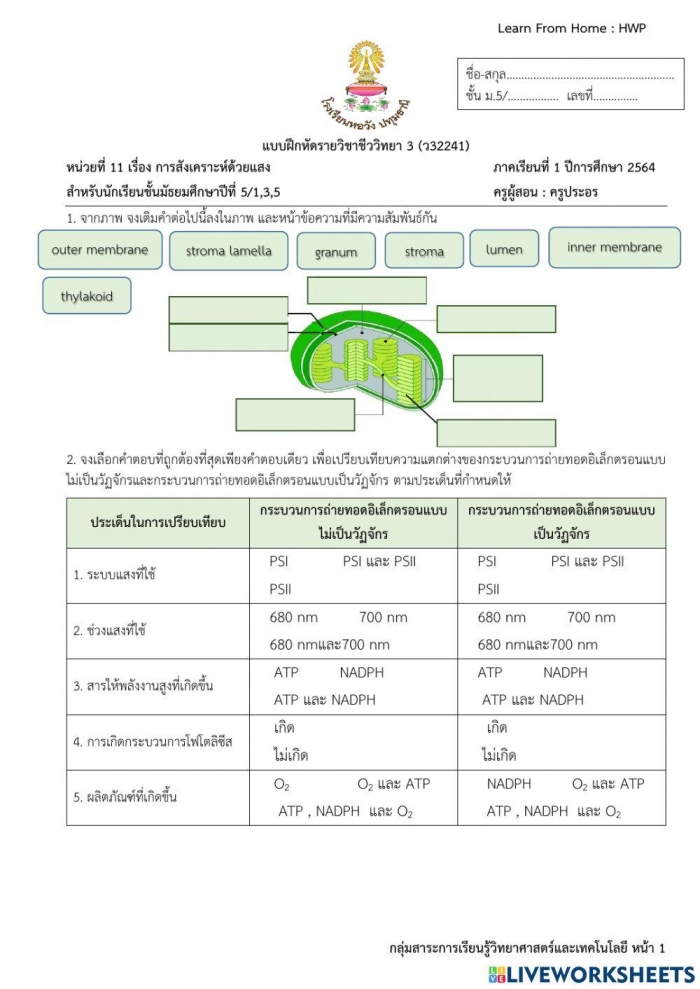
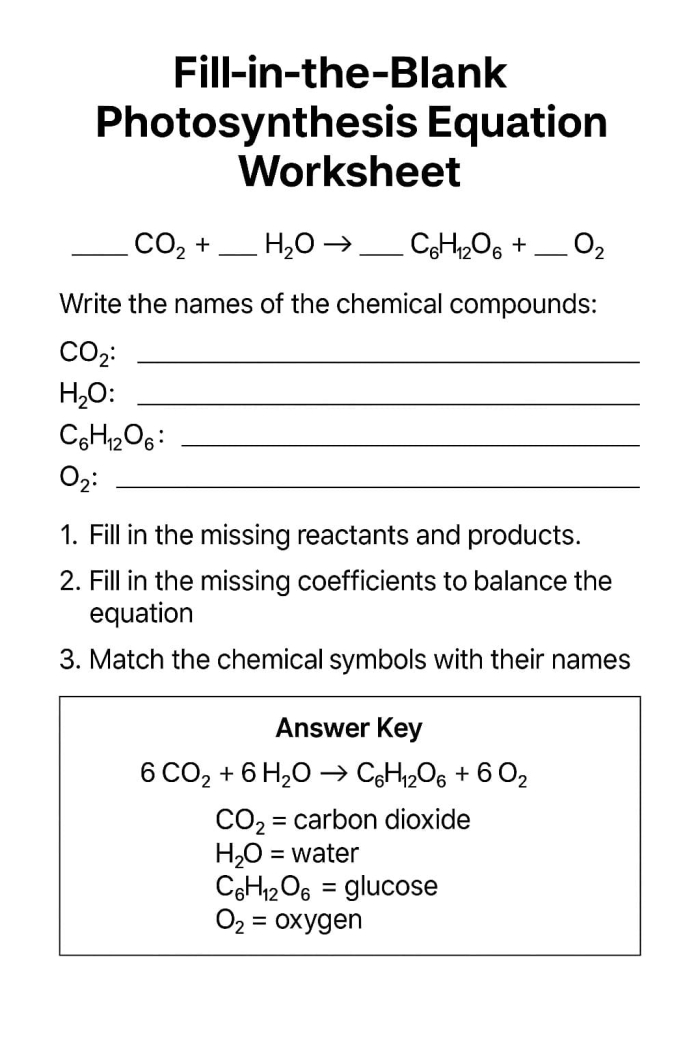
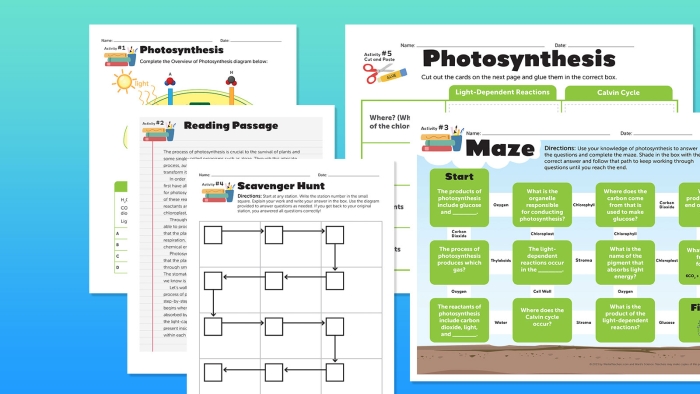
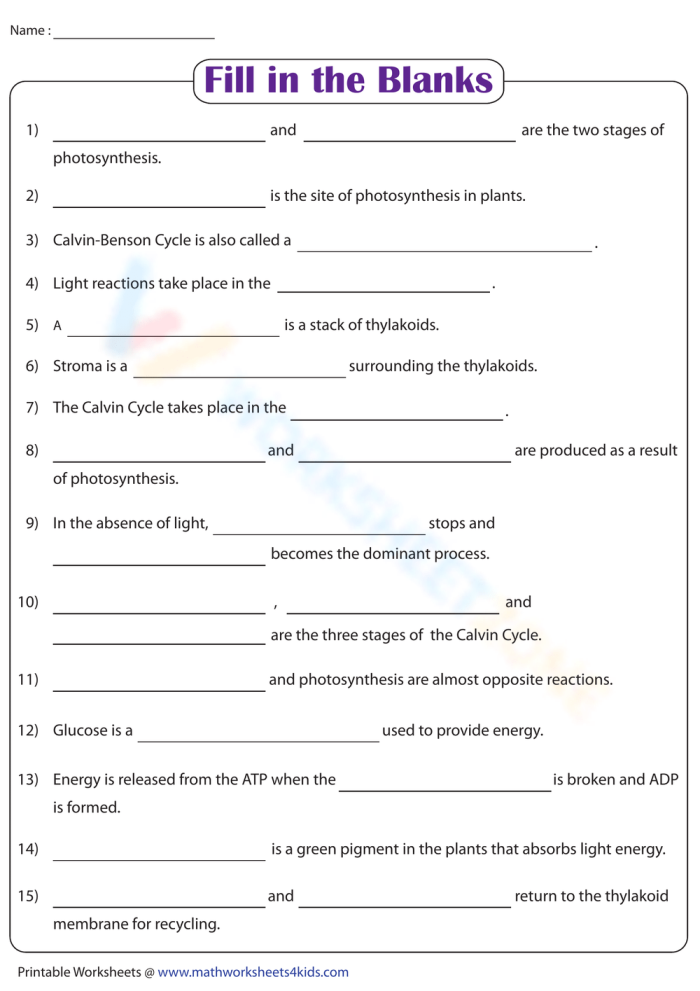
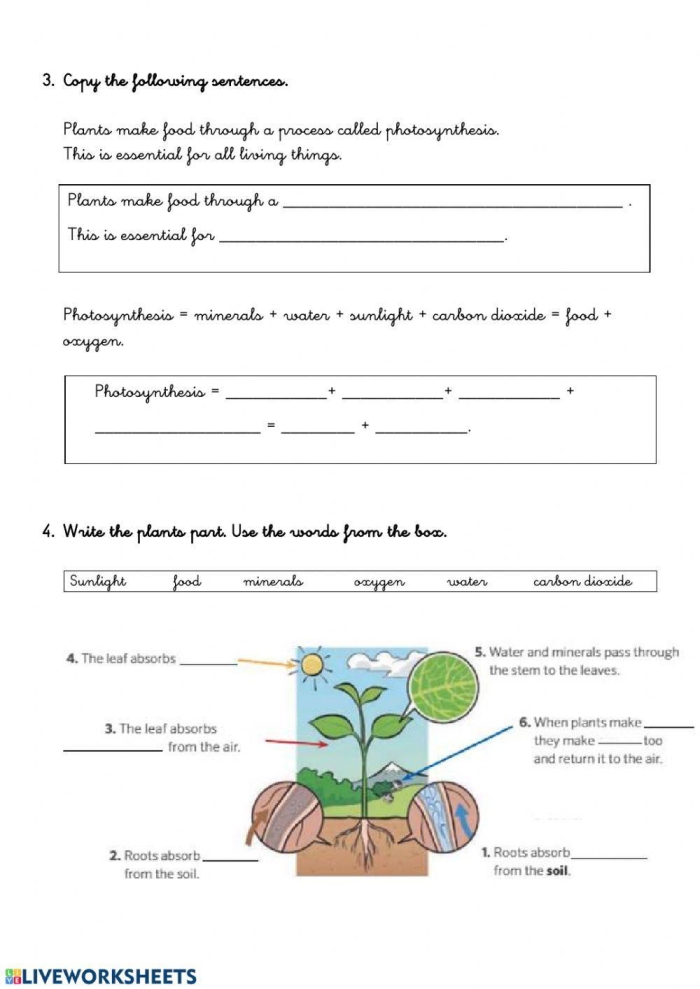
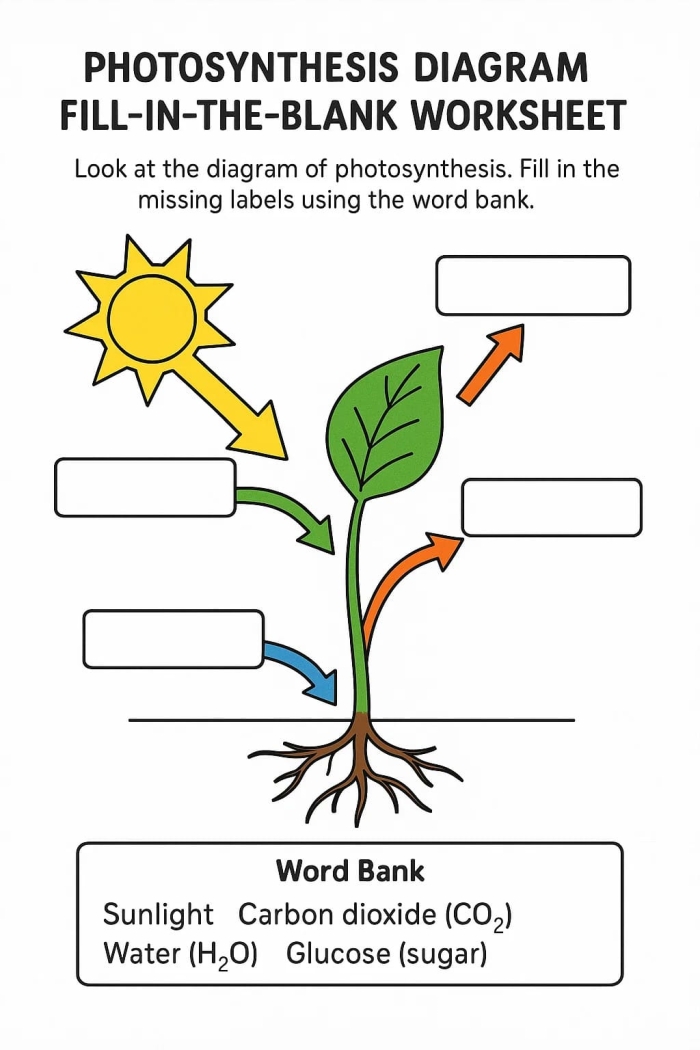
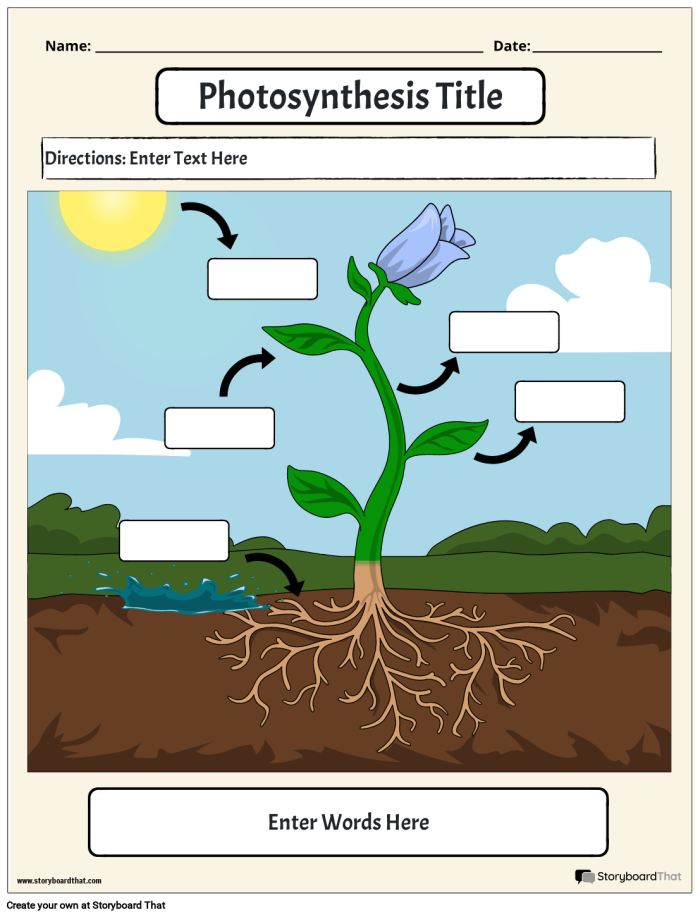
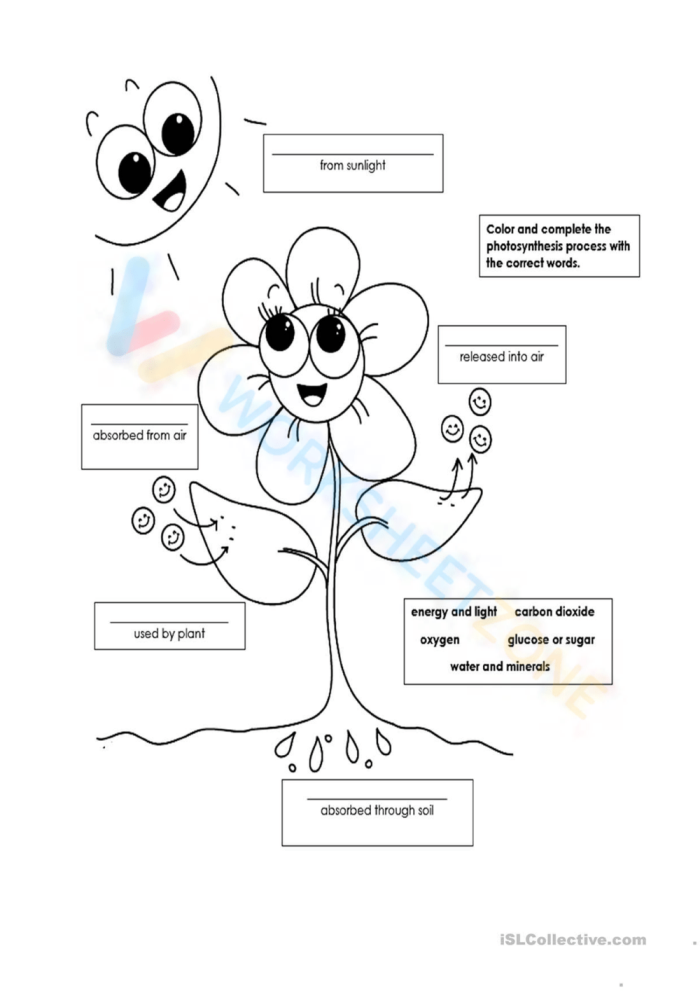
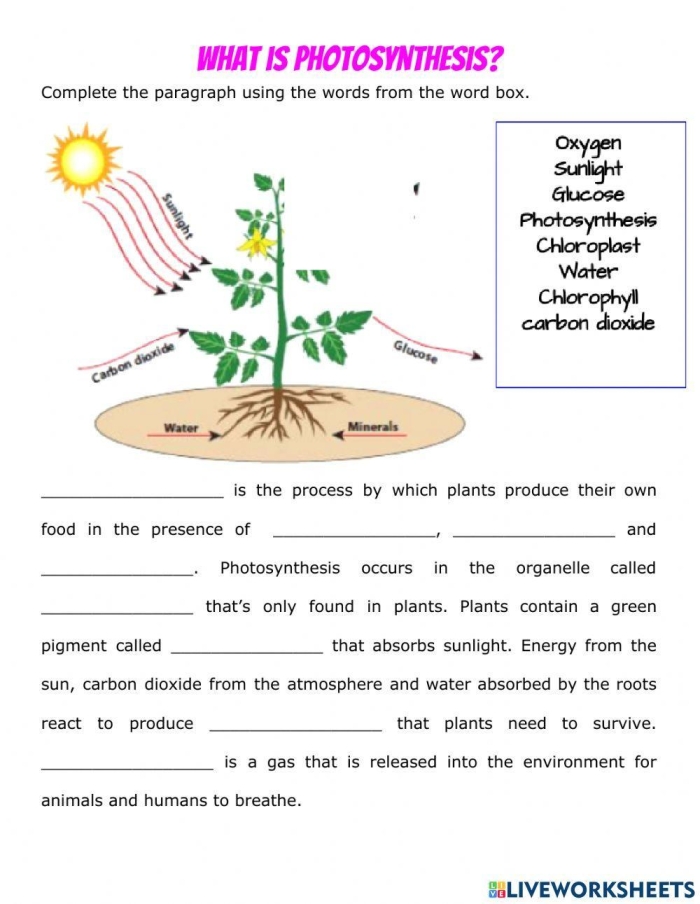
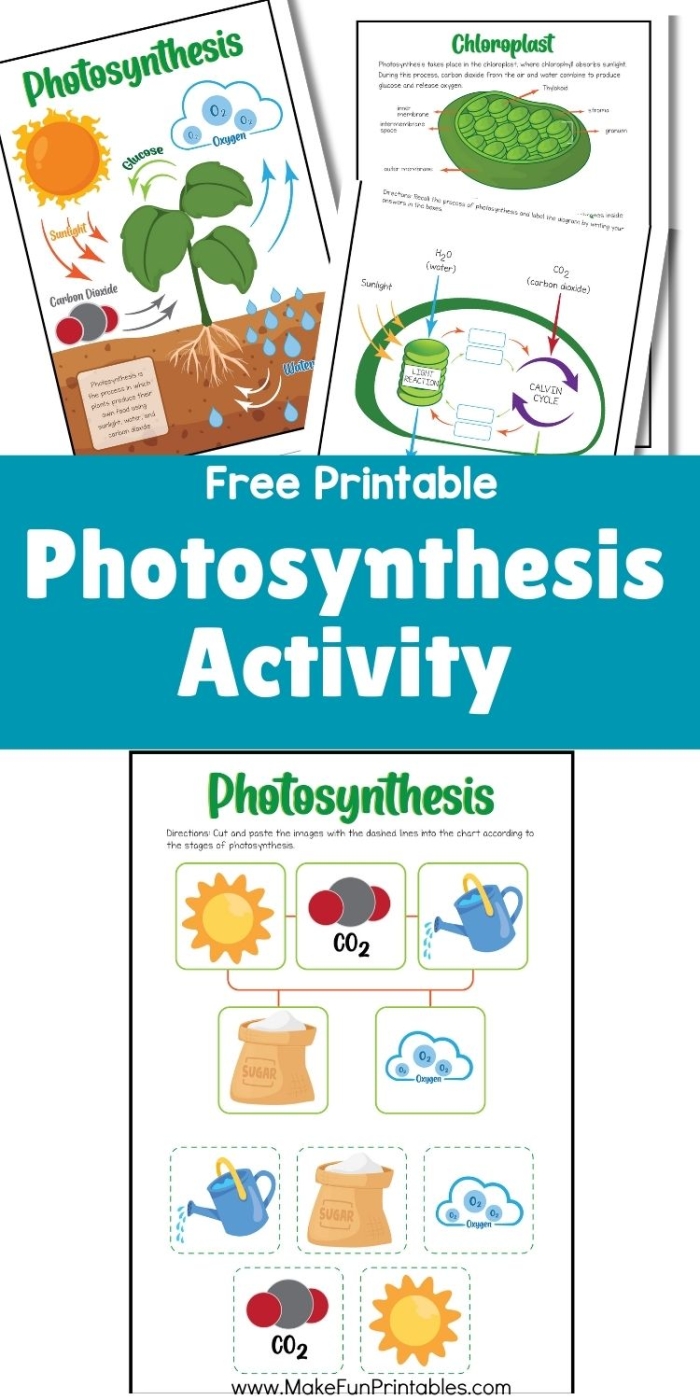
Photosynthesis fill-in-the-blank worksheets give fifth grade students a structured way to learn how plants convert sunlight into energy. These printable exercises work by presenting sentences with missing vocabulary terms, then providing a word bank at the bottom where students select the correct answers. The method forces active recall rather than passive reading, which strengthens memory retention before tests and quizzes.
When you work through a photosynthesis fill-in-the-blank worksheet, you’re engaging with life science concepts in a format that feels less intimidating than open-ended questions. Students encounter key terms like chlorophyll, glucose, carbon dioxide, and oxygen in context, so the definitions stick naturally. Rather than memorizing isolated vocabulary, you see how these words function within actual biological processes.
The practical value of keeping completed worksheets handy lies in their review power. After finishing the exercise, you have a personalized study guide with your own handwriting and answers. When quiz day arrives, flipping through these sheets refreshes your memory quickly. You’ve already written the terms once, so your brain recognizes them more easily during the actual assessment.
Fifth grade reading comprehension improves alongside science knowledge when using these worksheets. Students must read each sentence carefully to determine which word makes sense, combining reading skills with subject matter understanding. This dual-skill approach mirrors how learning actually works in the classroom.
Building a collection of completed worksheets creates a cumulative study resource. If your curriculum covers photosynthesis alongside other life science topics, you might also benefit from reviewing materials on chemical versus physical properties to understand how photosynthesis involves chemical changes. Combining multiple worksheet types gives you a broader foundation for standardized tests.
Keep your finished photosynthesis worksheets in a folder or binder specifically for life science. Mark any answers you initially got wrong, then review those terms extra carefully before assessments. This targeted review approach works better than cramming random facts the night before.
Boost Skills with These Worksheets