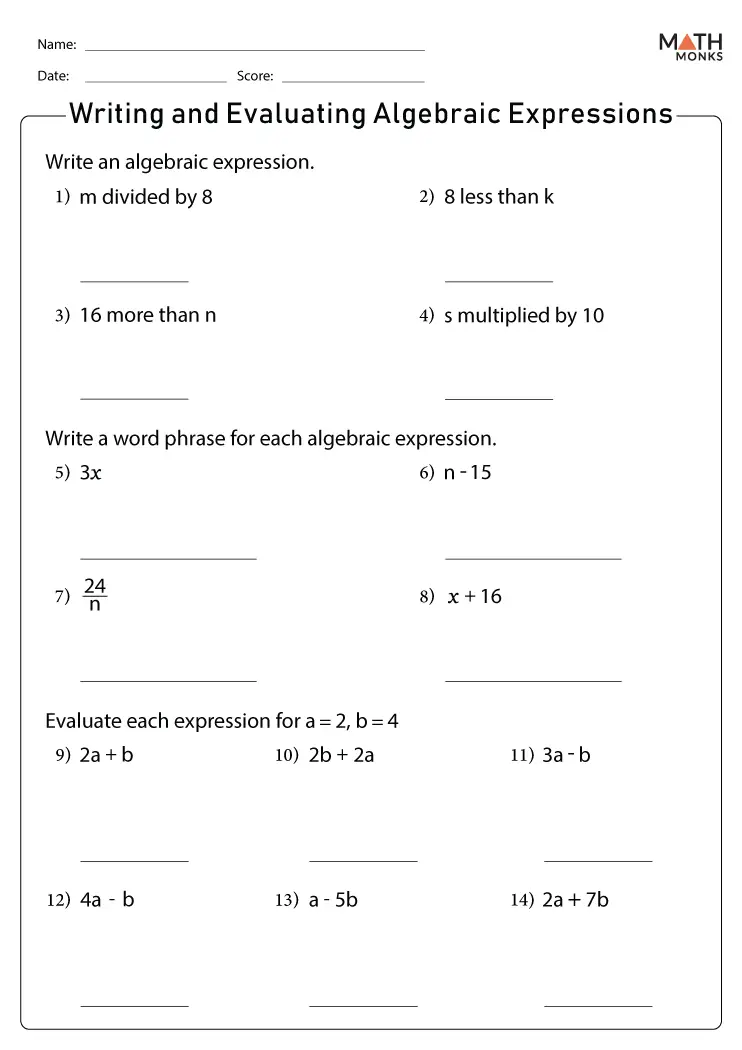
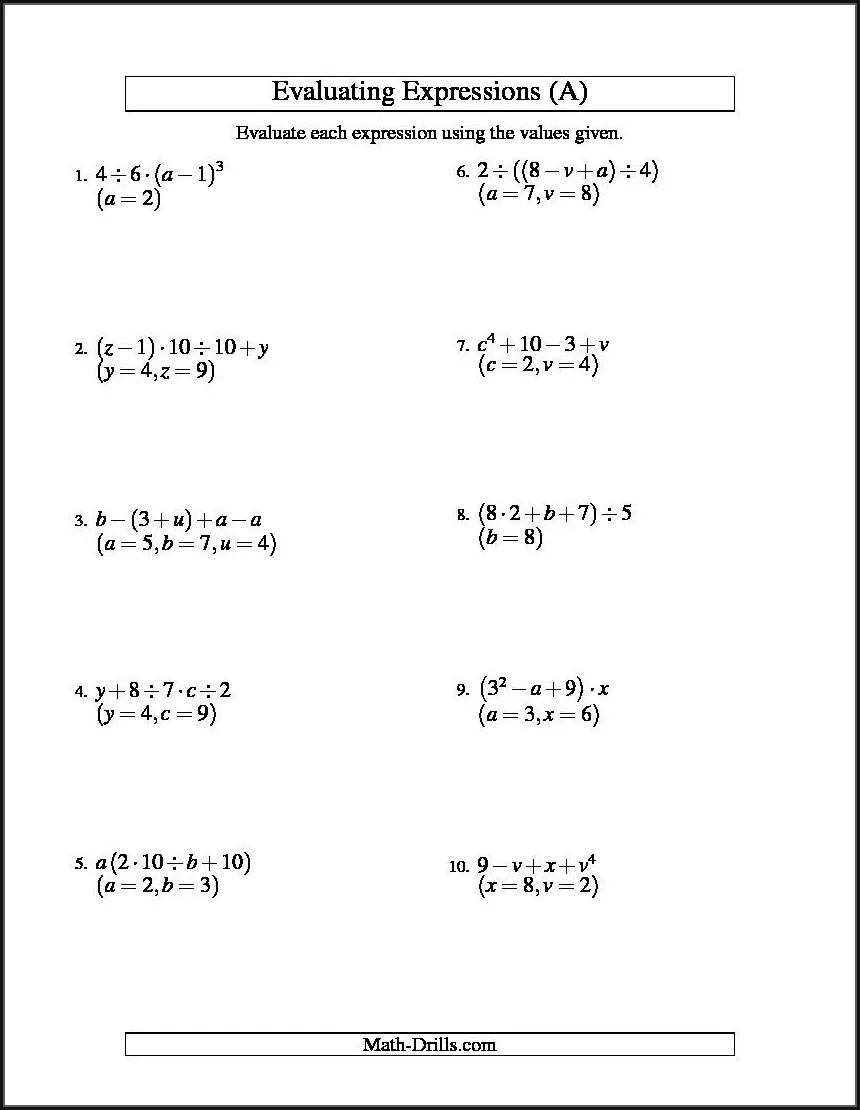
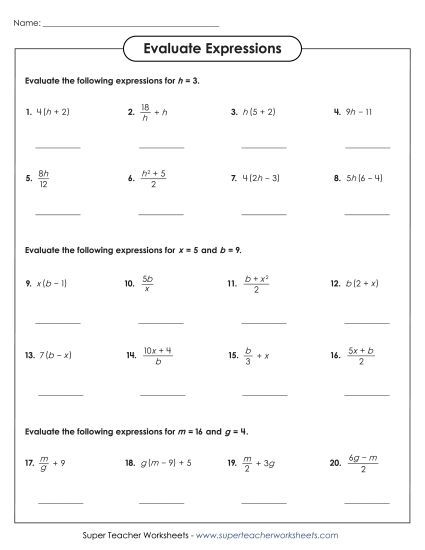
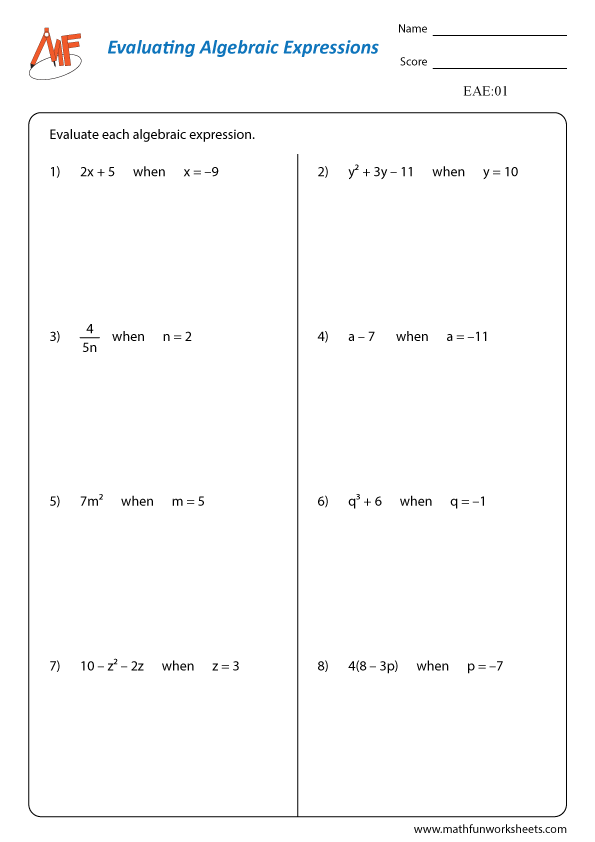
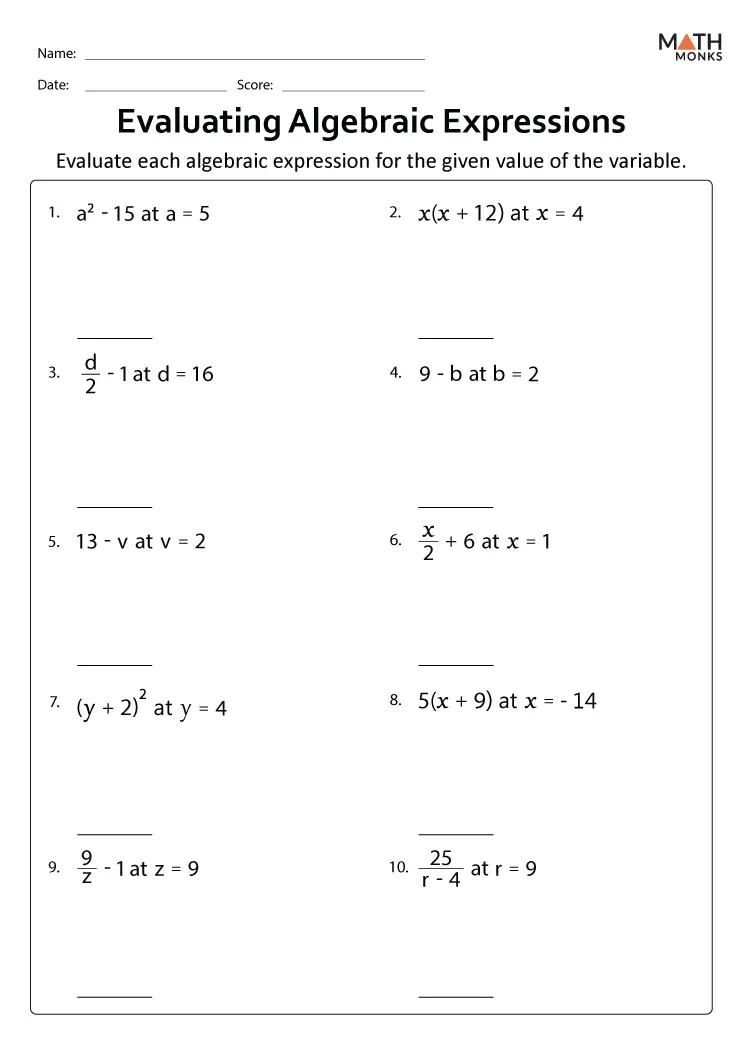
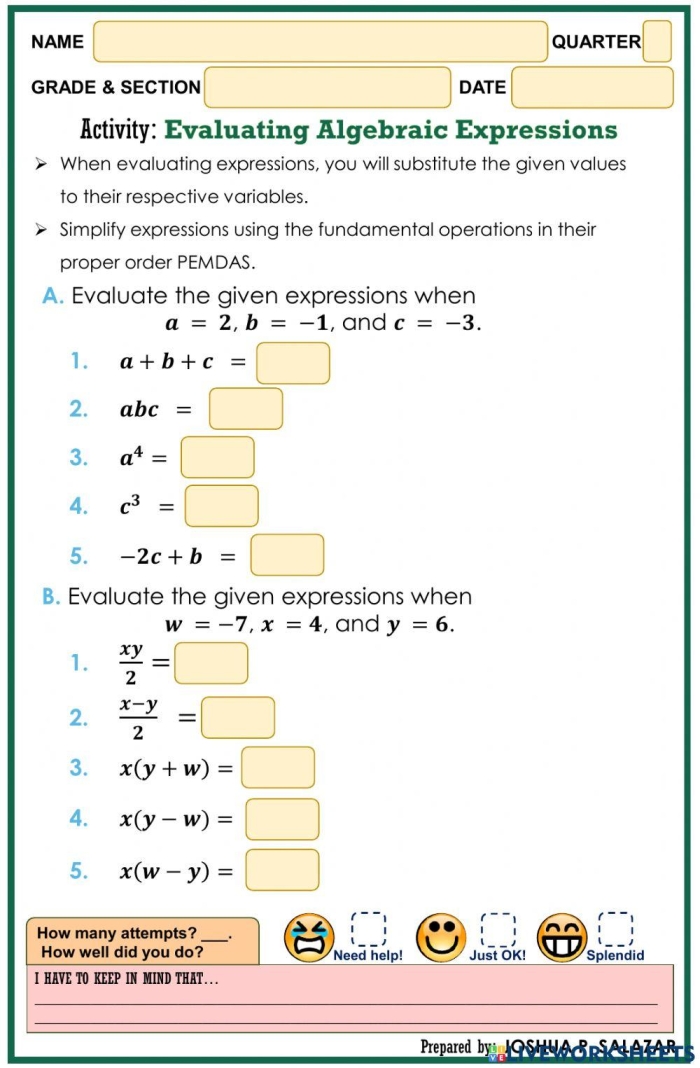
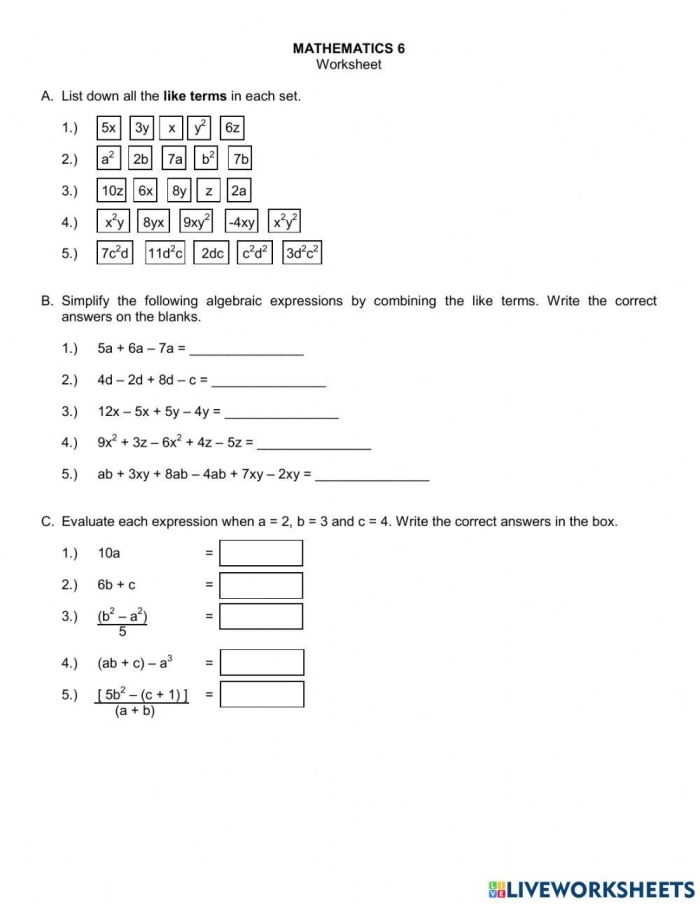
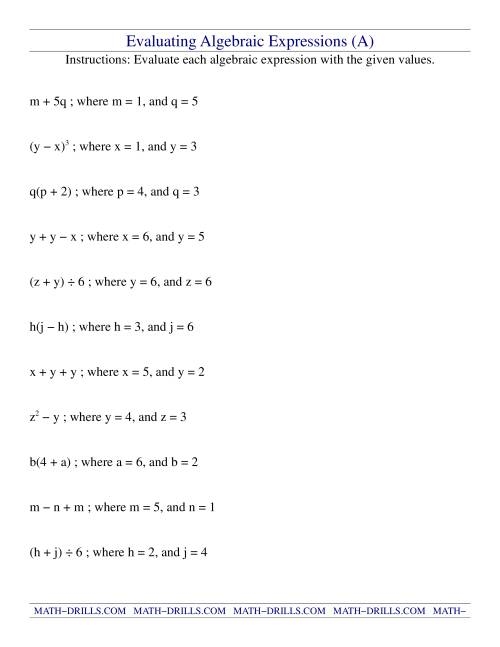
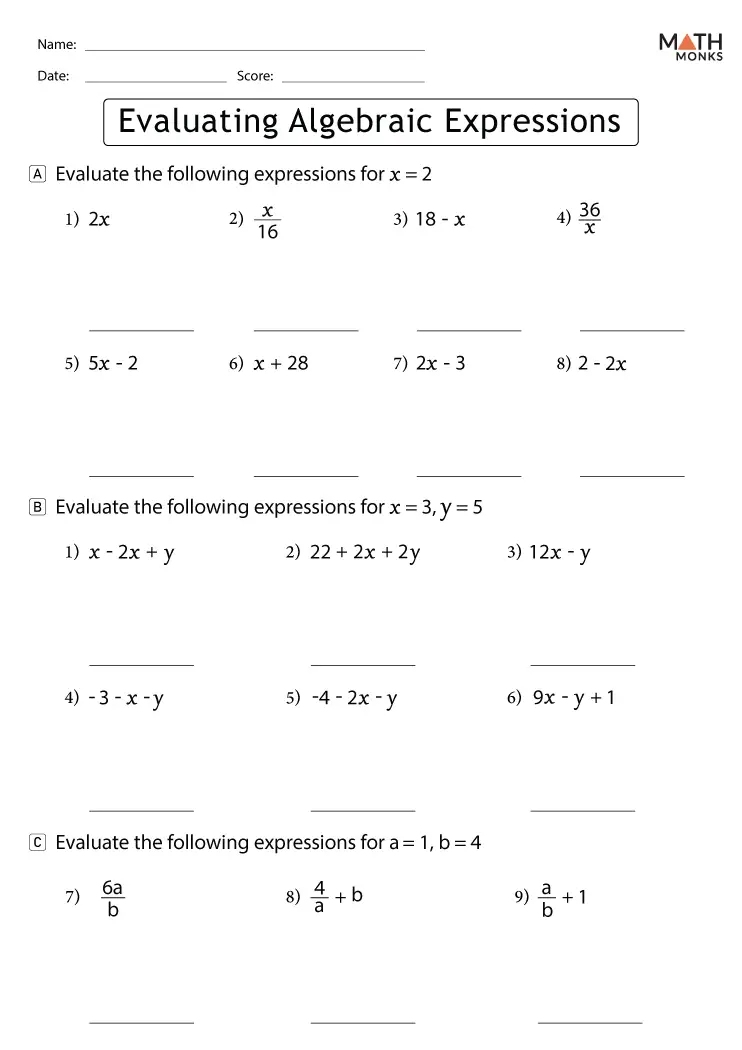
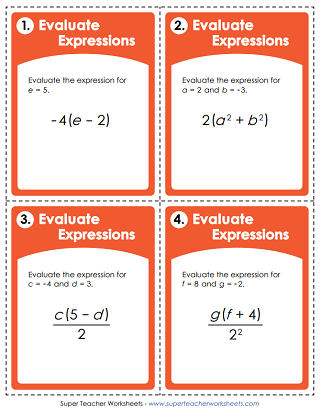
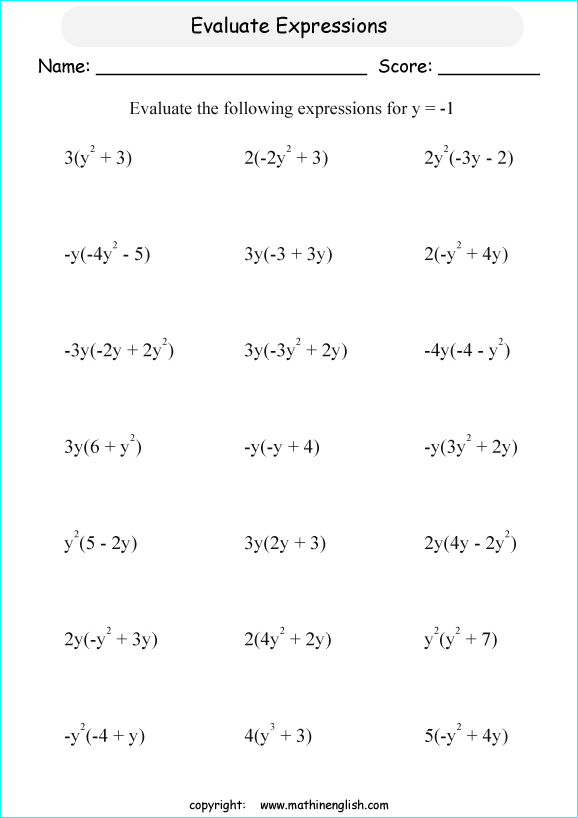
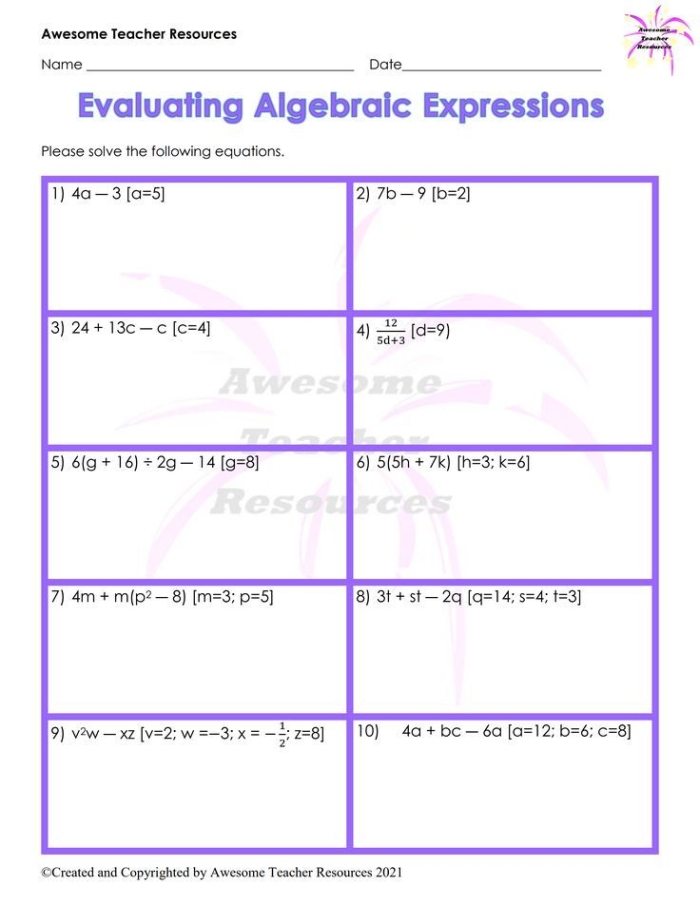
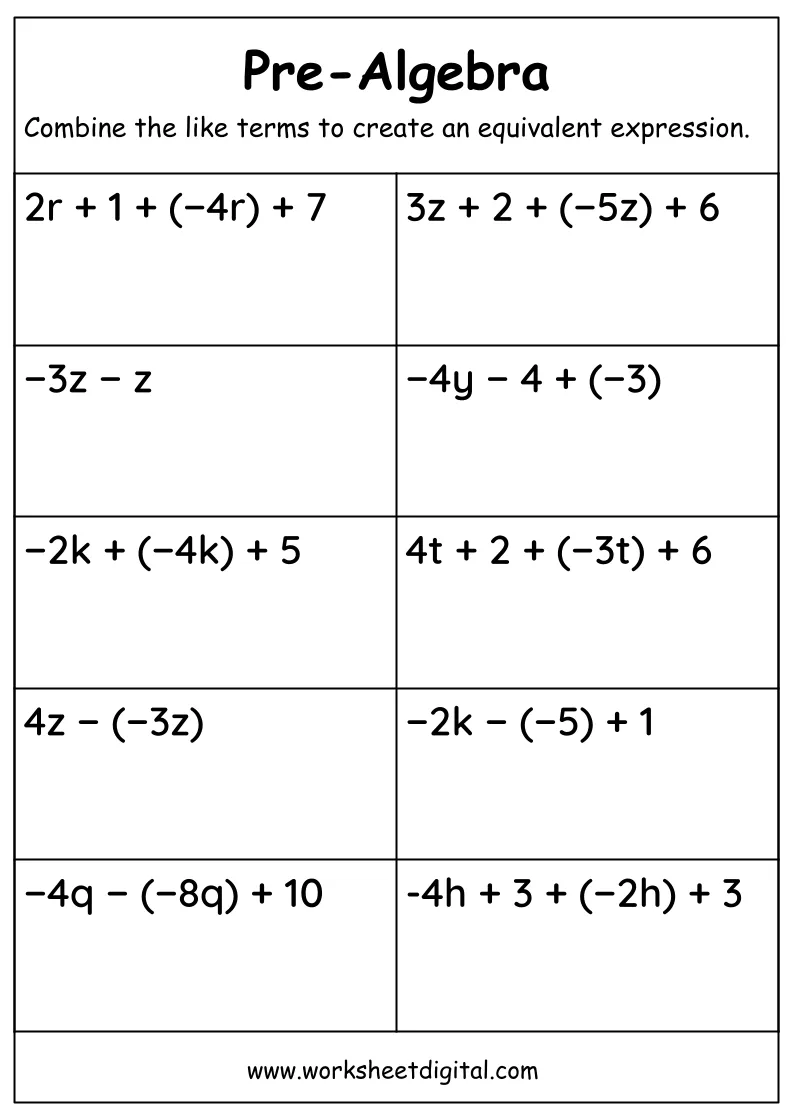
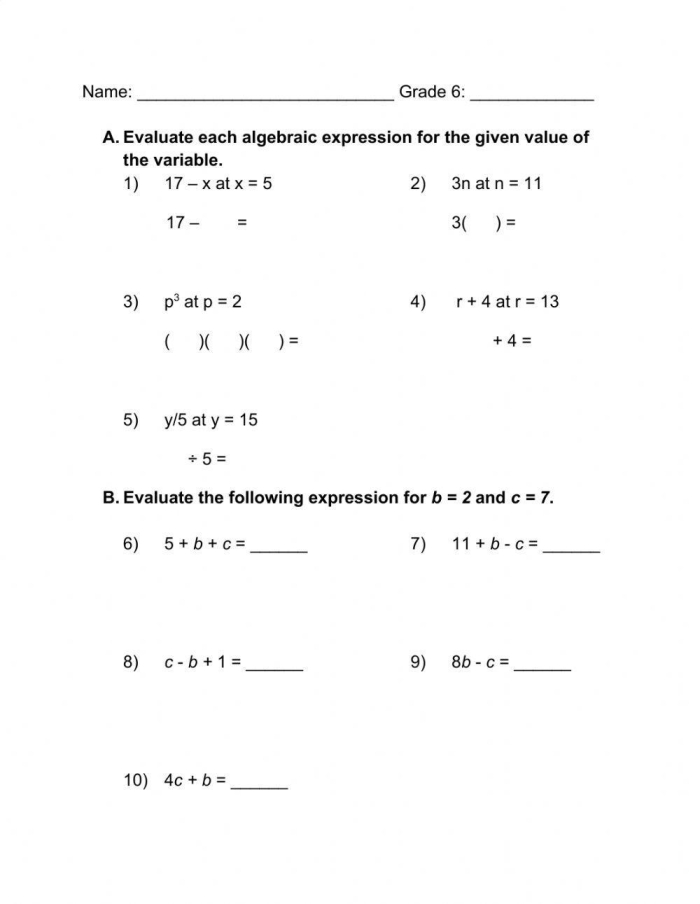
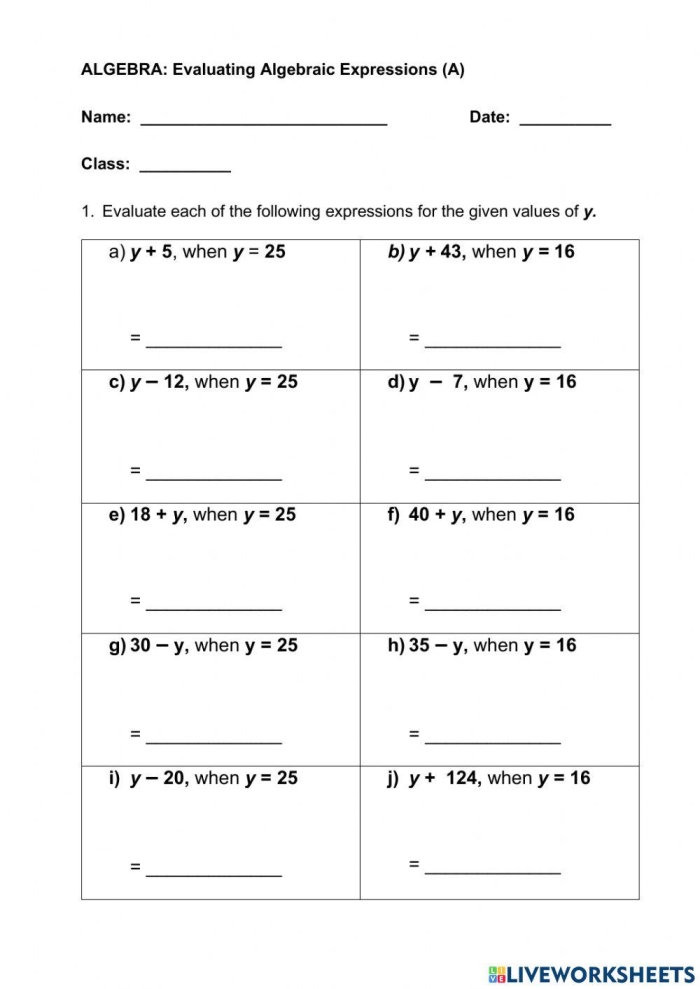
Algebraic expressions can feel abstract until you actually start plugging in numbers and watching them transform. This worksheet gives you the hands-on practice that makes the concept stick, especially if you’re working through sixth grade math and building your foundation in numbers and counting.
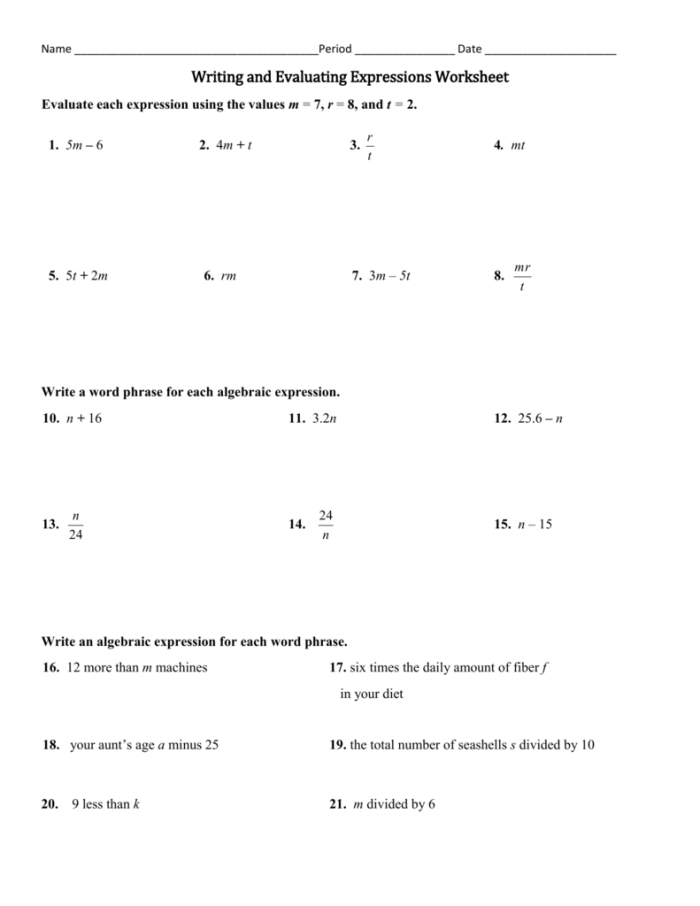
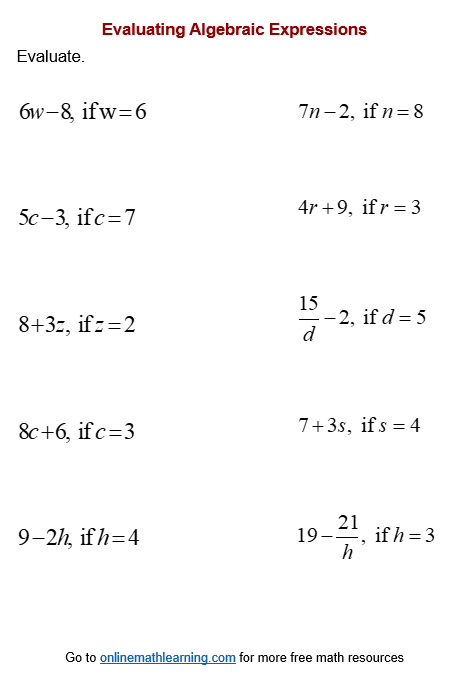
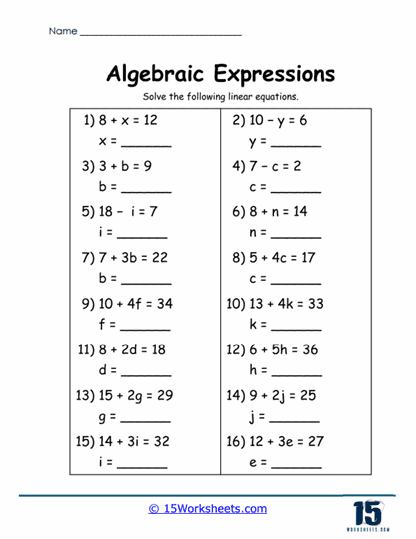
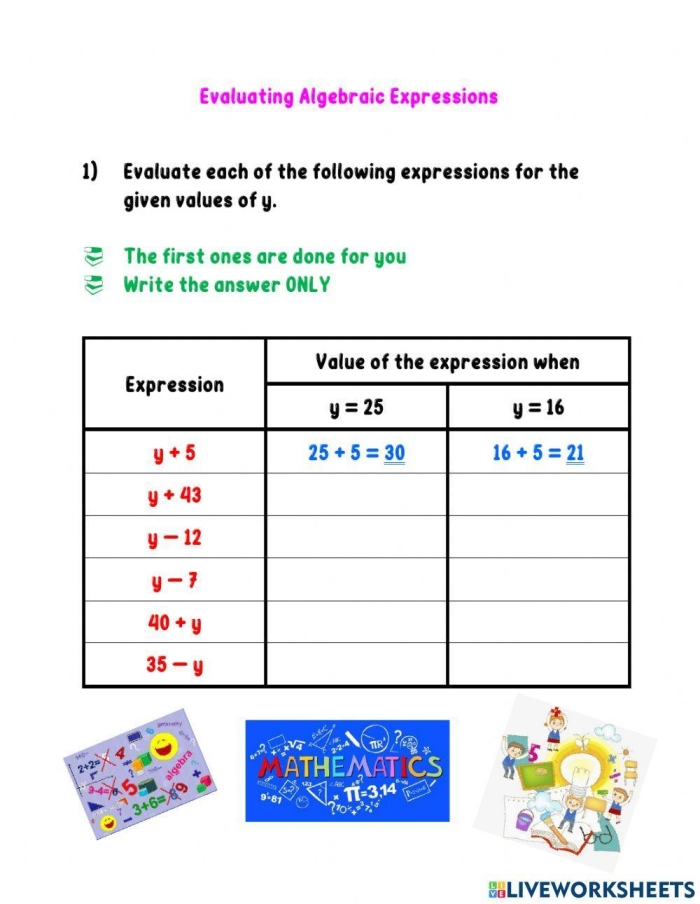
The key to mastering this skill is understanding what happens when you substitute a variable with its actual value. Instead of looking at something like 3x + 5 as a mysterious formula, you replace x with a real number, say 2, and suddenly you have 3(2) + 5, which equals 11. That concrete step from abstract to concrete is where understanding actually happens.
Once you’ve plugged in the values, the order of operations becomes your guide. You follow PEMDAS (Parentheses, Exponents, Multiplication and Division, Addition and Subtraction) to simplify correctly. Skip a step or take them out of order, and you’ll get the wrong answer. Many students rush through this part, but slowing down here prevents careless mistakes that pile up across multiple problems.
This worksheet format works because repetition builds automaticity. After working through ten or fifteen expressions, your brain starts recognizing patterns. You stop second-guessing yourself on whether to multiply or add first. The process becomes natural rather than something you have to consciously think through every single time.
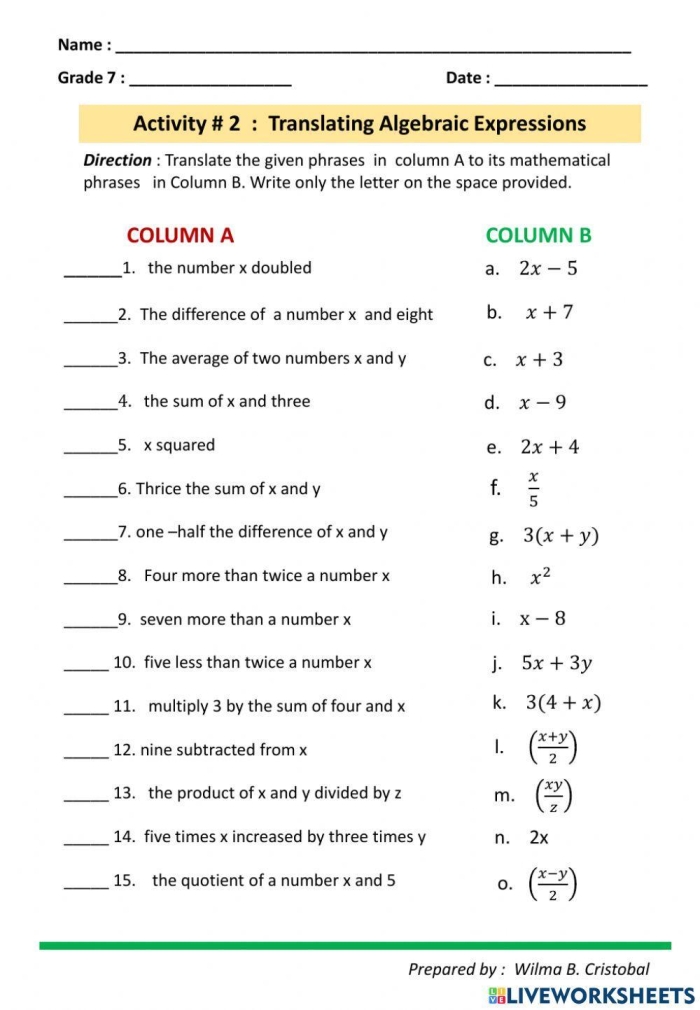
If you’re preparing for assessments or want to strengthen your grasp on how variables work, this kind of targeted practice pays off. You might also explore related skills like converting words to mathematical symbols, which helps you translate real-world problems into expressions you can evaluate. Working through these fundamentals now sets you up for success with more complex algebra later.
Hands-On Worksheet Activities