Rhyming words form one of the earliest building blocks in phonemic awareness, and spotting which words sound alike at the end is a skill that separates confident readers from struggling ones in kindergarten. If you want to know whether your students can actually hear and identify rhymes, you need more than casual observation during circle time.
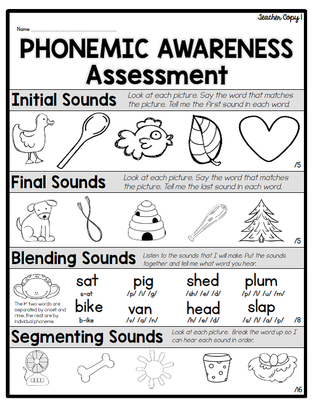
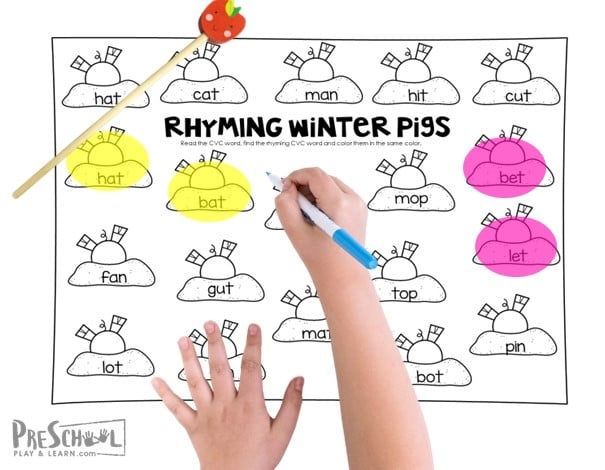
A structured assessment gives you concrete data about each child’s phonemic awareness level. When you use a dedicated rhyming words assessment, you’re not guessing anymore. You can see exactly which students catch rhymes instantly and which ones need explicit instruction. Some kids will match “cat” with “hat” without hesitation, while others might stare blankly or pick random words that don’t rhyme at all.
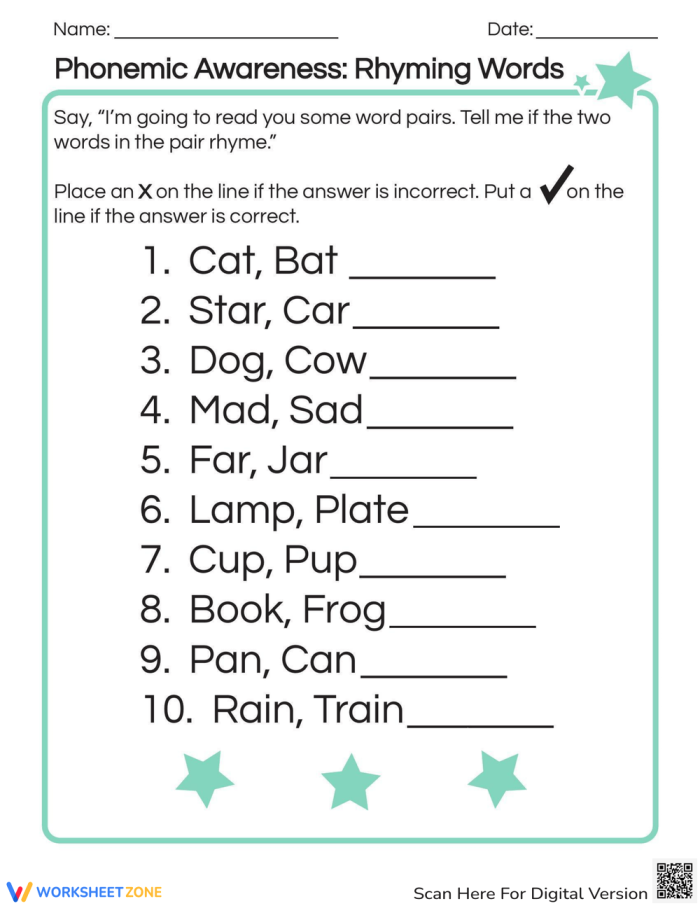
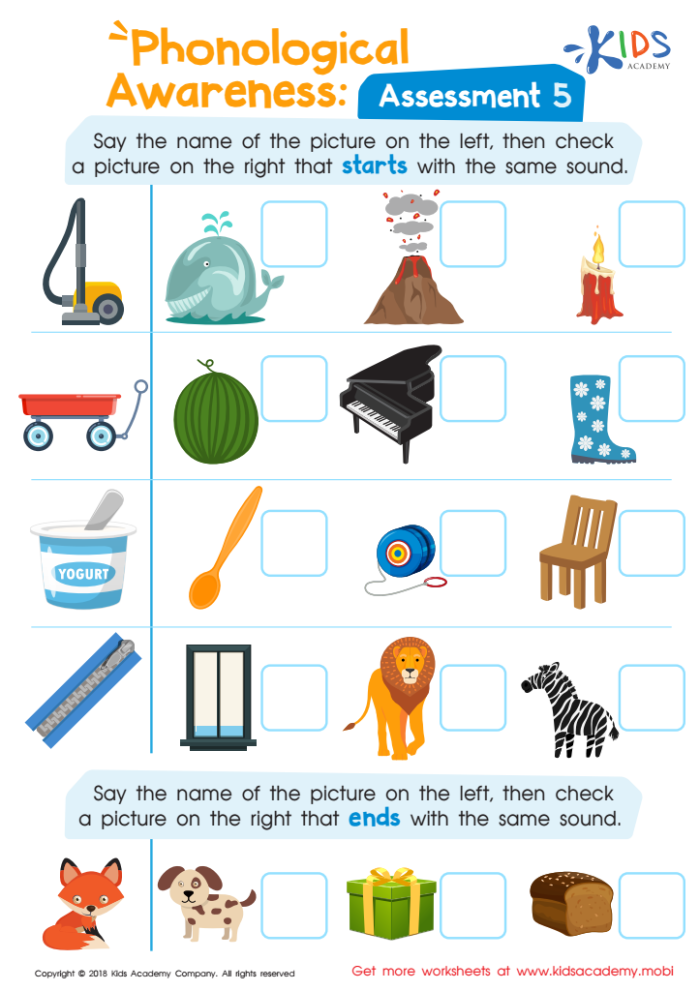
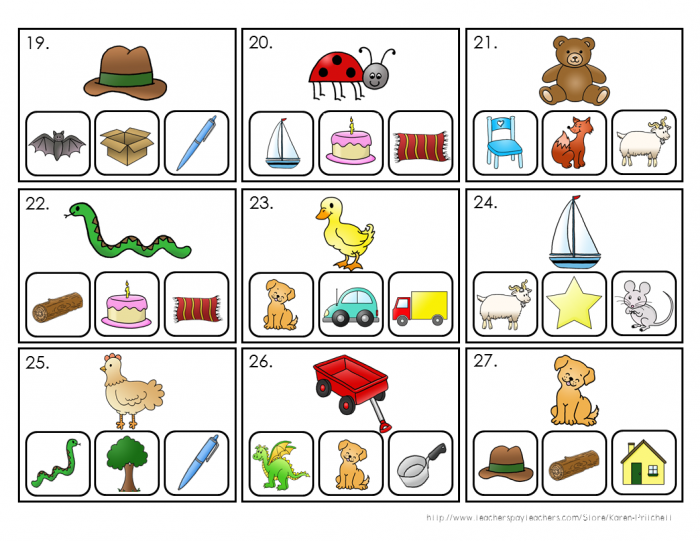
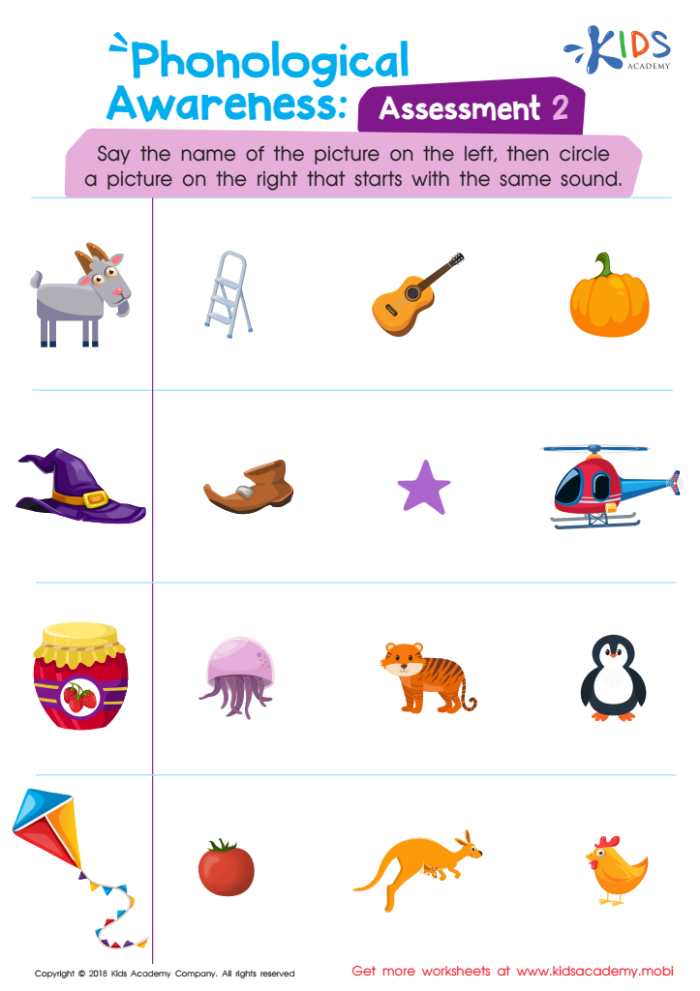
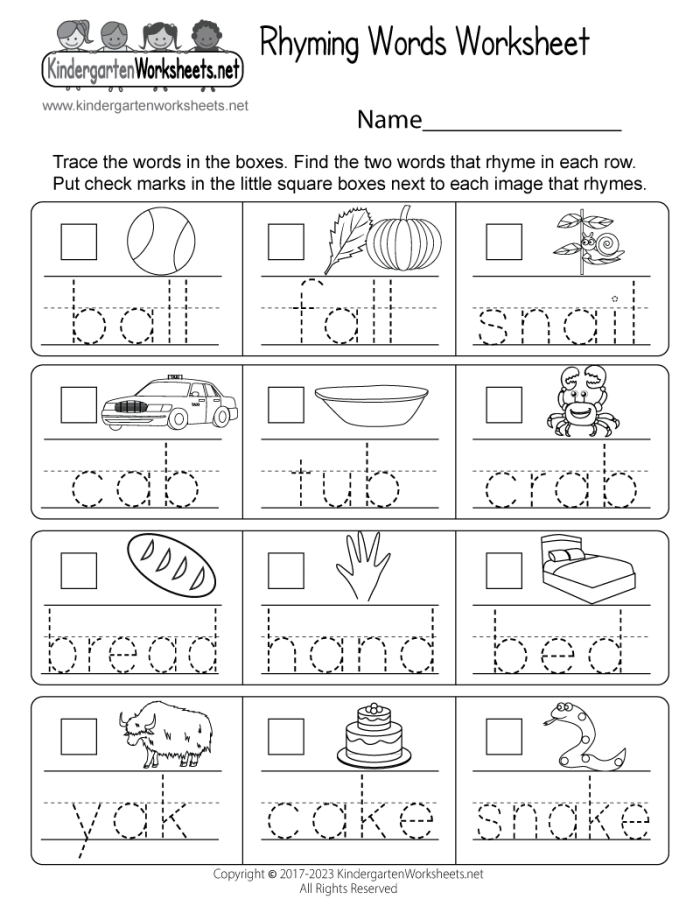
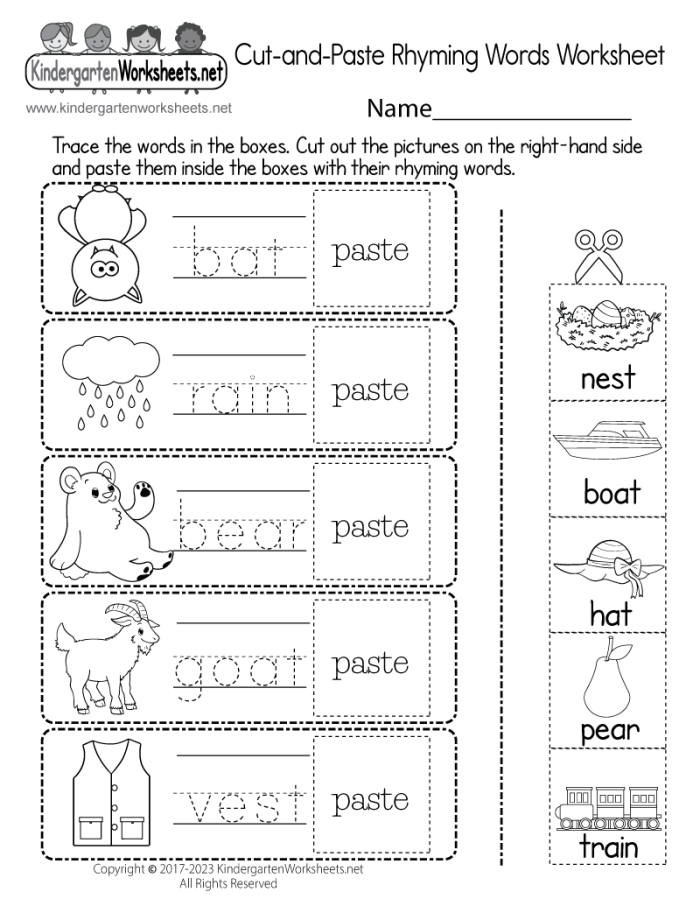
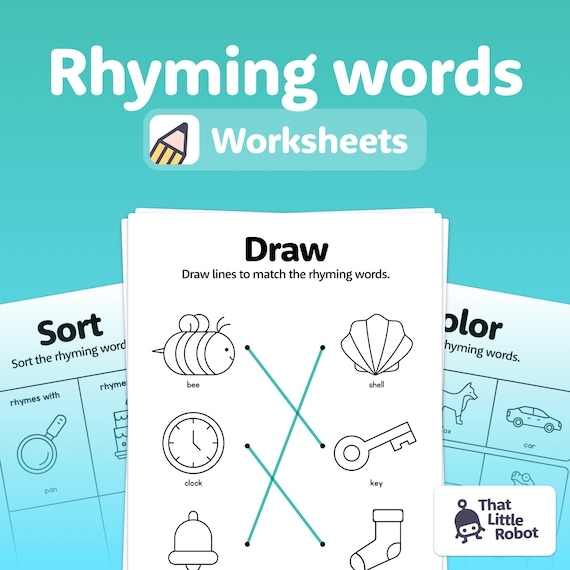
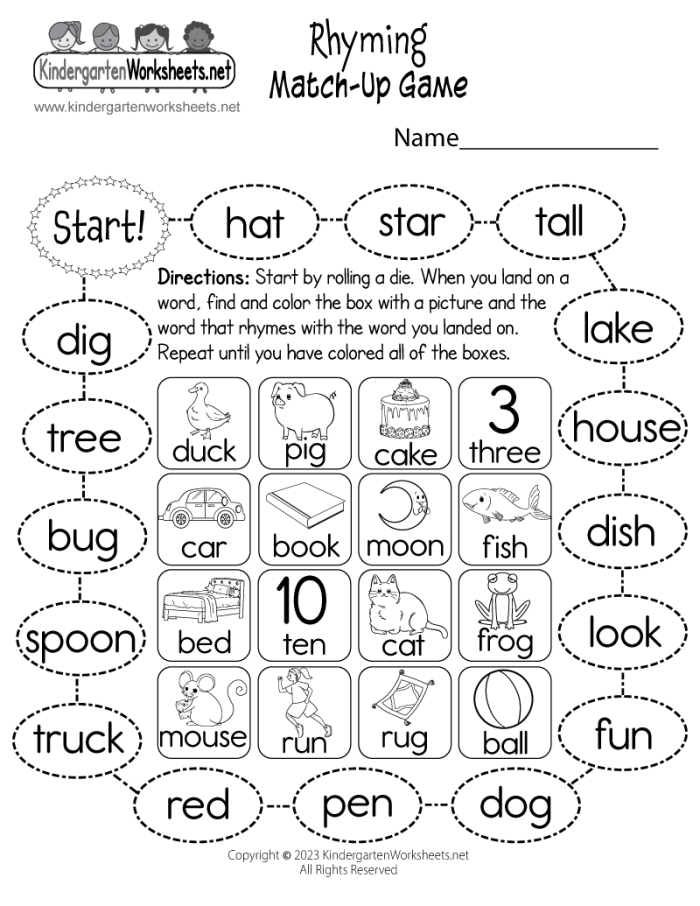
The mechanics are straightforward. Present pairs or groups of words aloud and ask students to identify which ones rhyme. You might say “Do ‘dog’ and ‘log’ rhyme?” or show pictures and ask “Which word rhymes with ‘sun’?” The visual support of pictures helps kindergarteners stay engaged, since many aren’t yet reading fluently. Their job is purely to listen and recognize the sound pattern.
What makes this assessment valuable is the specificity it provides. You’ll discover whether a student struggles with rhyming across the board or just with certain vowel sounds. Some children catch obvious rhymes like “cat” and “bat” but miss subtle ones like “light” and “night.” This information directly informs your next teaching steps.
Once you’ve assessed your class, you can differentiate instruction based on what you’ve learned. Students who already demonstrate strong rhyming skills can move toward more complex phonics activities, while those who need support benefit from targeted practice with clear rhyming patterns. The assessment itself takes just minutes per student, making it an efficient tool for any kindergarten classroom focused on building solid phonics foundations.
Start Practicing with These Worksheets