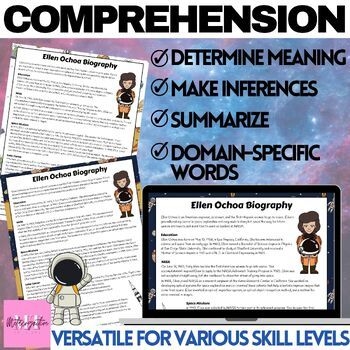
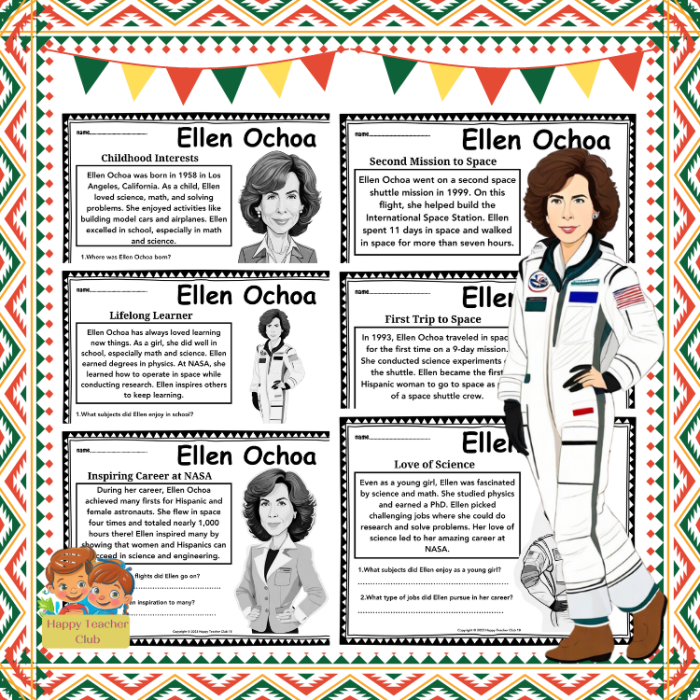
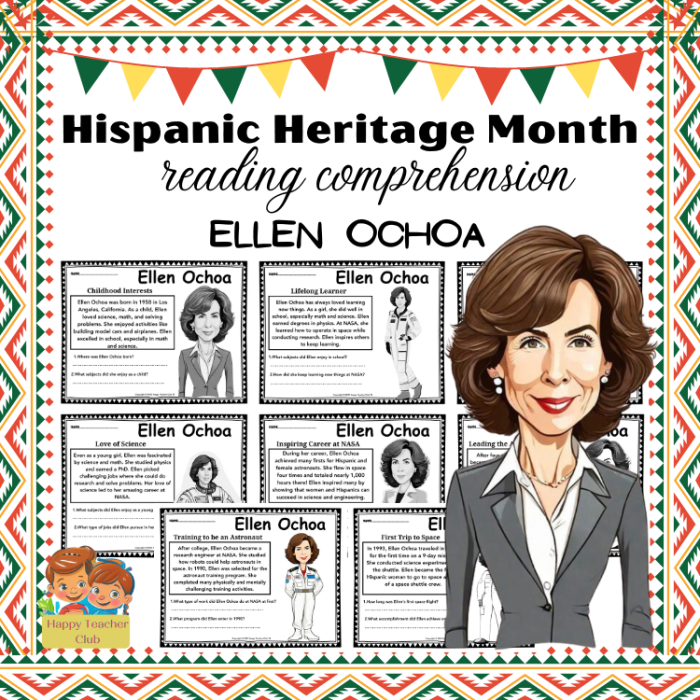
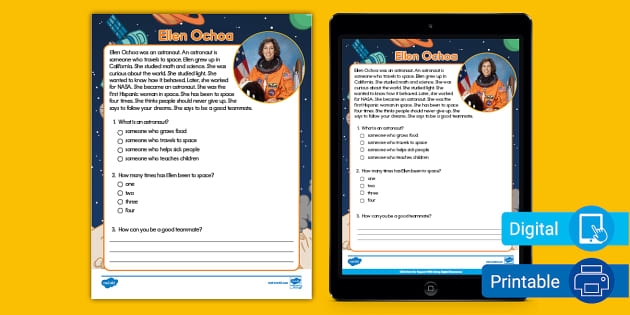
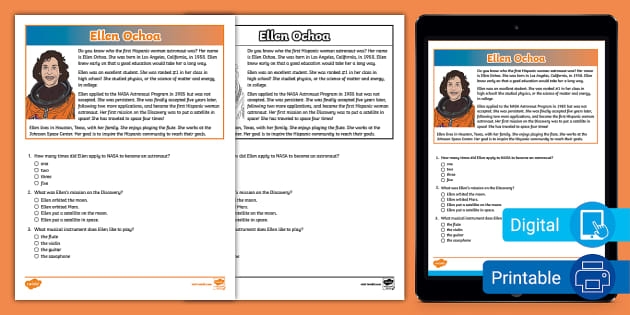
Ellen Ochoa didn’t dream of space as a child. She grew up in Los Cerros, California, where her mother raised her and four siblings after her parents divorced. What she did have was curiosity and a love of solving problems, traits that would eventually carry her beyond Earth’s atmosphere.
Born in 1958, Ochoa excelled in mathematics and physics throughout her education. She earned a doctorate in electrical engineering from Stanford University, a path that many sixth grade students might recognize as requiring the kind of logical thinking used when working through multiplication and division problems in scientific notation. Her academic foundation became the launching pad for her career at NASA.
In 1991, at age 32, Ochoa became the first Hispanic woman to travel to space. She flew aboard the Space Shuttle Discovery as a mission specialist and primary robotic arm operator. Over her astronaut career, she logged more than 1,000 hours in space across four shuttle missions. Her work involved operating the shuttle’s robotic arm to deploy and retrieve satellites, tasks that demanded precision and deep concentration.
What makes Ochoa’s story compelling for middle-grade readers is how she balanced her scientific ambitions with her identity. She spoke Spanish at home and never lost connection to her cultural roots, even as she achieved what few people on Earth had accomplished. She also played the flute and maintained hobbies outside her career, showing that scientists are multidimensional people with varied interests.
Today, Ochoa directs NASA’s Johnson Space Center in Houston, Texas. Her biography serves as proof that persistence, education, and curiosity can open doors that seem impossibly distant. For students learning to recognize shapes in Spanish or tackle systems of linear equations through word problems, Ochoa’s journey demonstrates why these skills matter beyond the classroom.
Worksheet Practice Section