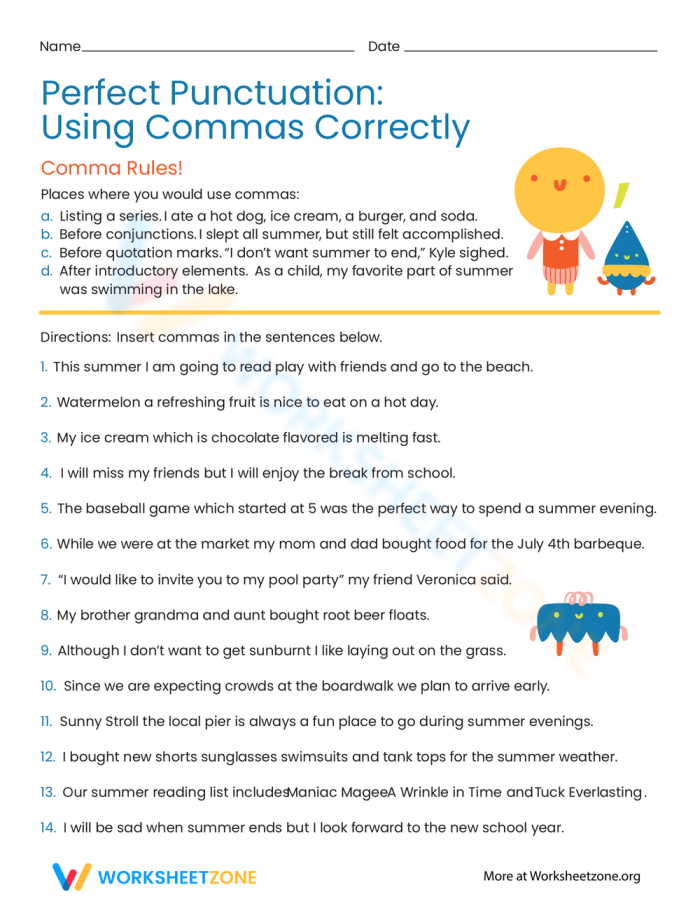
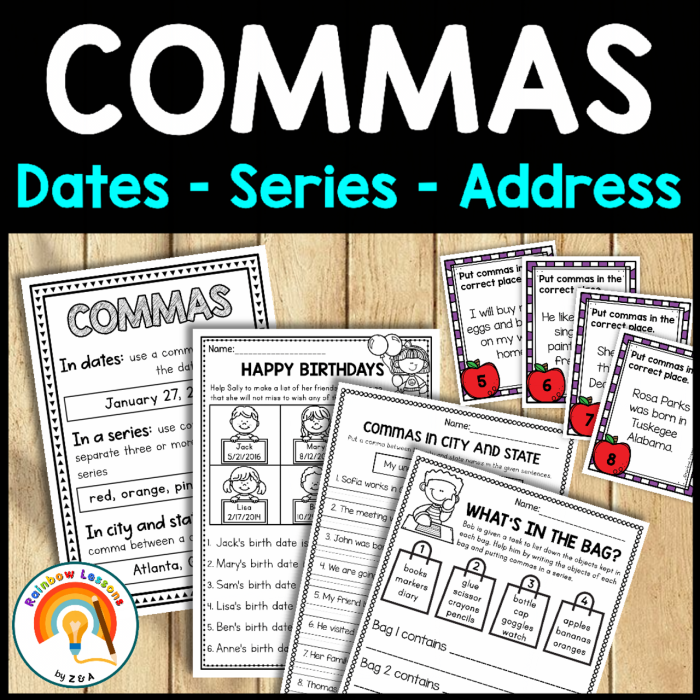
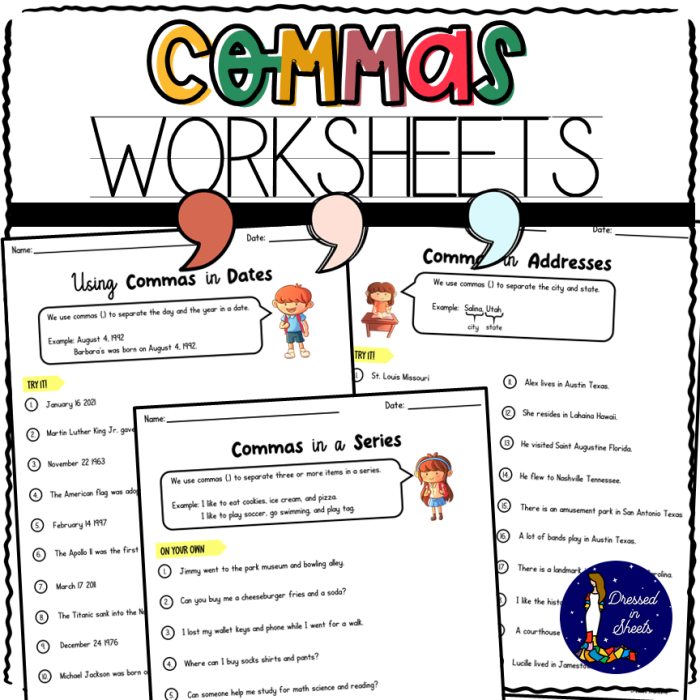
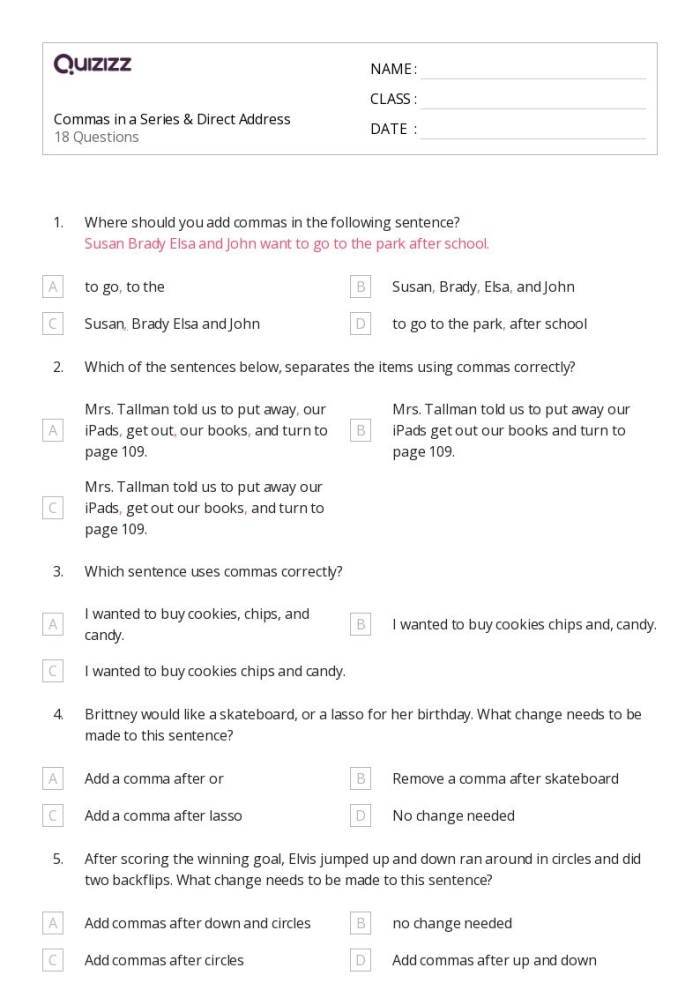
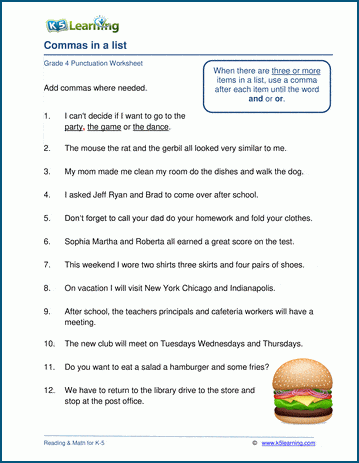
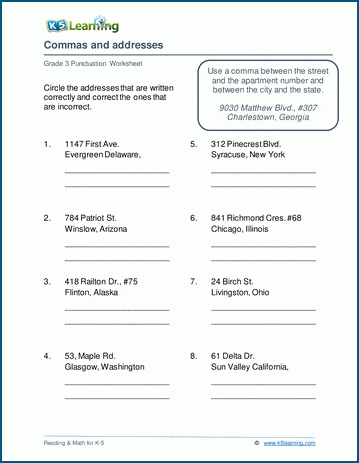
Comma rules trip up most third graders because they seem arbitrary at first glance. Your child learns that commas separate items in a list, but then encounters them in completely different contexts like dates and addresses. This confusion is normal, and it’s exactly why focused practice matters.
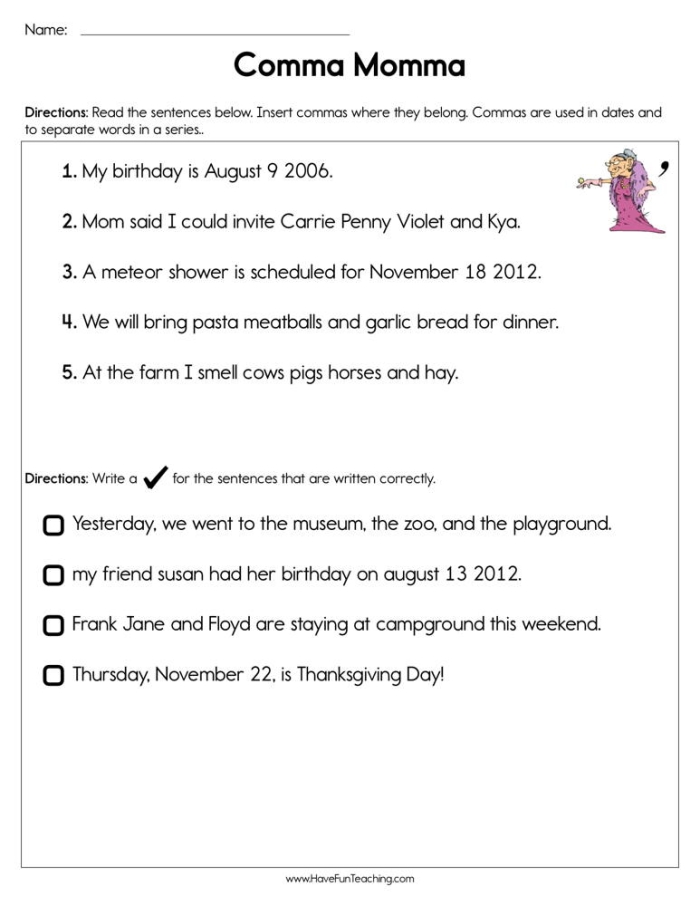
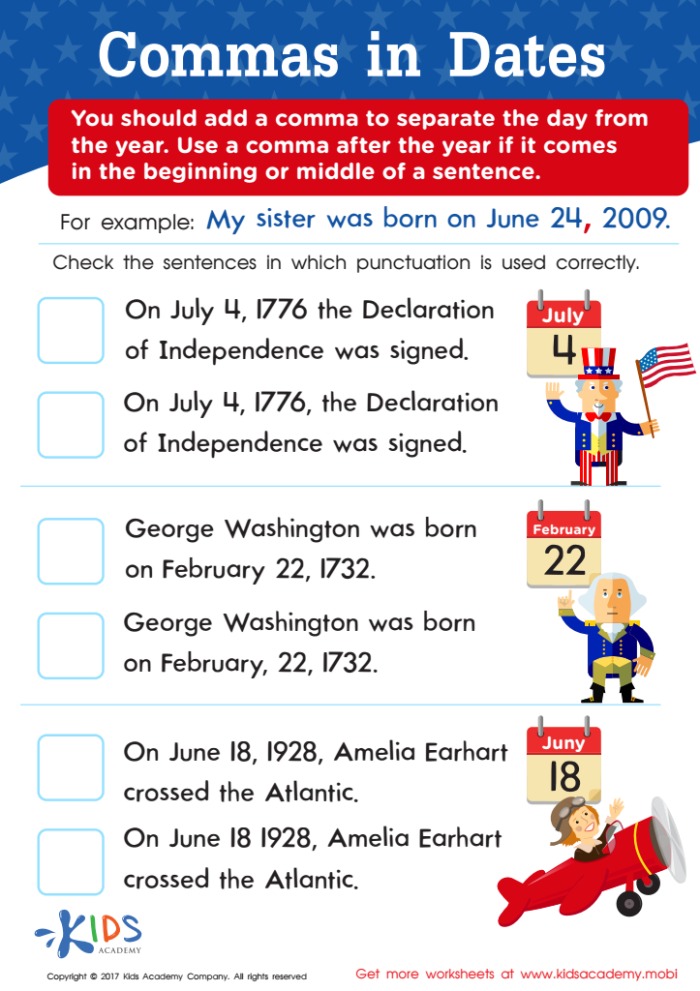
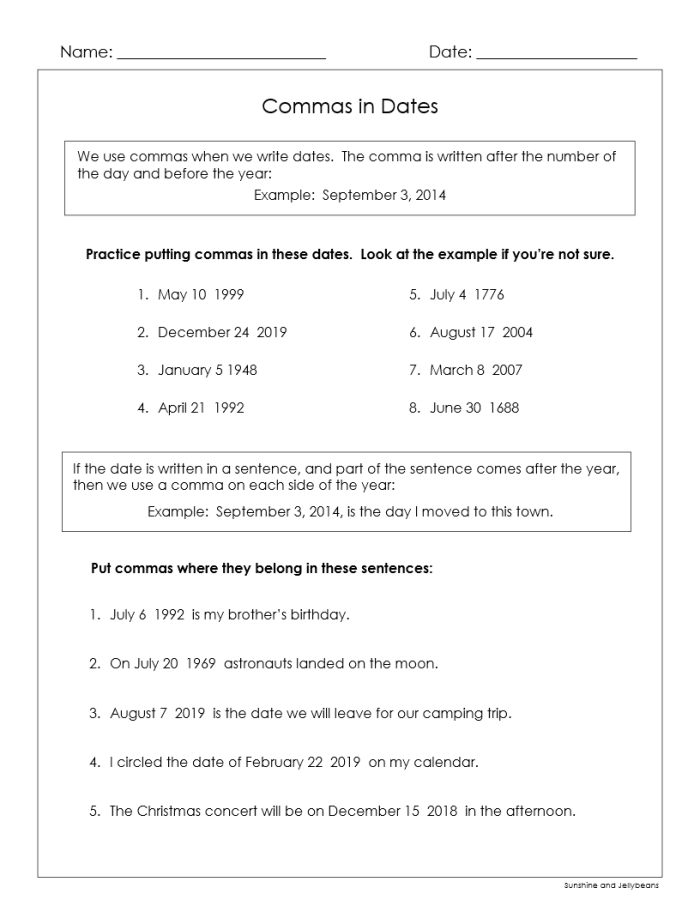
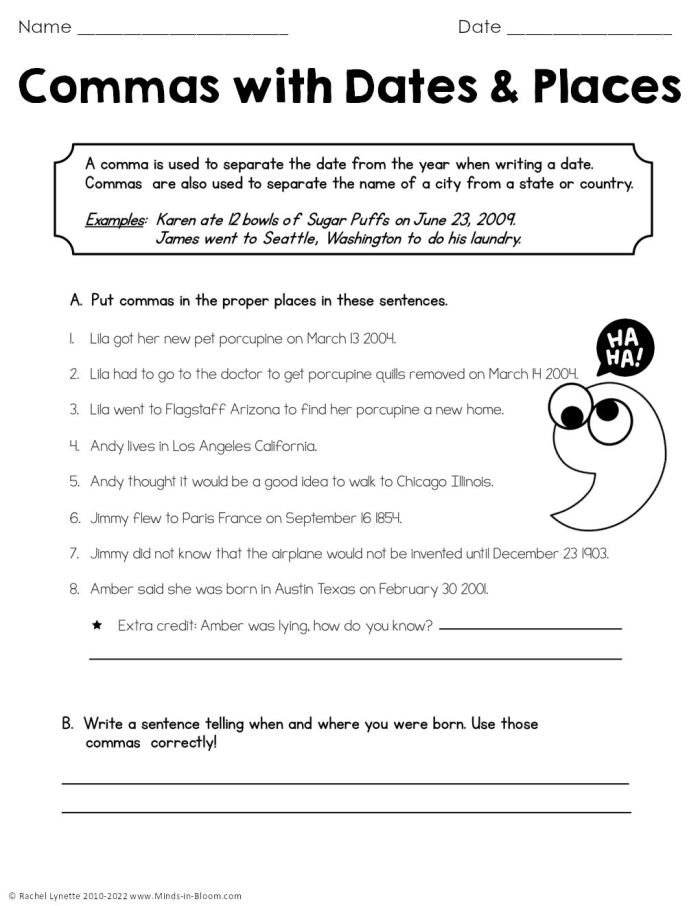
When third graders write dates and addresses, they often skip commas entirely or place them randomly. They might write “March 15 2024” instead of “March 15, 2024” or forget the comma between a city and state. These aren’t careless mistakes, they’re gaps in understanding the specific rules governing punctuation in these two contexts.
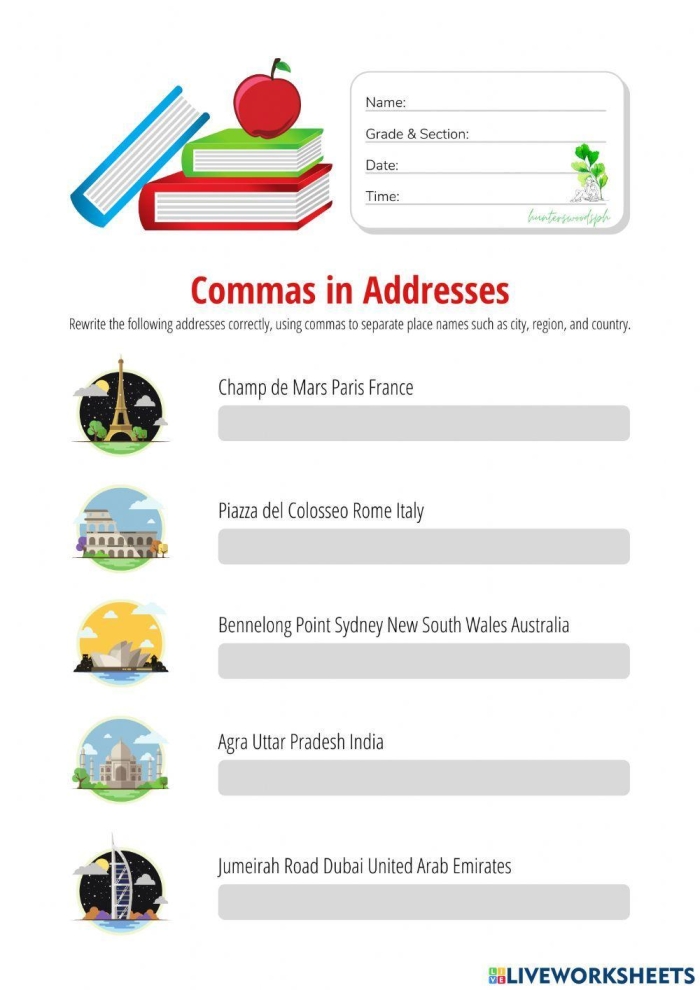
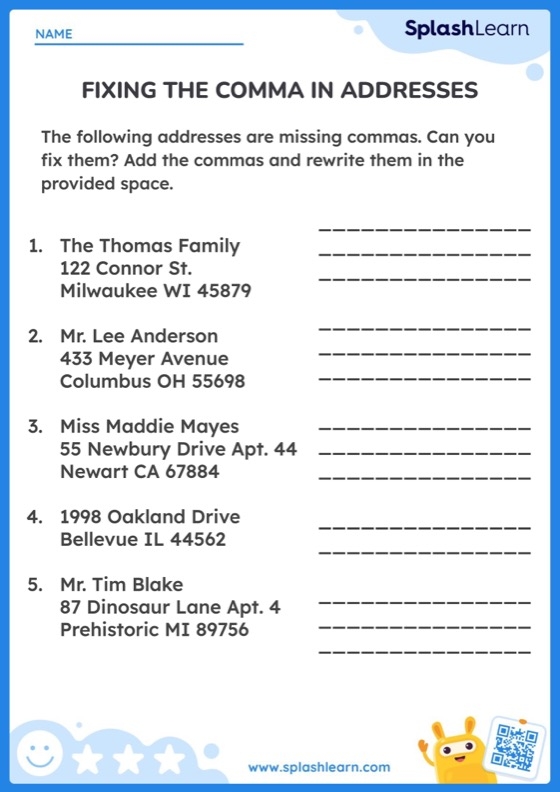
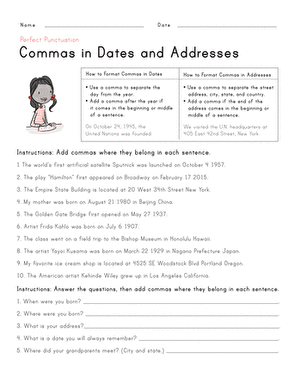
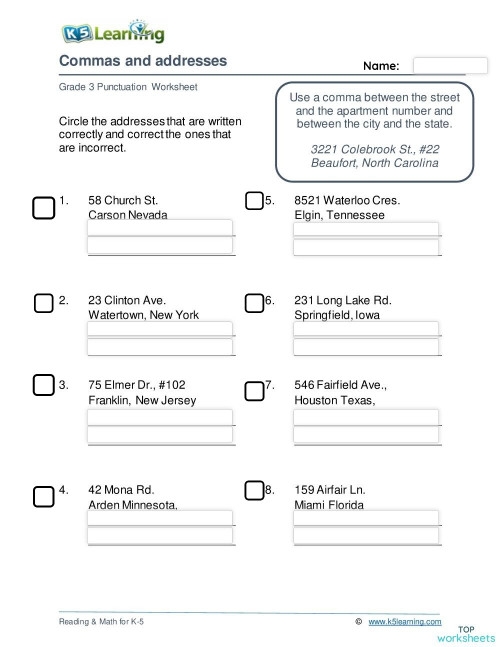
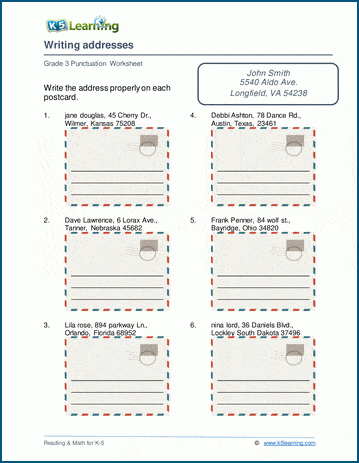
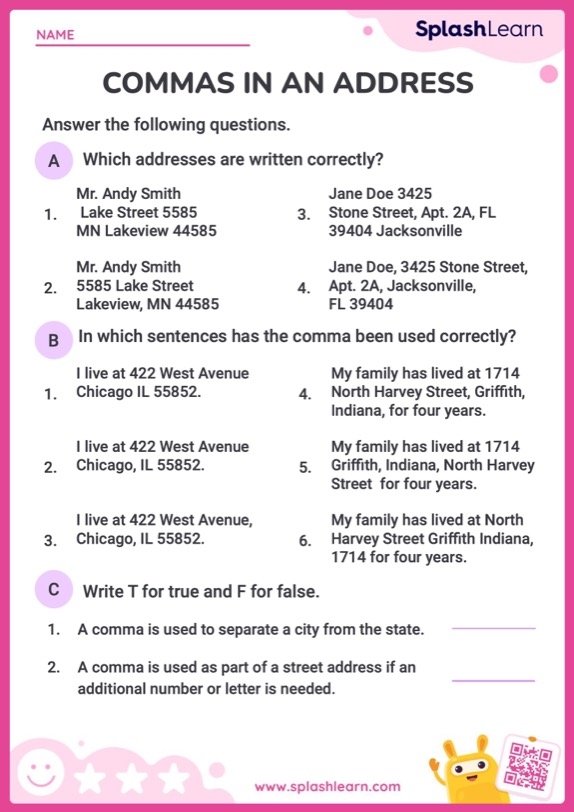
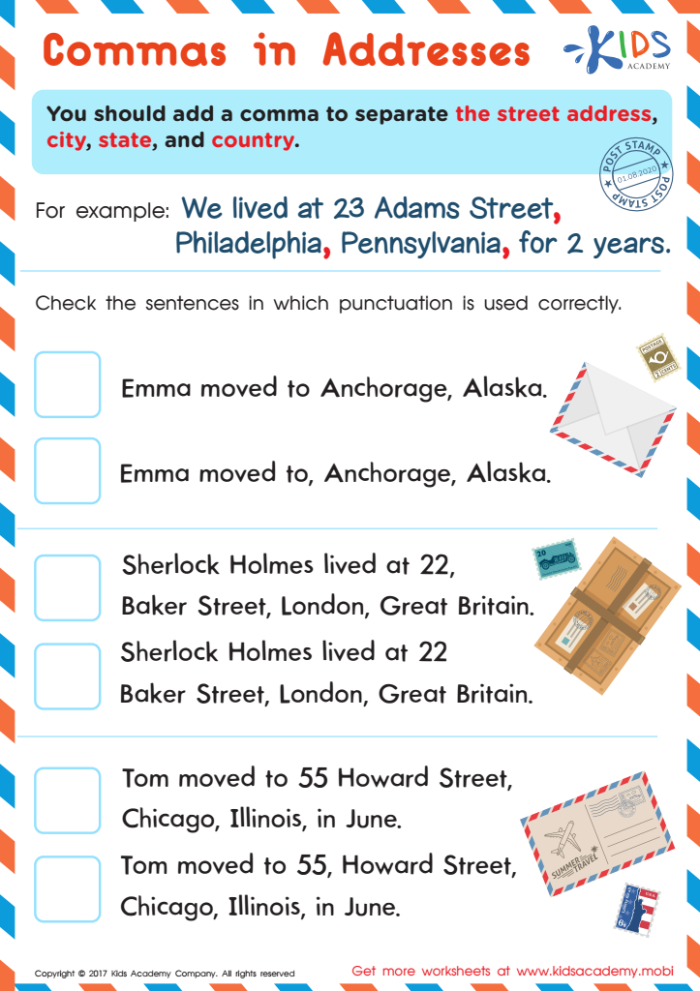
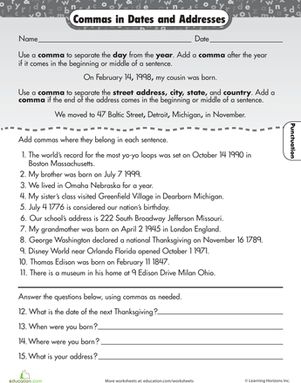
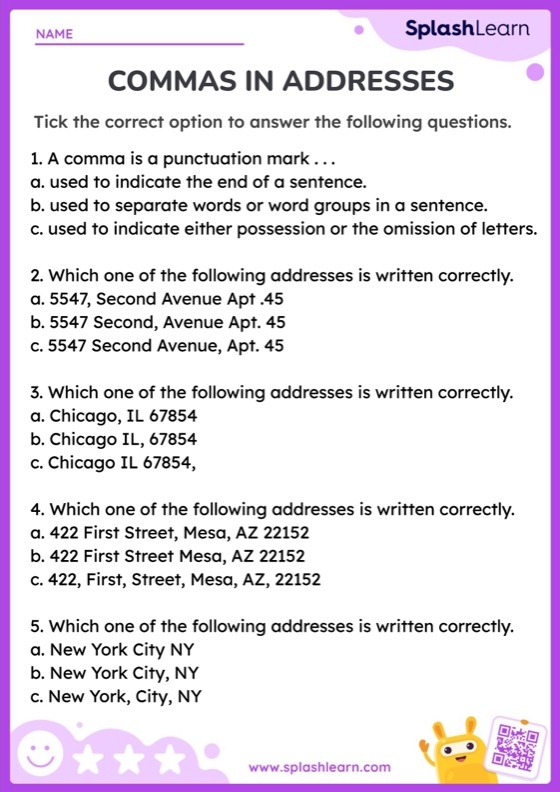
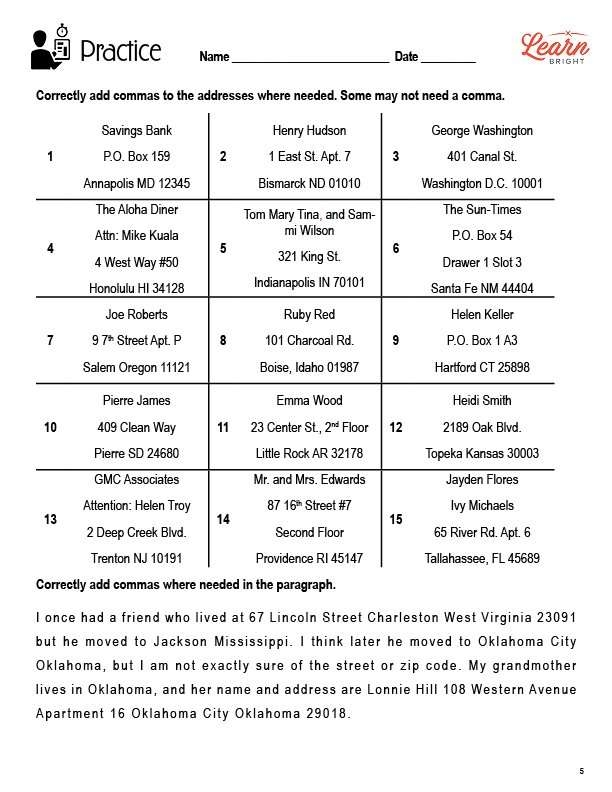
A dedicated worksheet that explains how commas function in dates and addresses fills this gap directly. Rather than mixing comma rules together, this approach isolates the exact patterns your child needs to master. In a date like “Monday, March 15, 2024,” the comma separates the day of the week from the date itself, and another comma follows the day of the month. In an address like “123 Oak Street, Springfield, Illinois 62701,” commas separate the street address from the city and the city from the state.
Working through examples helps third graders see the pattern. They practice writing their own dates and addresses with proper punctuation, which builds the muscle memory needed for consistent application. This skill connects directly to real-world writing, whether your child is addressing a birthday invitation or filling out a form at school.
If your third grader needs broader punctuation practice, you might also explore worksheets covering different types of poetry or other third grade grammar exercises. For focused work on this specific skill, the punctuation worksheet on commas in dates and addresses provides clear instruction and plenty of practice space.
Practice with These Worksheets