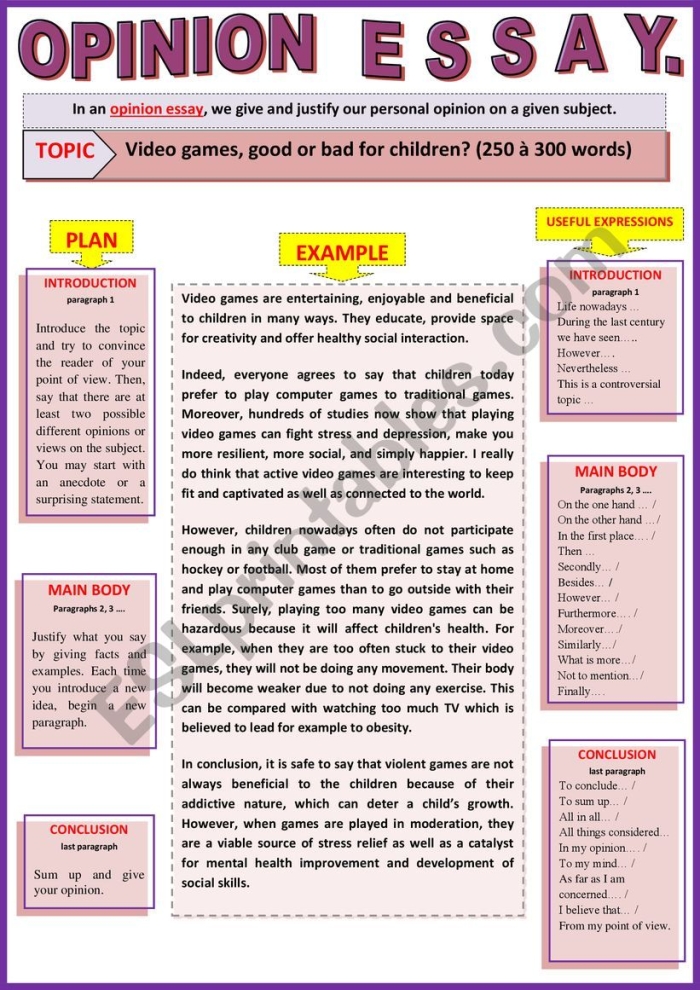
Teaching third graders to form opinions and defend them in writing is harder than it looks. Young writers at this age understand basic sentence structure, but moving from simple statements to actual arguments requires a different skill set entirely. This worksheet bridges that gap by giving students a structured path to explore whether video games are good or bad, while building the foundation for persuasive writing they’ll use throughout their education.
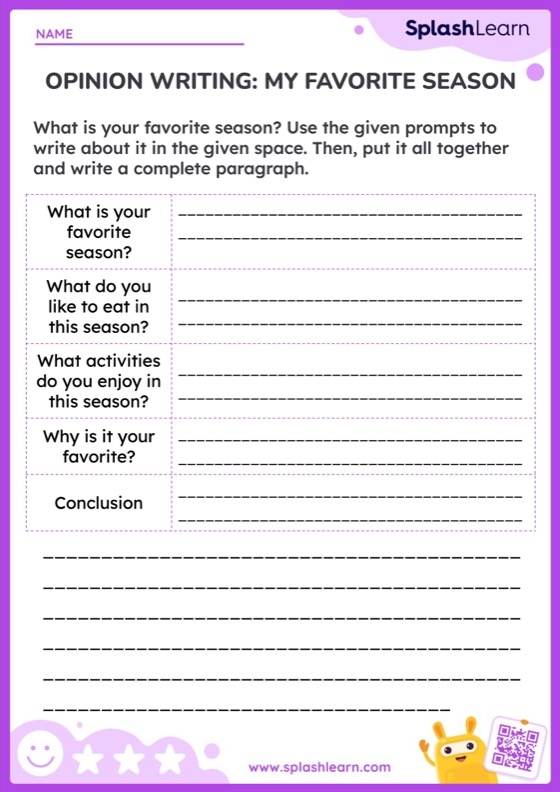
The framework works because it breaks argument-building into manageable steps. Instead of asking children to write a full essay from scratch, the worksheet guides them through identifying their position, listing supporting reasons, and organizing their thoughts before they write. Third graders benefit from this scaffolding because it removes the blank-page anxiety and gives them permission to think through their ideas on paper first.
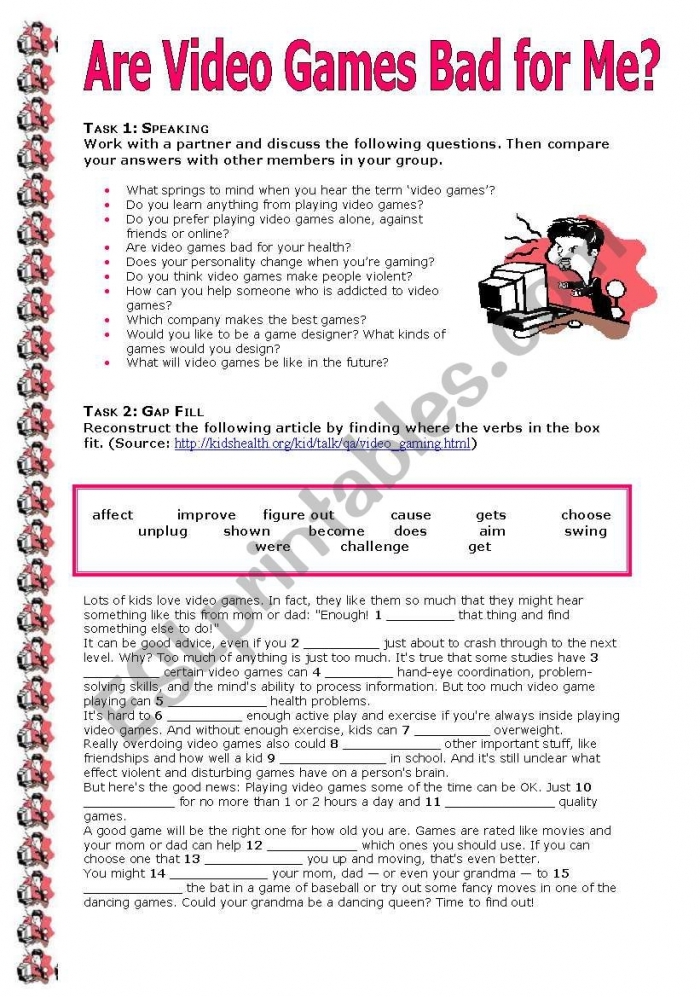
What makes this approach particularly effective is how it connects writing practice to real topics kids actually care about. Video games are part of most third graders’ lives, whether they play them regularly or see friends playing. This personal connection means students aren’t writing about abstract concepts, they’re defending something they have genuine opinions about. The engagement factor matters because motivated writers produce better work.
The worksheet also naturally incorporates spelling practice into the writing process. As students draft their arguments, they encounter vocabulary related to games, reasons, and opinions. Pairing this with targeted spelling activities, like spelling tests on compound words or unscramble exercises for spelling words, reinforces both writing and language skills simultaneously.
For teachers, this worksheet saves planning time while delivering real learning outcomes. Third graders leave the activity with a completed opinion piece and a repeatable process they can apply to future writing assignments.
Download These Worksheets for Practice