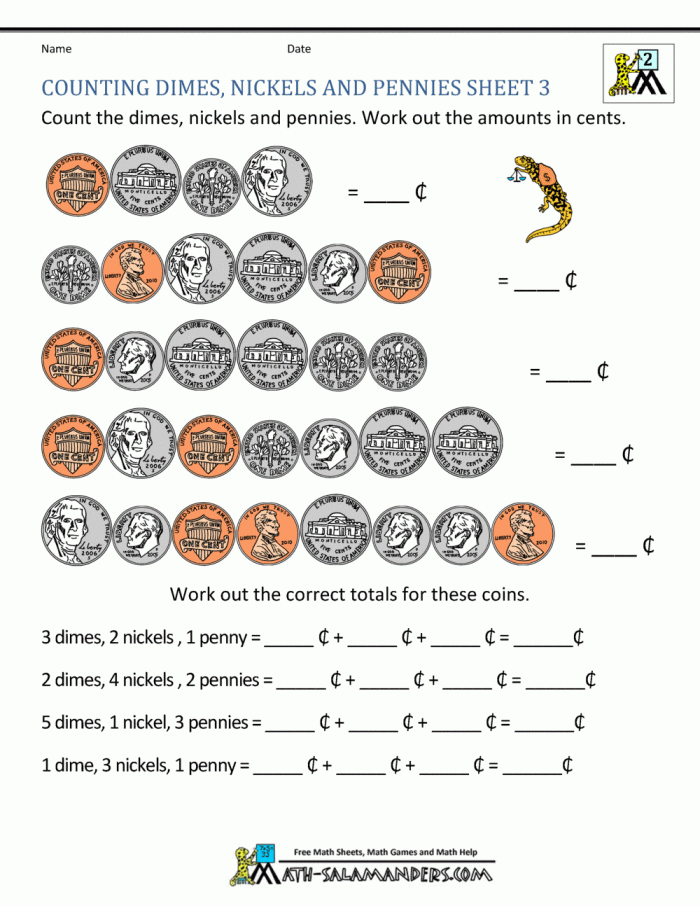
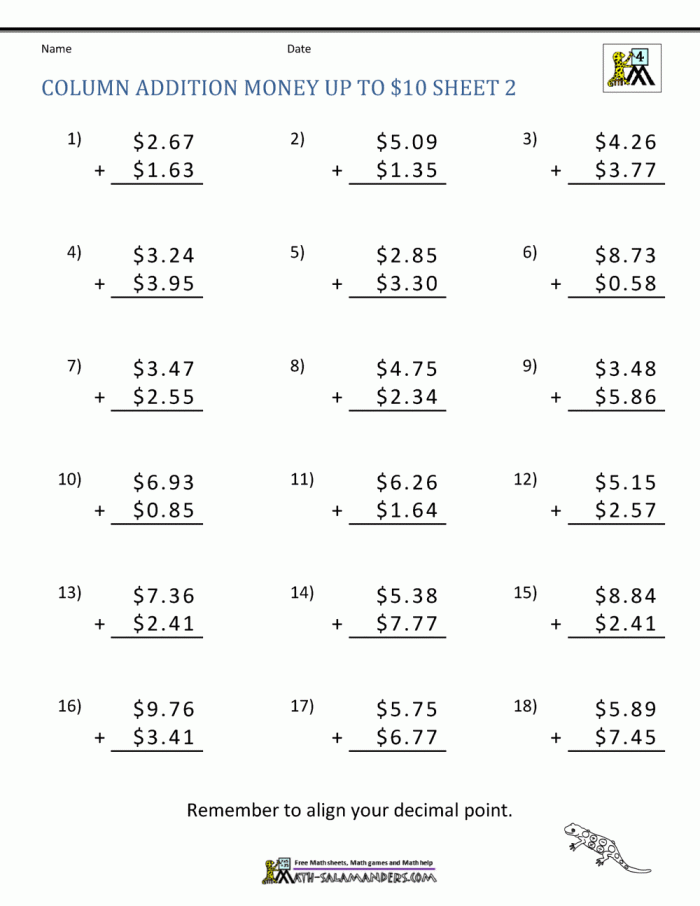
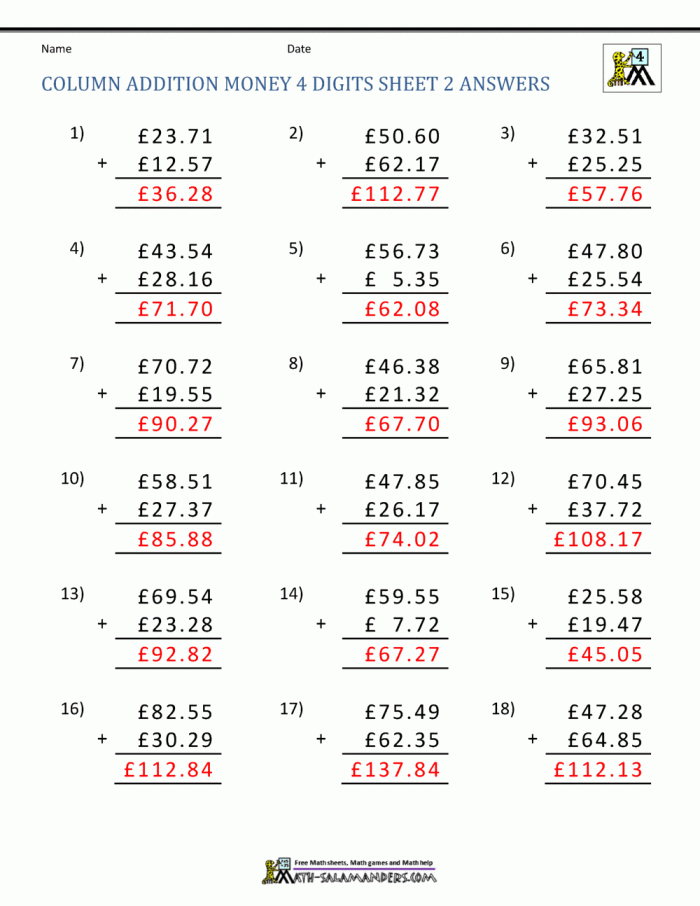
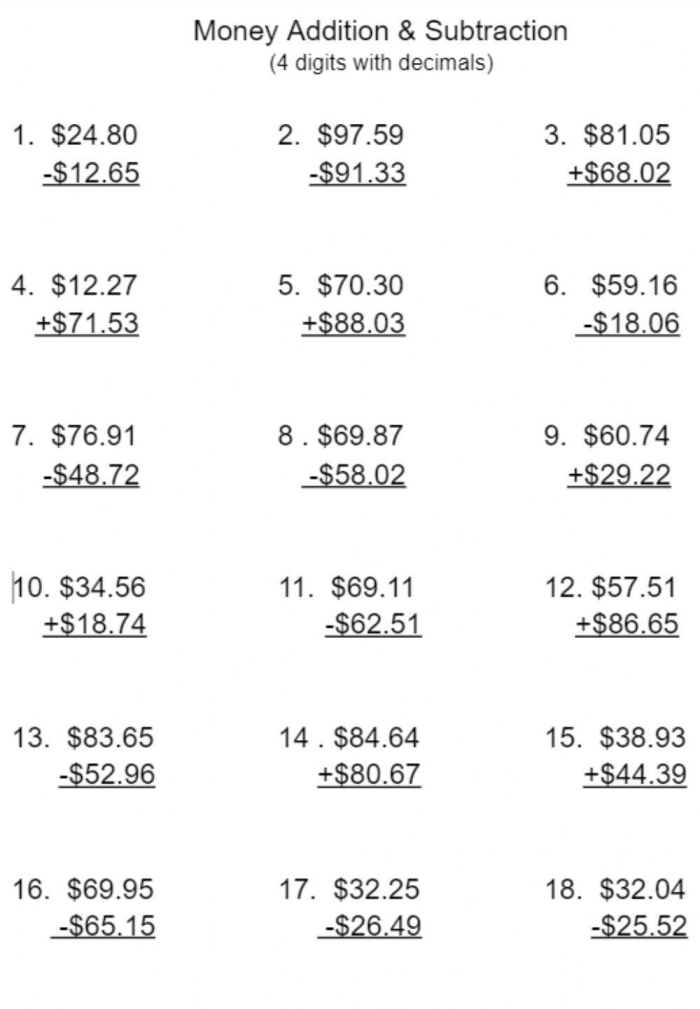
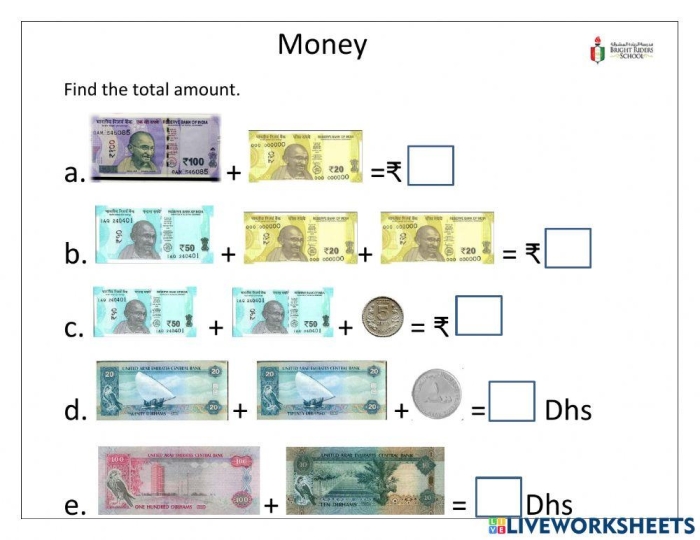
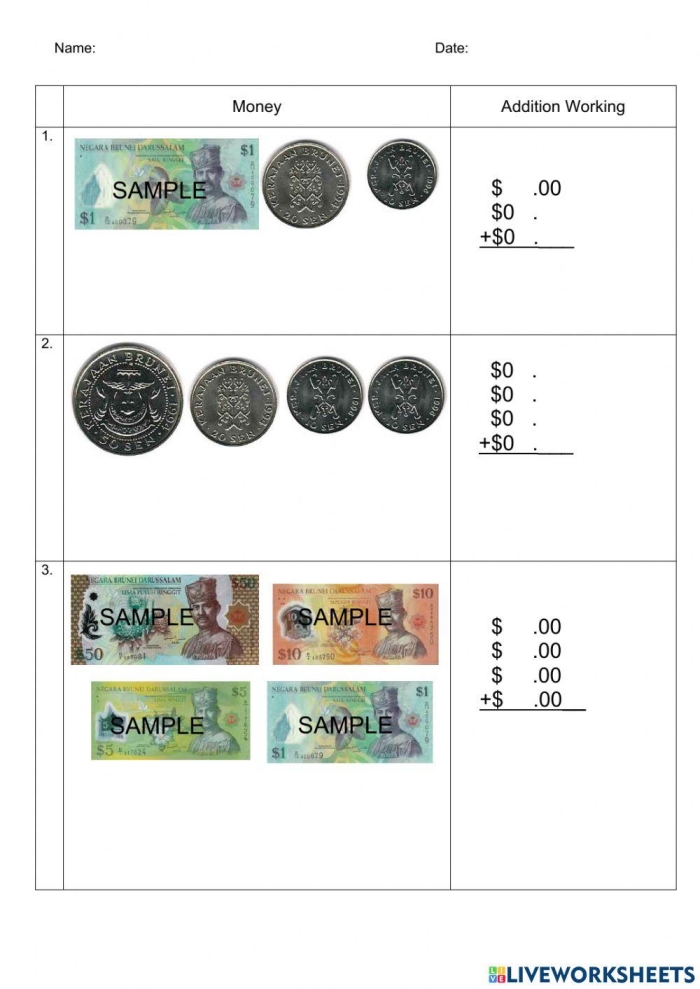
Teaching your child about money can be a rewarding experience, especially when it comes to practical exercises that make learning fun. One effective way to help your little one build money sense is through engaging activities that involve adding coins and dollars to pay for various items. This hands-on approach not only makes the concept of money more relatable but also helps children develop essential math skills.
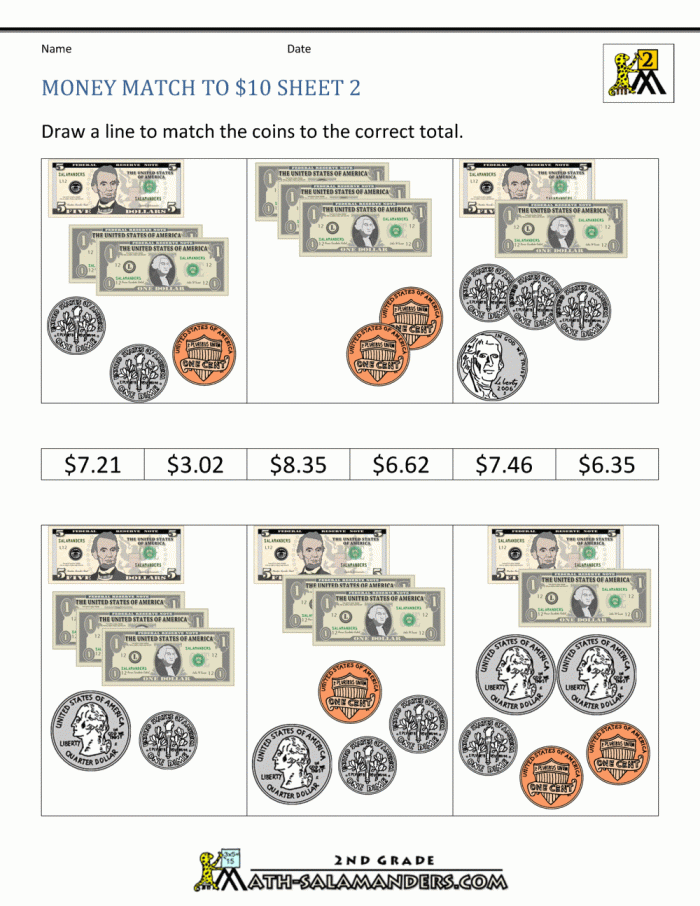
Start by creating a simple exercise where your child can practice adding up the cost of items. For instance, you might list a few items they commonly encounter, such as a toy, a snack, or a book. Assign a price to each item, using a mix of coins and dollar bills. For example, a toy might cost $3.50, a snack could be $1.25, and a book might be $4.75. Encourage your child to add the prices together to see how much money they would need in total.
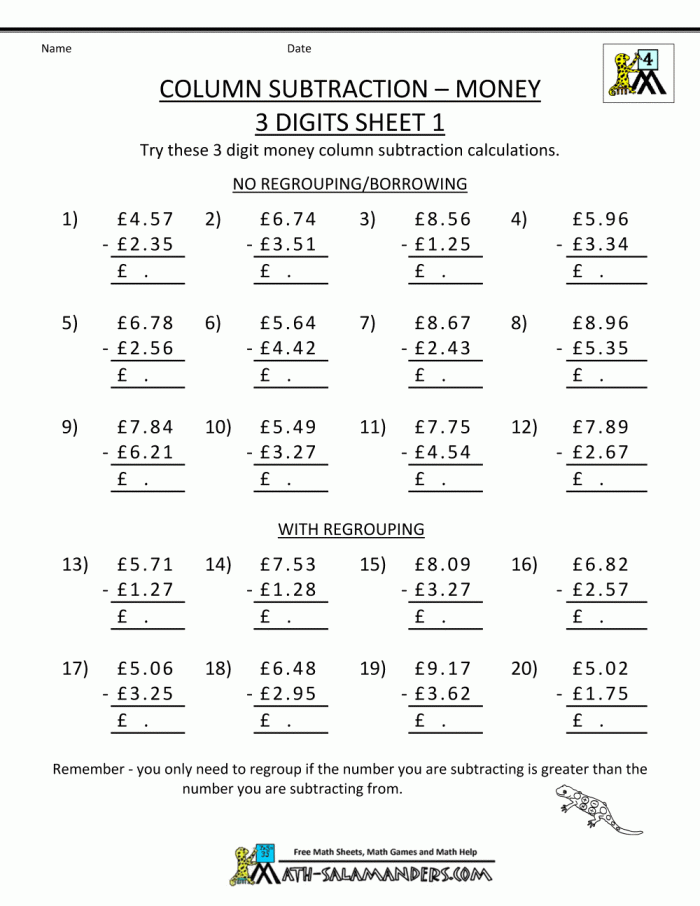
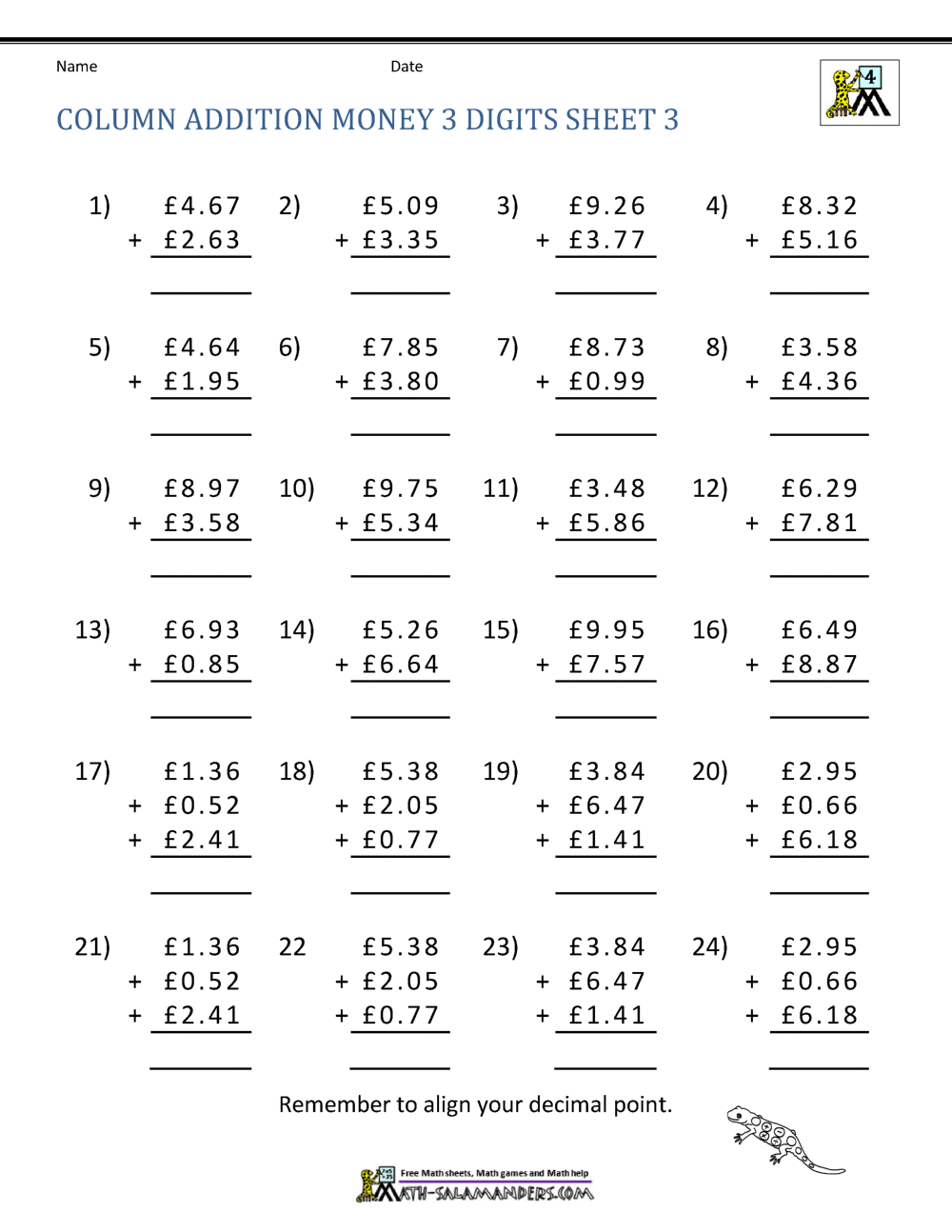
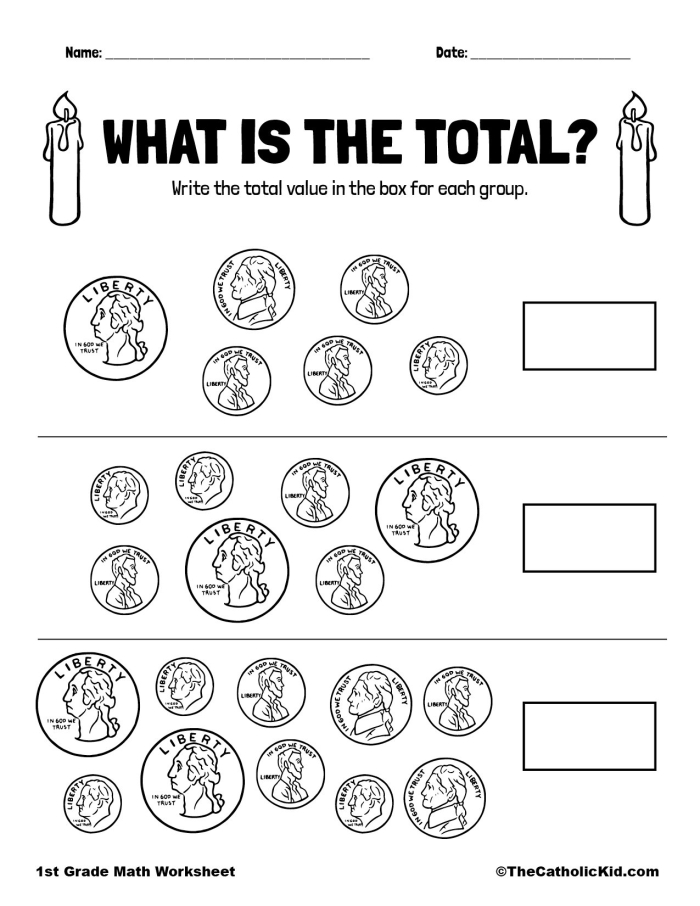
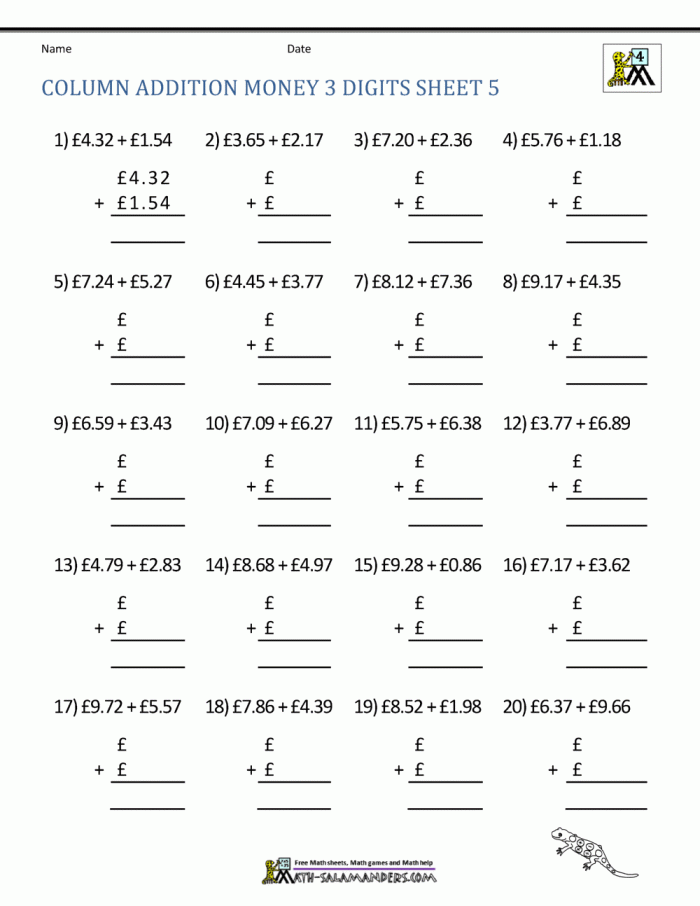
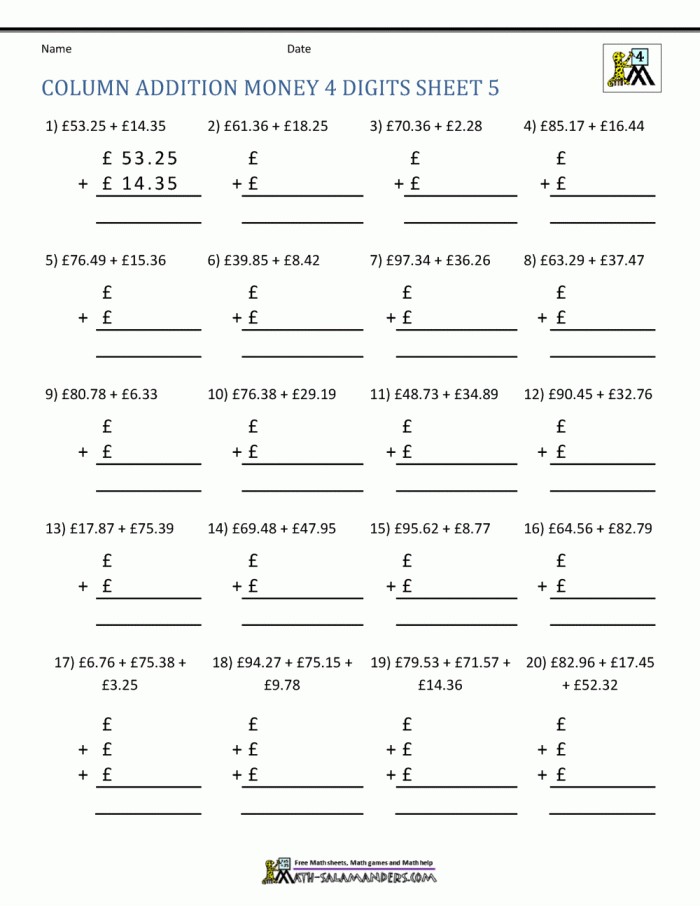
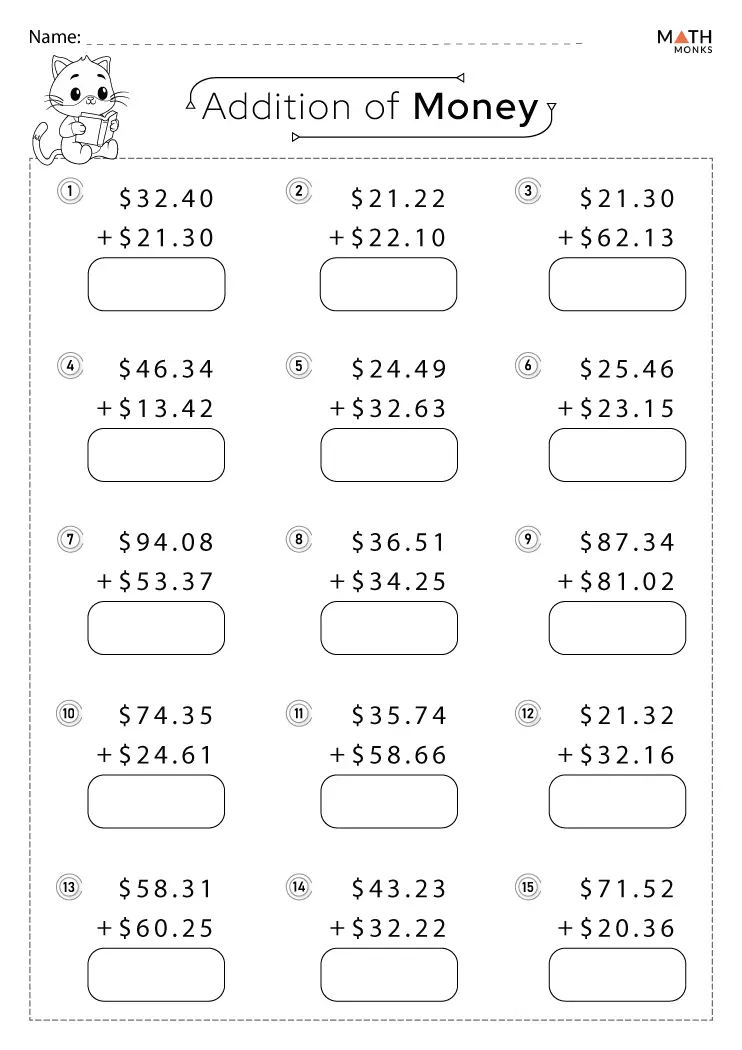
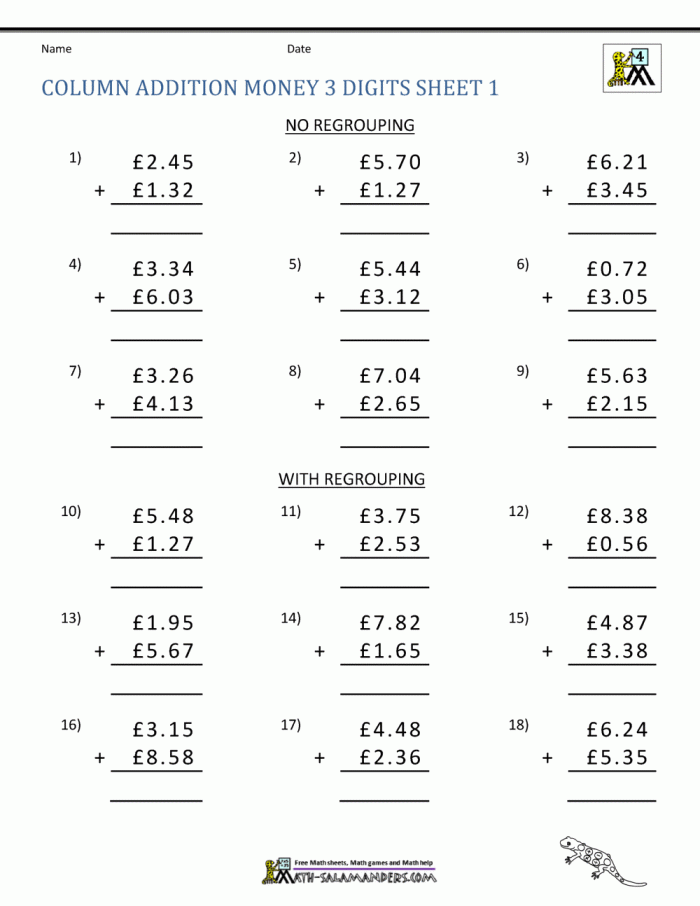
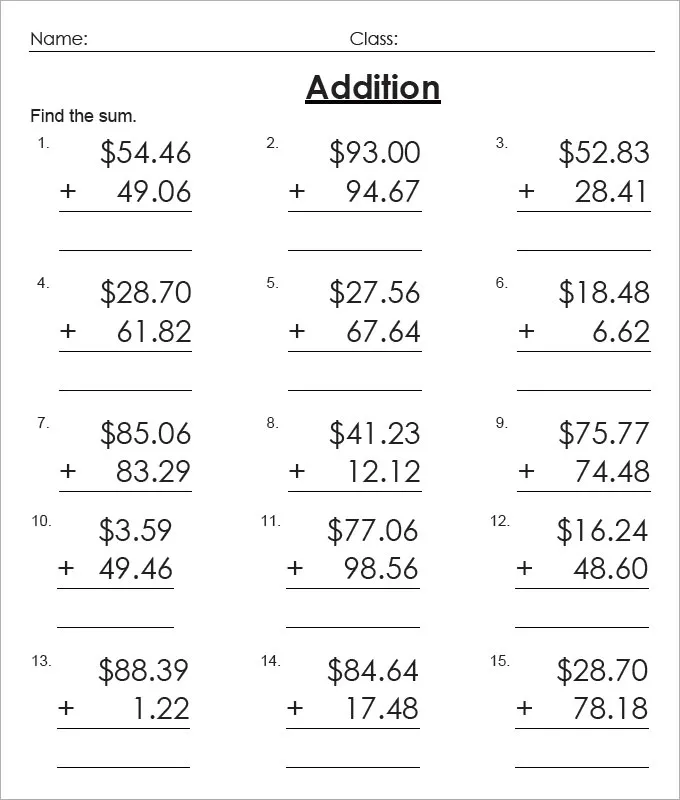
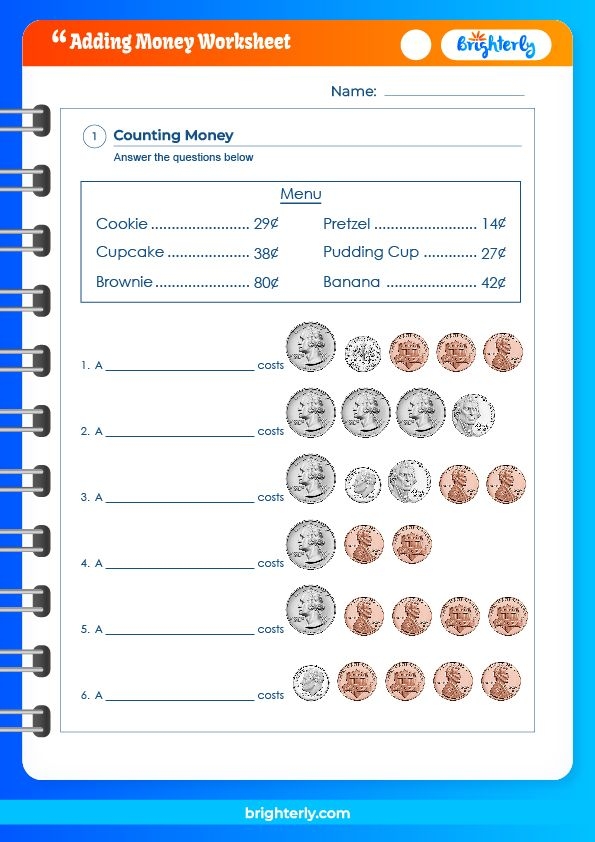
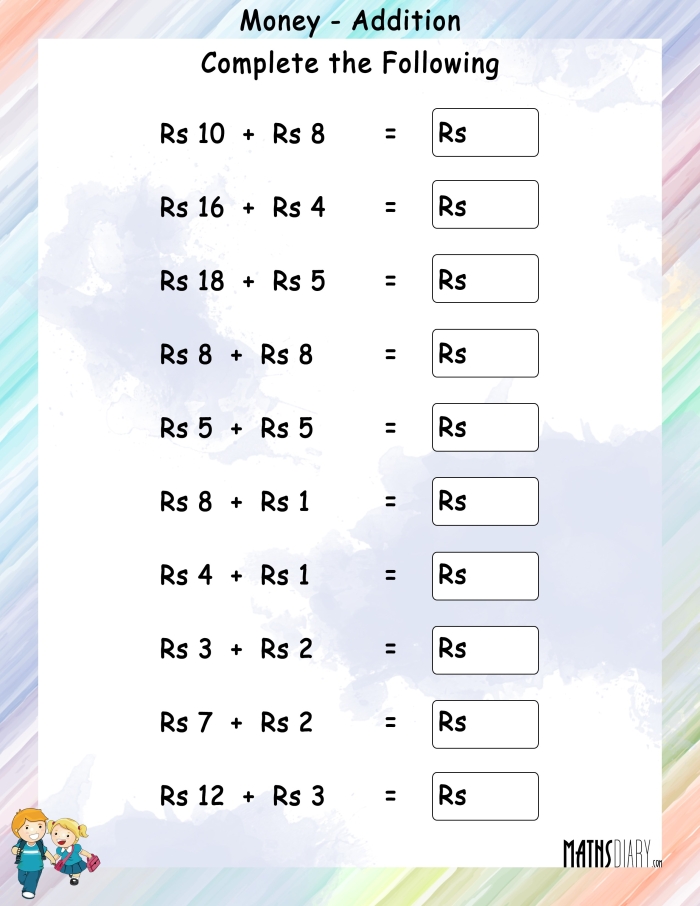
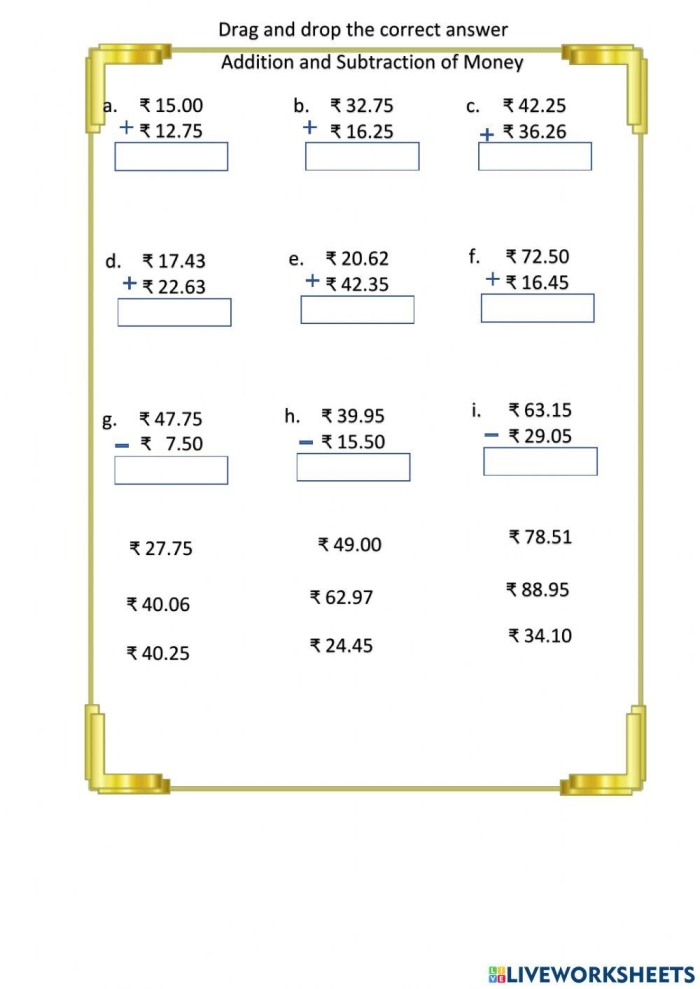
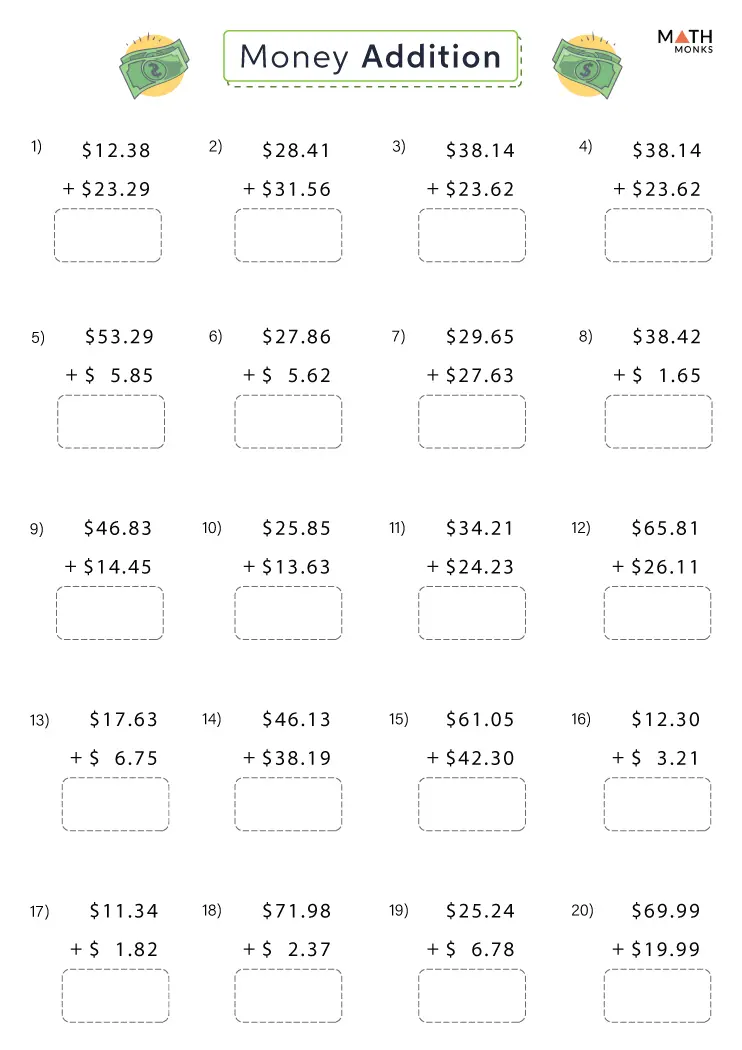
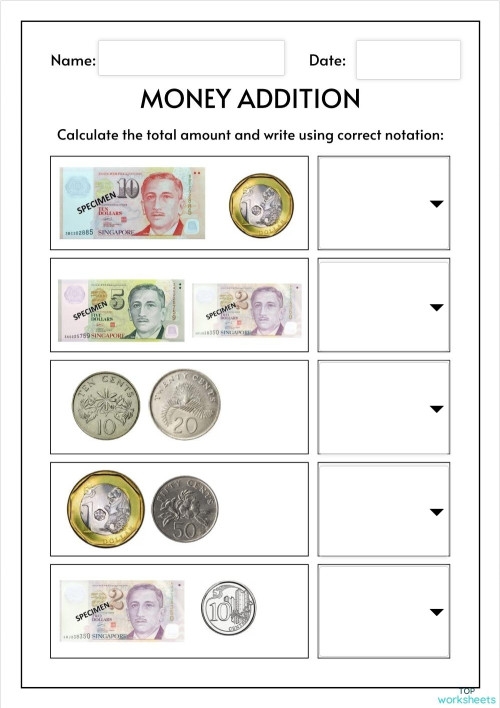
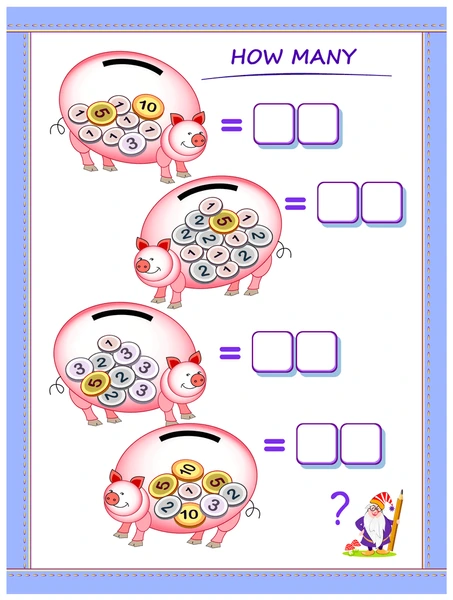
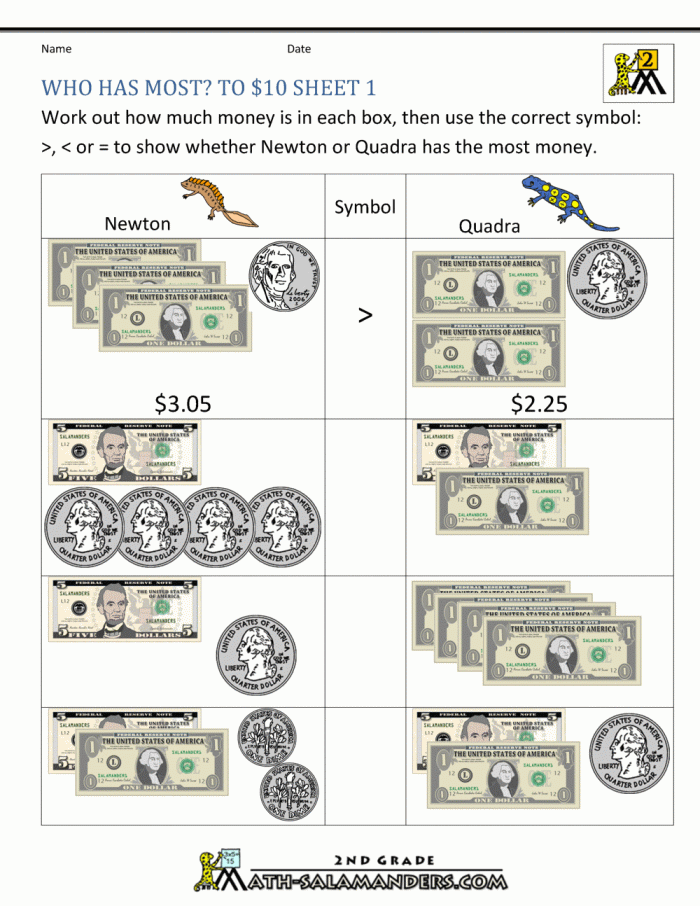
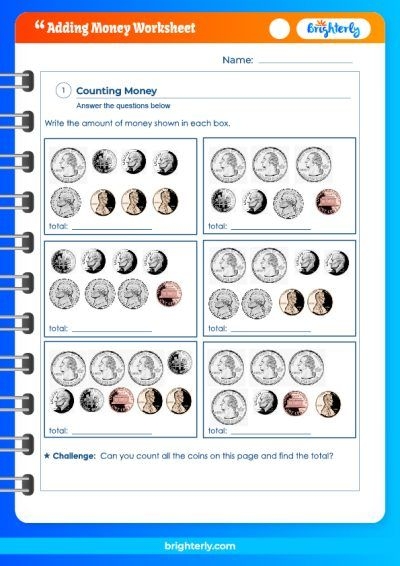
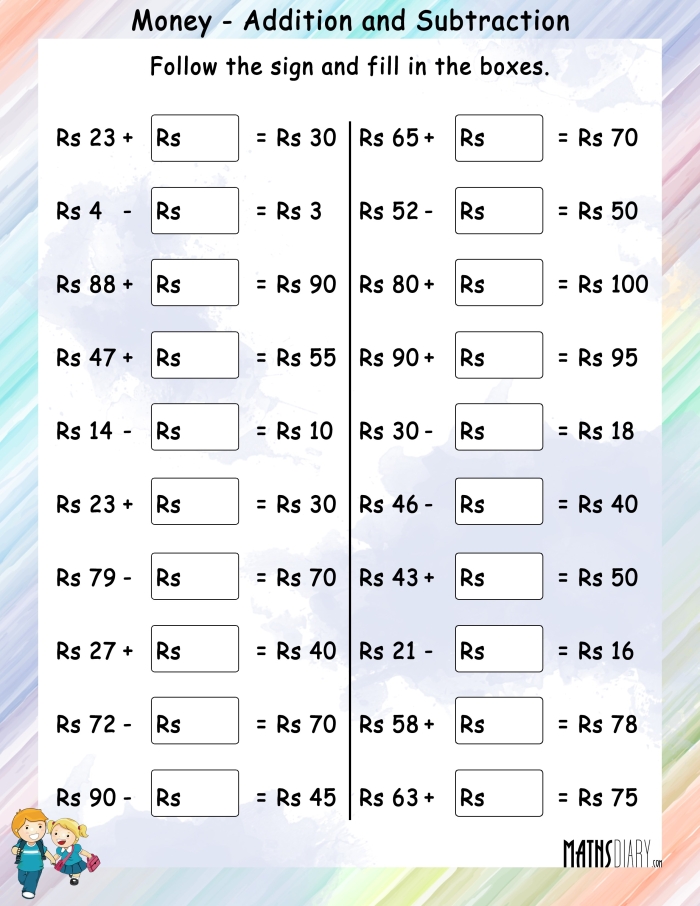
Using printable money addition worksheets can also enhance this learning experience. These worksheets provide structured practice that reinforces the math skills needed to understand money. Children can work on problems that involve adding various denominations, which helps them become more comfortable with handling real-life transactions.
Incorporating money-related activities into your child’s routine can create lasting benefits. As they practice, they will not only learn how to add and subtract money but also gain confidence in financial literacy. This knowledge will serve them well as they grow older and begin to handle their own finances.
By making learning about money enjoyable and interactive, you can instill important skills in your child that will last a lifetime. For additional resources, consider exploring worksheets that cover other essential topics, such as understanding time or irregular past tense verbs. These materials complement your child’s learning journey in second grade writing, ensuring a well-rounded educational experience.
Grab These Worksheets Now