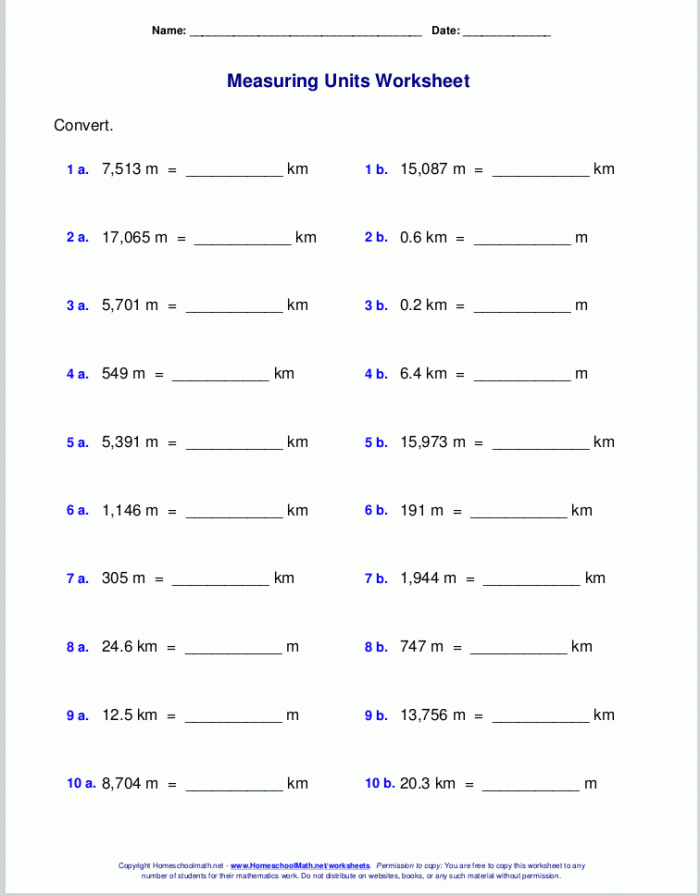
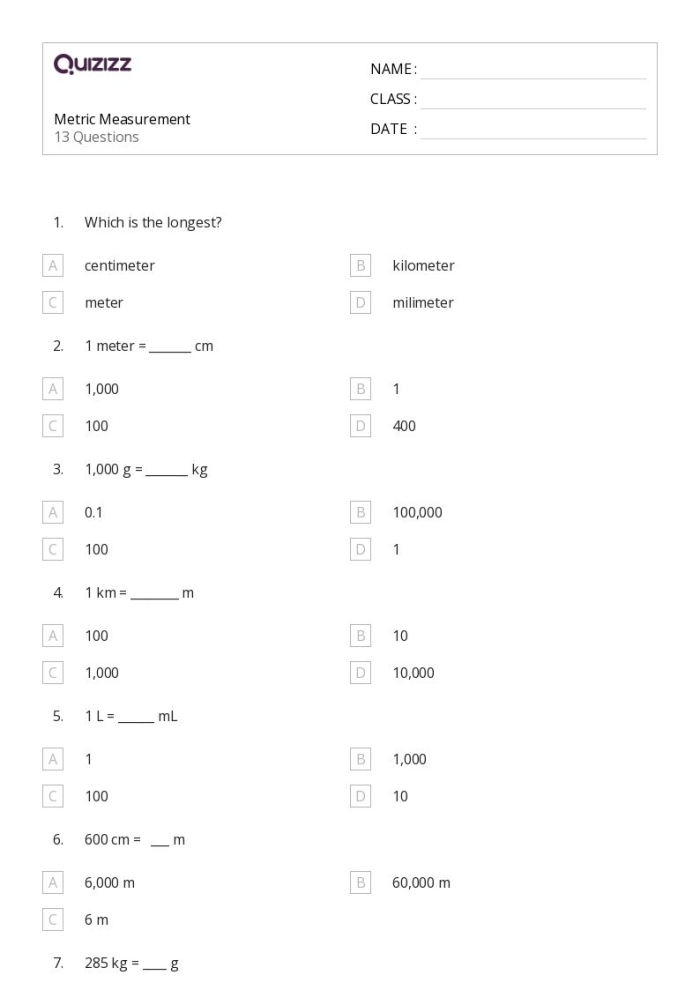
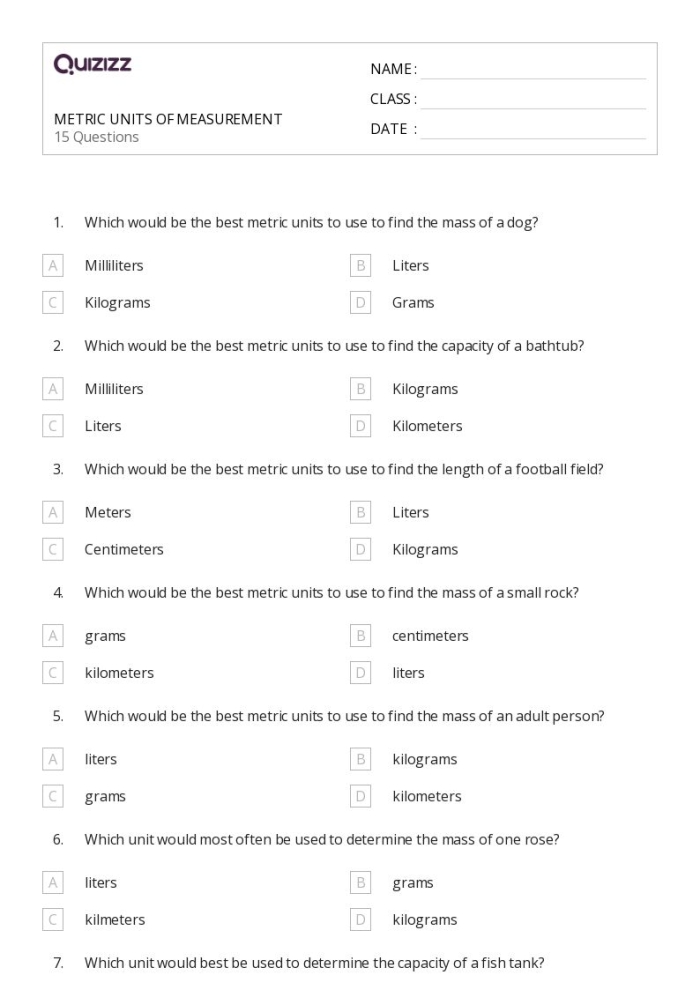
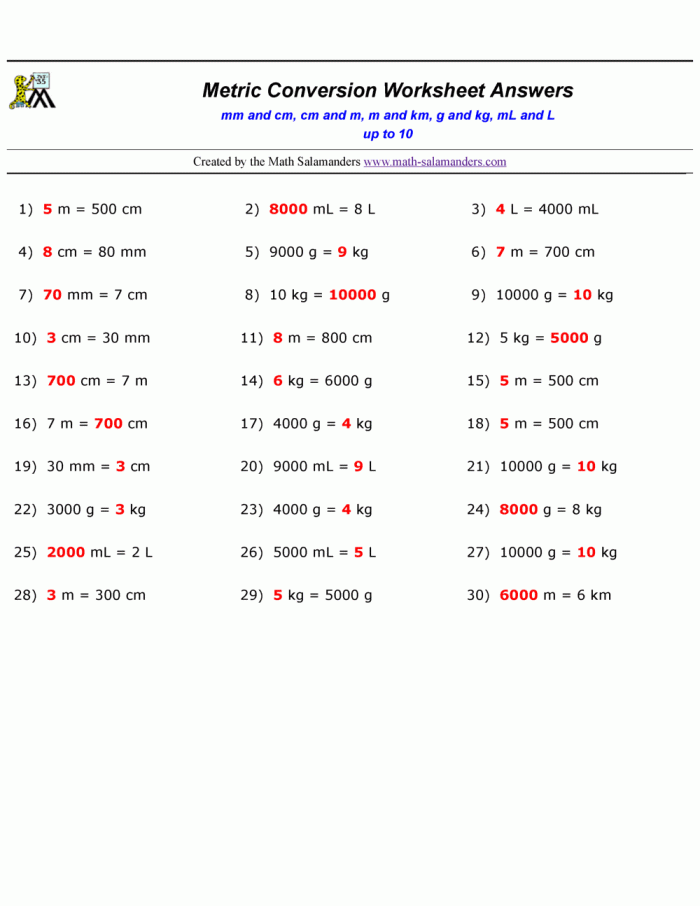
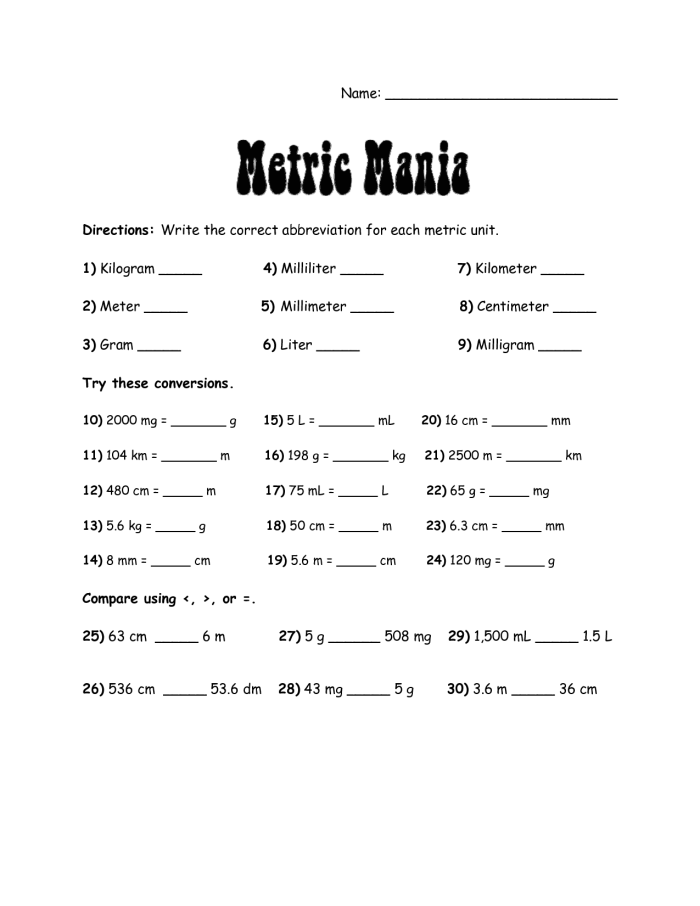
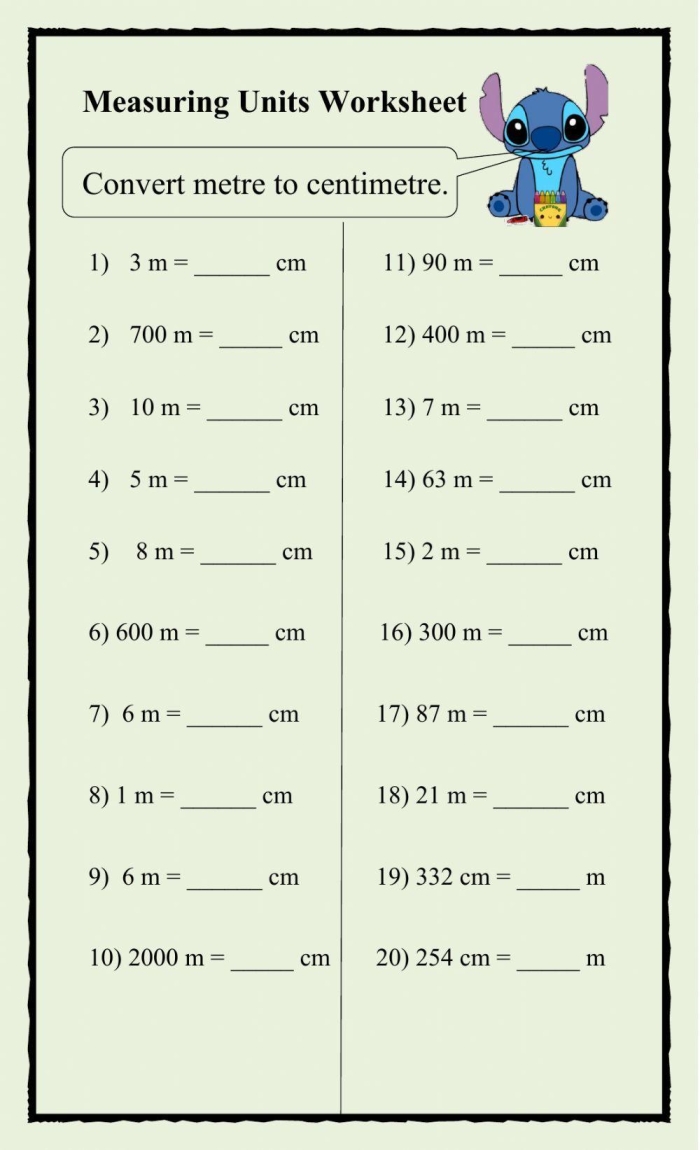
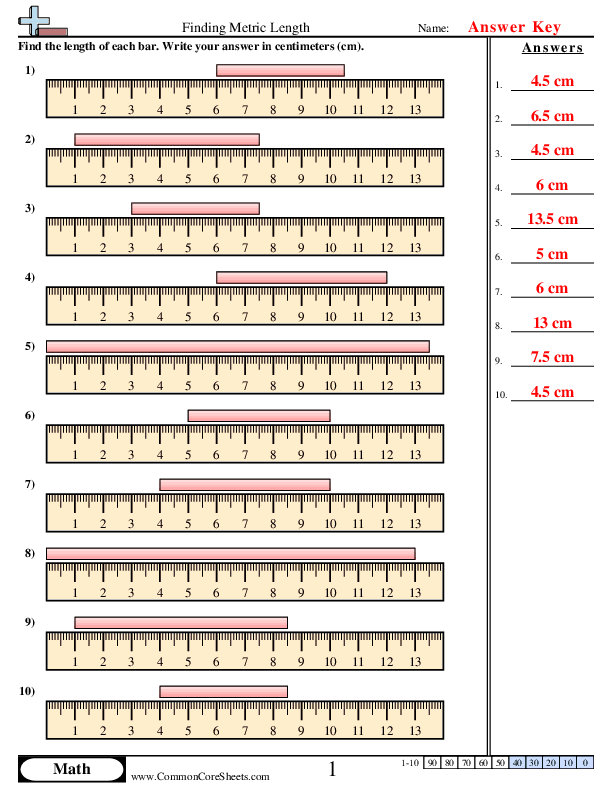
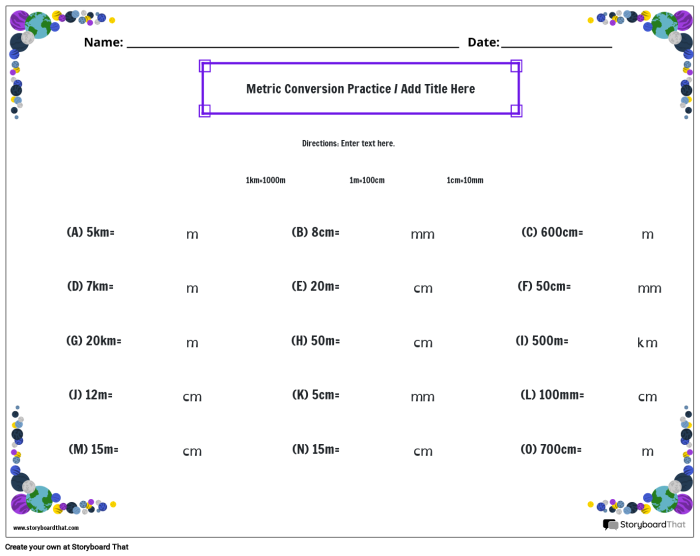
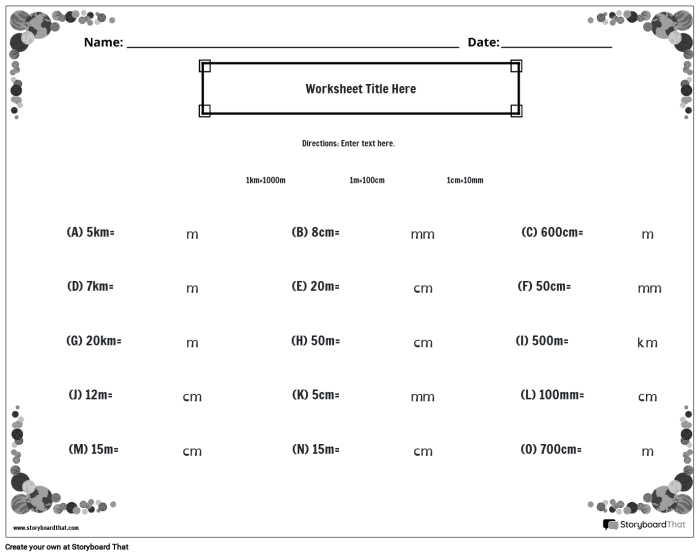
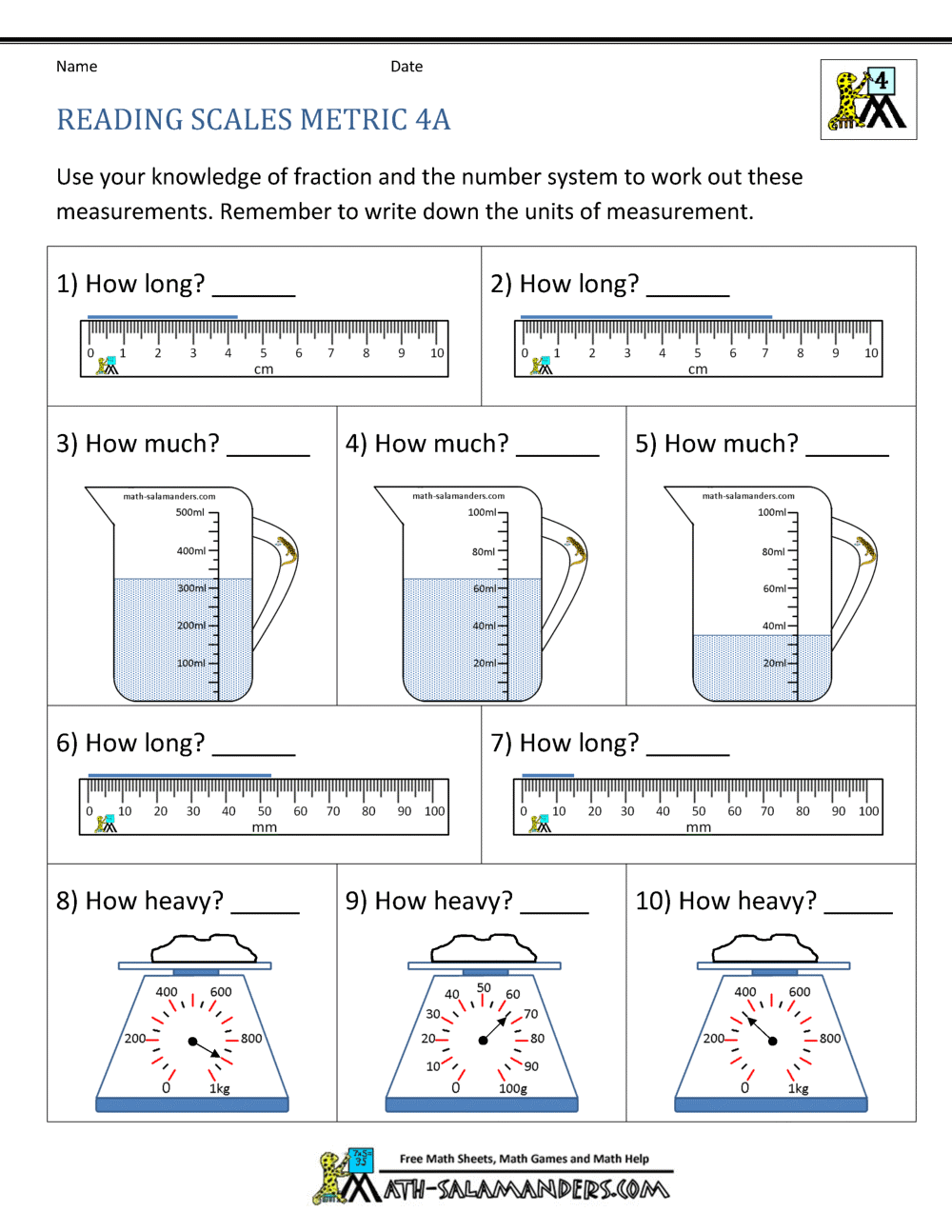
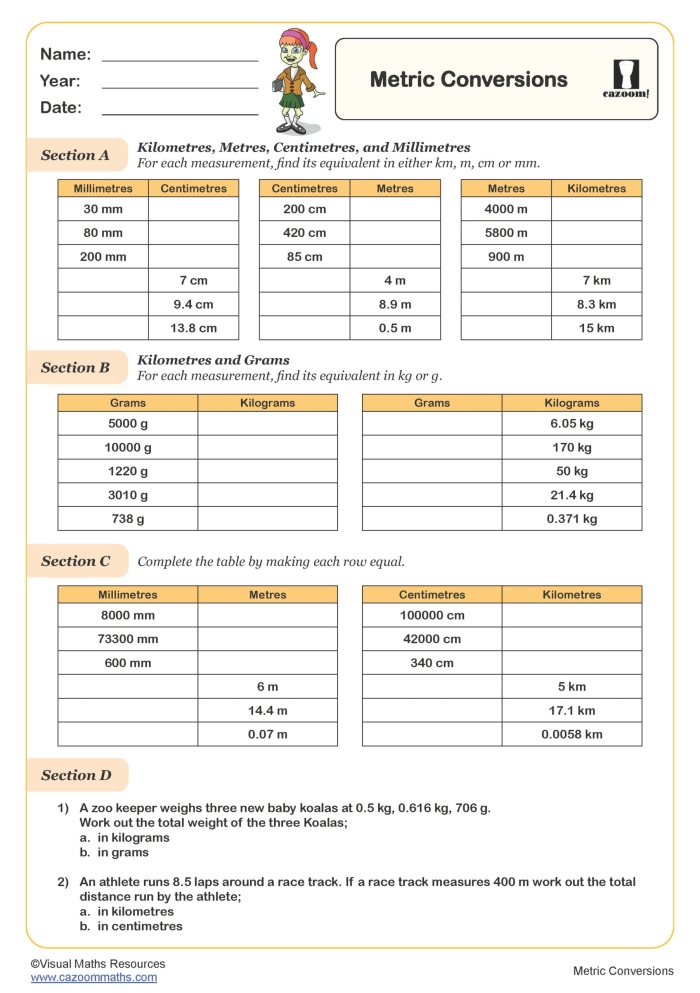
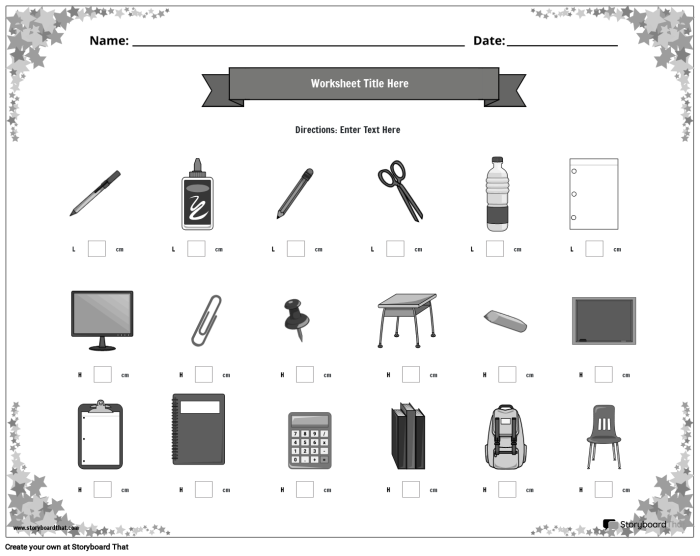
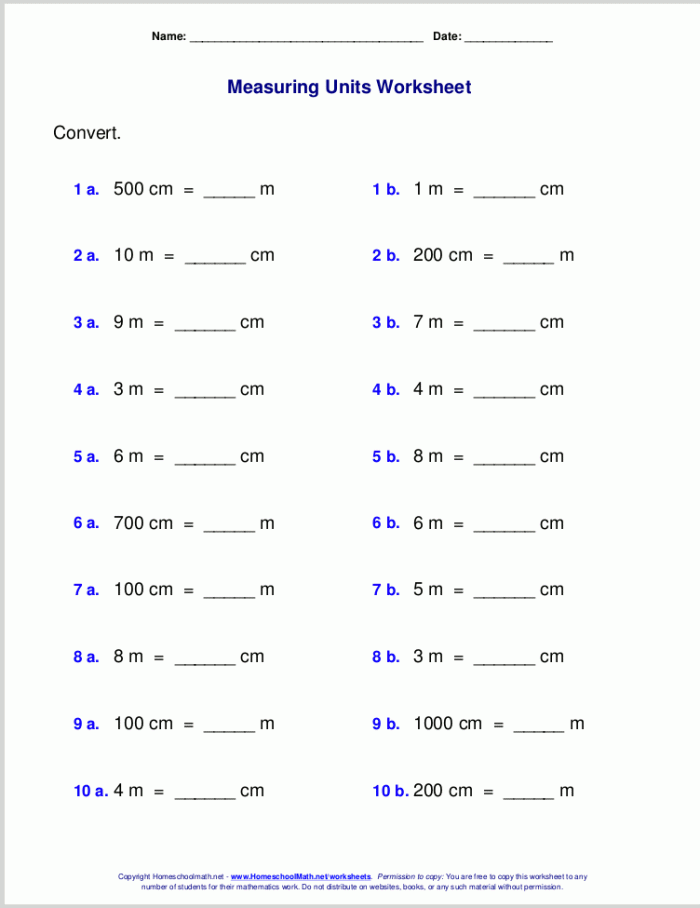
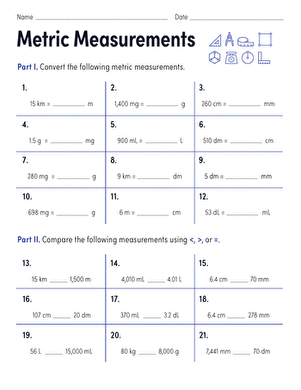
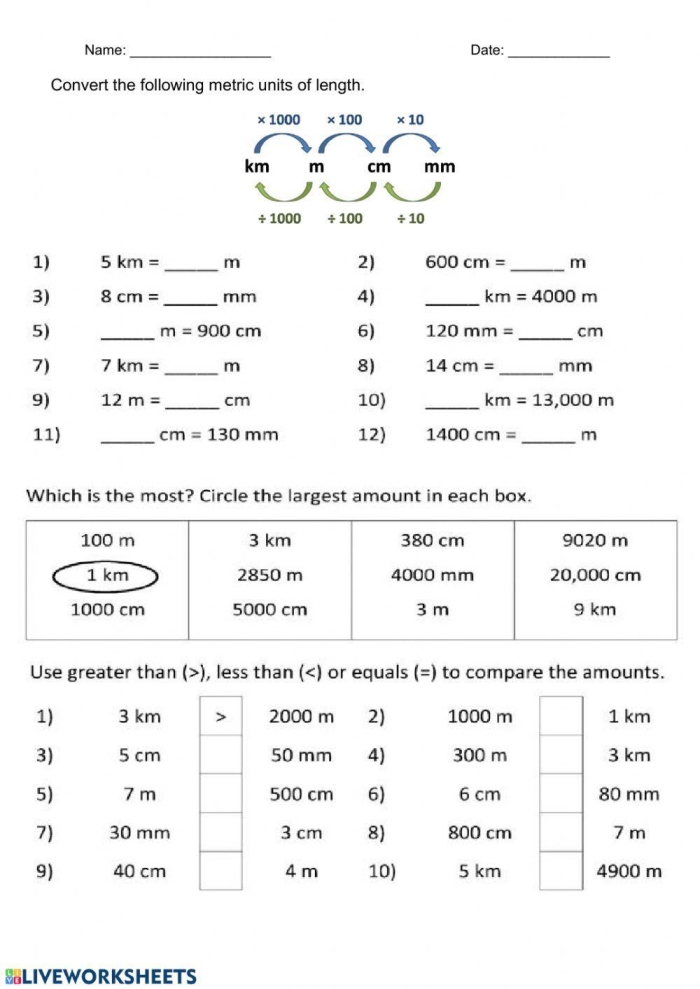
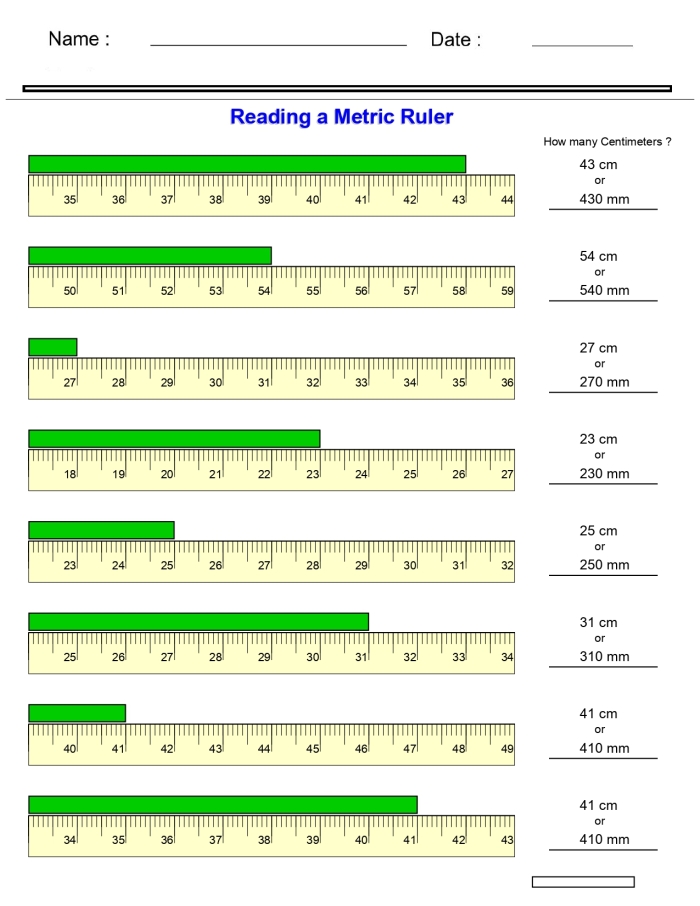
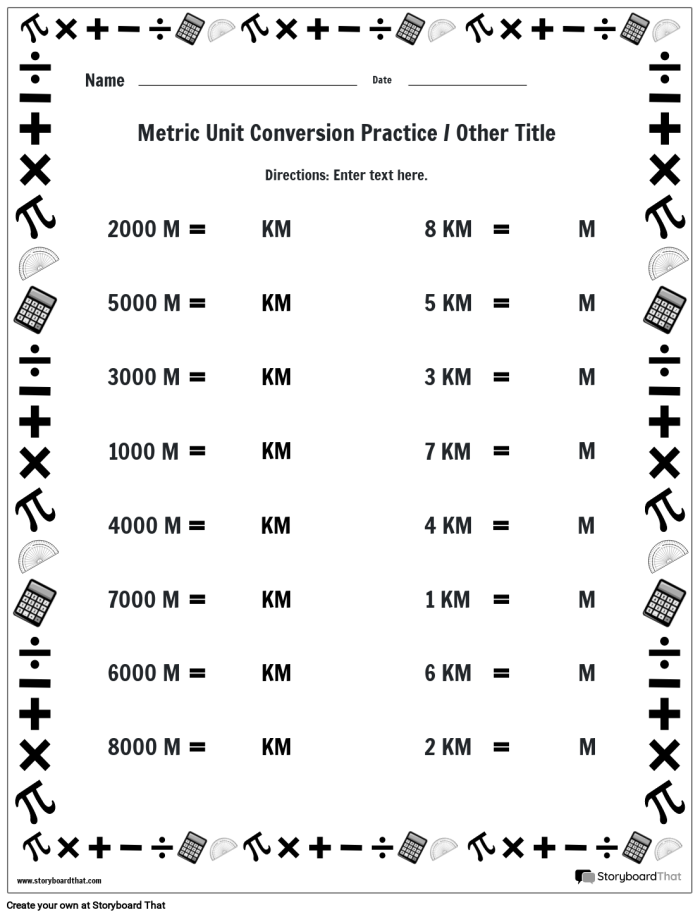
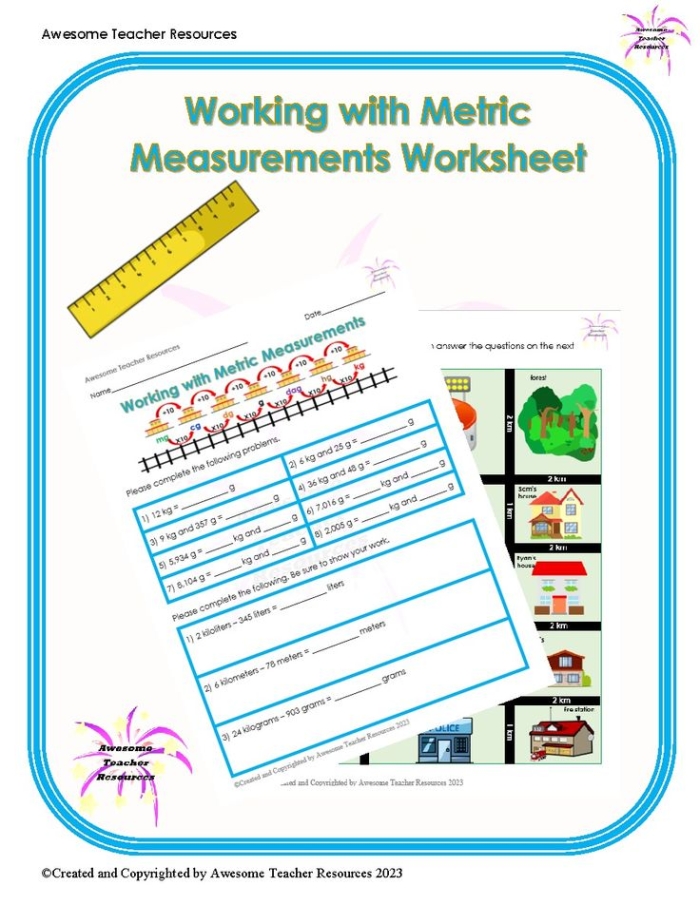
Metric conversions can feel abstract until students actually work through real problems. A measurement and conversion worksheet gives fifth graders the chance to apply what they’ve learned about the metric system in concrete ways, moving beyond memorization to genuine understanding.
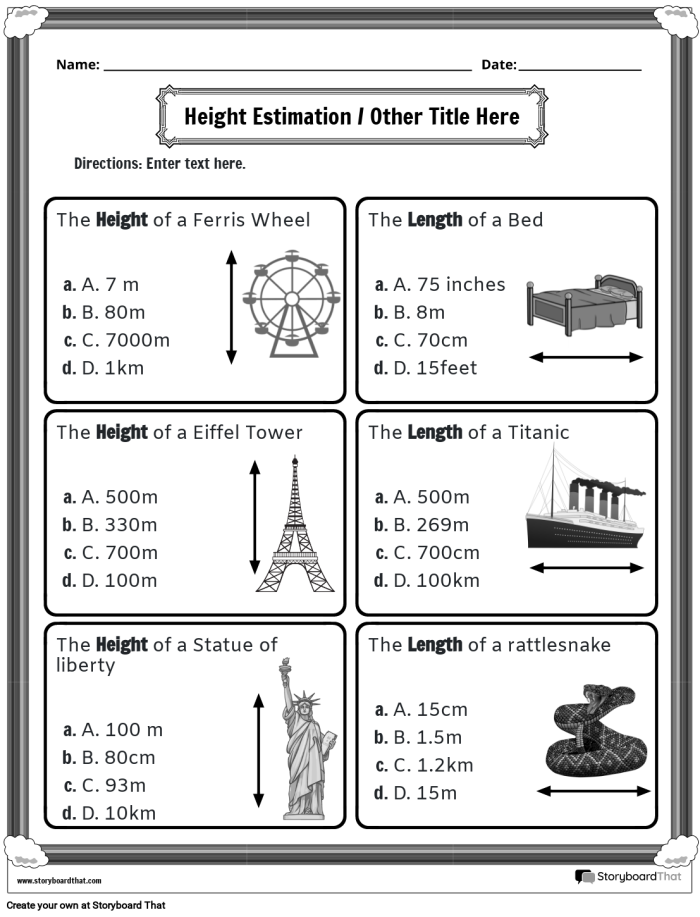
The metric system relies on powers of ten, which makes it more logical than imperial units. When students convert between millimeters and centimeters, or liters and milliliters, they’re reinforcing their grasp of place value and decimal relationships. This connection between measurement and number sense strengthens both skills simultaneously. A well-designed worksheet presents problems that require students to think about which unit makes sense for a given context, not just plug numbers into formulas.
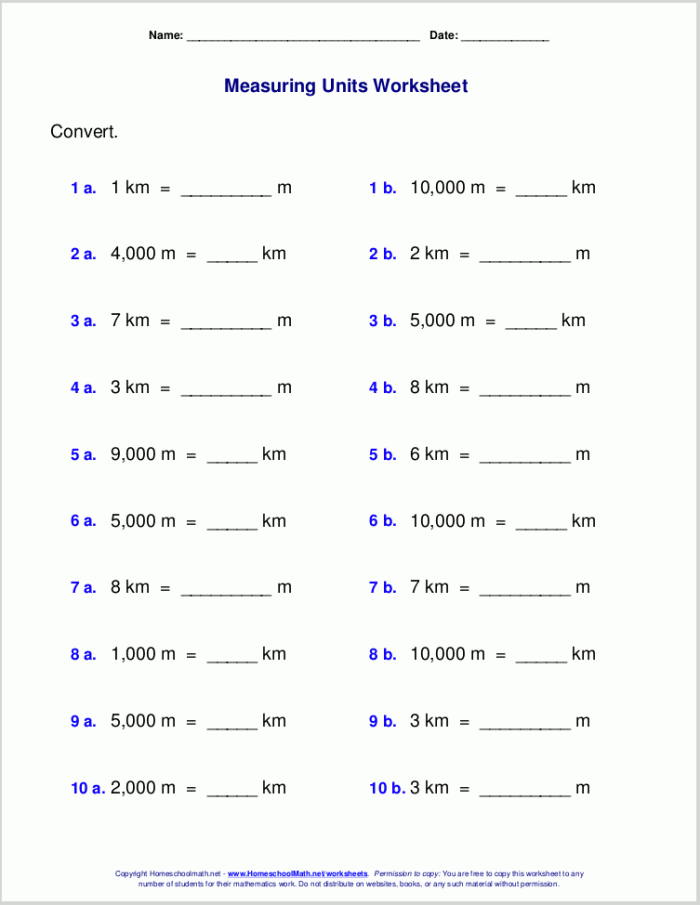
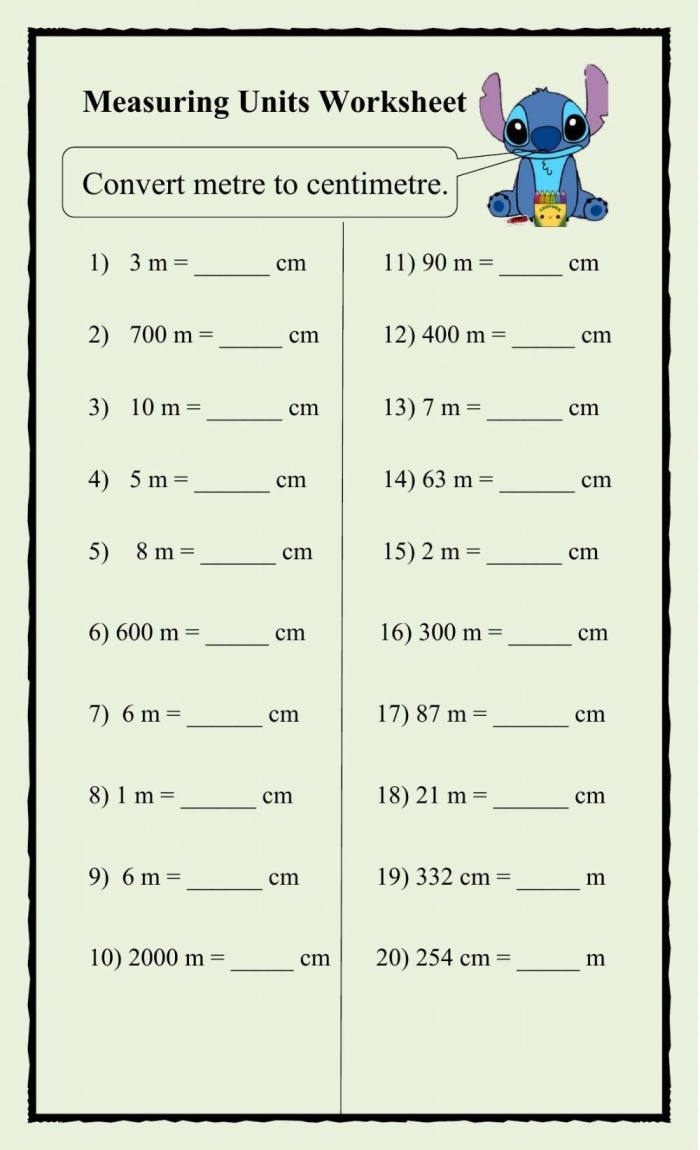
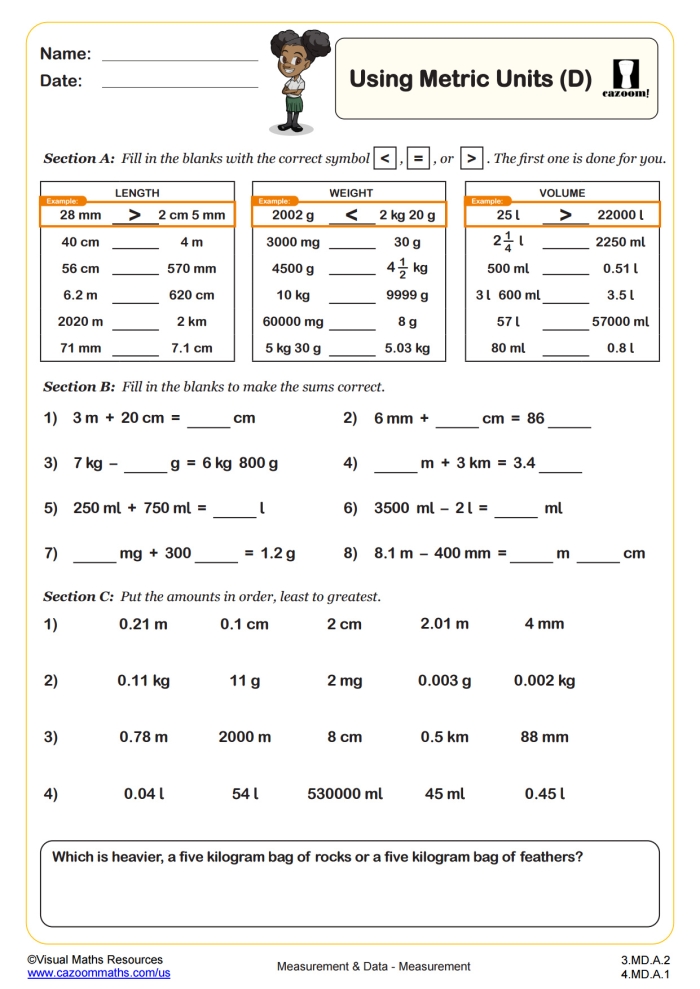
Fifth graders benefit from worksheets that mix different types of conversions. Some problems might ask them to convert length measurements, while others focus on volume or mass. This variety keeps the work engaging and prevents students from falling into mechanical patterns where they solve without thinking. When a student converts 2.5 kilometers to meters, they’re actually working with multiplication and decimals in a purposeful context.
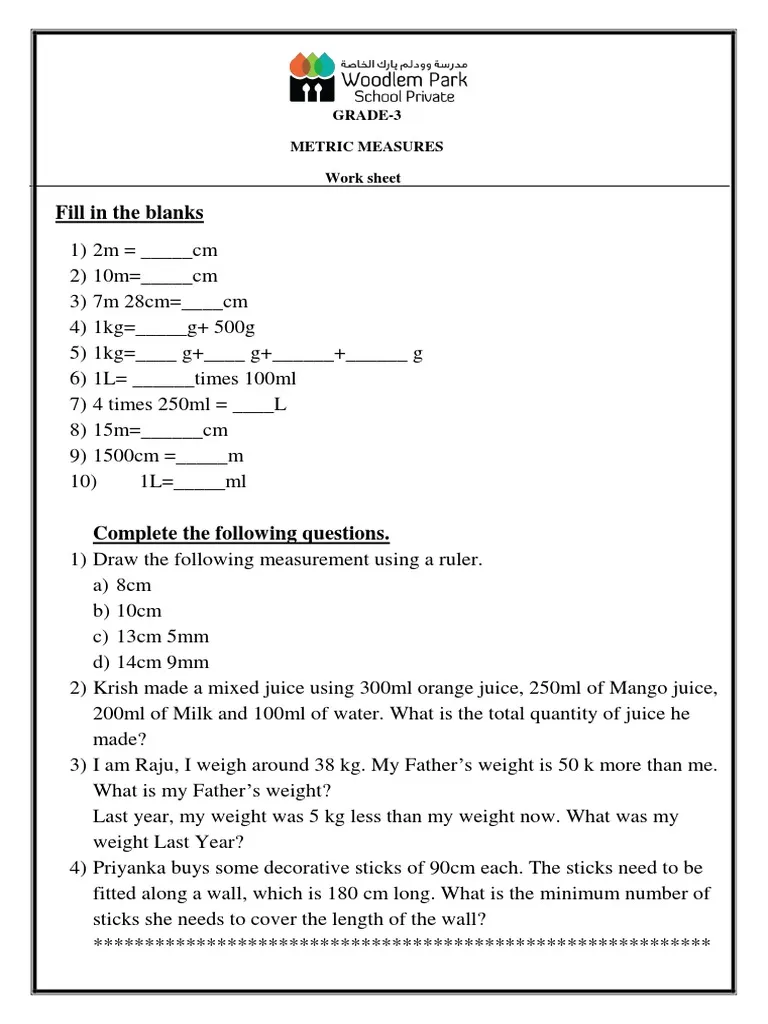
Beyond basic conversion, these worksheets often include word problems that require students to choose the appropriate unit and then perform the calculation. A problem asking how many milliliters are in 3 liters demands different thinking than one asking how many centimeters fit in 4 meters, even though the mathematical process is similar.
Teachers can extend this work by pairing metric conversion practice with related skills. Students working on metric measurements in fifth grade worksheets often benefit from also tackling liquid measure conversion problems to deepen their understanding of volume specifically. These complementary practice sets help students see how measurement skills connect across different contexts.
Start Practicing with These Worksheets