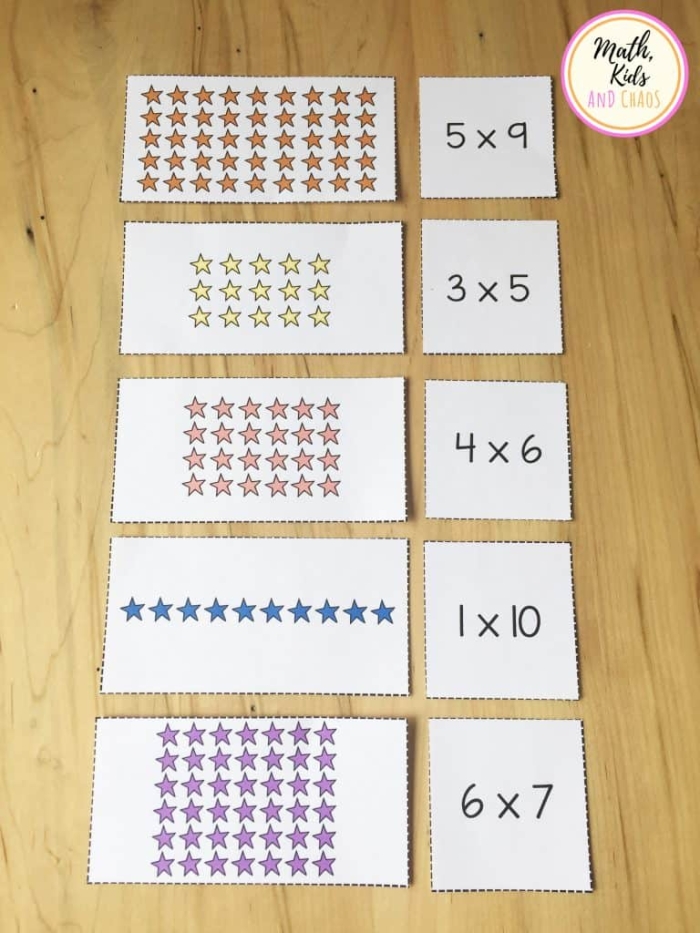
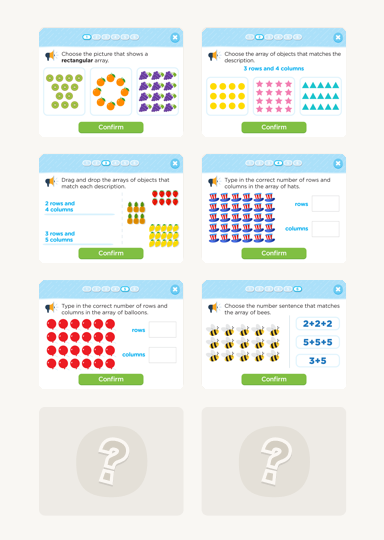
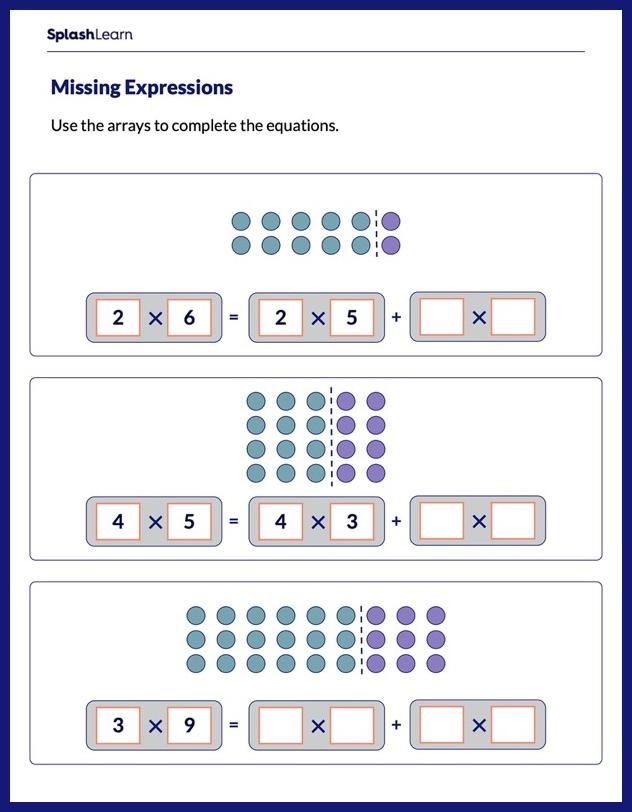
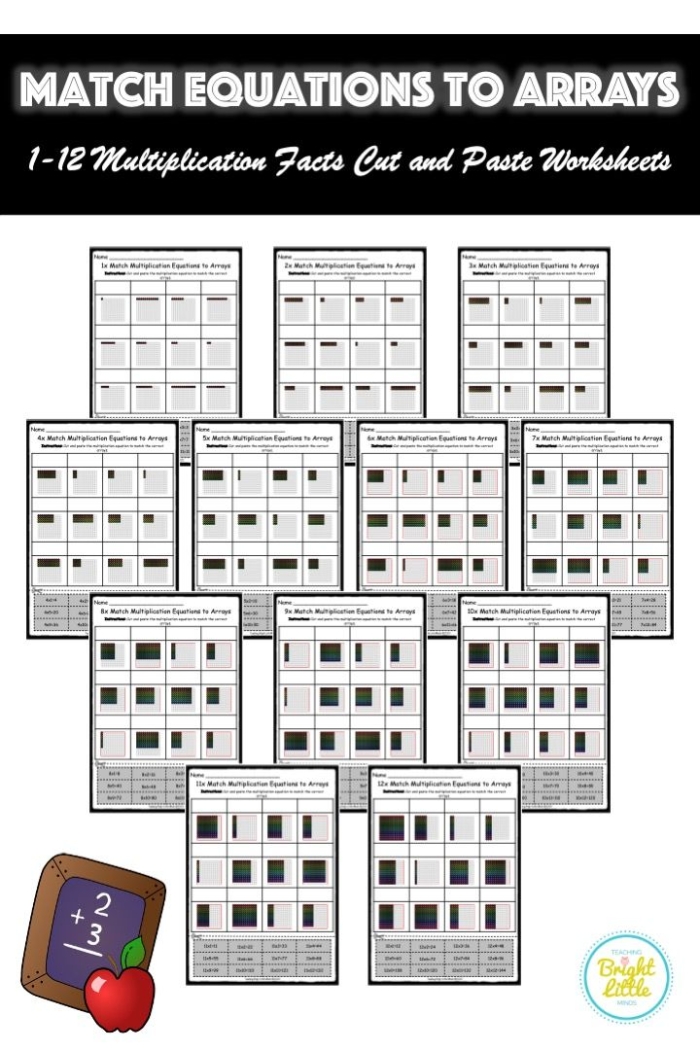
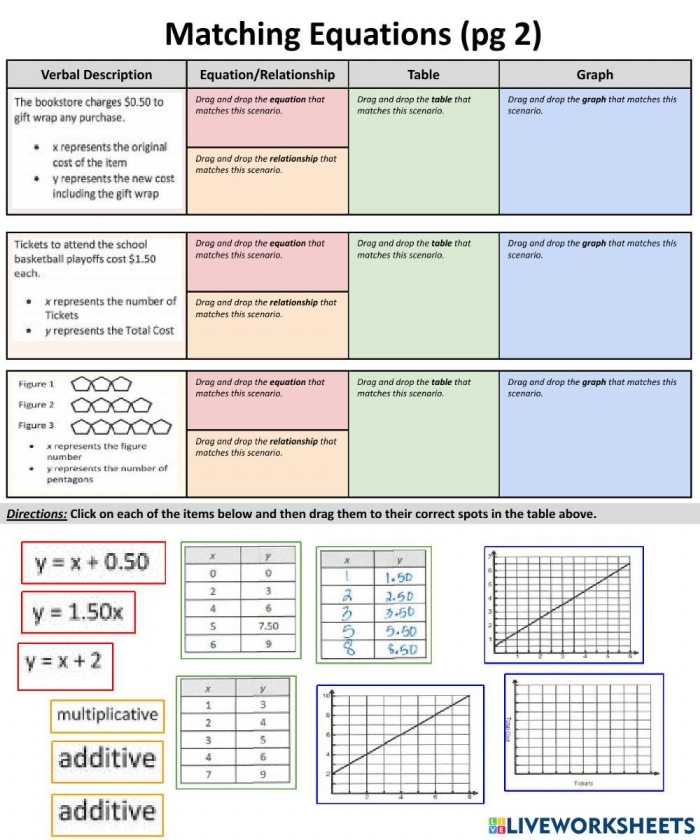
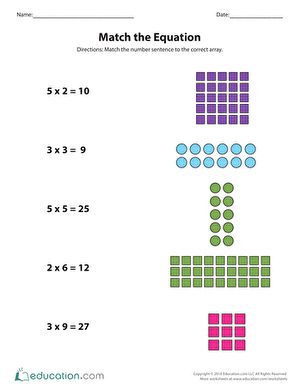
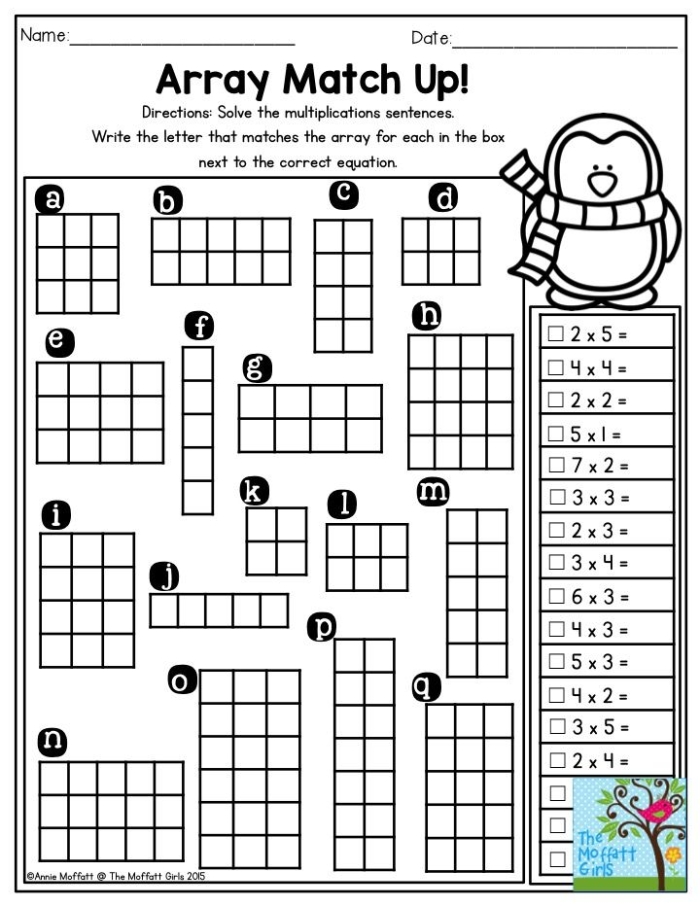
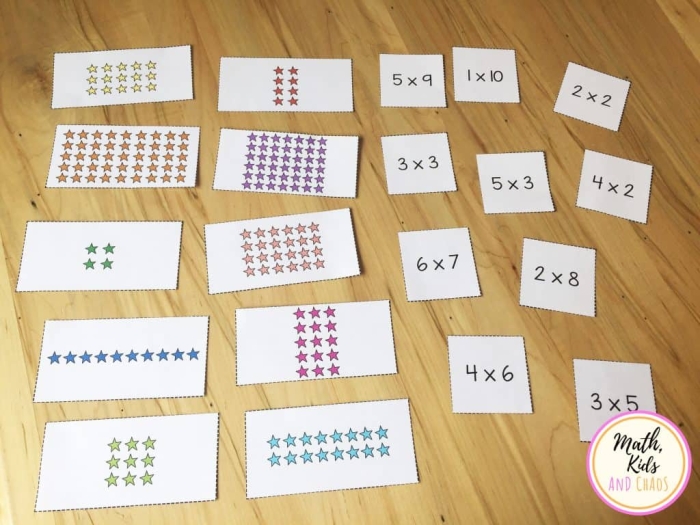
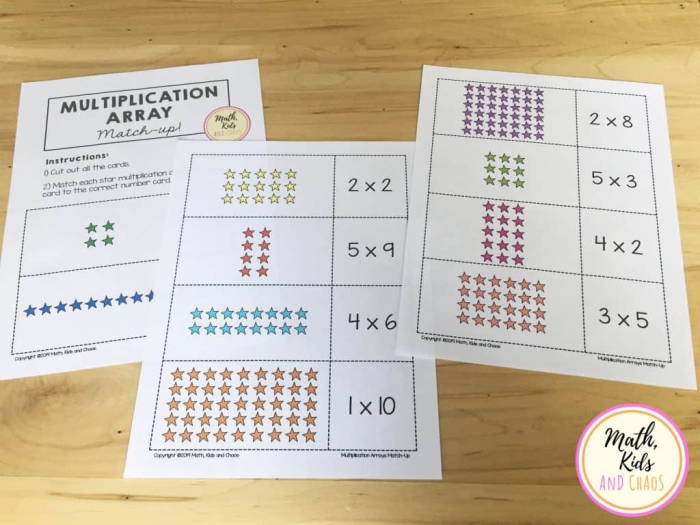
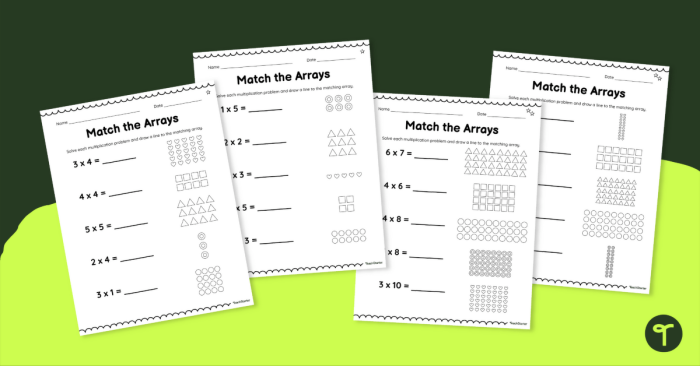
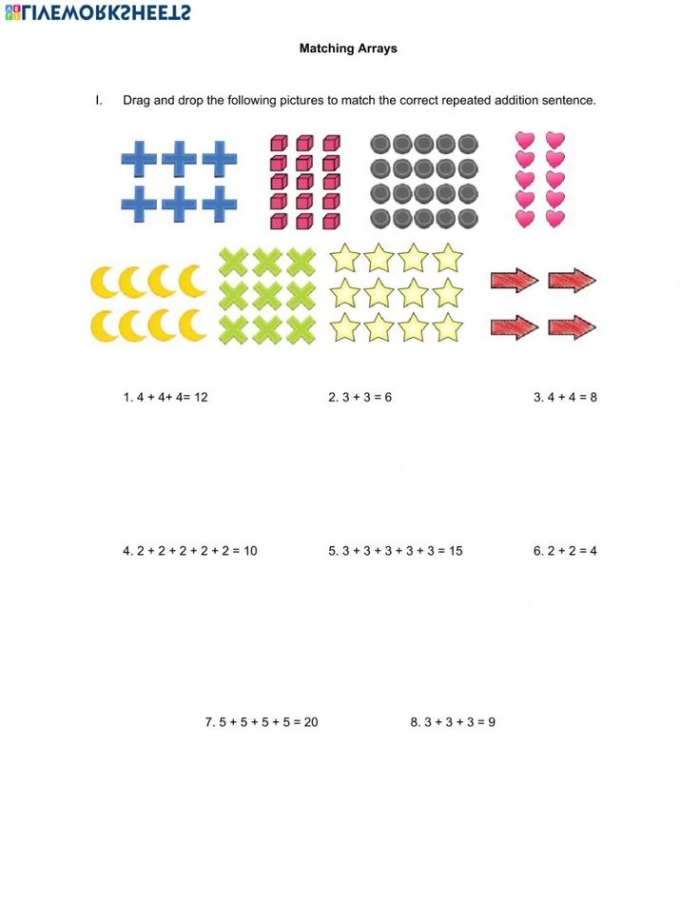
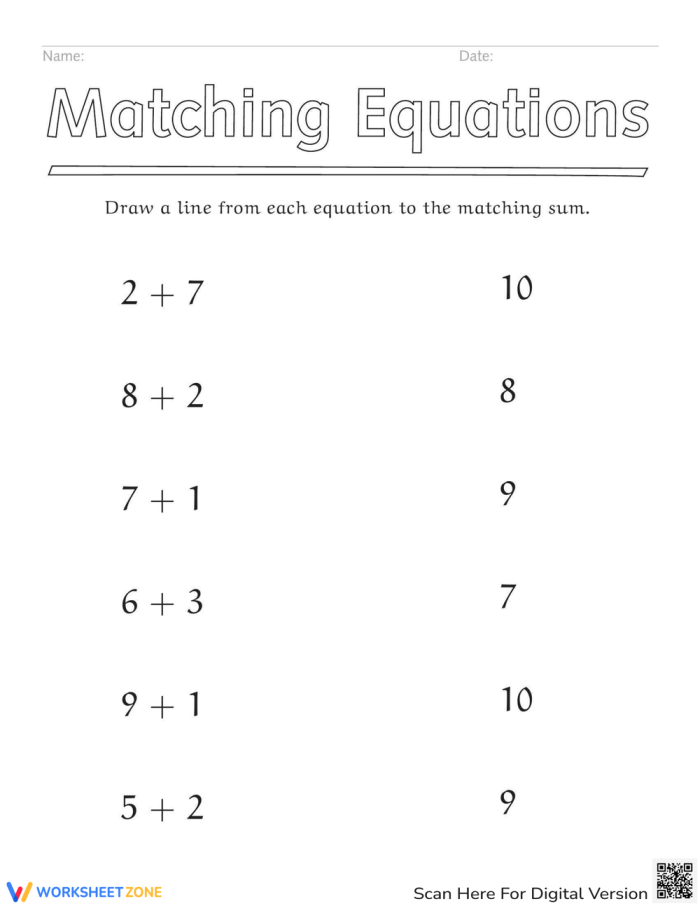
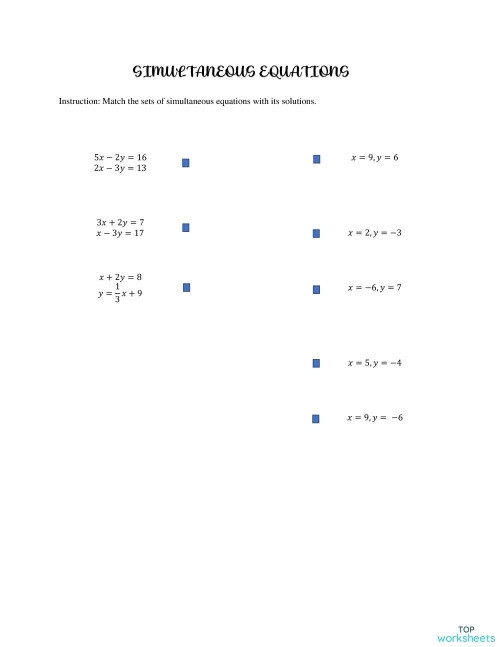
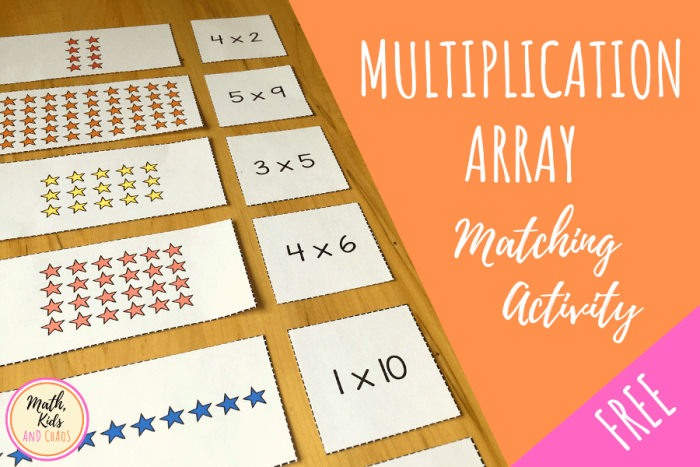
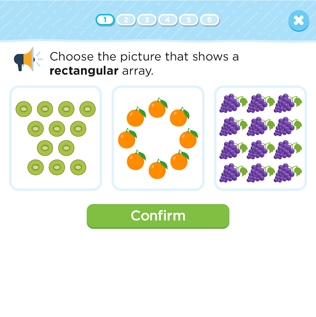
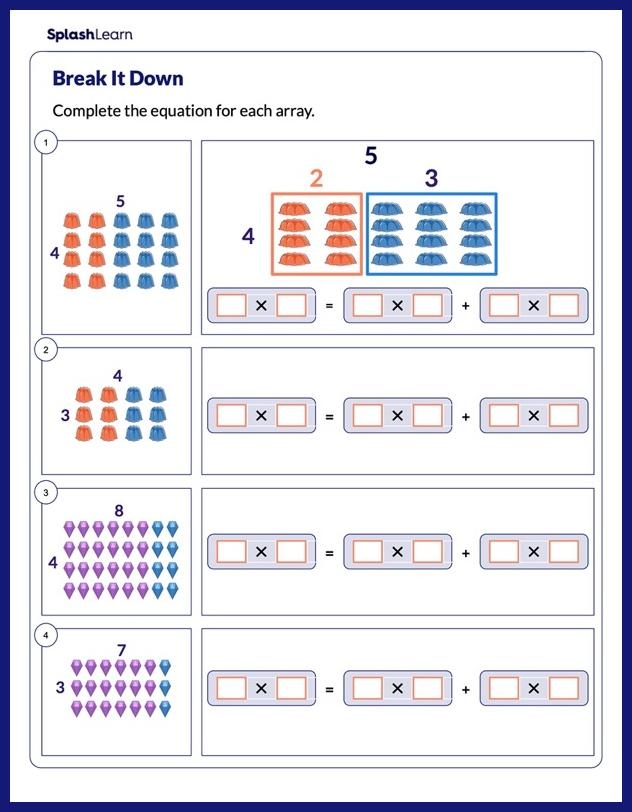
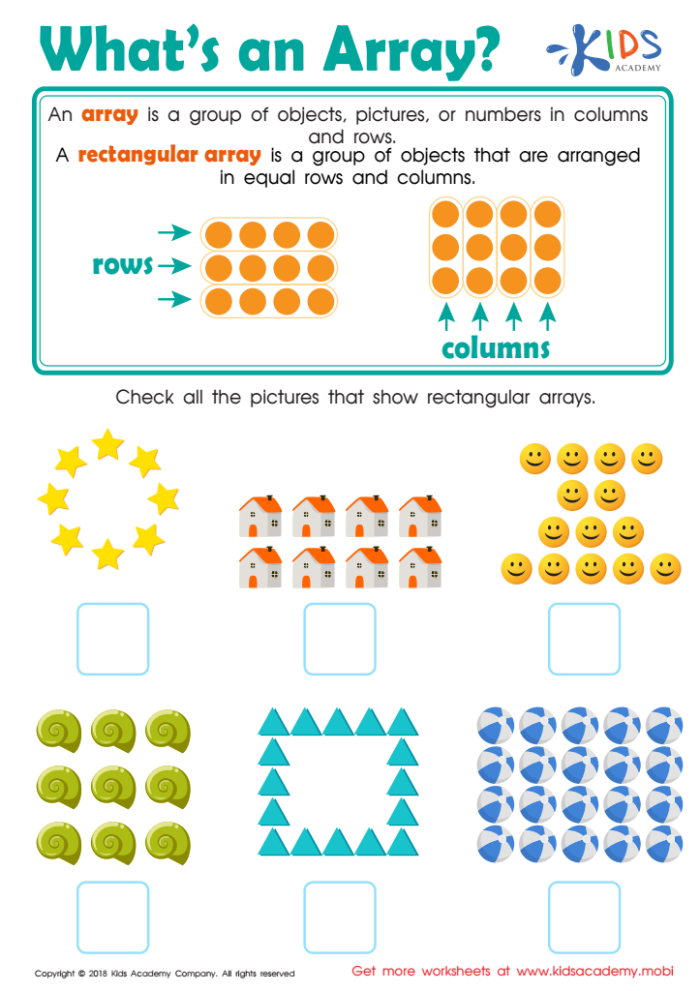
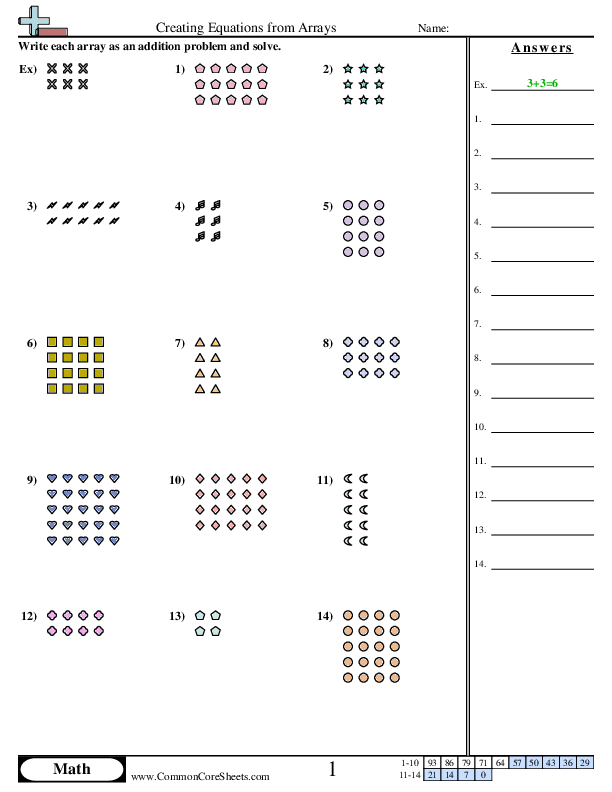
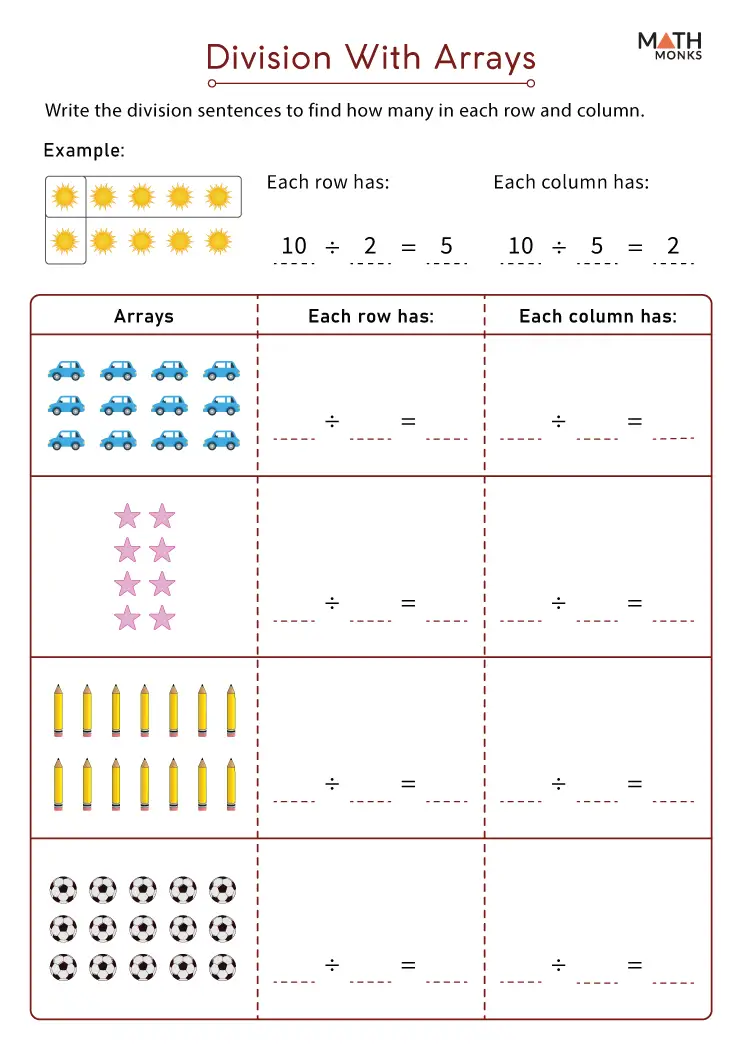
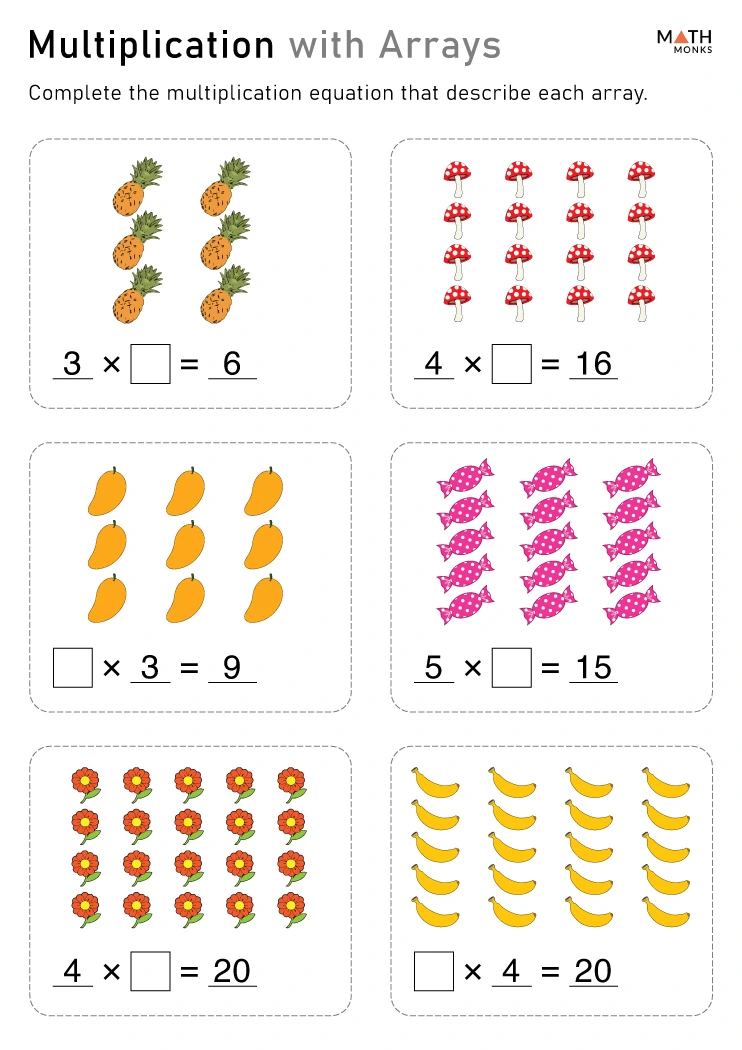
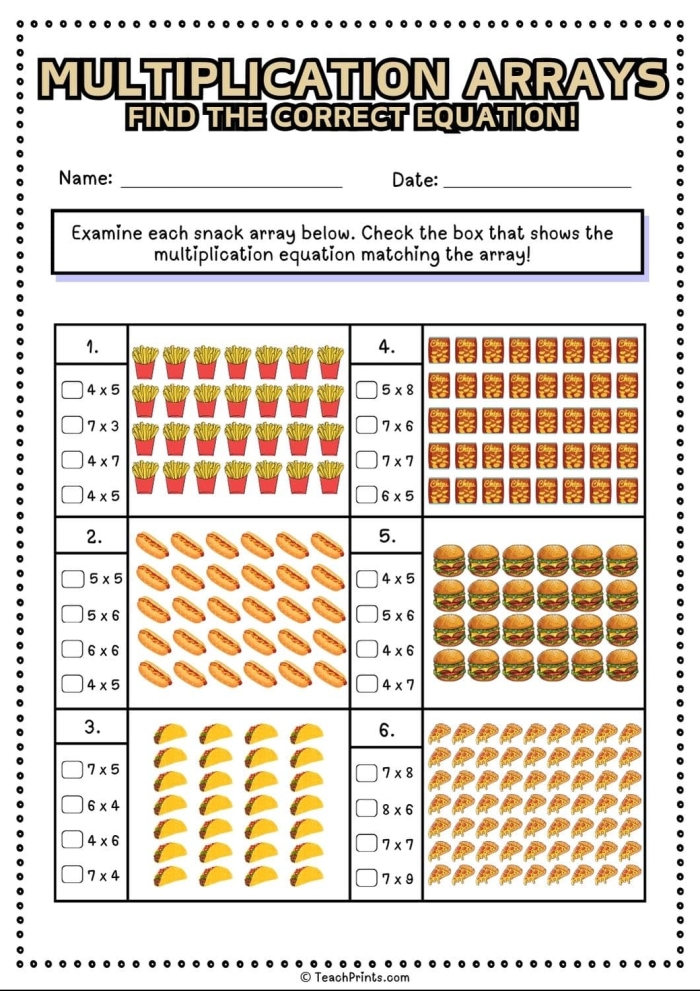
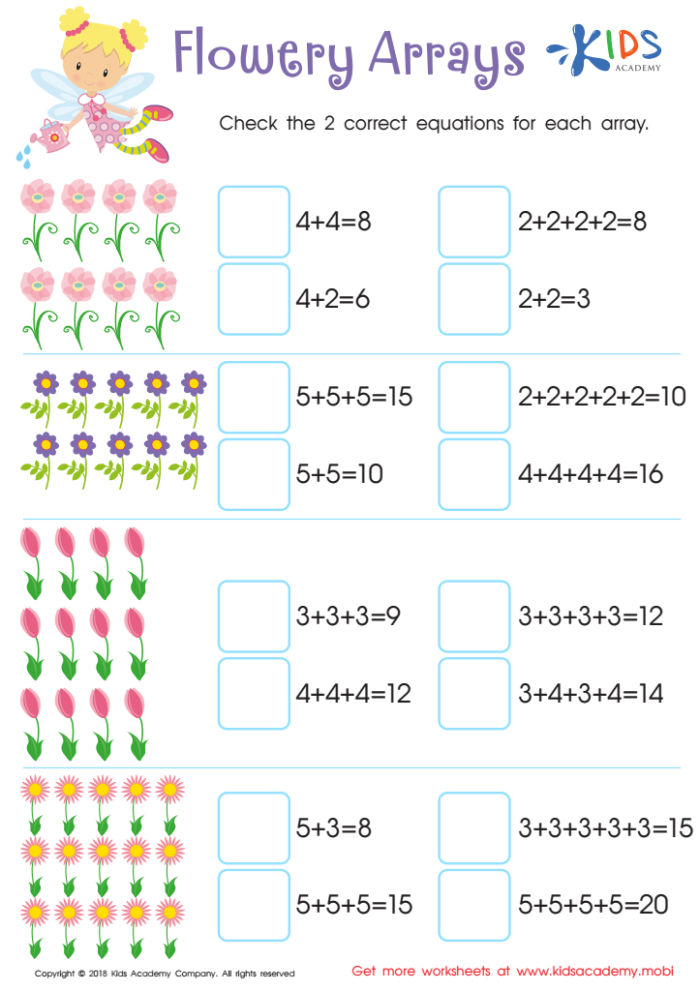
Understanding how to translate visual representations into mathematical equations is a crucial skill for third graders. This worksheet provides valuable practice for students by allowing them to match arrays to equations and vice versa. Engaging with these activities helps solidify their grasp of basic algebraic concepts.
For example, consider a visual array representing three rows of four apples. This array can be translated into the equation 3 x 4 = 12. When students see the equation, they can visualize the grouping of apples, reinforcing their understanding of multiplication as repeated addition.
As children work through the worksheet, they gain confidence in recognizing the relationship between arrays and equations. This practice not only aids in their mathematical skills but also enhances their problem-solving abilities. Being able to interpret visual data is an essential skill, not just in math but across various subjects.
Additionally, integrating fun elements into learning can keep students motivated. For instance, you might challenge them to create their own arrays using everyday objects at home, like toys or snacks. Afterward, they can write the corresponding equations, further reinforcing the connection between visuals and numerical expressions.
Incorporating these worksheets into your third grader’s routine could lead to better performance in algebra and other areas of mathematics. Resources such as the Telling Time Worksheets or Probability Worksheets can also complement their learning journey in various mathematical concepts.
Ultimately, this engaging practice of matching arrays to equations serves not just to enhance your child’s math skills but also to set a strong foundation for future learning. Embrace the opportunity to make math enjoyable and relevant through these interactive worksheets.
Hands-On Worksheet Activities