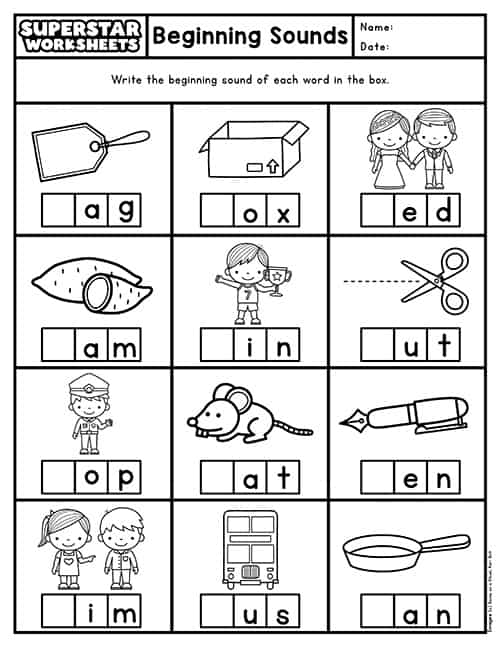
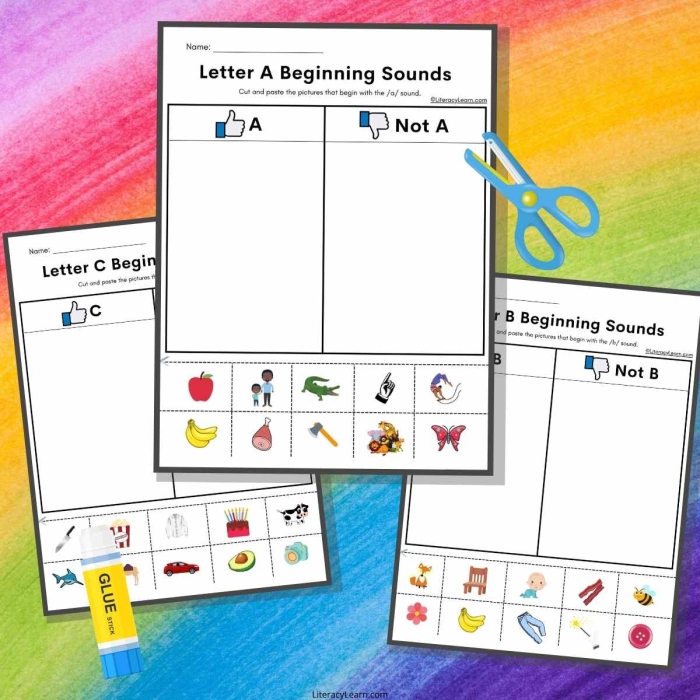
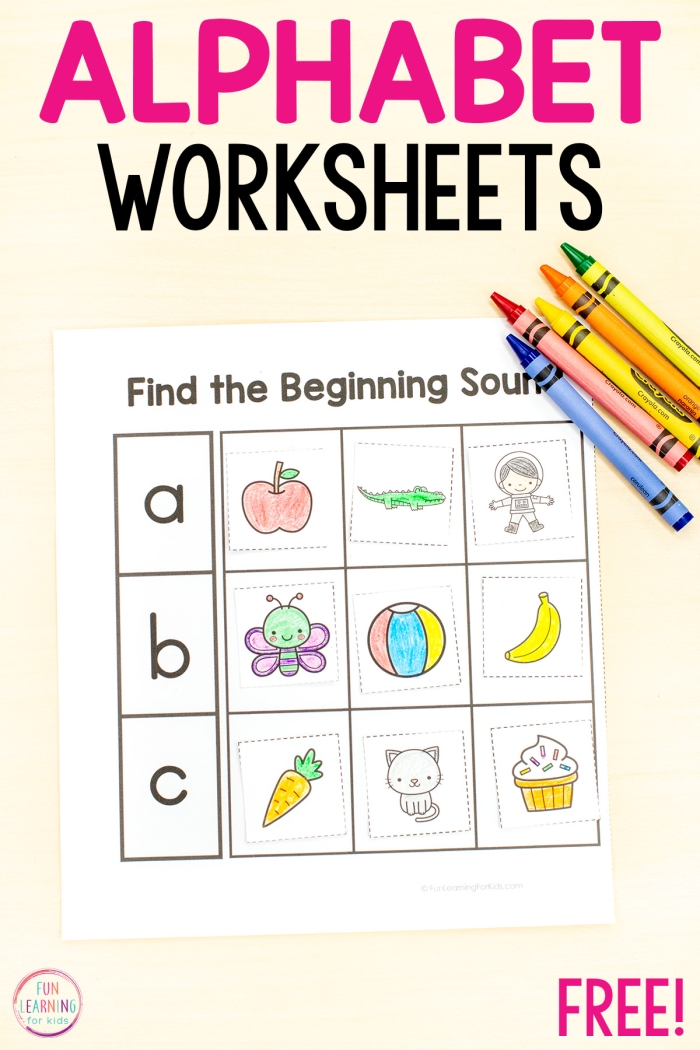
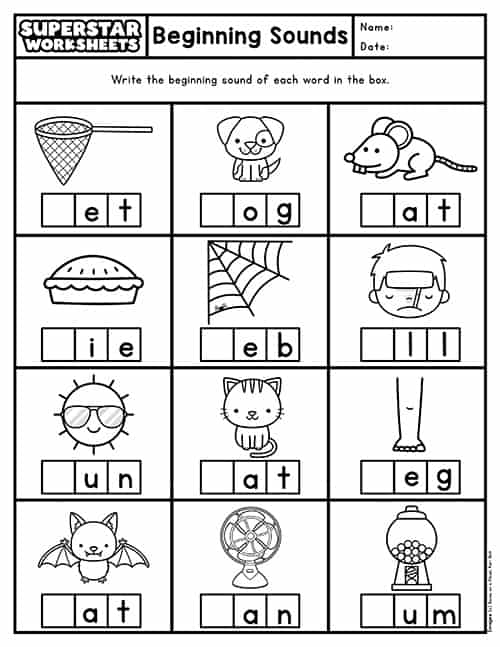
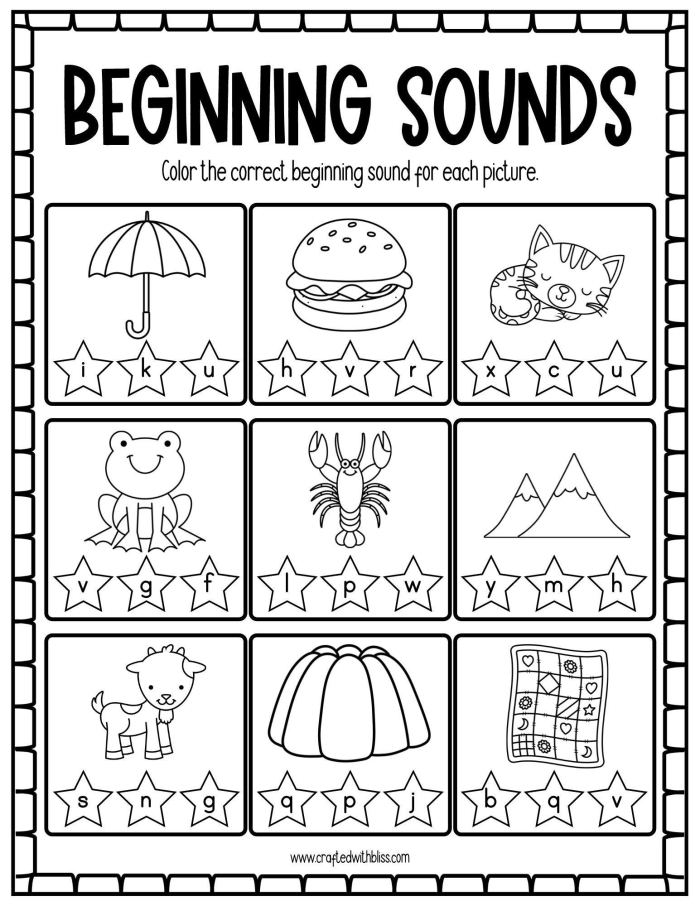
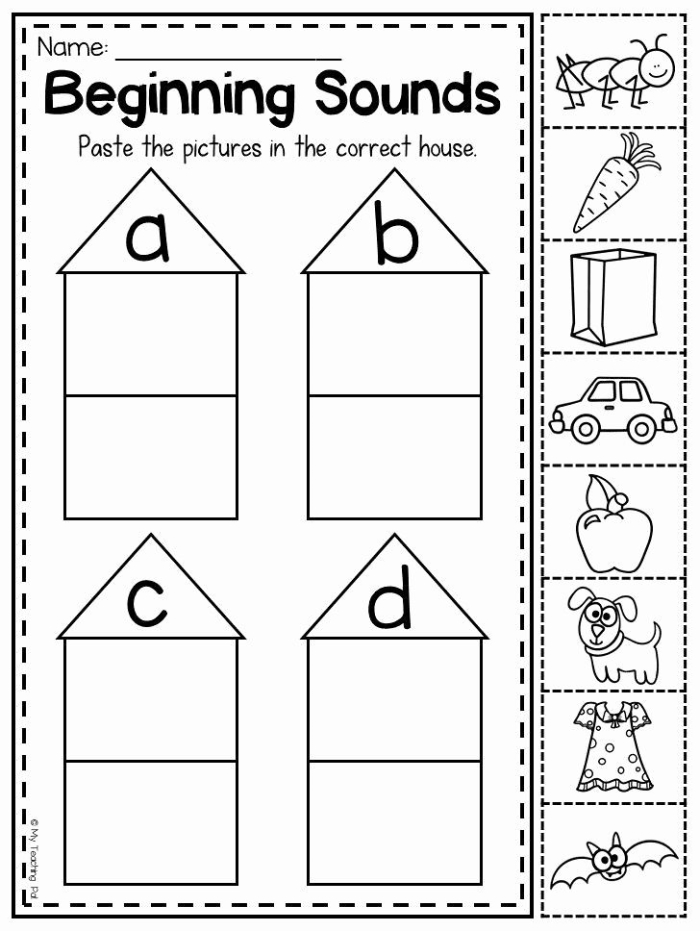
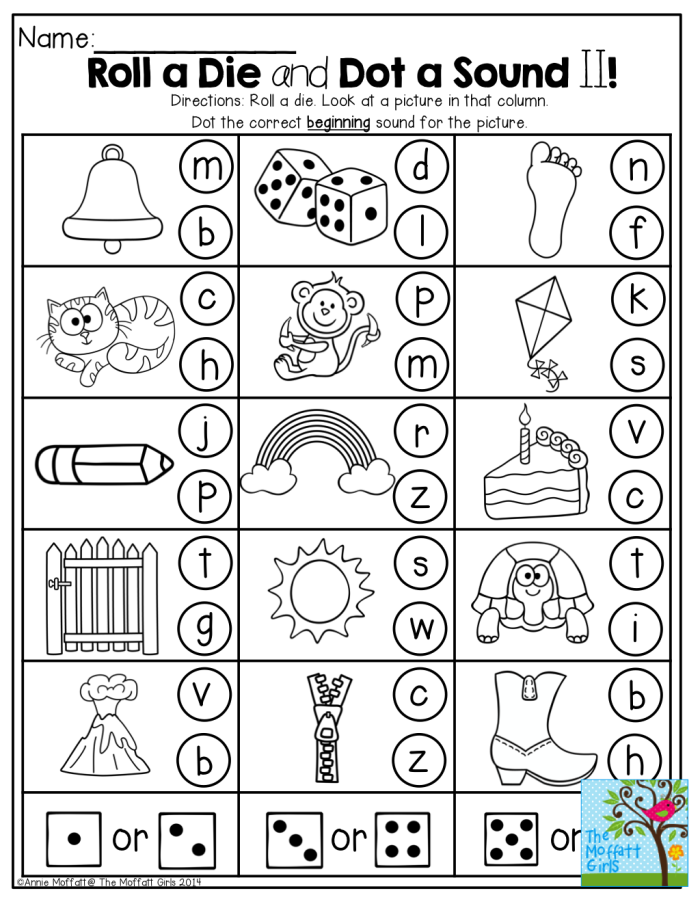
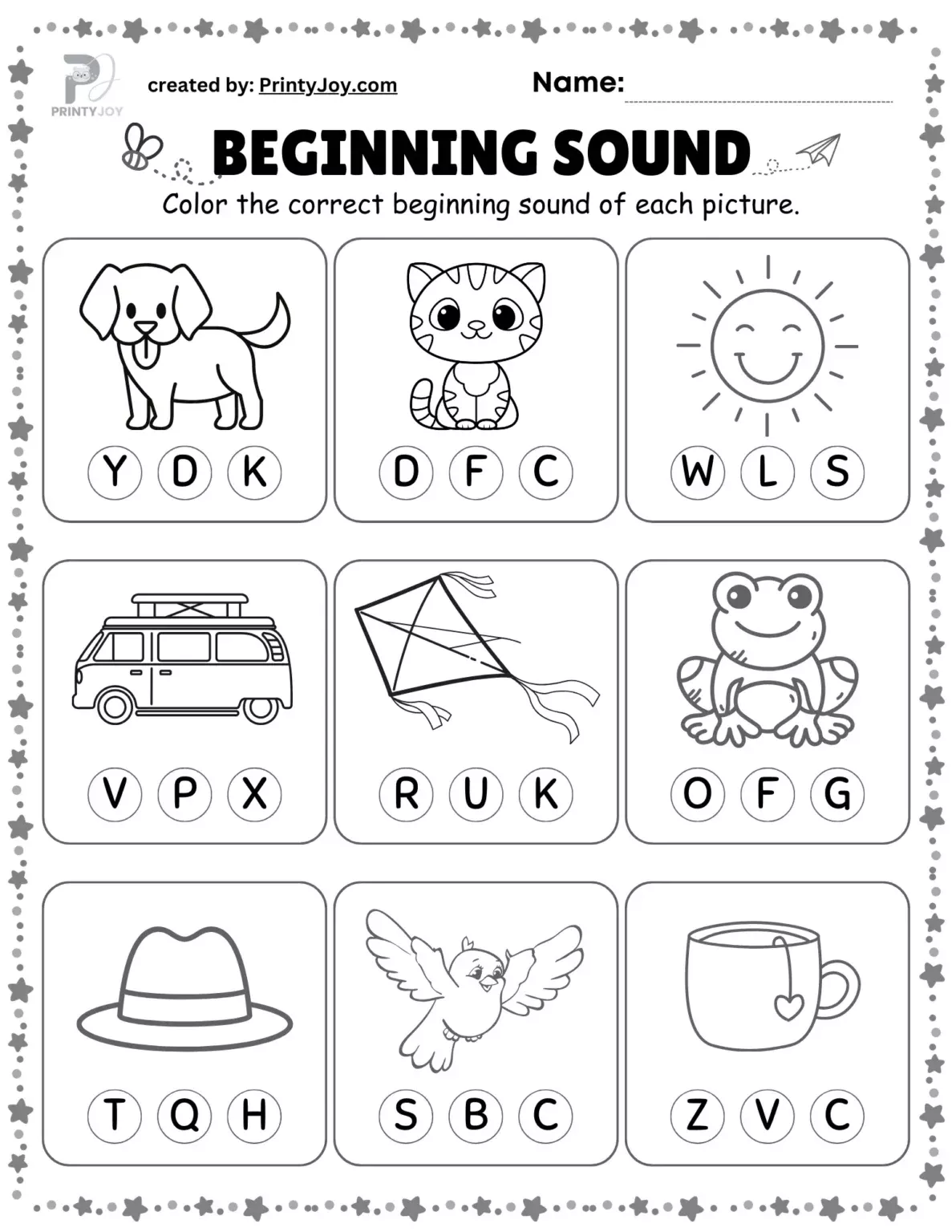
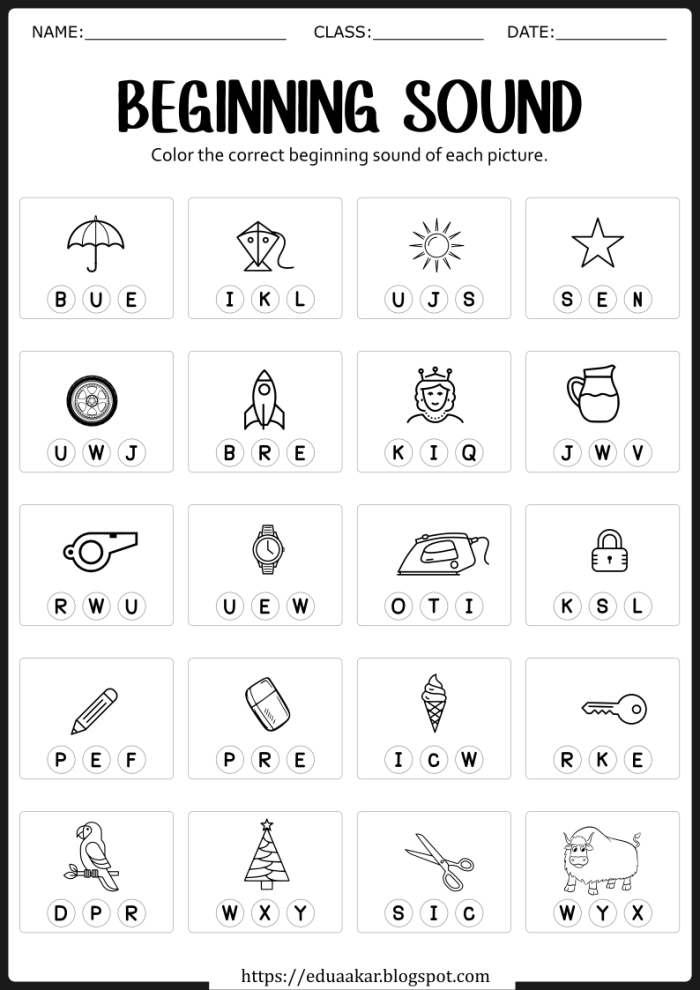
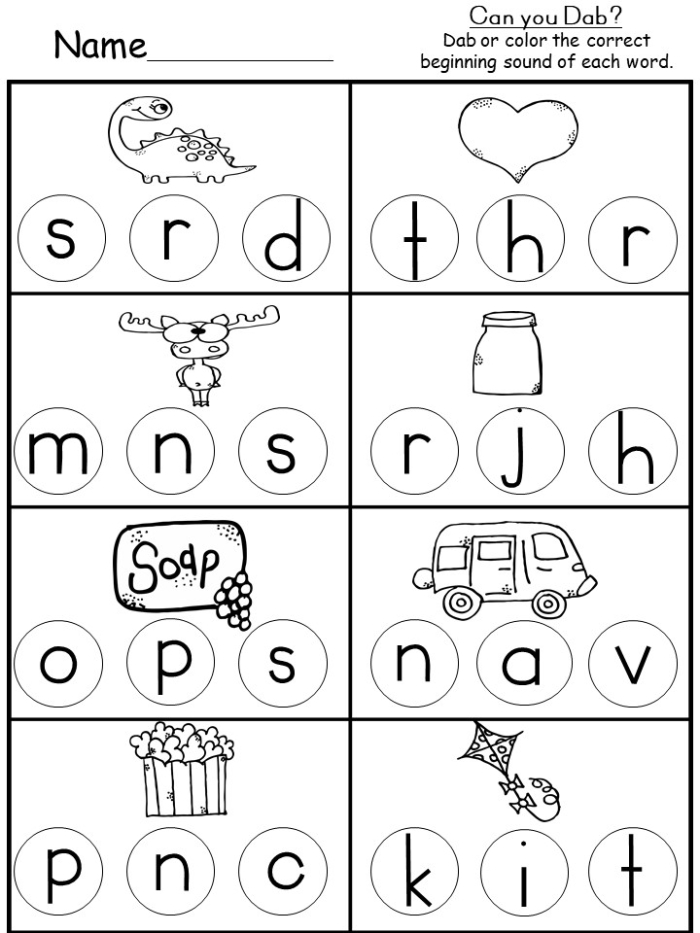
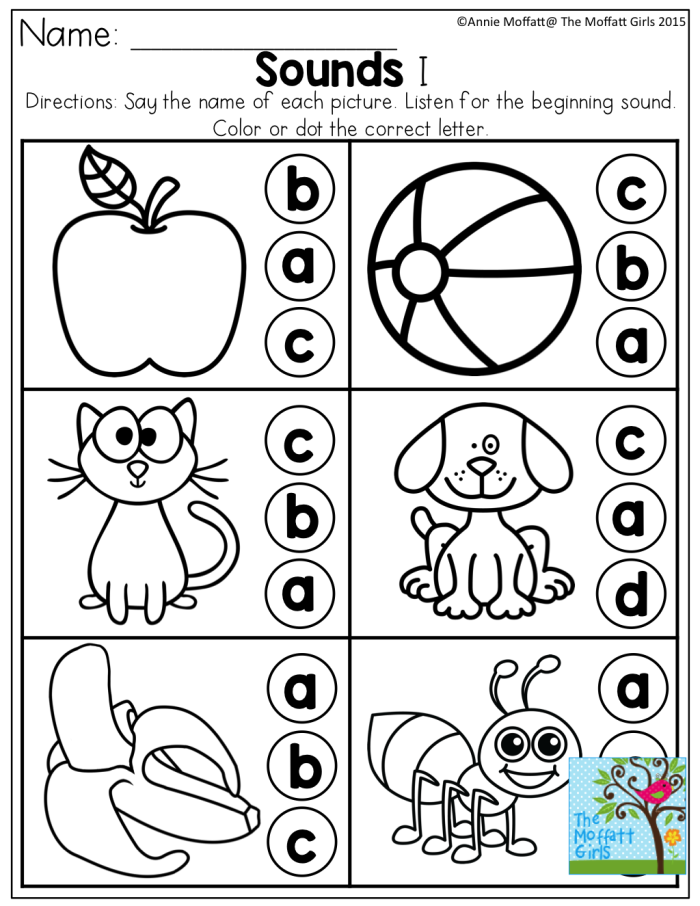
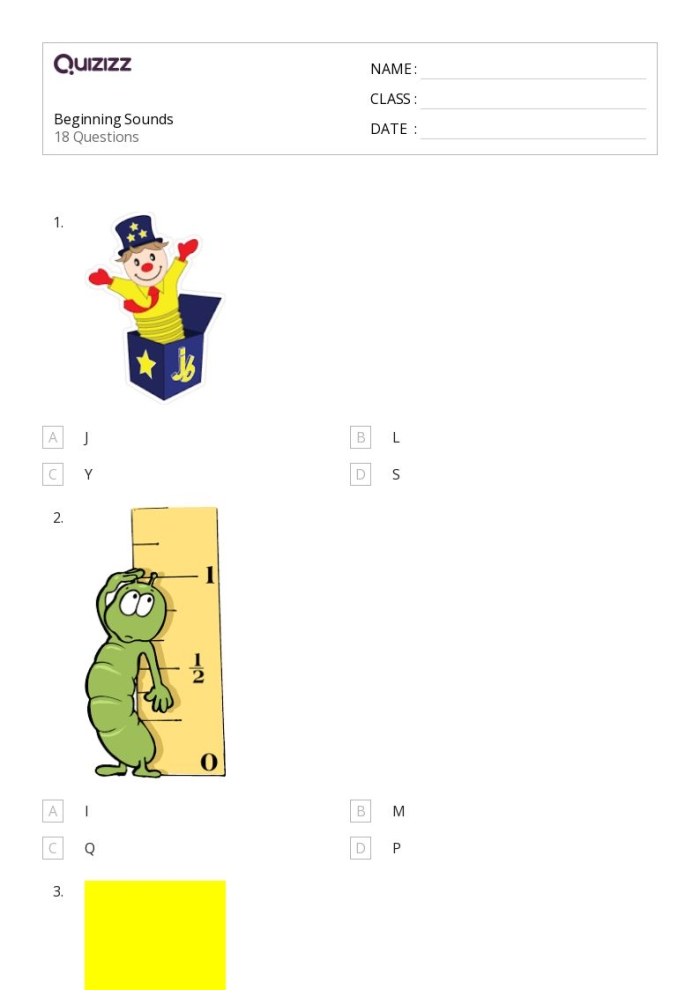
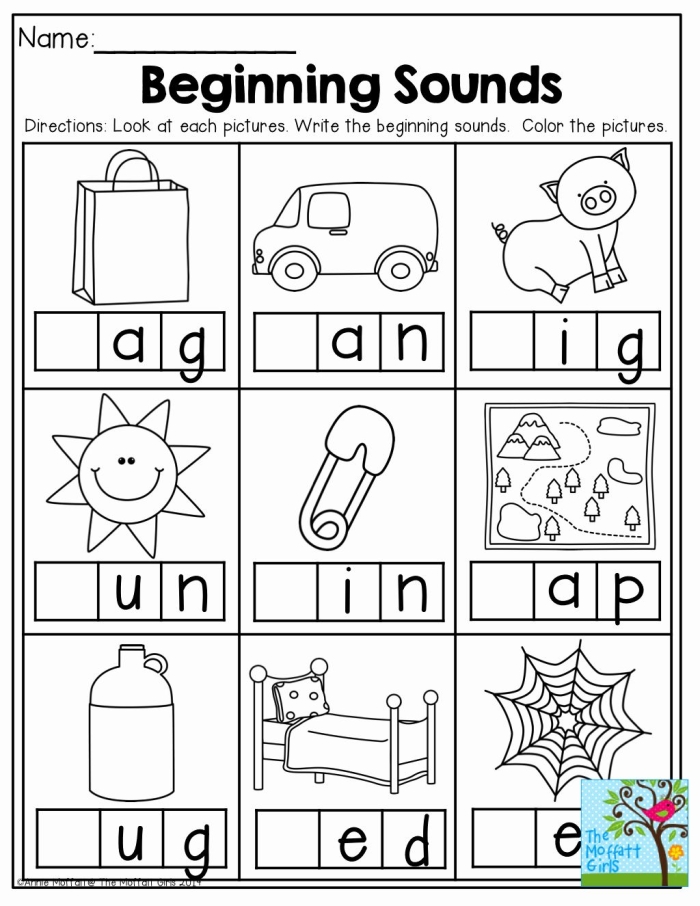
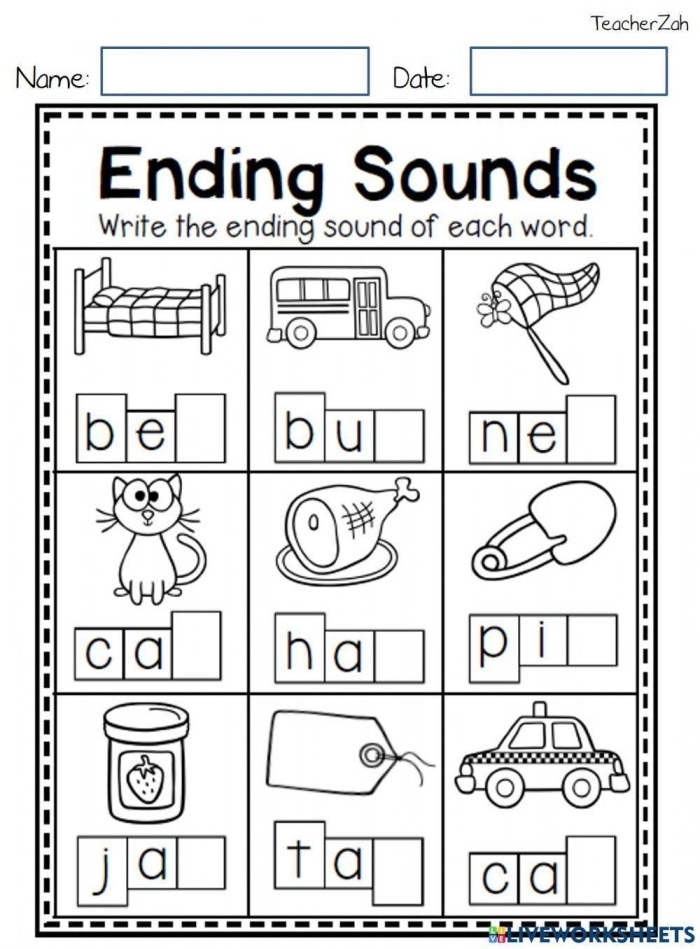
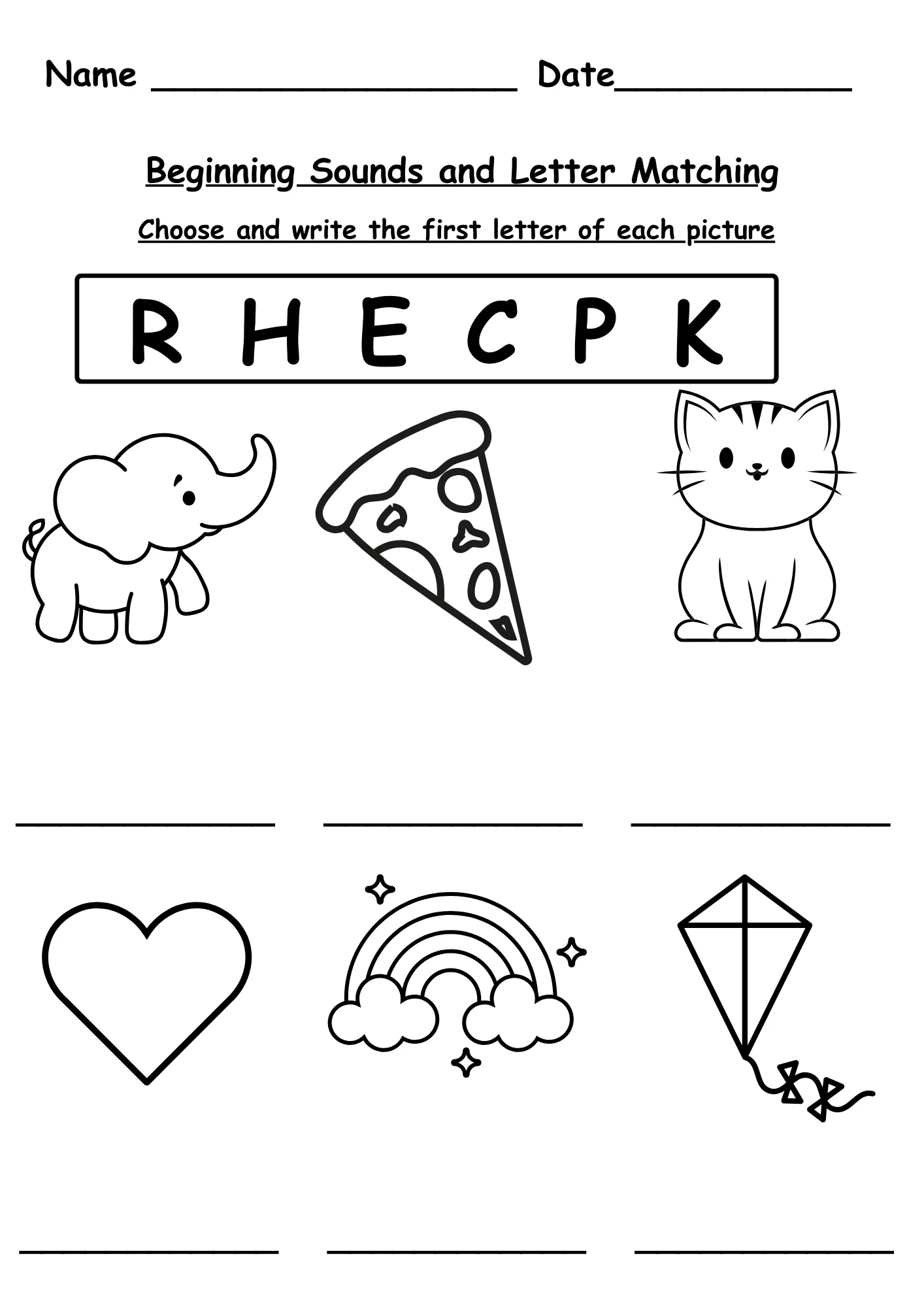
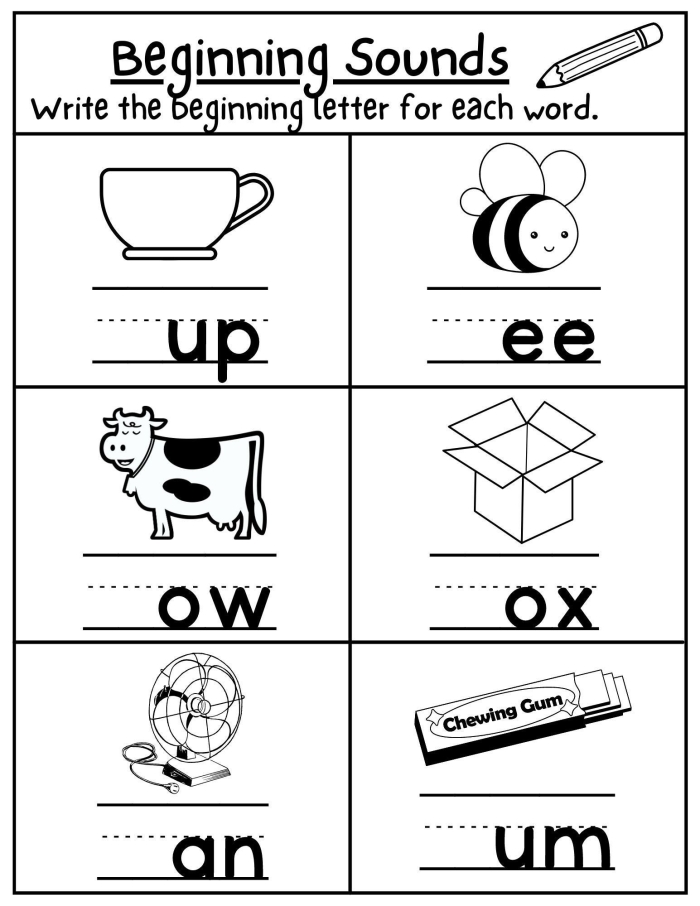
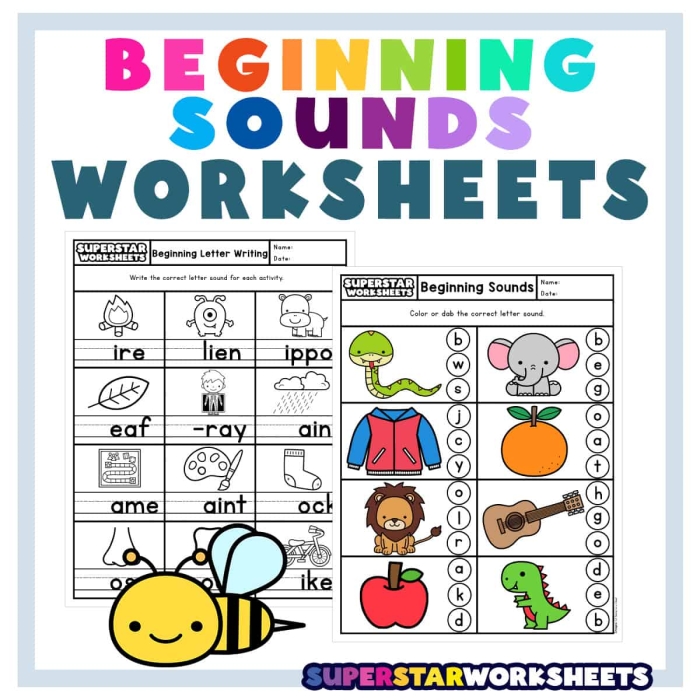
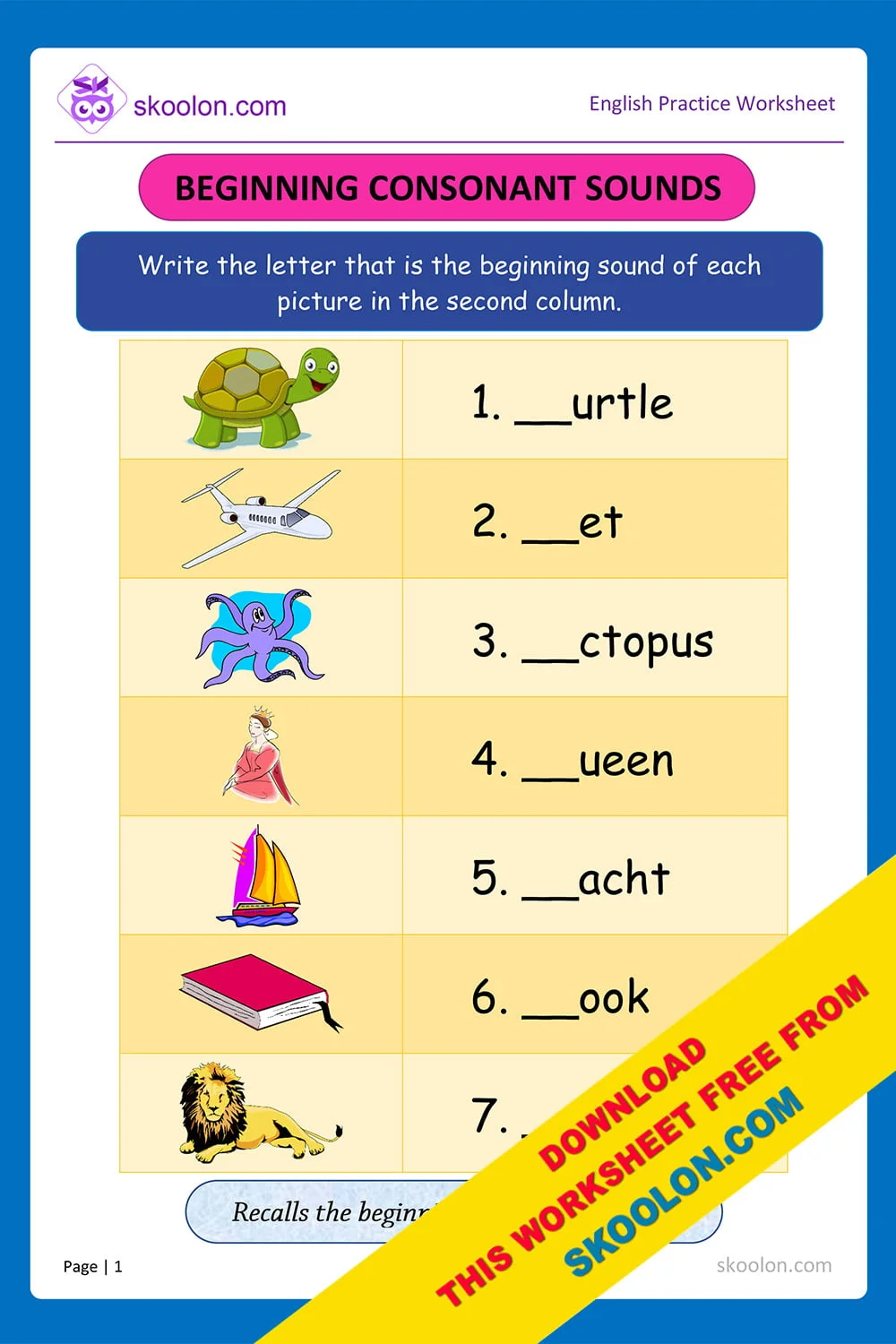
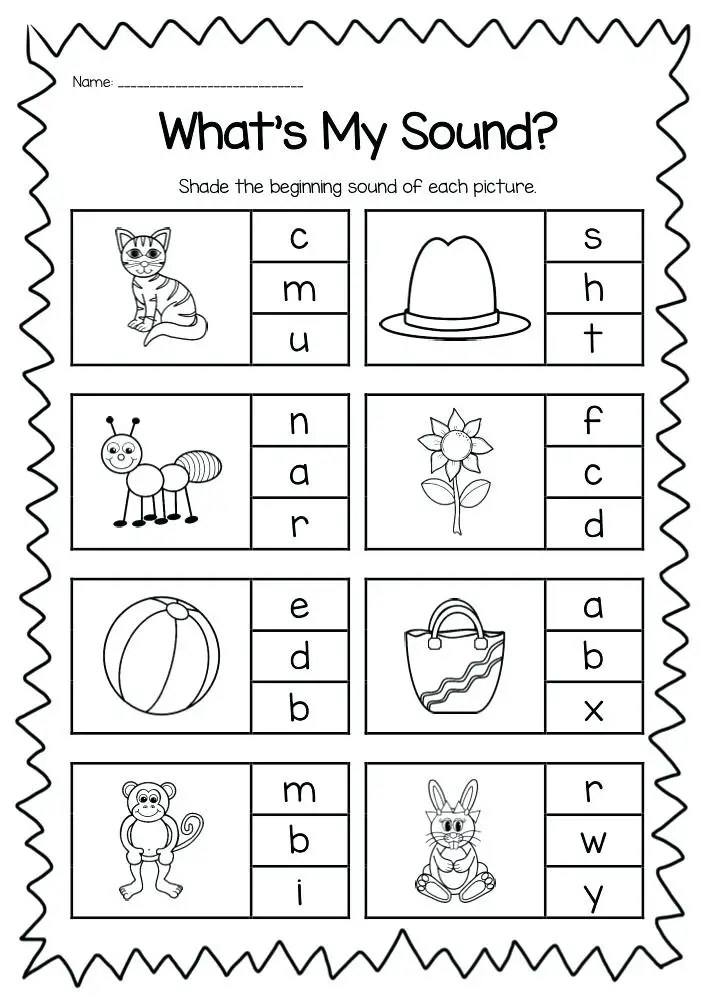
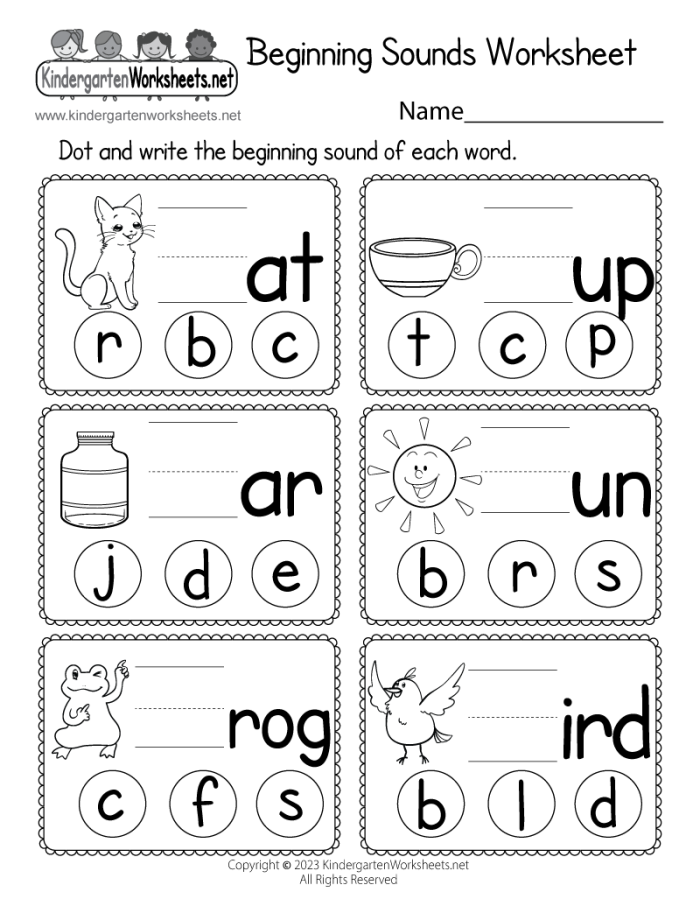
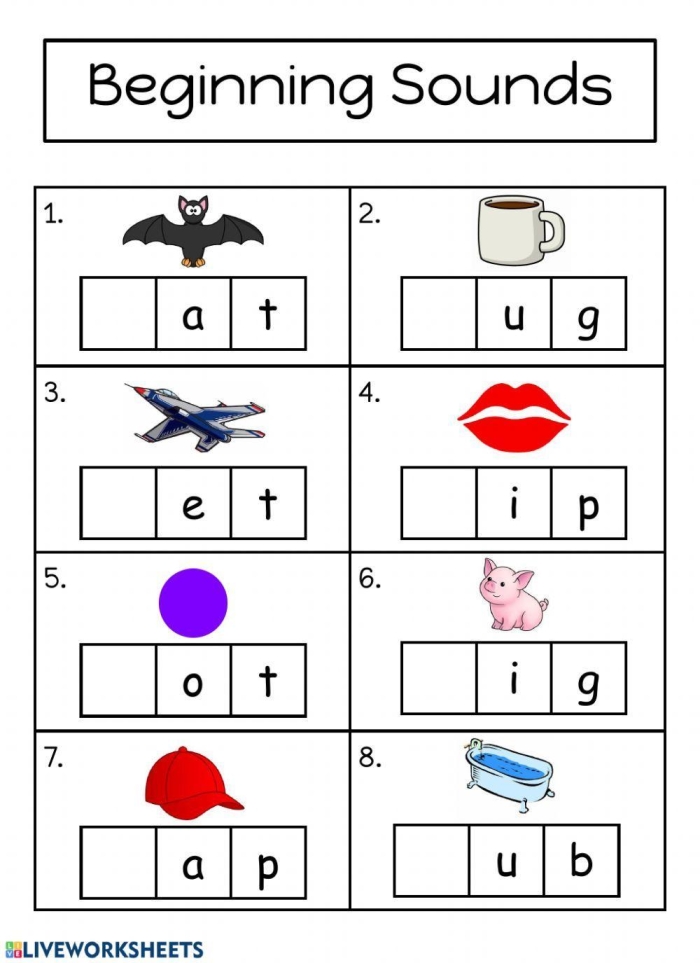
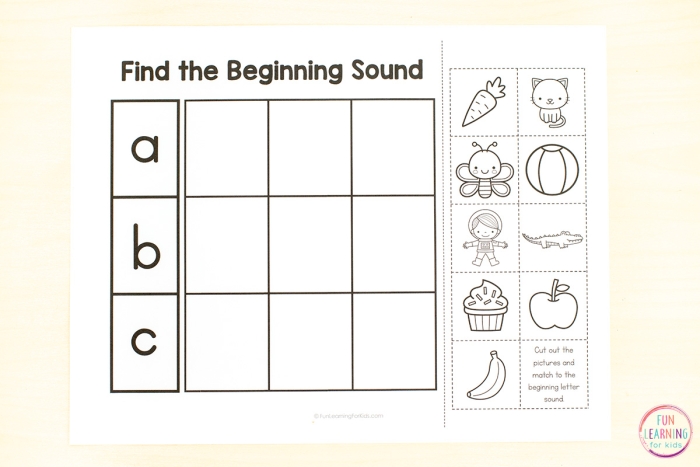
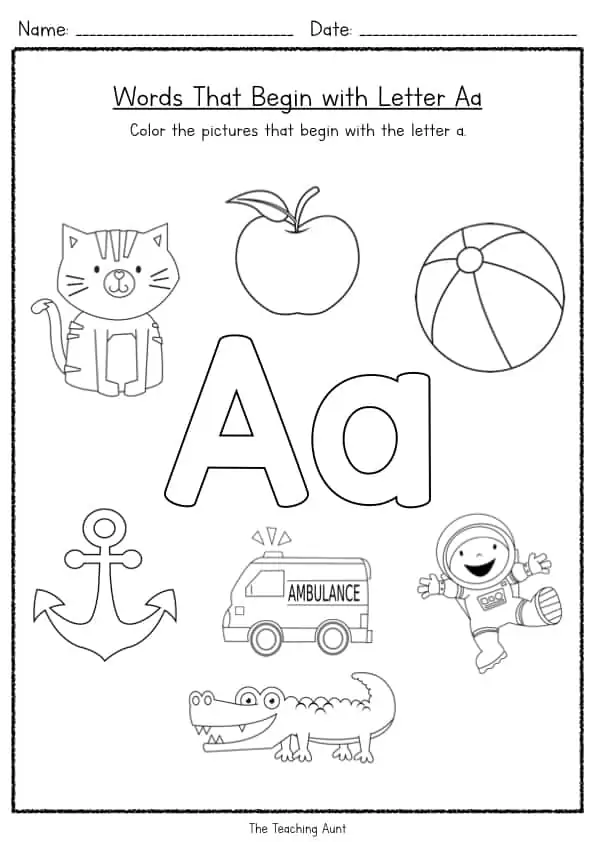
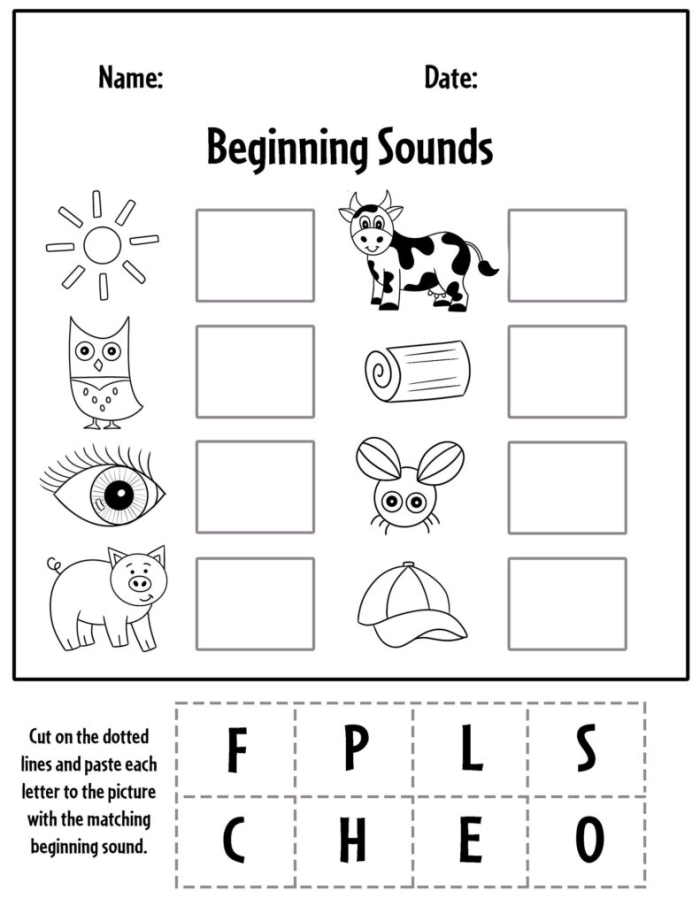
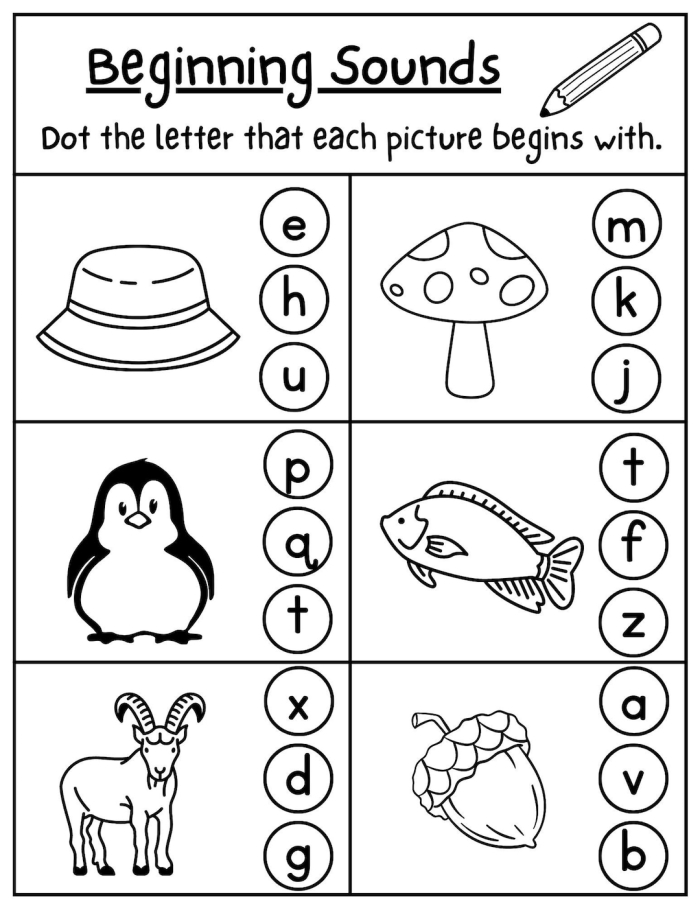
Picture-matching activities form the foundation of early literacy instruction in kindergarten classrooms. This worksheet takes that concept and anchors it specifically to beginning sound recognition, asking children to examine each picture and circle the letter that matches what they hear at the start of the word.
The mechanics are straightforward but effective. A child looks at an image, says the word aloud (or a teacher says it), then identifies which letter represents that opening sound. The visual anchor of the picture helps bridge the gap between abstract letters and concrete meaning. A picture of a cat naturally leads to the letter C, while a dog points toward D. This direct connection between image and letter sound is how phonics instruction actually sticks in young minds.
What makes this approach valuable is its simplicity. Kindergarten students are still building foundational skills, and worksheets like this isolate one specific task without overwhelming them. Unlike more complex grammar activities that might appear in later grades, beginning sound work stays focused on auditory discrimination and letter recognition. The repetition across multiple pictures reinforces the pattern: look, listen, identify, circle.
Teachers often pair these worksheets with letter formation practice and broader phonics lessons. While students work through letter sounds, they’re simultaneously building the muscle memory needed for writing. This type of focused practice complements other learning approaches, whether you’re working with word families and deconstruction techniques in later grades or establishing basic spelling foundations.
The history of phonics instruction shows that explicit letter-sound correspondence remains one of the most reliable pathways to reading fluency. Beginning sound worksheets represent that time-tested principle in its most accessible form for the youngest learners.
Boost Skills with These Worksheets