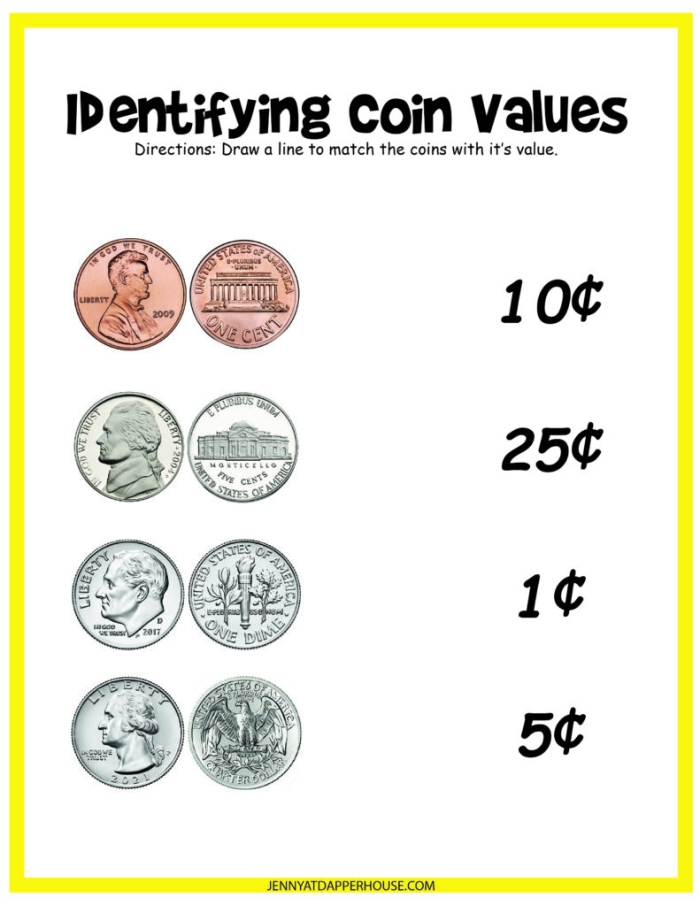
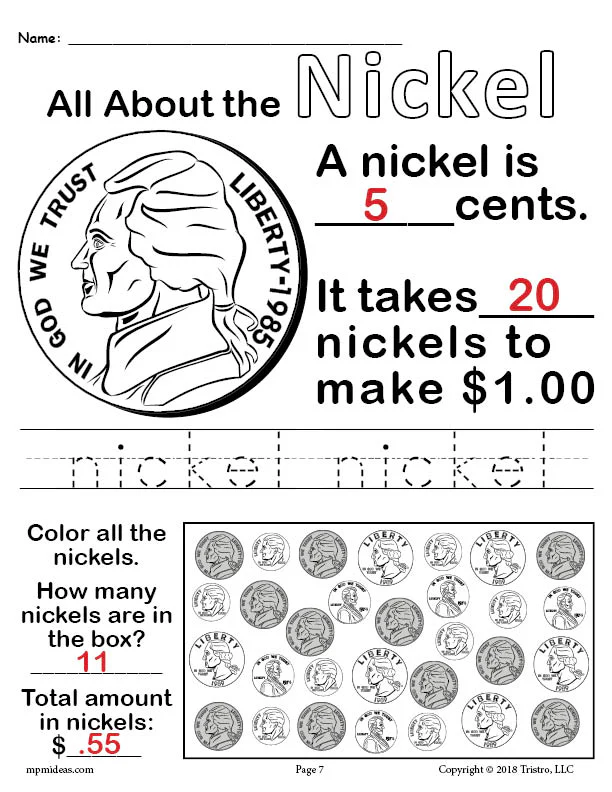
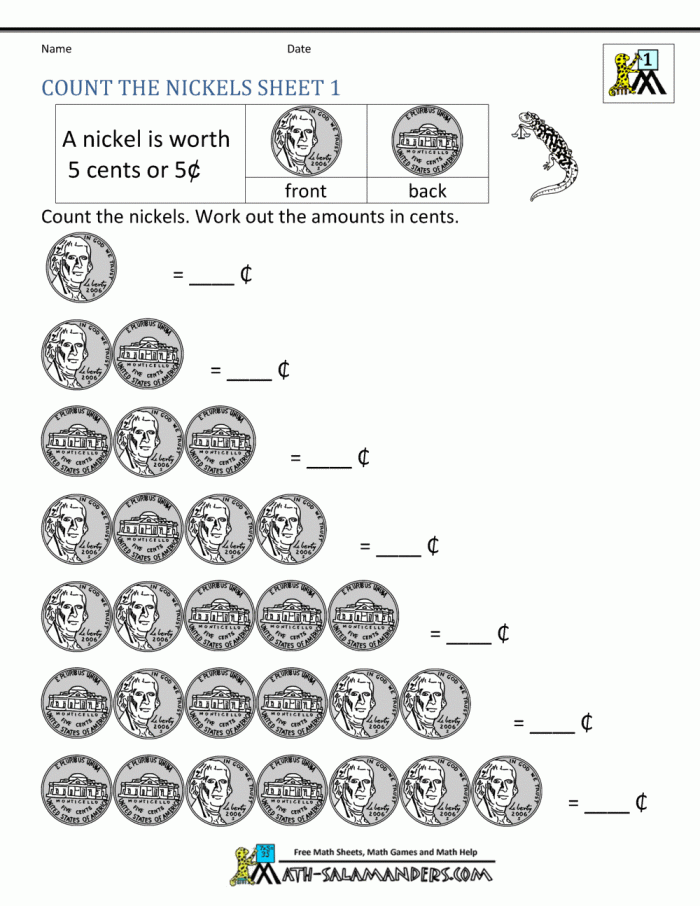
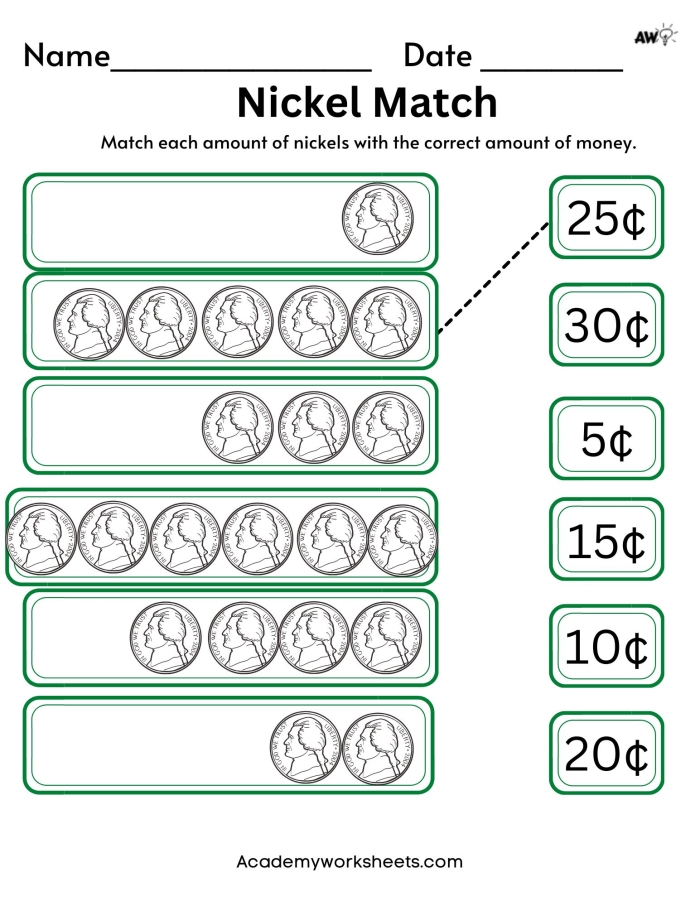
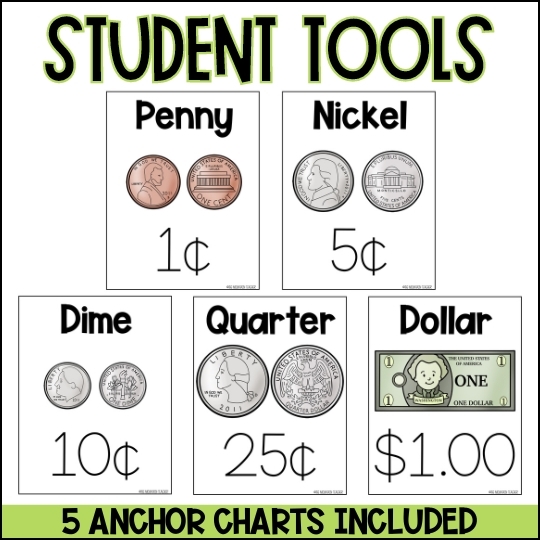
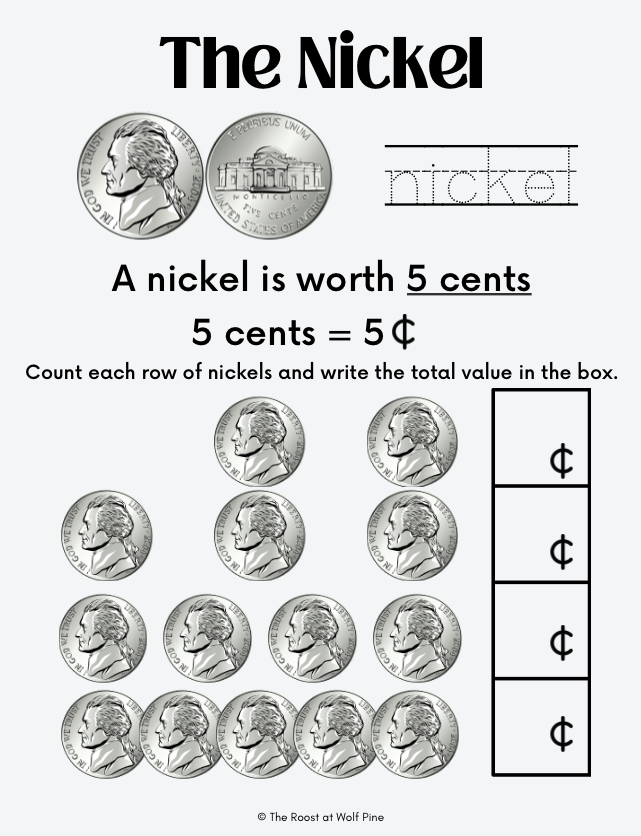
Which coin is worth five cents? The nickel, of course! This small, silvery piece of American currency often gets overlooked by young learners, but it plays an important role in understanding how money works. Teaching kindergarten students about the nickel opens doors to broader lessons in Time and Money, helping them recognize different coins and their values.
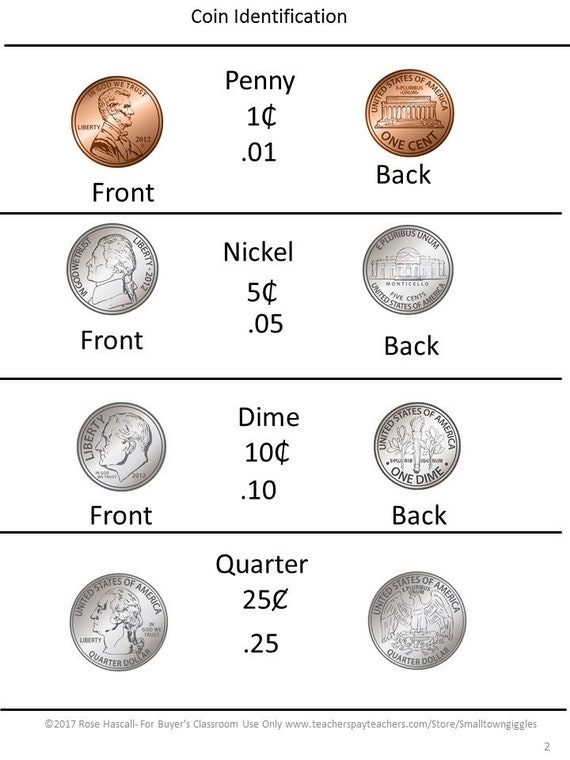
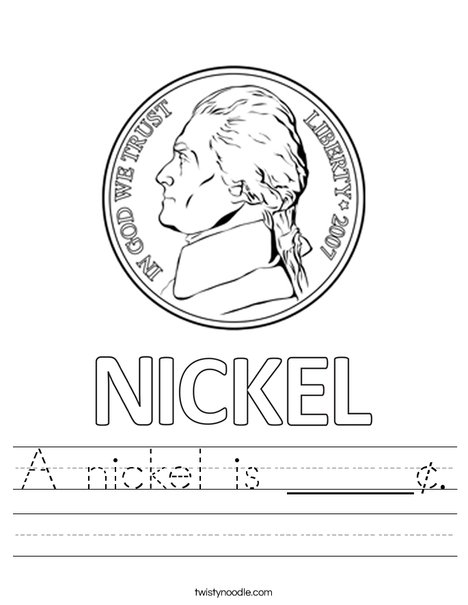
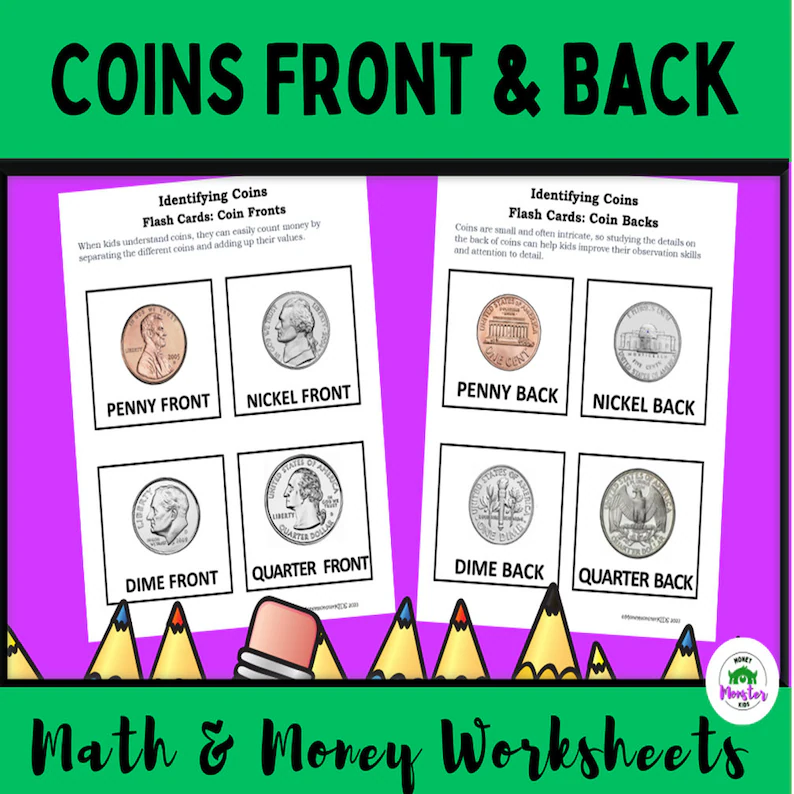
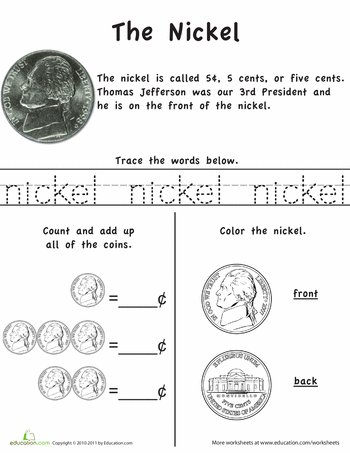
The nickel has a distinctive appearance that makes it easier for children to identify compared to other coins. It’s larger than a dime but smaller than a quarter, and features Thomas Jefferson’s profile on one side. The reverse side shows Monticello, Jefferson’s historic home. These visual details give kids something concrete to remember when learning coin recognition.
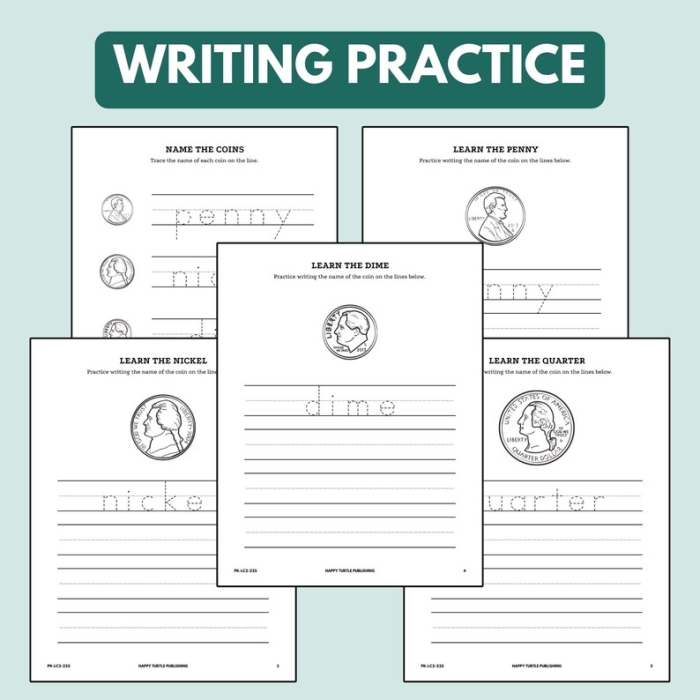
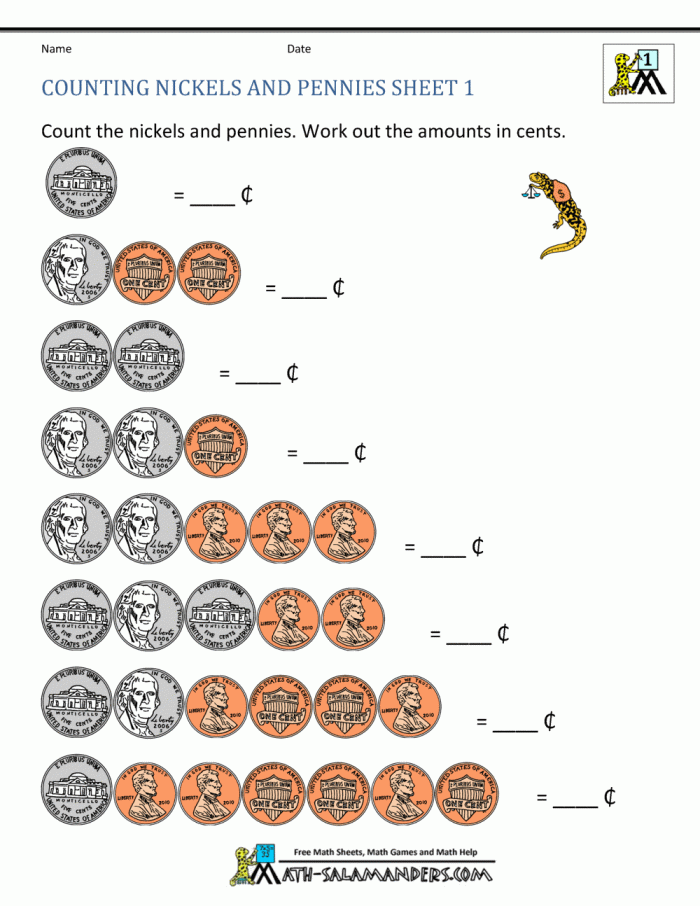
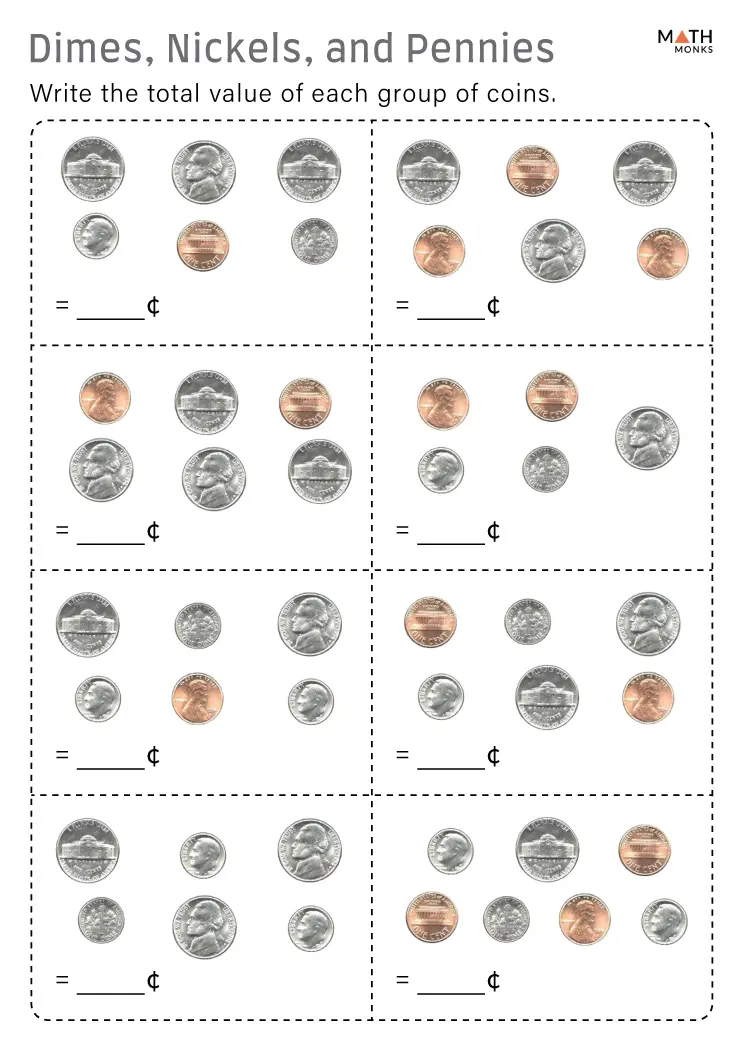
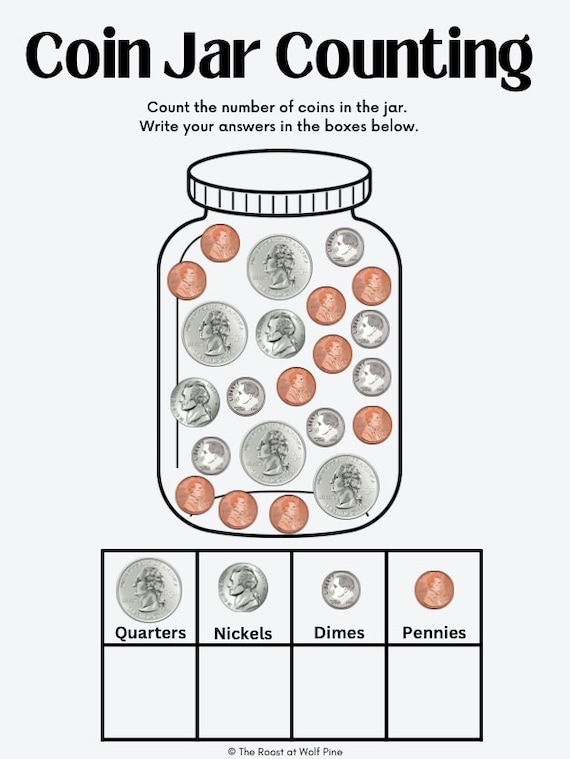
For kindergarten learners, hands-on activities work best. Rather than simply telling children that a nickel equals five cents, let them hold real nickels, count them, and practice combining them with other coins. Activity-filled worksheets can reinforce this learning through engaging exercises. You might pair nickel lessons with other foundational skills, like using tracing numbers and counting activities to help children write out the number five.
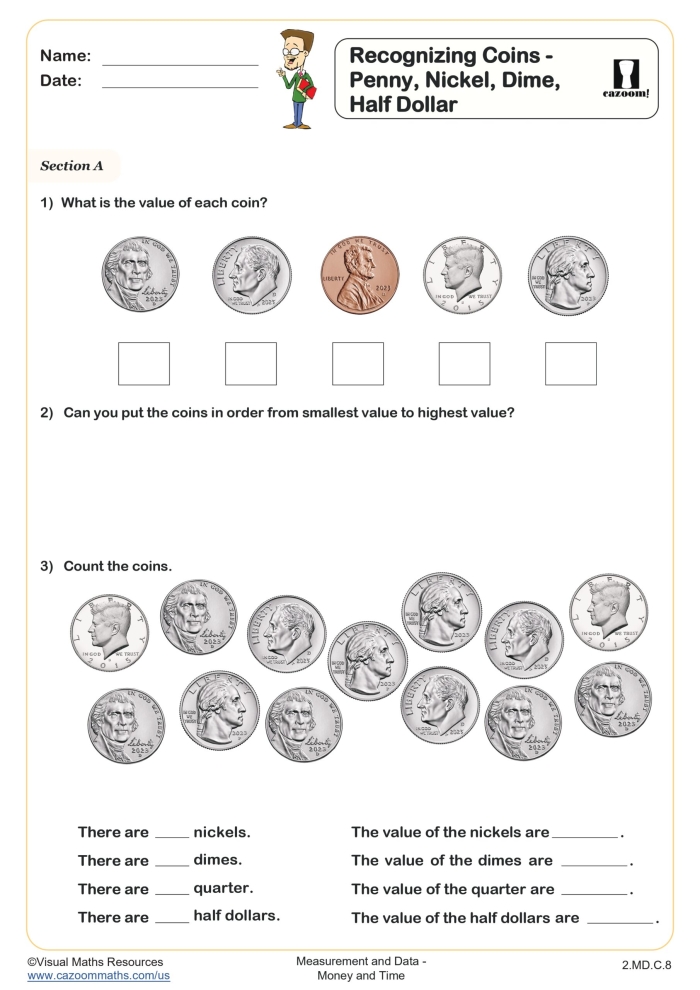
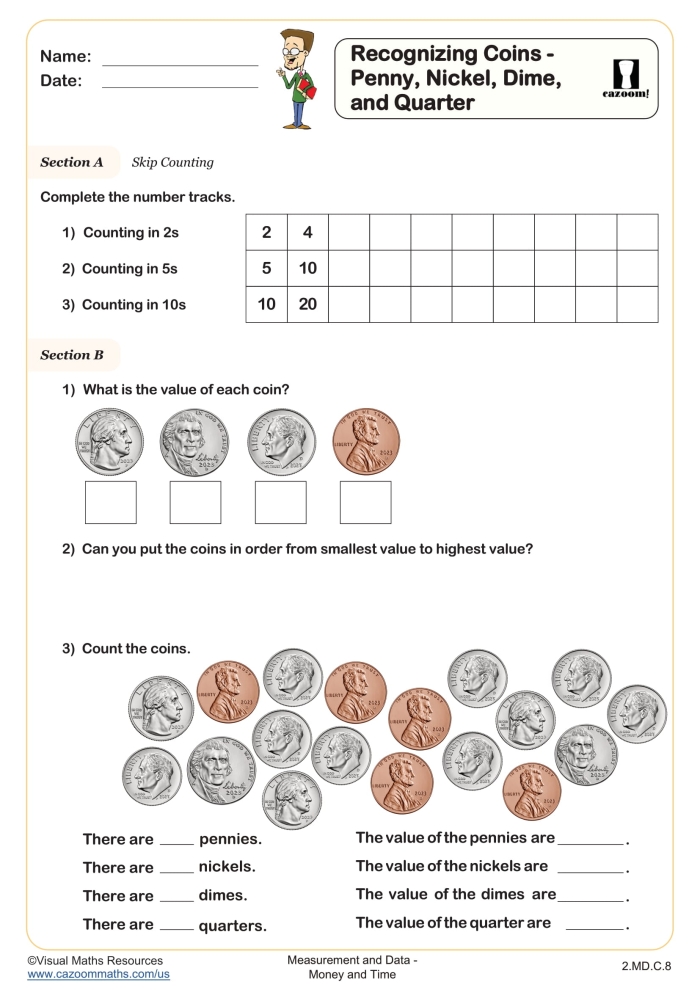
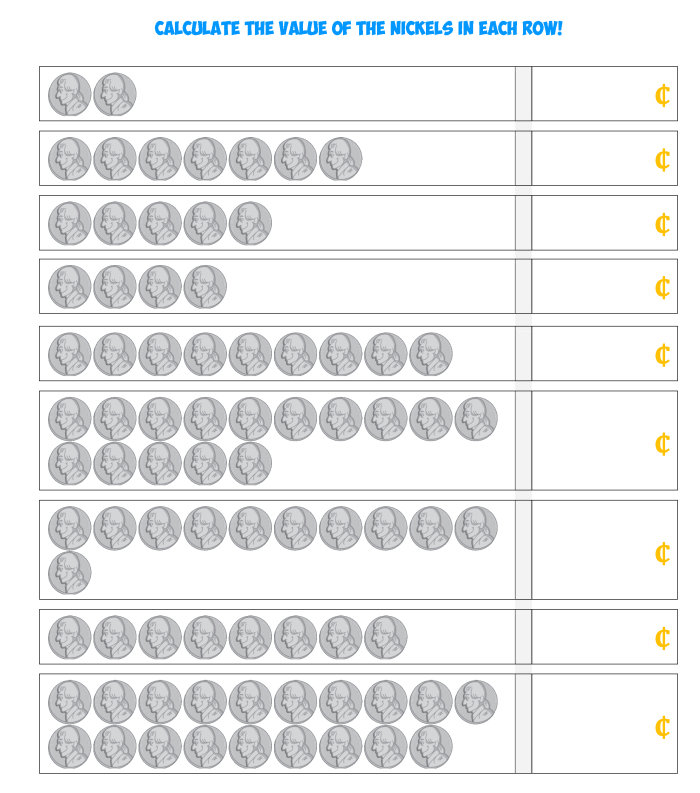
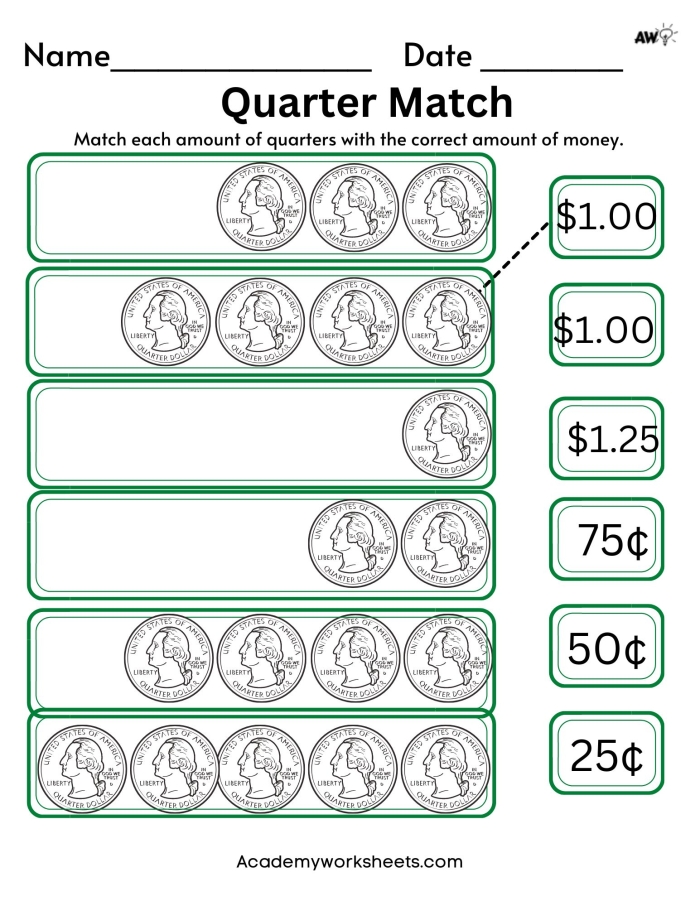
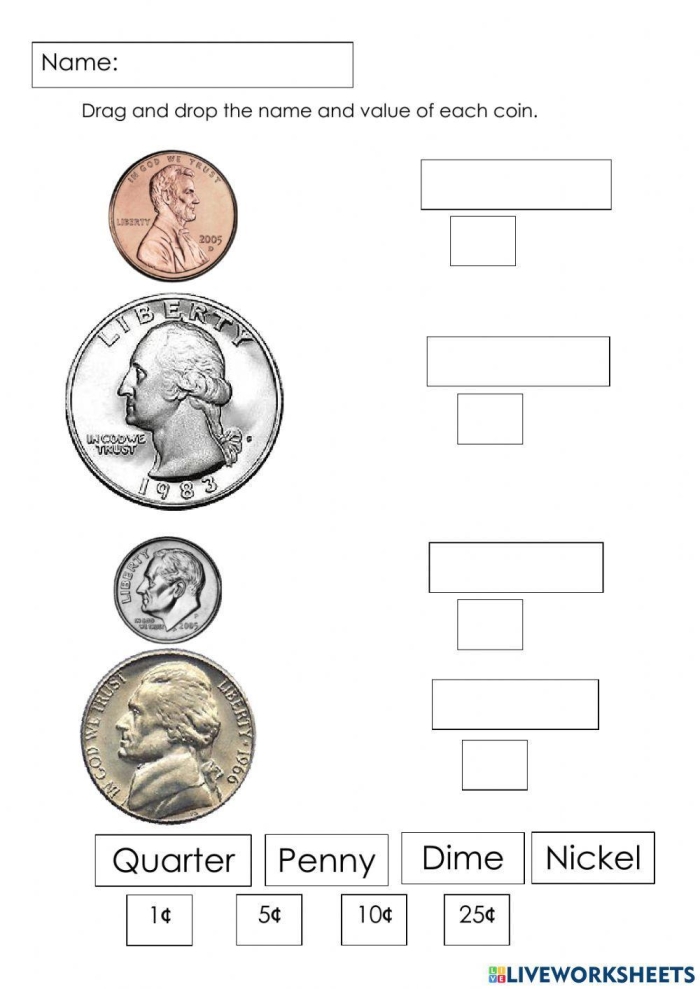
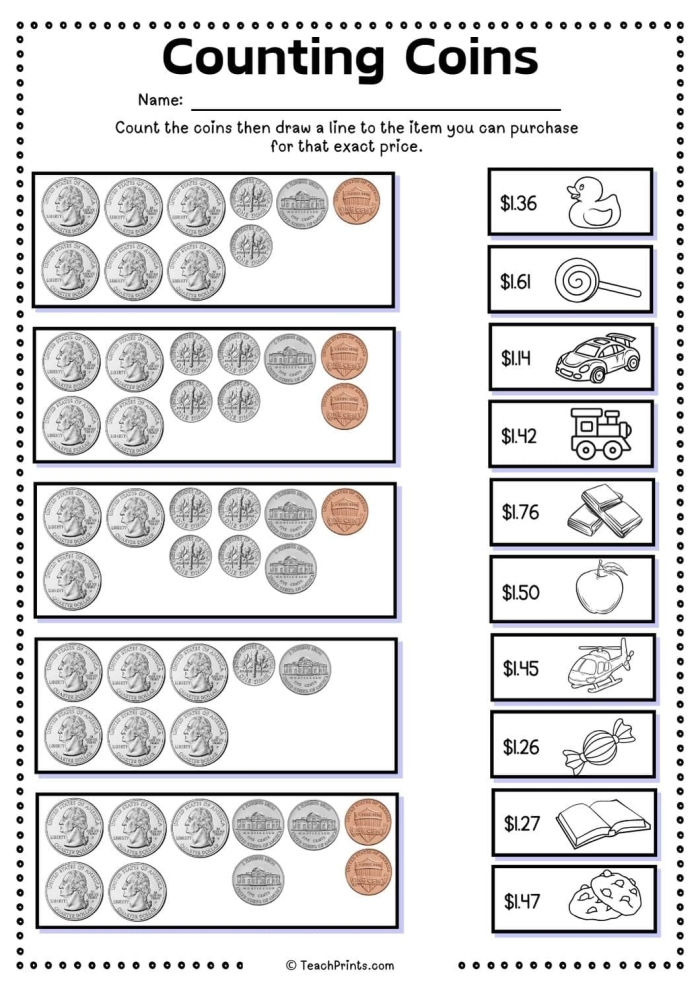
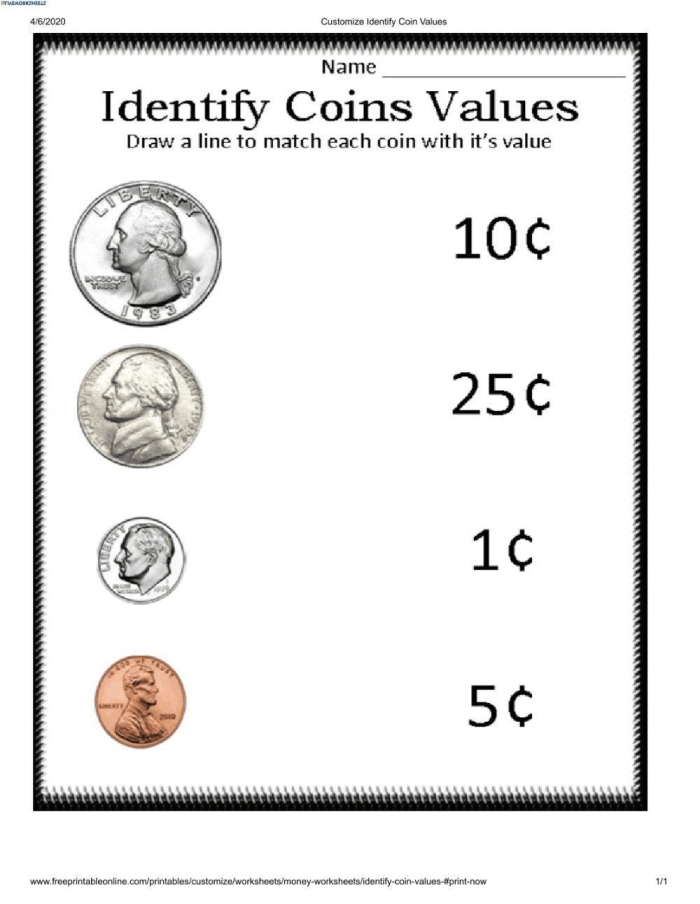
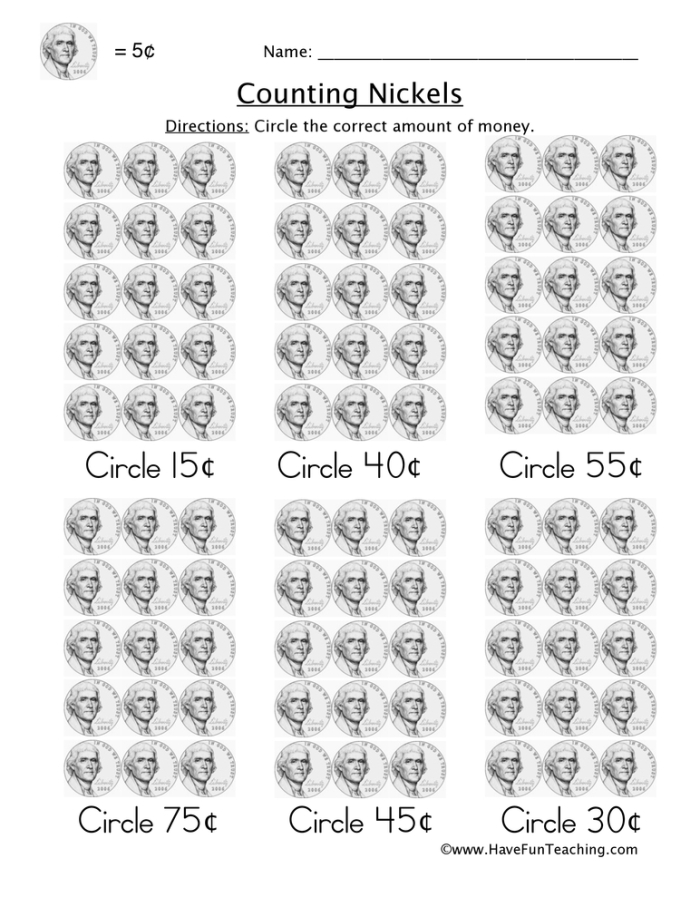
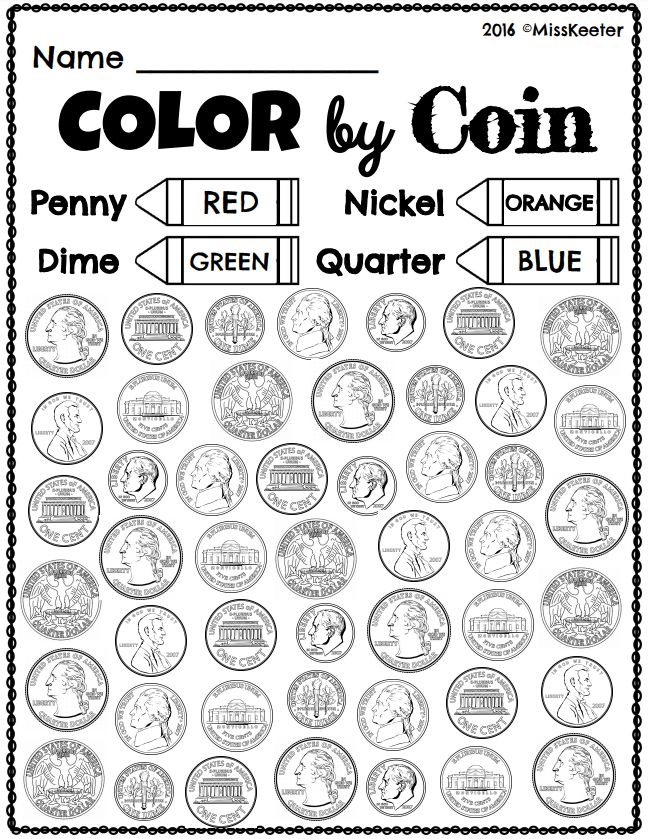
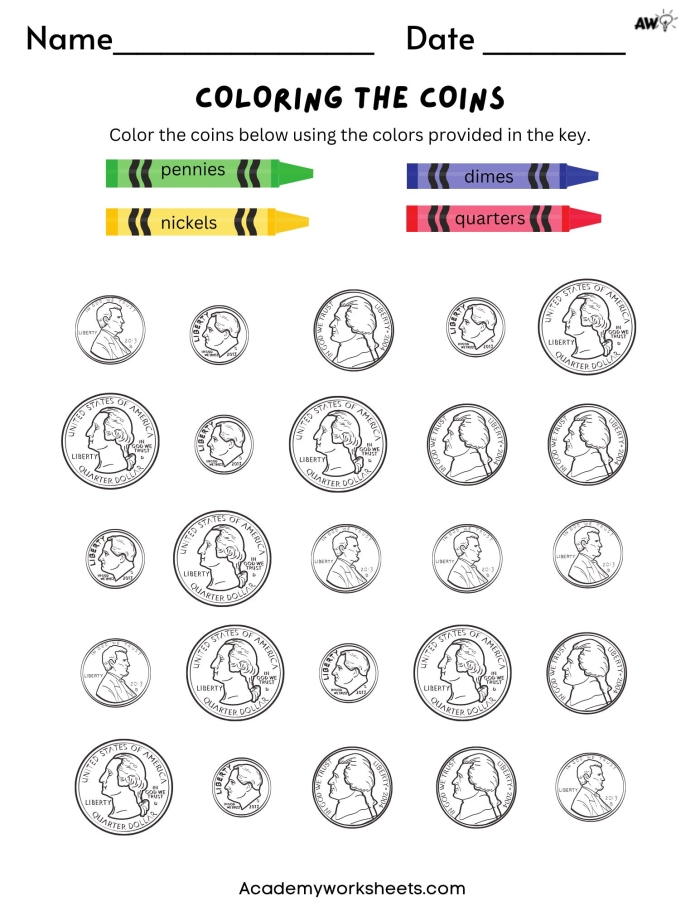
Worksheets that incorporate visual elements work particularly well at this age. Children can color nickels, match them to their values, or solve simple word problems involving five-cent pieces. Some teachers combine money lessons with seasonal activities, such as themed picture addition exercises, to maintain engagement throughout the year.
The key to teaching coins successfully is repetition and variety. Rotate between different learning methods, mixing worksheet practice with real-world scenarios where children see coins being used. This approach builds confidence and makes the concept of money feel natural and relevant to their everyday lives.
Worksheet Practice Section