Mastering algebra can seem challenging, but two fundamental concepts pave the way for success: the order of operations and combining like terms. Understanding these principles is essential for any sixth grader navigating the world of algebraic expressions.
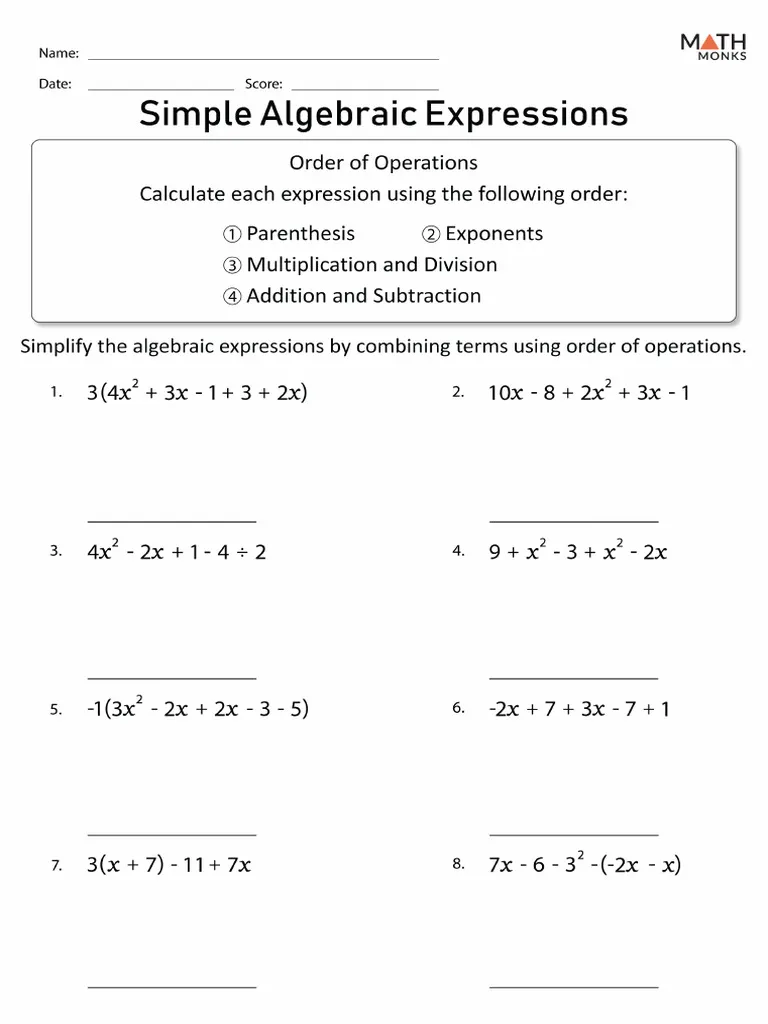
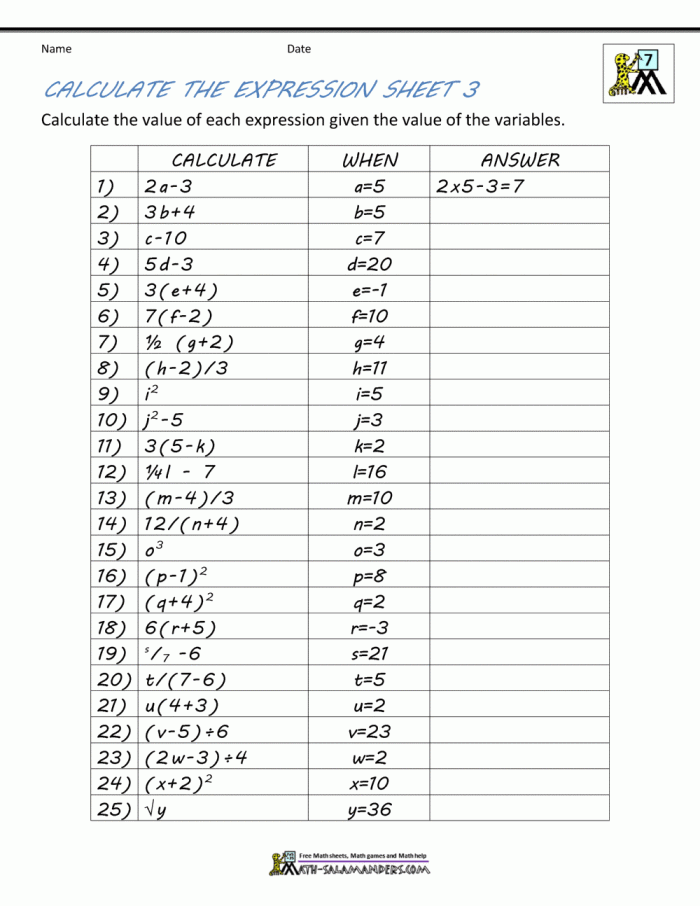
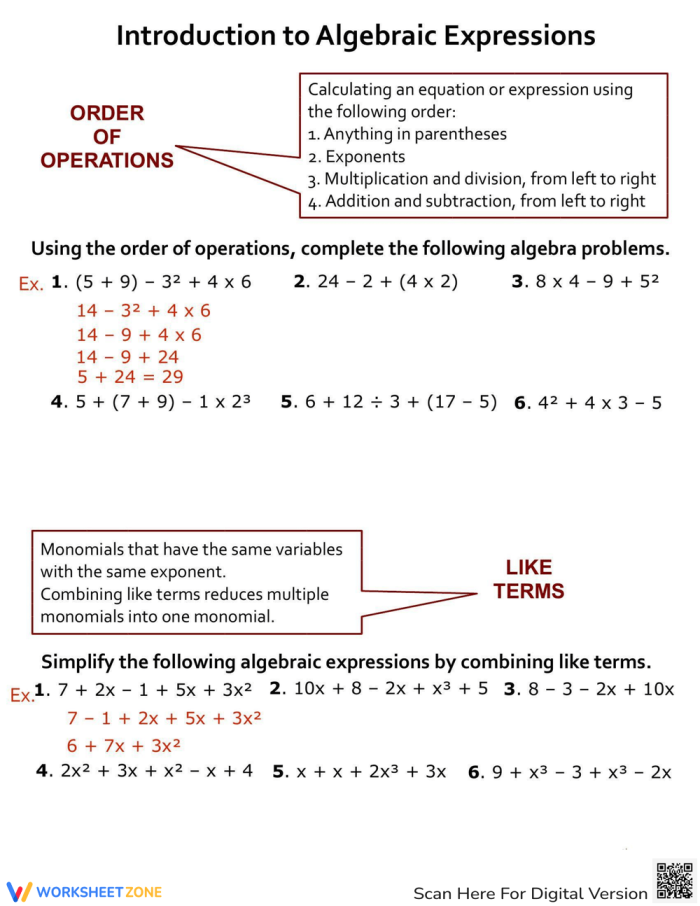
The order of operations is a critical guideline that dictates the sequence in which mathematical operations should be performed. Often remembered by the acronym PEMDAS (Parentheses, Exponents, Multiplication and Division, Addition and Subtraction), this rule ensures that calculations are consistent and accurate. For example, in the expression 3 + 6 × (5 + 4), students must first solve the parentheses, then perform multiplication before addition, leading to the correct answer of 57 rather than 27.
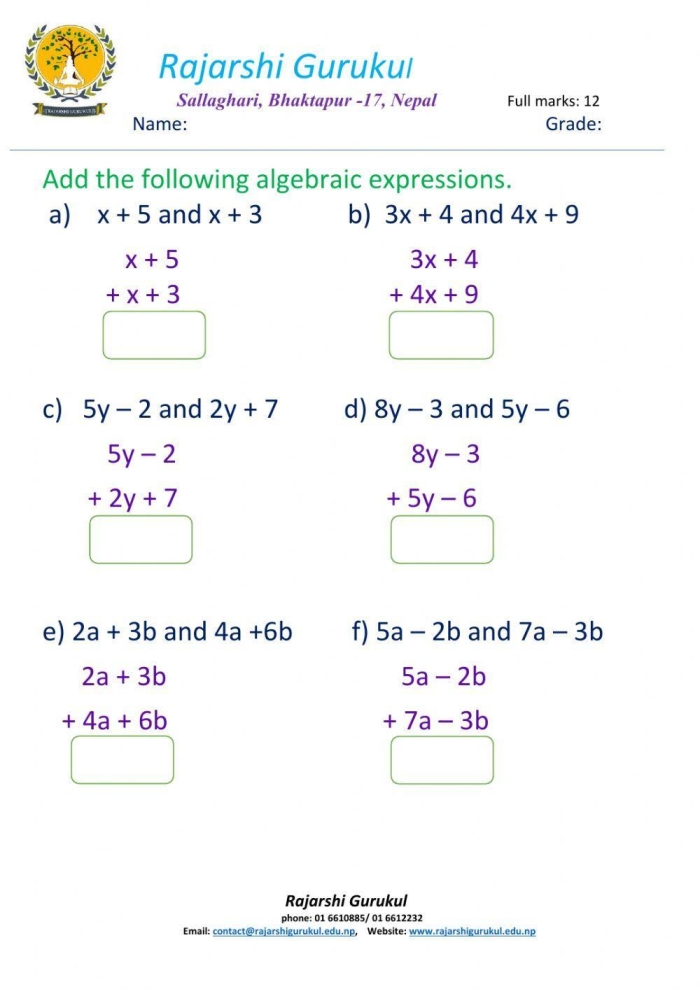
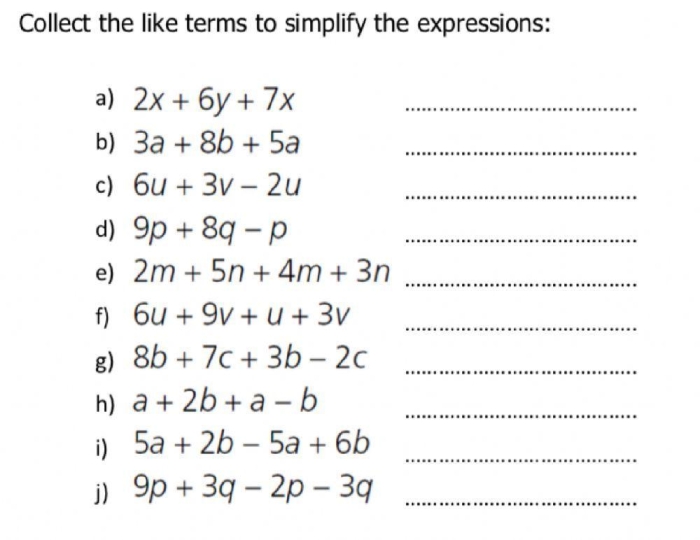
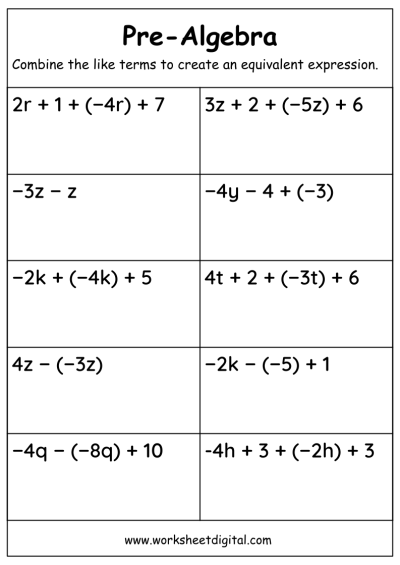
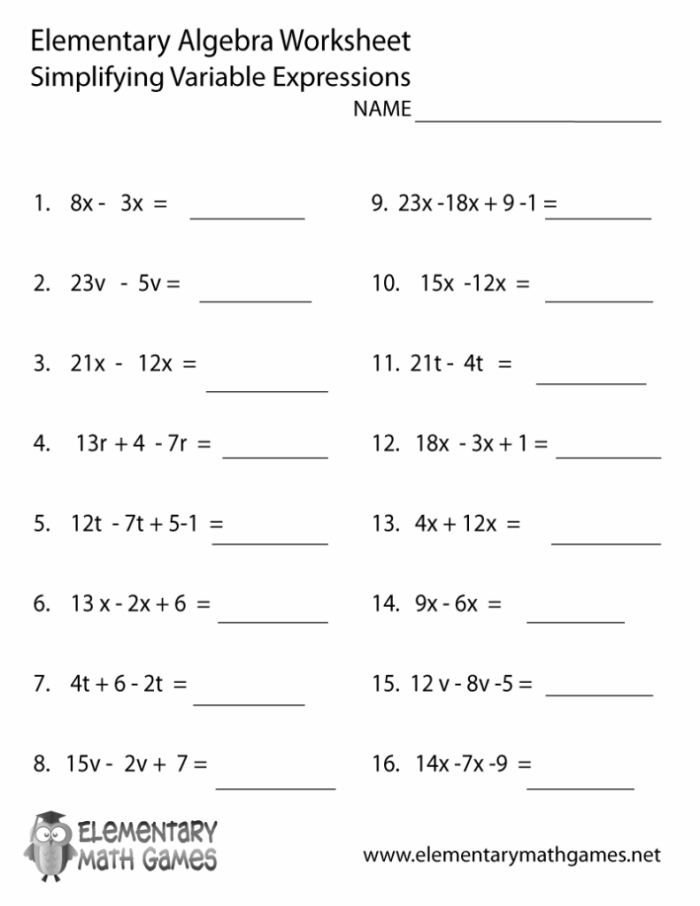
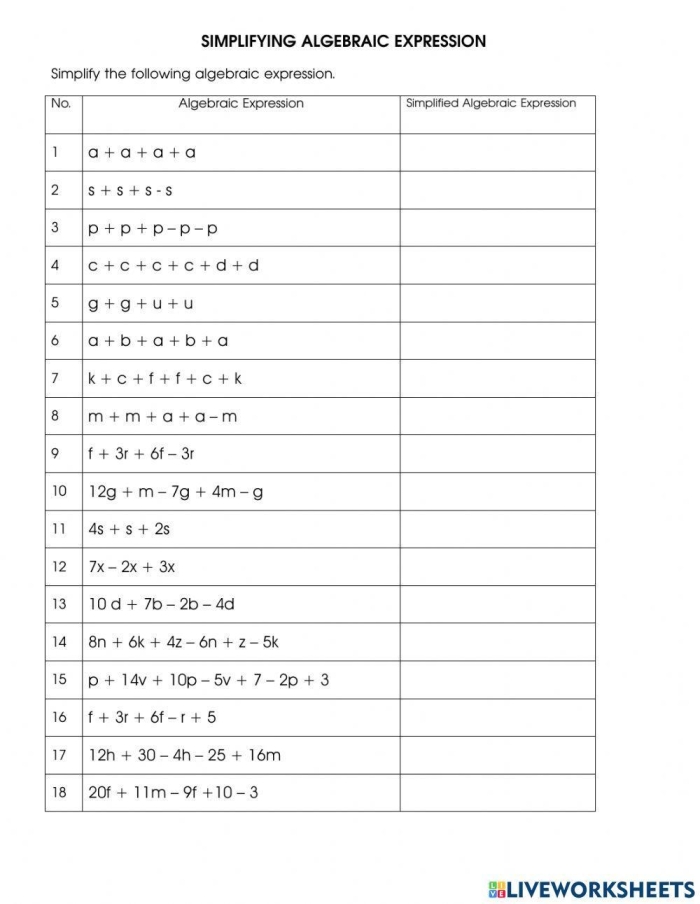
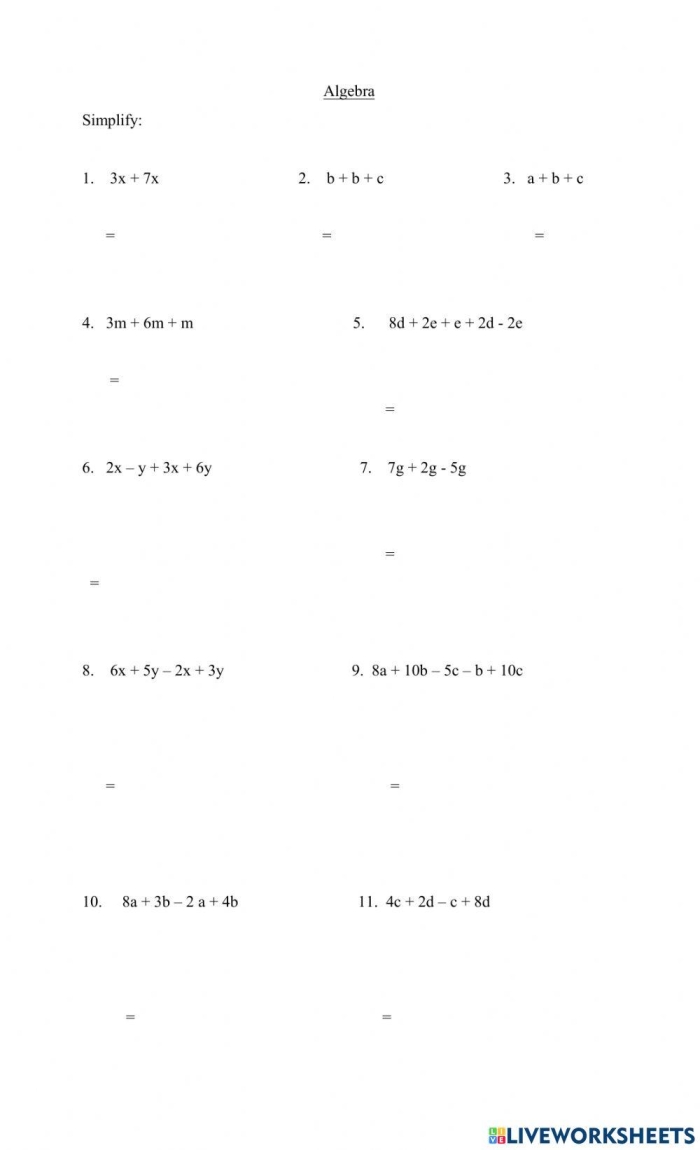
Equally important is the skill of combining like terms. This involves identifying and grouping terms that have the same variable raised to the same power. For instance, in the expression 2x + 3x + 5, the like terms 2x and 3x can be combined to simplify the expression to 5x + 5. This simplification not only makes calculations easier but also lays the groundwork for solving more complex equations.
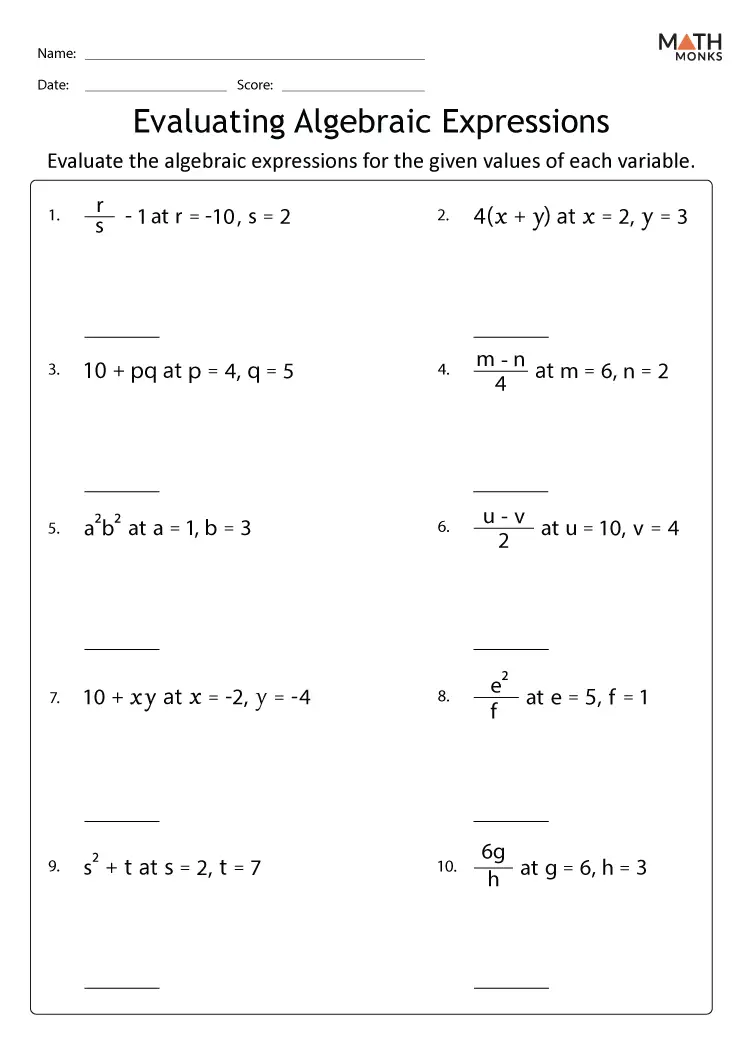
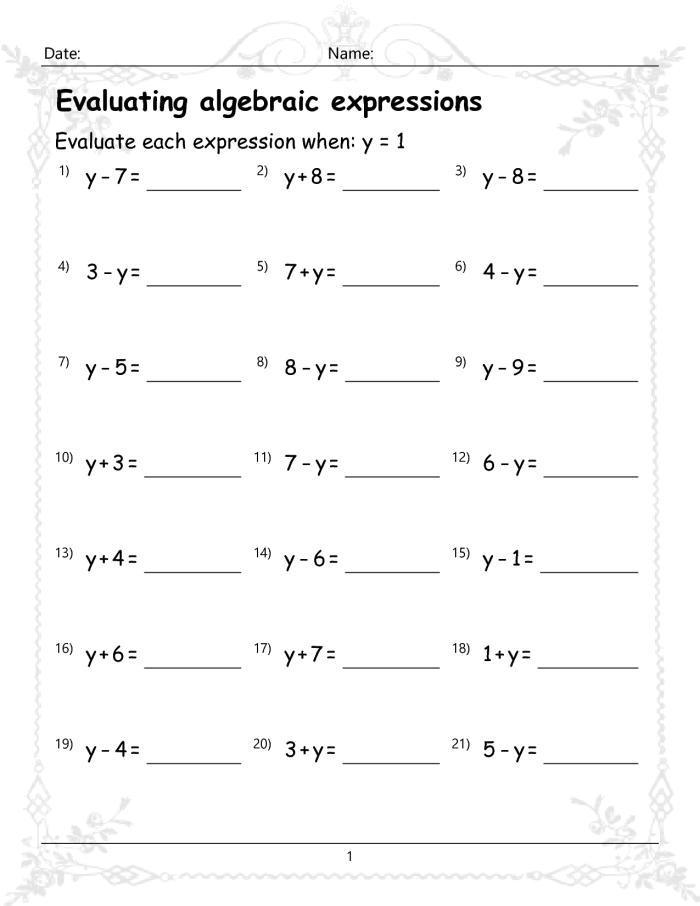
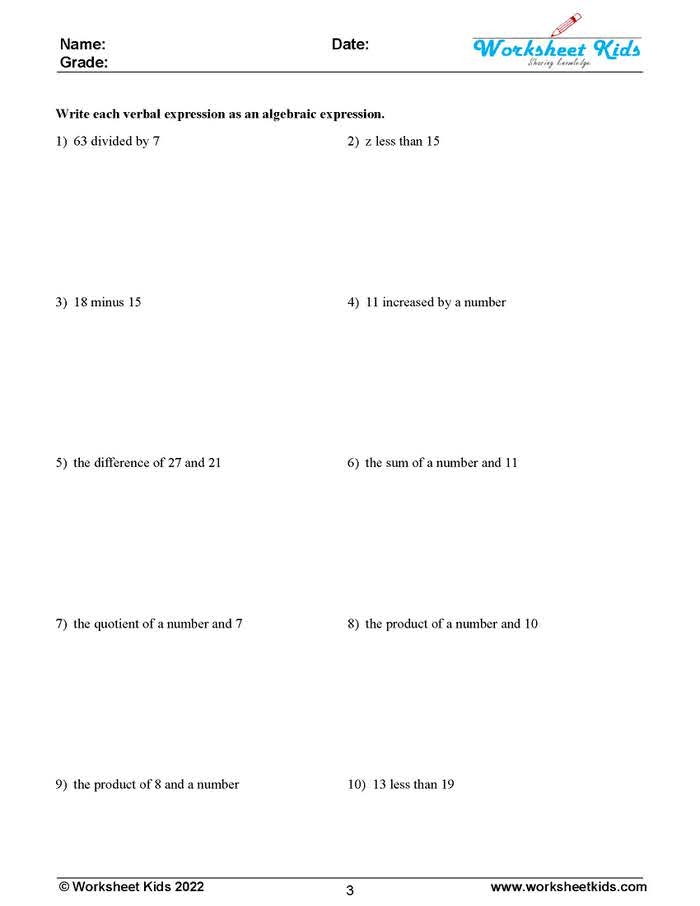
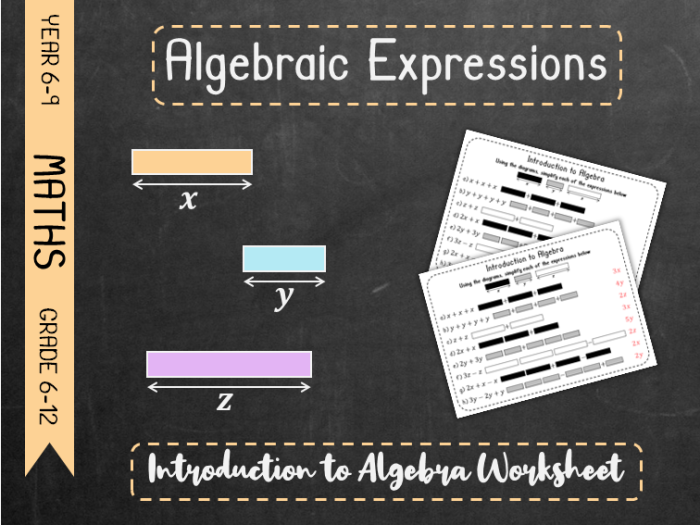
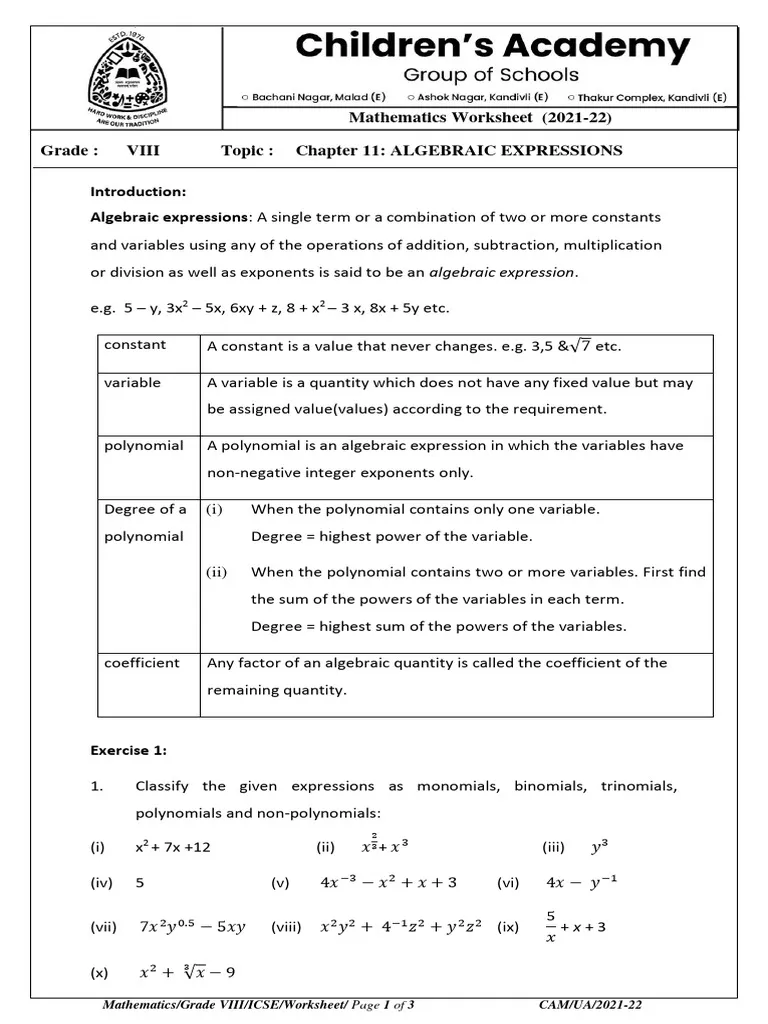
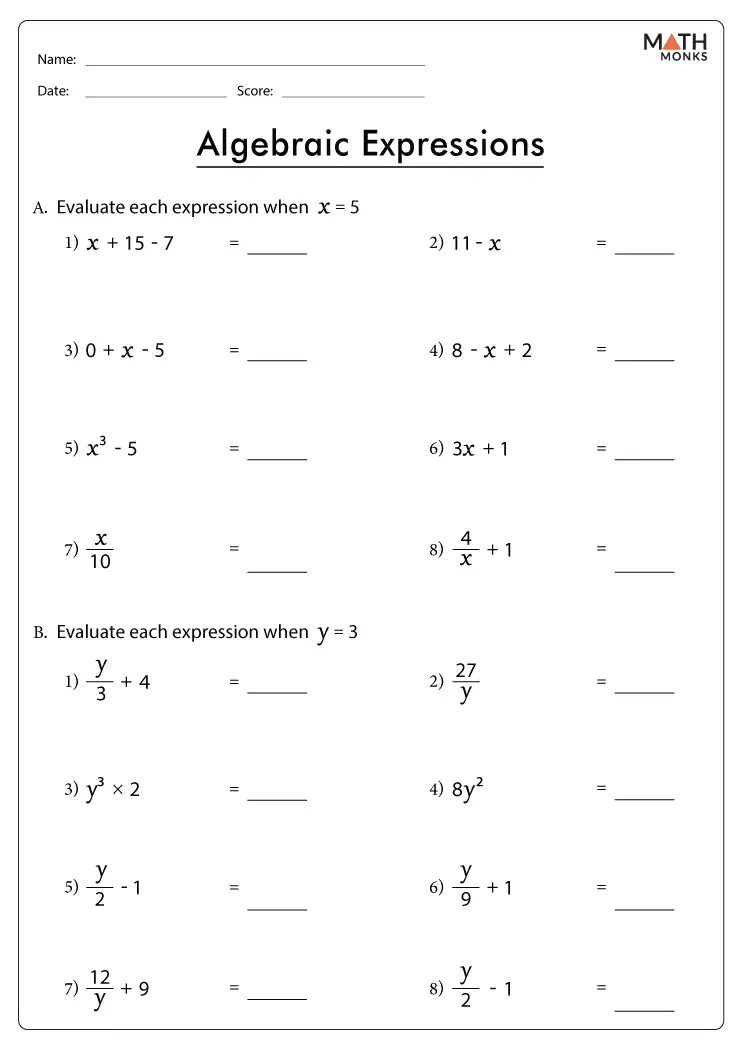
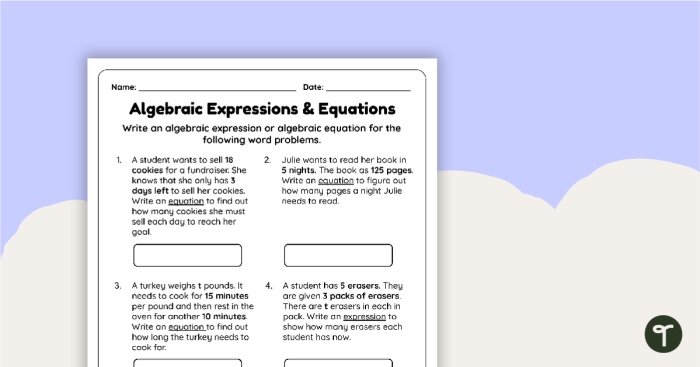
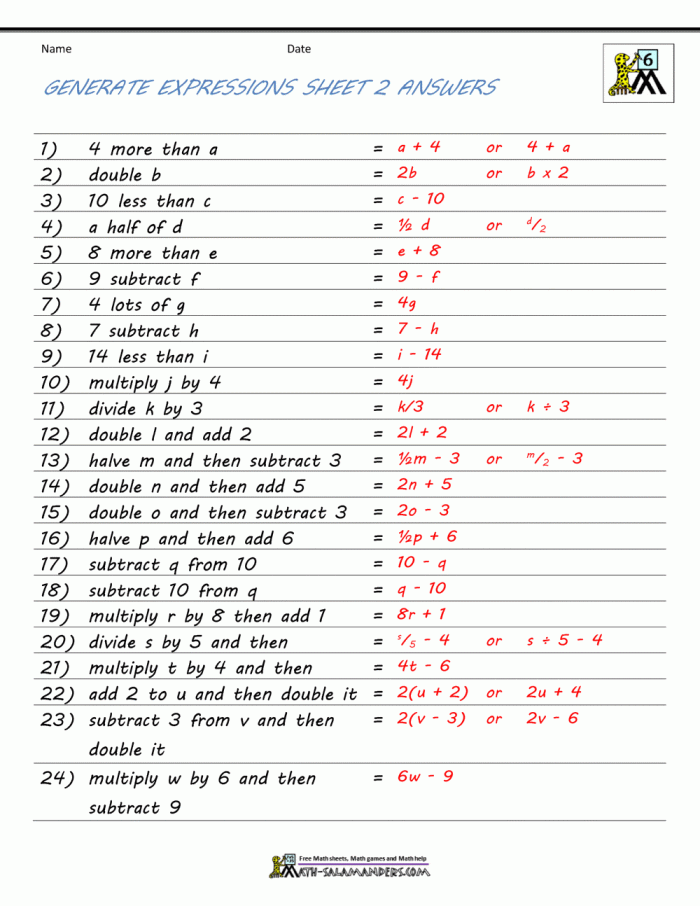
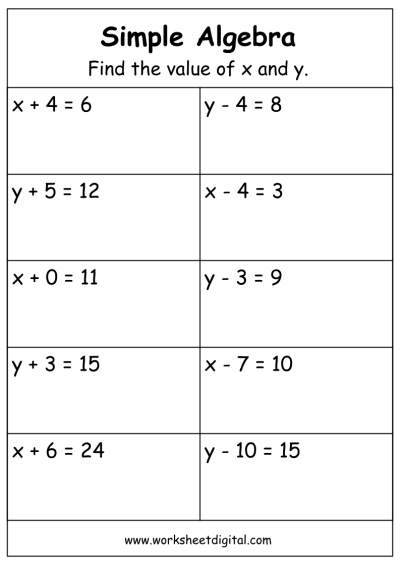
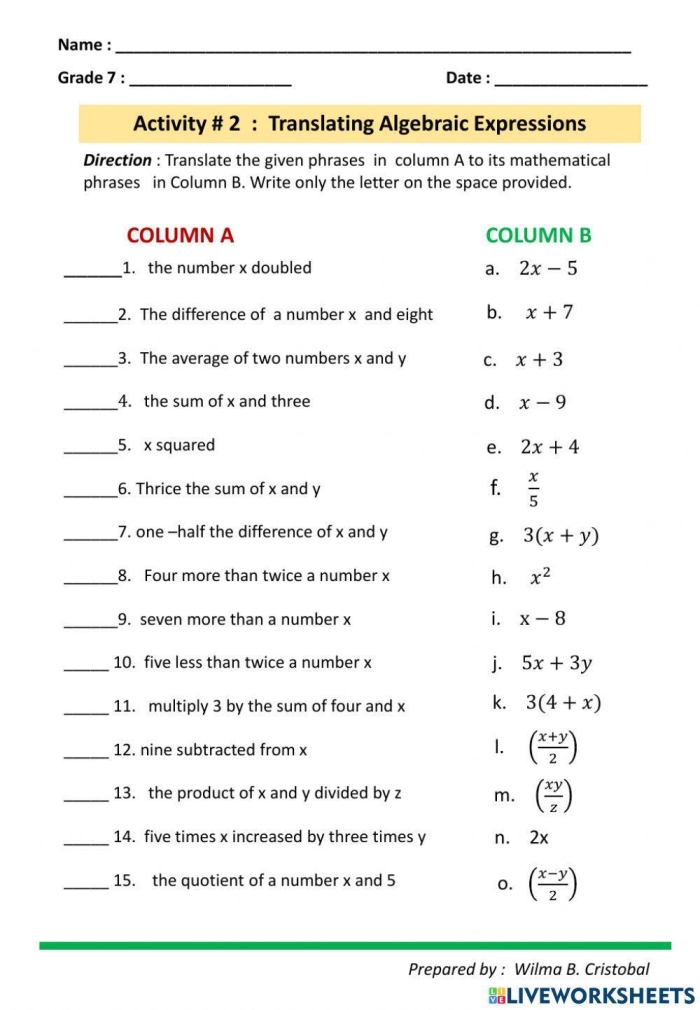
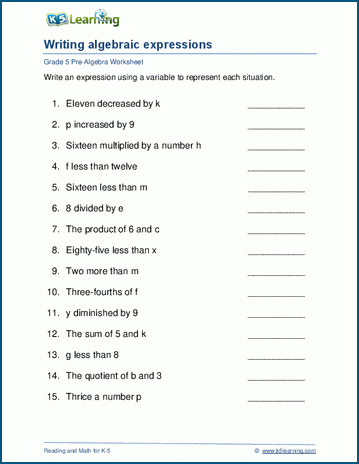
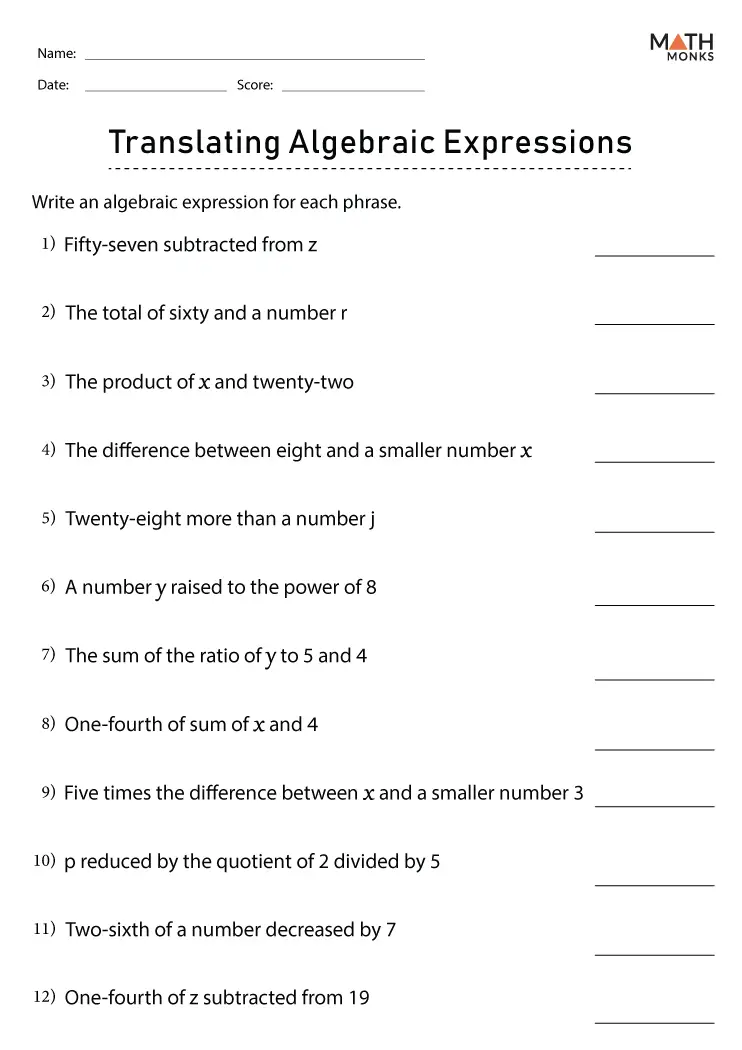
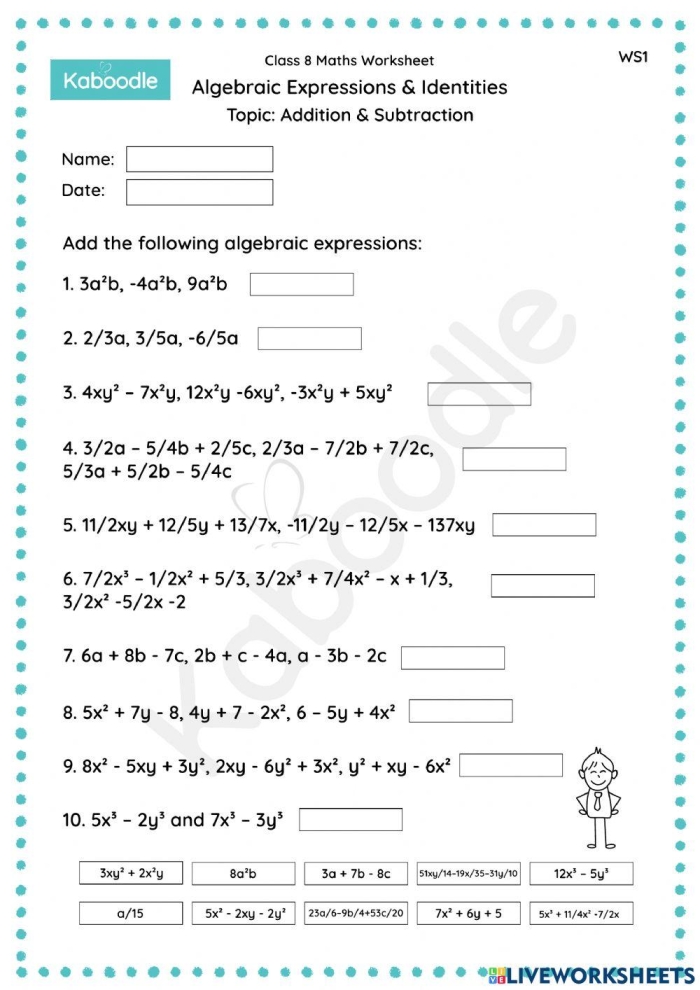
These concepts are not just theoretical; they have practical applications in various subjects. For example, students can see how to write algebraic expressions based on real-life scenarios, such as calculating ratios from word problems or understanding surface area in geometry. For those looking to reinforce their skills, practice sheets can provide valuable exercises. The Printable Introduction to Algebraic Expressions Worksheets are an excellent resource for sixth graders to practice these essential skills.
By focusing on the order of operations and combining like terms, students can build a solid foundation in algebra. These skills will not only aid them in math but also enhance their problem-solving abilities in everyday situations.
Download These Worksheets for Practice