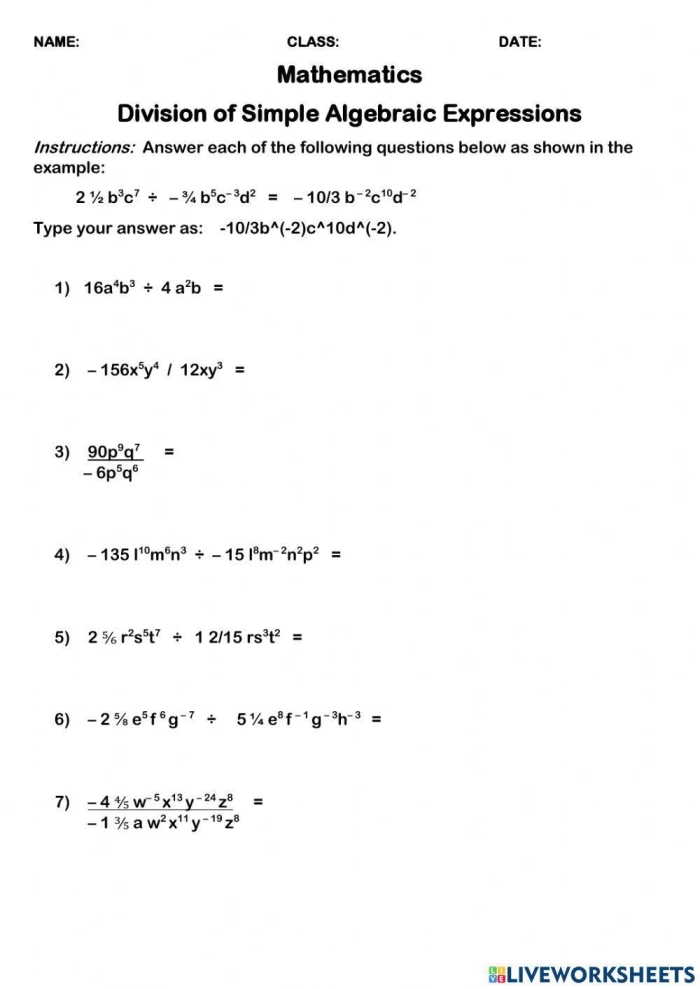
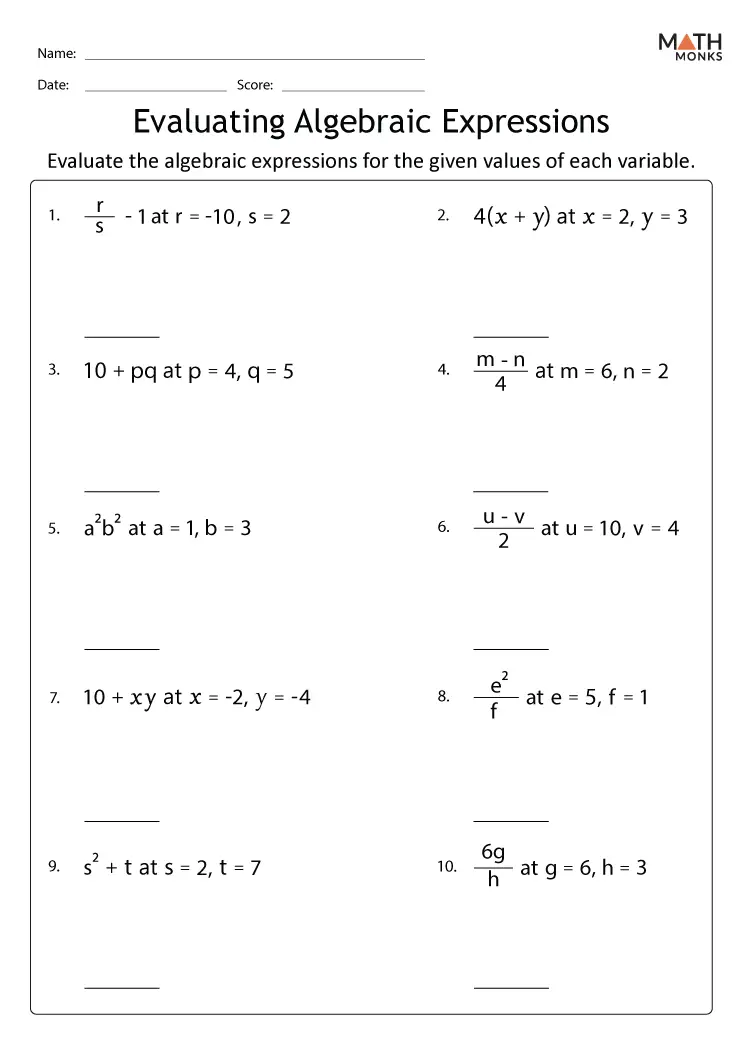
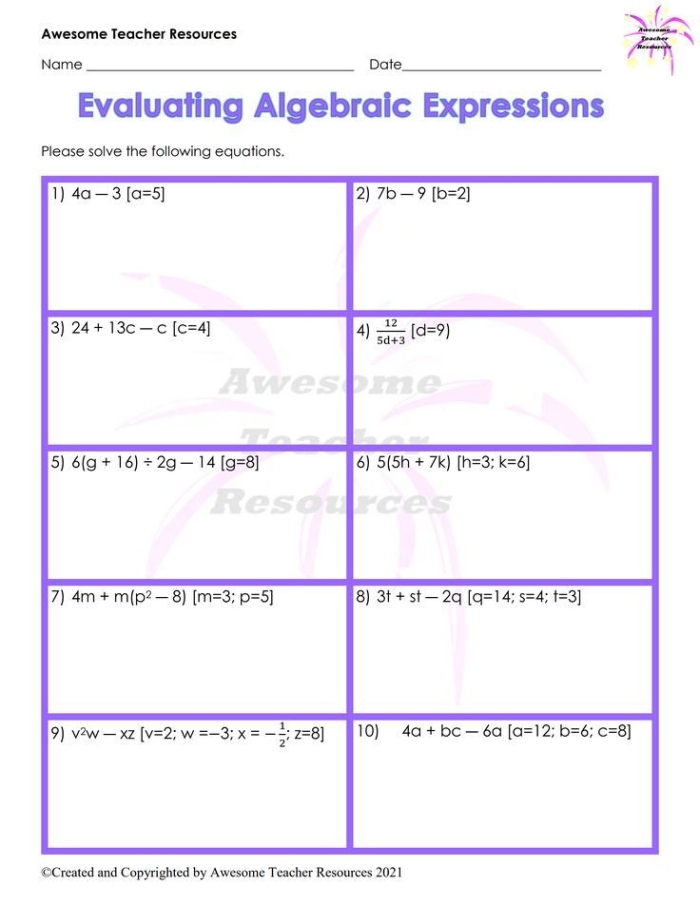
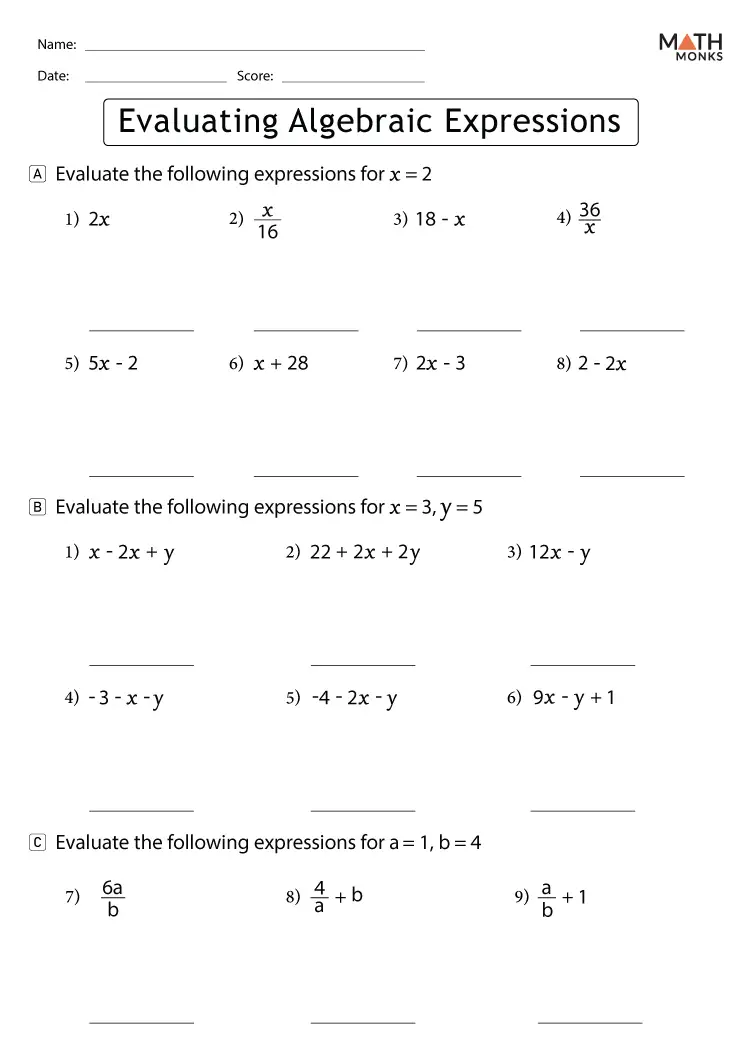
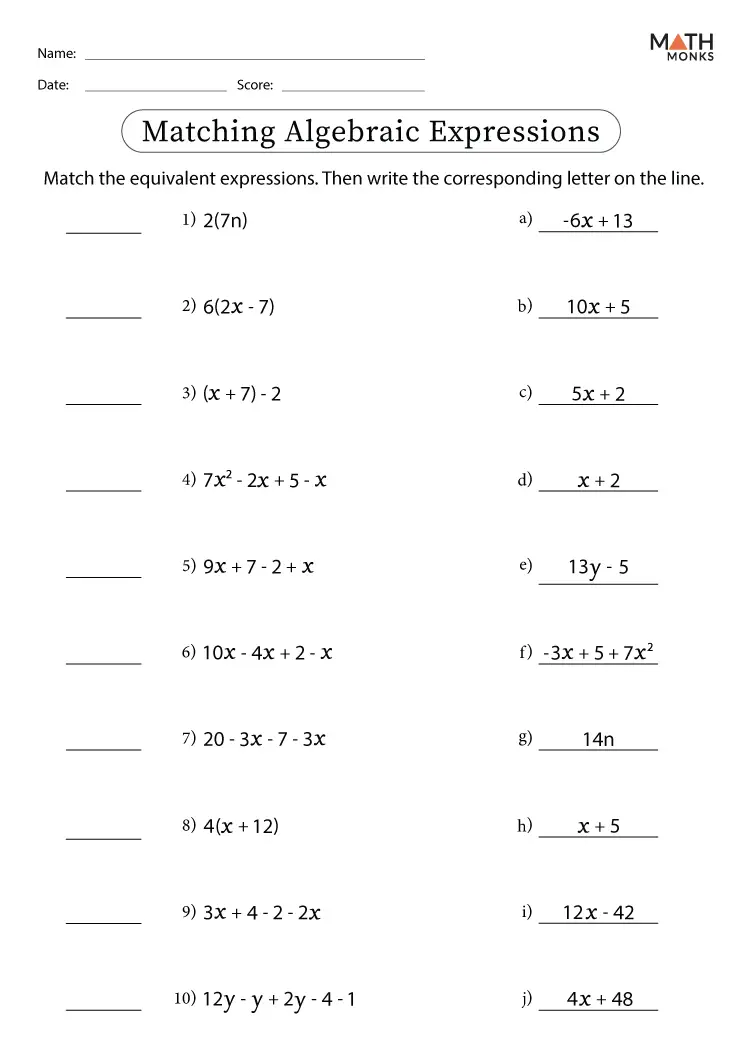
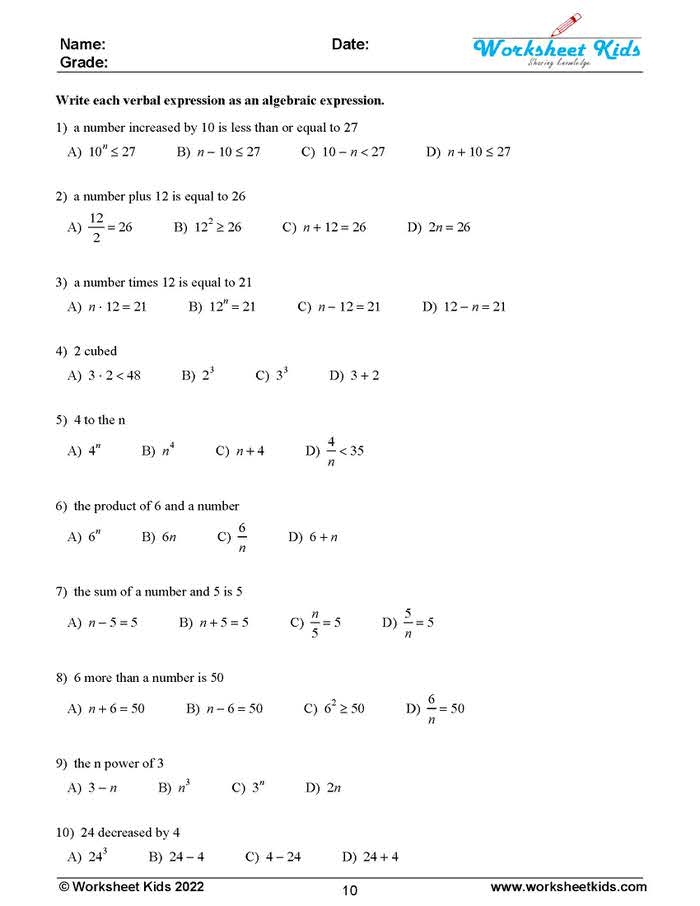
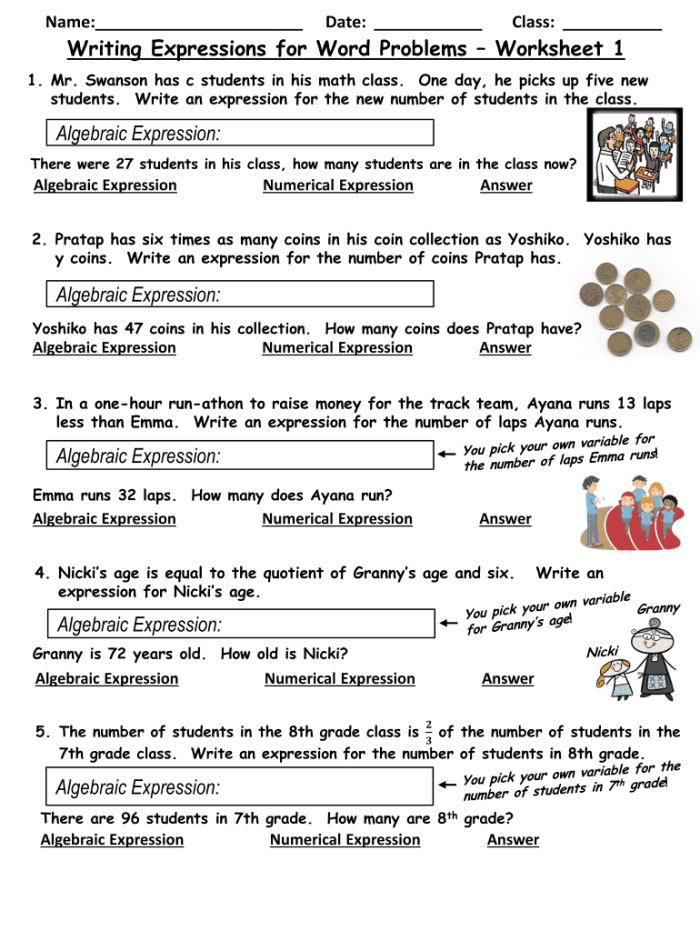
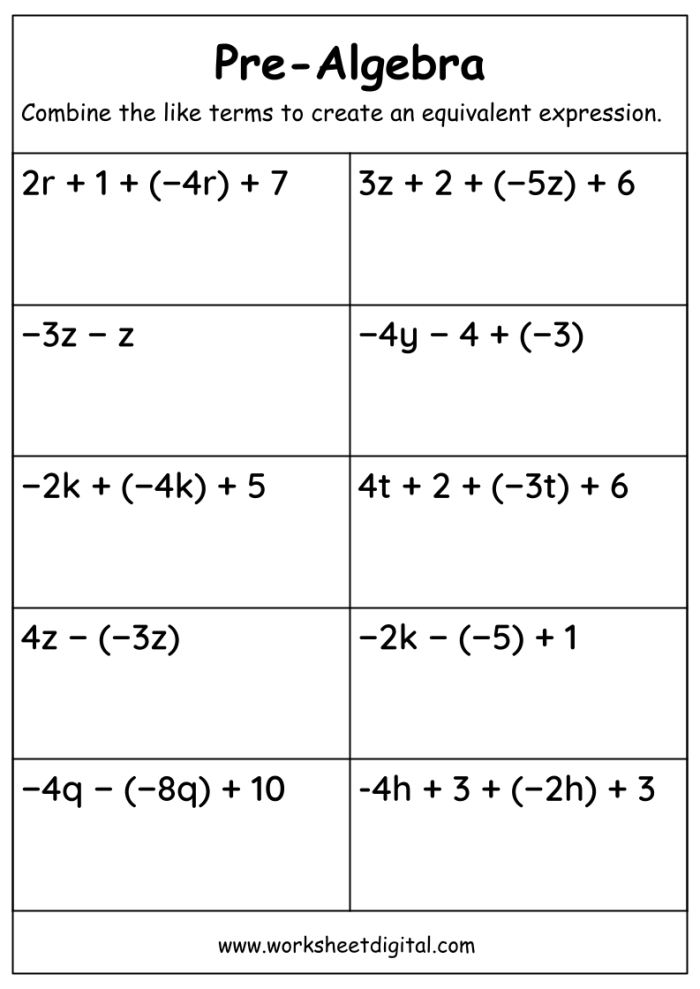
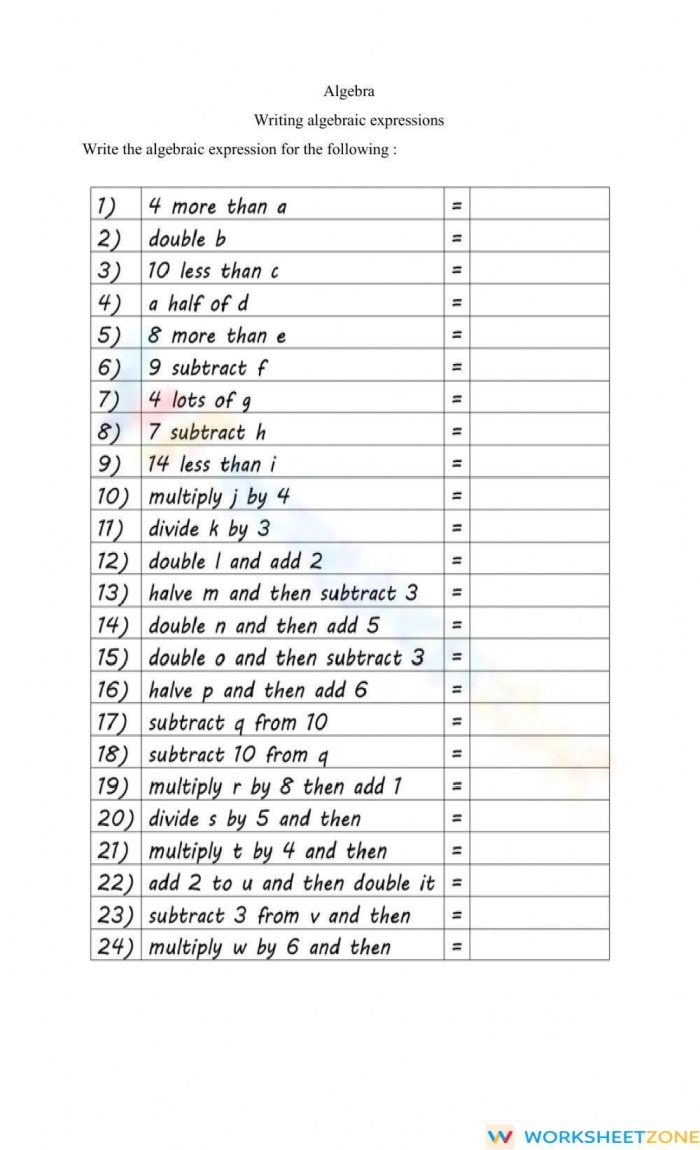
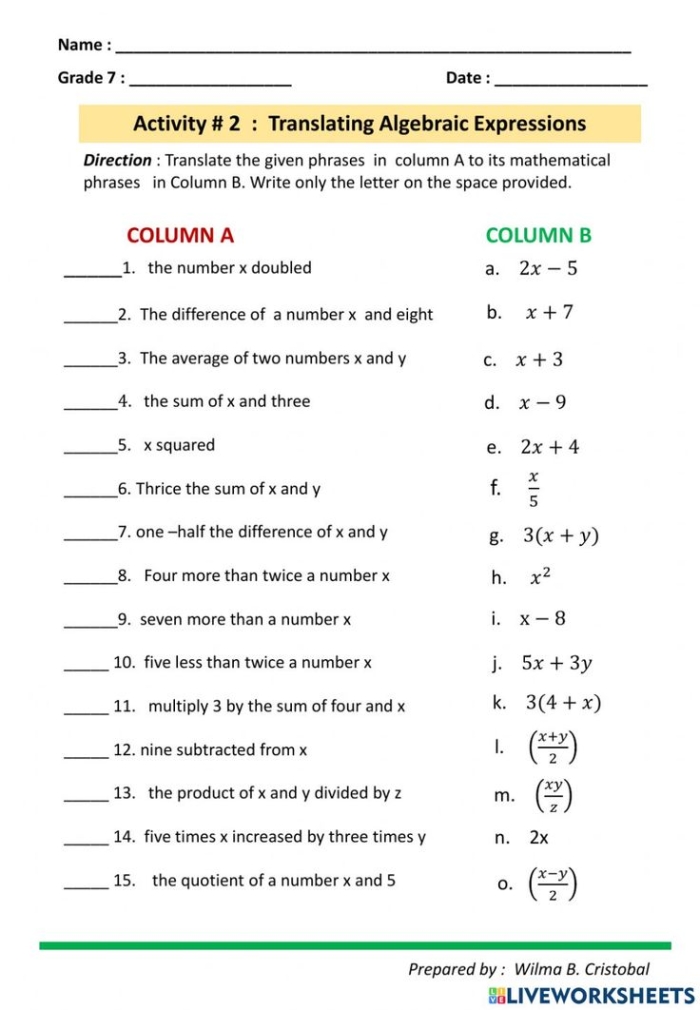
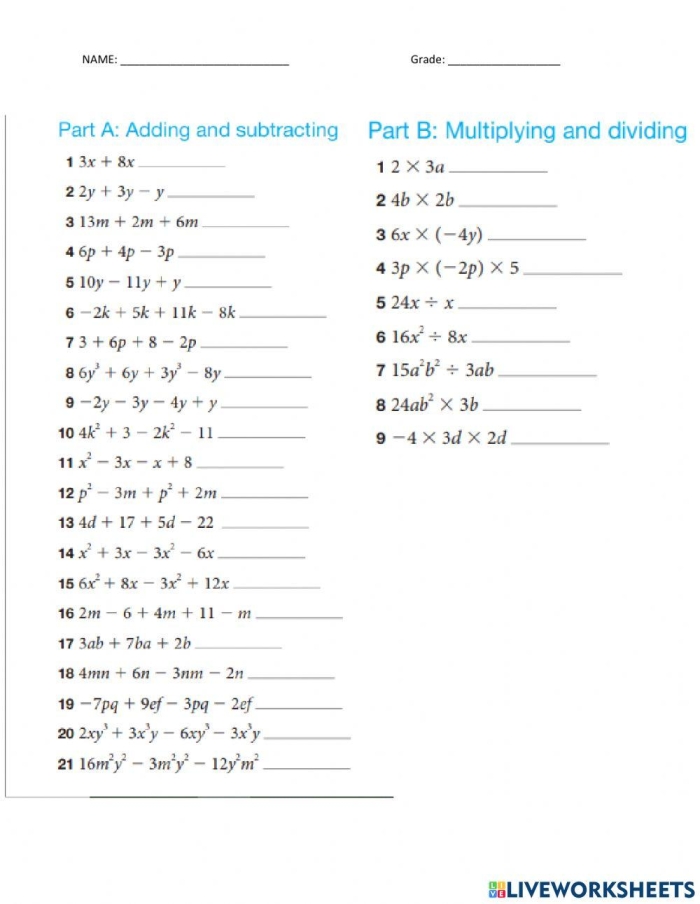
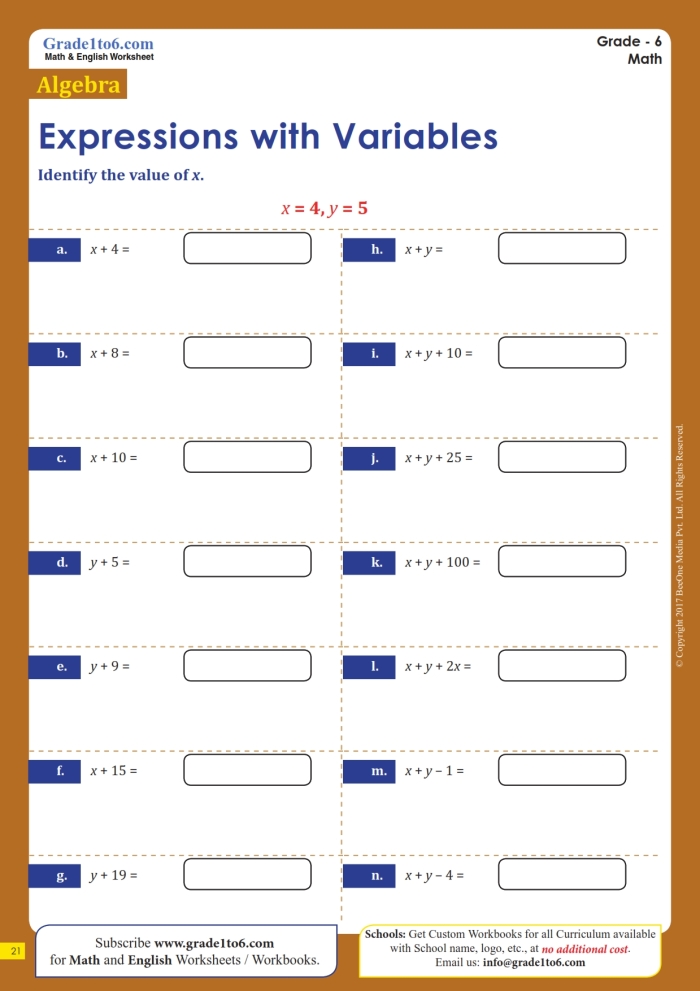
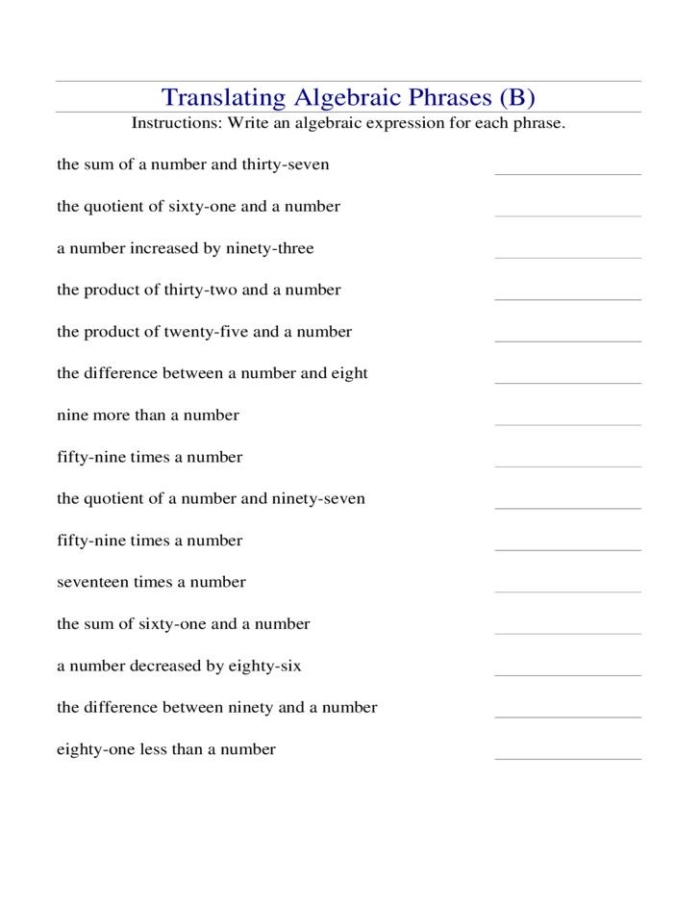
Translating words into mathematical symbols is one of those skills that looks confusing at first, but clicks quickly once you see the pattern. This worksheet helps sixth grade students build that bridge between everyday language and algebraic notation, which is essential for moving beyond basic arithmetic into real problem-solving.
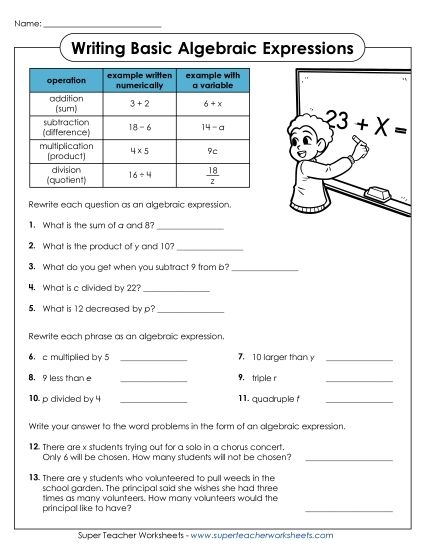
The challenge many students face is recognizing which words signal which operations. When someone says “five more than a number,” the word “more” doesn’t mean addition is happening first—it means you’re adding to an unknown value. Similarly, “twice as many” points to multiplication, while “divided equally” suggests division. These verbal cues are the vocabulary of algebra, and learning to spot them makes the translation almost automatic.
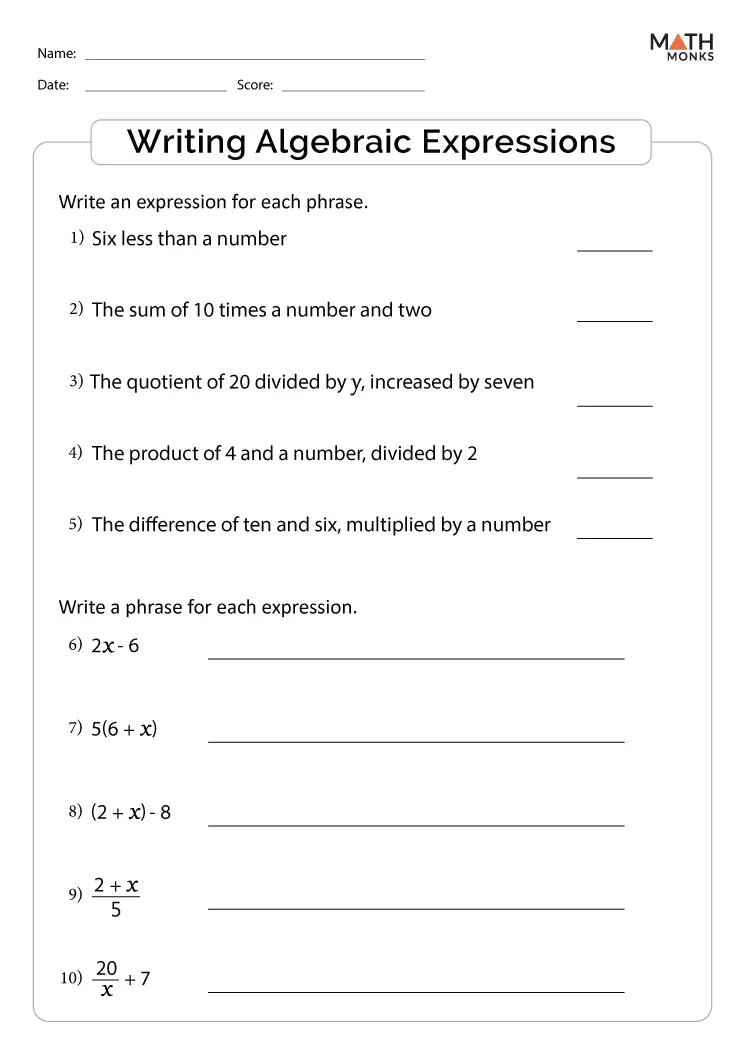
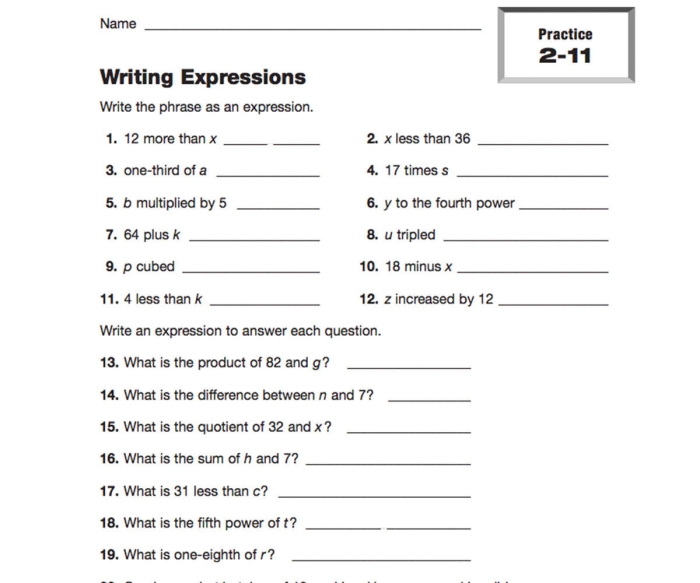
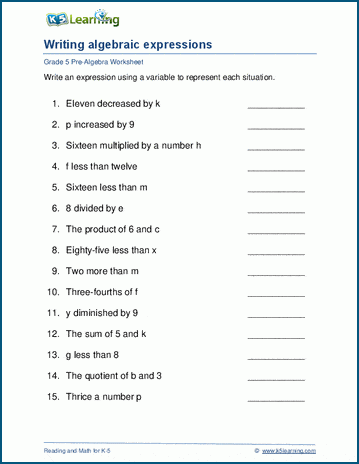
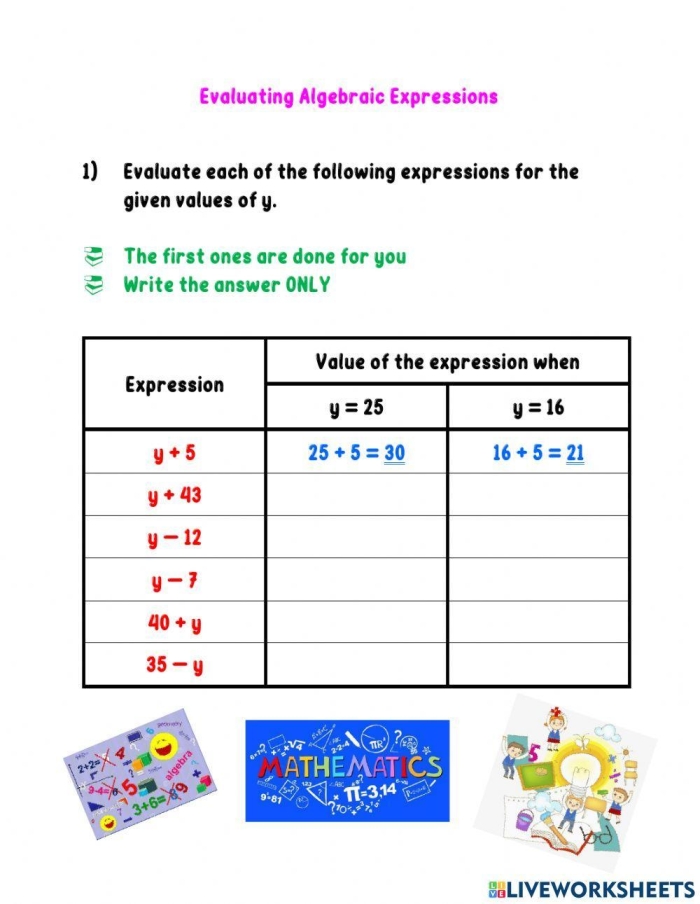
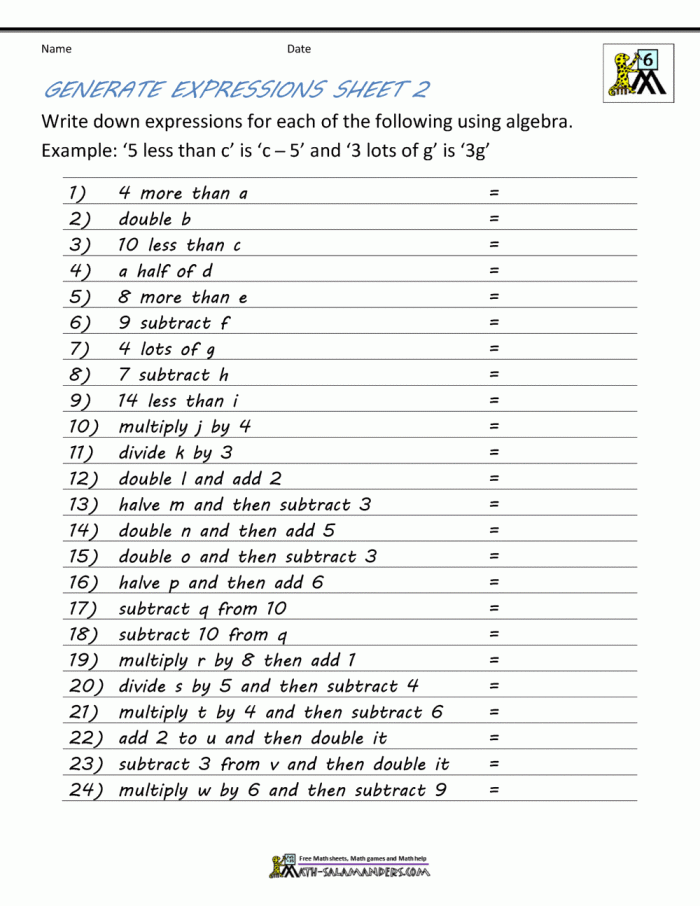
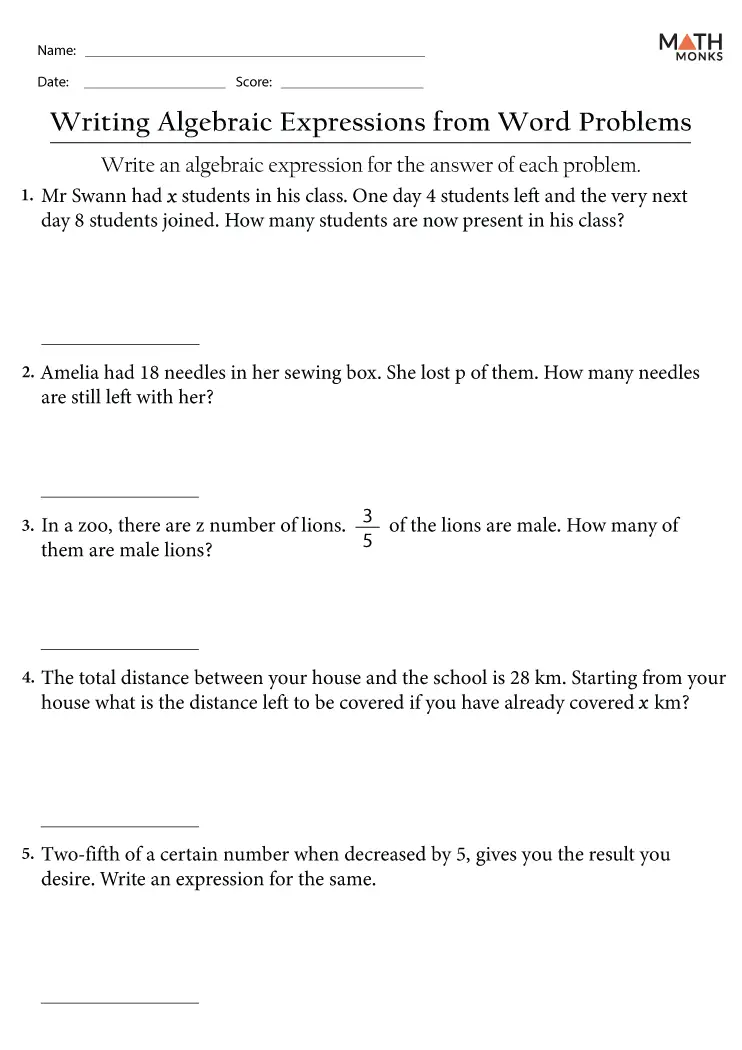
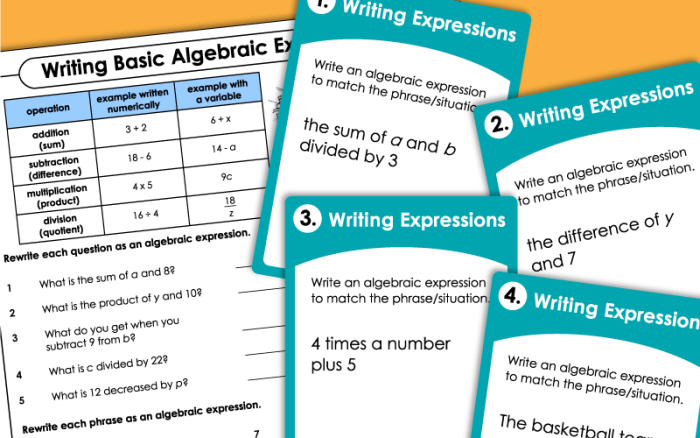
A solid worksheet starts by reviewing these key phrases before jumping into practice problems. Students see that “the sum of x and 3” becomes x + 3, while “the product of 4 and y” becomes 4y. This explicit connection between words and symbols takes the guesswork out of the process. When sixth graders understand that language maps directly onto mathematical operations, they gain confidence in their ability to handle word problems later on.
The practice component matters just as much as the instruction. Working through multiple examples reinforces the pattern recognition your brain needs to internalize. You might translate “seven less than a number” into n – 7, then immediately see “a number decreased by seven” and recognize it’s the same expression. That repetition builds automaticity.
This foundation in algebraic thinking connects to other mathematical skills sixth graders develop. Whether you’re working through area of parallelograms or tackling more complex equations later, the ability to translate verbal expressions into algebraic form remains essential. It’s the language that lets you move from describing a problem to solving it.
Practice with These Worksheets