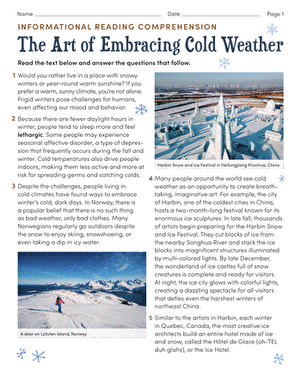
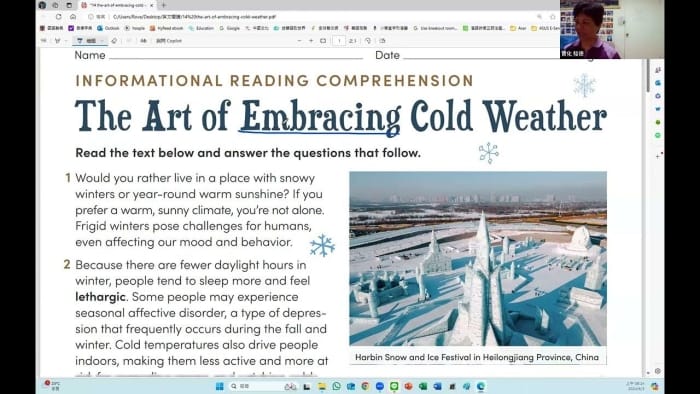
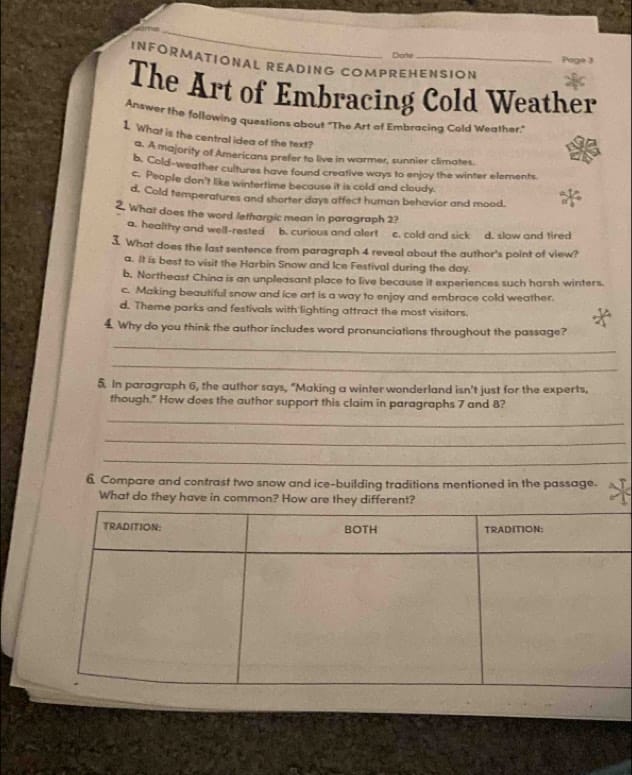
Winter transforms how people live, work, and play across the globe, and understanding these cultural differences makes for compelling reading material in sixth grade classrooms. Rather than viewing cold weather as something to endure, communities worldwide have developed distinct traditions and practices that turn the season into opportunity. This reading comprehension worksheet guides students through real-world examples of how different cultures embrace winter, building both vocabulary and critical thinking skills.
In Japan, winter brings onsen culture to life, where families gather in hot springs surrounded by snow. Scandinavia celebrates the season with hygge, a Danish concept emphasizing coziness, candlelight, and warm gatherings indoors. Meanwhile, Indigenous peoples in Arctic regions have adapted their entire way of life to winter conditions, developing specialized hunting techniques and clothing that allow them to thrive rather than merely survive. Russia’s winter festivals showcase ice sculpture competitions and traditional troika sleigh races that have existed for centuries.
Students working through this worksheet encounter authentic texts describing winter sports like curling in Canada, ice fishing in Minnesota, and cross-country skiing in Switzerland. The material helps sixth graders recognize how geography shapes culture and how people innovate solutions to environmental challenges. Rather than treating winter as an obstacle, these examples demonstrate human creativity and resilience.
Using this worksheet alongside other sixth grade reading materials strengthens comprehension across different text types. Students can compare how seasonal changes affect ecosystems and food webs, or explore how physical forces like gravity influence winter activities such as sledding. The worksheet encourages students to think beyond simple facts and consider why people choose to celebrate rather than avoid their local winters.
Worksheet Practice Section