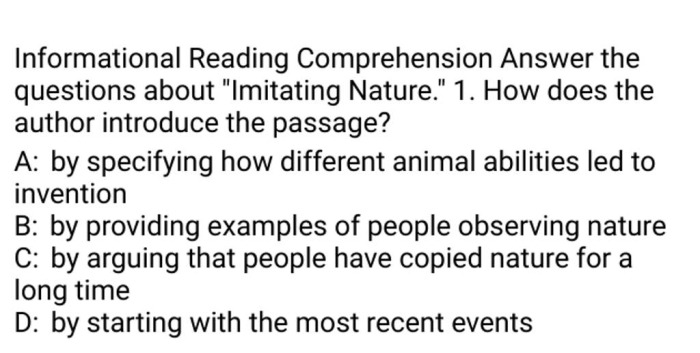
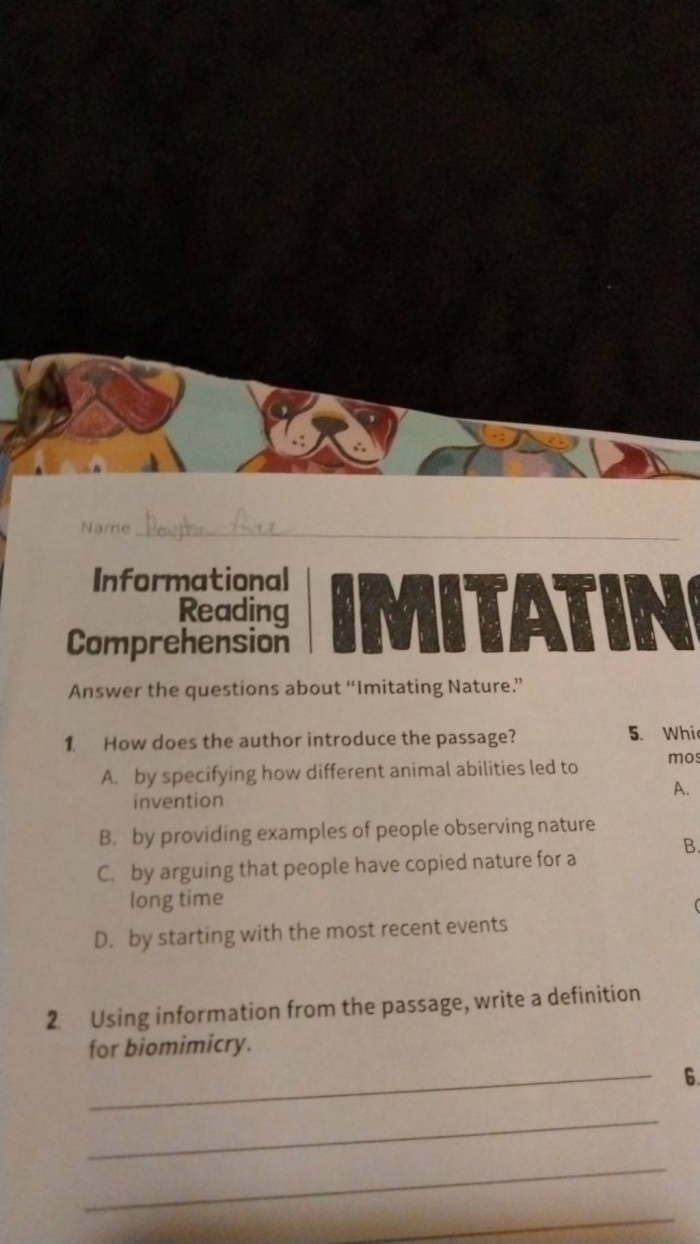
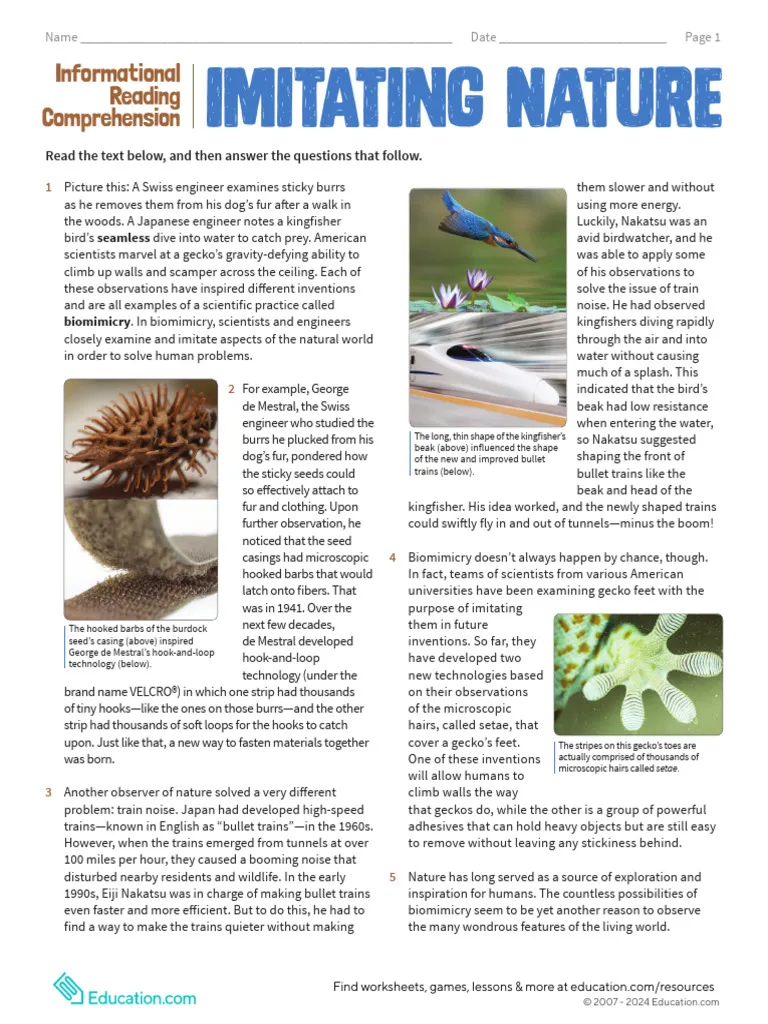
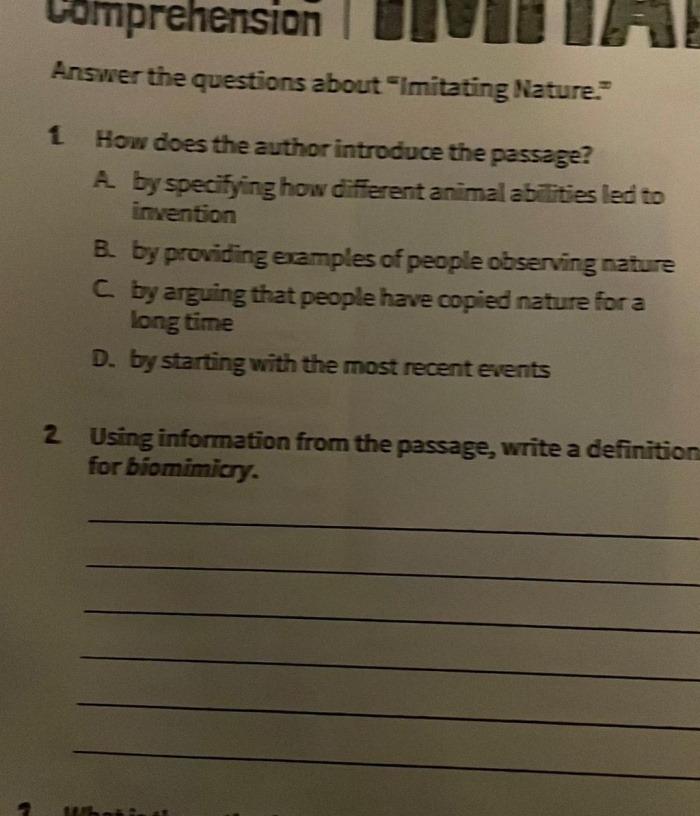
A train’s nose and a bird’s beak might seem completely different, but they share a hidden connection that engineers discovered by studying nature. This concept, called biomimicry, involves copying designs and strategies from the natural world to solve human problems. When you encounter a sixth-grade informational reading comprehension worksheet about biomimicry, you’re learning how scientists and inventors look to animals and plants for inspiration.
The Japanese Shinkansen bullet train offers a perfect example. Engineers noticed that kingfishers dive smoothly into water without creating big splashes, so they redesigned the train’s front to match the bird’s streamlined beak shape. This change reduced air resistance, allowing the train to travel faster while using less energy. The connection between these two completely different objects reveals something powerful: nature has already solved many of the problems we’re trying to fix.
Biomimicry appears everywhere once you start looking for it. Velcro came from observing burrs sticking to animal fur. Airplane wings were inspired by studying how birds fly. Even the pattern of syllables in words like “bio-mim-i-cry” reflects how we break down complex ideas into manageable pieces, much like how sixth-grade students learn to analyze longer informational texts.
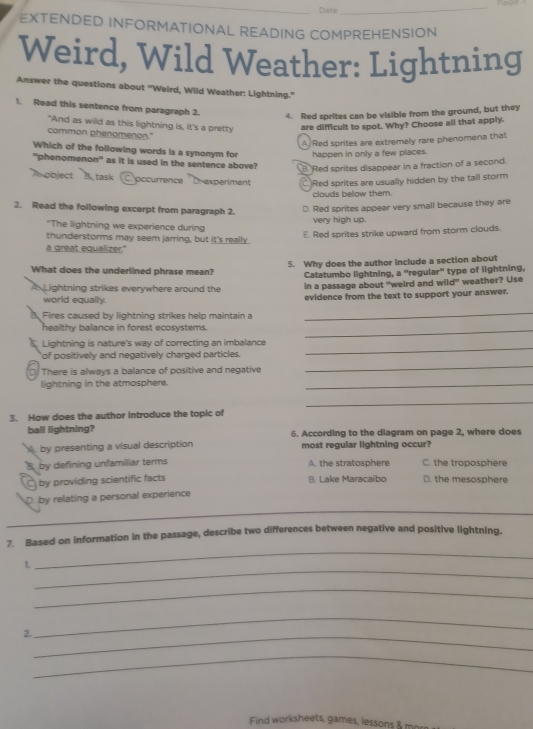
When you work through a printable informational reading comprehension worksheet about imitating nature, you’re developing critical thinking skills. These activities teach you to recognize patterns, understand cause and effect, and see connections between different subjects. You might also explore how similar concepts apply to other fields, such as understanding how digital and analog signals work in technology.
The train-and-bird comparison shows that learning isn’t limited to textbooks. Nature is the ultimate teacher, and by paying attention to how things work in the living world, we can create better solutions for the challenges we face.
Hands-On Worksheet Activities