Baobab Tree Reading Worksheets for 6th Grade

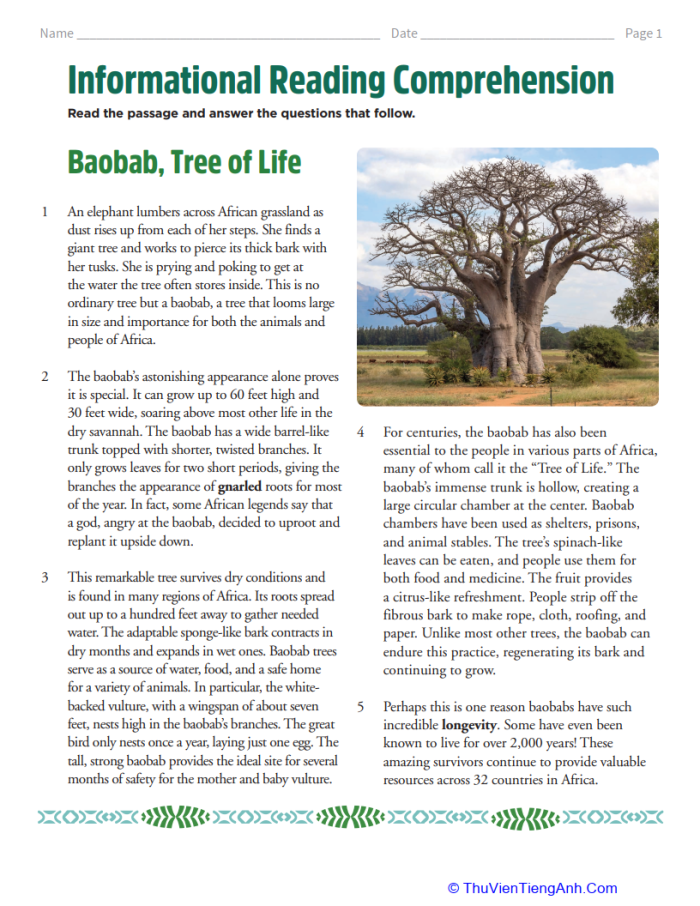
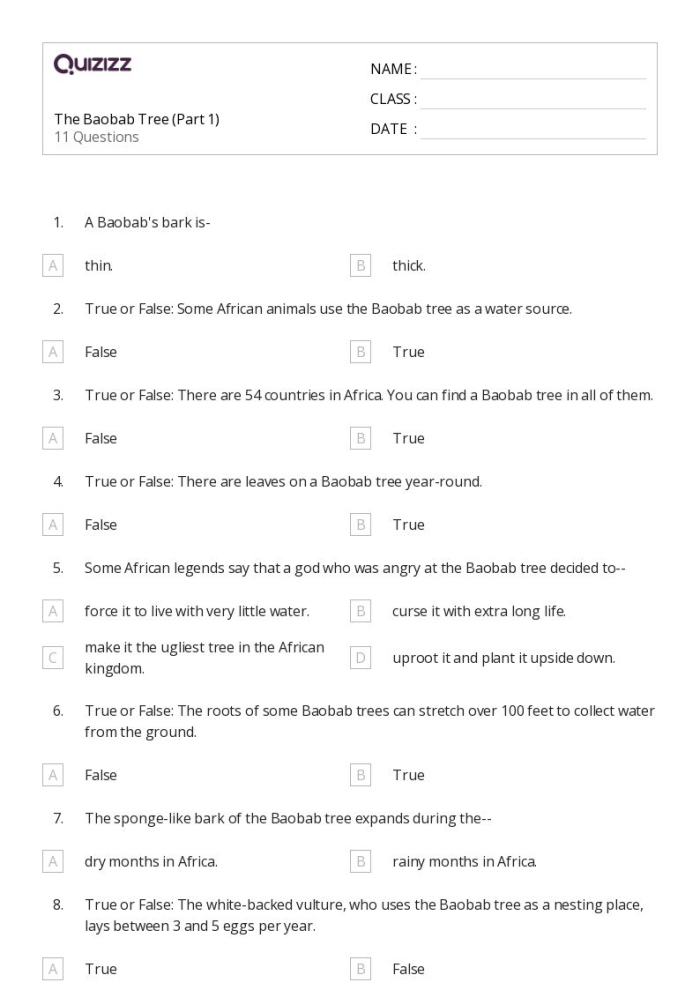
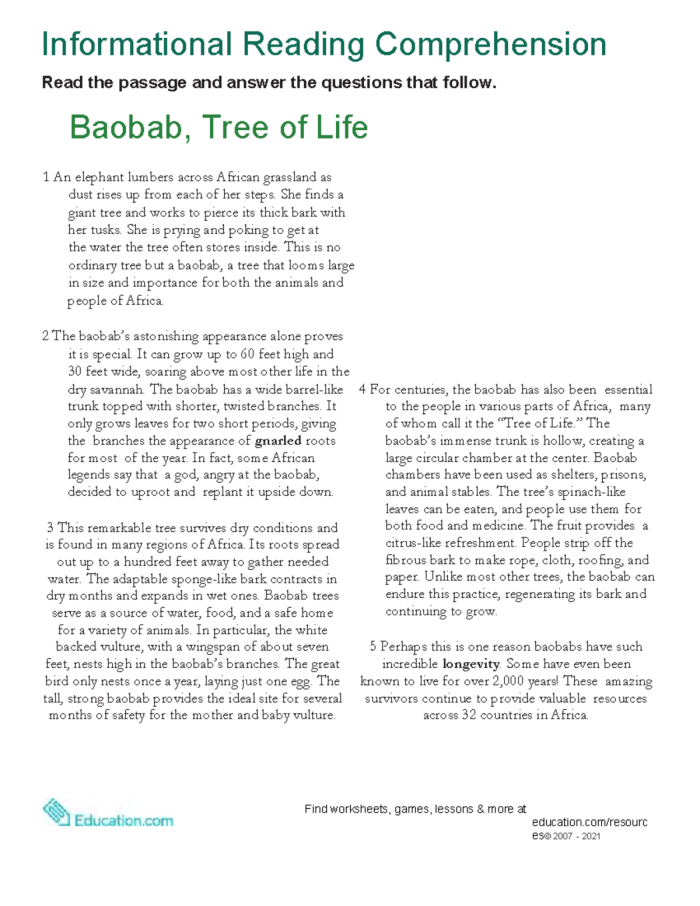
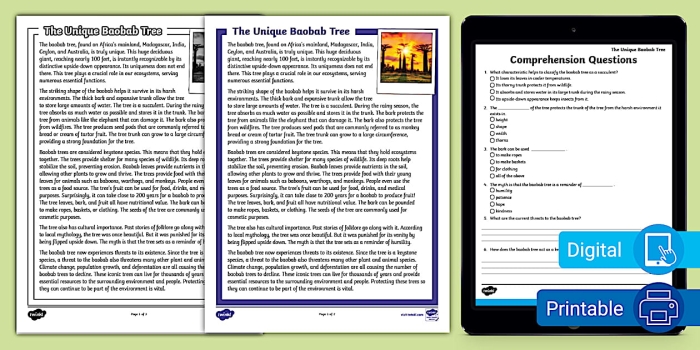
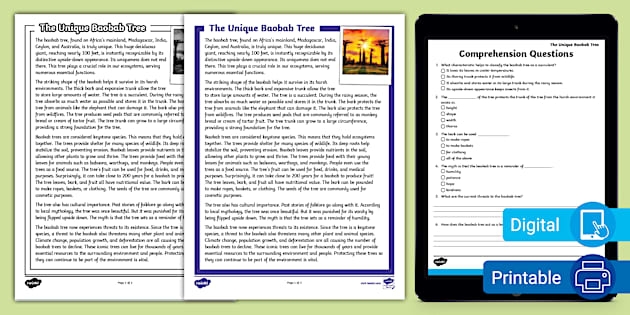
ALT text for a sixth-grade reading comprehension worksheet about the Baobab tree, highlighting its significance as Africa's "tree of life".
Image title for a worksheet focused on the unique features and importance of the Baobab tree in informational reading comprehension.
Category: Grammar and Mechanics | Grade: Sixth Grade

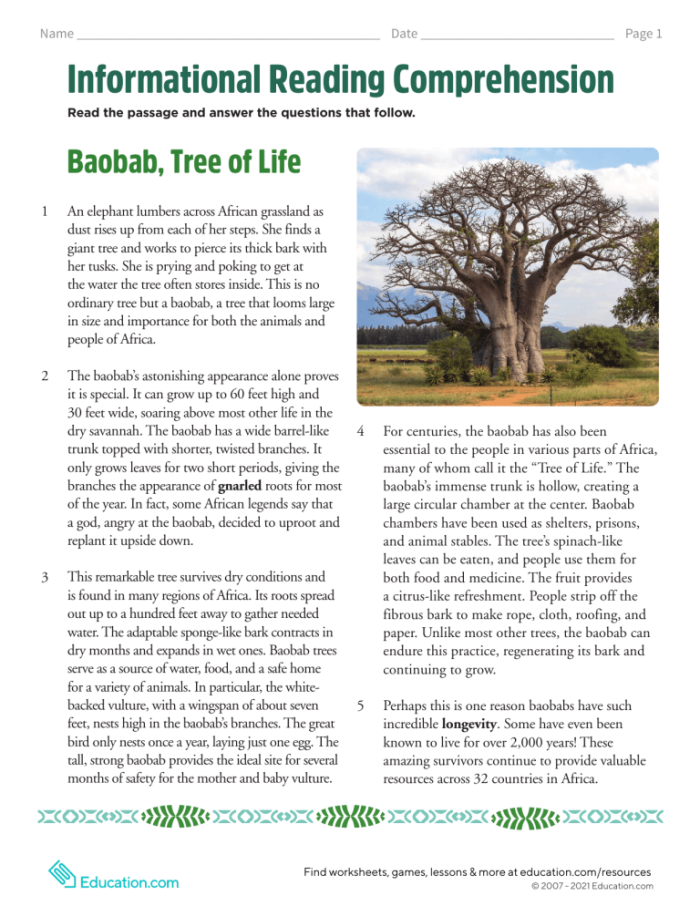
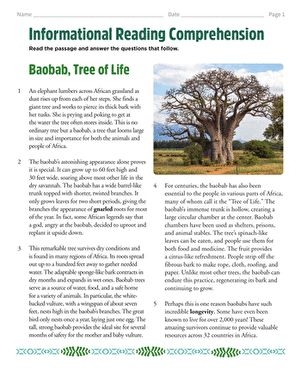
The baobab tree looks like someone planted it upside down, with a massive trunk that can stretch 30 feet wide and branches that seem almost skeletal against the African sky. Yet this peculiar-looking giant has sustained entire communities across Africa for thousands of years, earning its nickname as the “tree of life.” Understanding why requires looking beyond its strange appearance to discover the practical ways this tree supports human survival.

The baobab’s trunk serves as nature’s water storage system. During the rainy season, the tree absorbs and stores water in its spongy wood, creating a reserve that can reach up to 1,200 gallons. When drought strikes and other water sources dry up, people can tap into this living reservoir by drilling into the trunk. This survival function alone explains much of the reverence African communities hold for the baobab.

Beyond water, the baobab provides food year-round. The leaves offer nutritional value comparable to spinach, while the fruit, known as “monkey bread,” contains vitamin C levels higher than oranges. The seeds can be ground into flour or pressed for oil. Essentially, a single mature baobab can feed a family through seasons when other crops fail.

For sixth grade students studying grammar and mechanics, a reading comprehension worksheet on the baobab offers excellent material for analyzing how authors explain natural phenomena. These worksheets help students practice identifying main ideas and supporting details while learning about African ecosystems. Similar to how worksheets on compare like fractions with tape diagrams teach mathematical reasoning, baobab comprehension exercises develop critical reading skills through engaging content.

The baobab’s cultural significance extends beyond survival. In many African traditions, these trees serve as gathering places for community meetings and storytelling. Their longevity, with some trees living over 1,000 years, makes them witnesses to generations of human history.


Use These Worksheets Today
ALT text for a sixth-grade reading comprehension worksheet about the Baobab tree, highlighting its significance as Africa's "tree of life".
ALT text for a reading comprehension worksheet about the Baobab tree, known as Africa's "tree of life.
ALT text for a worksheet on the unique baobab tree, often called Africa's "tree of life
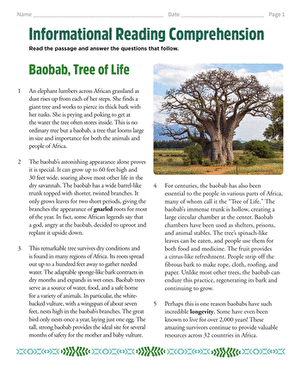
Sixth grade worksheet featuring a reading passage about the Baobab tree of life in Africa
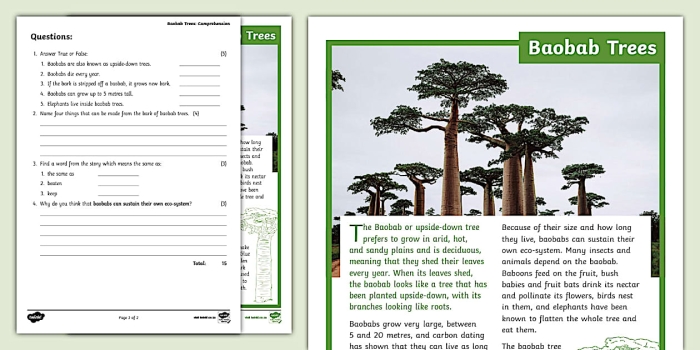
Sixth grade informational reading worksheet featuring a detailed illustration of an African baobab tree
Sixth grade worksheet featuring an informational reading passage about the African baobab tree
ALT text: Worksheet for sixth graders on the baobab tree, often called Africa's "tree of life.
Baobab tree illustration showcasing its unique features and significance as Africa's "tree of life
Sixth grade reading comprehension worksheet featuring the unique baobab tree
ALT text for a worksheet about the Baobab tree, showcasing its significance as Africa's "tree of life
ALT text for a worksheet on the Baobab tree, highlighting its significance as Africa's "tree of life" for sixth graders.
ALT text: Worksheet featuring the Baobab tree, known as Africa's "tree of life," for sixth graders' reading comprehension.
ALT text for worksheet featuring the Baobab tree, known as Africa's "tree of life" for sixth-grade reading comprehension.
Sixth grade student completing an informational reading comprehension worksheet about the African baobab tree
Sixth grade reading comprehension worksheet featuring facts and questions about the African Baobab tree
Sixth grade reading comprehension worksheet about the African baobab tree
ALT text: Worksheet on reading comprehension featuring the Baobab tree, often called Africa's "tree of life

Leave a Reply

Your email address will not be published. Required fields are marked *