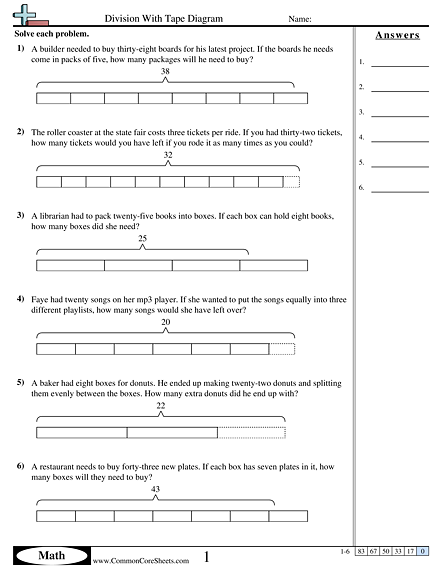
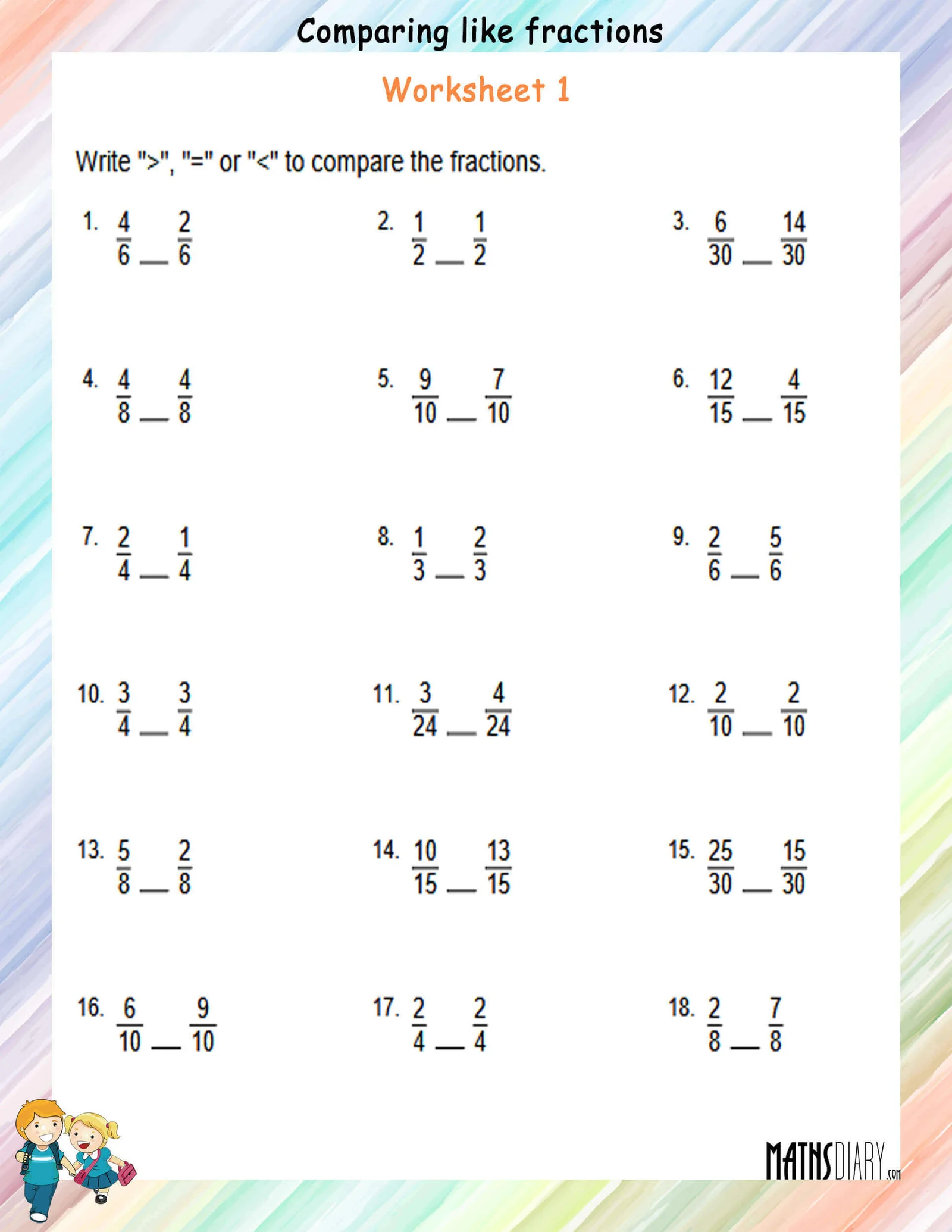
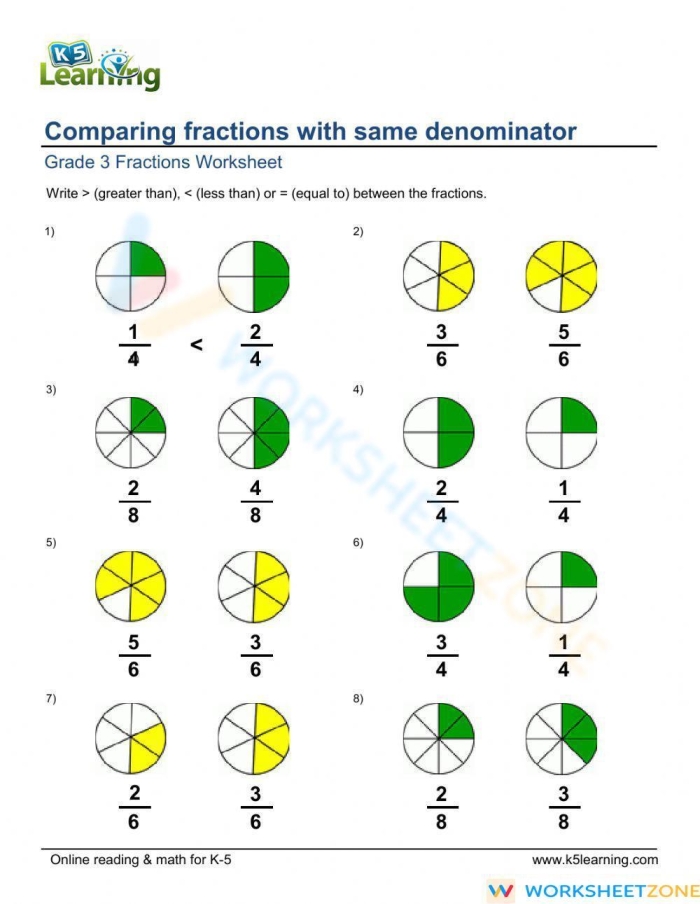
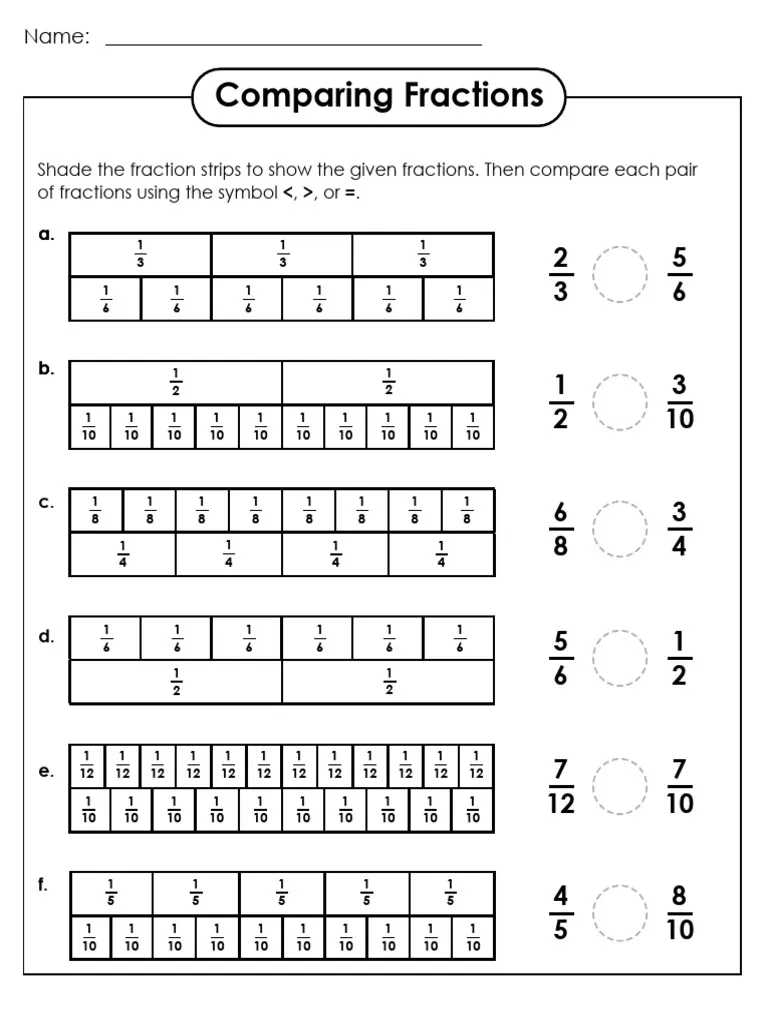
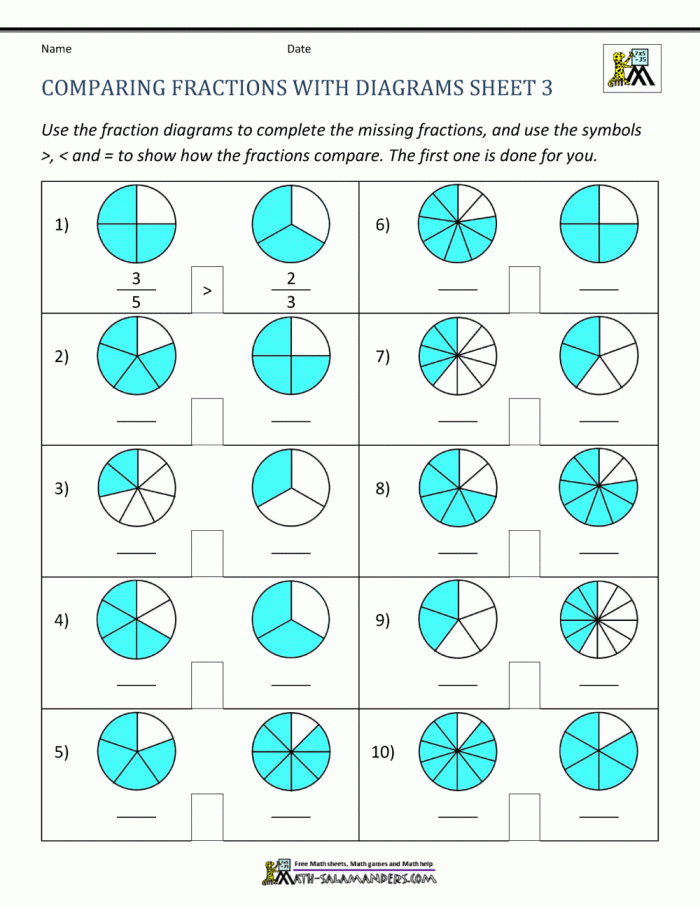
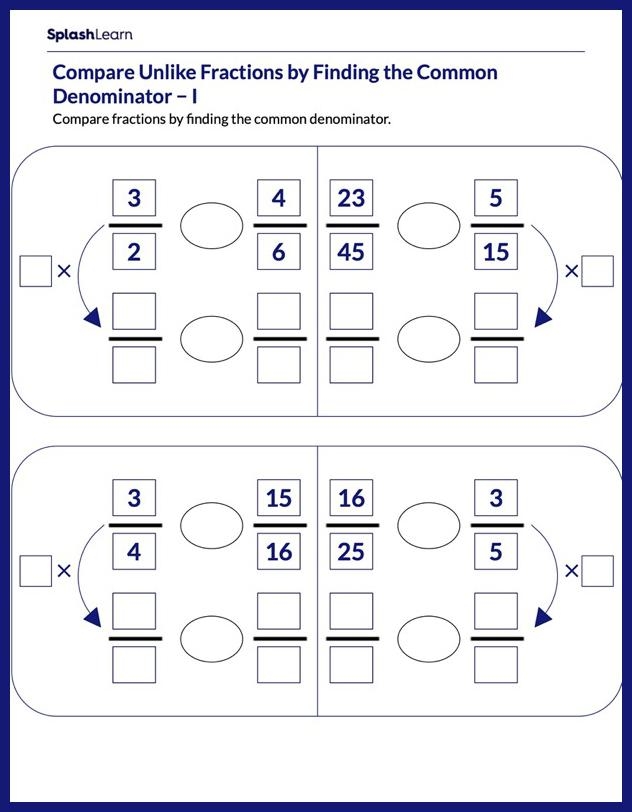
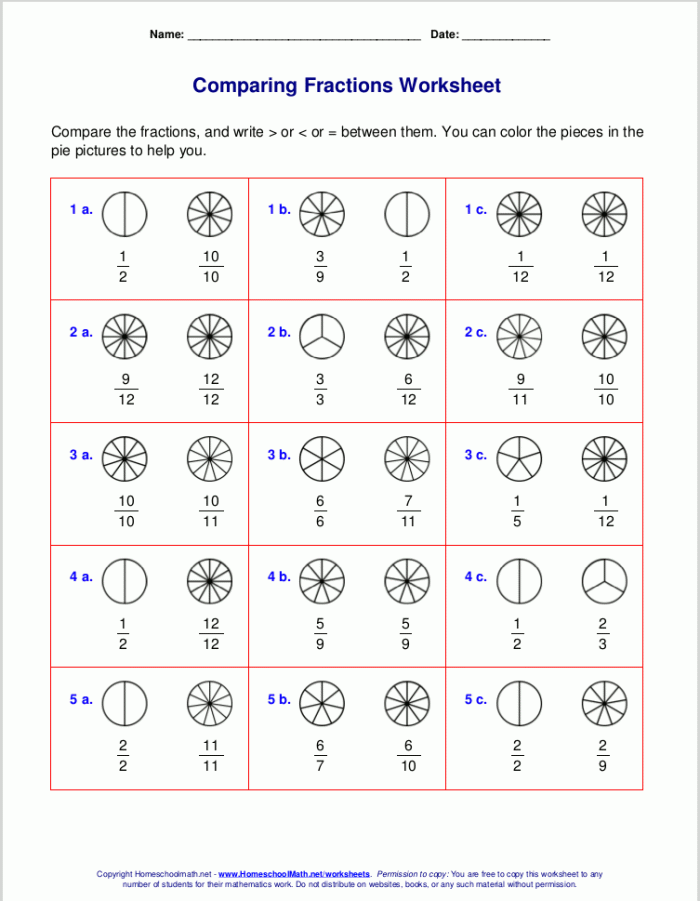
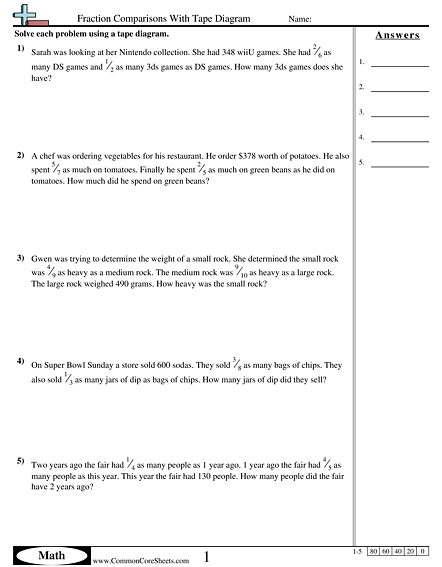
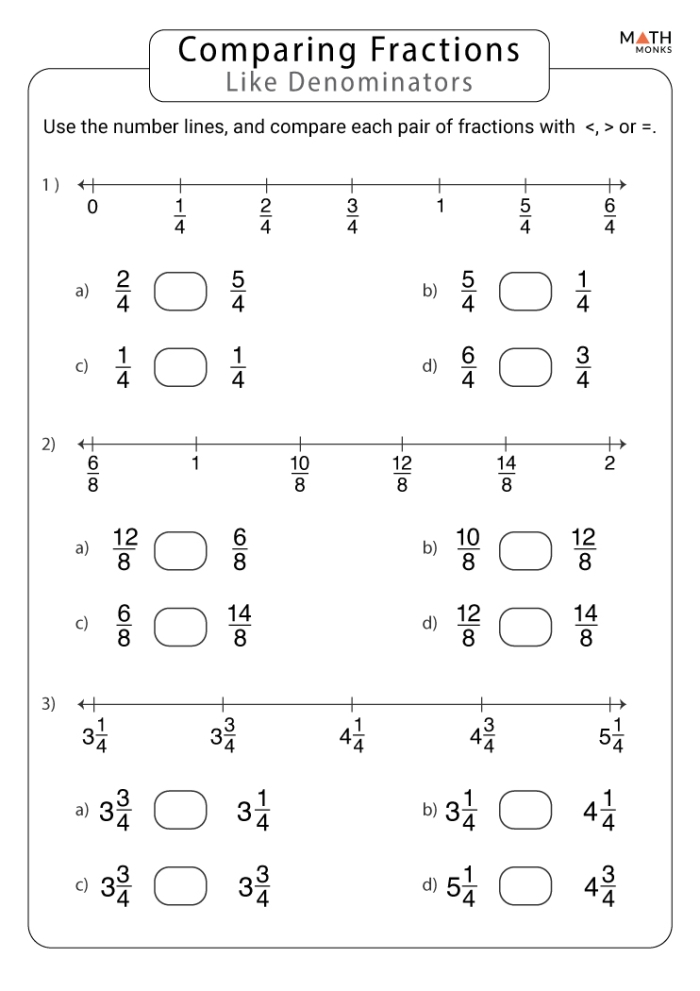
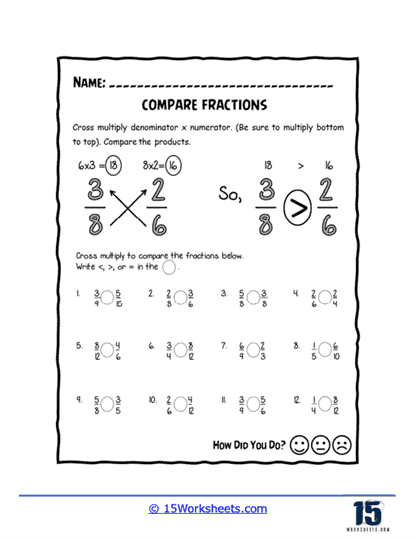
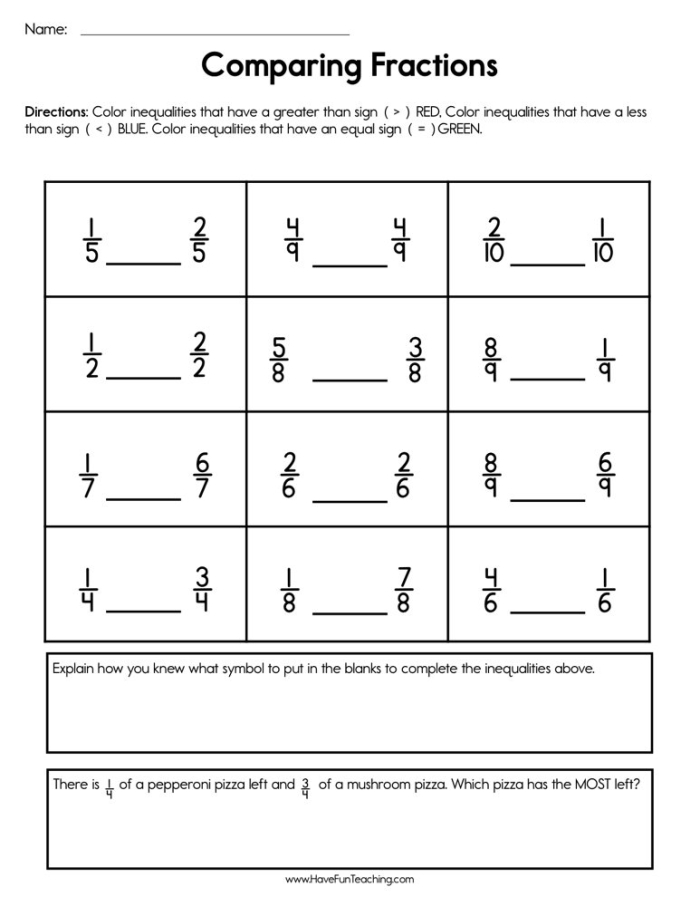
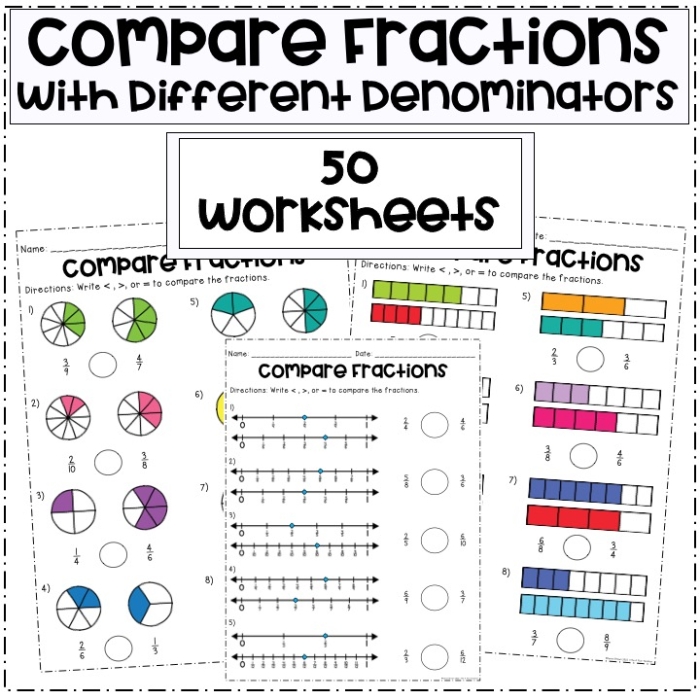
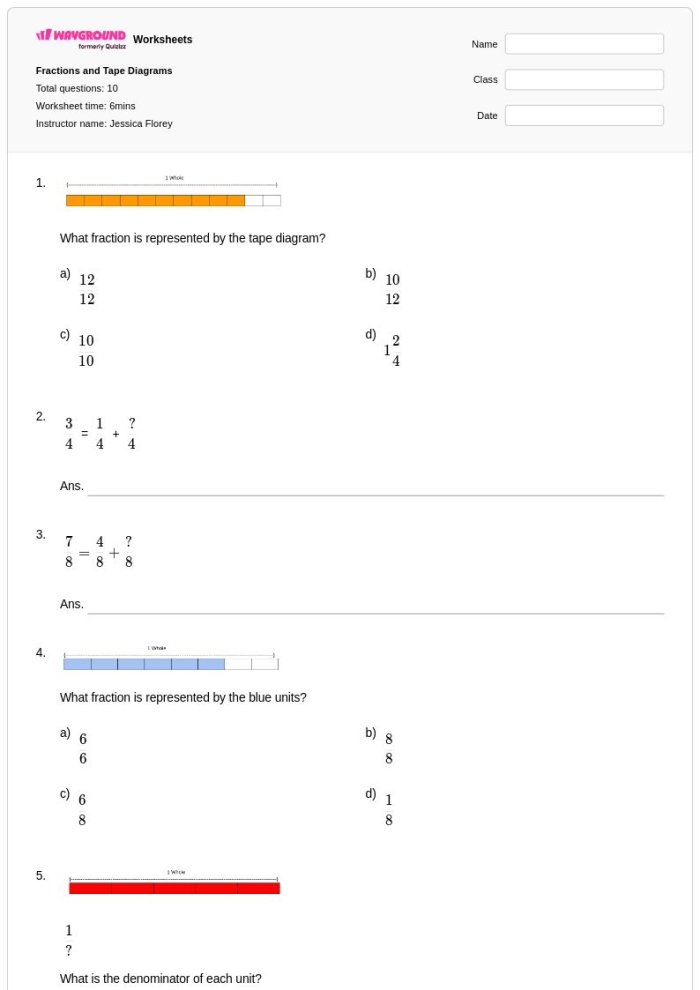
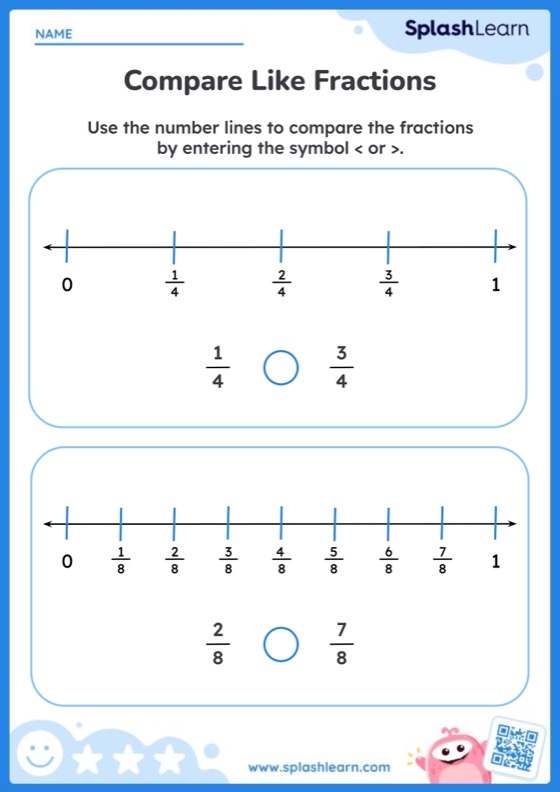
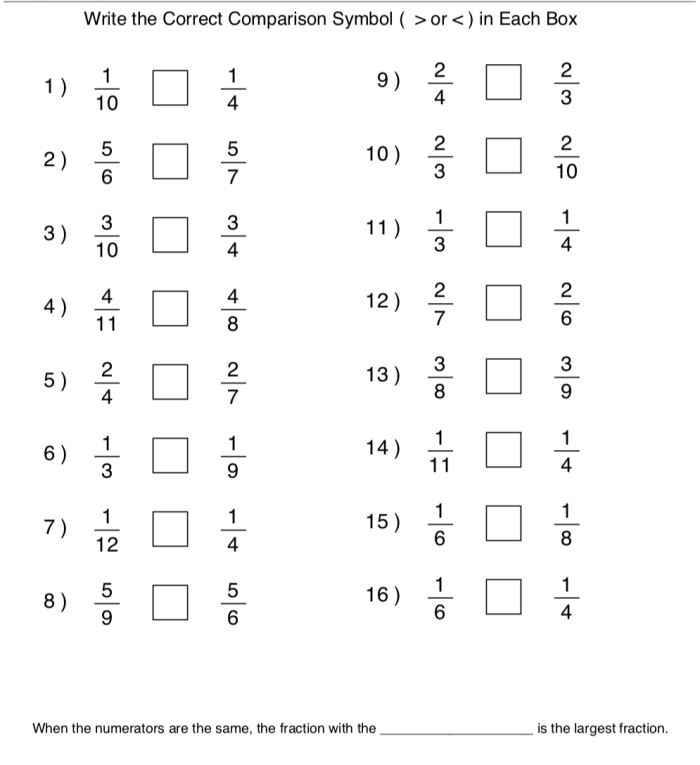
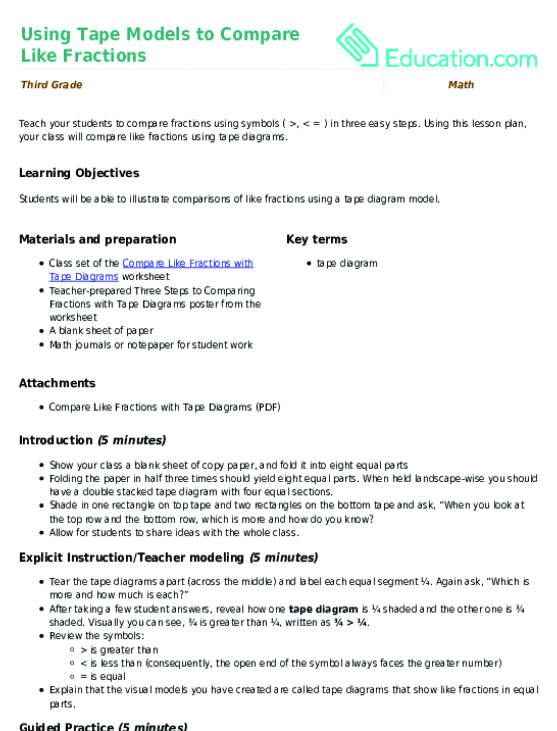
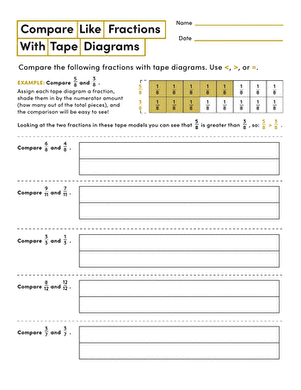
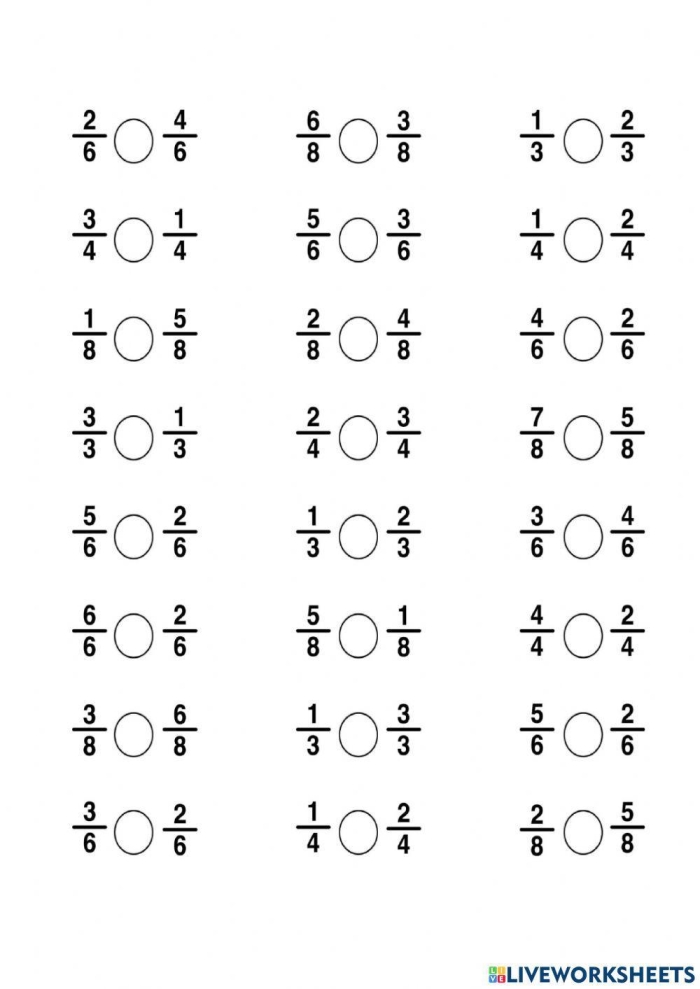
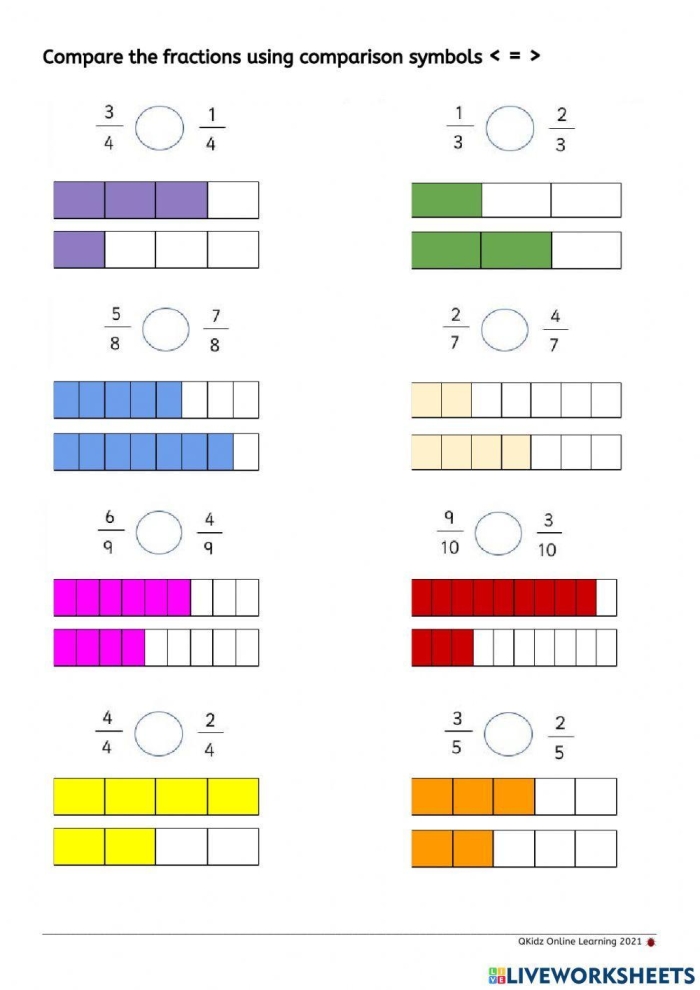
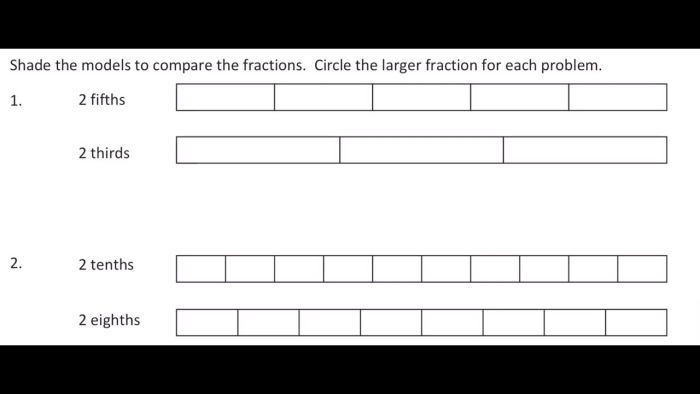
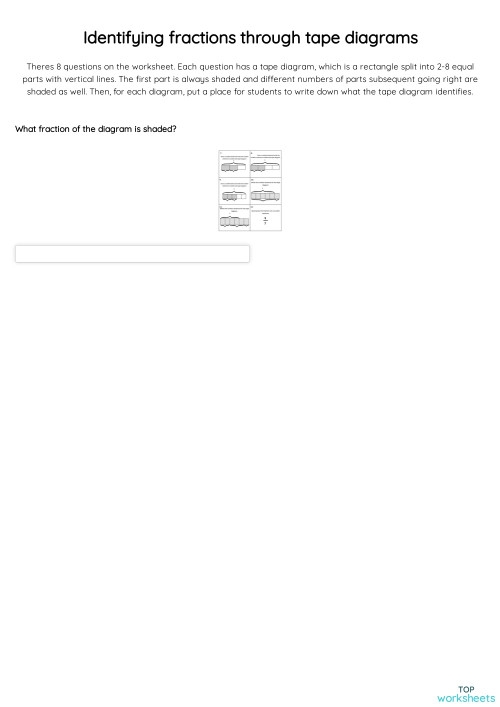
Visual learning can transform how students grasp mathematical concepts, especially when it comes to comparing fractions. In our engaging worksheet, students practice comparing pairs of fractions using tape diagrams, a straightforward visual modeling strategy that simplifies the process. This method allows young learners to see fractions as parts of a whole, making it easier to evaluate which is larger or smaller.
For third graders, mastering the skill of comparing like fractions is essential. Tape diagrams serve as a powerful tool by providing a clear visual representation. For example, if students need to compare 1/4 and 3/4, they can draw two rectangles divided into four equal parts. By shading in the corresponding sections, it becomes instantly clear that 3/4 is greater than 1/4. This visual approach not only enhances understanding but also makes learning more interactive and enjoyable.
Besides being effective, this strategy aligns seamlessly with handwriting practice. As students work through the worksheet, they can jot down their observations and solutions, reinforcing their writing skills alongside their mathematical abilities. By integrating handwriting exercises, students develop fine motor skills that are crucial at this stage of their education. For those interested in expanding their practice in handwriting, consider checking out resources like cursive handwriting worksheets or grammar handwriting worksheets.
Overall, comparing fractions with tape diagrams offers a dual benefit: it fosters mathematical comprehension while also enhancing handwriting skills. This holistic approach prepares students not just for future math challenges, but also for effective communication through writing. By utilizing these worksheets, educators can create a dynamic learning environment that encourages exploration and confidence in both math and writing.
Boost Skills with These Worksheets