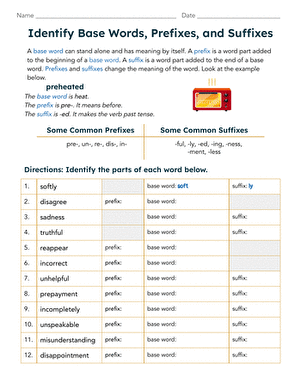
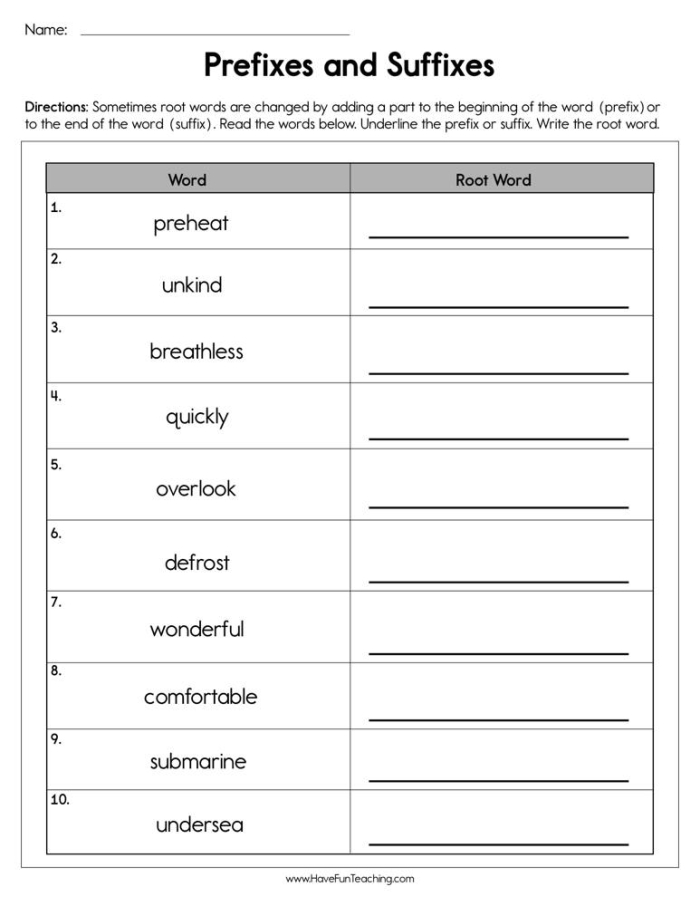
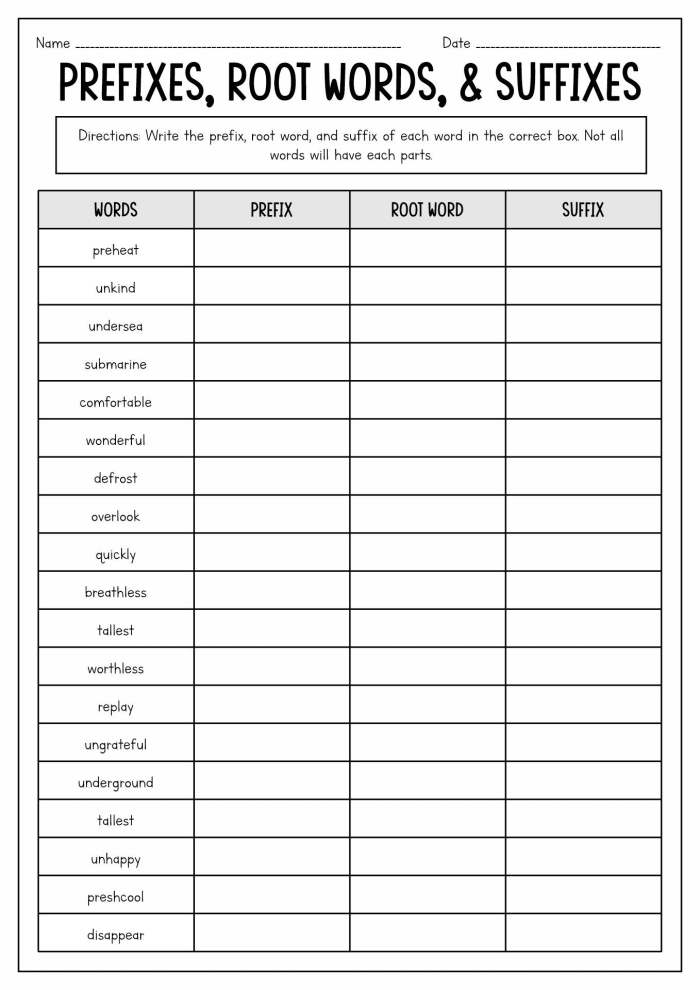
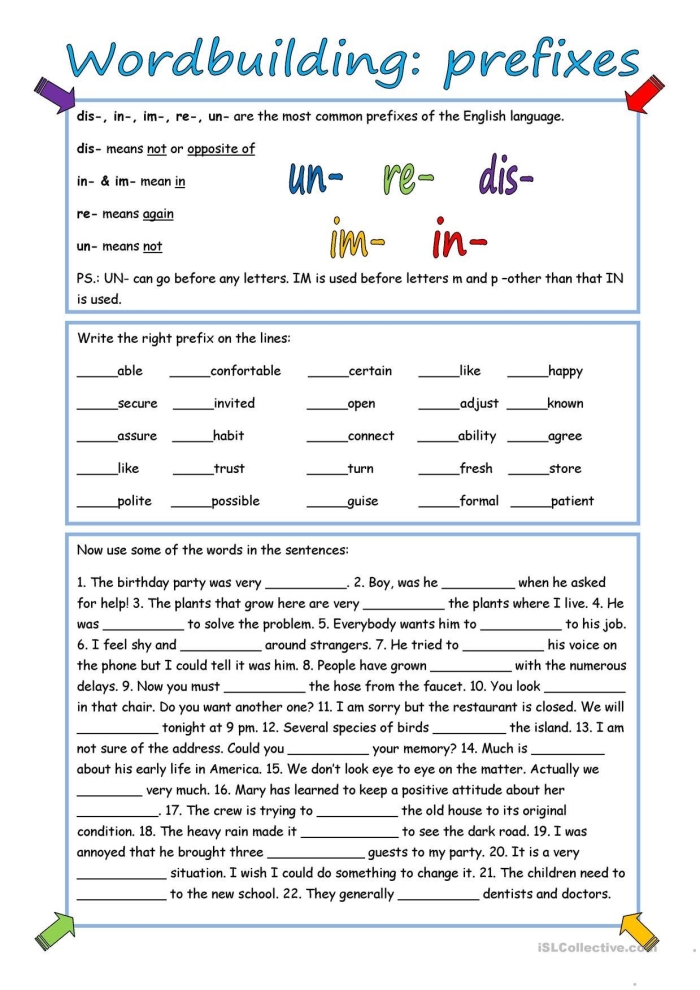
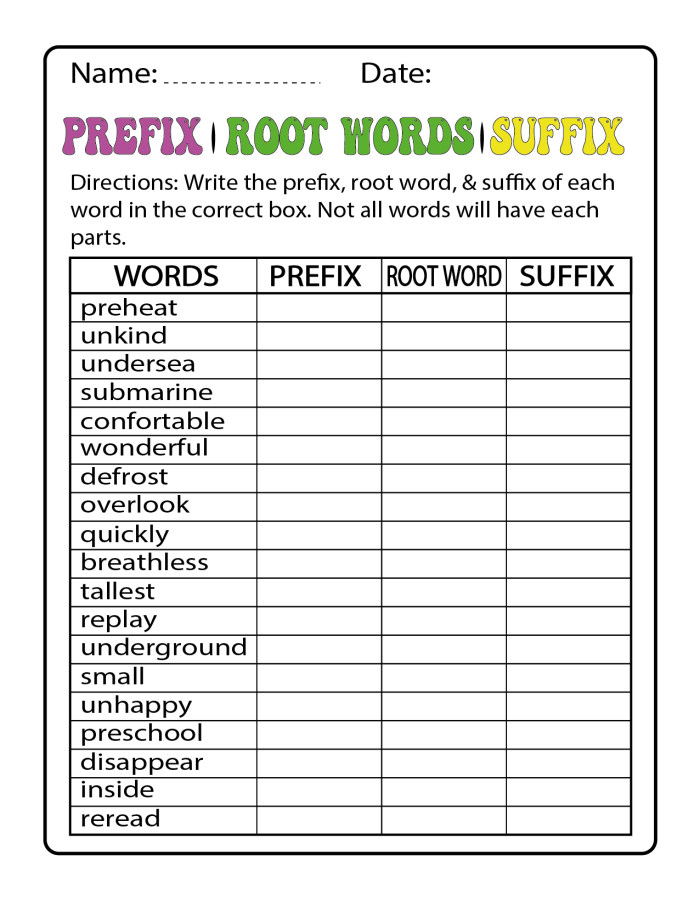
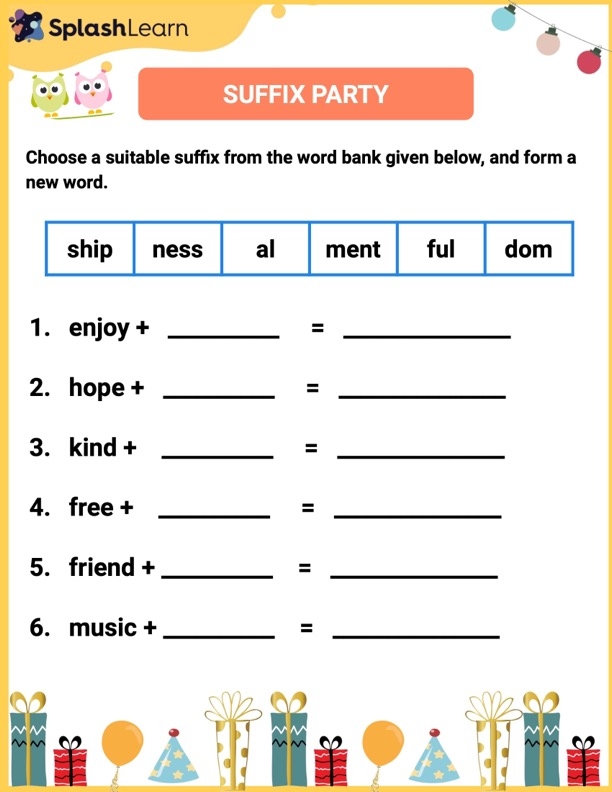
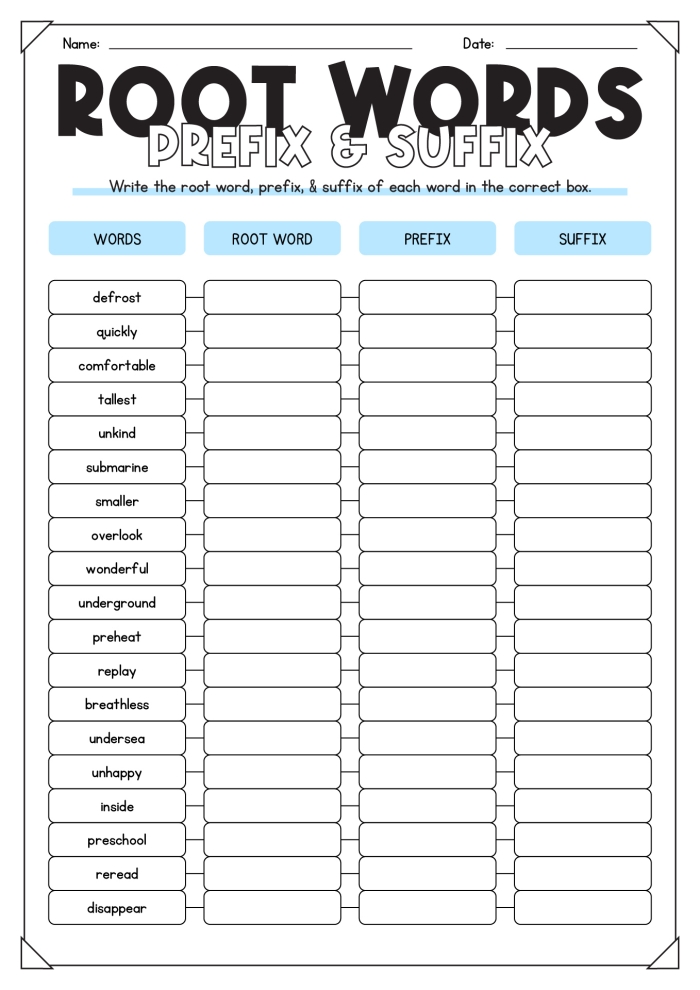
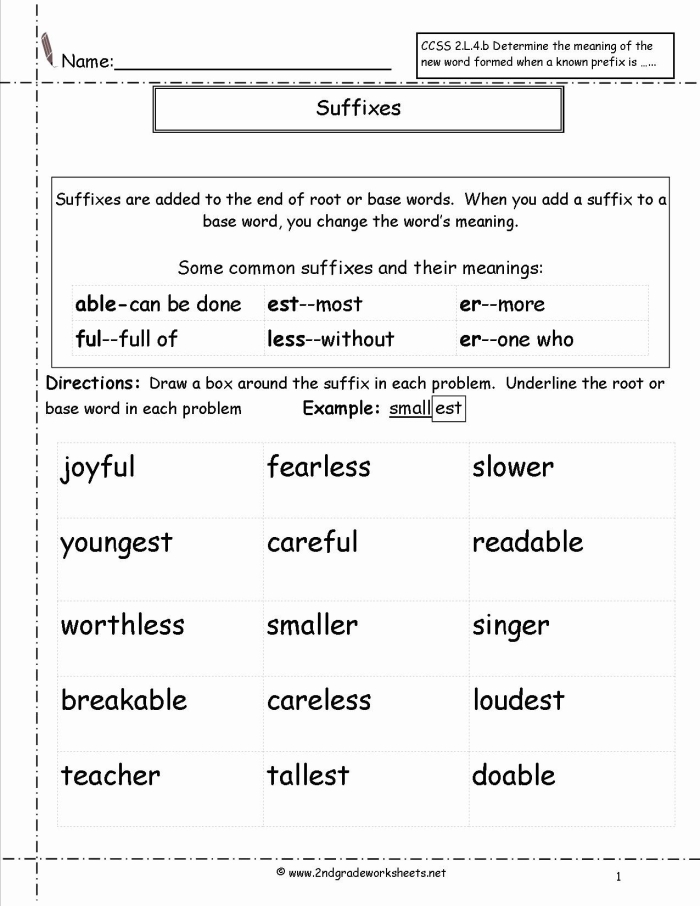
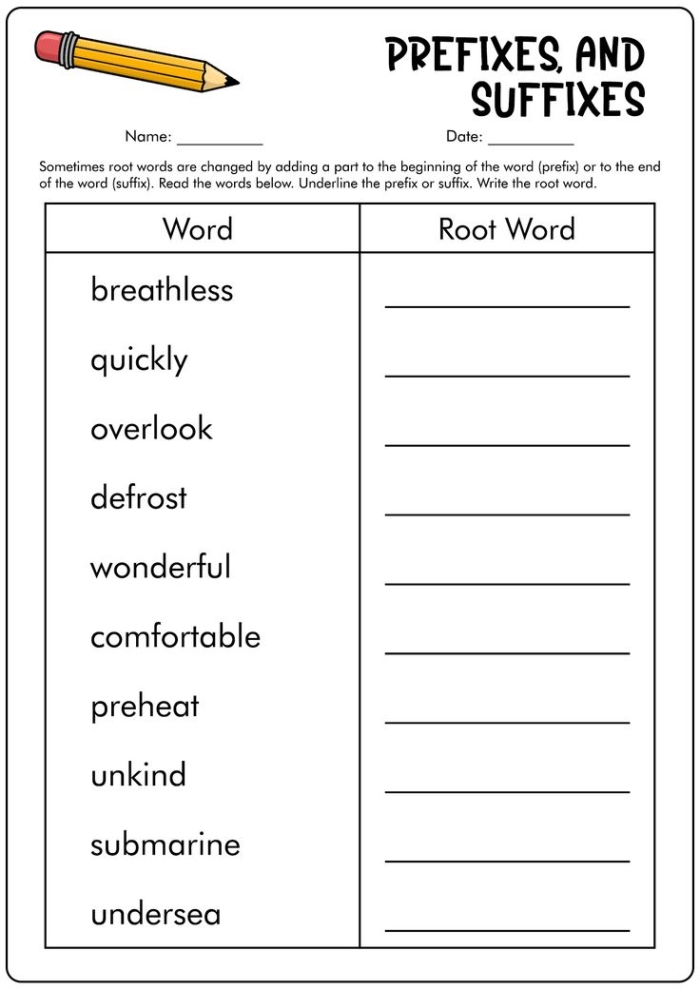
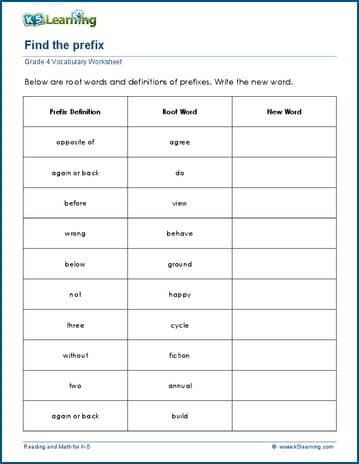
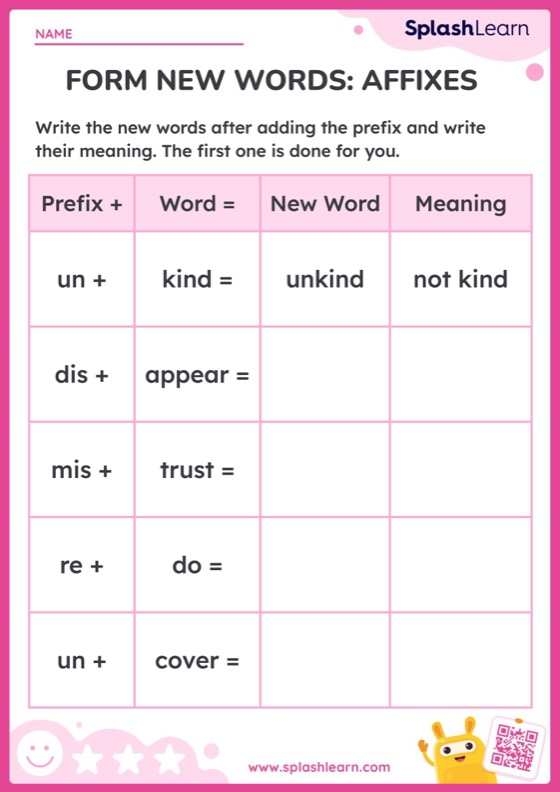
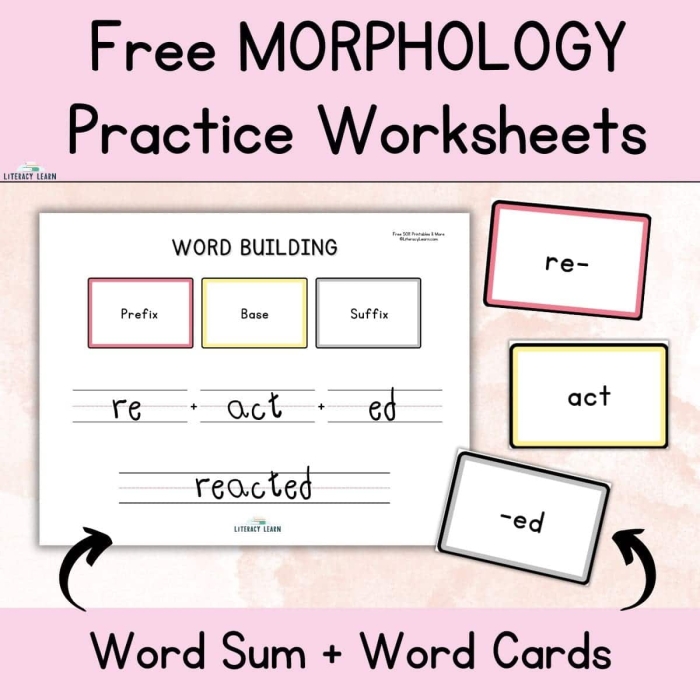
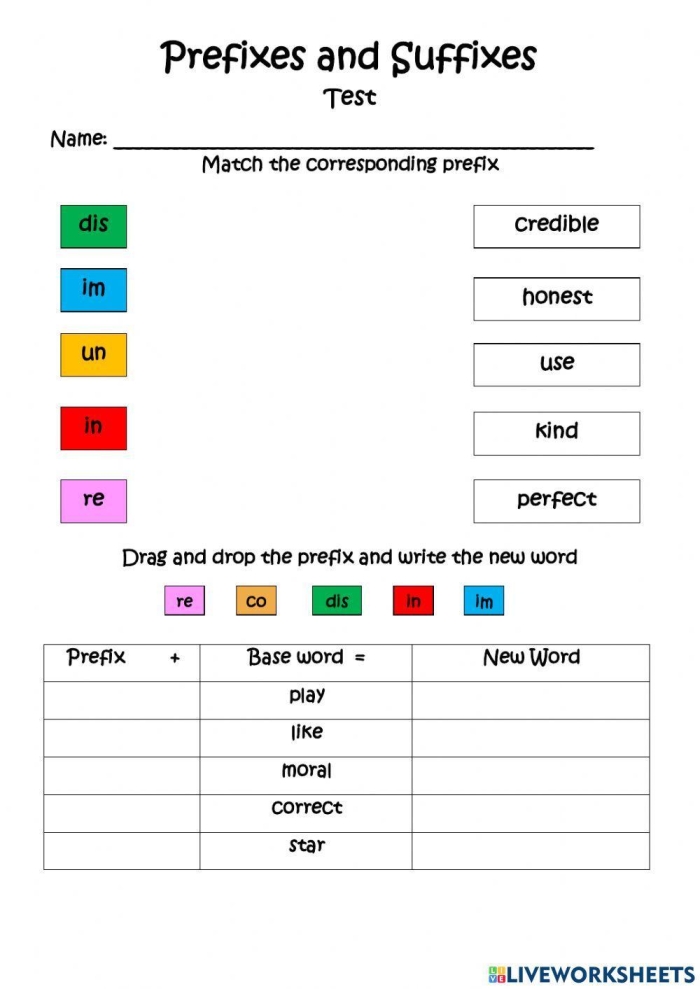
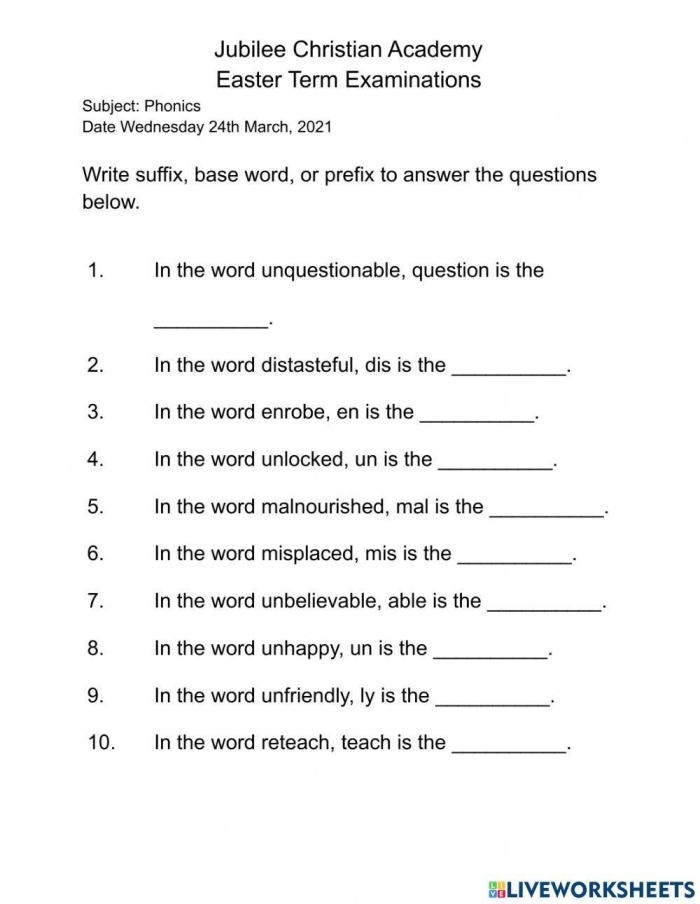
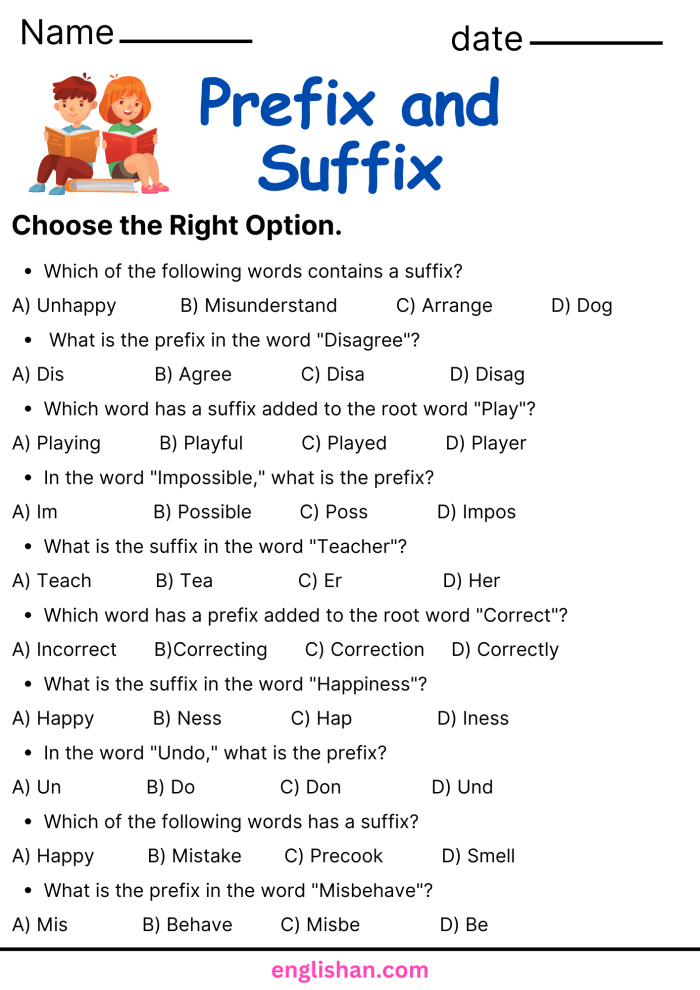
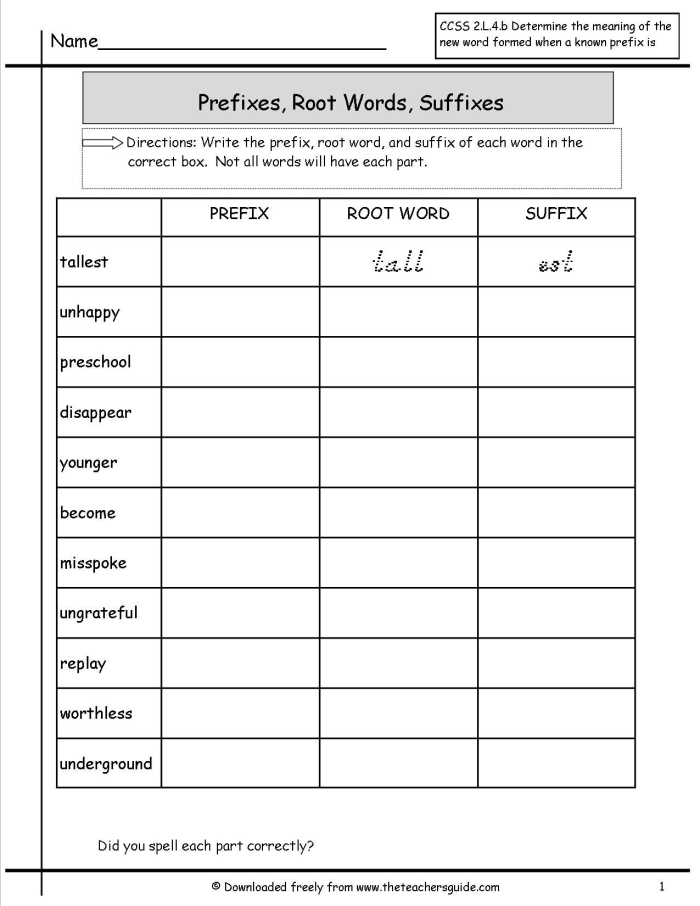
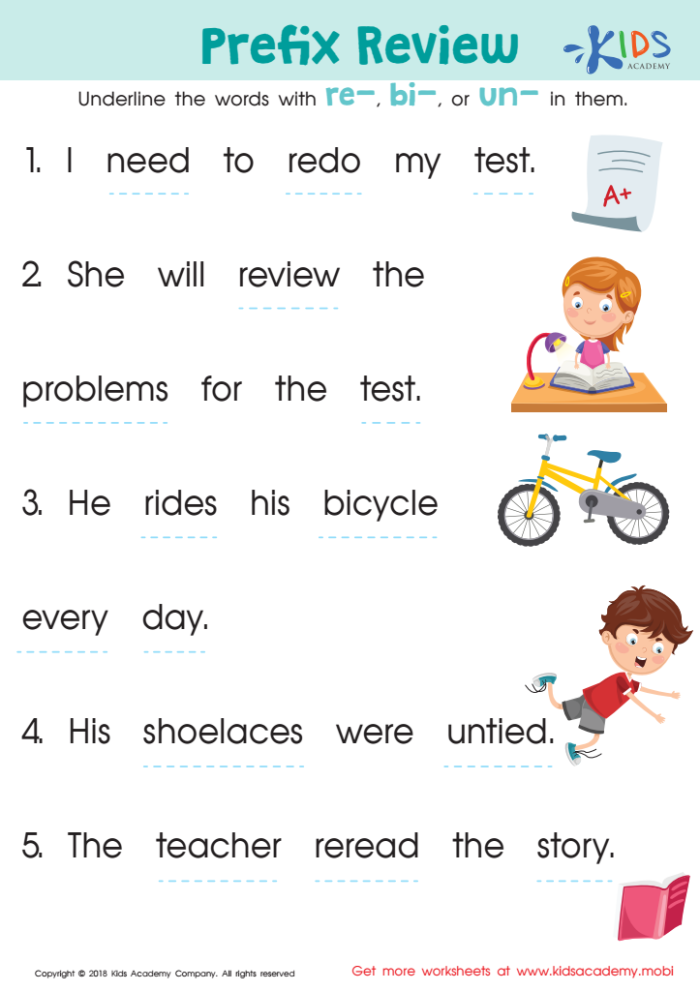
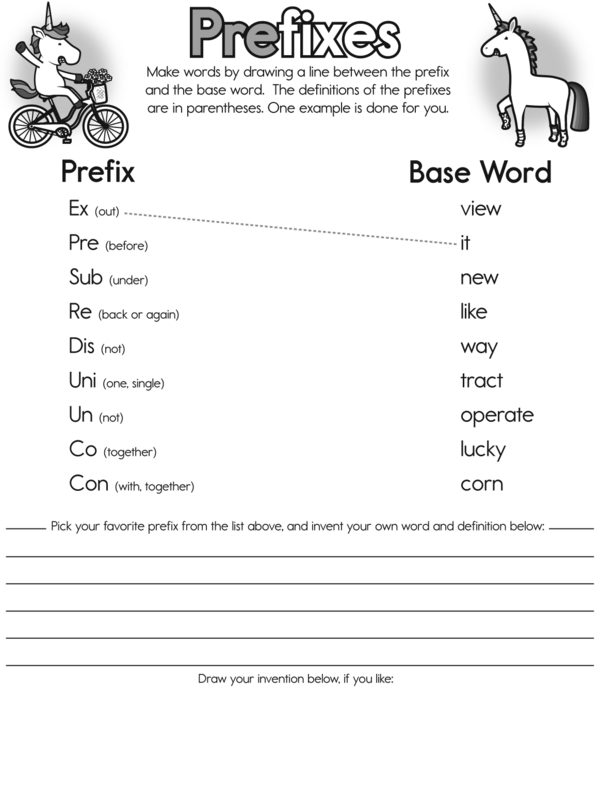
Breaking down words into their component parts is one of those skills that clicks for students once they understand the pattern. This third-grade vocabulary worksheet focuses on exactly that: helping students recognize prefixes, base words, and suffixes as building blocks that create meaning.
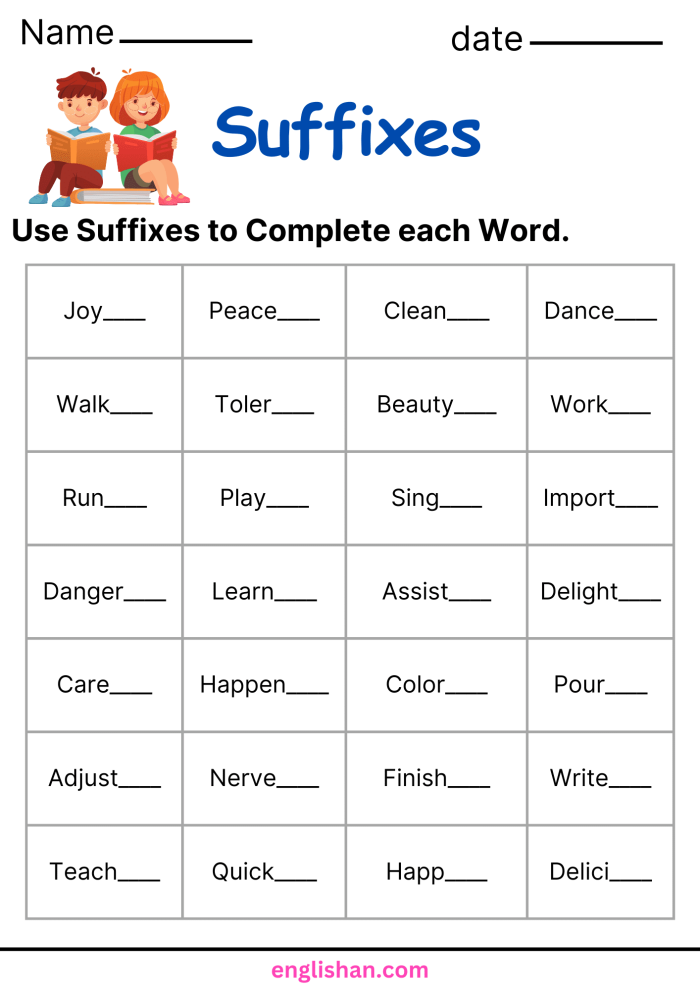
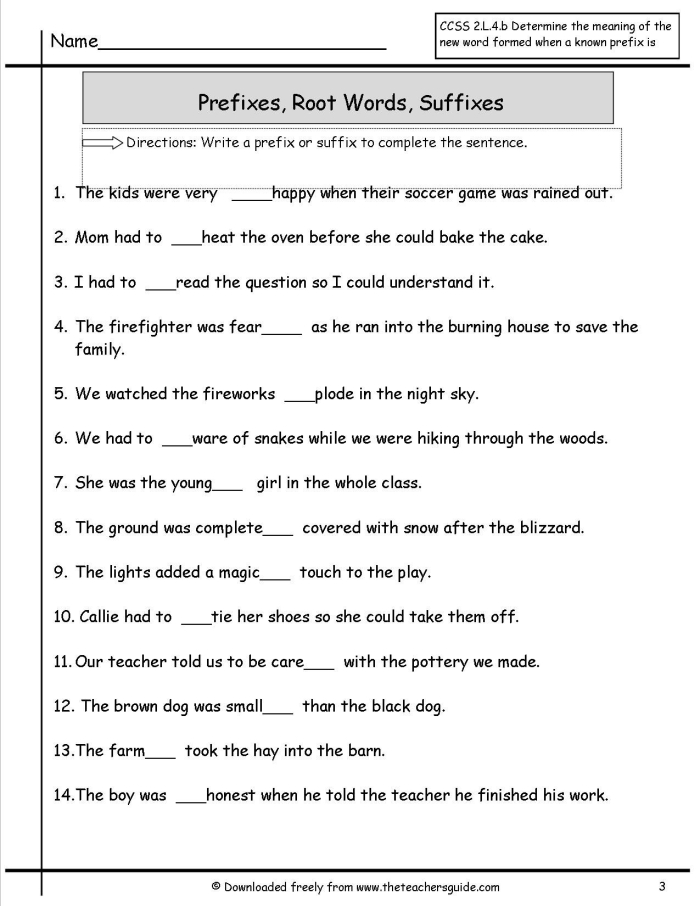
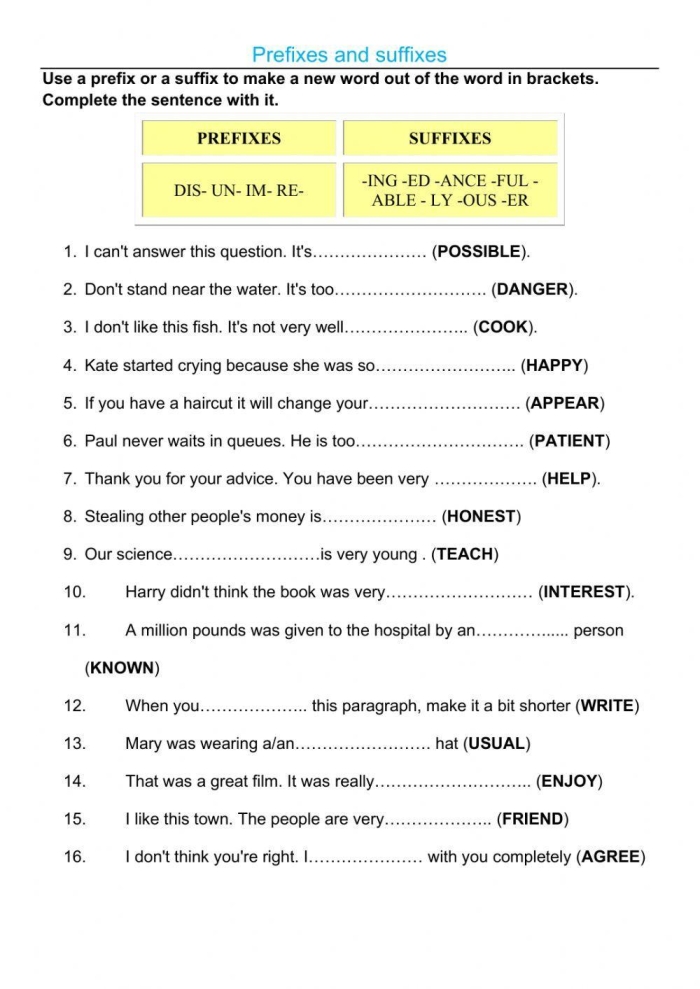
When third graders learn to identify these word parts, they gain a tool that works across their entire reading and writing life. Instead of memorizing individual words, they start seeing patterns. The prefix “un” means not, so “unhappy” becomes predictable. The suffix “ing” shows action happening now, so “running” and “jumping” follow the same logic. A base word is the core meaning, the part that stands alone and carries the main idea.
This worksheet approach works because it’s visual and hands-on. Students see a word, circle the base word, underline the prefix, and box the suffix. They’re not just reading about grammar rules, they’re actively working with words. The repetition helps the pattern stick. By the time they finish, most students can spot these components in unfamiliar words, which means they can decode new vocabulary on their own.
The practical benefit extends beyond vocabulary class. When students encounter a word like “rewrite” or “unhelpful,” they don’t freeze. They break it apart and figure it out. This confidence carries into reading comprehension, where understanding word parts often unlocks the meaning of an entire sentence.
Pairing this activity with other third-grade vocabulary work strengthens the foundation. Students who master word structure often find success with activities like writing exercises that build on word choice, since they understand how words function and combine.
These worksheets work best when used regularly throughout the year, not as a one-time lesson. The repetition builds automaticity, turning word analysis into an instinctive skill rather than a conscious effort.
Hands-On Worksheet Activities