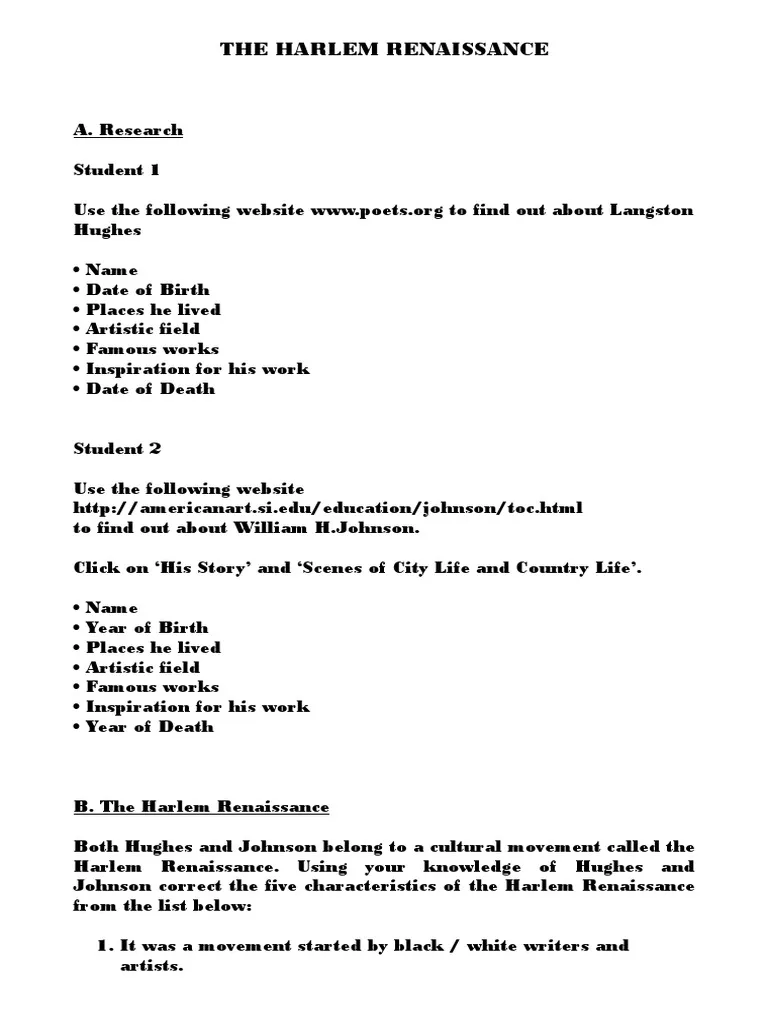
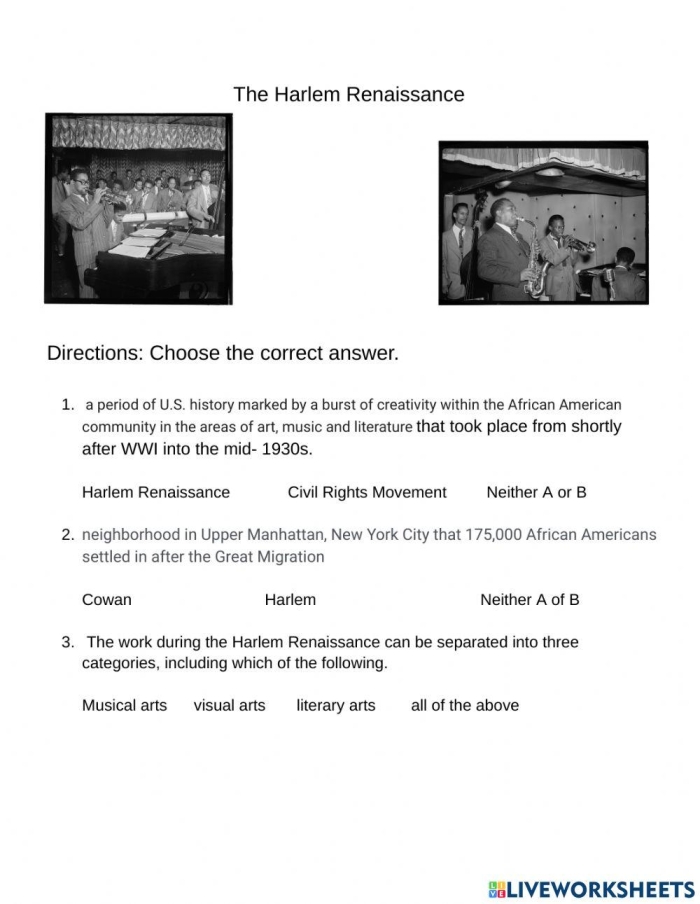
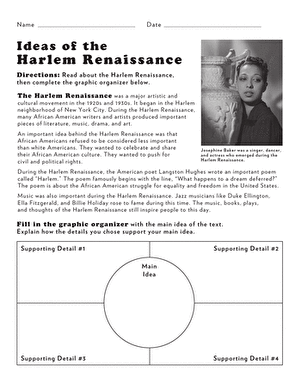
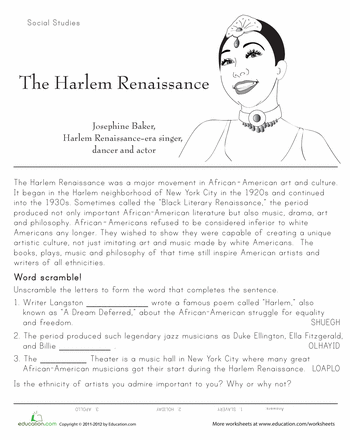
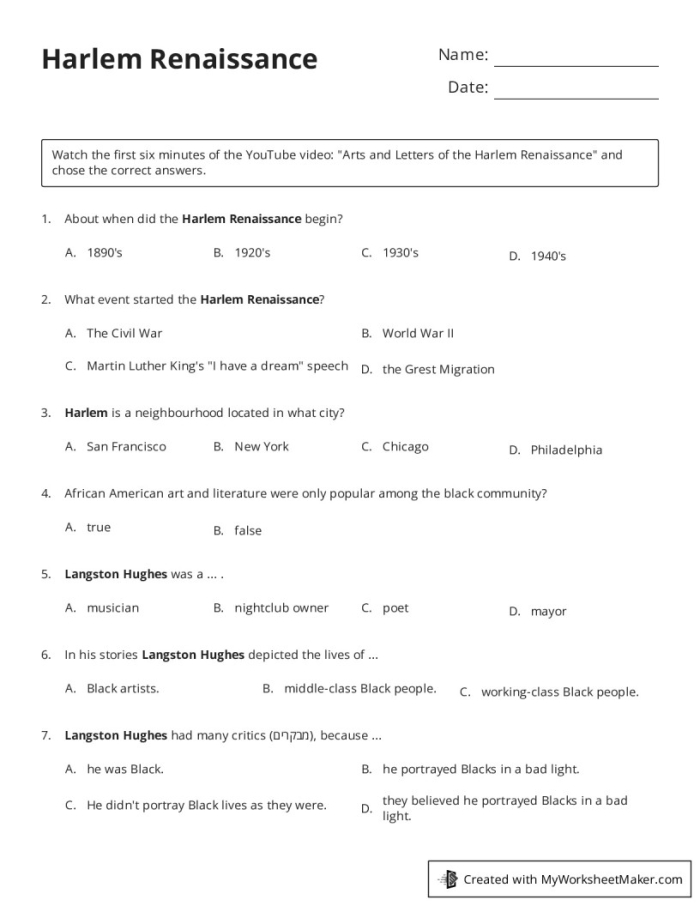
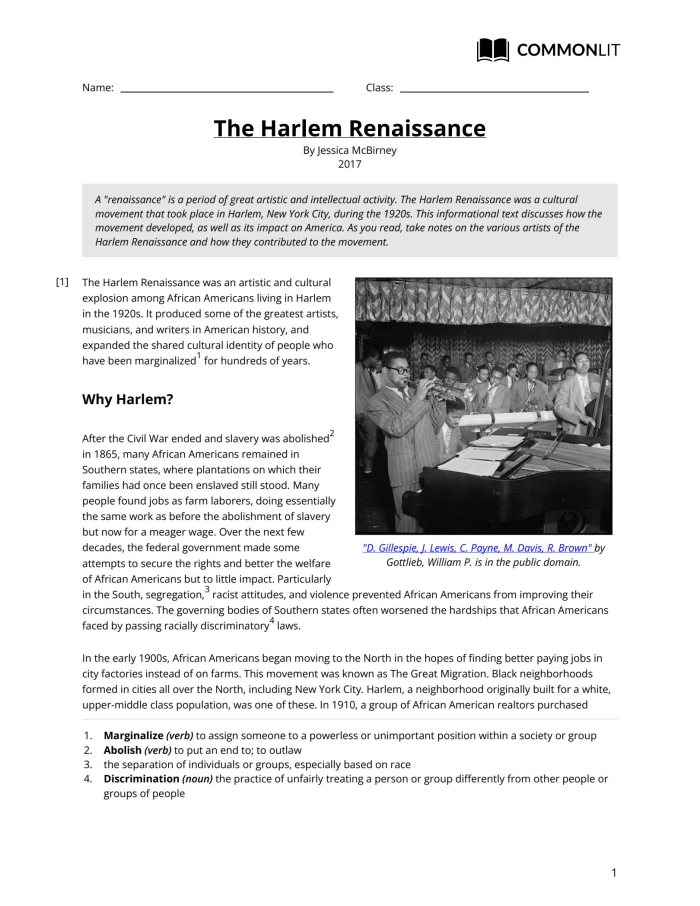
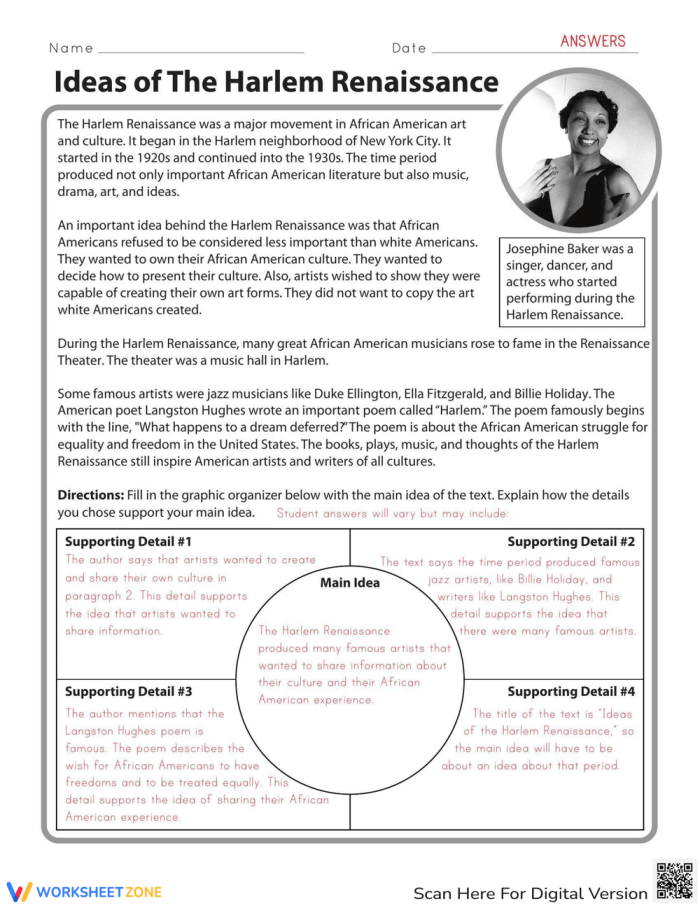
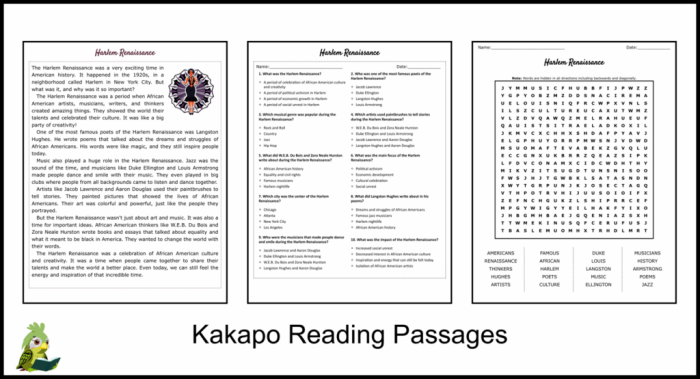
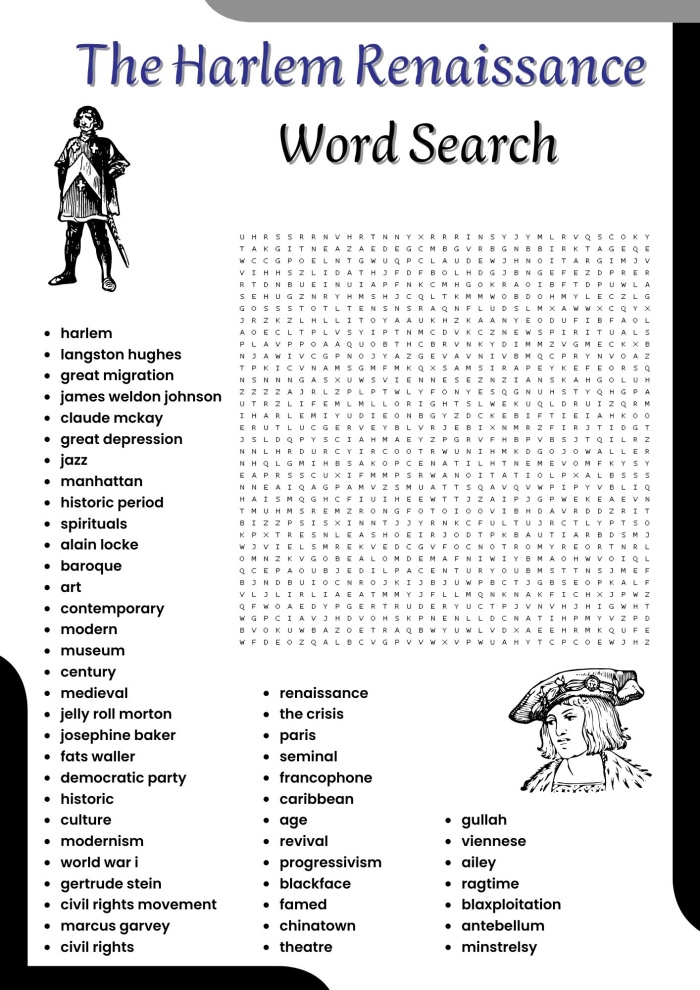
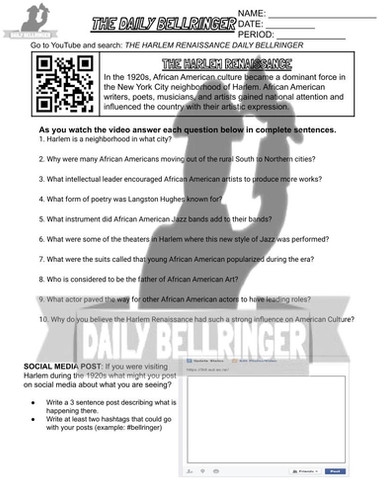
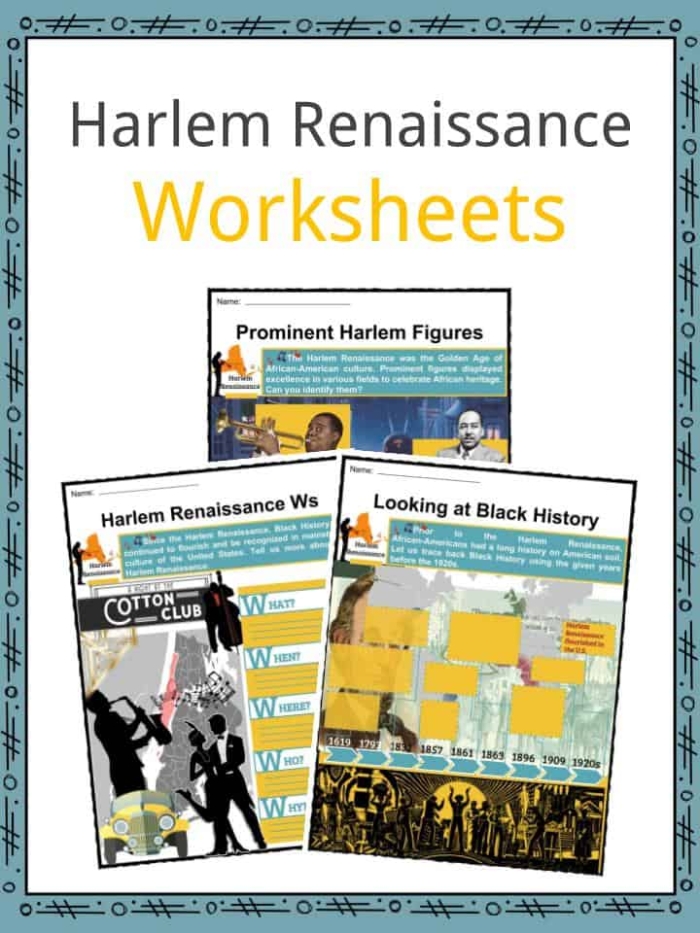
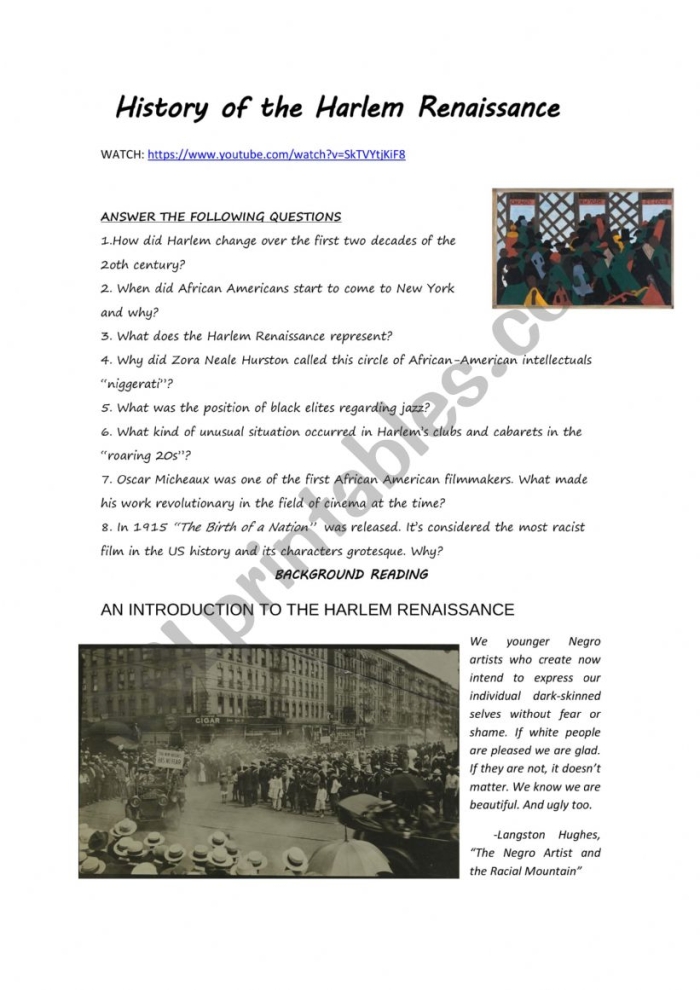
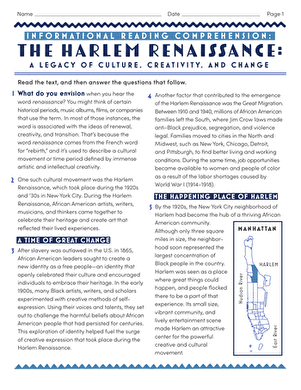
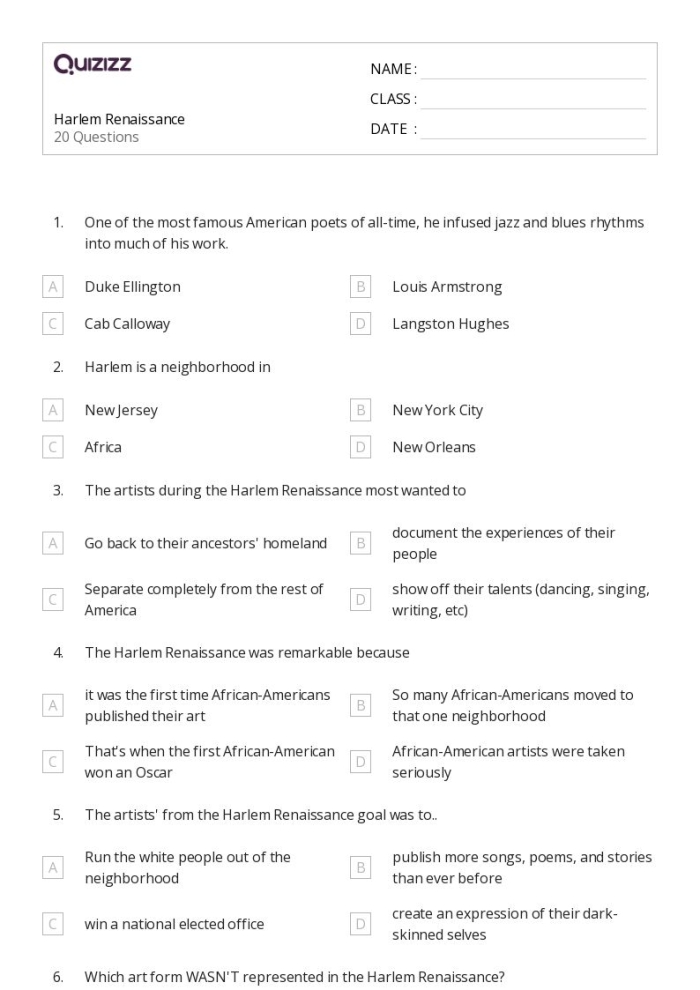
Introducing third grade students to the Ideas of the Harlem Renaissance through a worksheet is a smart way to connect history with reading and phonics skills. This cultural movement, which took place mainly during the 1920s and 1930s, was a vibrant period of artistic and intellectual growth among African Americans, centered in Harlem, New York City. Children get a chance to explore not just facts, but also the spirit of creativity that defined this era.
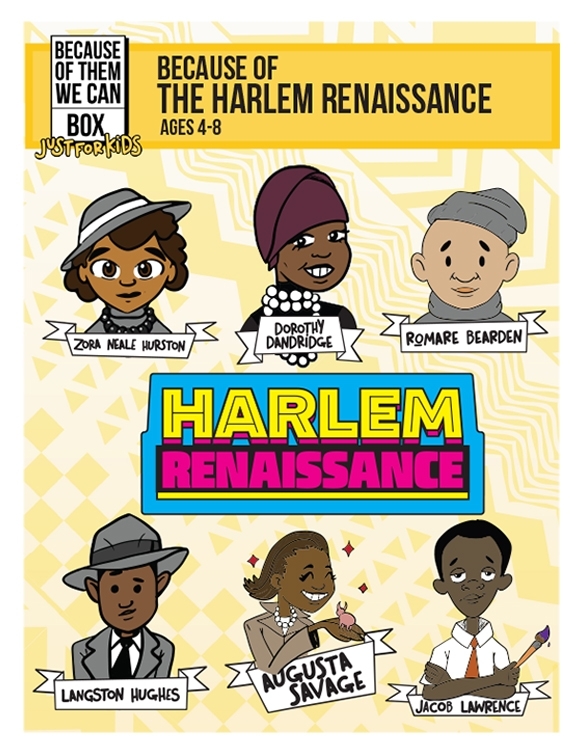
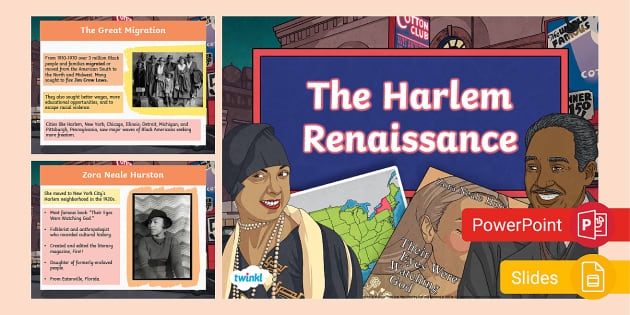
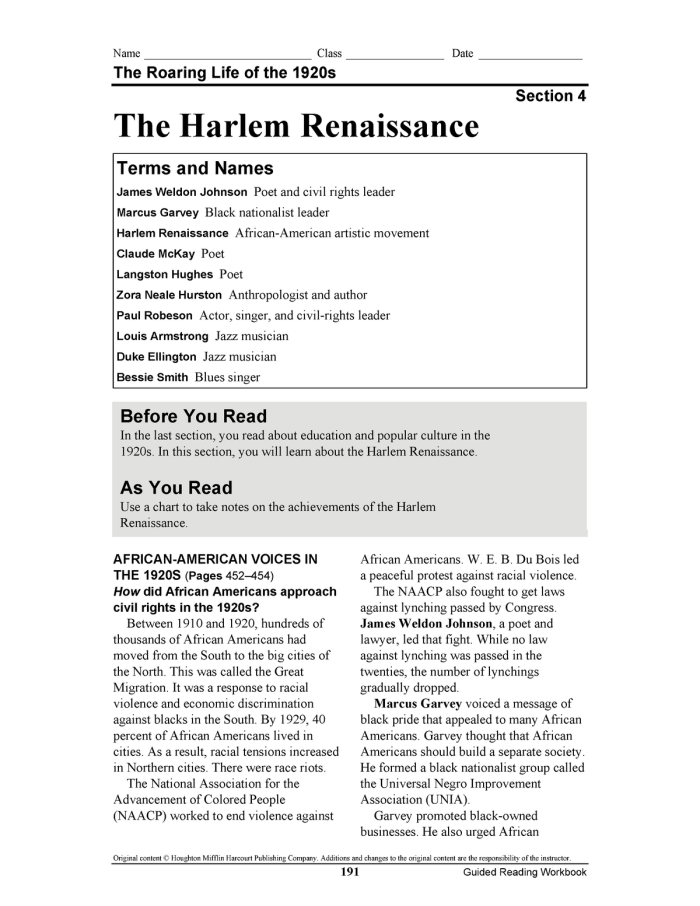
The worksheet presents simple explanations about what the Harlem Renaissance was: a time when African American artists, writers, and musicians gained recognition for their contributions to culture. It highlights famous figures such as Langston Hughes, known for his poetry, and Duke Ellington, a key jazz musician. Including these names helps students put faces to the ideas and understand how this movement influenced American culture.
One of the benefits of using this worksheet in a third grade phonics lesson is that it combines content knowledge with language skills. Children practice reading comprehension and vocabulary while learning about history. For example, words like “jazz,” “poetry,” and “artist” appear in the text, offering natural opportunities to reinforce phonics patterns and word recognition. This integration supports literacy development in an engaging context.
Teachers will find that printable Ideas of the Harlem Renaissance worksheets provide a focused way to introduce cultural history without overwhelming young learners. By connecting the material to phonics practice, students can improve their reading fluency and vocabulary understanding alongside learning about an important part of American heritage. This approach also encourages curiosity, as children often want to hear and see more about the music and art of that time.
For those interested in expanding phonics and writing skills further, resources like writing prompts about seasons or narrative kinds can complement lessons about historical topics. These materials support a balanced literacy program that builds both knowledge and reading ability in third grade. When lessons weave together history and language arts thoughtfully, students gain a richer, more memorable learning experience.
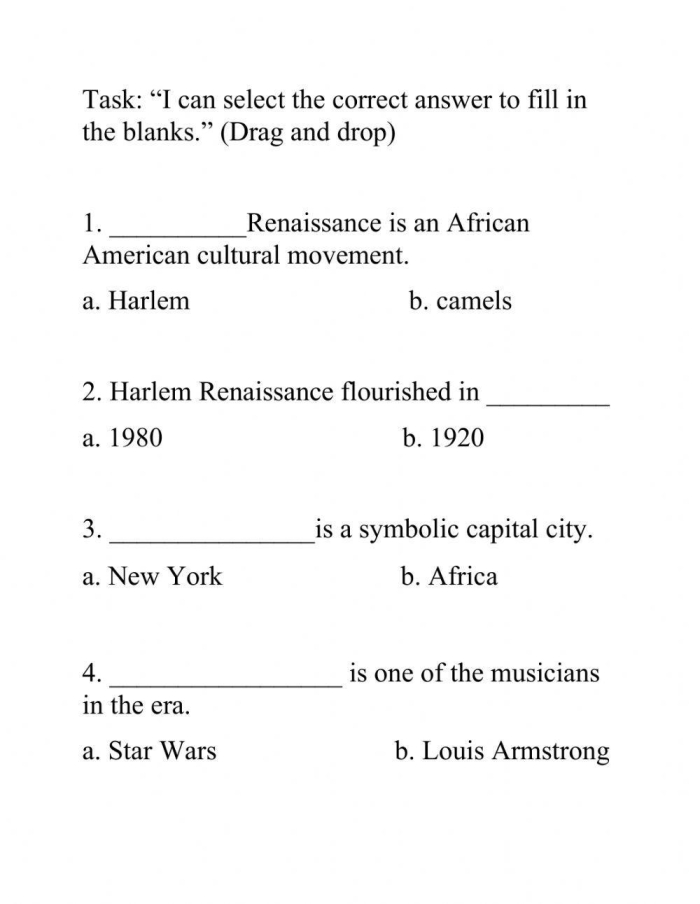
Worksheet Practice Section