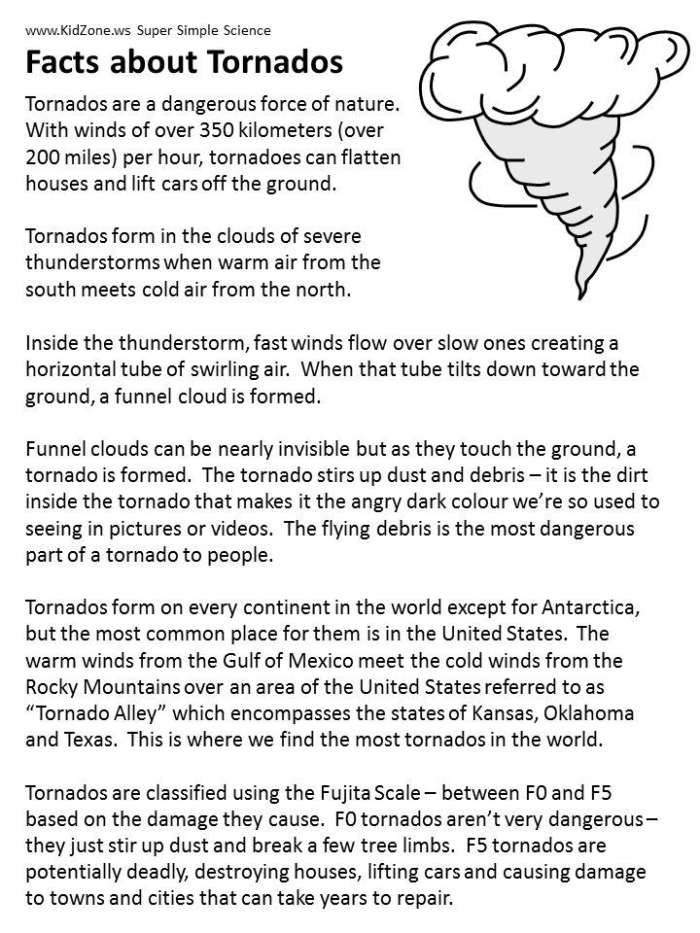
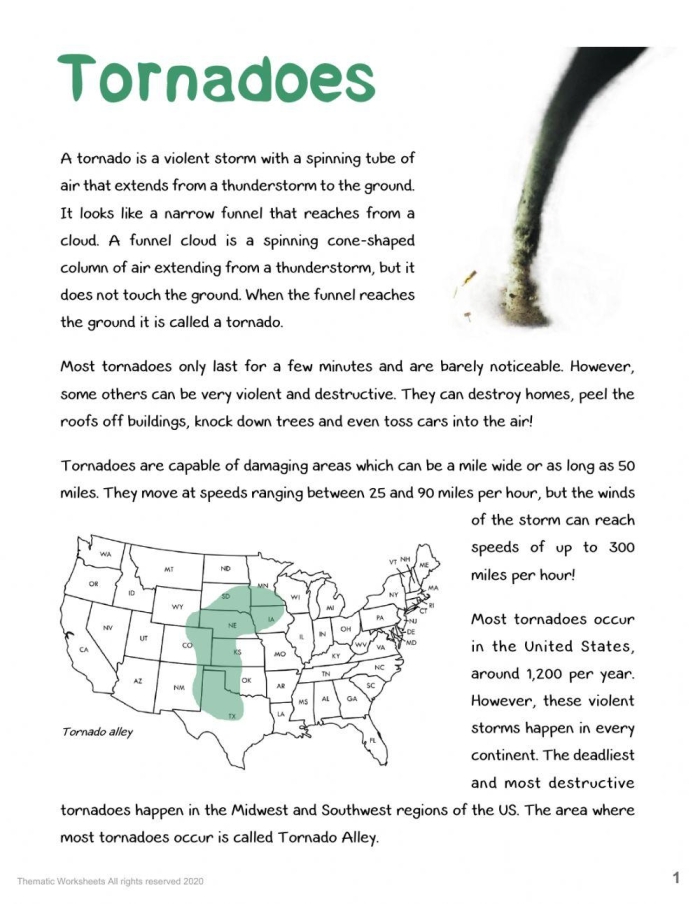
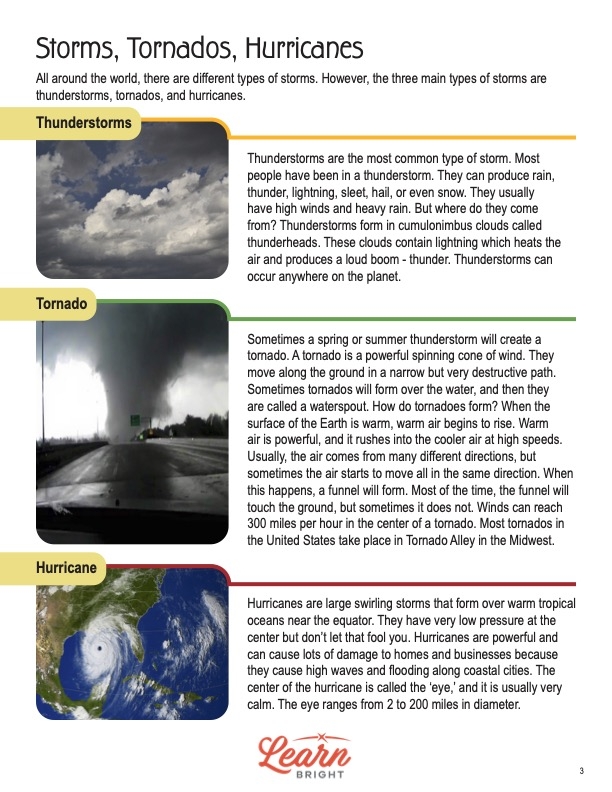
Do you know how tornadoes form? Understanding the science behind tornado formation is not only fascinating but also crucial for safety and preparedness. Tornadoes are violent windstorms characterized by a rotating column of air that extends from a thunderstorm to the ground. The formation of these powerful storms involves specific atmospheric conditions.
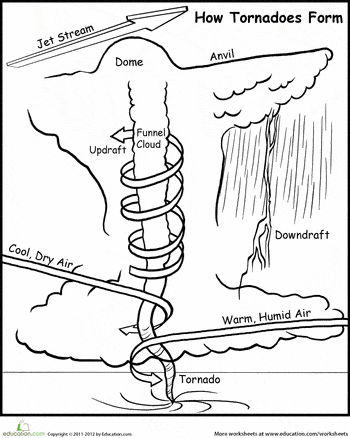
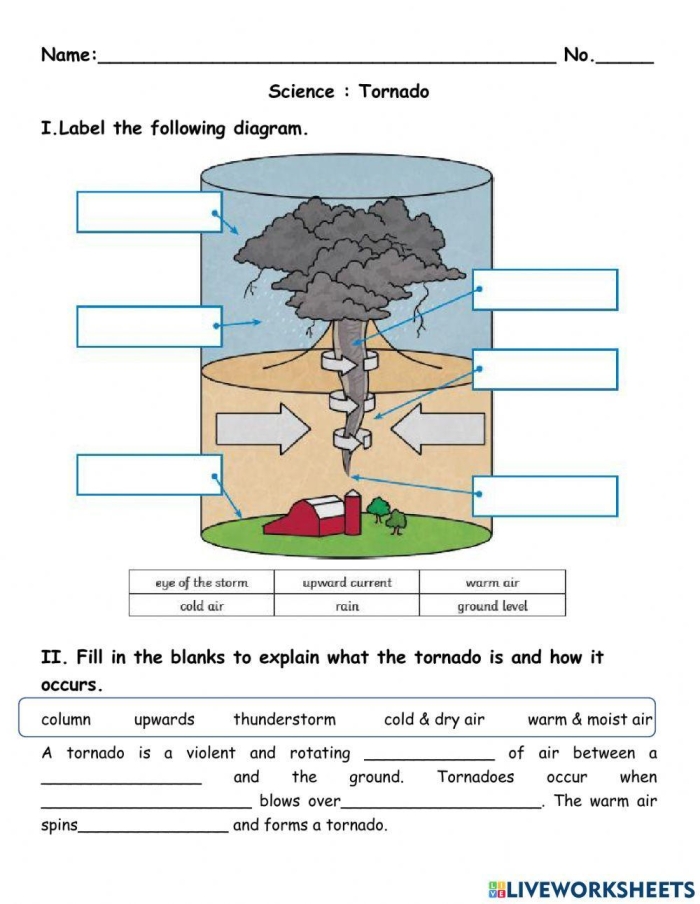
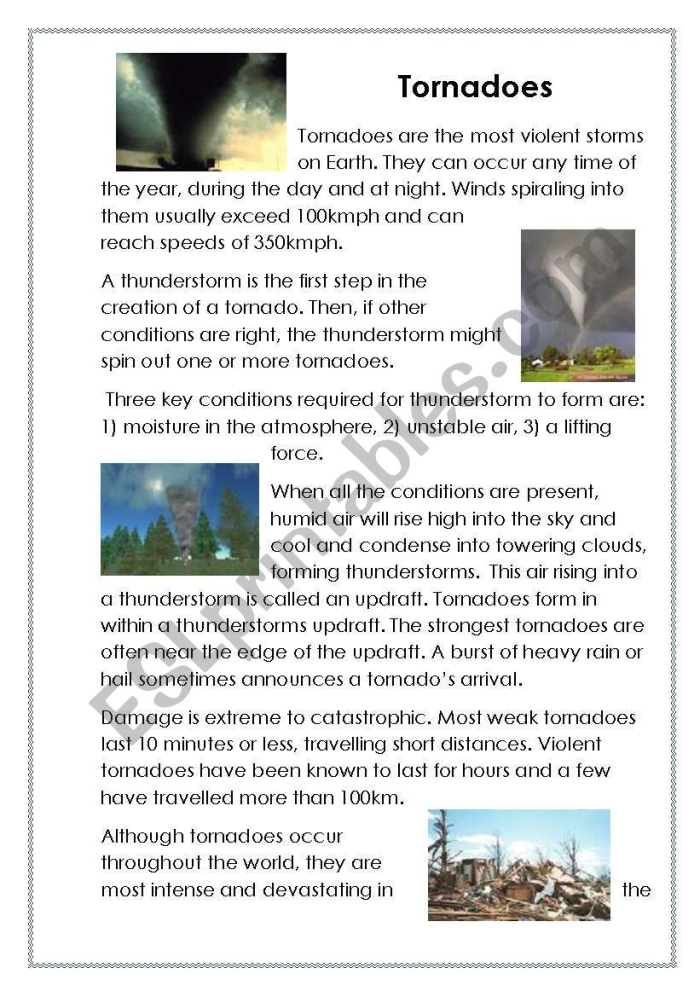
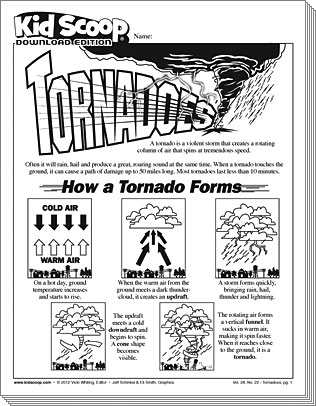
First, the necessary ingredients for tornado formation include warm, moist air near the surface and cooler, dry air above. This creates instability in the atmosphere. When these two air masses collide, powerful updrafts begin to develop. As these updrafts continue to rise, they may start to rotate, especially if there is wind shear—changes in wind direction and speed with height—present in the environment.
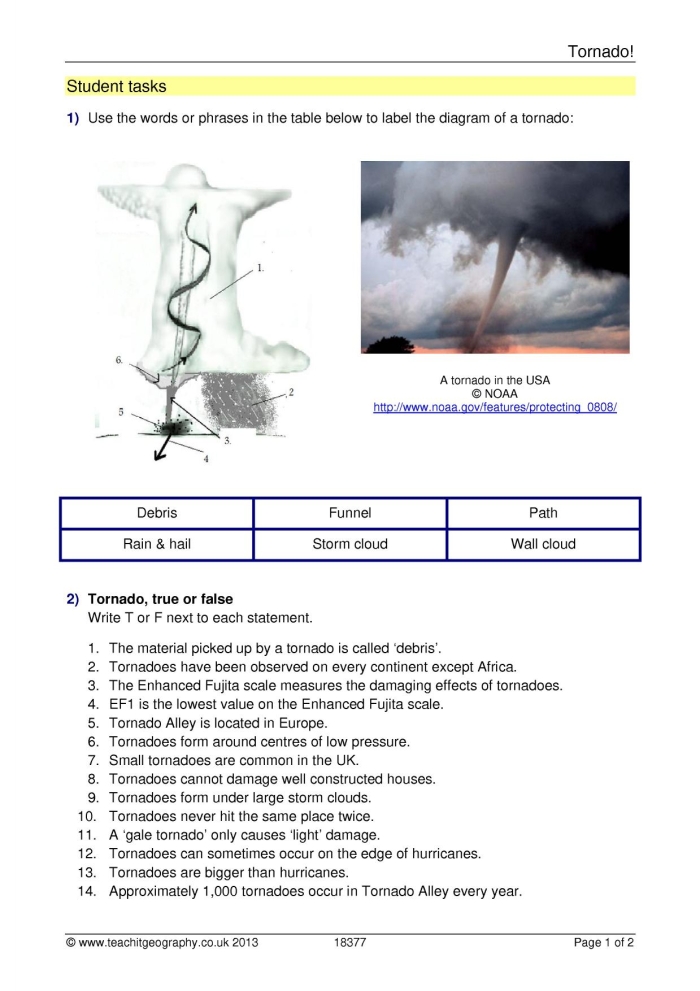
Once the rotating updraft, known as a mesocyclone, forms, it becomes more organized. If conditions remain favorable, this rotating column can tighten and extend downward, creating a funnel cloud. When this funnel cloud touches the ground, it officially becomes a tornado. The enhanced Fujita scale categorizes tornadoes based on the damage they cause, ranging from EF0 (weak) to EF5 (incredible).
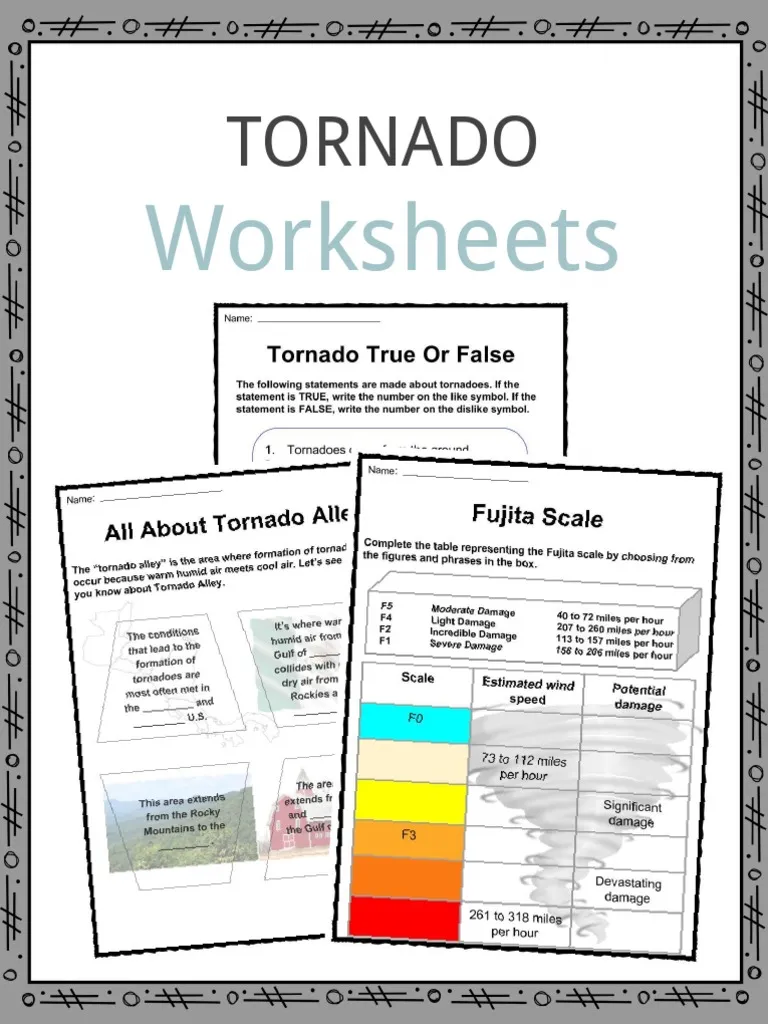
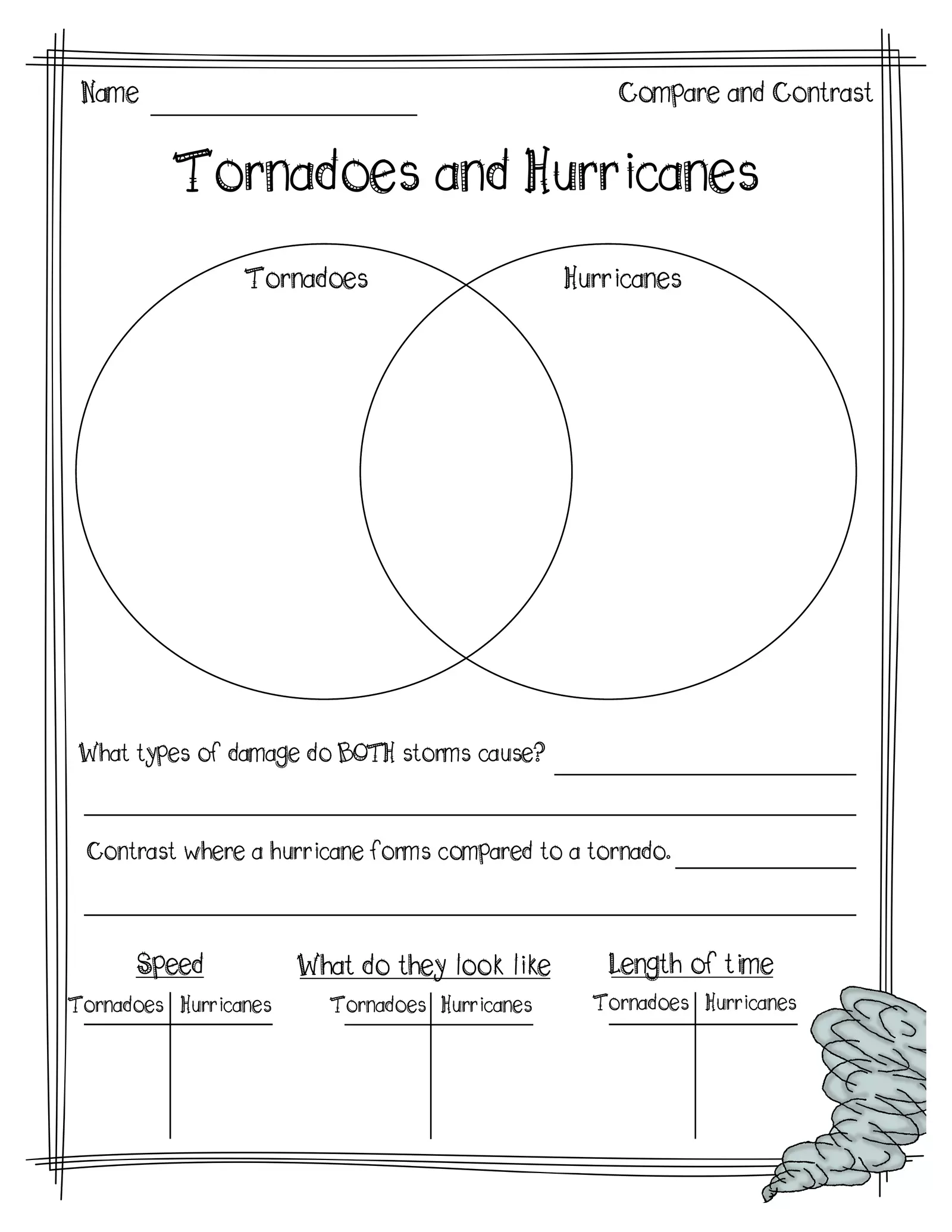
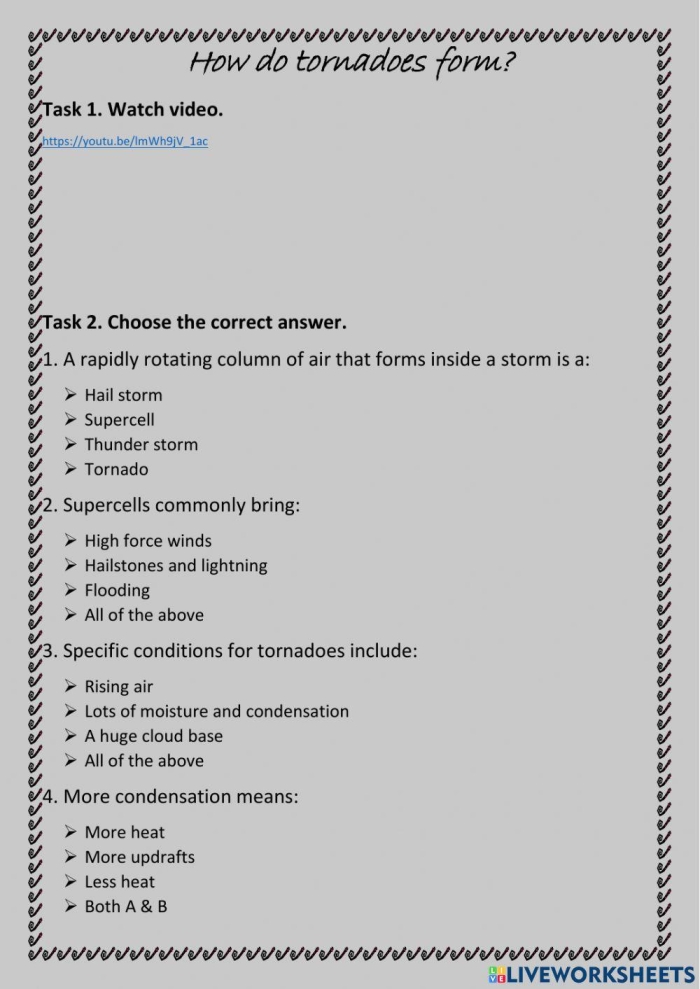
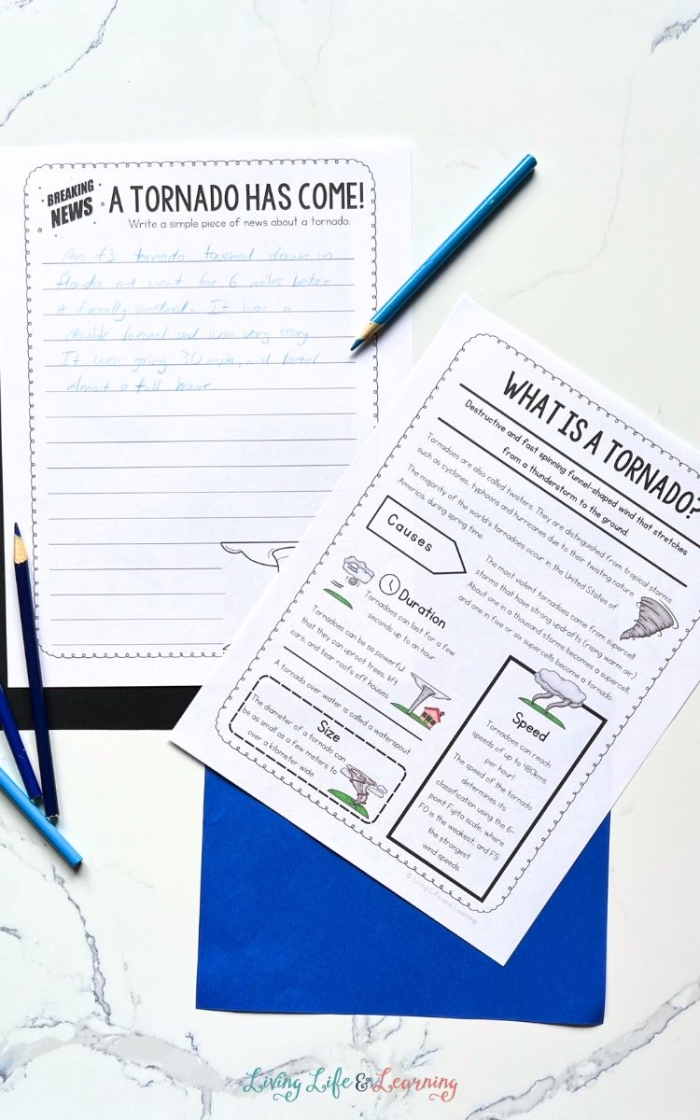
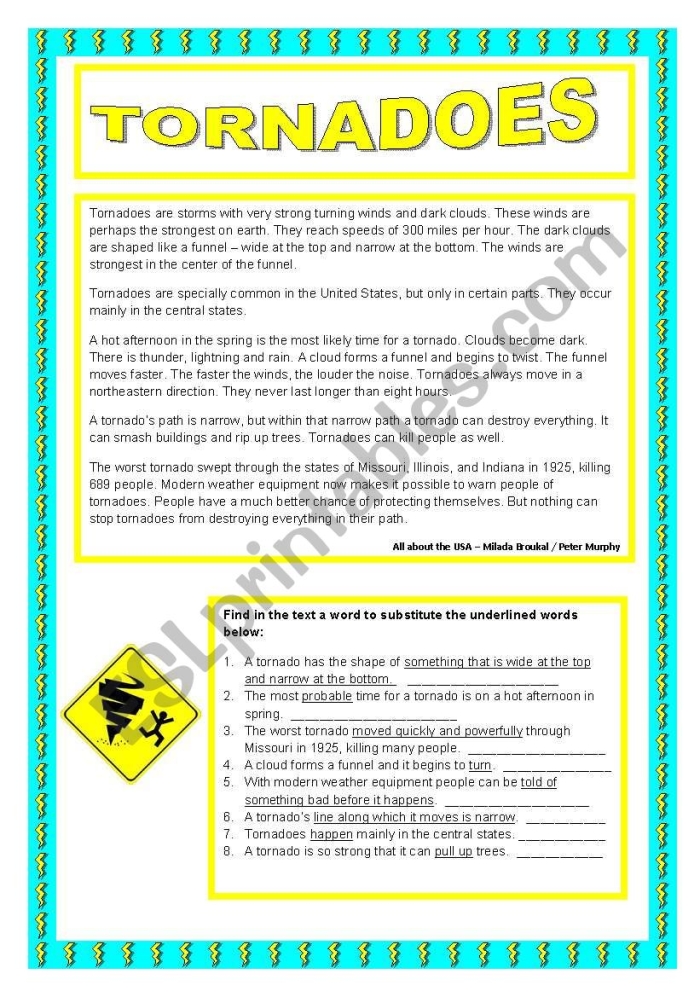
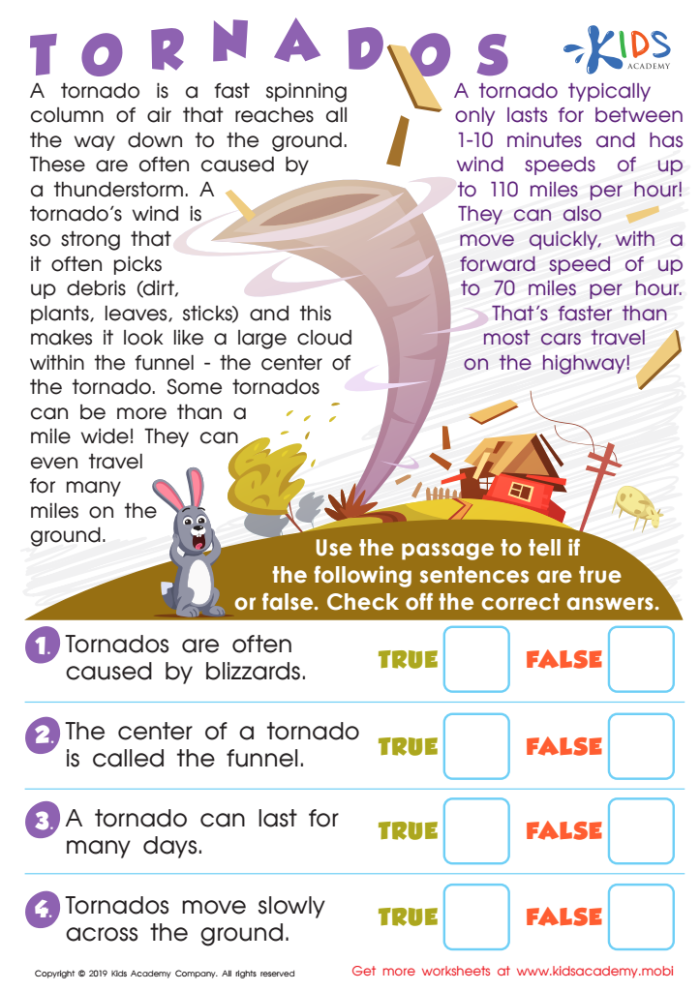
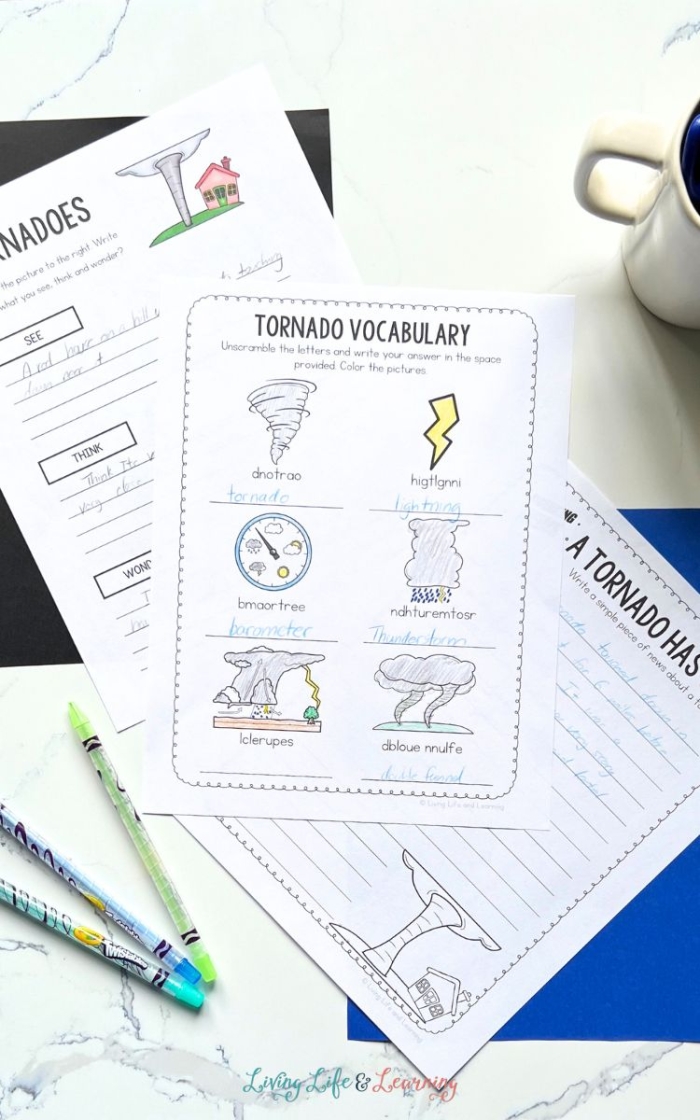
For students, visual aids can greatly enhance understanding. A printable worksheet on how tornadoes form can provide diagrams that illustrate these processes, making it easier for fifth graders to grasp the concept. Such educational resources help break down complex scientific phenomena into manageable parts, which is essential in subjects like algebra where students can apply mathematical reasoning to understand data related to tornadoes.
If you want to explore more educational materials, check out resources like Printable How Tornadoes Form Worksheets or engage with other topics such as parts of speech that can be integrated into your curriculum.
Printable Worksheets for Practice