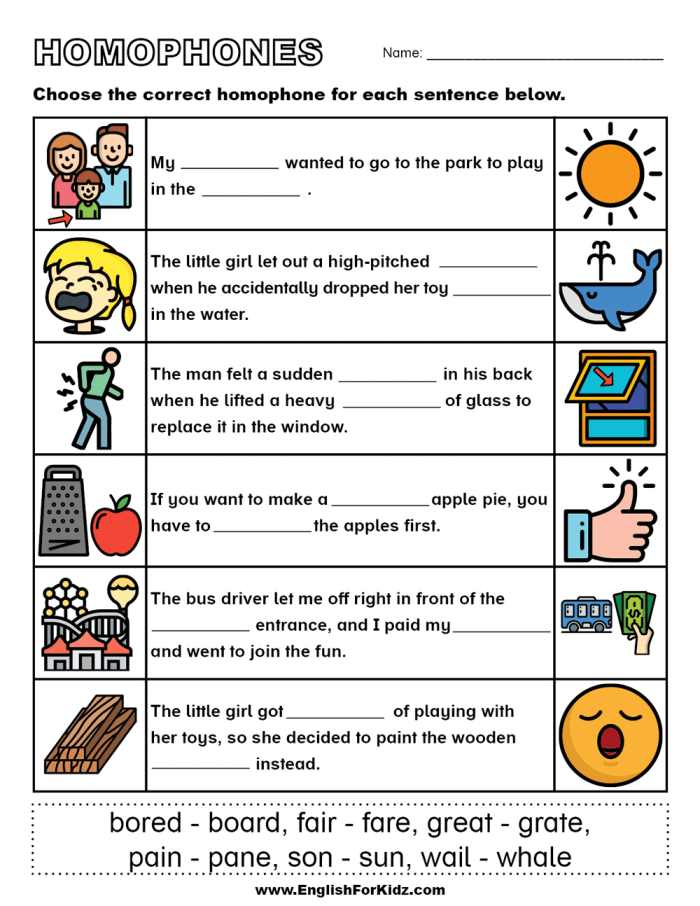
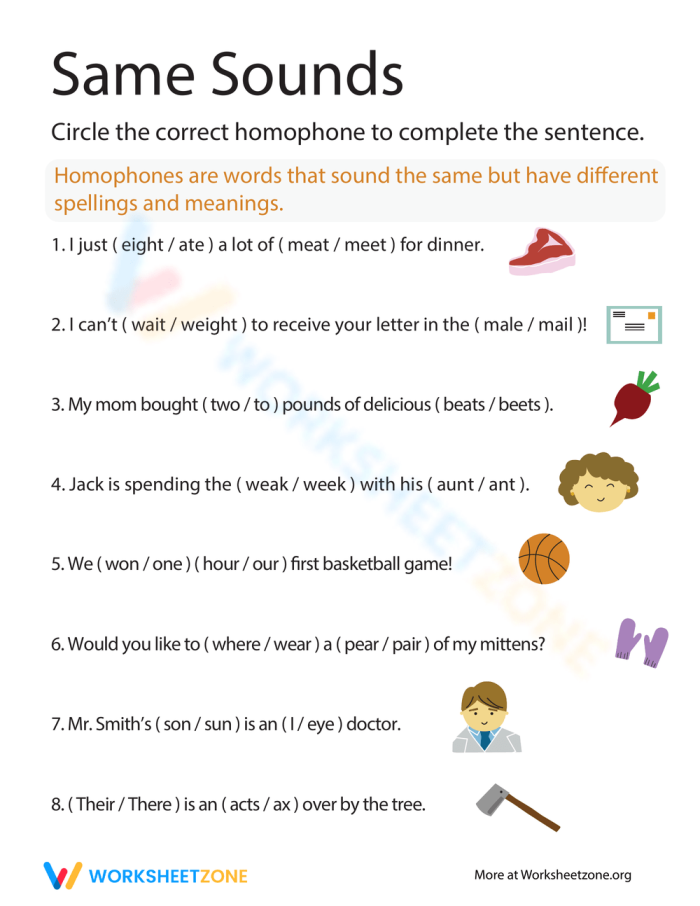
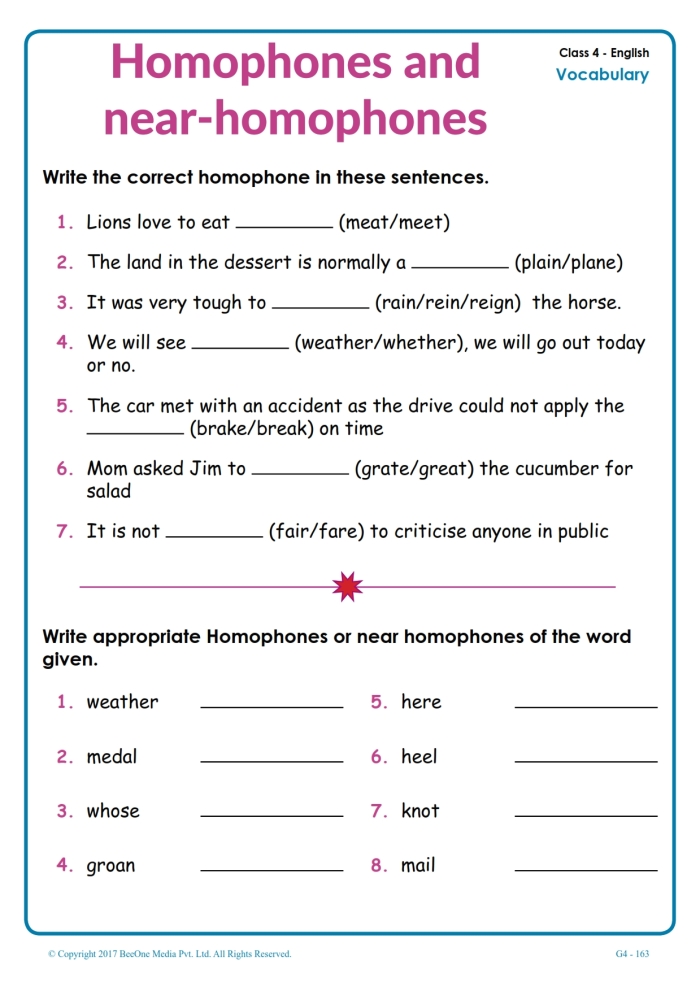
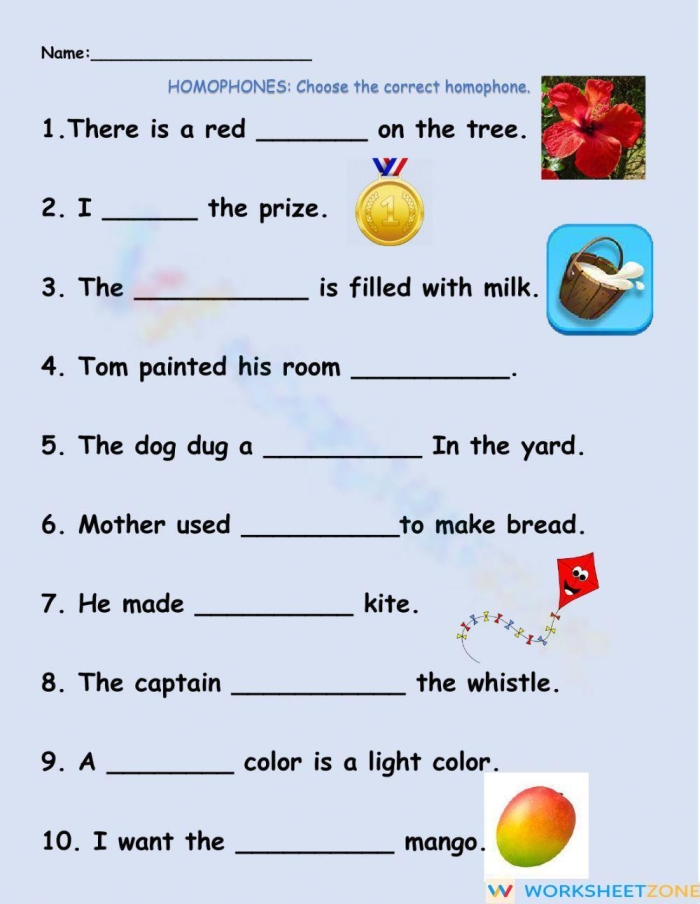
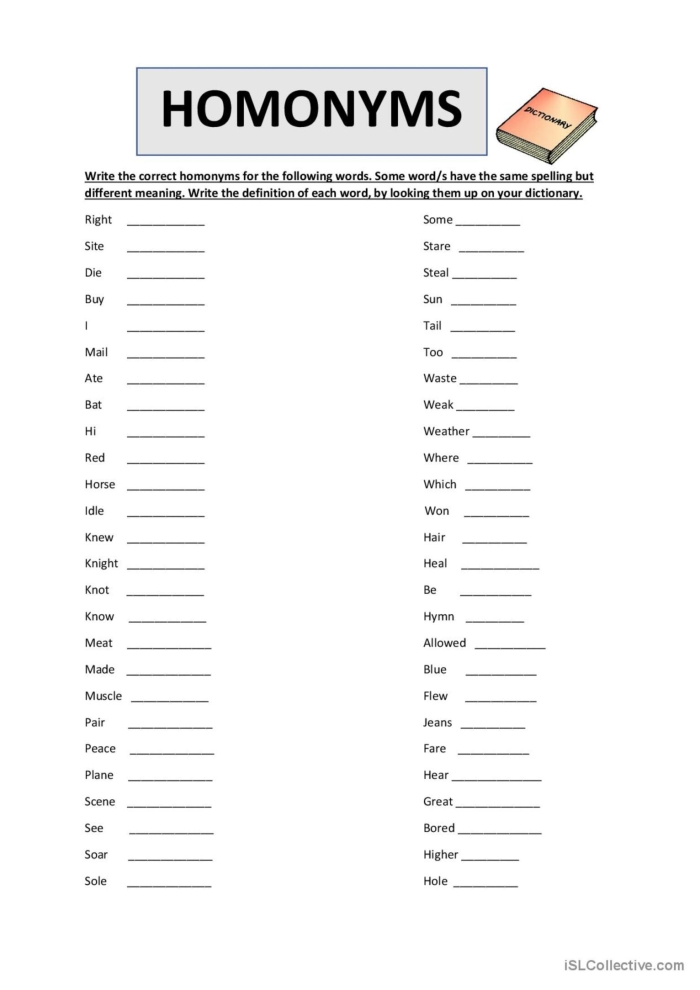
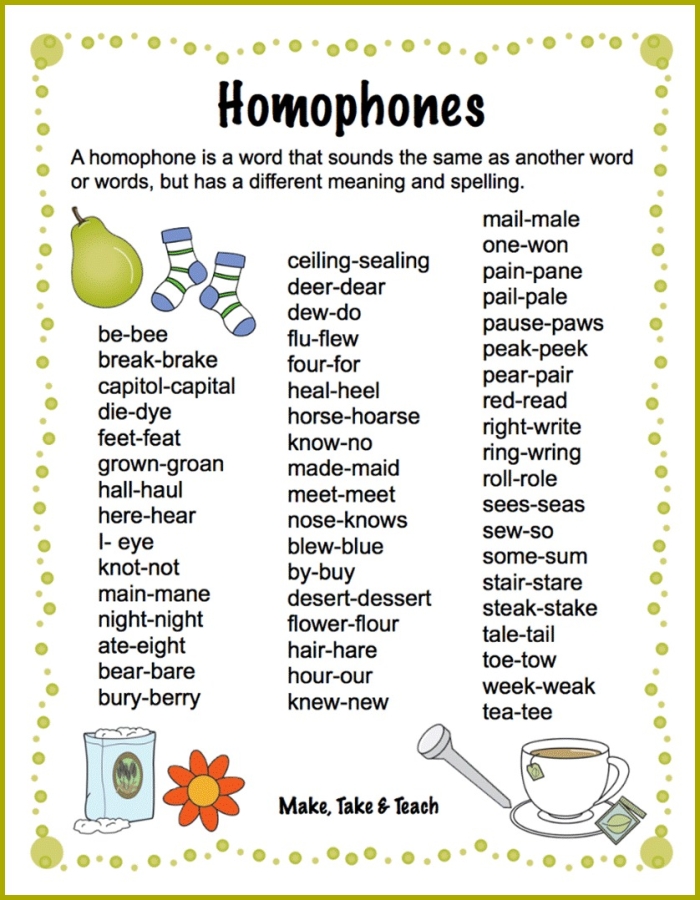
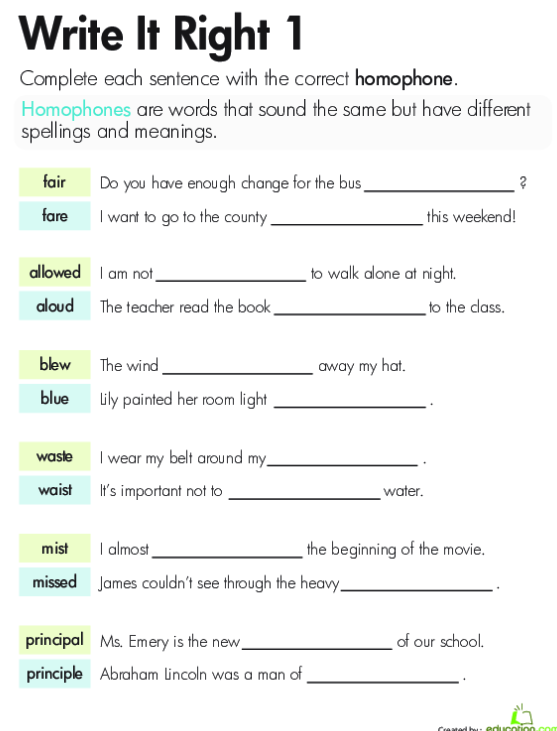
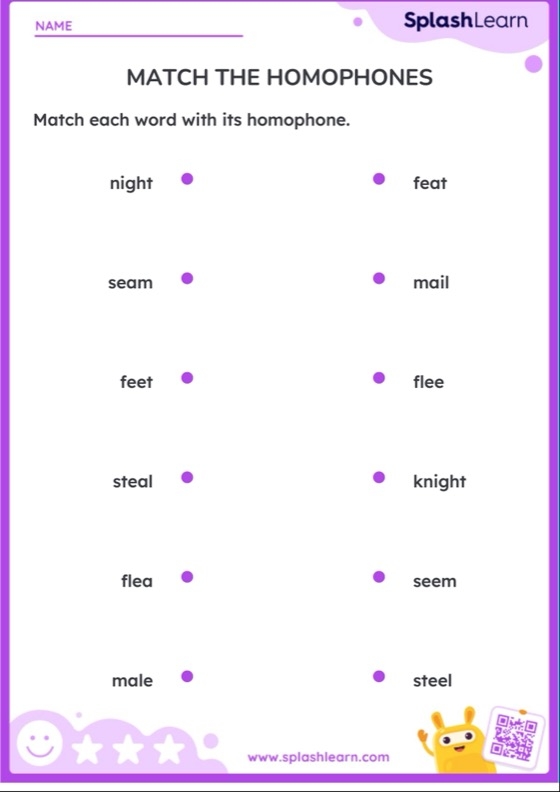
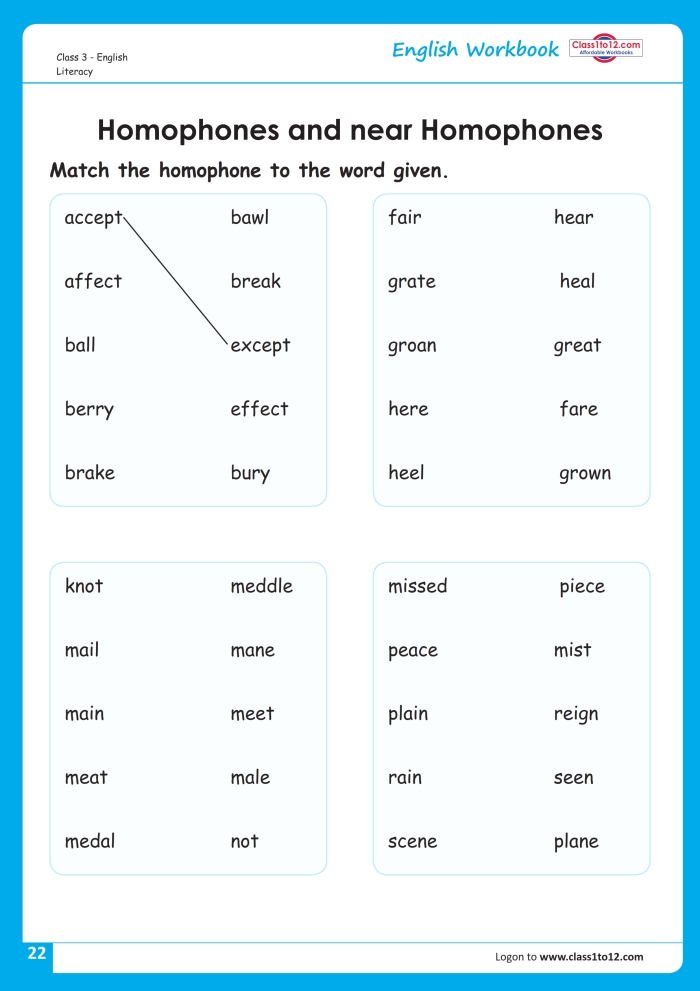
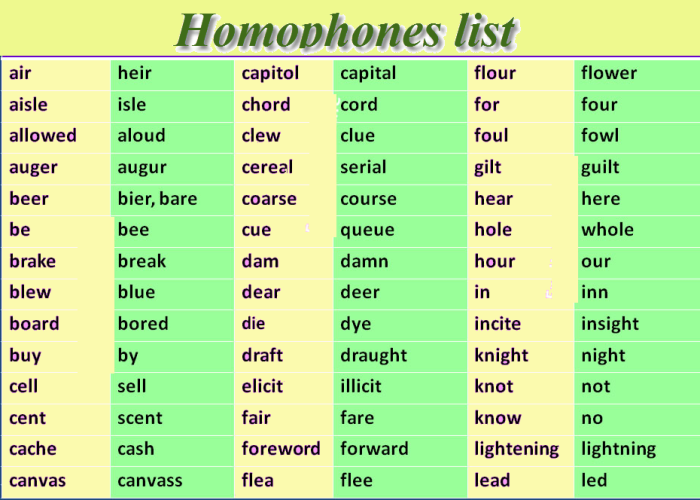
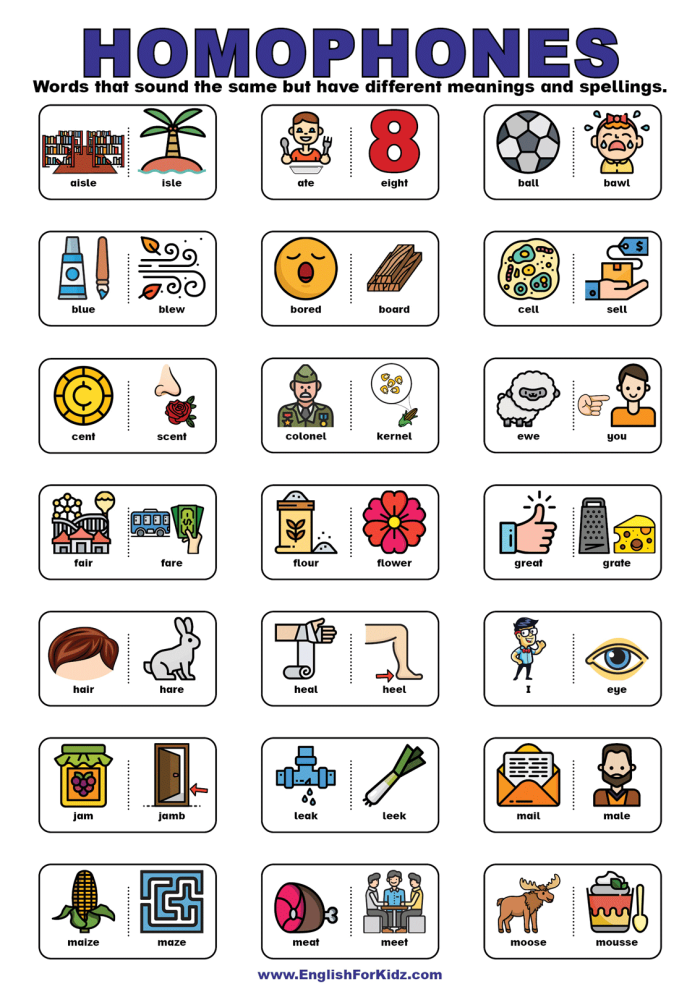
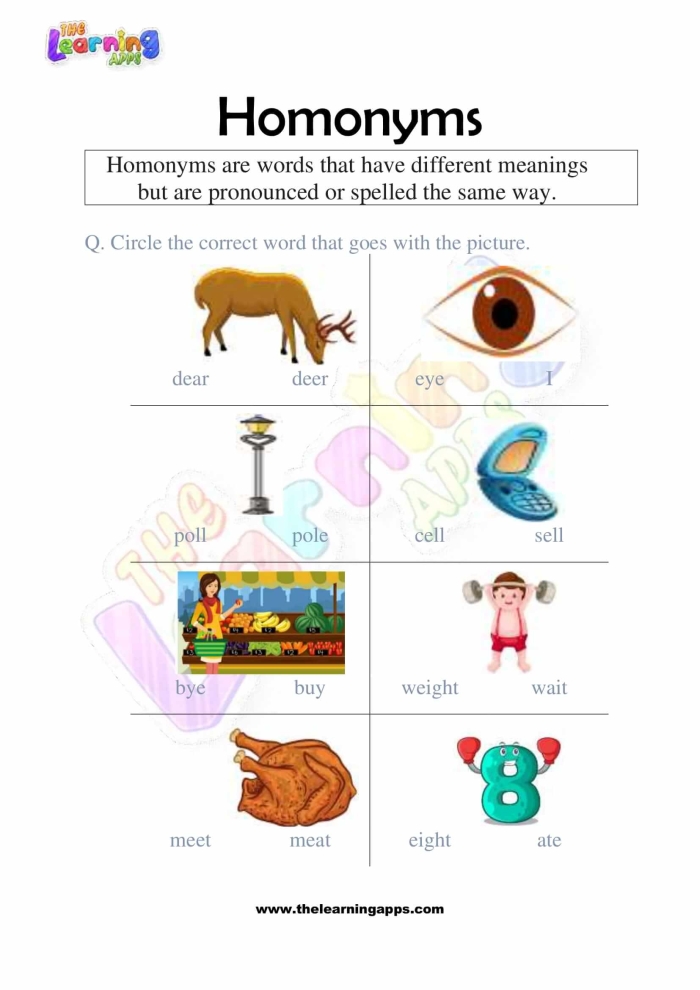
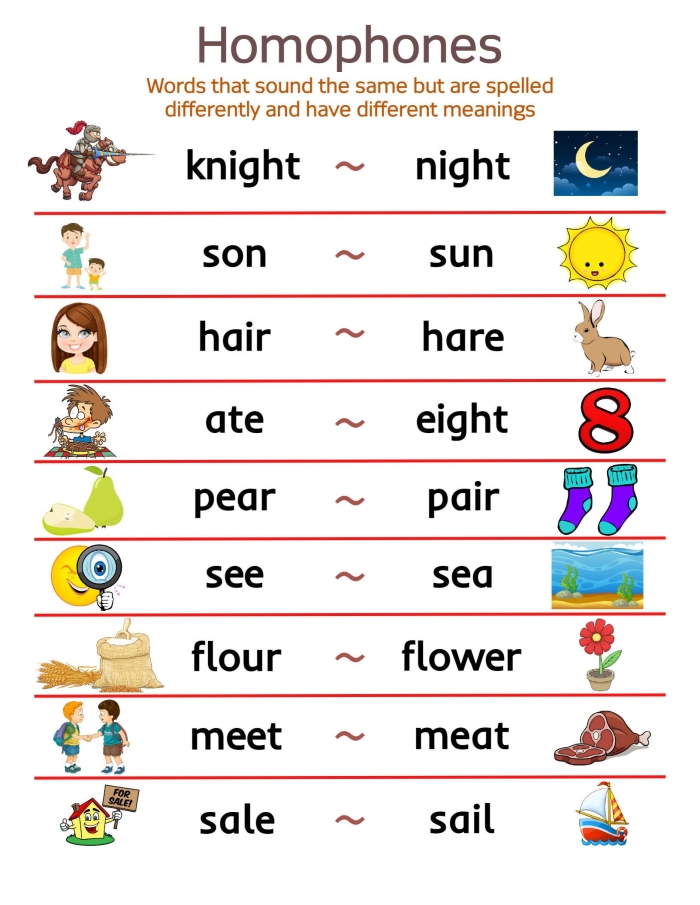
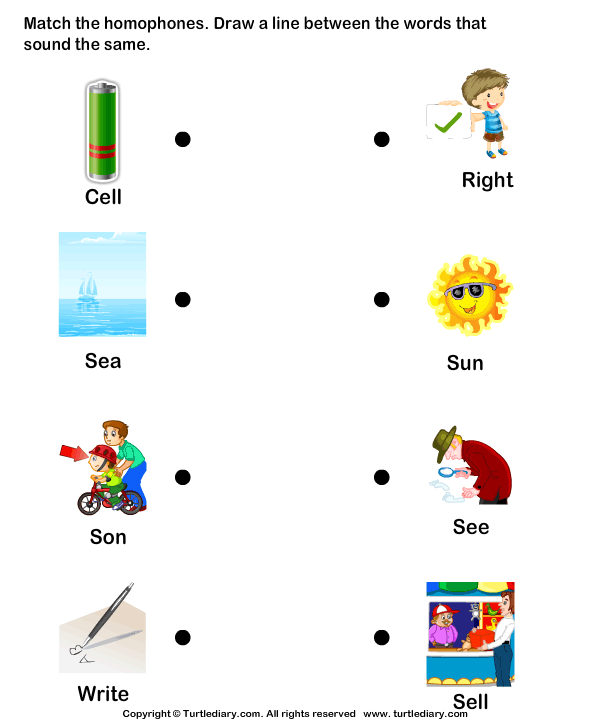
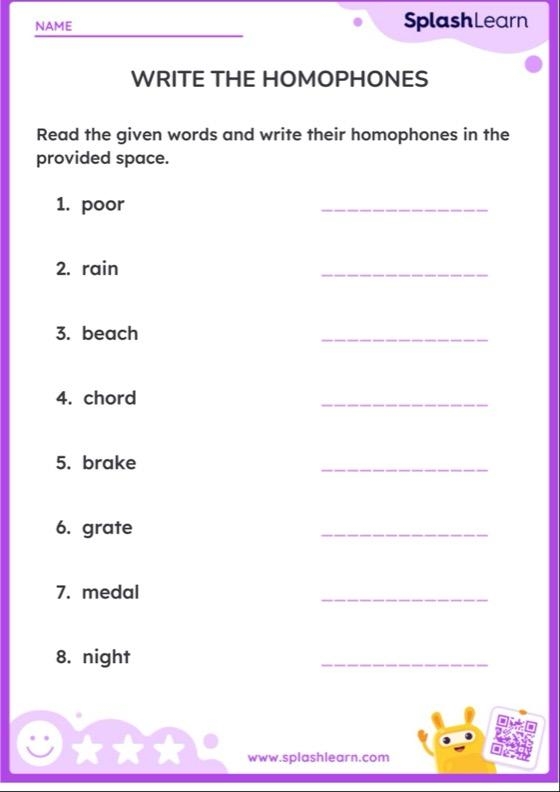
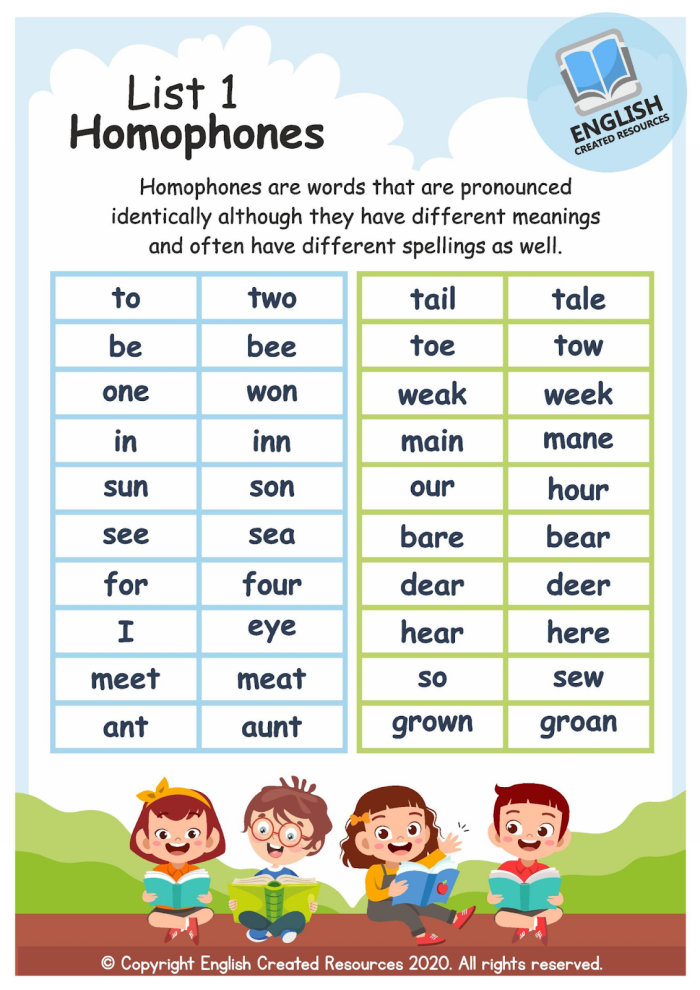
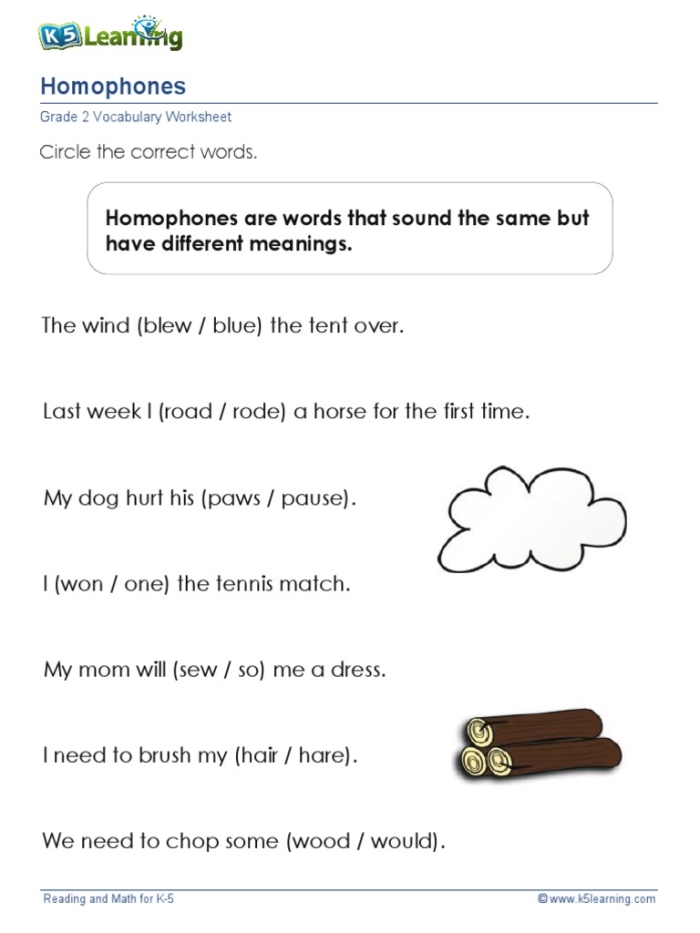
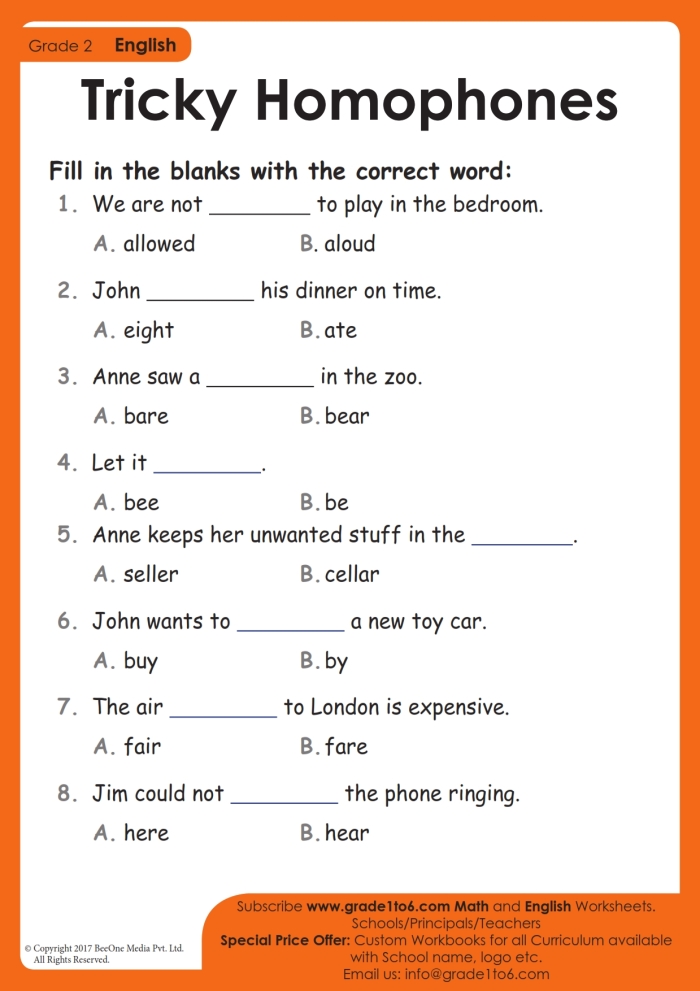
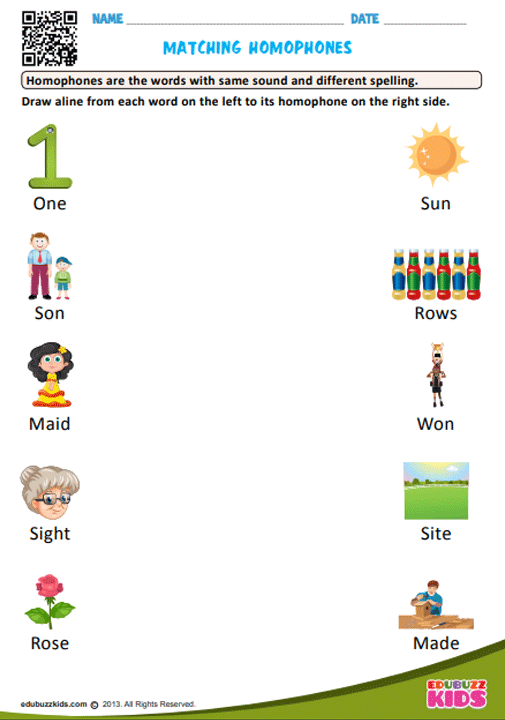
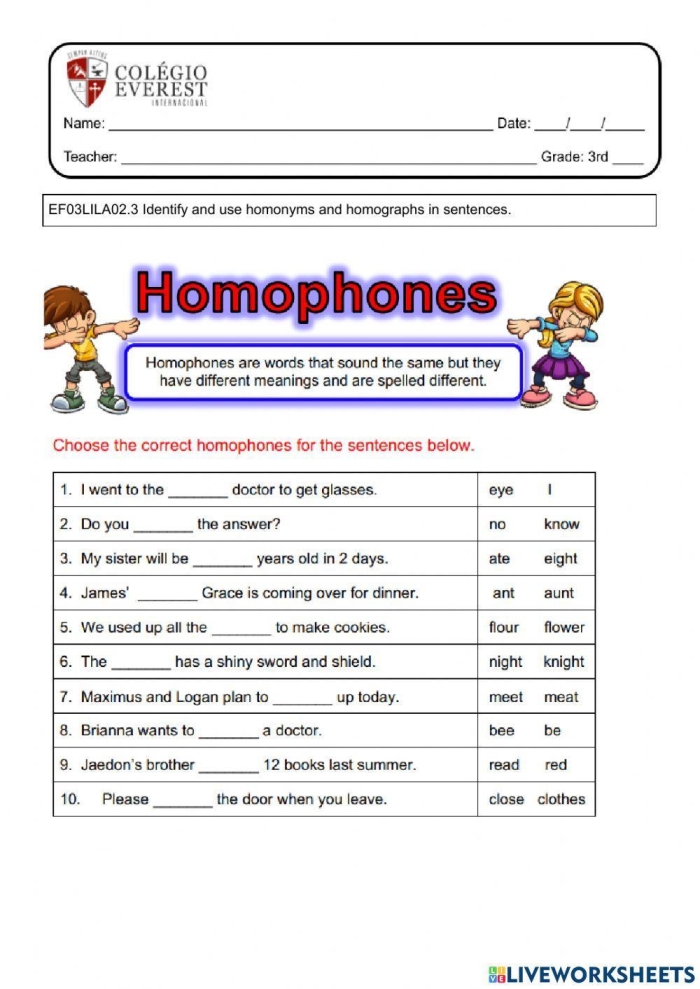
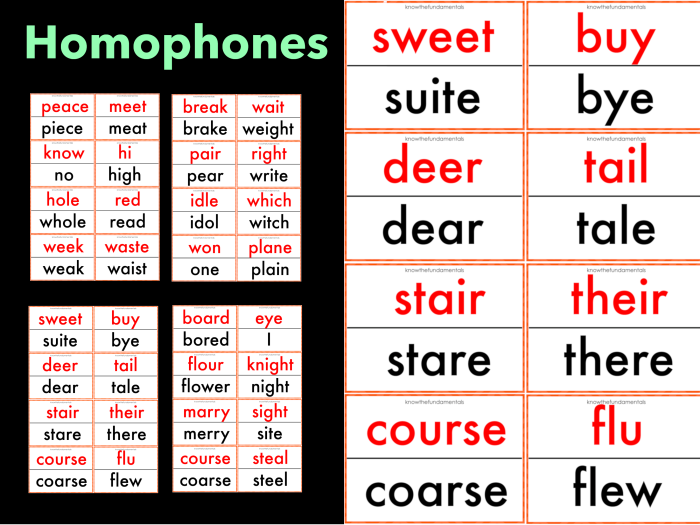
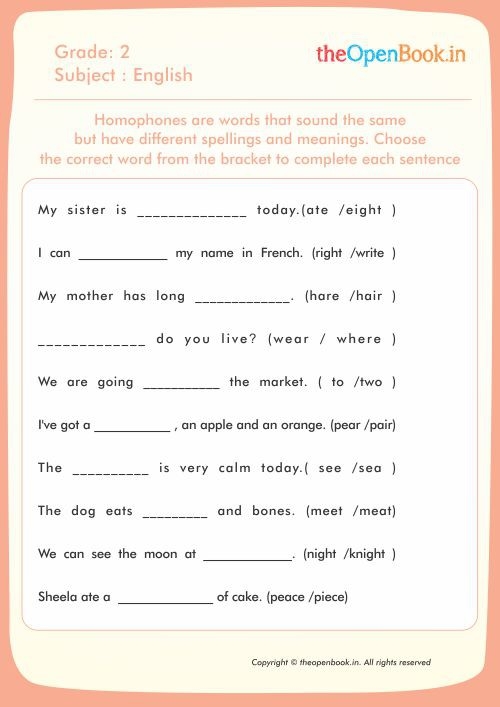
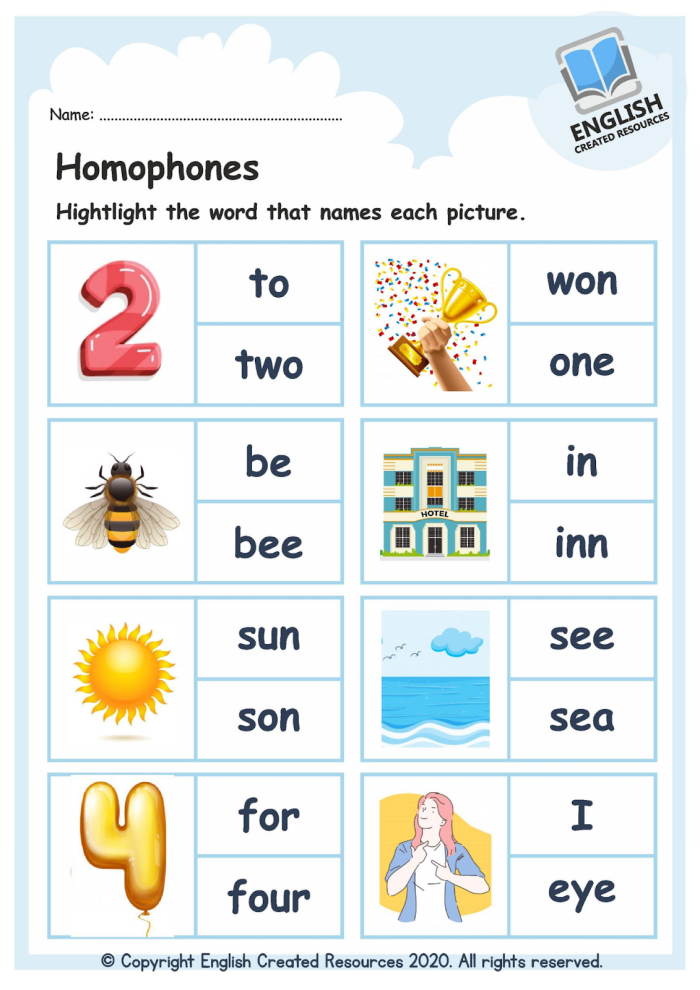
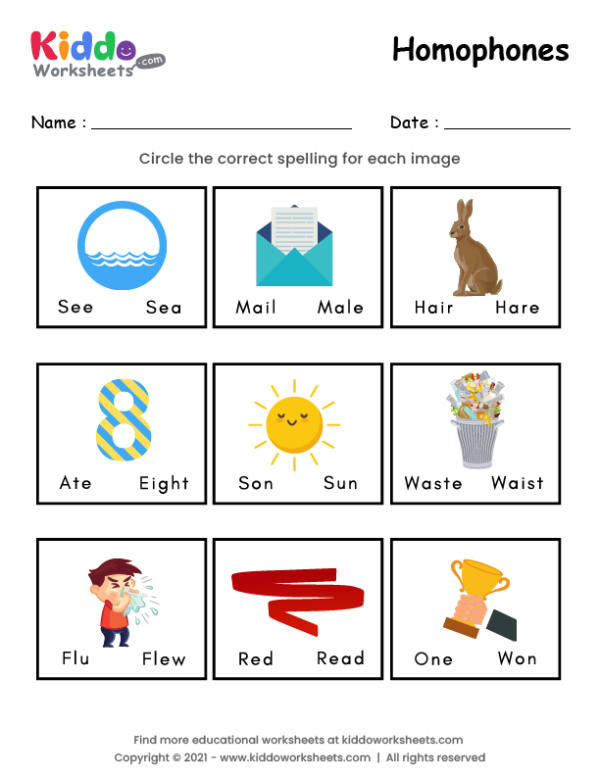
Homophones can be a delightful challenge for second graders. These words sound the same but have different meanings and spellings, which can lead to confusion. This is where a targeted worksheet comes into play, providing children with the opportunity to practice identifying and using homophones correctly.
Imagine a worksheet designed specifically for second graders, focusing on these tricky word pairs. Kids can engage with sentences that require them to select the appropriate homophone to complete the thought. For example, they might encounter the sentence, “The cat sat on the mat” versus “The cat is matting.” This simple exercise is effective in helping young learners grasp the concept of homophones while also enhancing their reading and writing skills.
Using homophones in writing not only improves a child’s vocabulary but also encourages them to think critically about word choice. This skill is essential as they progress in their education, especially in subjects like algebra, where precise language is crucial. Worksheets that focus on homophones can be an engaging way for kids to practice while also building their confidence as writers.
Moreover, incorporating these worksheets into a regular learning routine can have lasting benefits. As students practice, they develop a clearer understanding of language nuances, paving the way for improved reading comprehension. This knowledge is particularly useful when students tackle more complex concepts later on, such as in algebra word problems.
In addition to homophones, second graders can explore other engaging worksheets, like the life cycle of a butterfly, which can add variety to their learning experience. By combining different subjects and skills, educators can create a rich, supportive environment for young learners.
Practice with These Worksheets