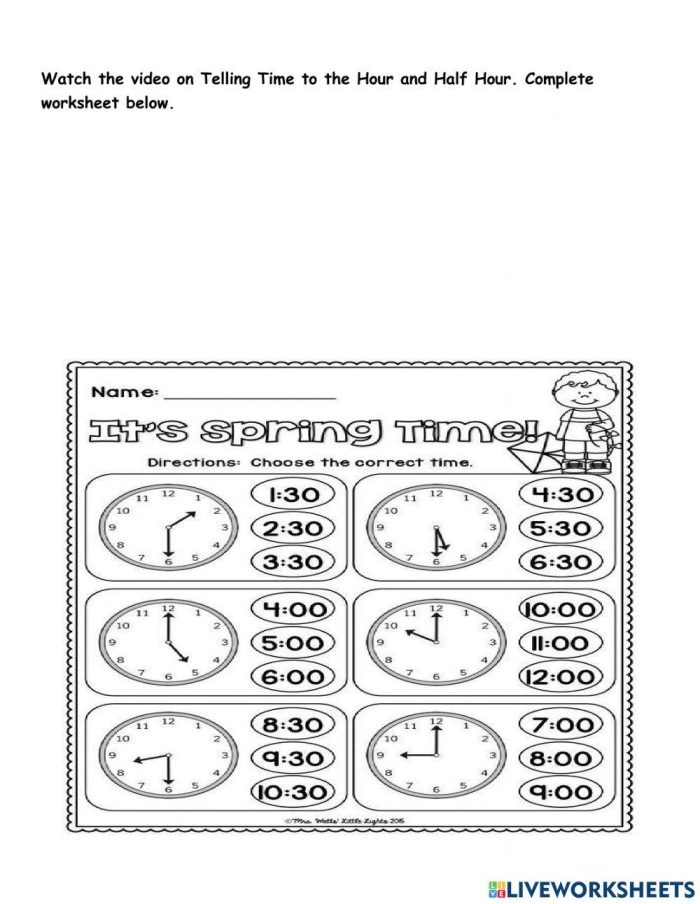
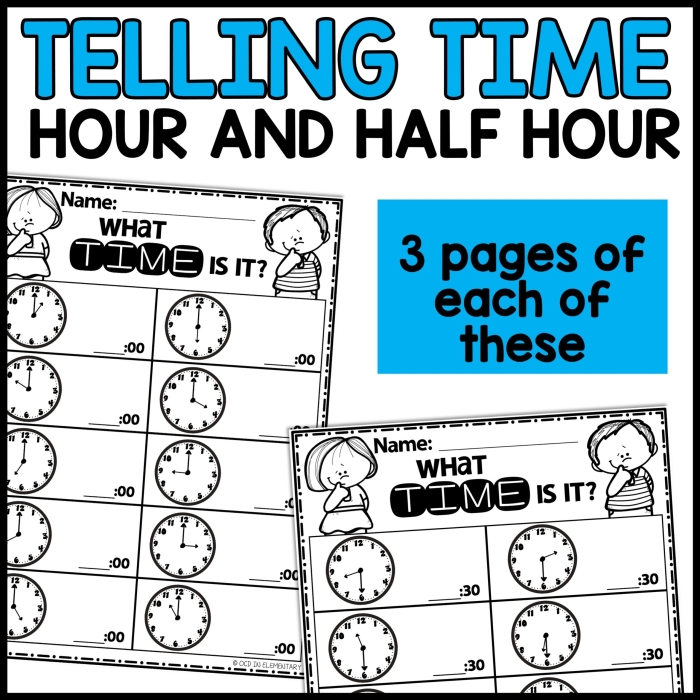
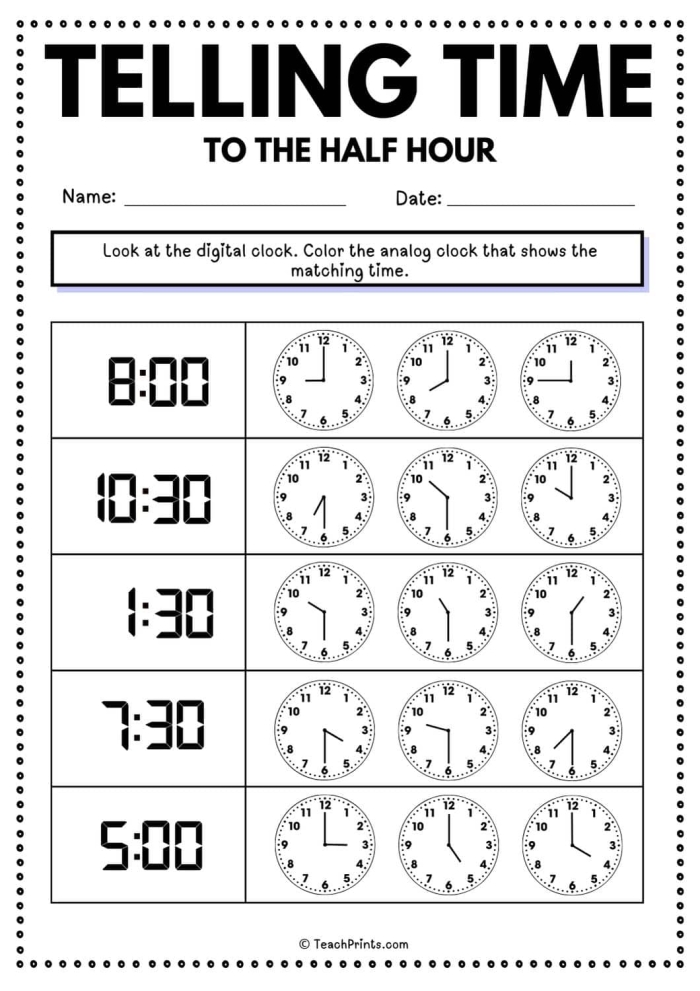
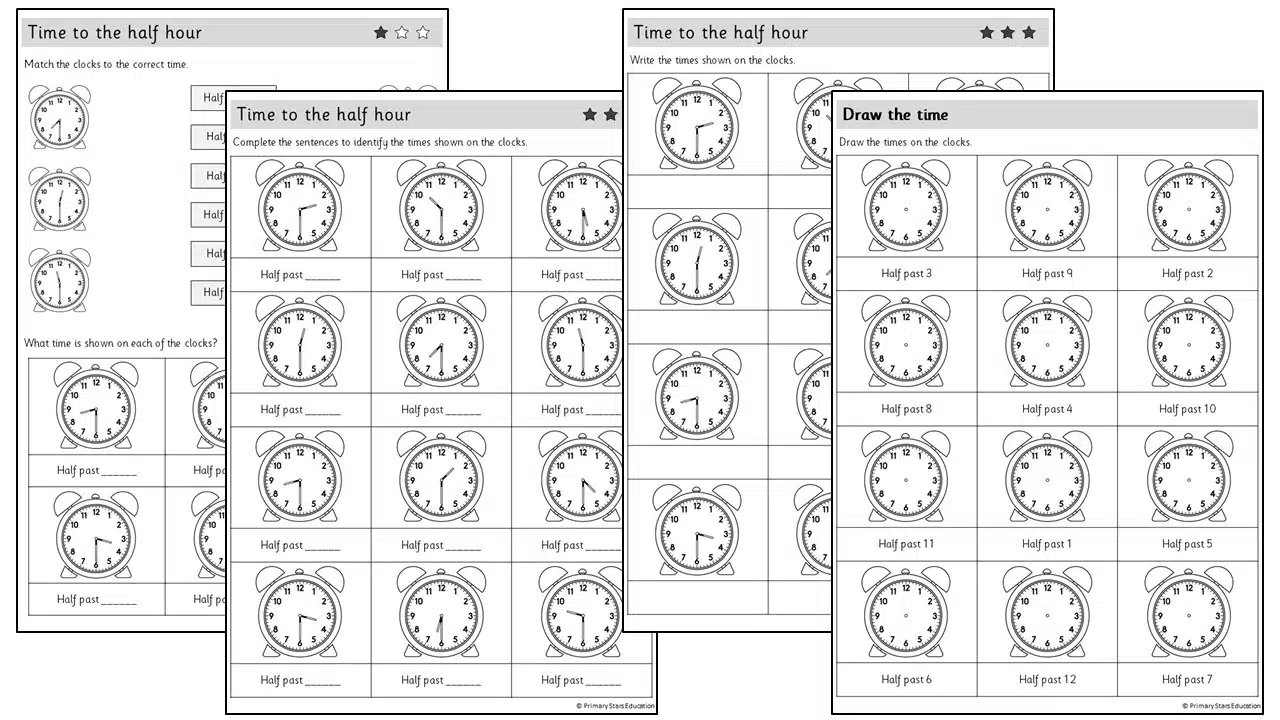
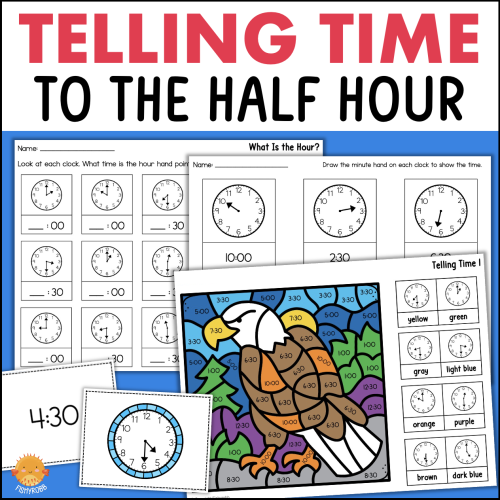
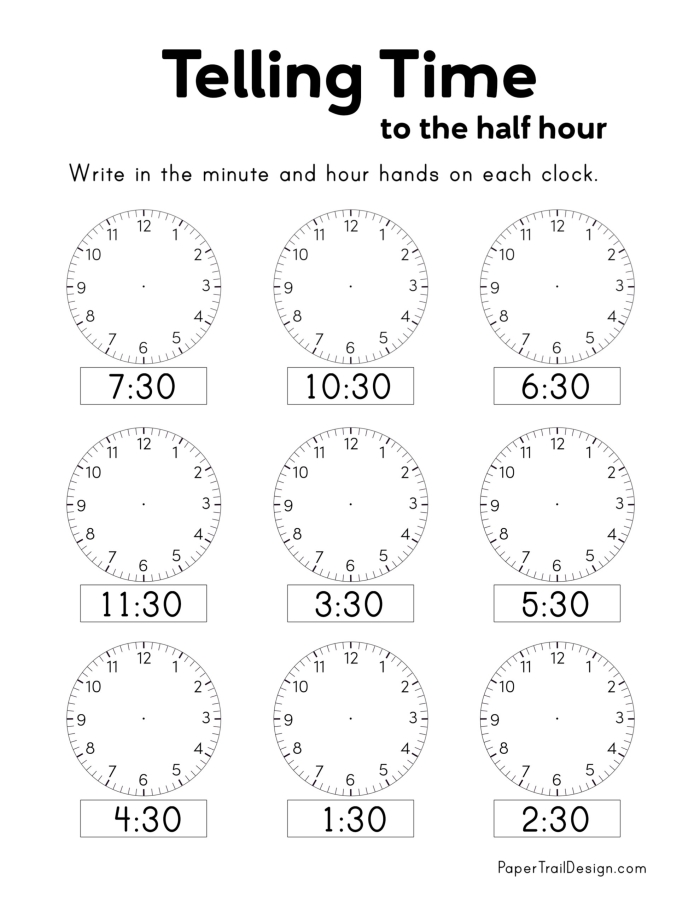
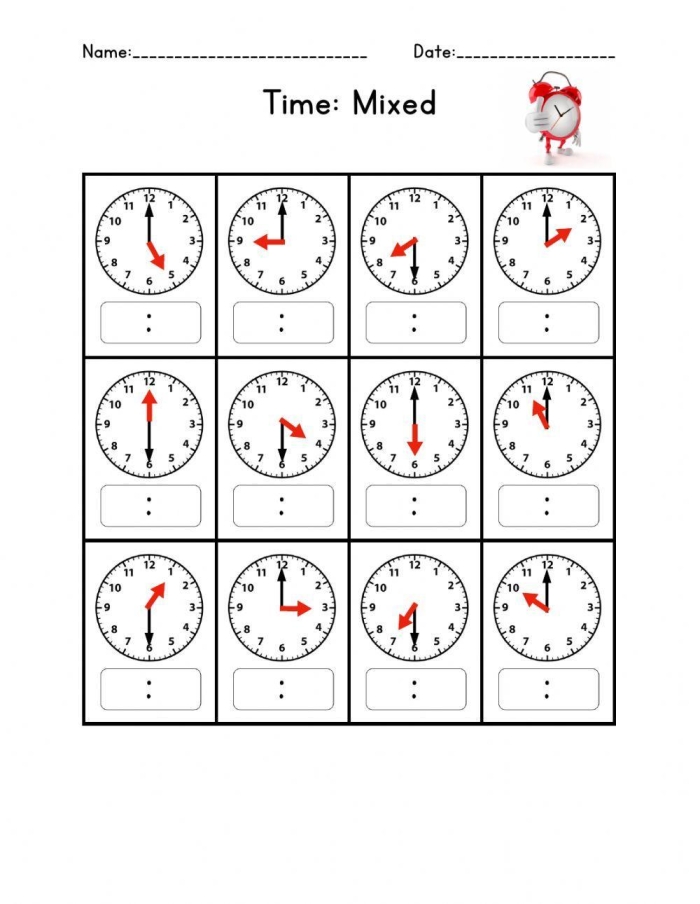
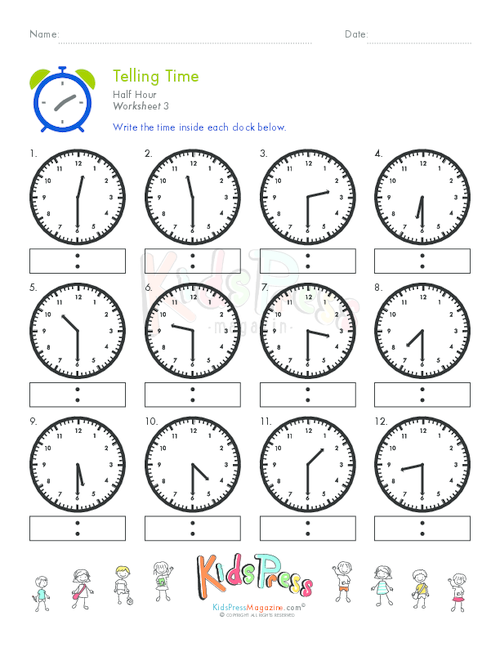
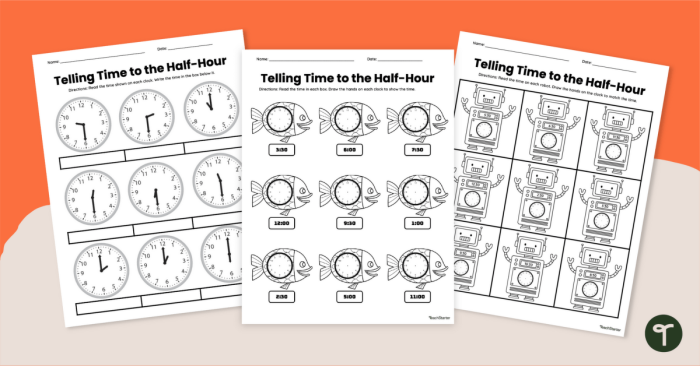
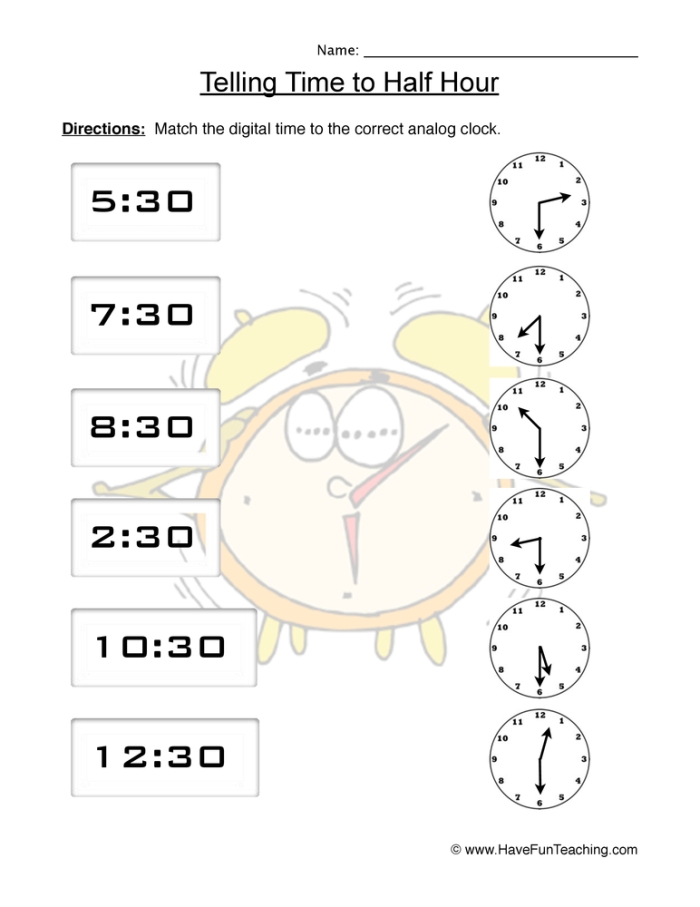
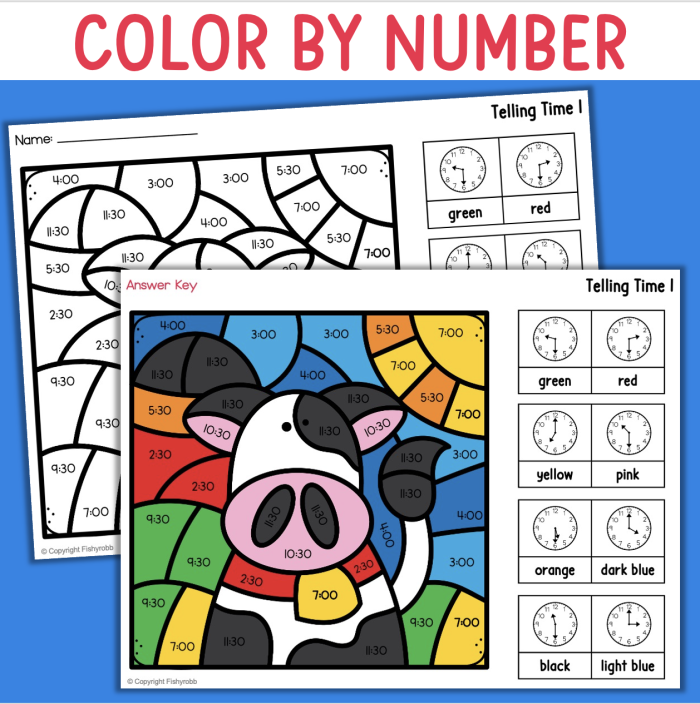
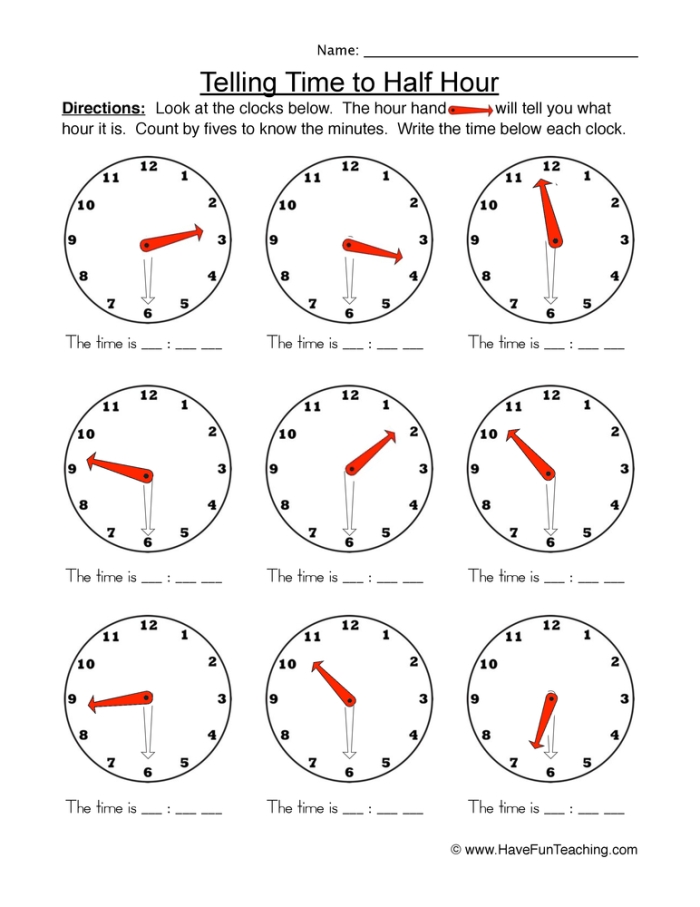
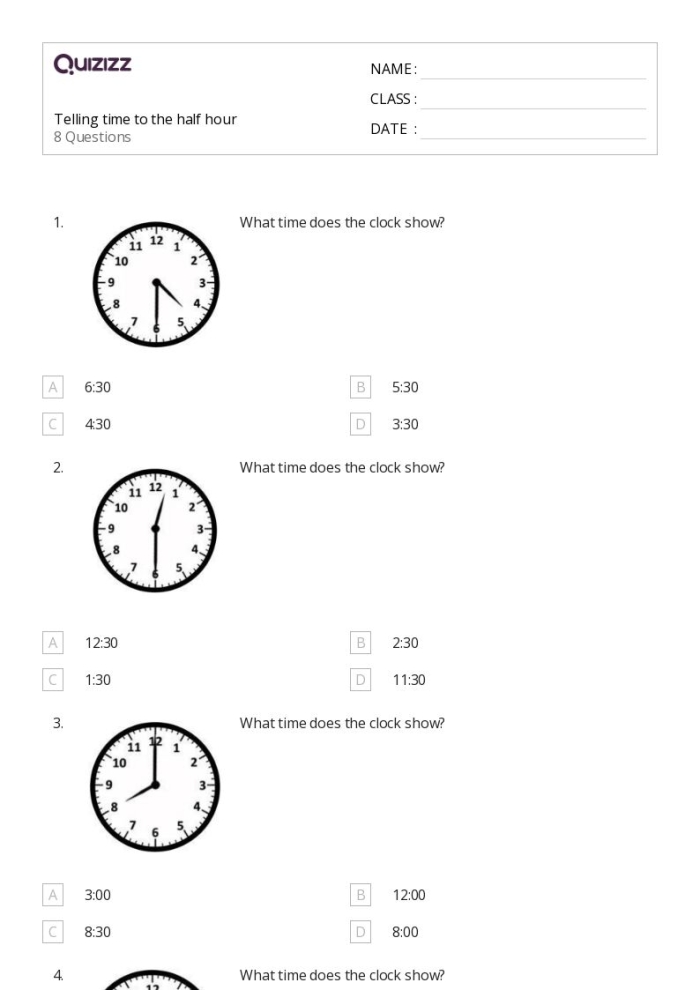
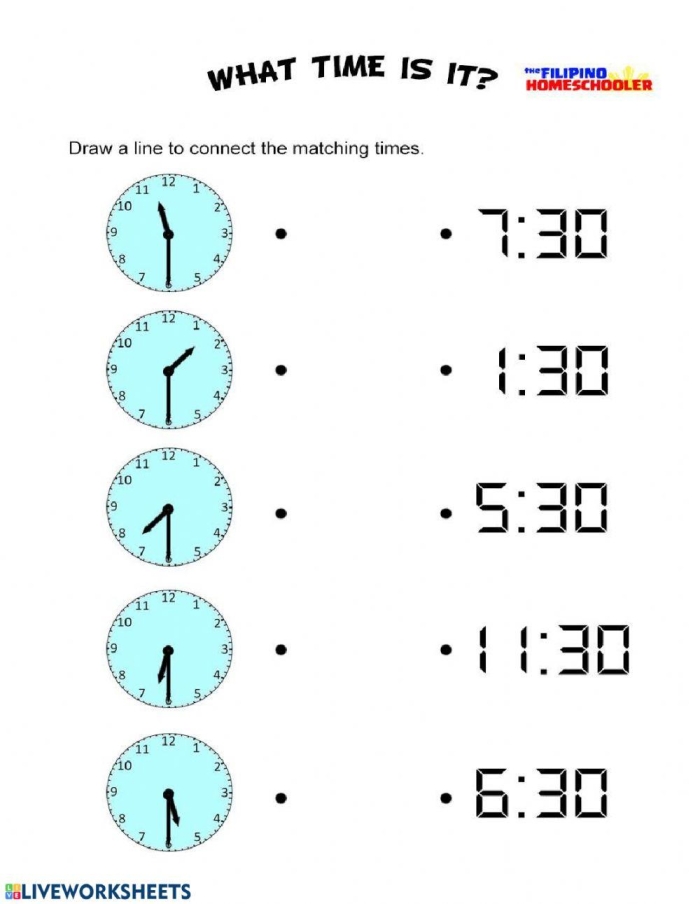
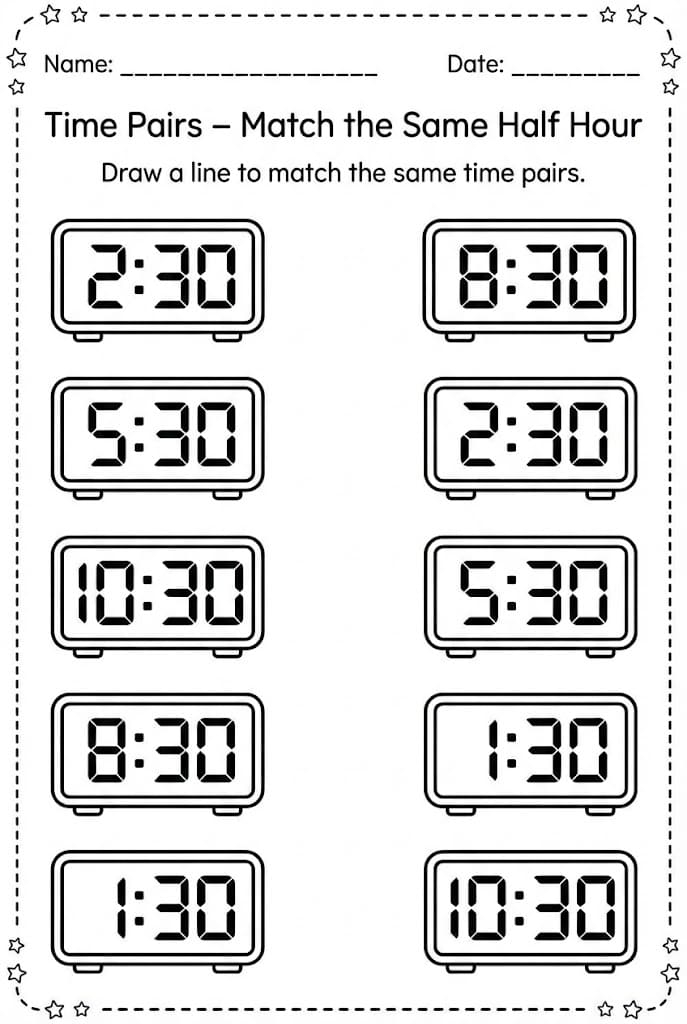
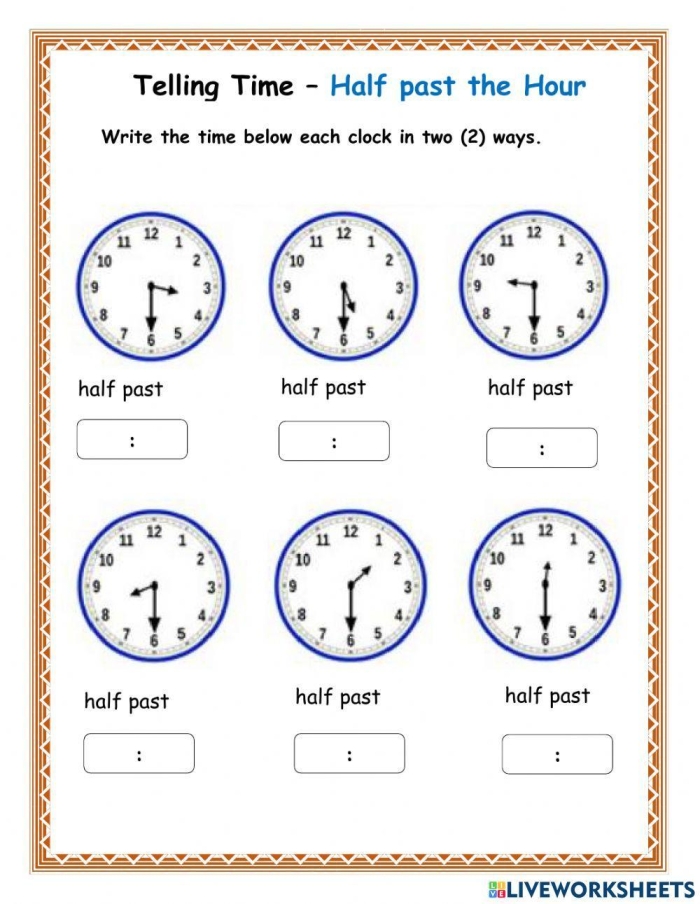
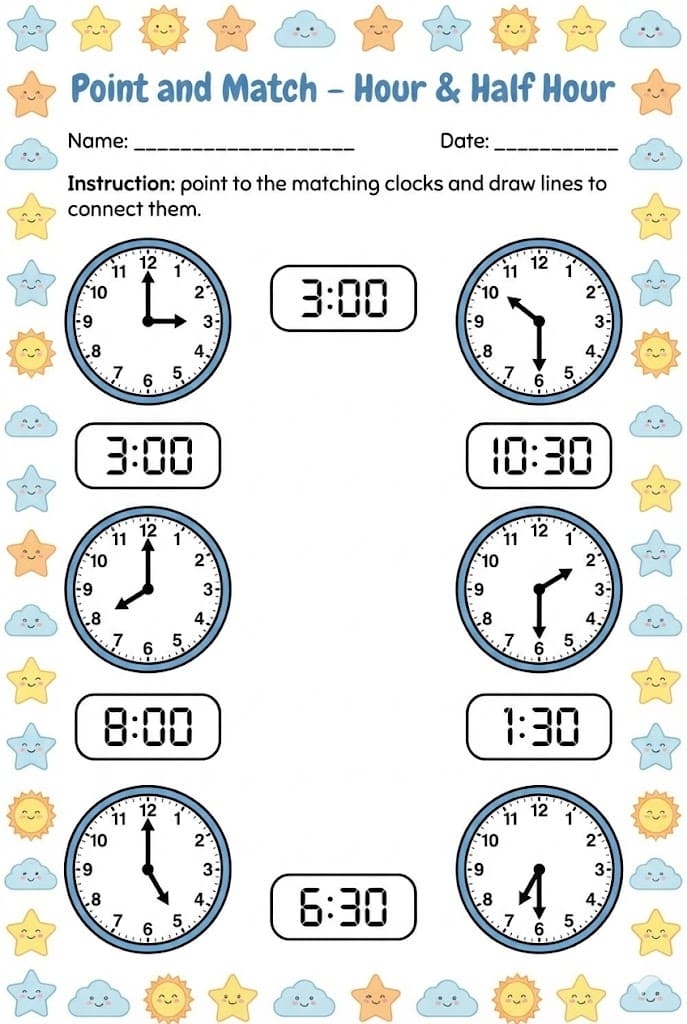
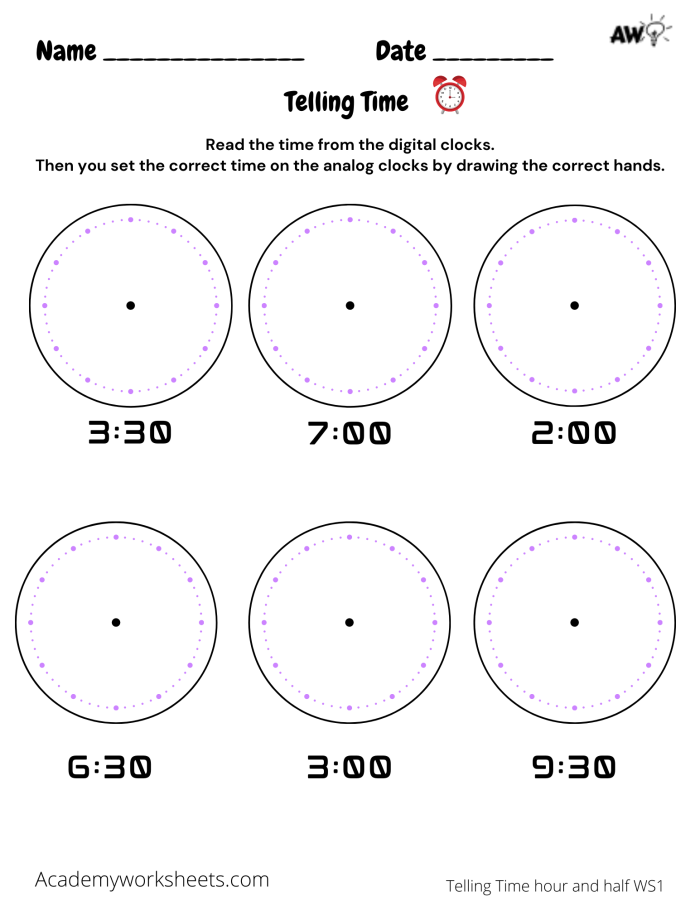
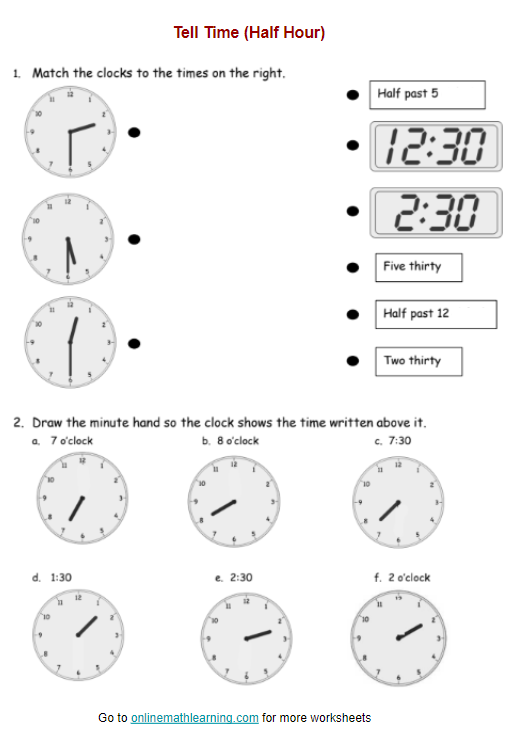
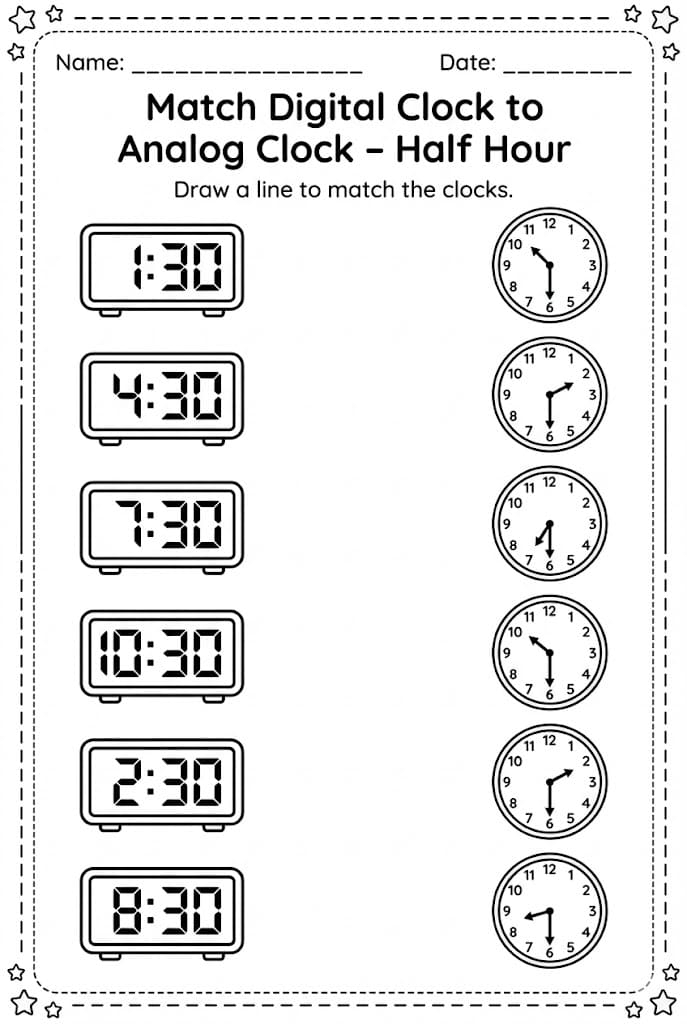
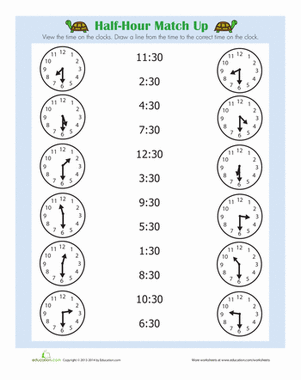
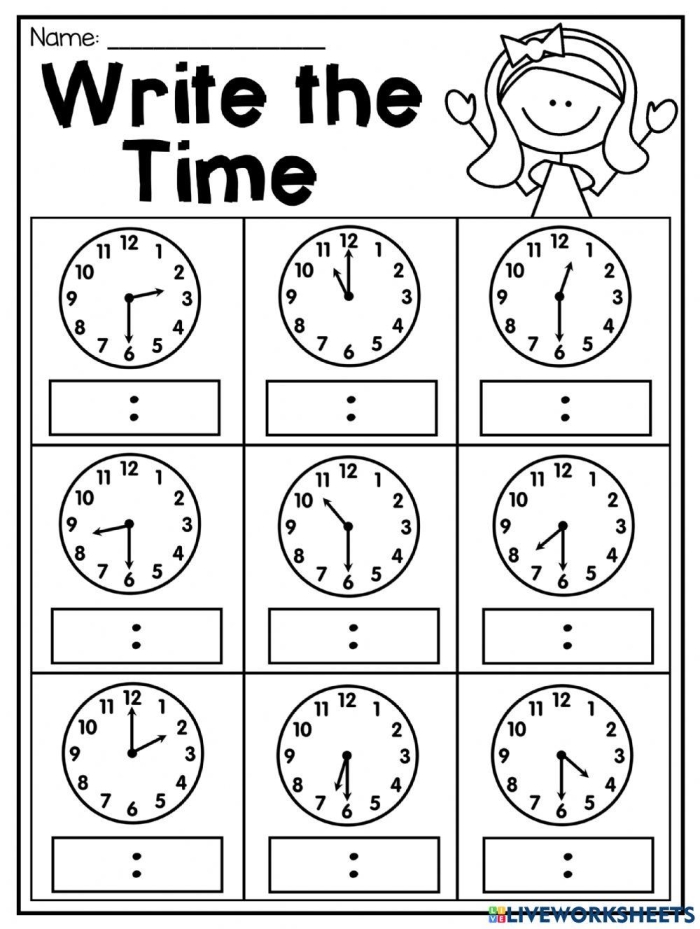
Telling time to the half hour trips up plenty of first graders, but it doesn’t have to be a frustrating skill to teach. The matching worksheet approach works because it lets kids see the connection between analog clock faces and written time without the pressure of writing answers from scratch.
When children work with matching activities, they’re building visual recognition rather than starting from zero. A student might not be ready to write “3:30” on their own, but they can absolutely identify which clock shows half past three when it’s sitting right next to the correct answer. This scaffolding matters more than people realize in early math instruction.
The half hour specifically deserves focused practice because it’s the natural second step after learning whole hours. Once kids grasp that the hour hand points between two numbers and the minute hand points to the 6, they’ve unlocked something concrete. Matching worksheets reinforce this pattern repeatedly, which is exactly what developing brains need at this stage.
These worksheets fit naturally into a broader first grade math routine. Pairing them with other foundational skills makes sense too. For instance, students working on measuring school supplies in centimeters are also developing spatial awareness, while practicing fact families strengthens number sense. Time and money concepts build on these same foundational understandings.
The beauty of a matching format is its efficiency. Teachers can quickly see which students have grasped the concept and which ones need additional support or manipulatives. Kids who finish early can move on to trickier activities, while struggling learners get the repetition they need without feeling singled out.
Practice with These Worksheets