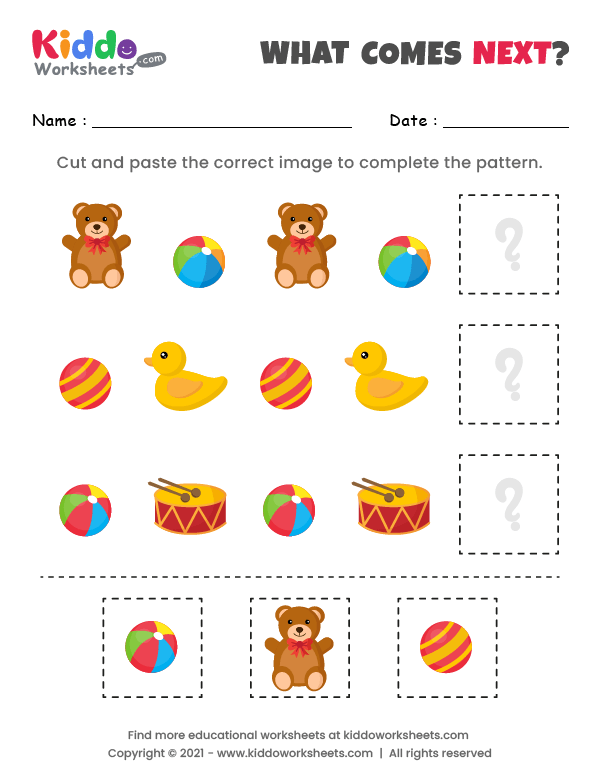
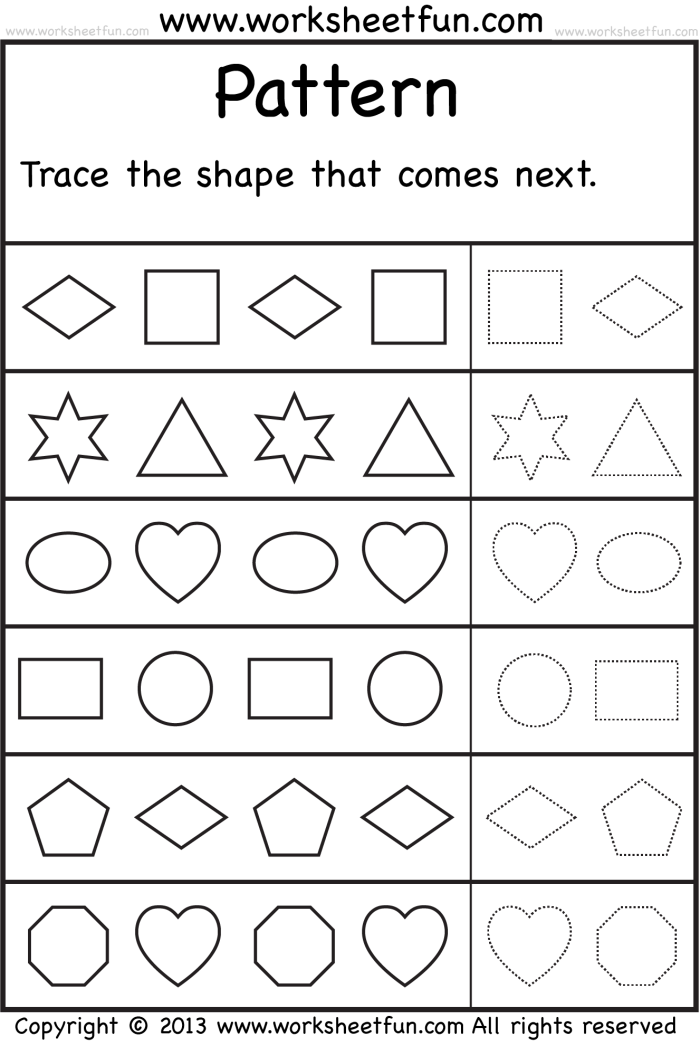
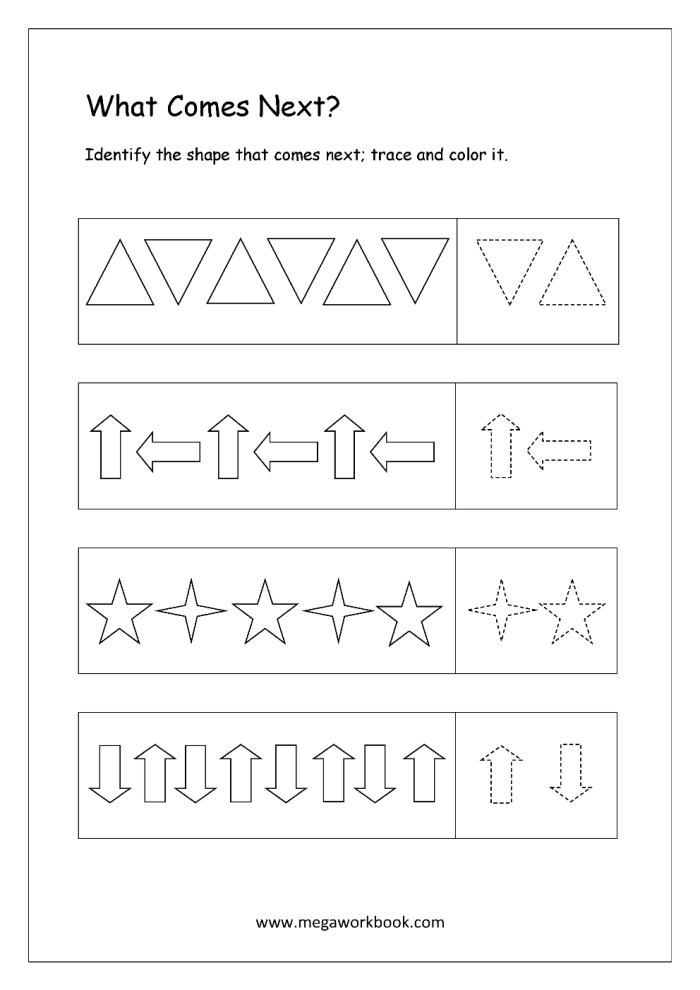
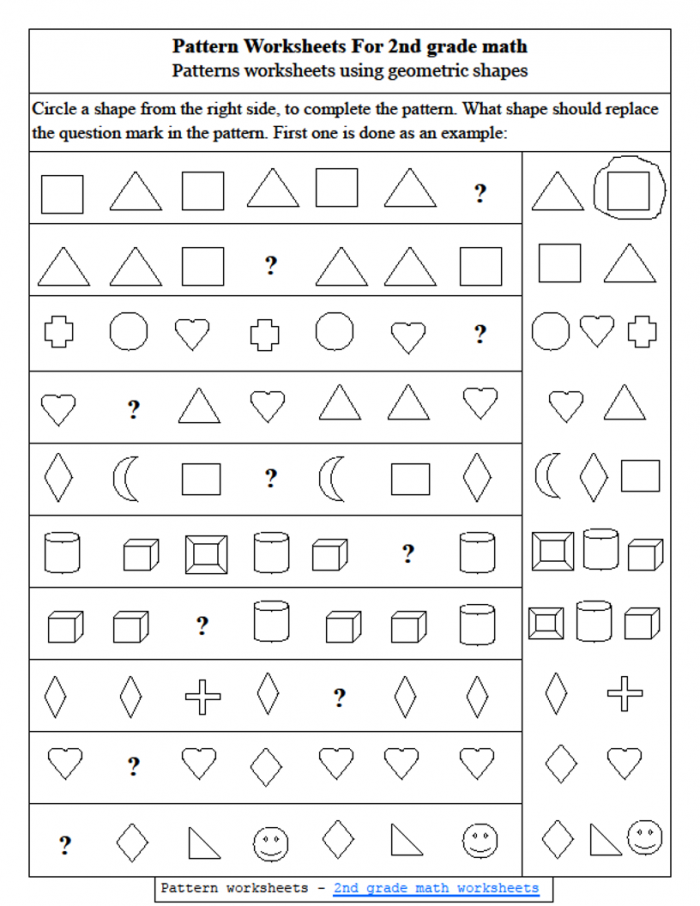
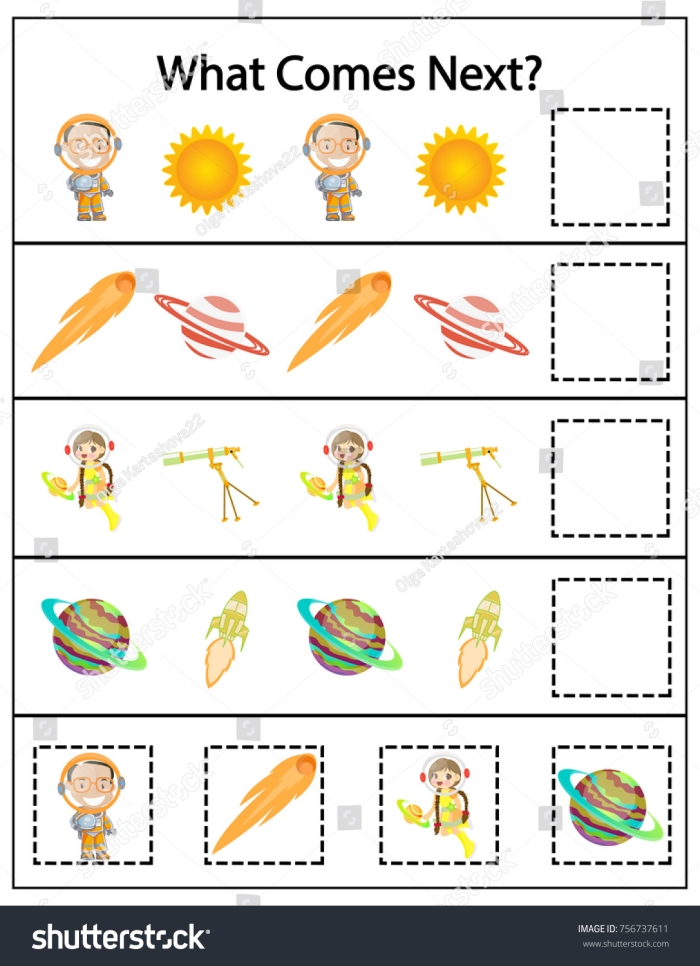
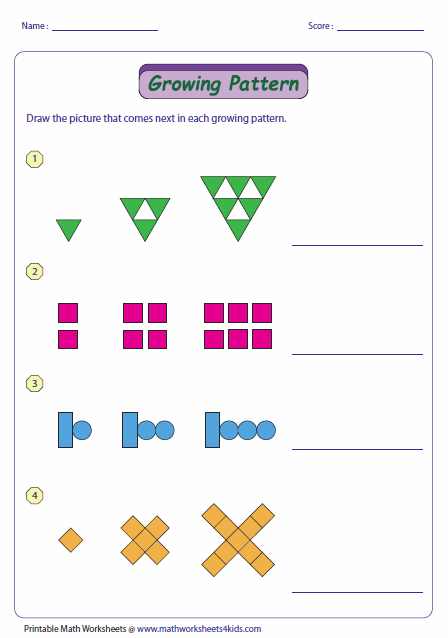
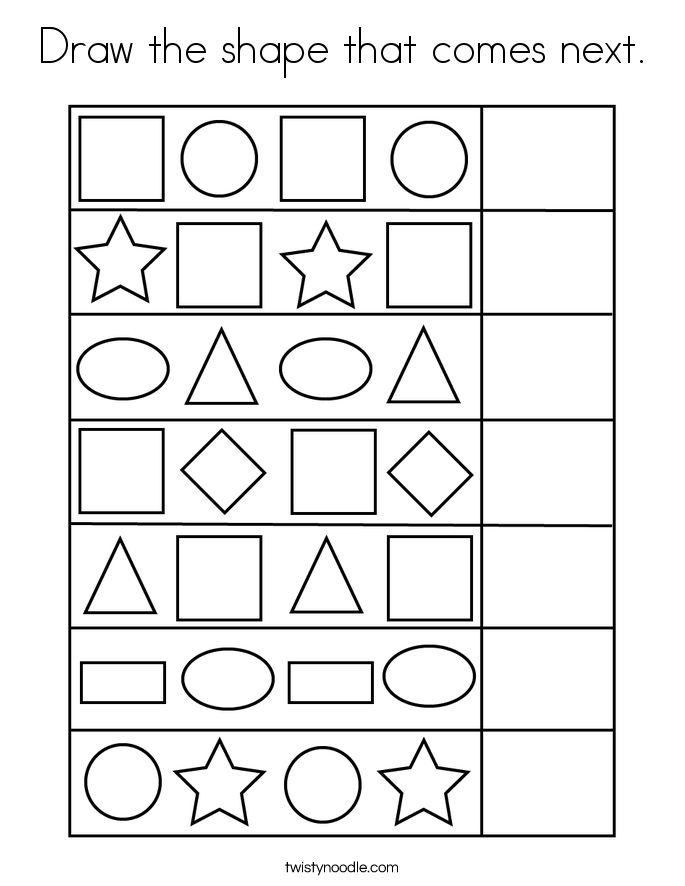
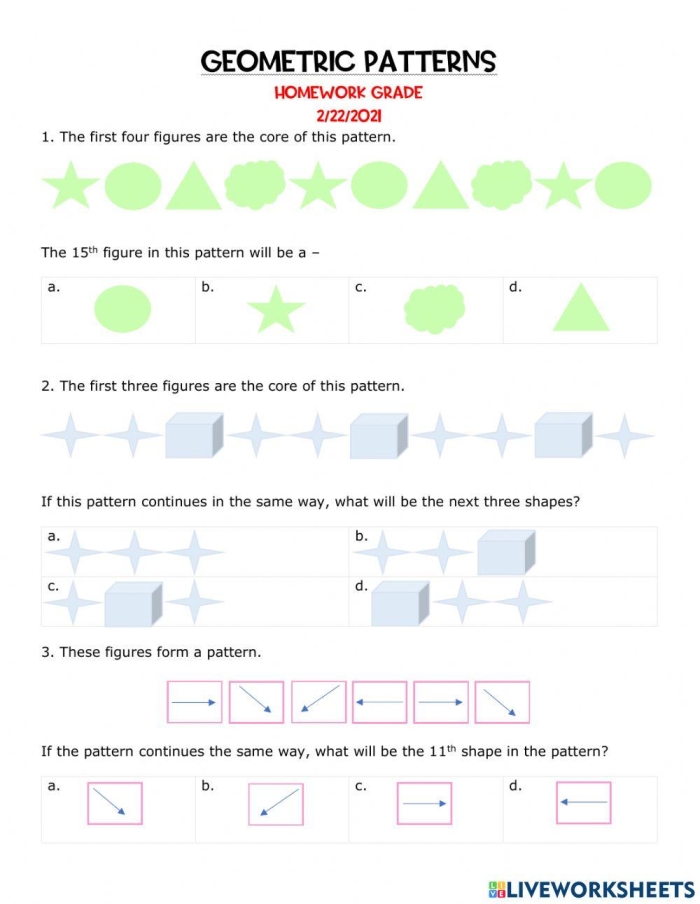
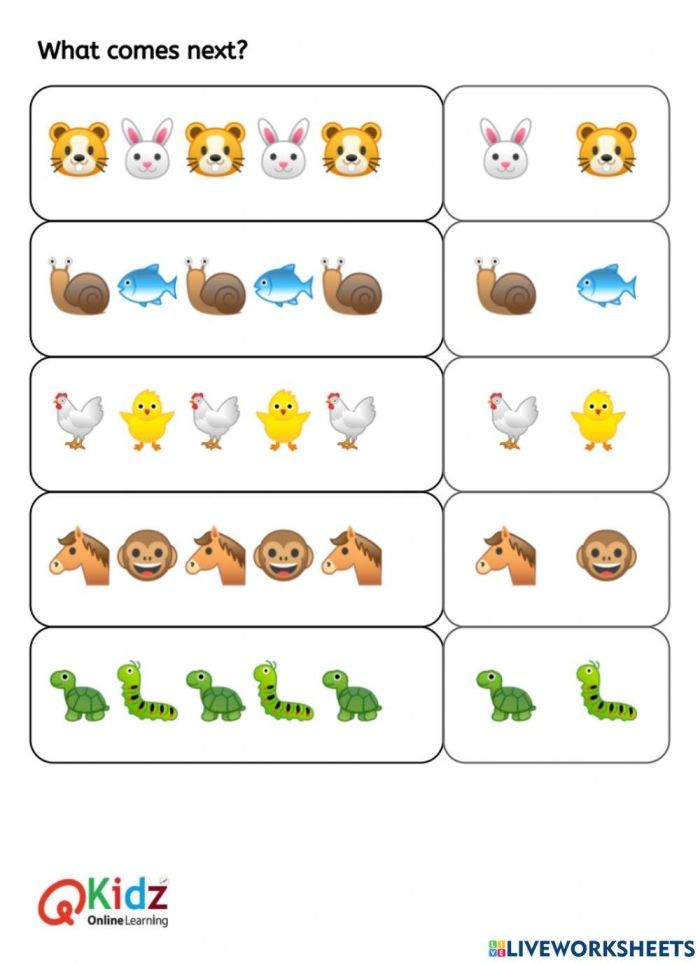
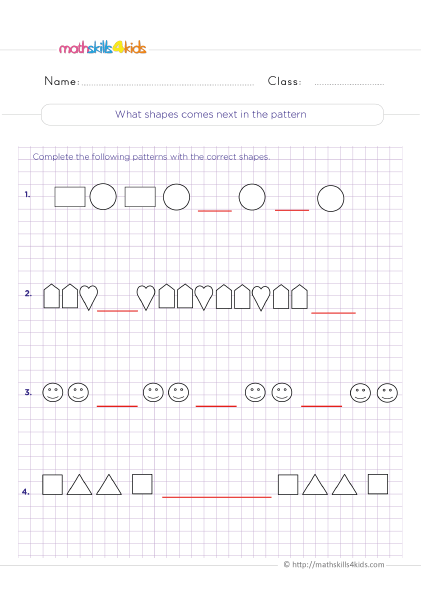
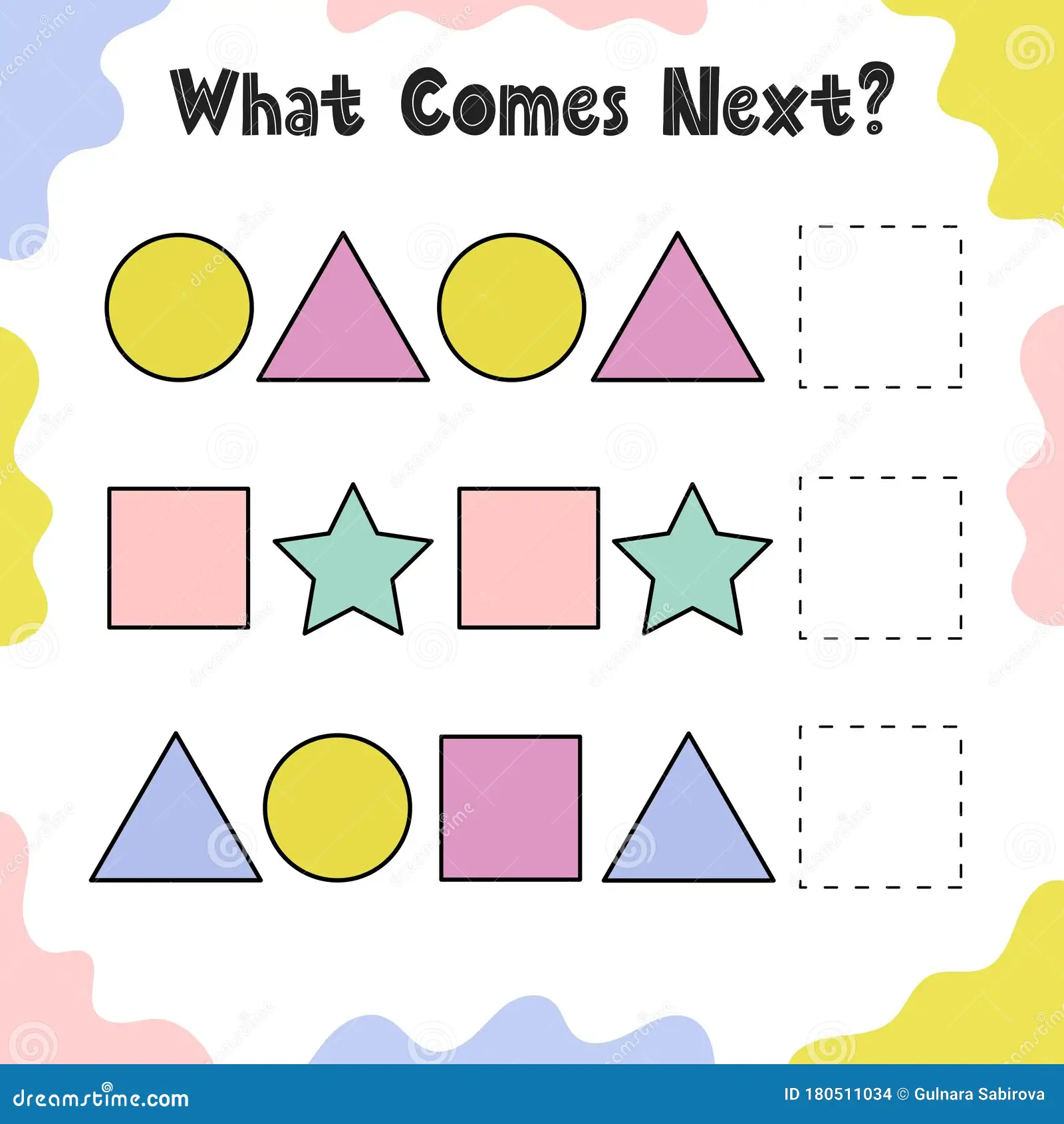
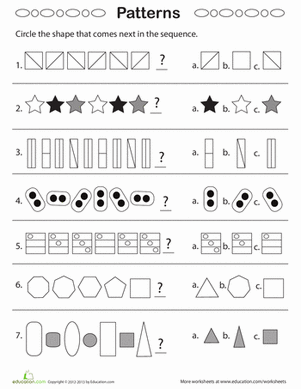
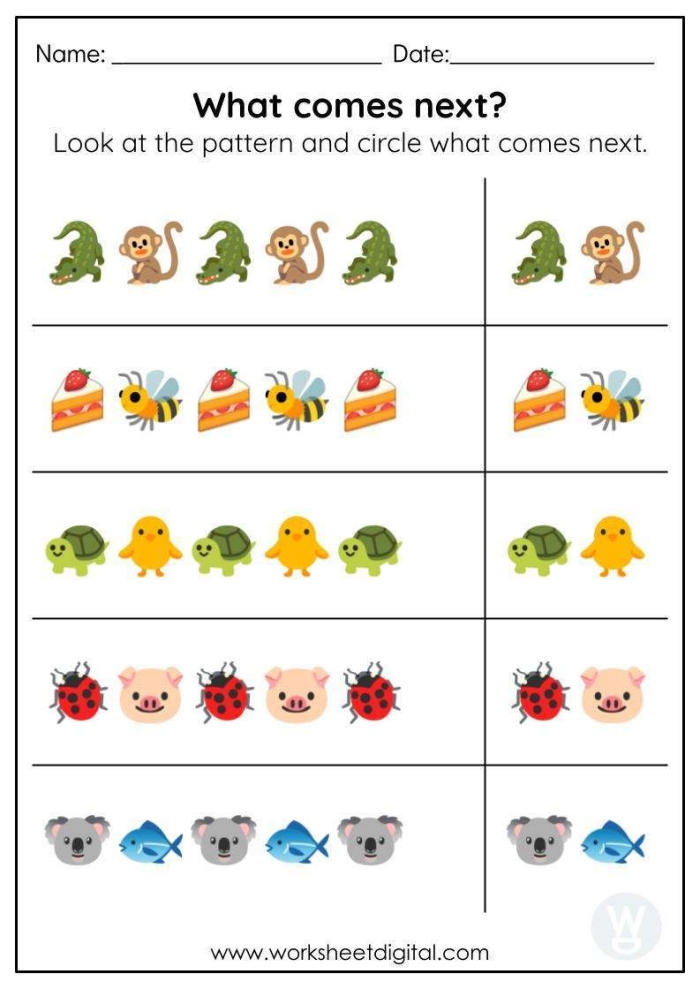
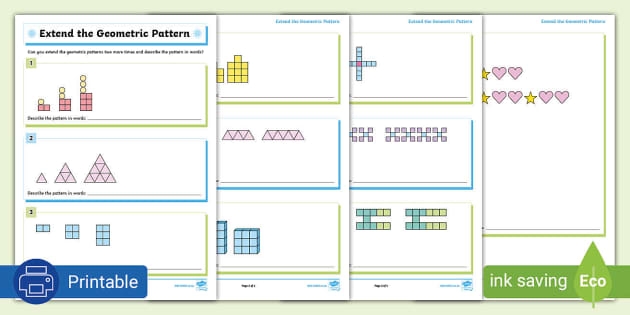
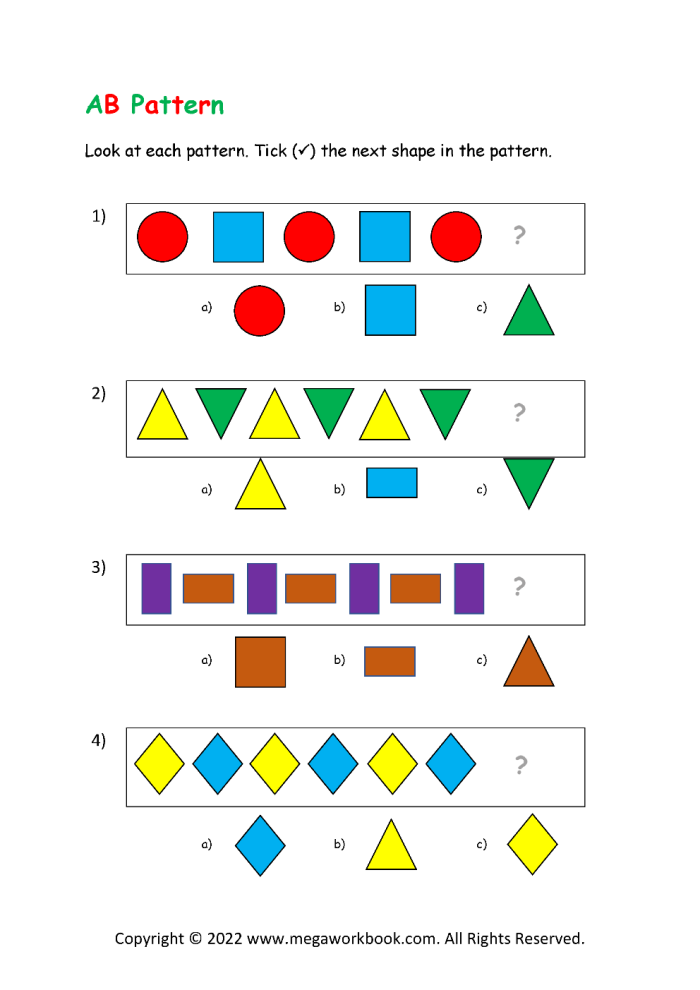
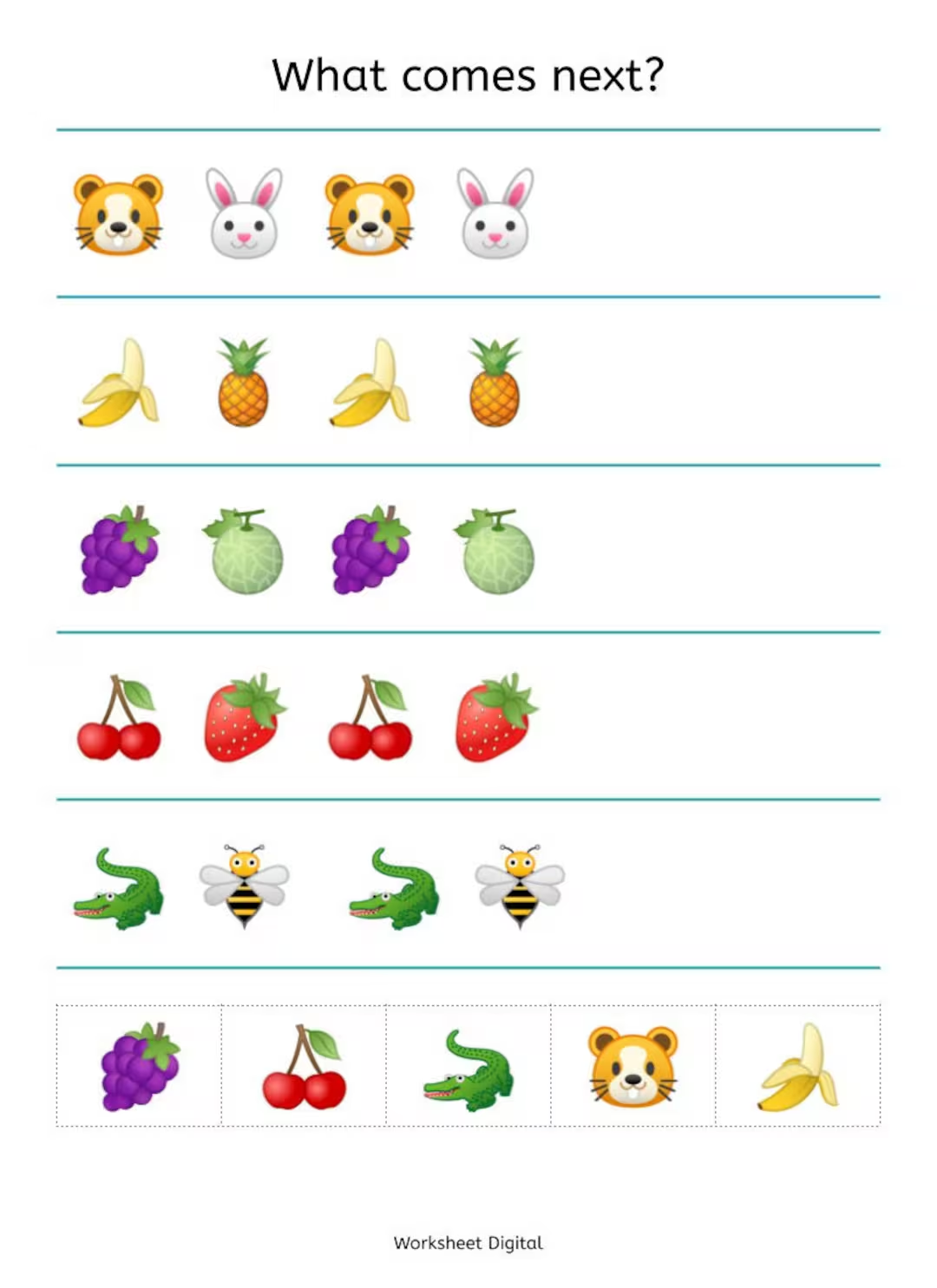
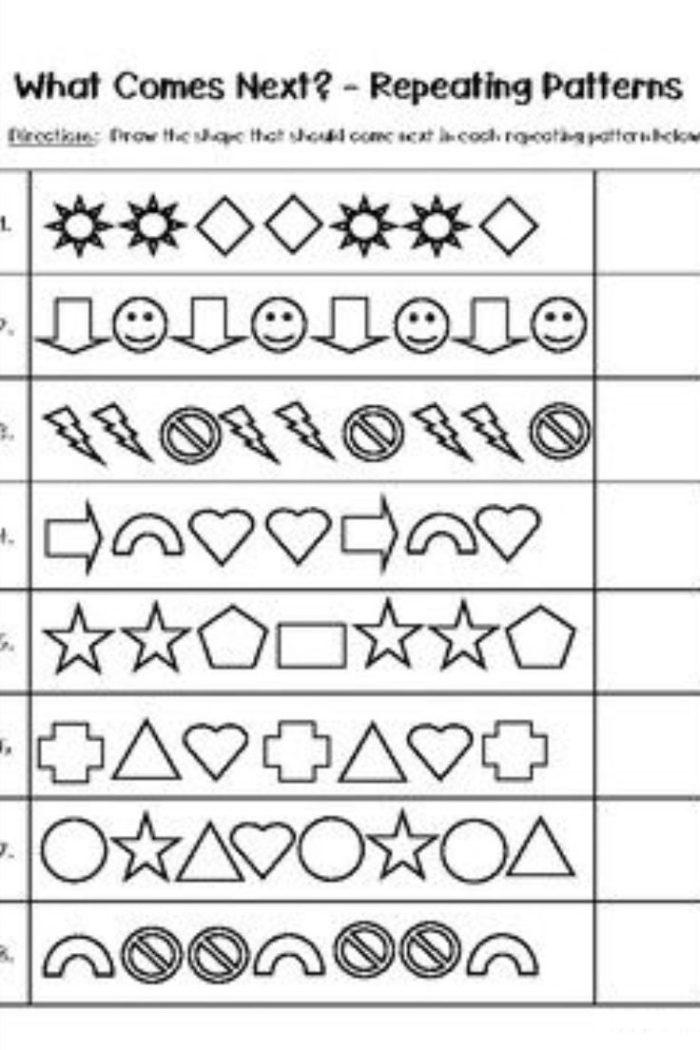
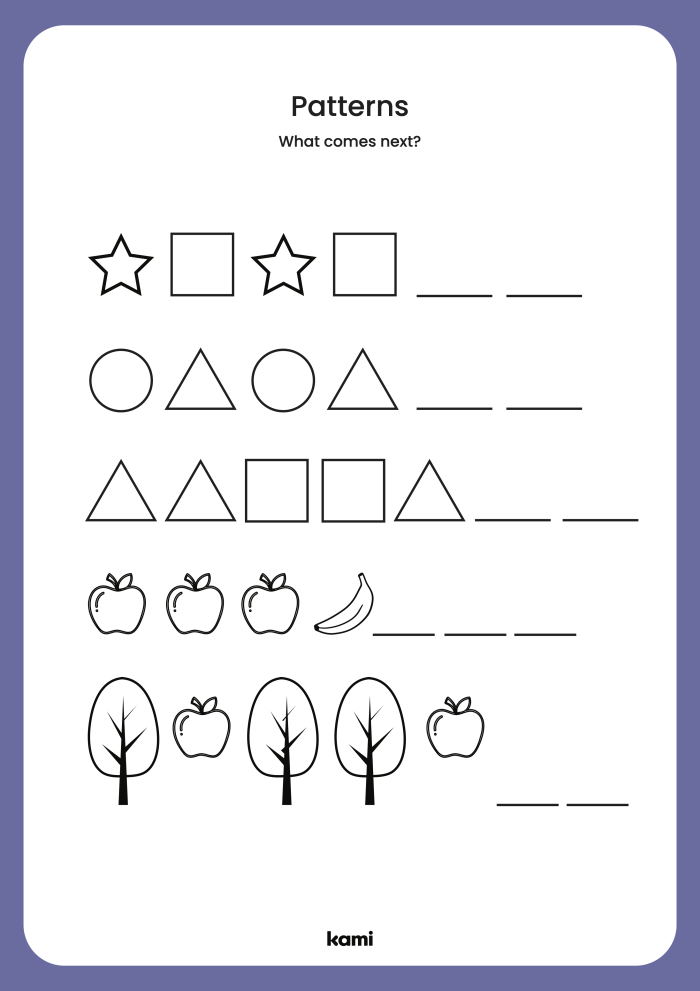
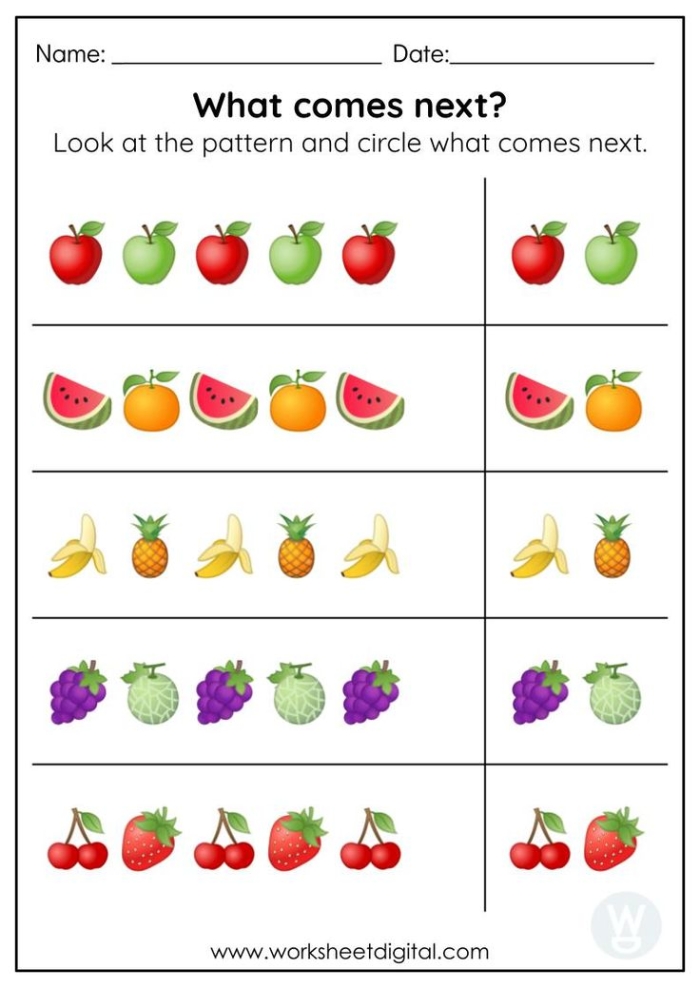
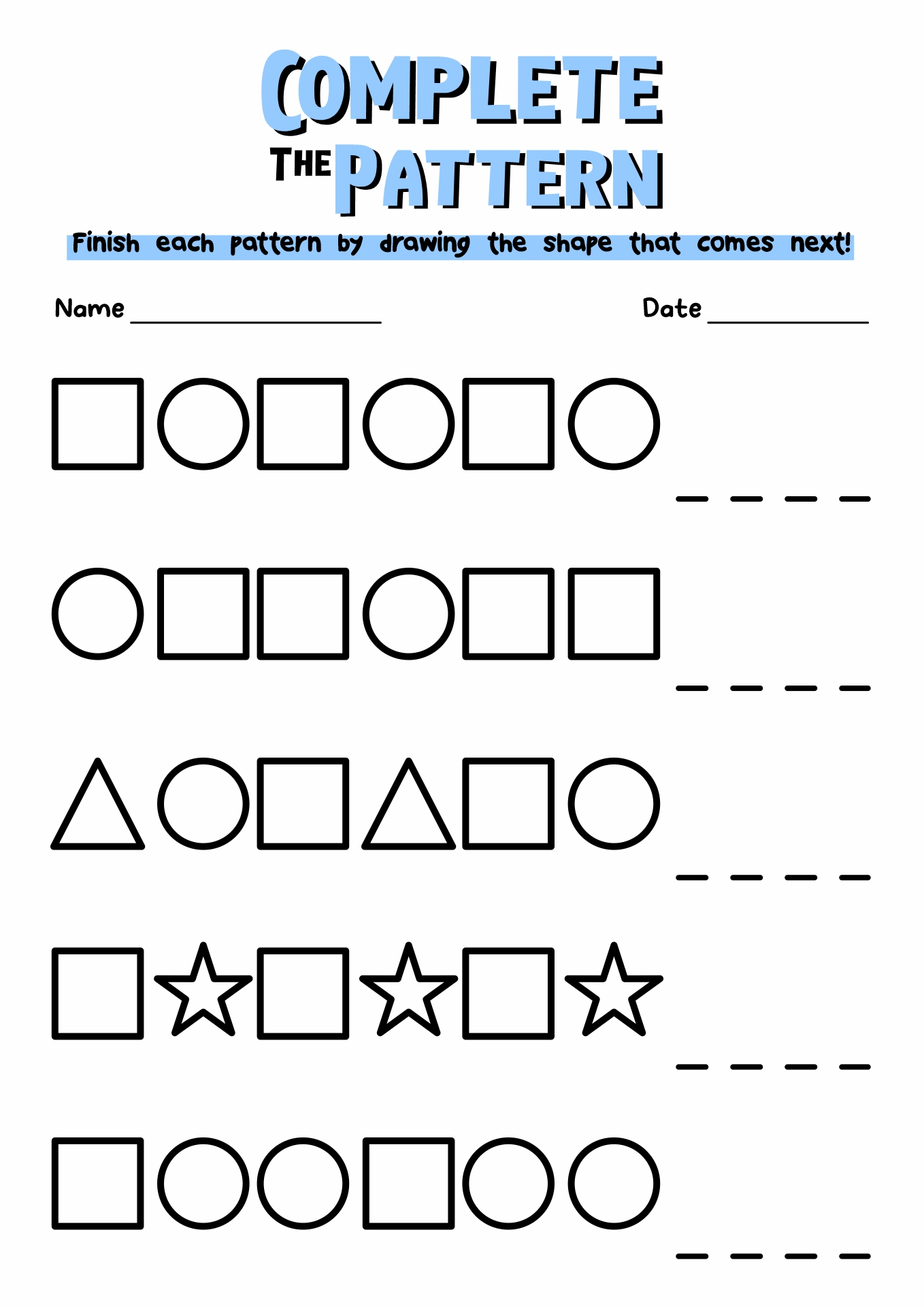
For children in second grade who enjoy puzzles, working on geometric patterns offers an engaging way to sharpen their logical reasoning. A worksheet focused on identifying what comes next in a sequence of shapes encourages young learners to observe carefully and think systematically. This type of activity goes beyond simple recognition—it challenges kids to predict the next figure based on the rules governing the pattern.
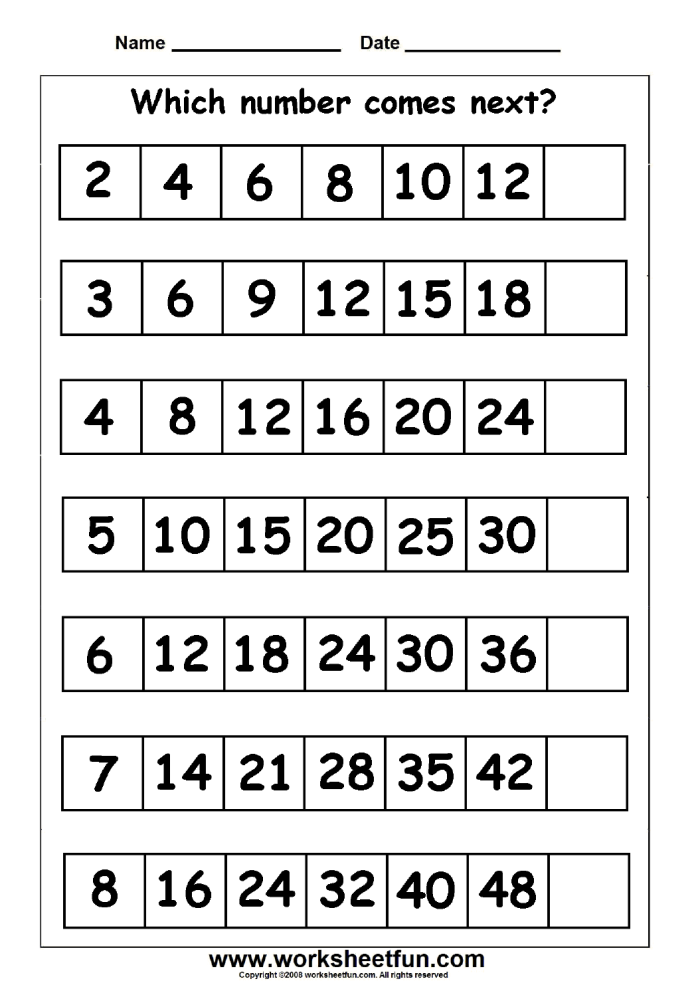
Printable geometric patterns worksheets designed for second graders often feature sequences that increase in complexity, starting with simple shapes like circles and squares, then adding variations in color, size, or orientation. This gradual progression helps build confidence as children recognize the underlying order without feeling overwhelmed. Each correct answer reinforces their understanding of numeric relationships and spatial awareness, which are important components of the Numbers and Counting curriculum at this grade level.
One practical benefit of these exercises is how they translate to real-world skills. For example, spotting patterns is essential in mathematics and science, but it also plays a role in day-to-day problem solving. Completing a pattern requires attention to detail and the ability to apply logic consistently. According to educational resources like point of view practice worksheets, activities that combine observation with reasoning can improve a child’s overall cognitive development.
In addition, integrating geometric pattern worksheets with other second-grade activities—such as building bar graphs or practicing sentence completion—creates a well-rounded learning experience. These tasks complement each other by engaging different skills while maintaining a focus on numbers and counting. For example, a child could switch from solving pattern puzzles to exploring bar graph building exercises, reinforcing their understanding of sequences and numerical data in diverse contexts.
Printable geometric patterns worksheets are easy to incorporate into classroom or home learning routines. They require minimal materials and offer immediate feedback through trial and error, encouraging persistence. For puzzle lovers, these activities provide a satisfying challenge that supports critical thinking and nurtures a deeper grasp of mathematical concepts relevant to their grade level.
Try These Printable Worksheets