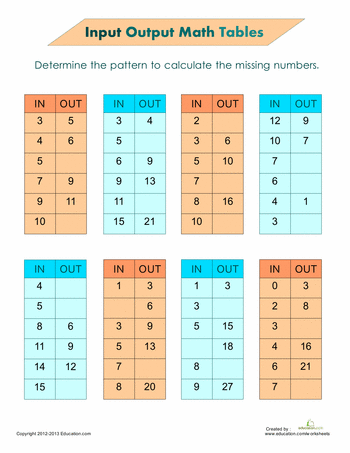
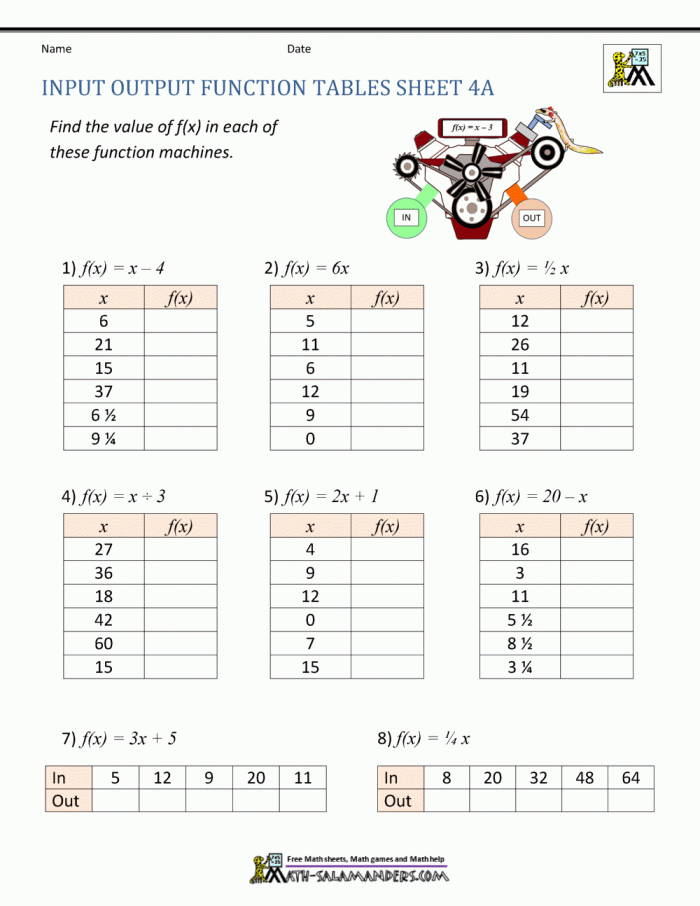
Understanding function tables can be a fun and rewarding challenge, especially for third graders learning the basics of mathematics. The key to mastering these tables lies in comparing your “input” numbers with the corresponding “output” numbers to identify patterns. This process not only reinforces mathematical concepts but also enhances critical thinking skills.
When you look at a function table, you typically see pairs of numbers. Each pair consists of an input value and its corresponding output value. For example, if you have an input of 2 and an output of 4, you might notice that the output is double the input. By examining several pairs, you can begin to see a pattern emerge, which helps you predict missing values. This skill is particularly useful in various real-world scenarios, such as calculating scores in a game or adjusting recipes in cooking.
To illustrate, consider a simple function table where the input numbers are 1, 2, 3, and the output numbers are 2, 4, 6. If the input of 1 gives an output of 2, and the input of 2 gives an output of 4, it’s clear that the rule here is that the output is obtained by multiplying the input by 2. Therefore, if you encounter an input of 4, you can confidently fill in the missing output as 8.
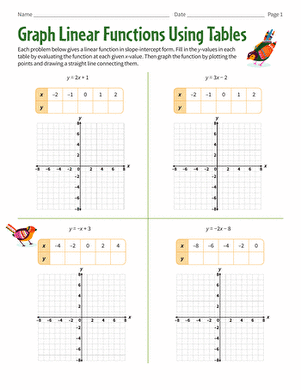
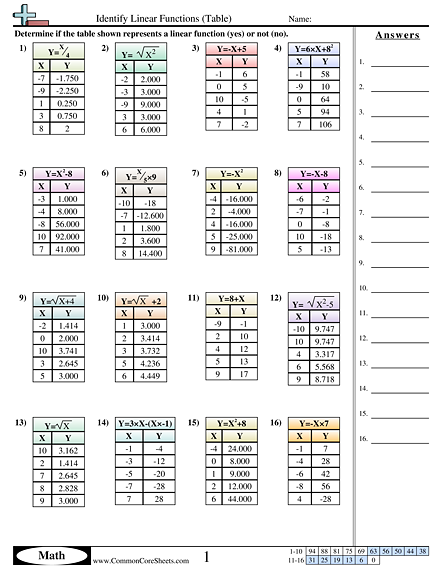
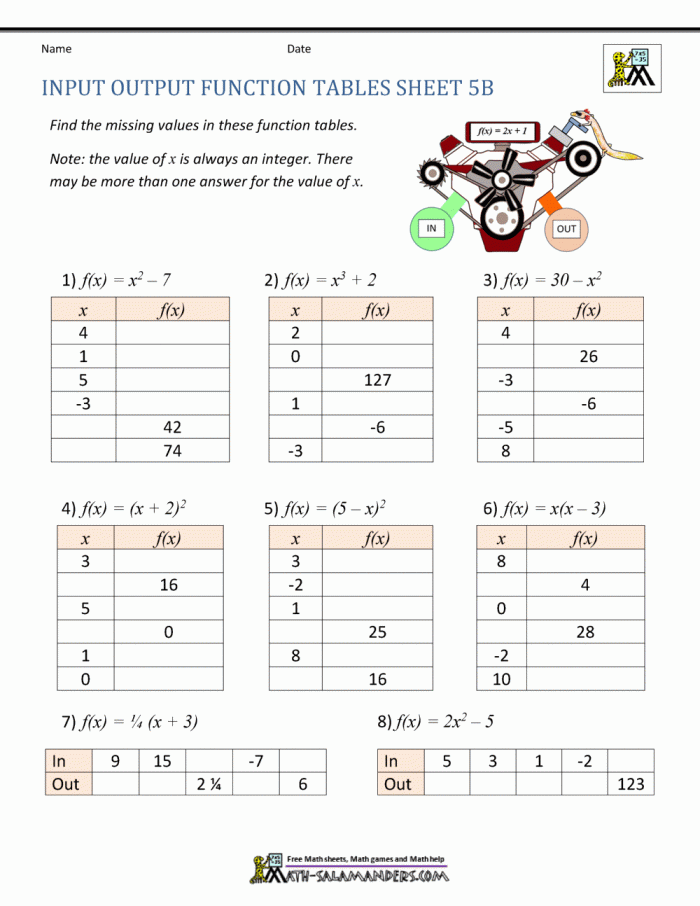
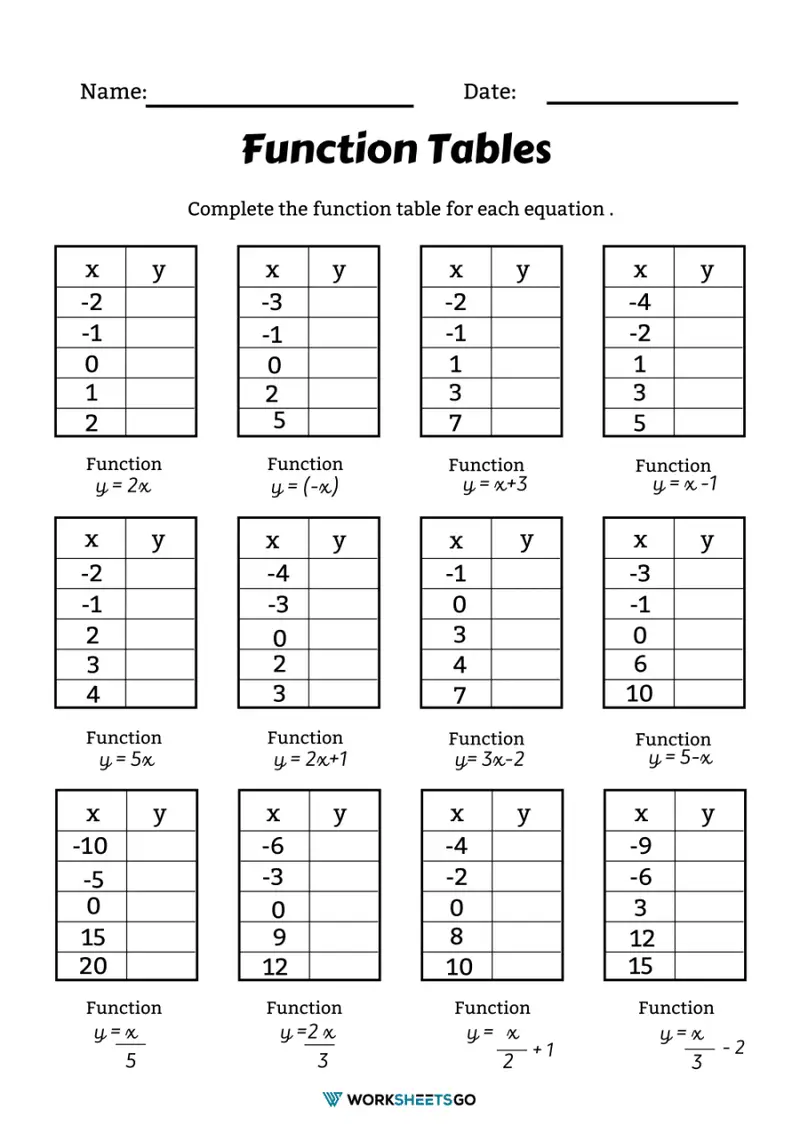
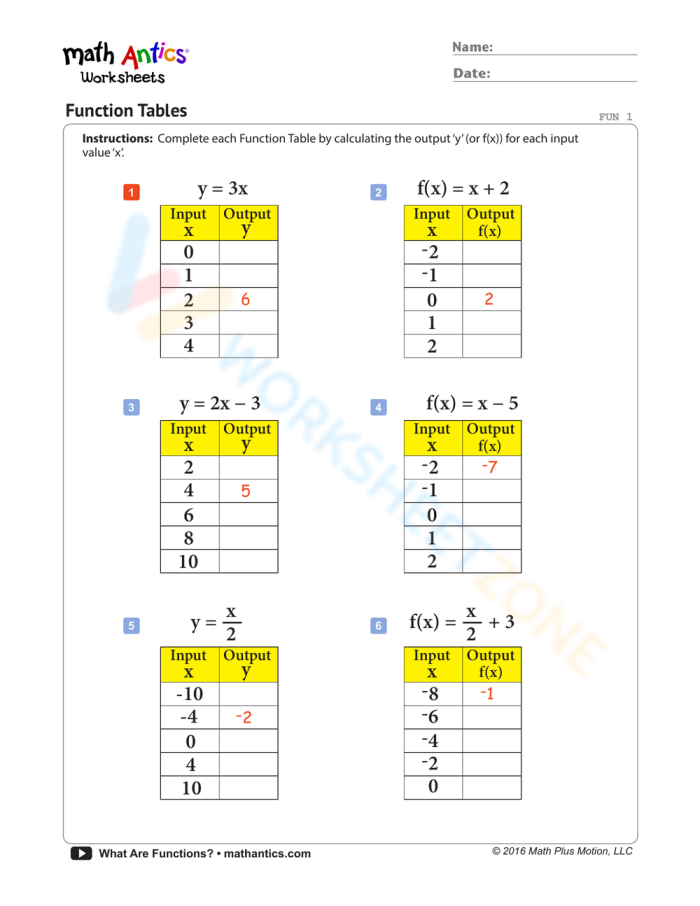
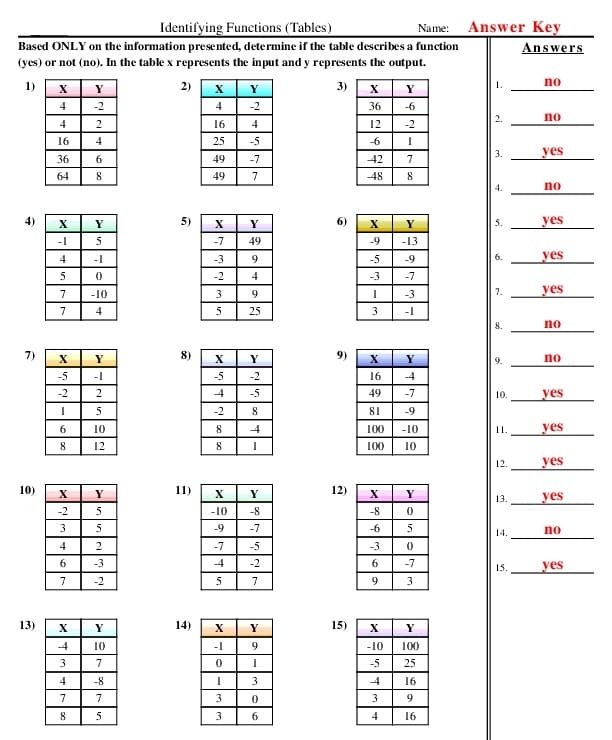
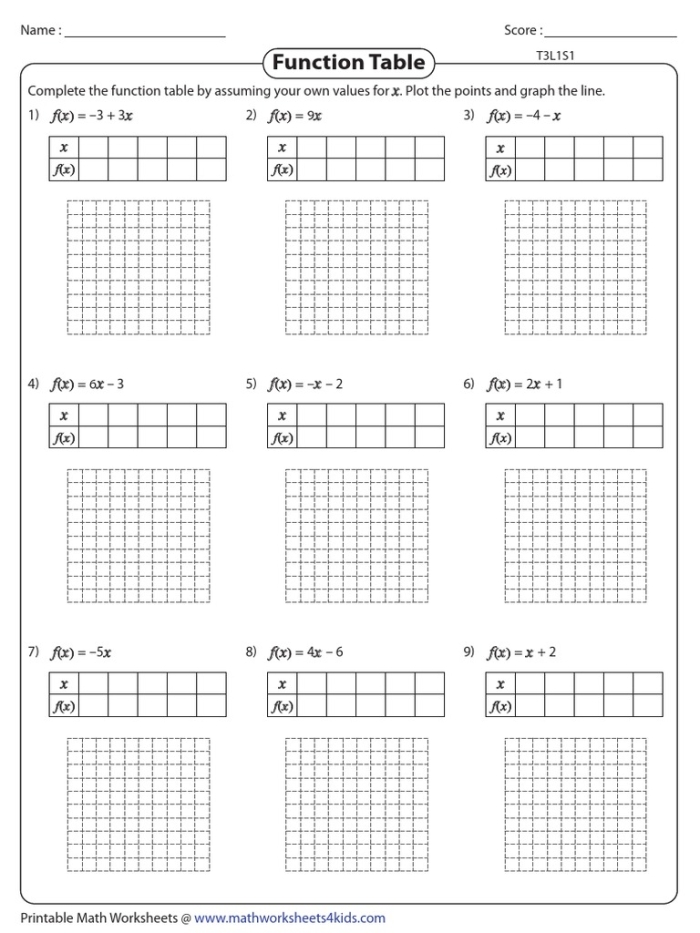
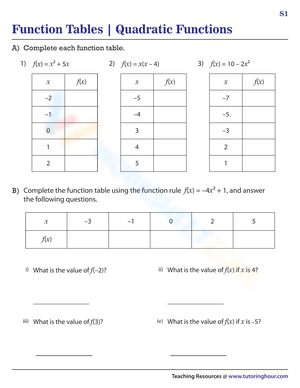
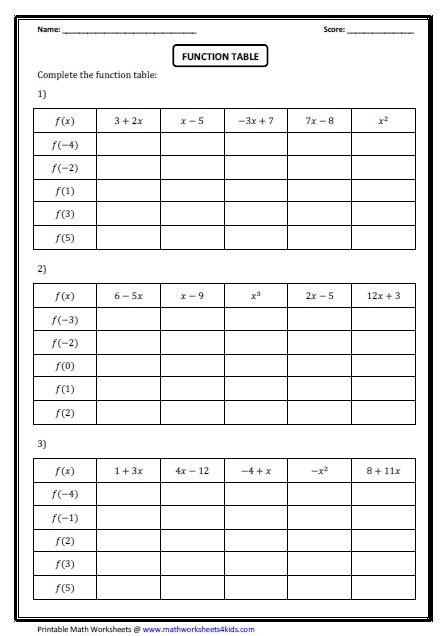
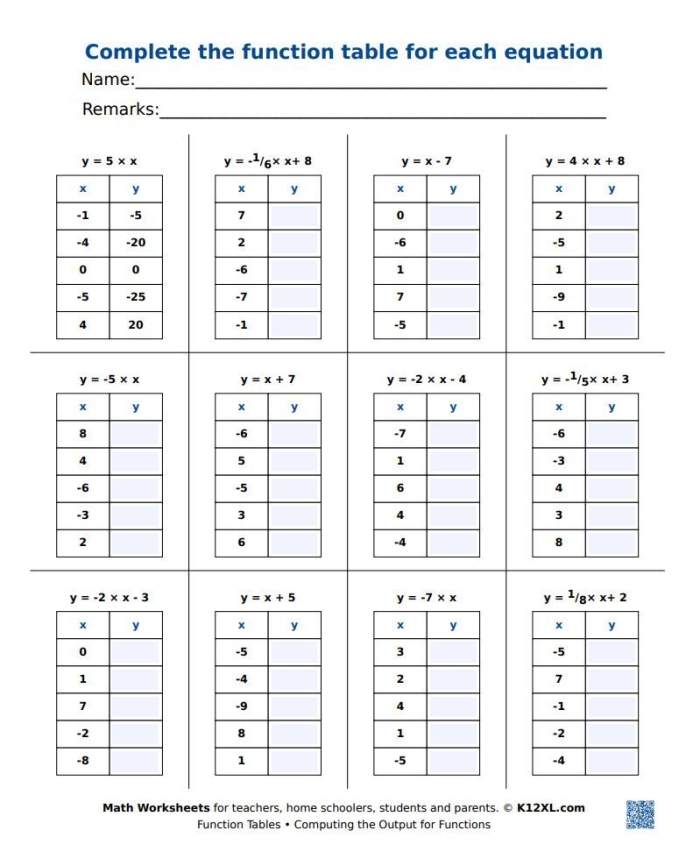
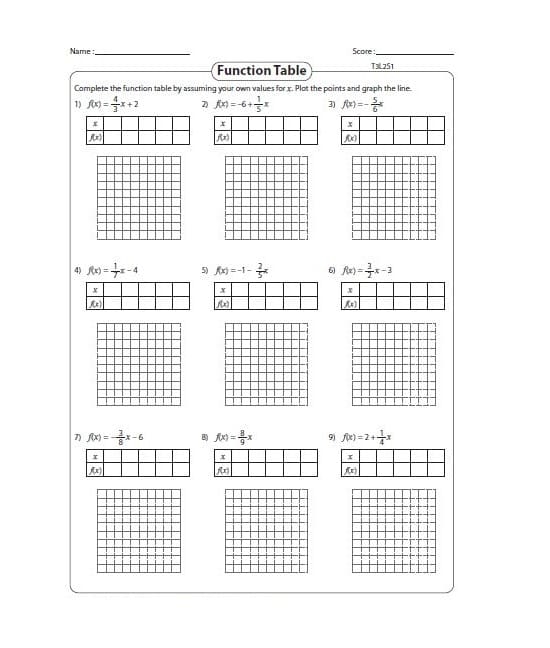
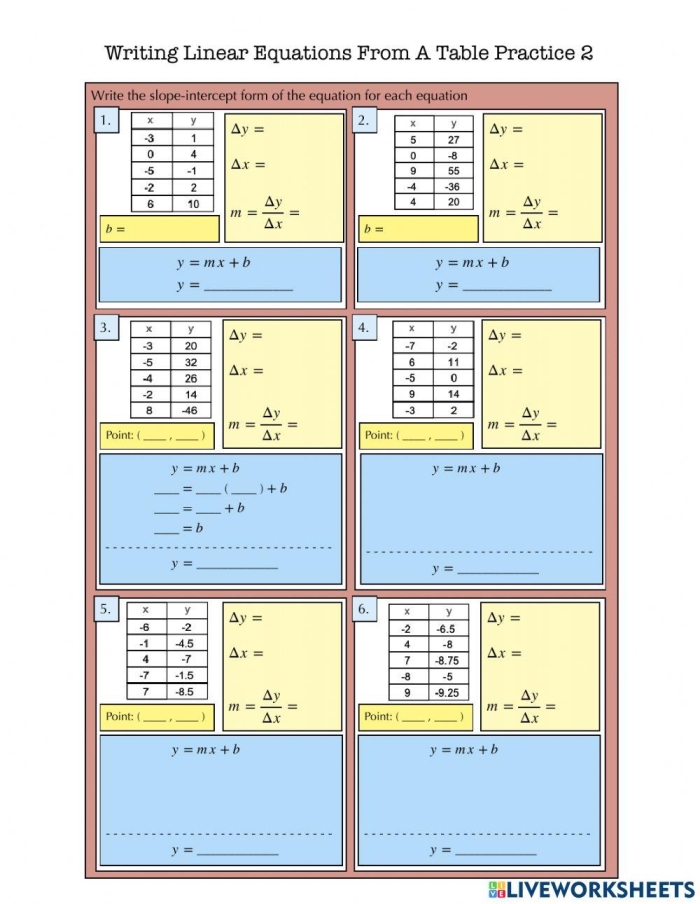
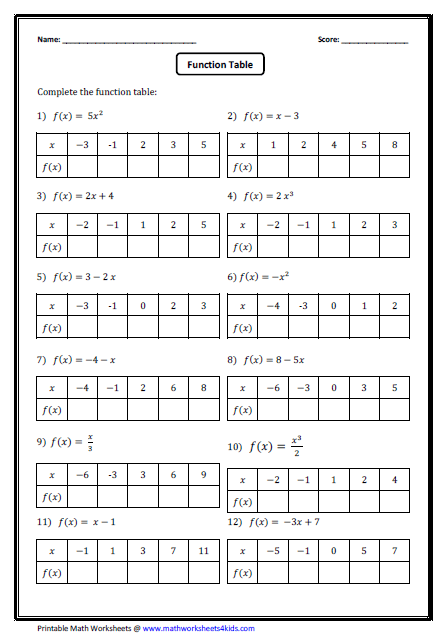
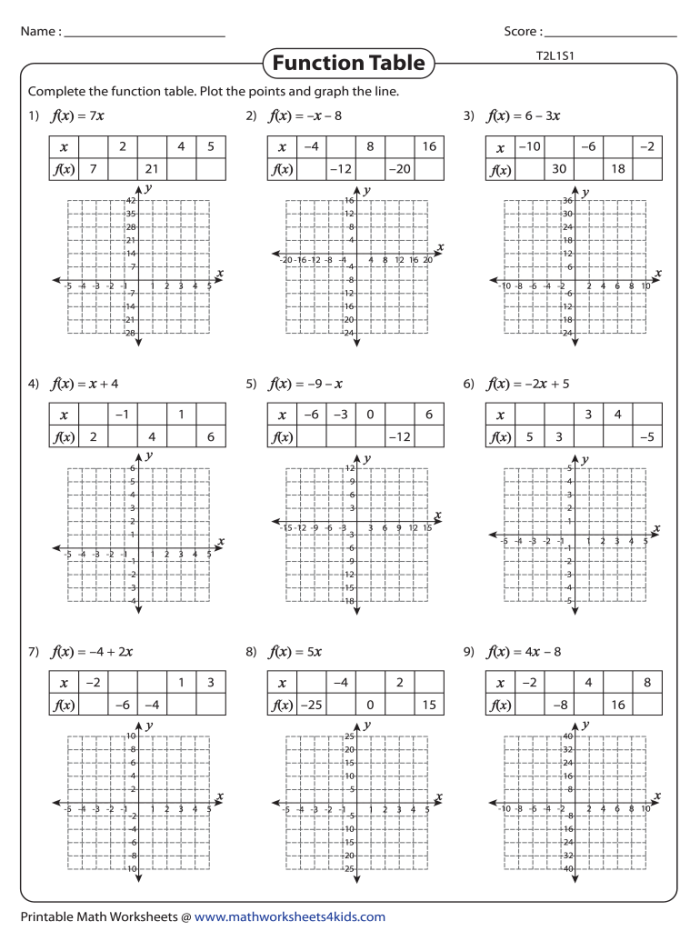
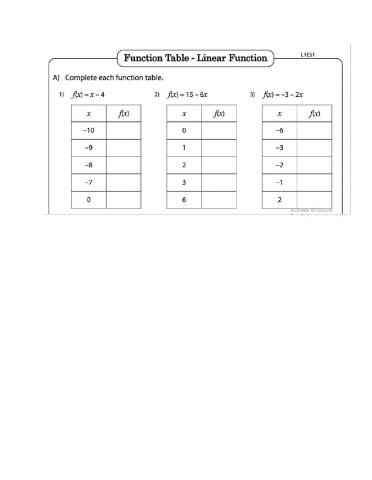
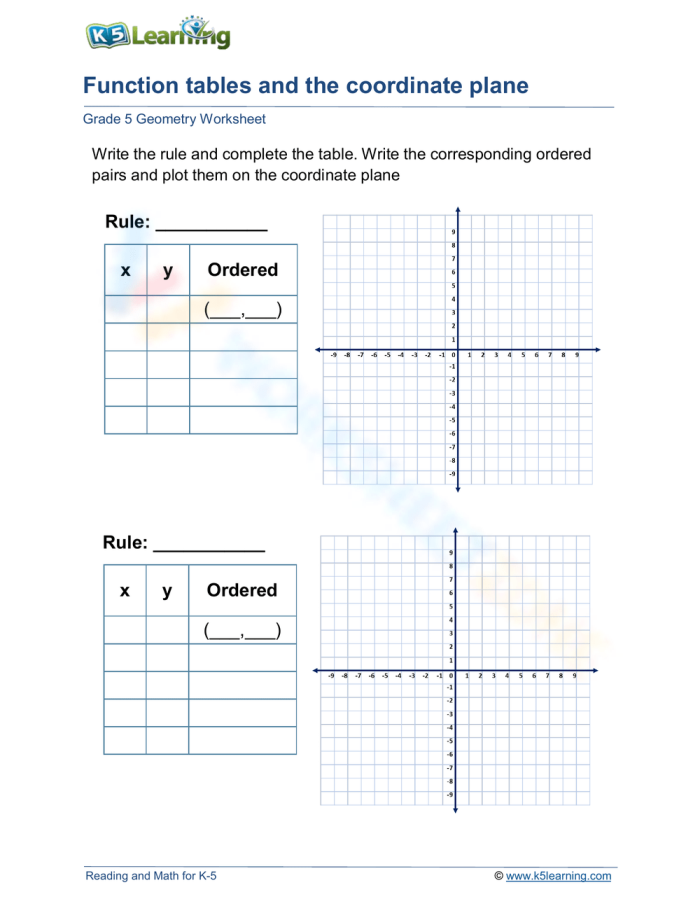
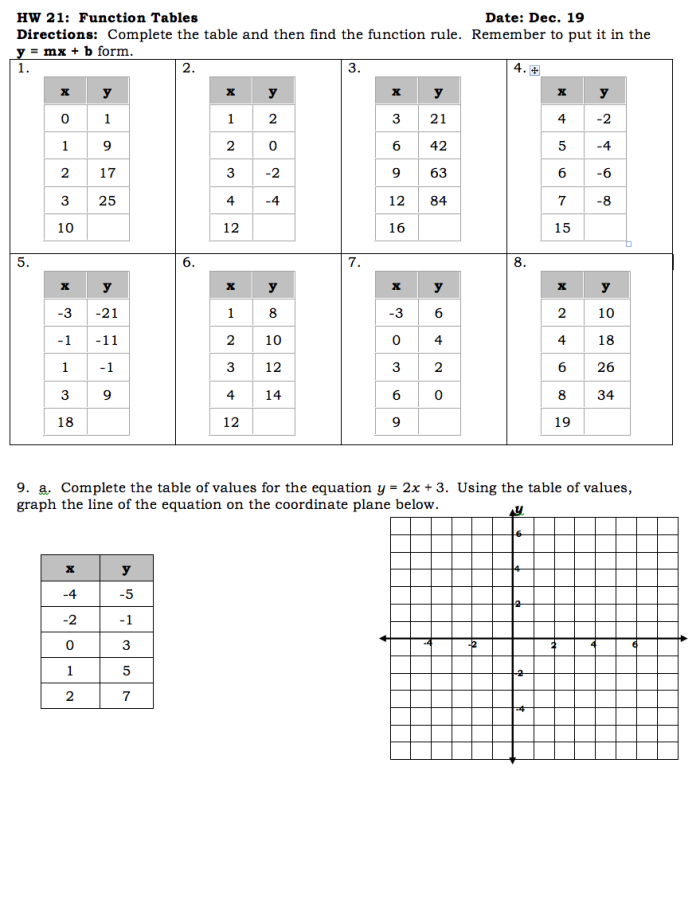
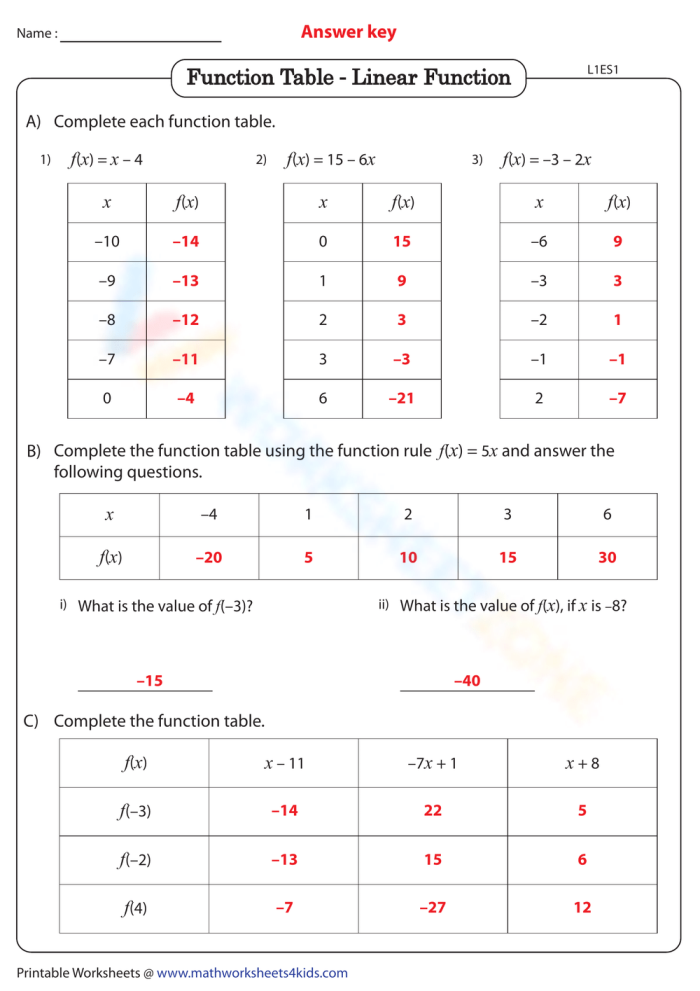
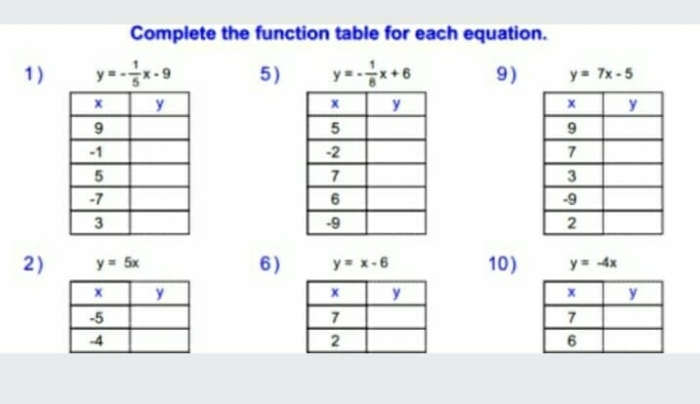
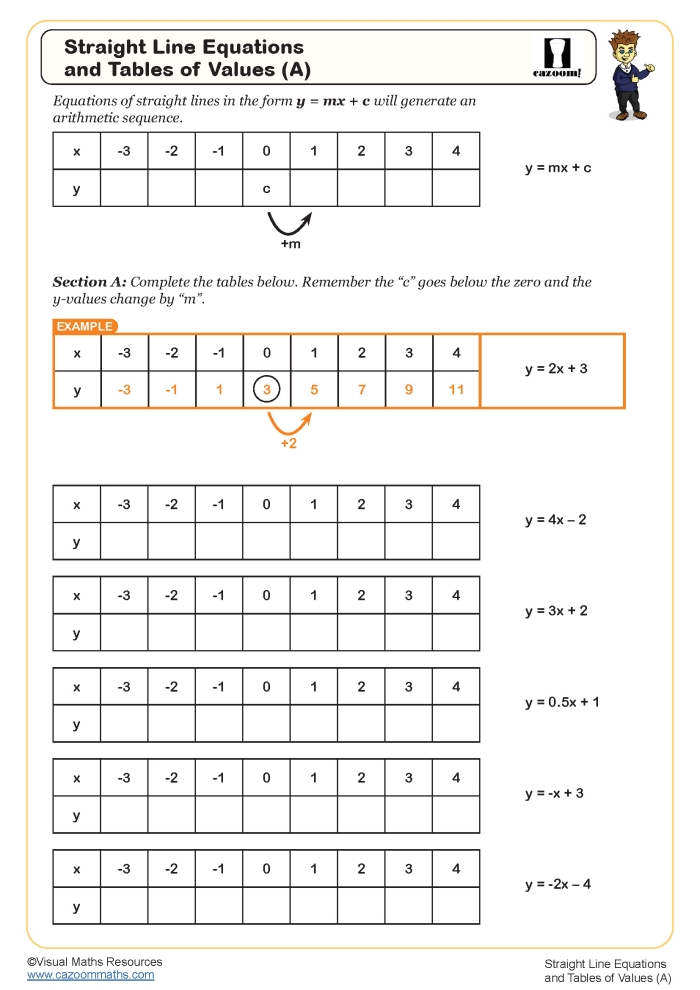
Printable function tables worksheets can further aid students in practicing this valuable skill. They provide structured opportunities to analyze and fill in gaps, reinforcing the learning of grammar and mechanics in mathematics. For those interested in exploring more resources, check out worksheets that align with this concept, such as the linear and nonlinear functions or those designed for categorization in science.
Engaging with function tables not only makes math more enjoyable but also prepares students for more complex mathematical concepts in the future. By comparing input and output numbers, third graders can develop a strong foundation that will serve them well in their academic journey.
Boost Skills with These Worksheets