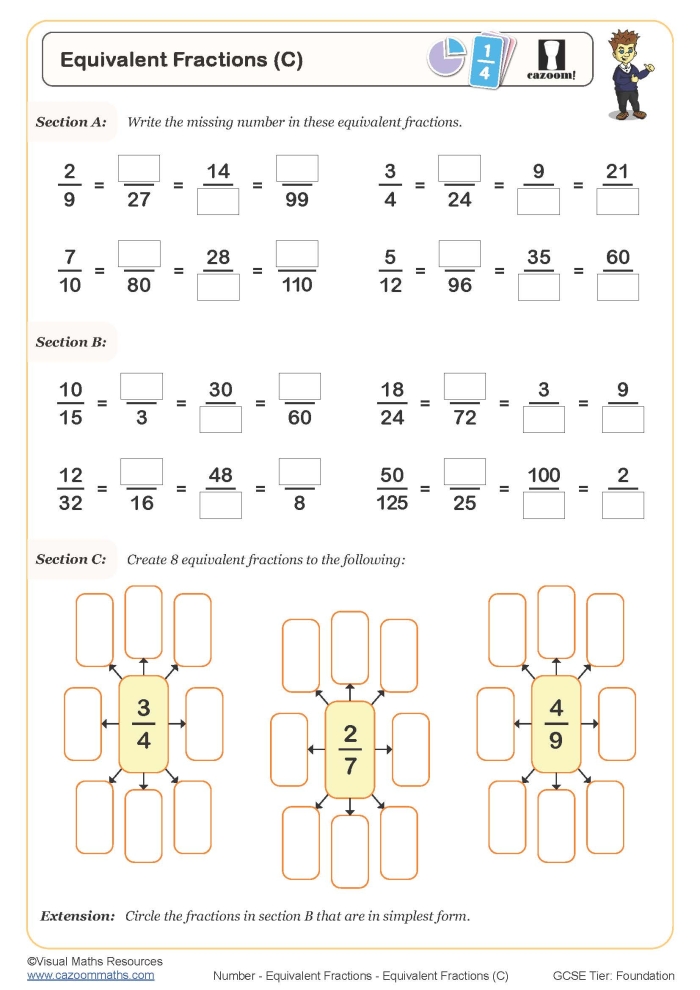
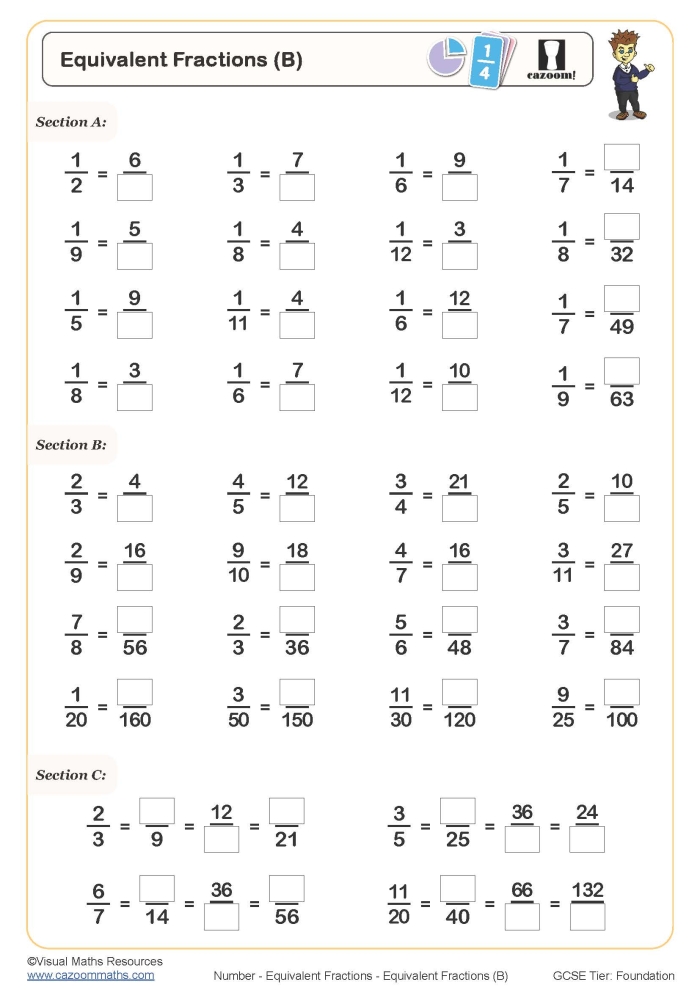
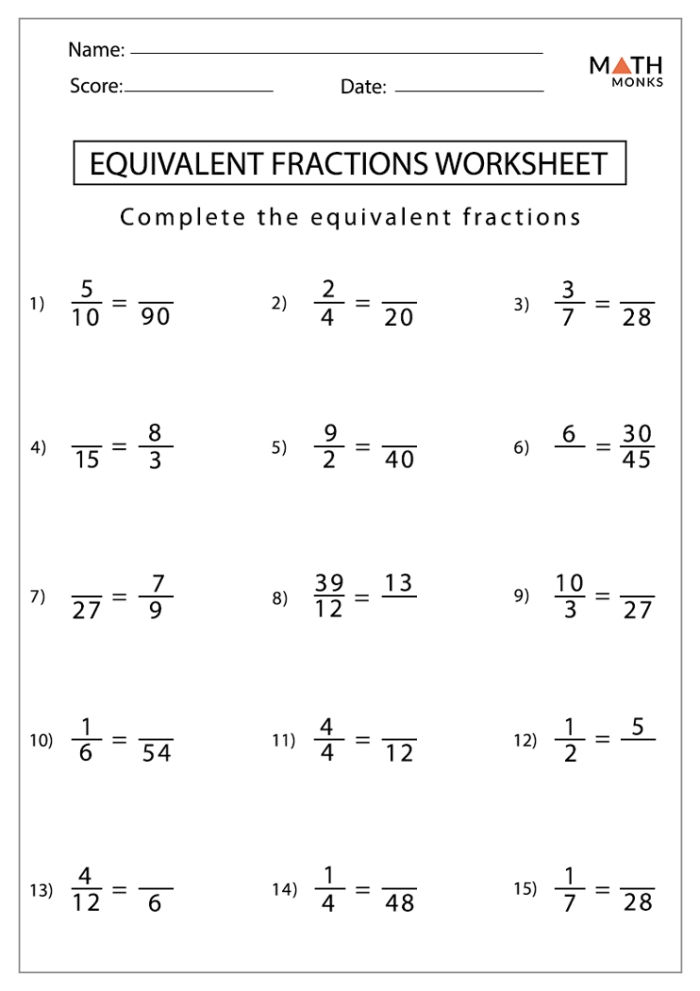
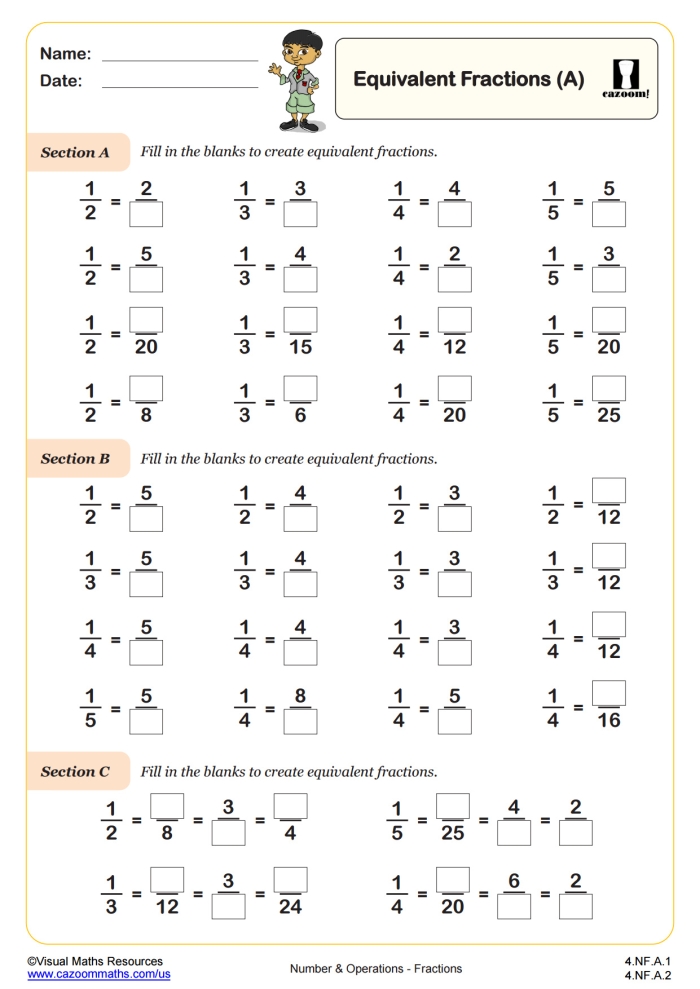
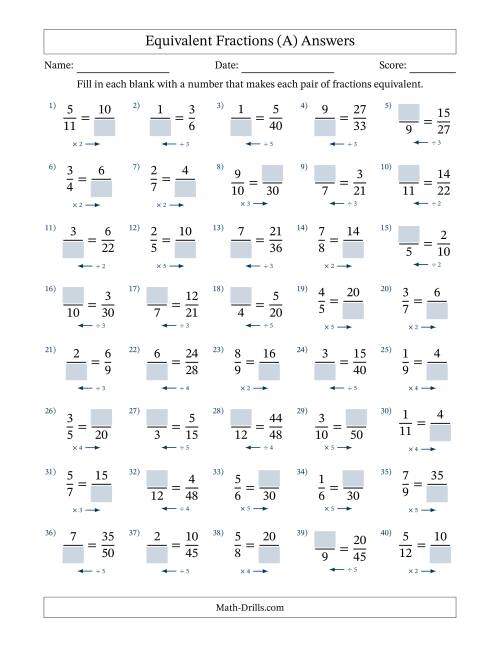
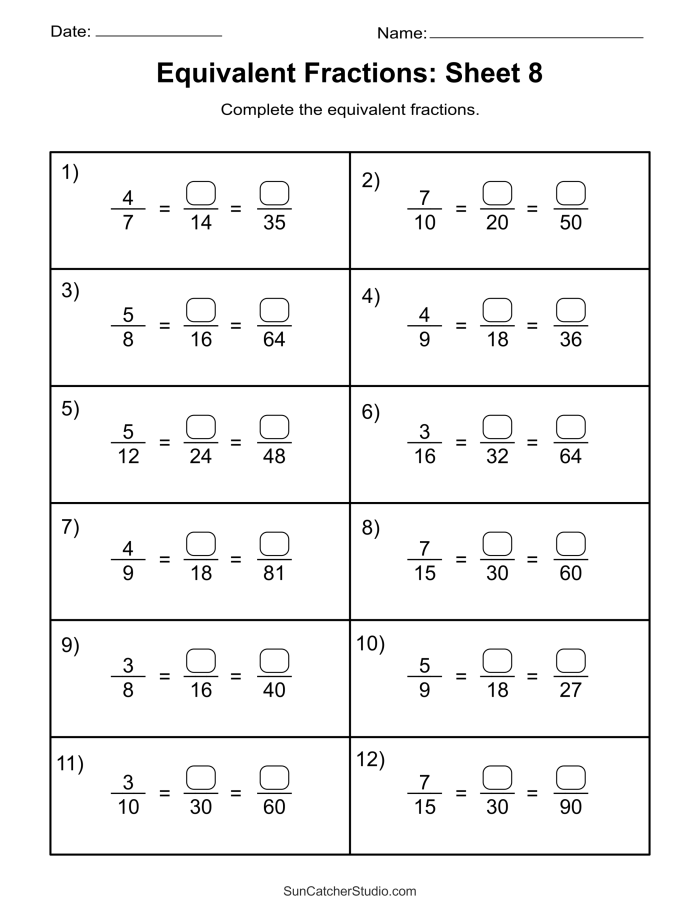
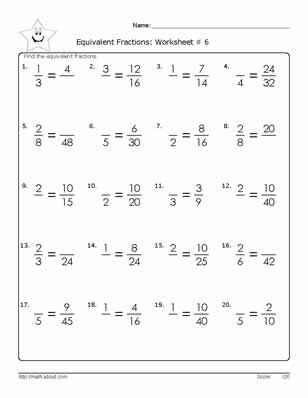
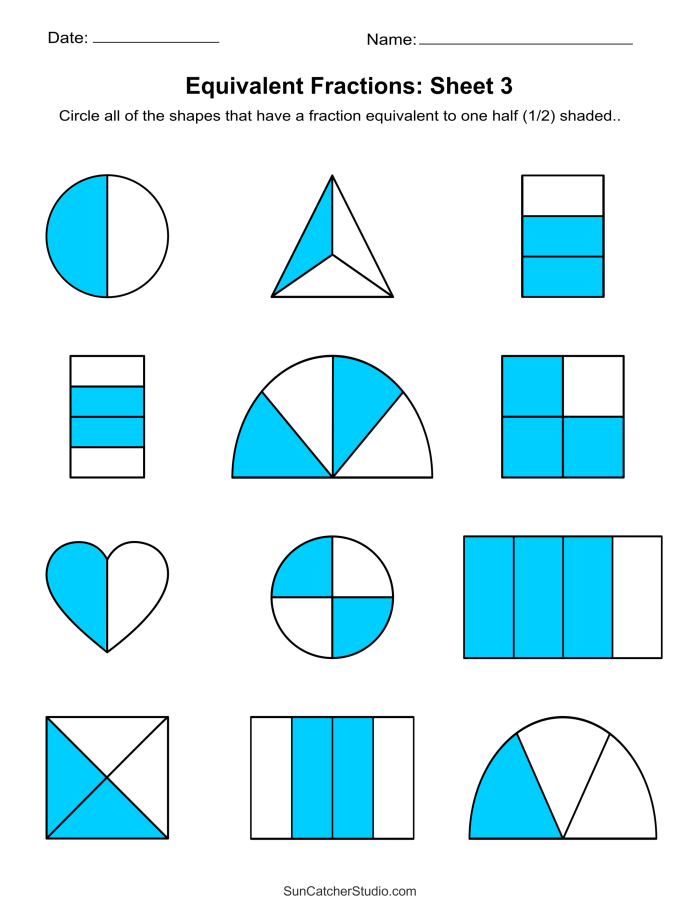
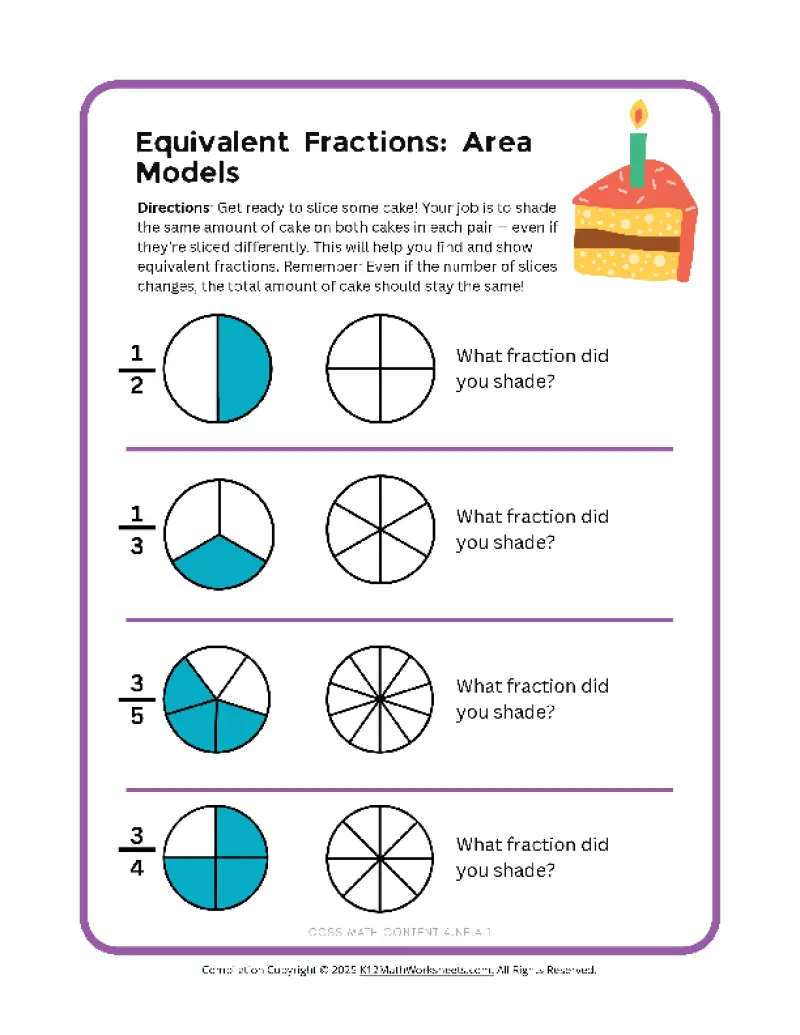
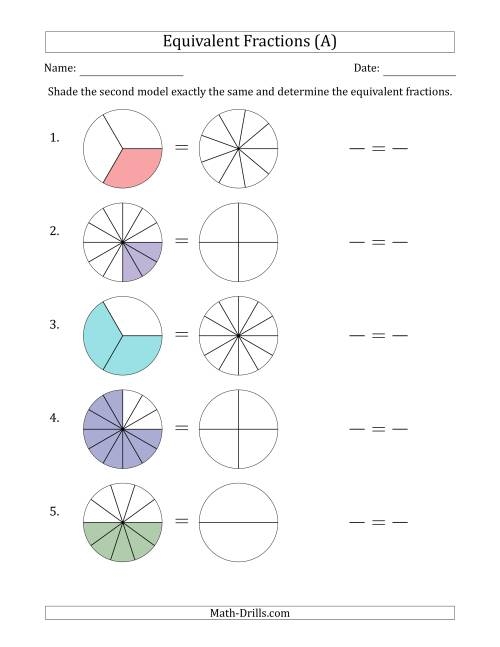
Many third grade students struggle with the concept that fractions can look different but represent the same amount. Your child might confidently identify 1/2 as half a pizza, but when asked if 2/4 is the same thing, confusion sets in. Equivalent fractions are one of those foundational math concepts that click once kids see the pattern, but they need practice to internalize it.
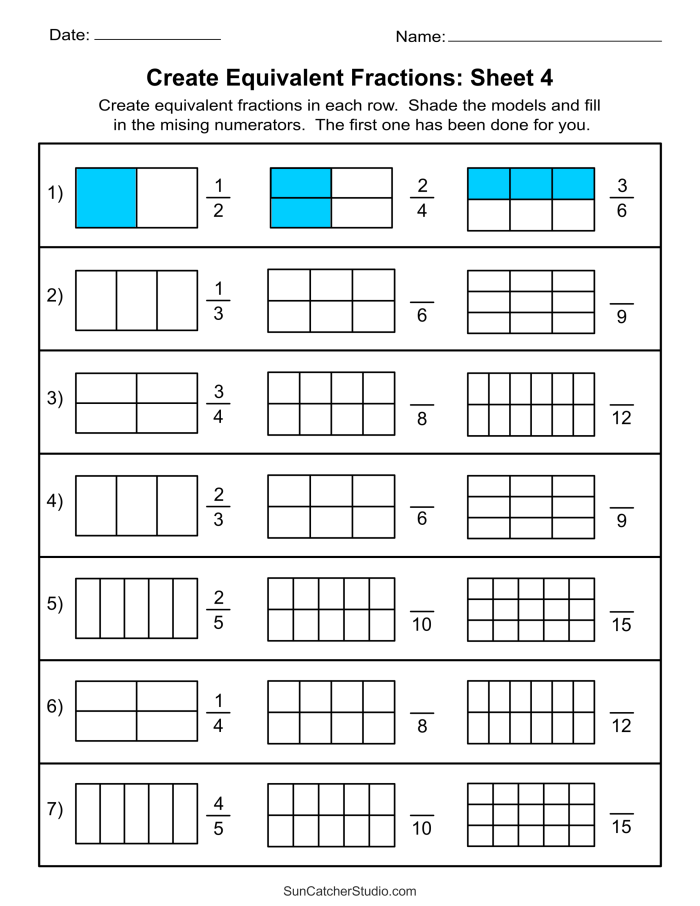
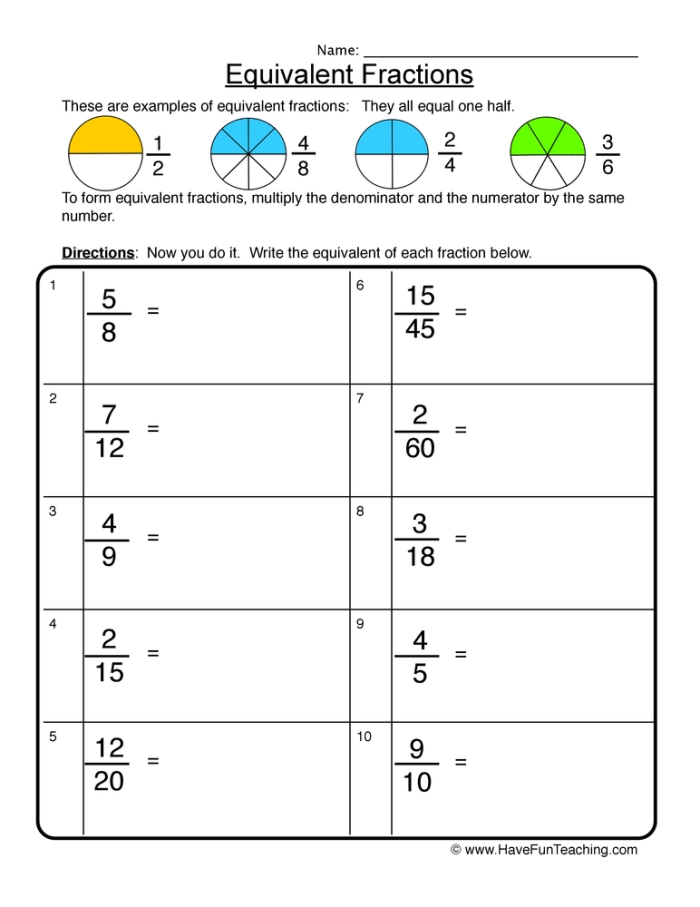
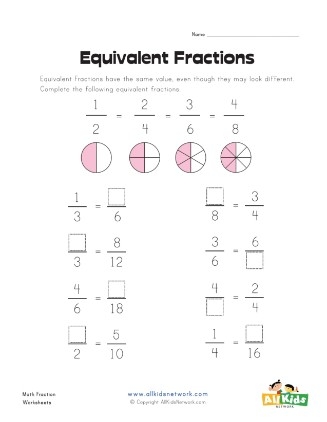
The core idea is straightforward: when you divide something into more pieces and take proportionally more of those pieces, you end up with the same portion. If you cut a sandwich in half, you get 1/2. If you cut that same sandwich into four pieces and take two of them, you have 2/4, which equals the same amount of sandwich. Add a third way of dividing it into six pieces and taking three, and you see 3/6 joins the group. These three fractions are equivalent because they all represent the middle of the whole.
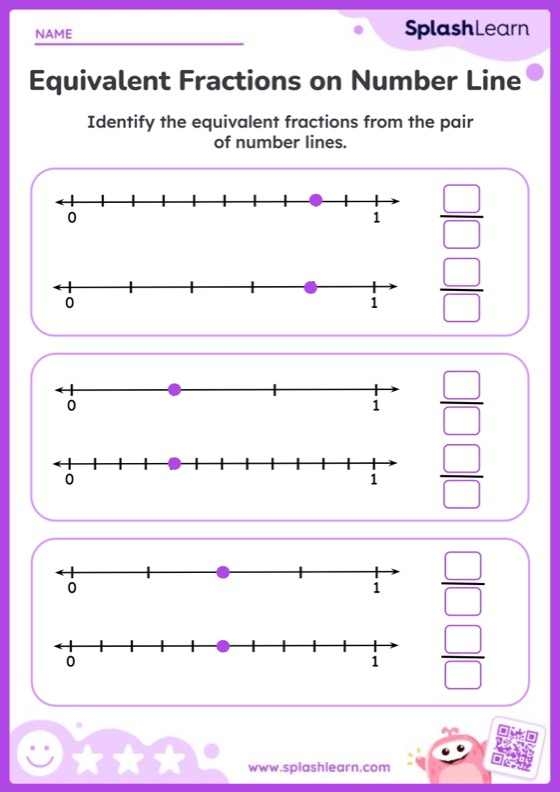
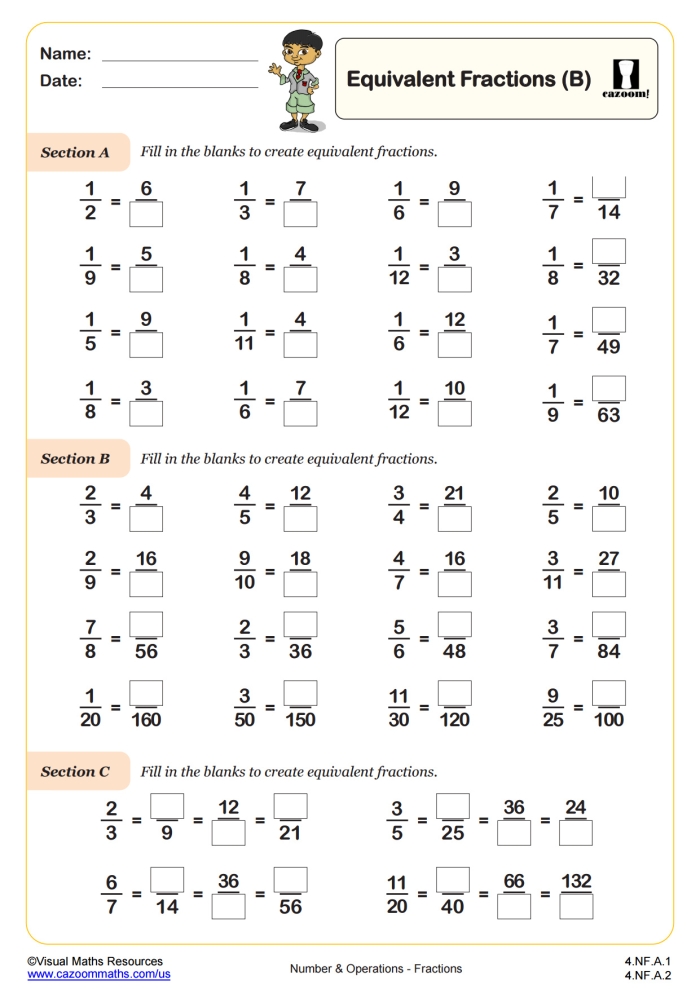
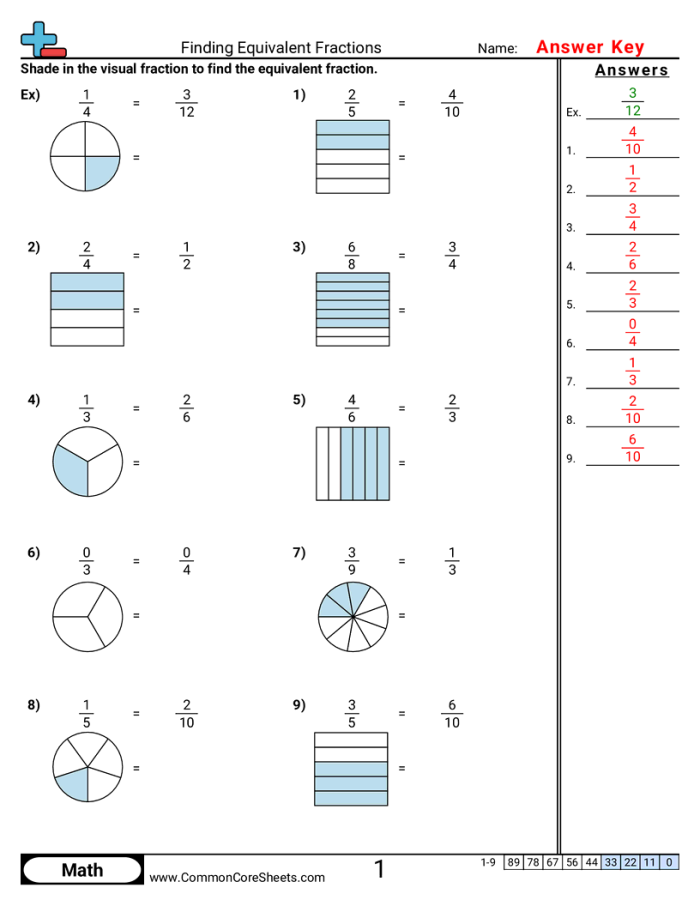
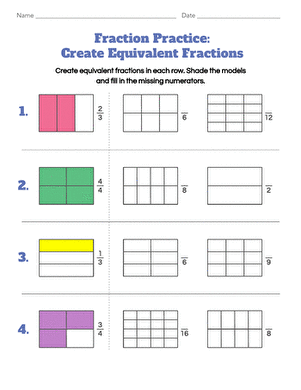
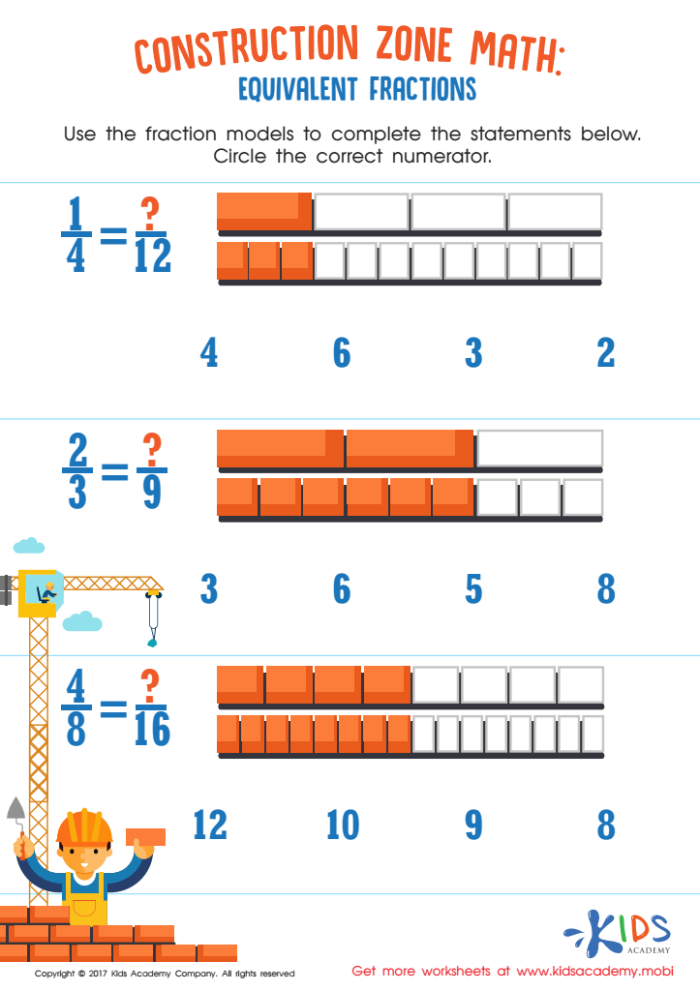
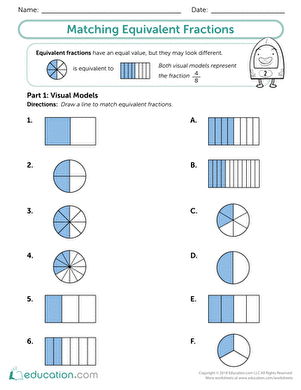
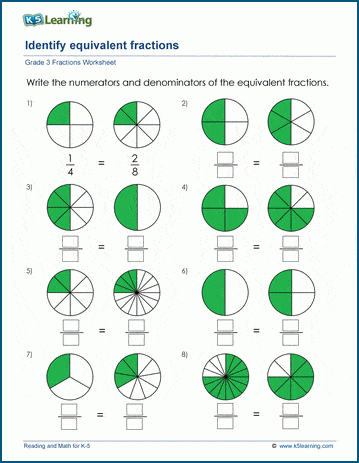
Colorful worksheets make this concept more approachable for young learners. Visual representations, like shaded sections of circles or rectangles, help children see the equivalence rather than just memorizing it. When kids can color in 1/2 of a circle and then see 2/4 of another circle shaded the same way, the lightbulb moment happens naturally.
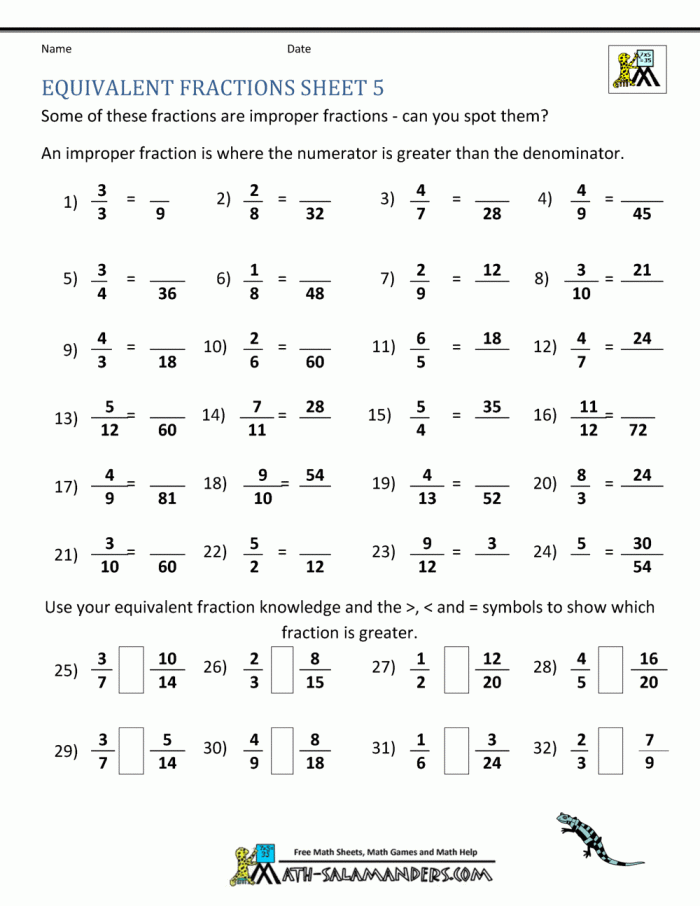
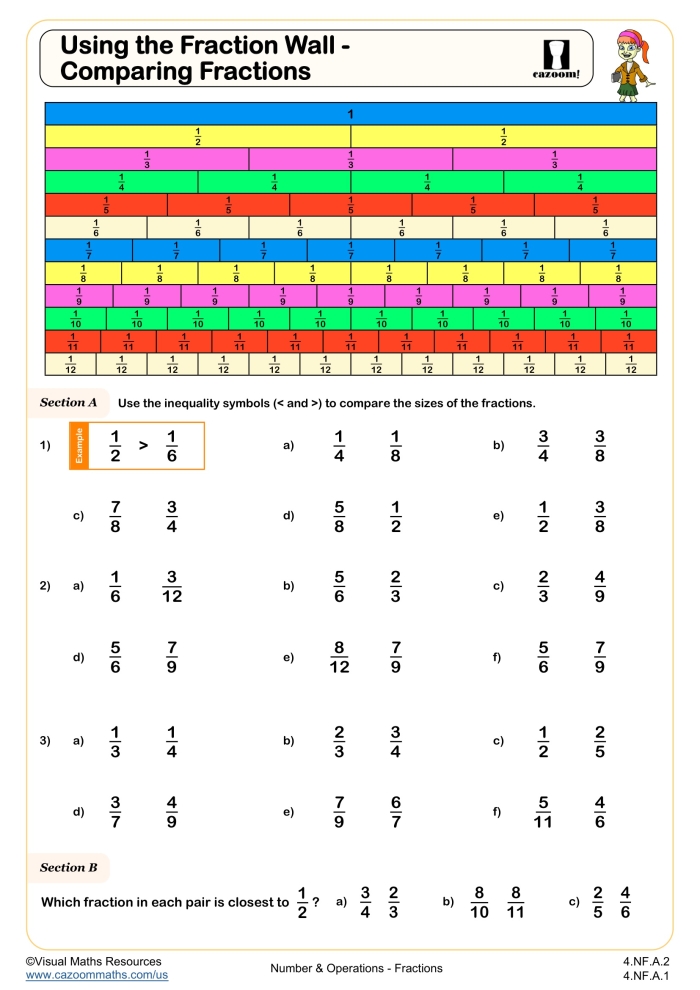
Beyond isolated fraction practice, understanding equivalence supports everything that comes later in math. It prepares students for comparing fractions, adding fractions with different denominators, and eventually simplifying fractions. As your child works through these exercises, they’re building a mental toolkit they’ll use throughout their education.
Pairing fraction worksheets with other third grade skills keeps learning balanced. Your child benefits from mixing in activities like multiplication word problems about shopping scenarios or editing exercises for capitalization and punctuation. A well-rounded approach ensures no single skill gets neglected.
Use These Worksheets Today