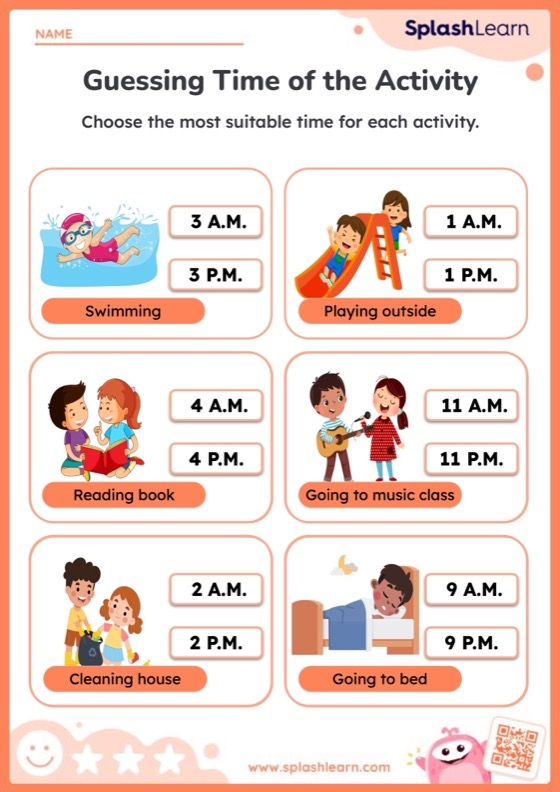
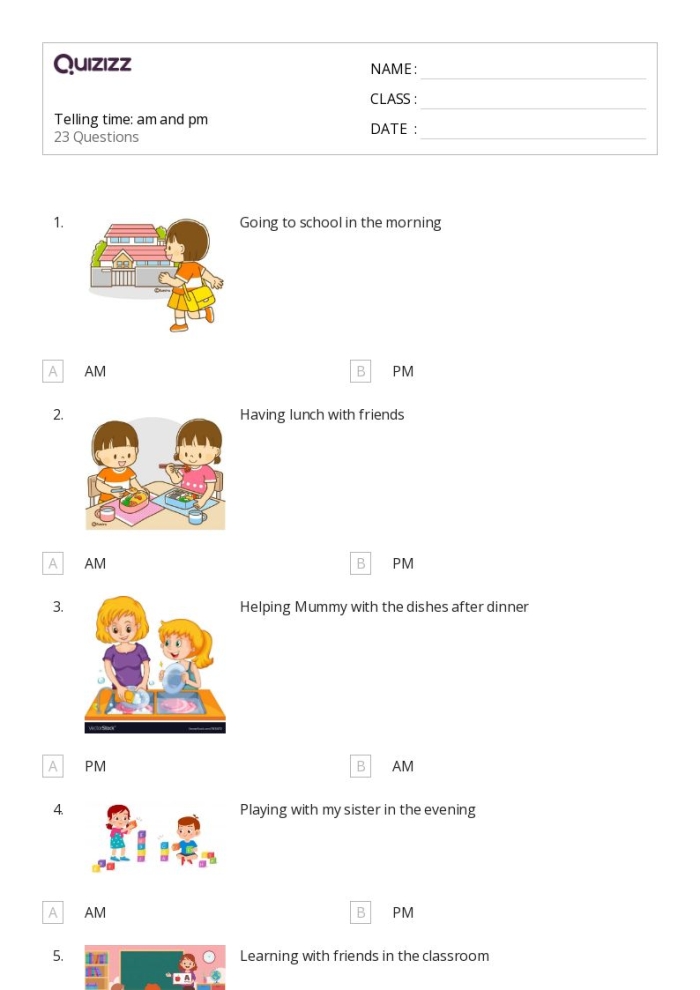
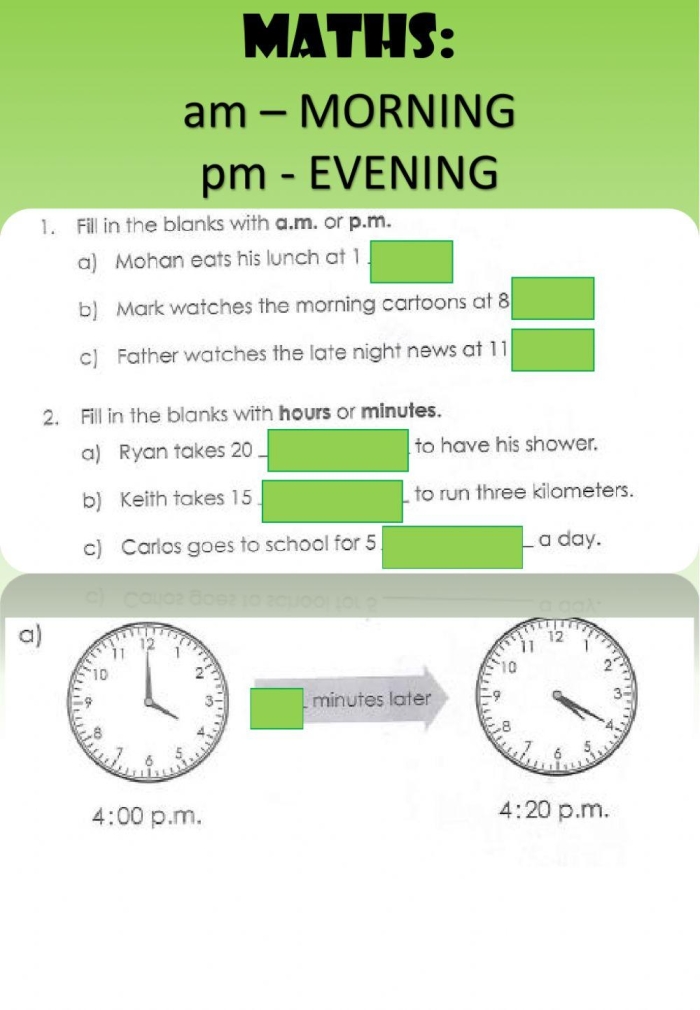
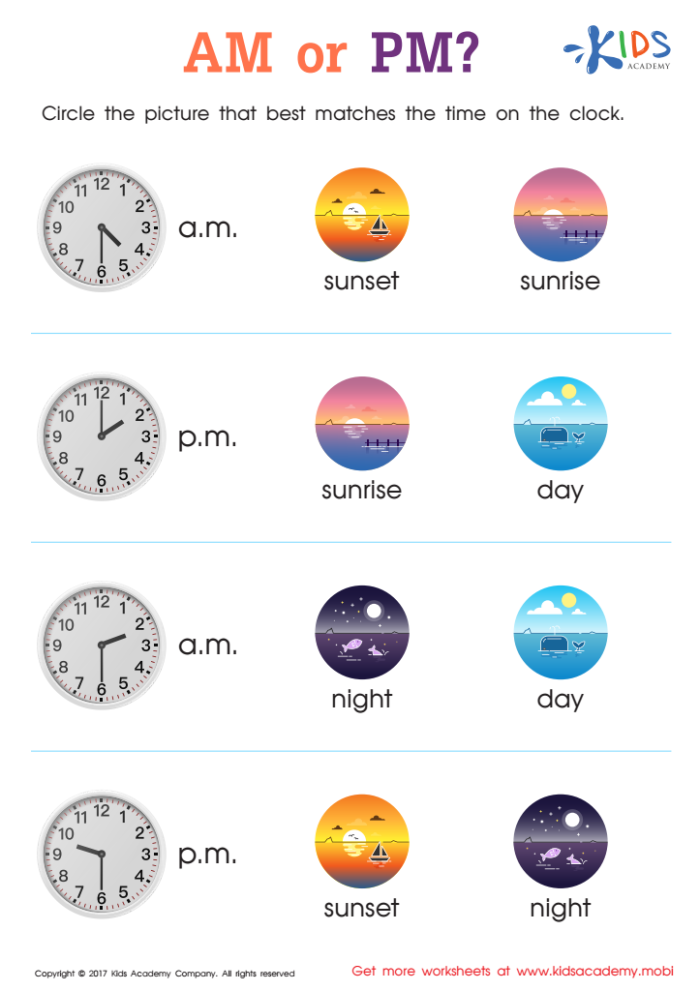
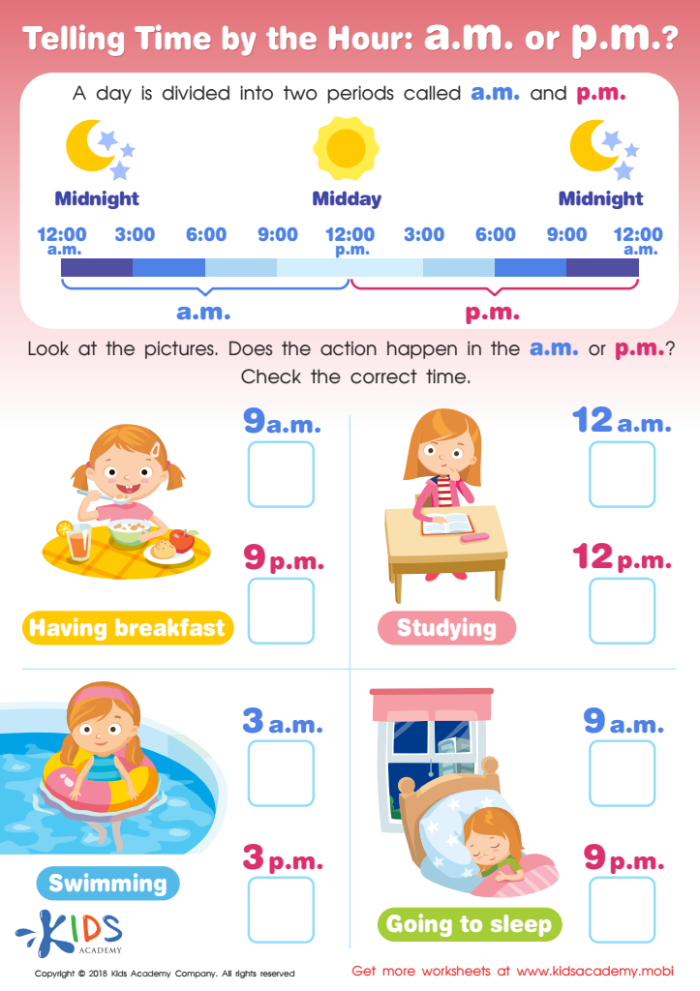
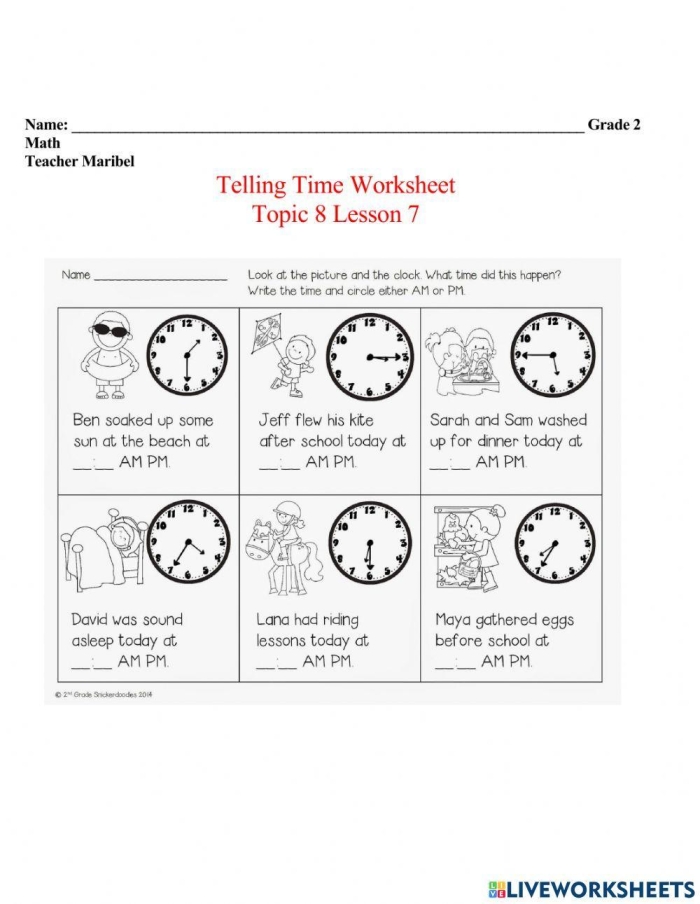
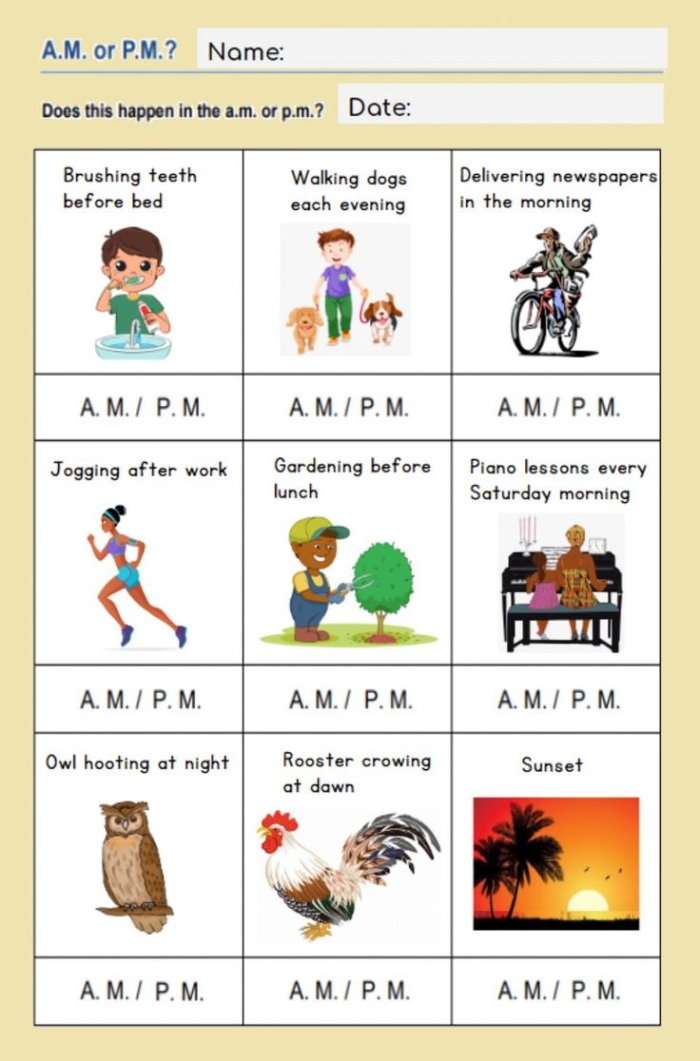
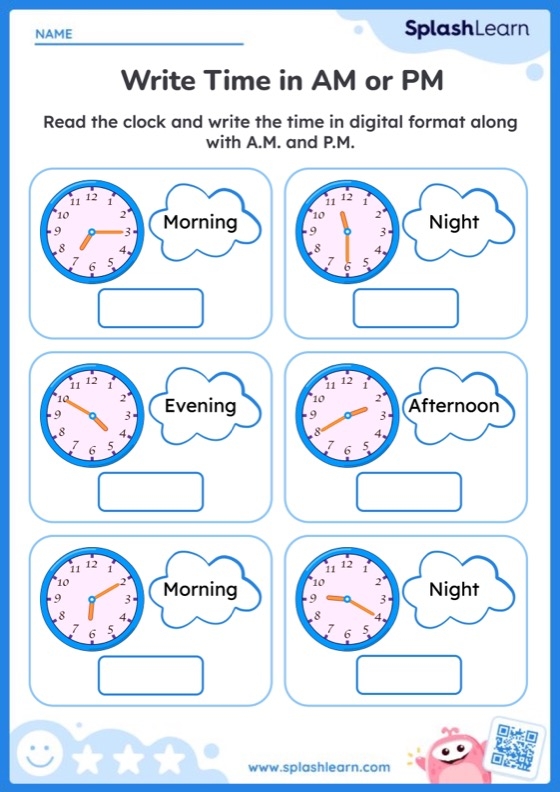
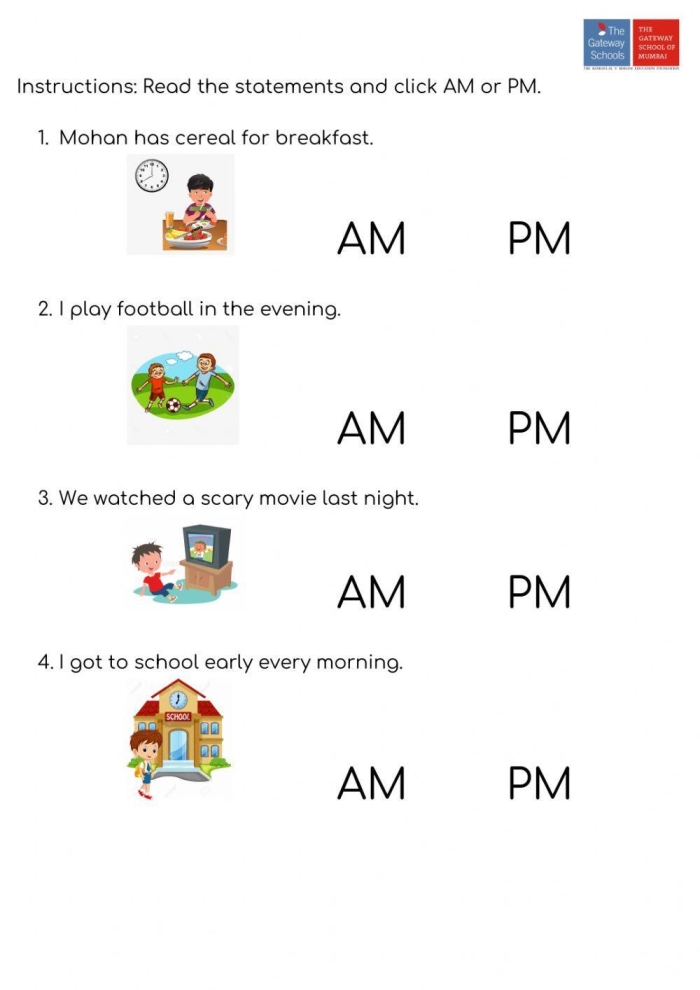
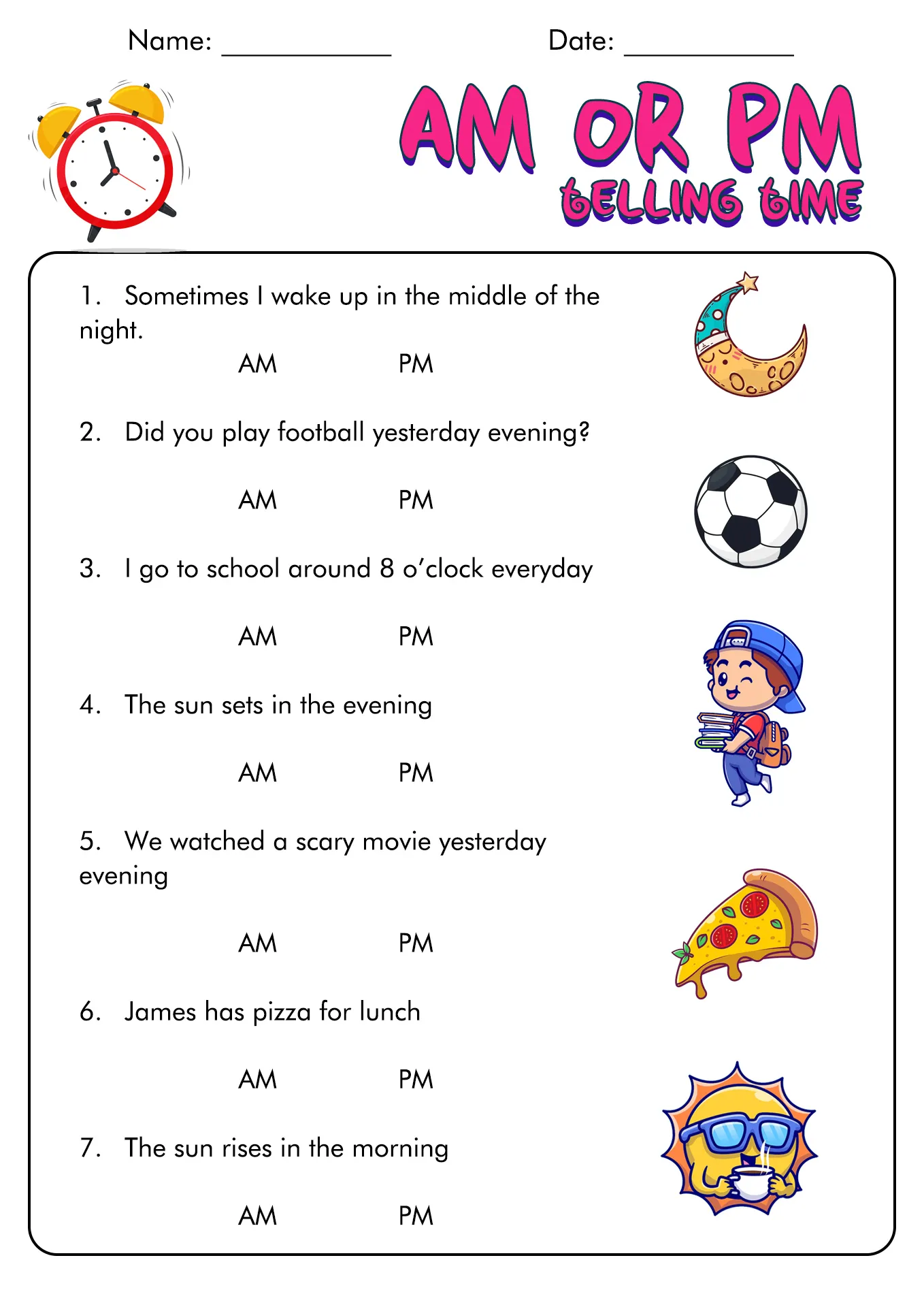
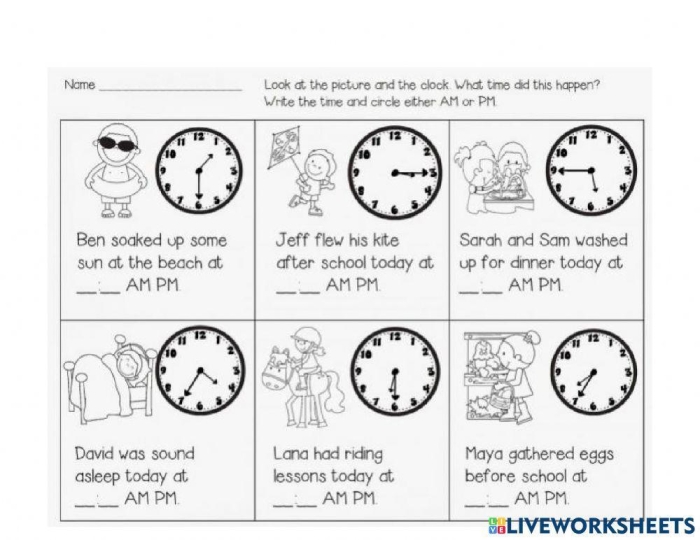
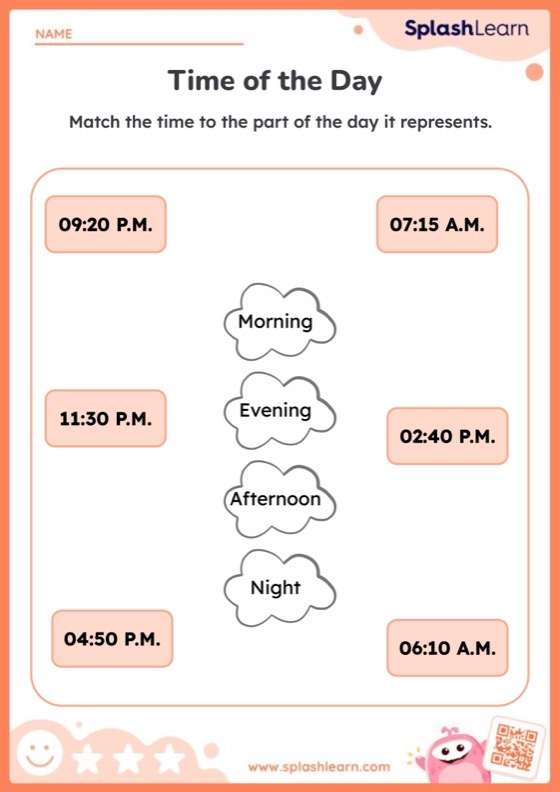
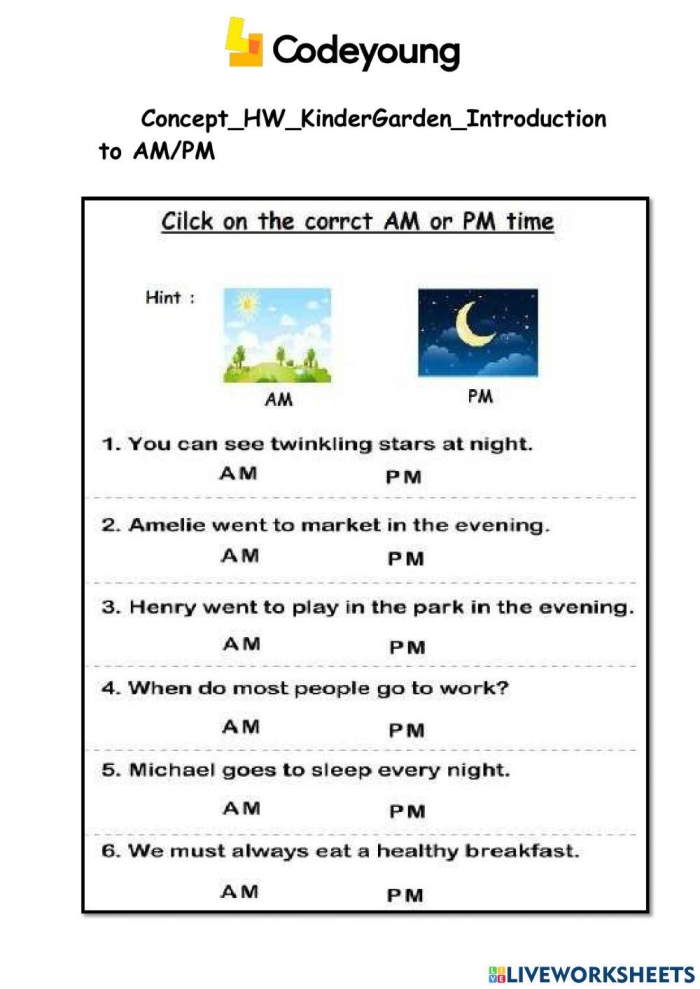
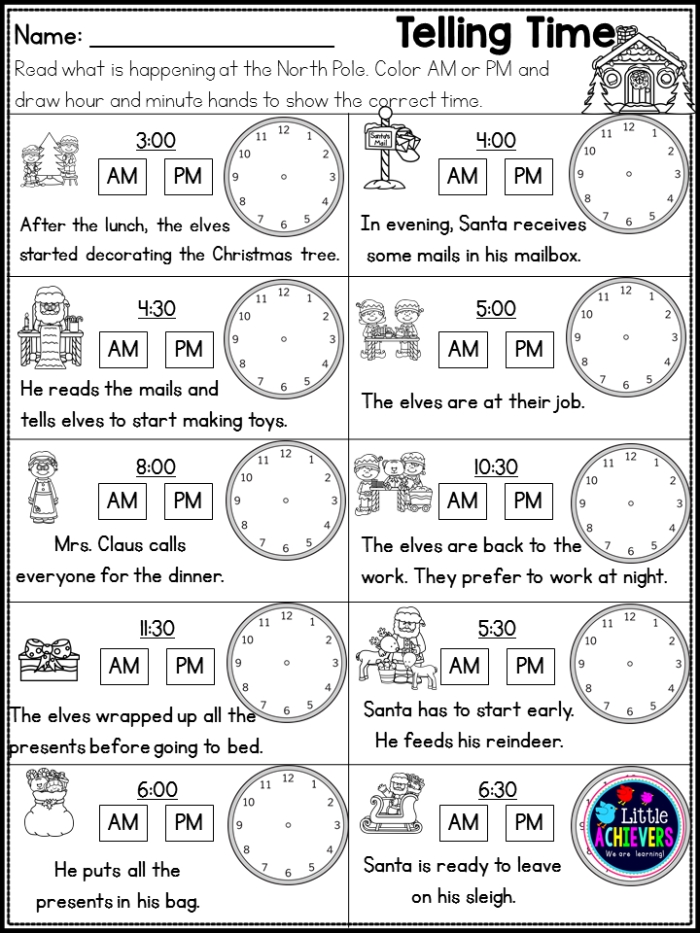
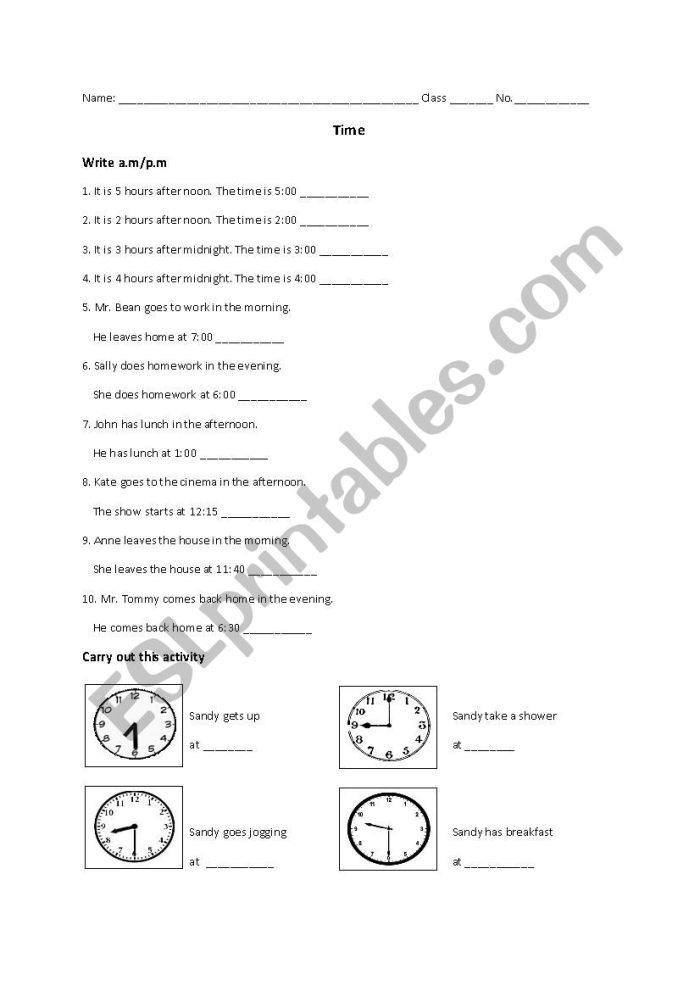
Teaching second graders to read an analog clock is a rewarding experience, especially as they begin to grasp the concept of time. By now, your students should be well on their way to mastering this essential skill. A practical way to assess their understanding is through a double-sided worksheet designed specifically for this purpose. This worksheet focuses on telling time to the nearest five minutes, incorporating both AM and PM distinctions.
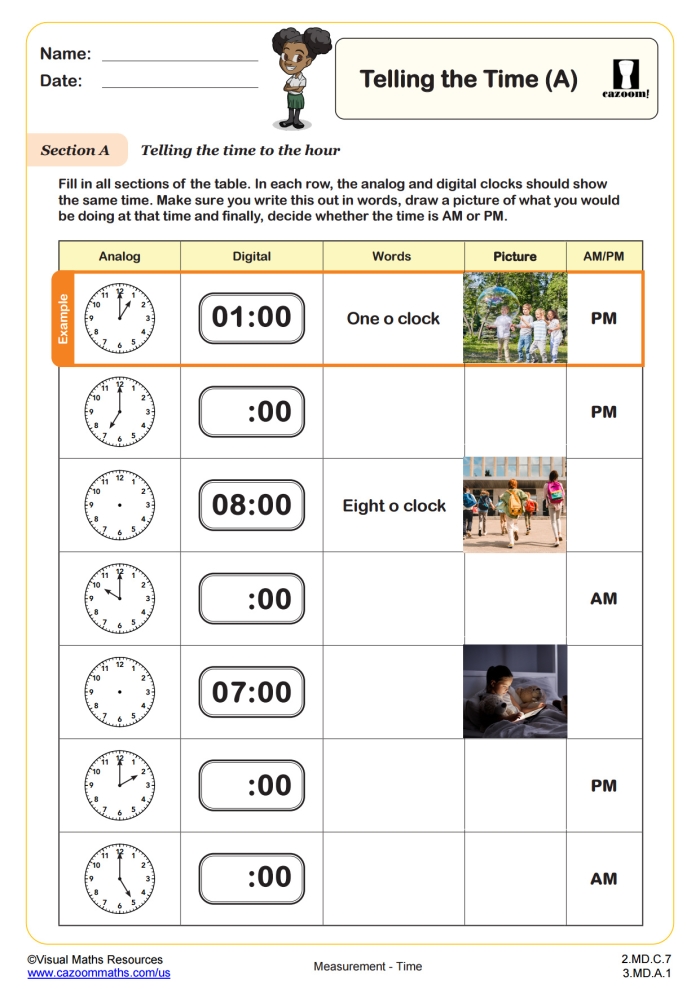
One of the key benefits of using worksheets in the classroom is that they provide a structured way for students to practice their skills. The double-sided format allows for a variety of exercises, ensuring that students engage with the material in different ways. For instance, one side may include clock faces where students write the correct time, while the other side could present word problems that require them to apply their knowledge of time in real-life scenarios. This approach not only solidifies their ability to read analog clocks but also connects math to everyday situations.
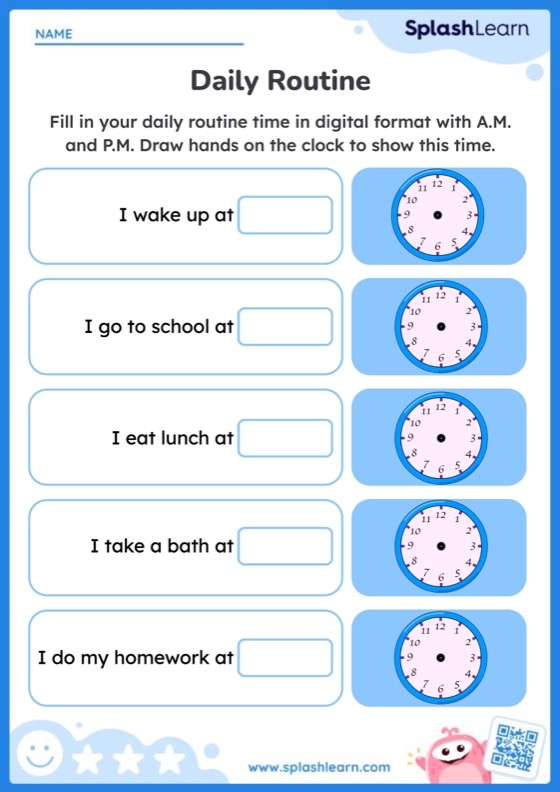
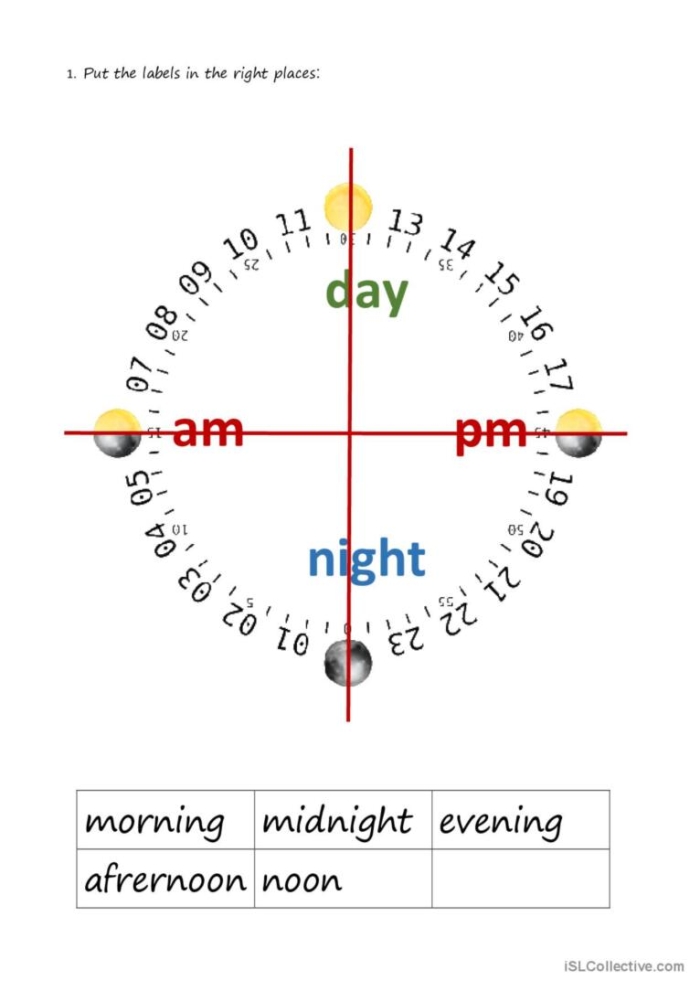
When assessing your students’ progress, look for common challenges they may face, such as distinguishing between AM and PM. Some children might confuse the times based on their daily routines. Incorporating discussions about their daily activities can help reinforce this concept. For example, you might ask, “What time do you wake up in the morning?” and “What time do you go to bed?” These questions can provide context and help students better understand how to apply their knowledge.
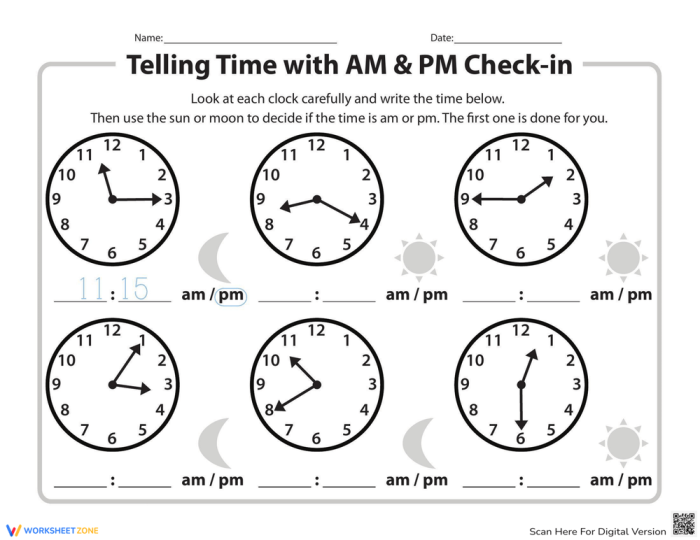
If you’re looking for additional resources, consider checking out the Telling Time with AM & PM Check-in worksheets for more practice materials. You can also explore quarter-hour time worksheets to further enhance their learning experience. By providing your second graders with engaging materials and practical applications, you’ll help them develop a strong foundation in math that will benefit them as they progress through their education.
Printable Worksheets for Practice