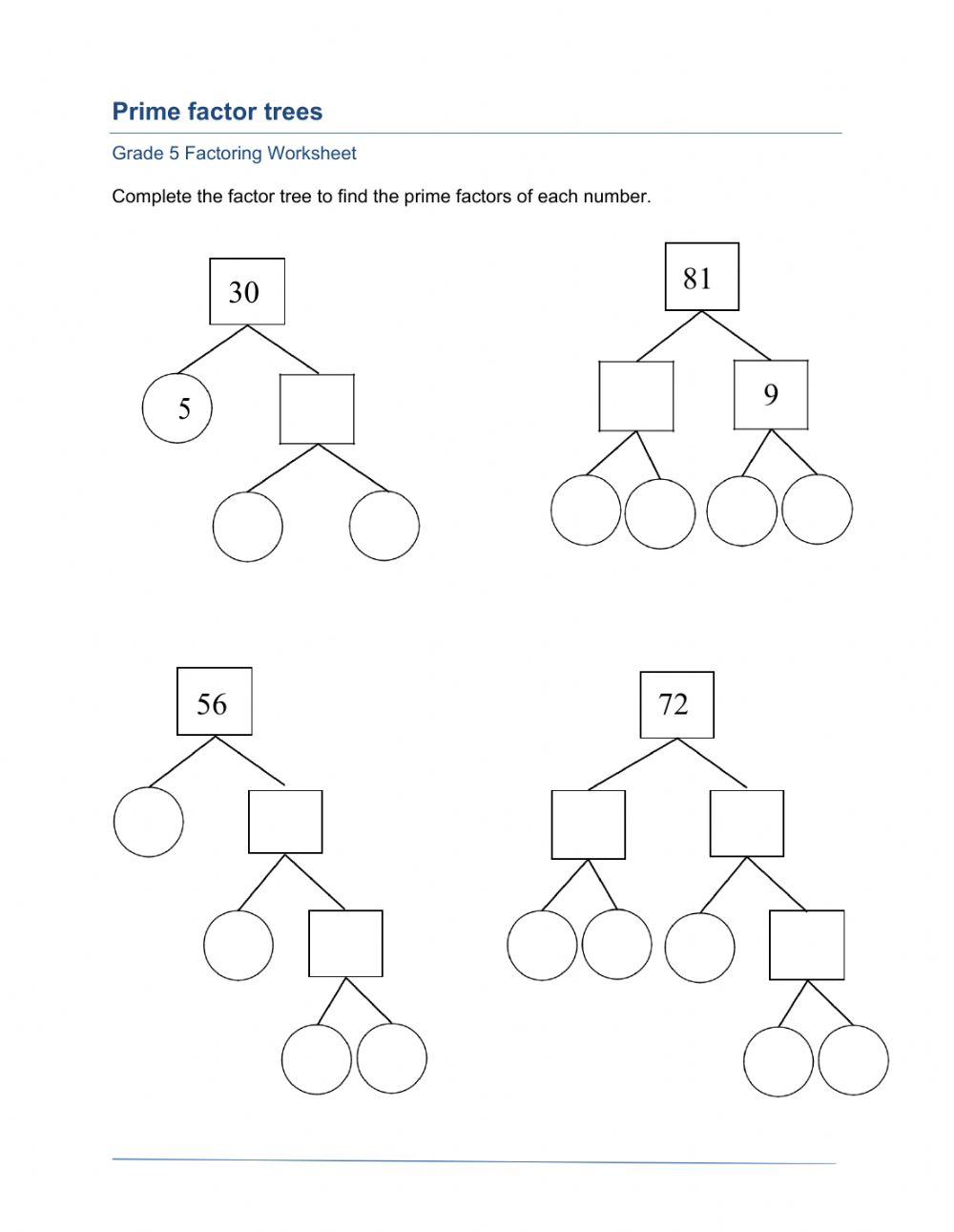
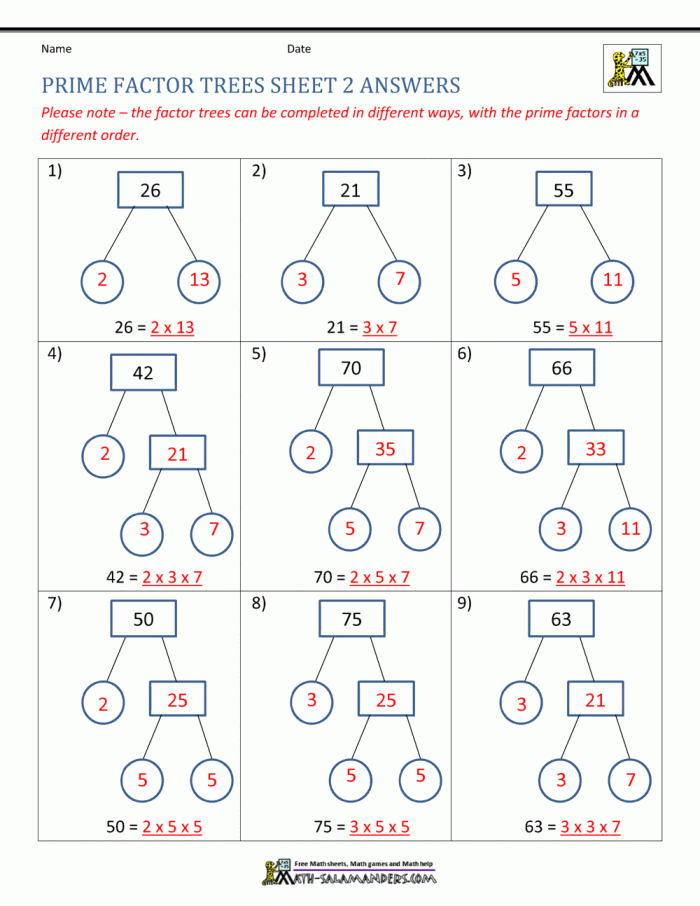
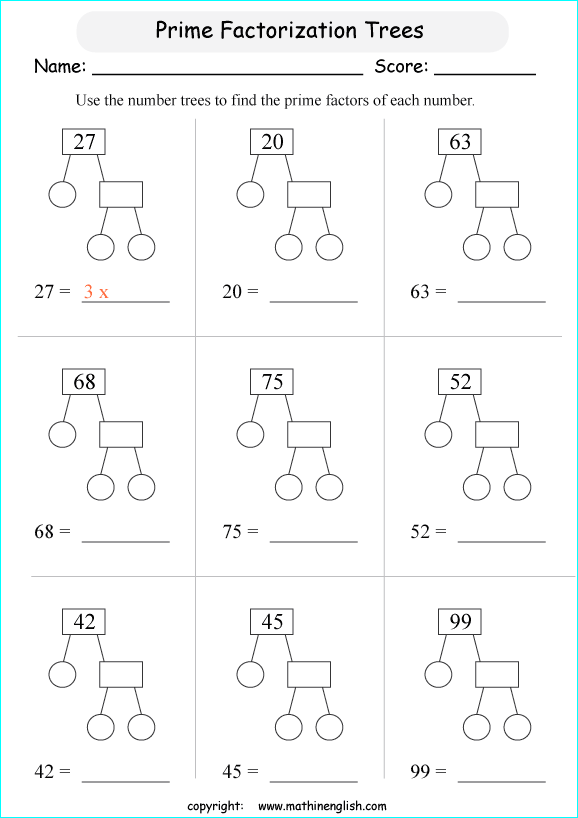
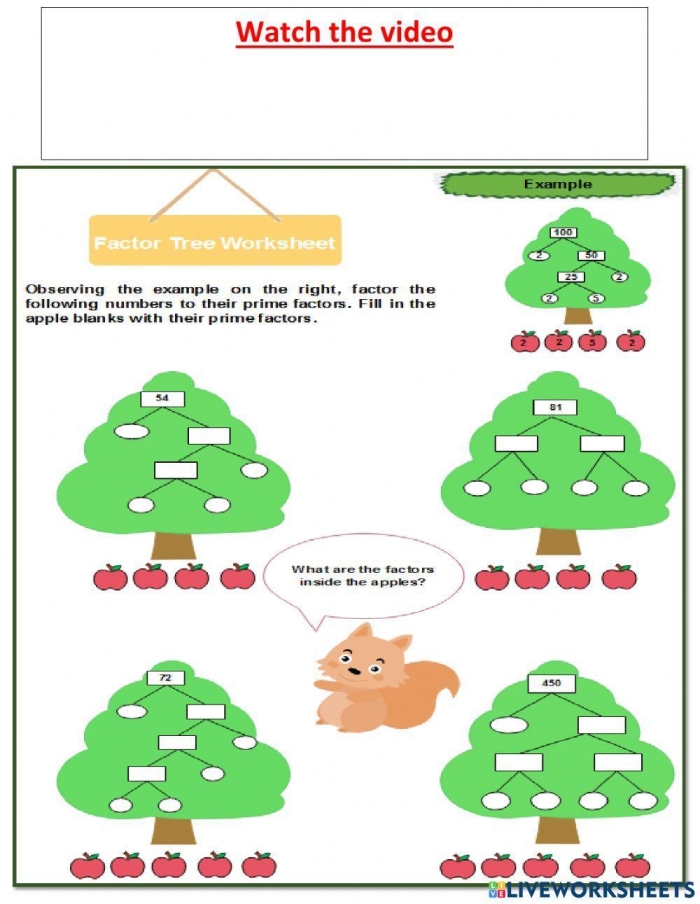
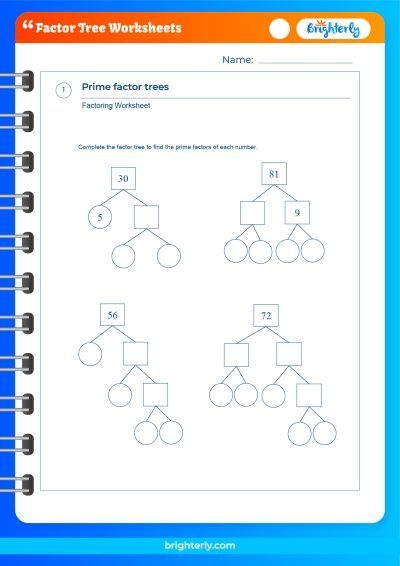
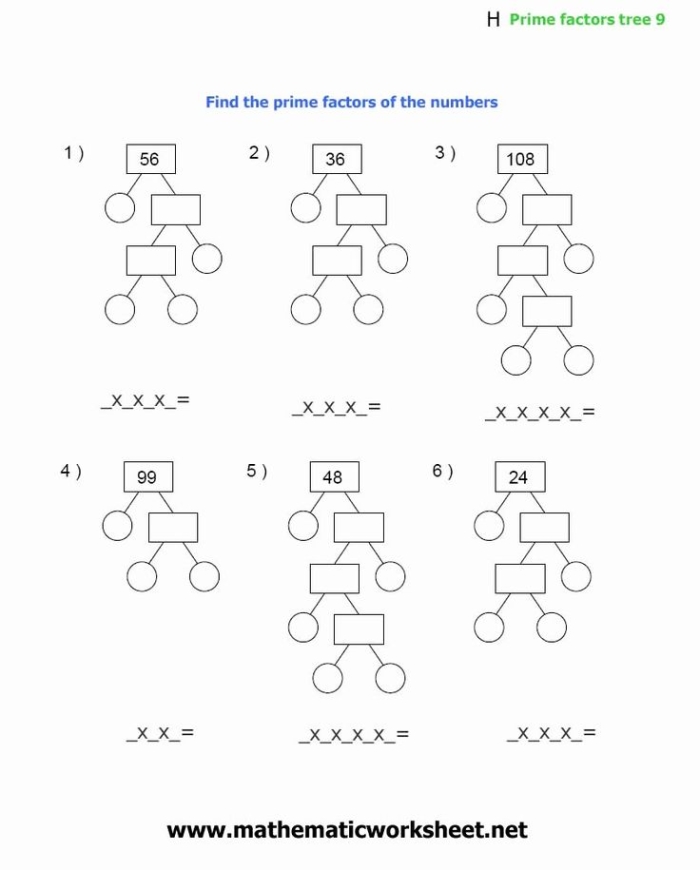
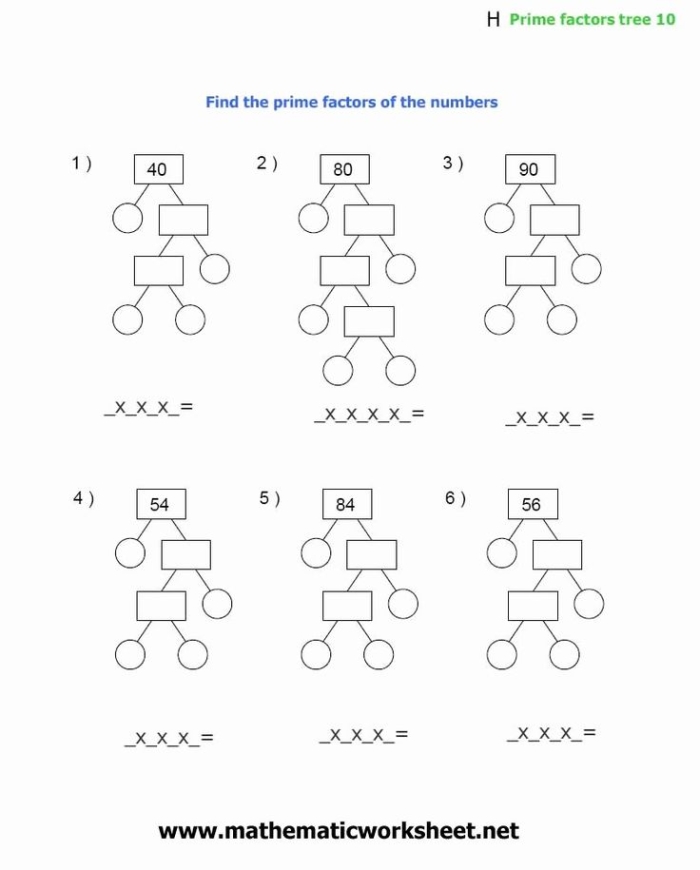
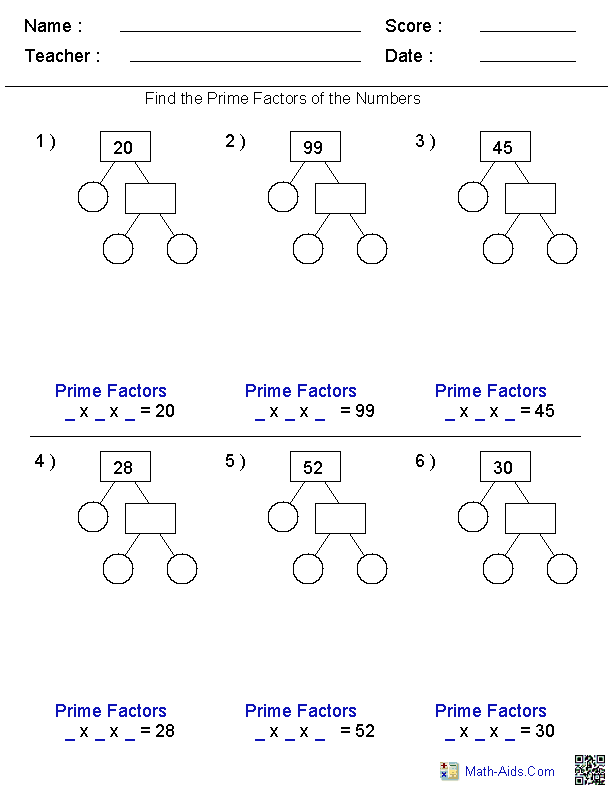
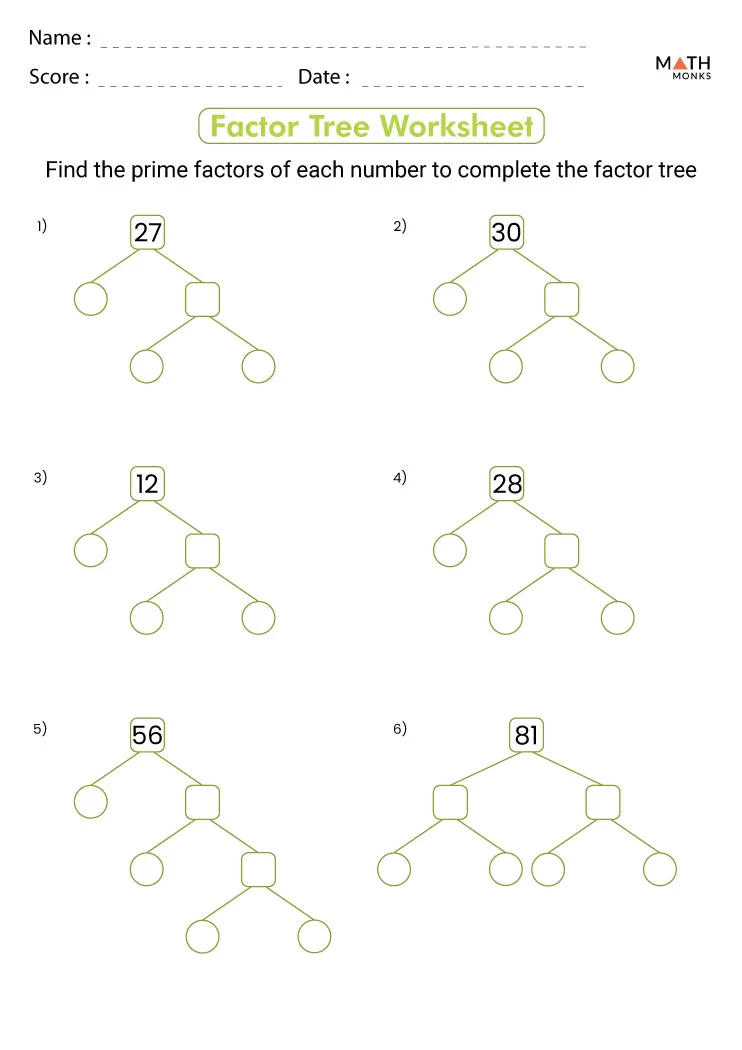
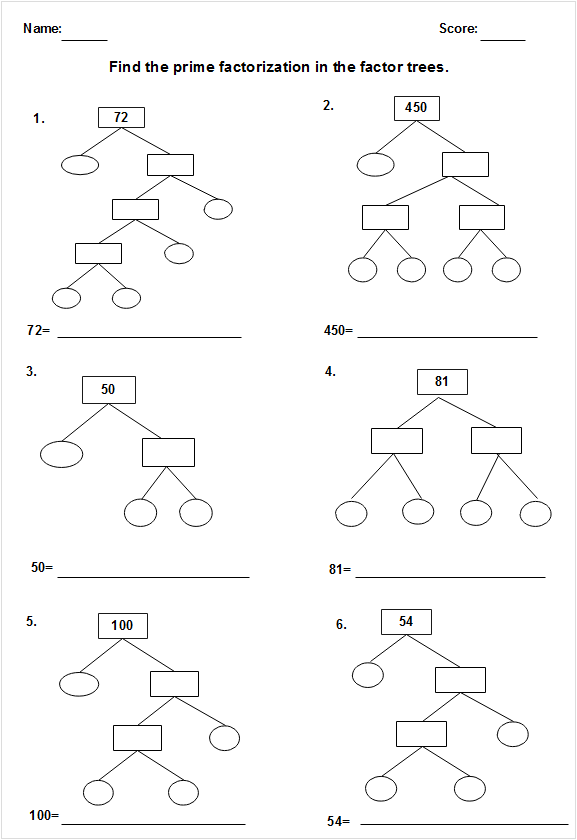
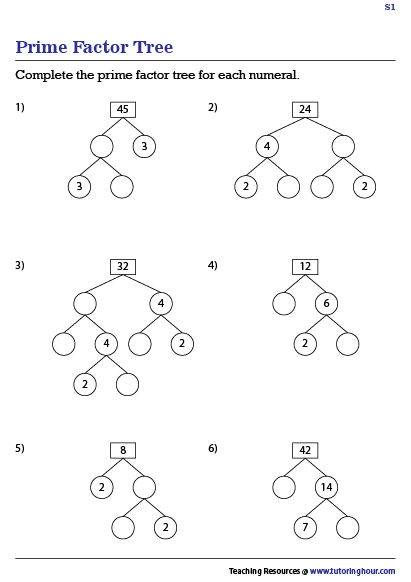
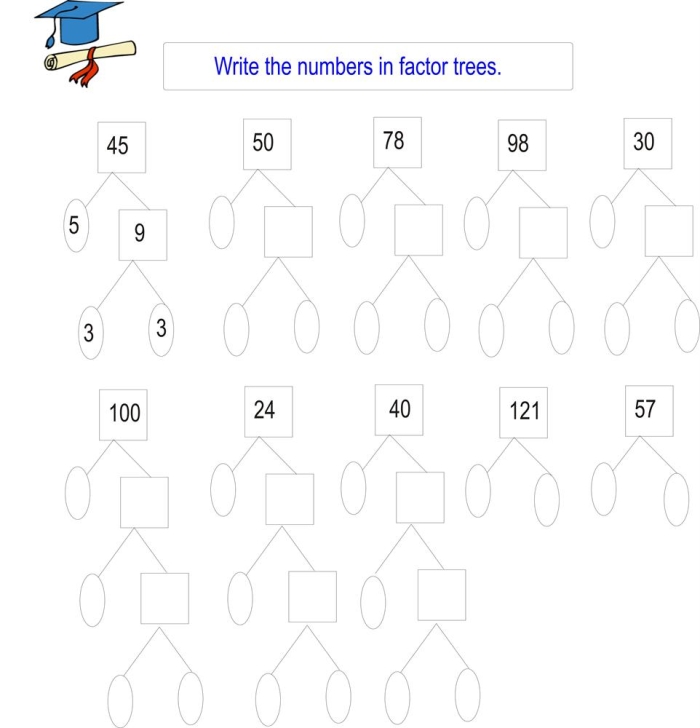
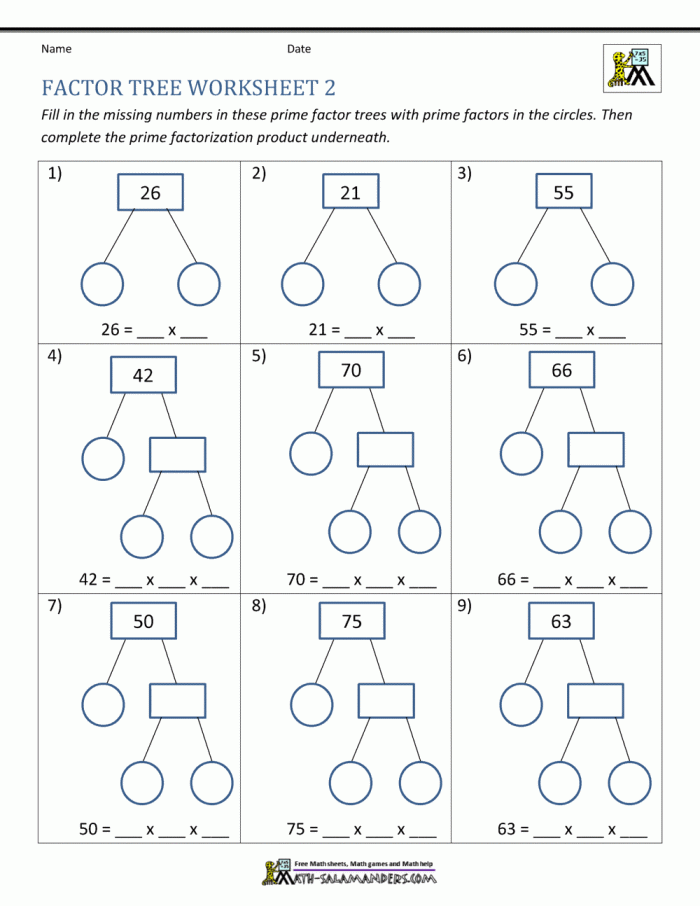
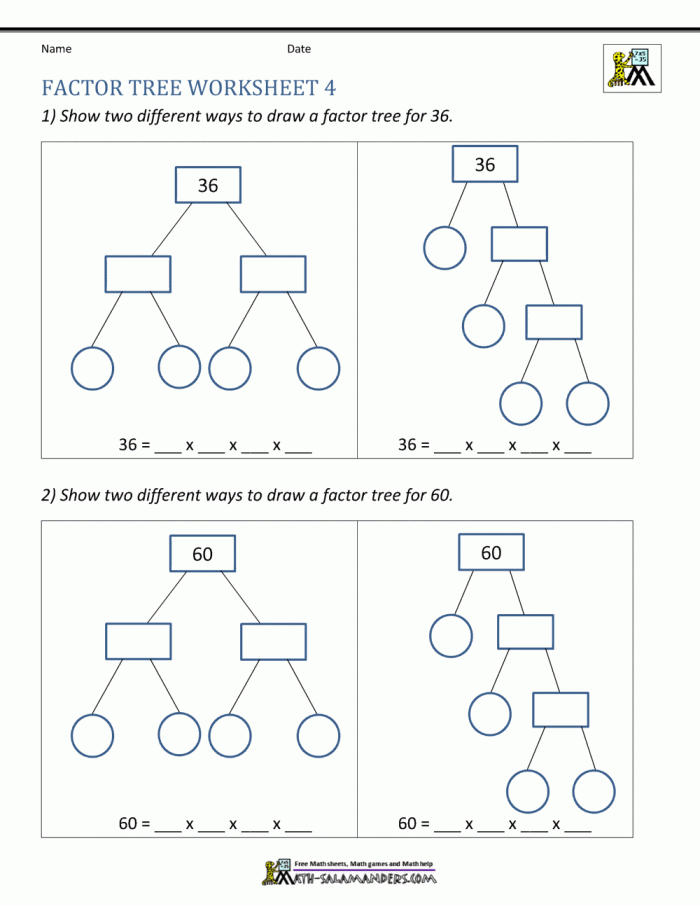
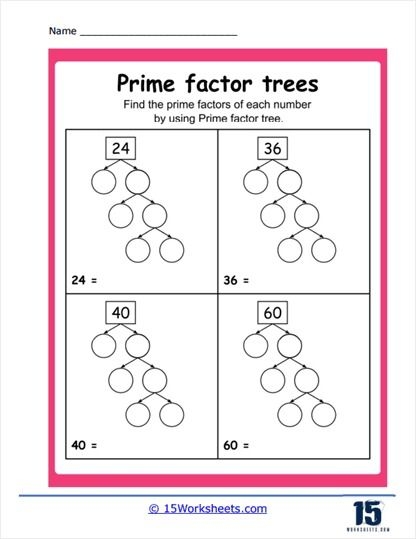
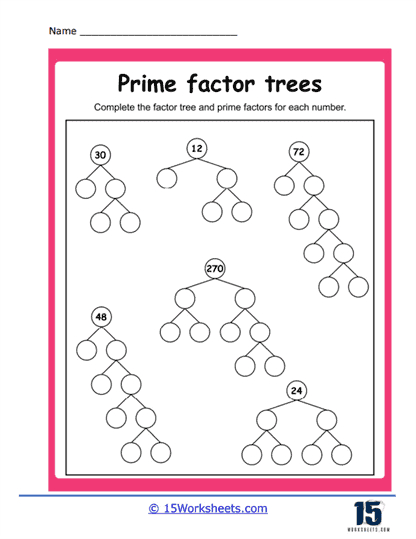
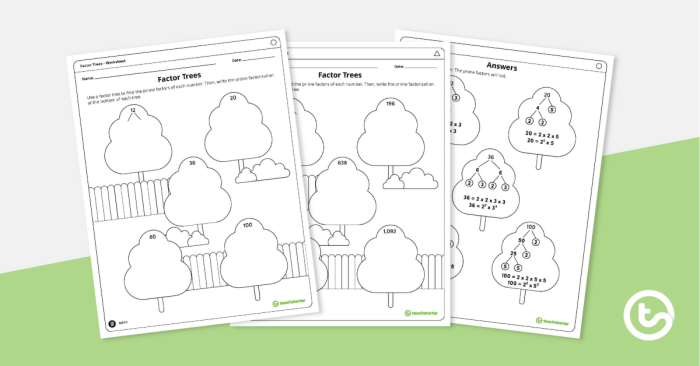
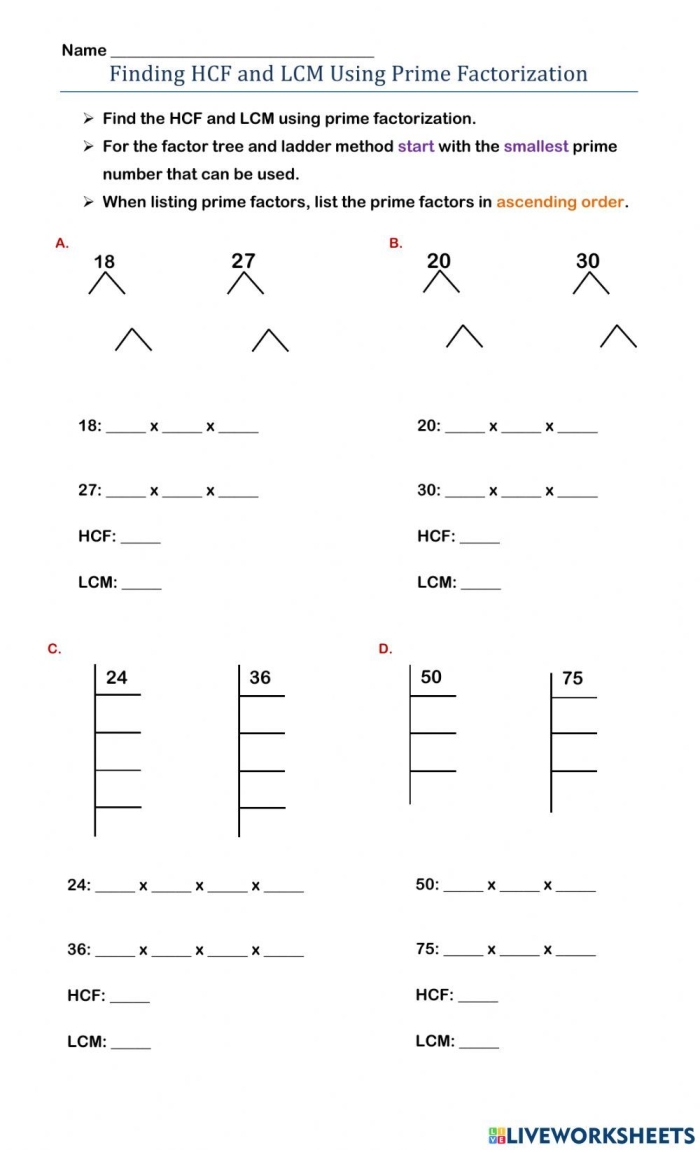
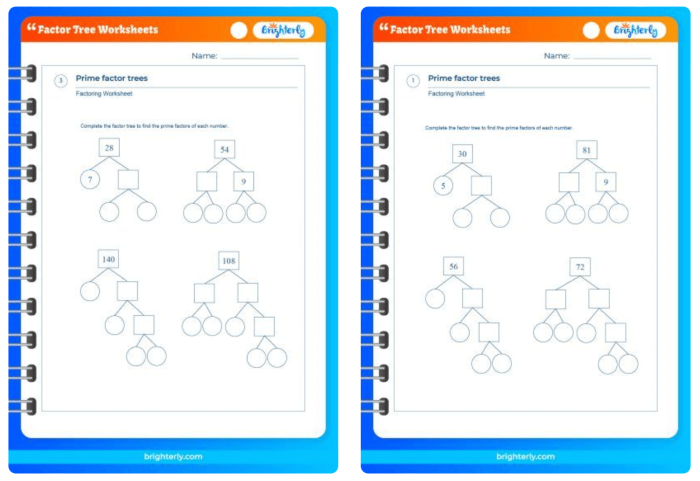
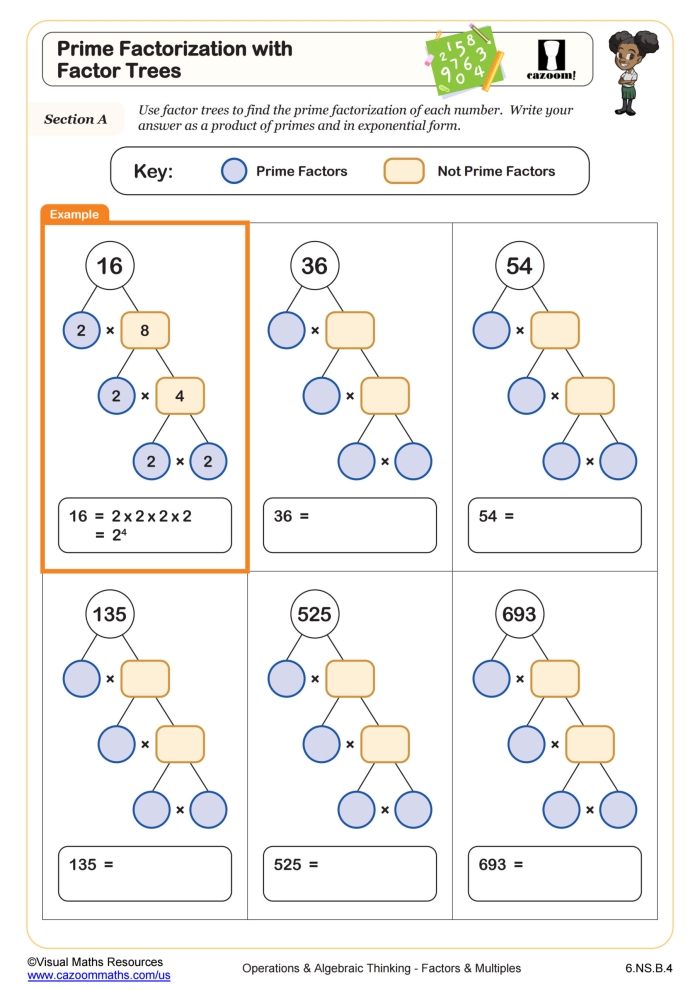
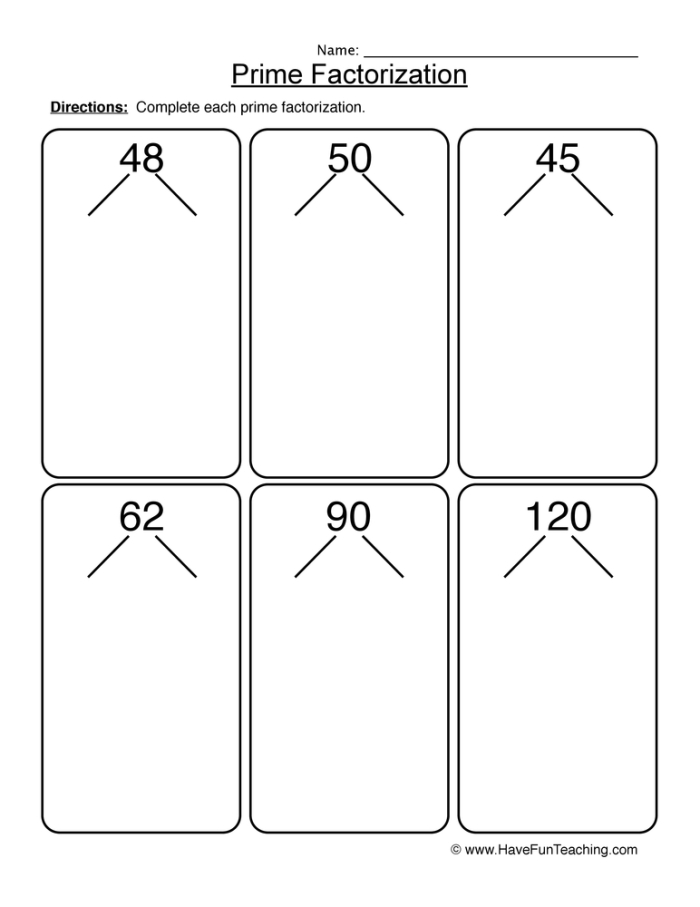
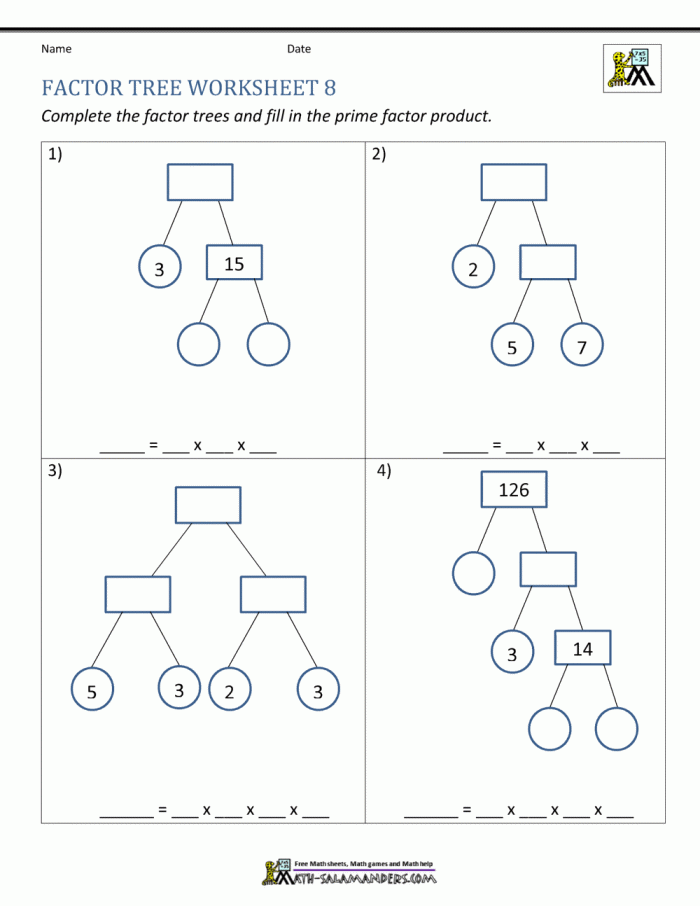
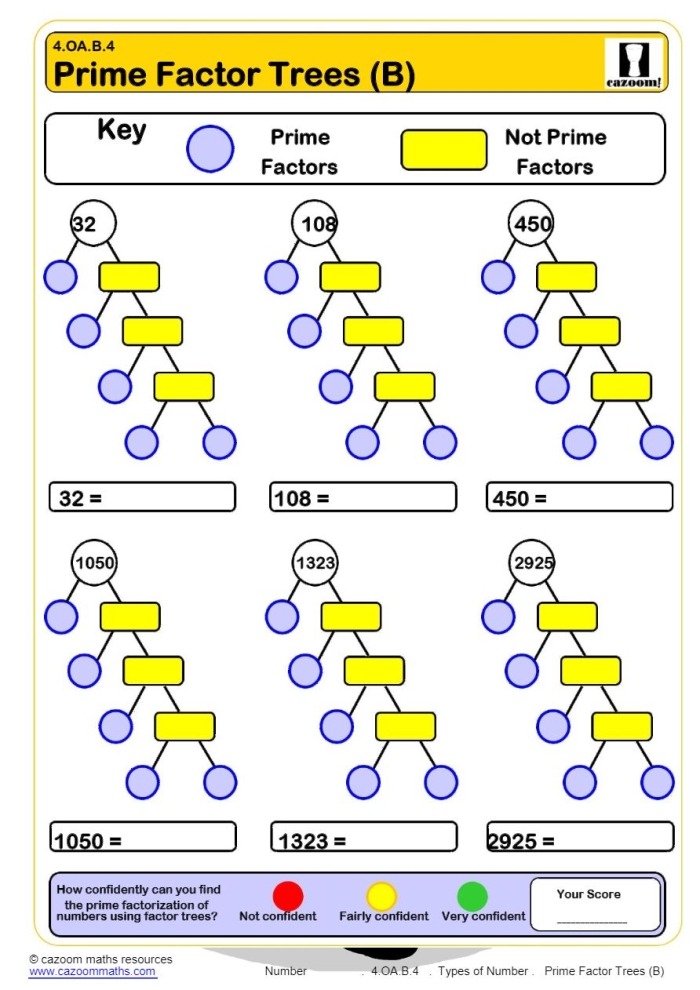
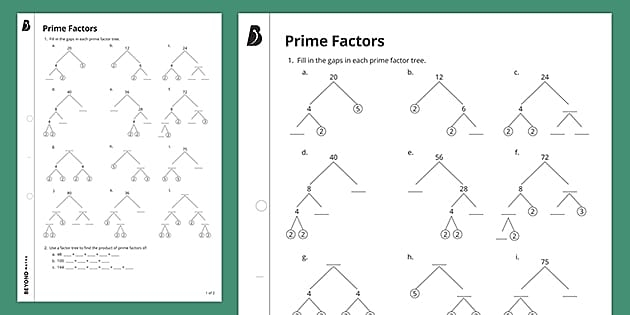
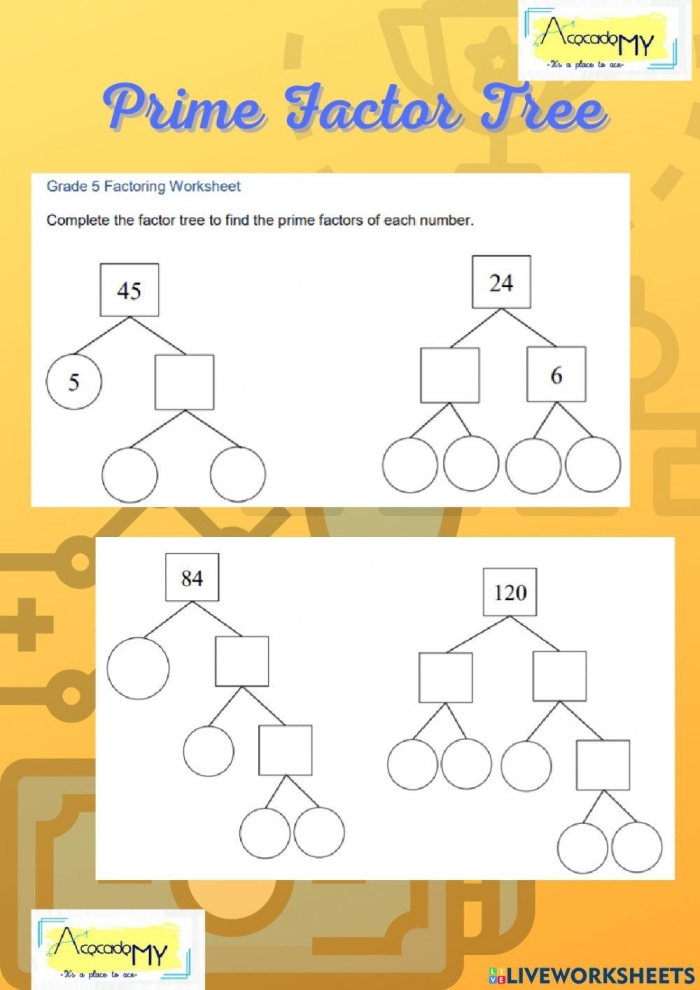
Using a factor tree can make the concept of factors more engaging for children, especially in a fourth-grade classroom. This visual tool helps students break down numbers into their prime factors, making multiplication and division easier to understand. When children practice identifying factors with a factor tree, they are not just memorizing multiplication tables; they are developing a deeper mathematical understanding.
In a typical multiplication worksheet that features a factor tree, students might start with a composite number, such as 24. They would then use the tree to explore how 24 can be divided into smaller prime numbers. For instance, they can break down 24 into 6 and 4, and then continue to factor until they reach the prime numbers 2 and 3. This method teaches students to see the relationships between numbers, enhancing their problem-solving skills.
One specific benefit of using factor trees is that they provide a clear visual representation of the factoring process. Children can see how numbers interact with one another, and this clarity often leads to better retention of mathematical concepts. Moreover, factor trees can also serve as a foundation for understanding more advanced topics, such as least common multiples and greatest common factors.
Printable factor tree worksheets are widely available and can be a great resource for teachers and parents alike. For example, worksheets that integrate reading skills, like Finding Area or History of Hip Hop Music, can engage students by combining math with literacy. This integrated approach keeps learning dynamic and motivating.
As children become more comfortable with identifying factors through these worksheets, they gain confidence in their math skills. Ultimately, using a factor tree is not just a method for solving problems; it is a stepping stone to greater mathematical literacy and a love for learning.
Start Practicing with These Worksheets