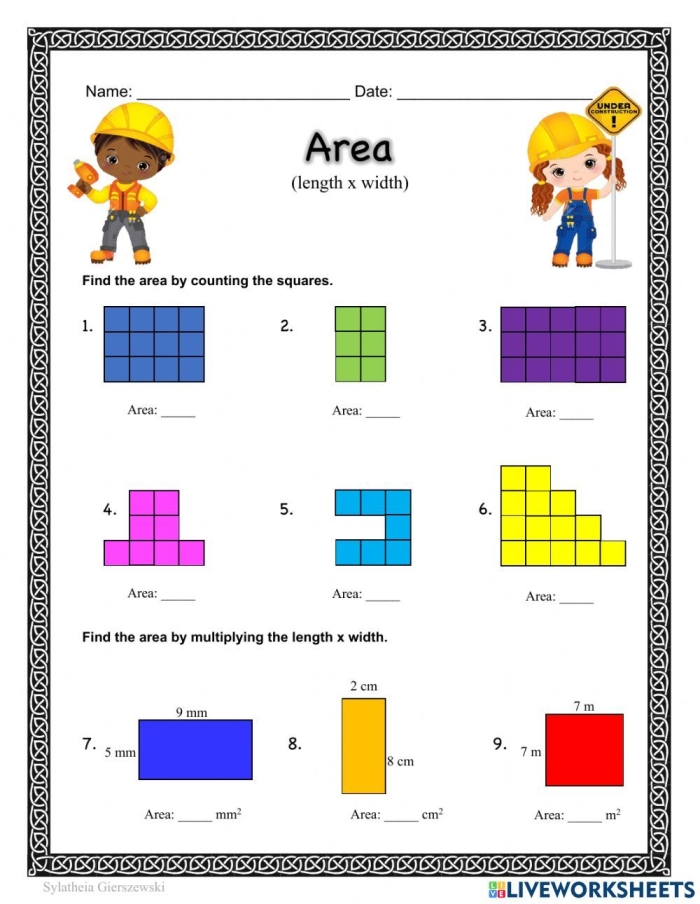
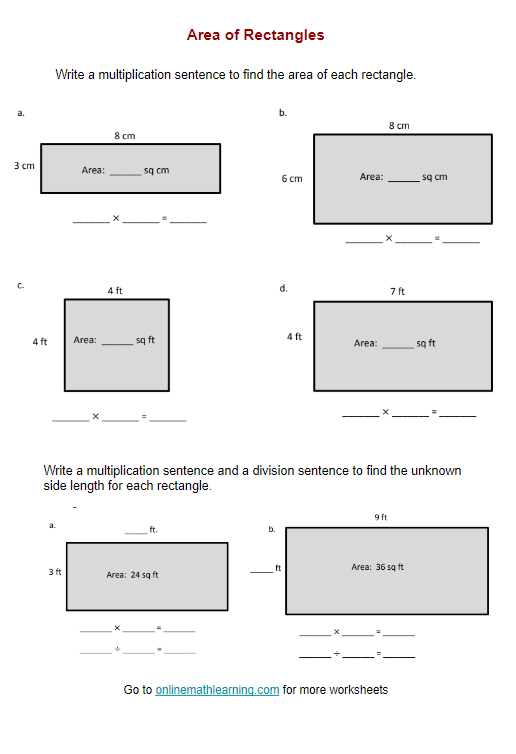
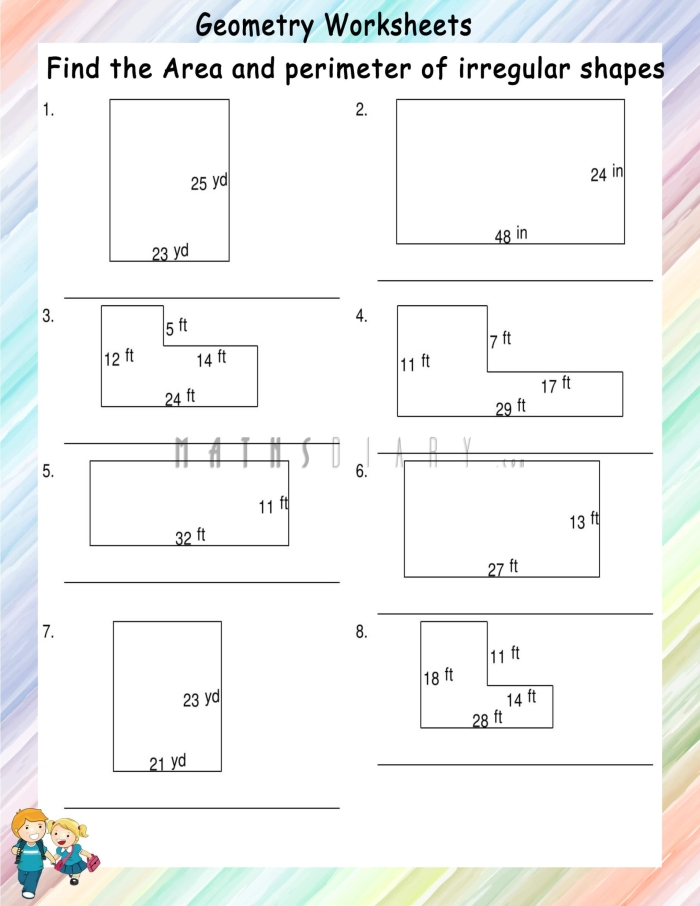
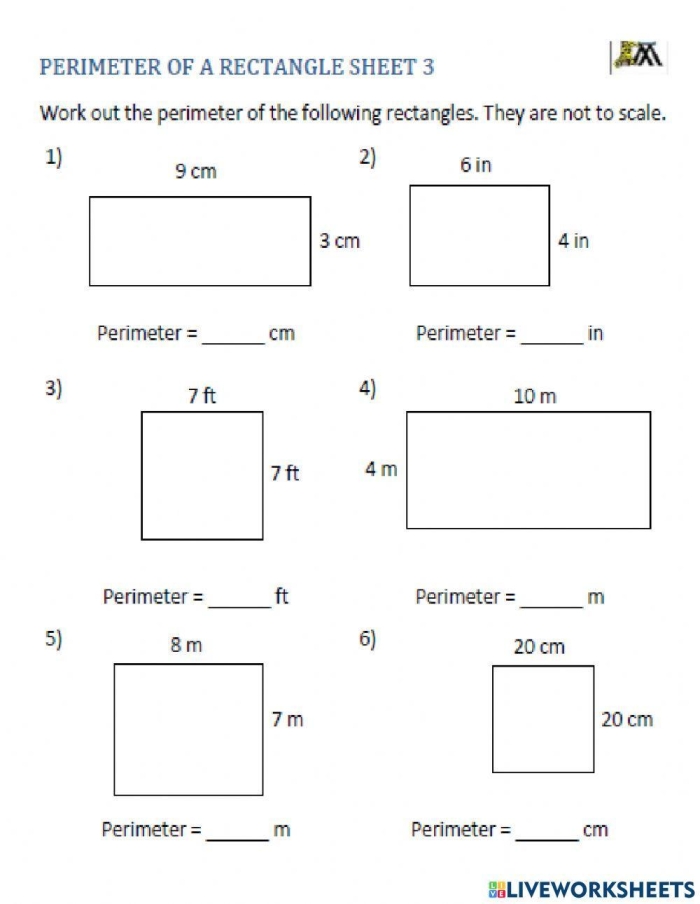
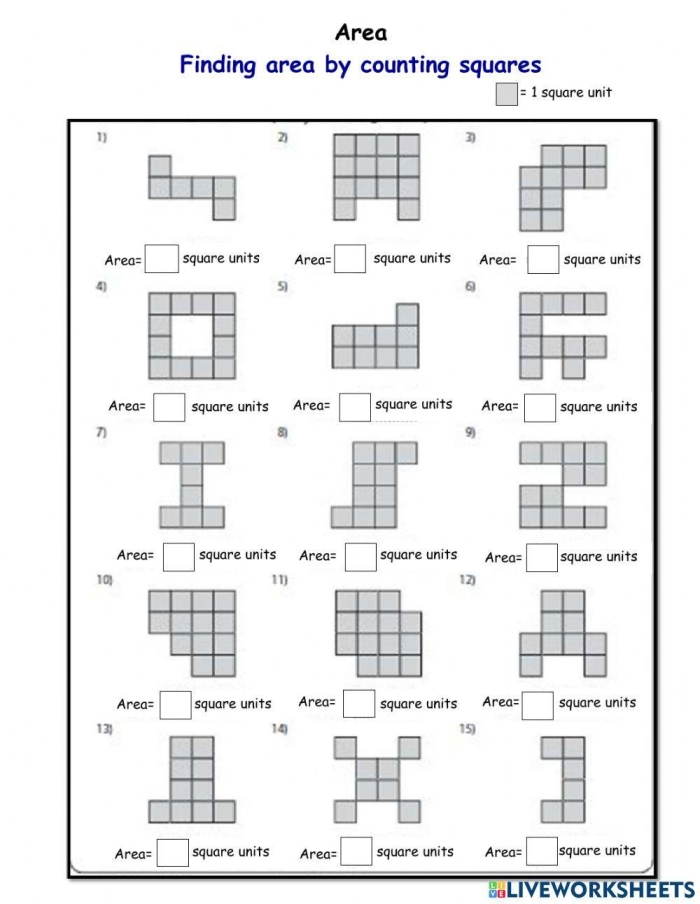
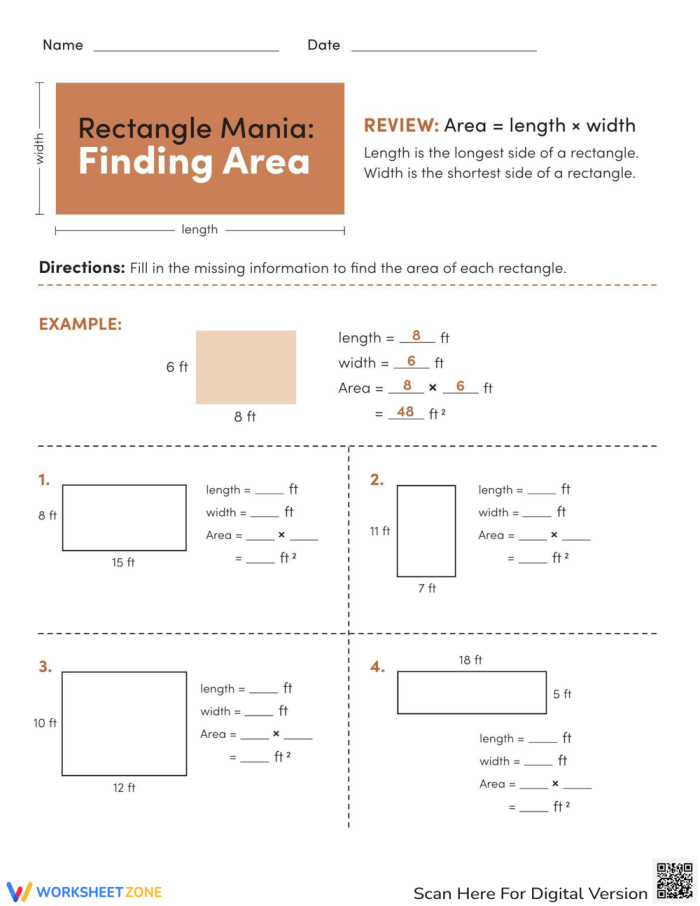
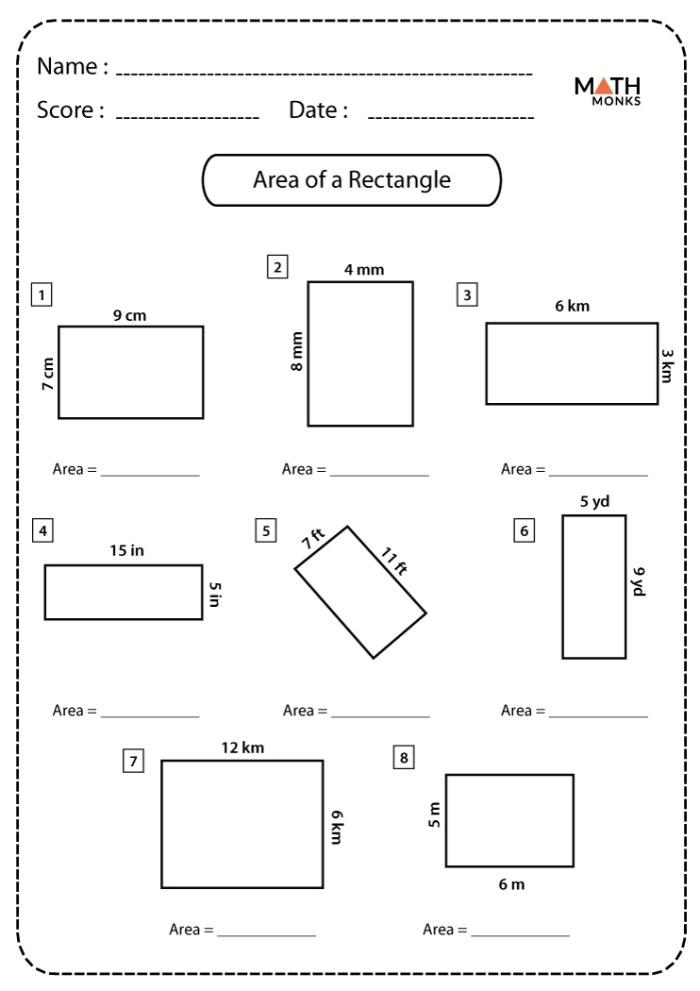
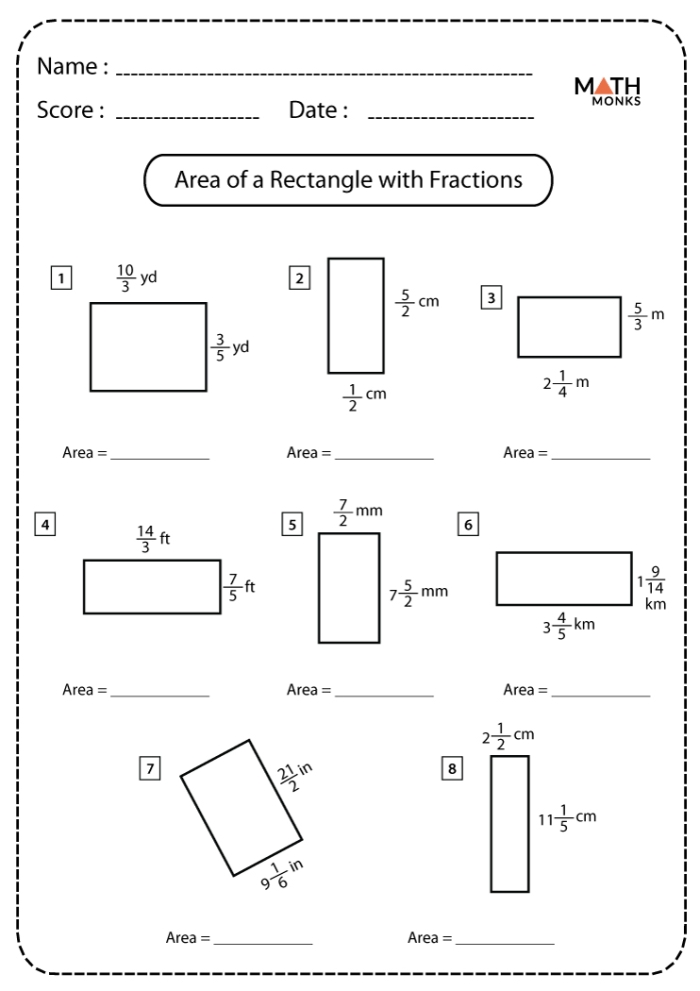
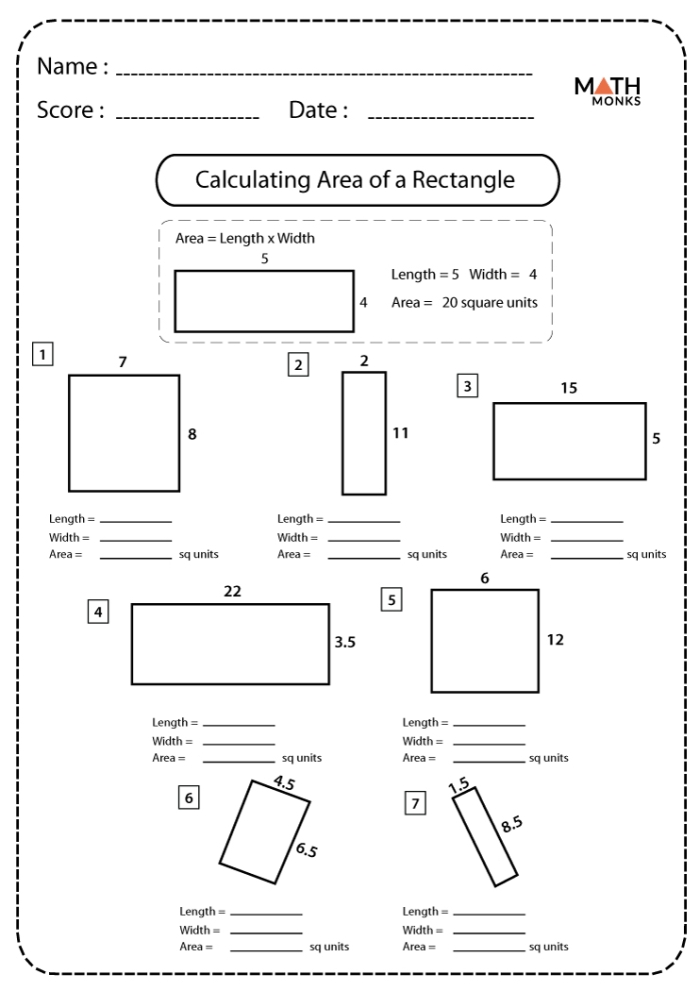
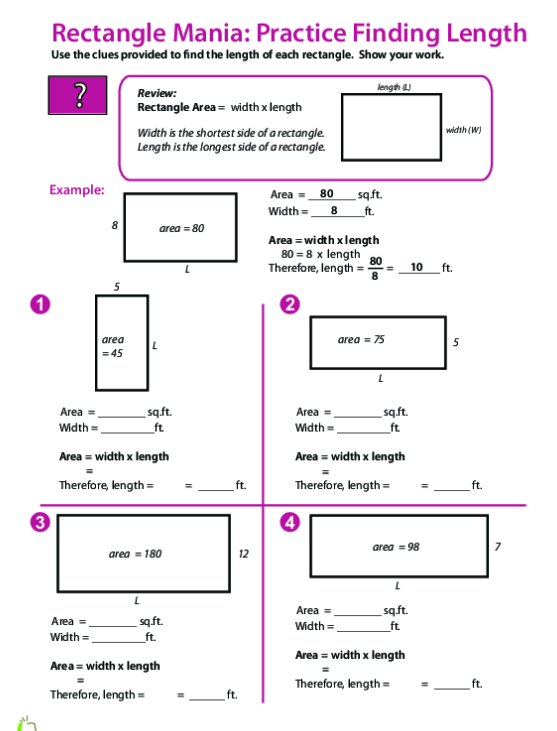
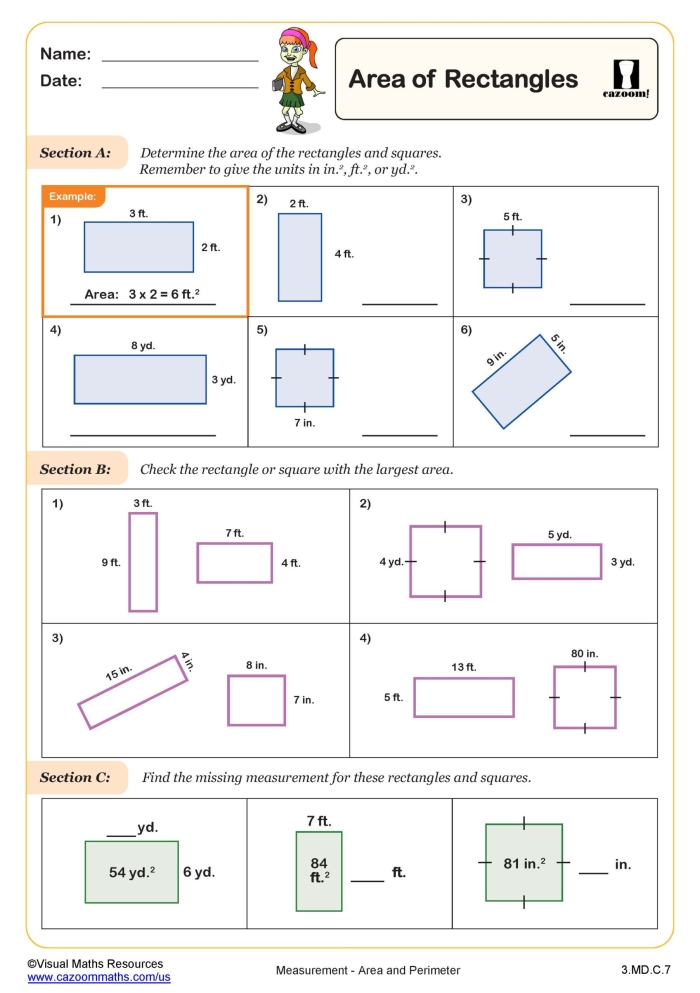
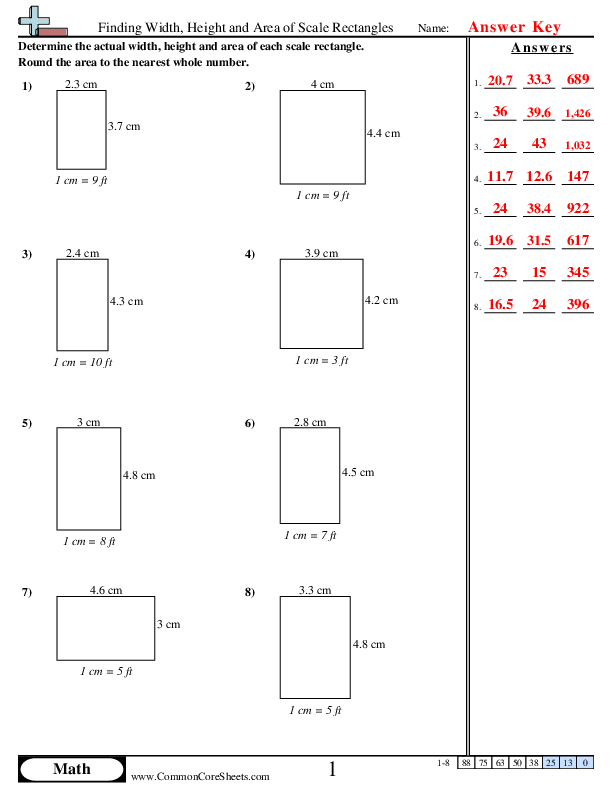
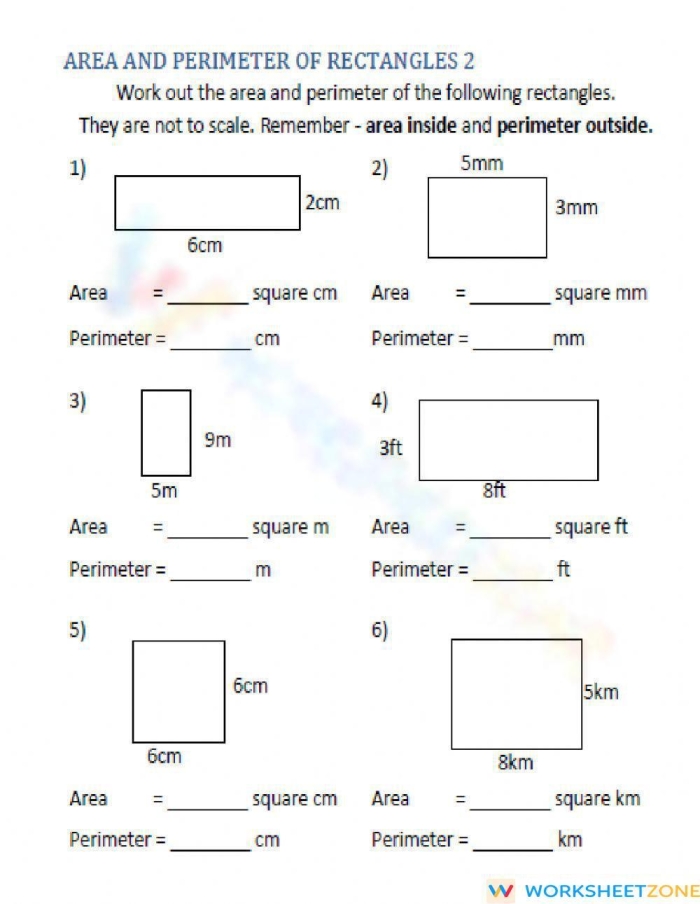
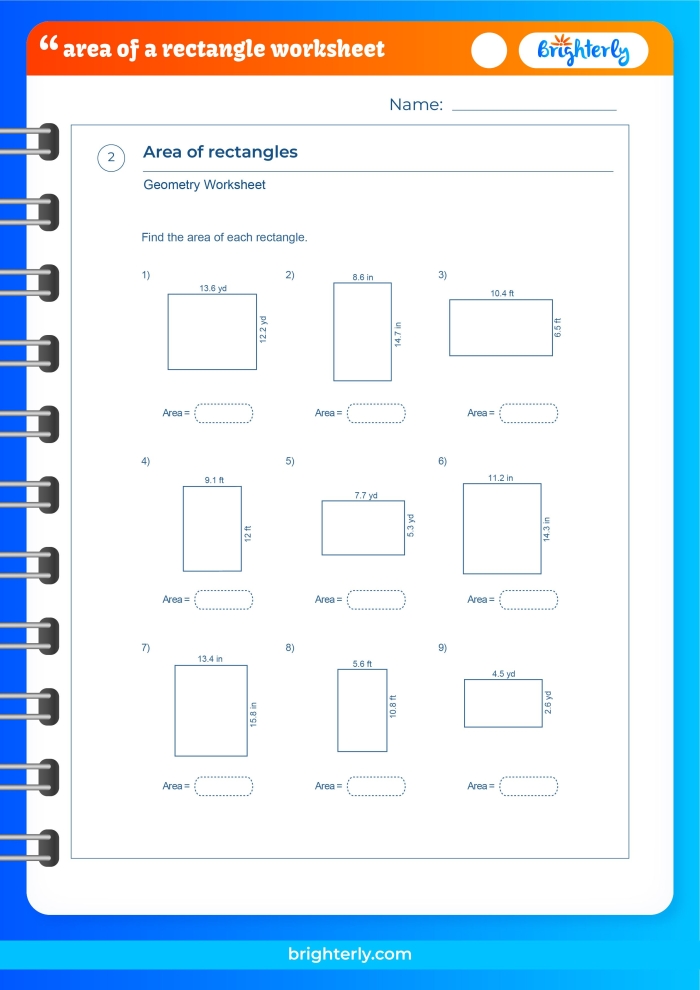
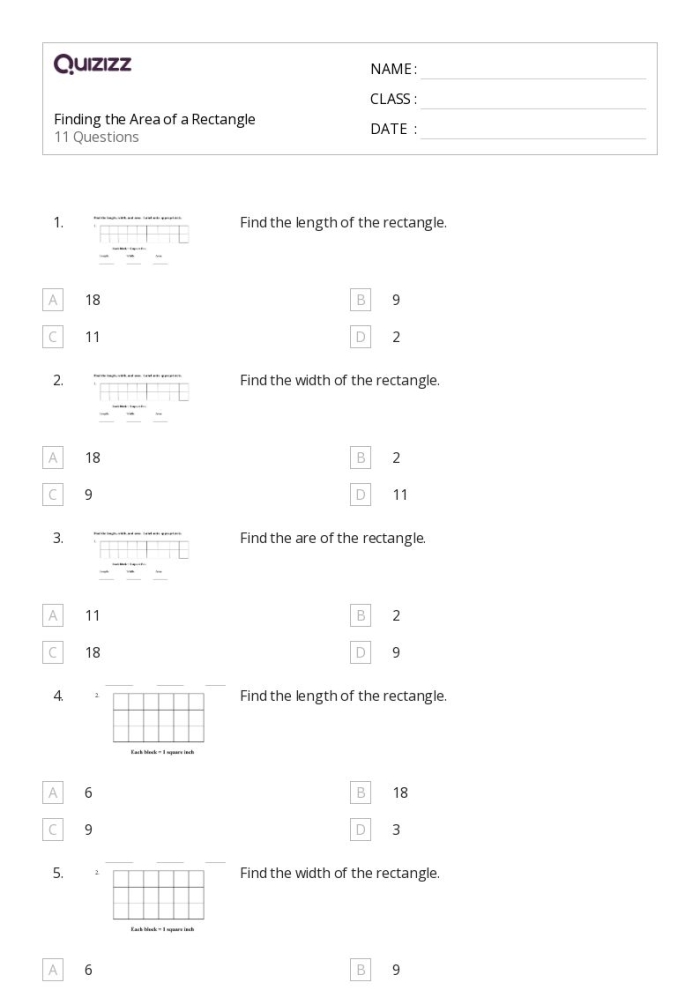
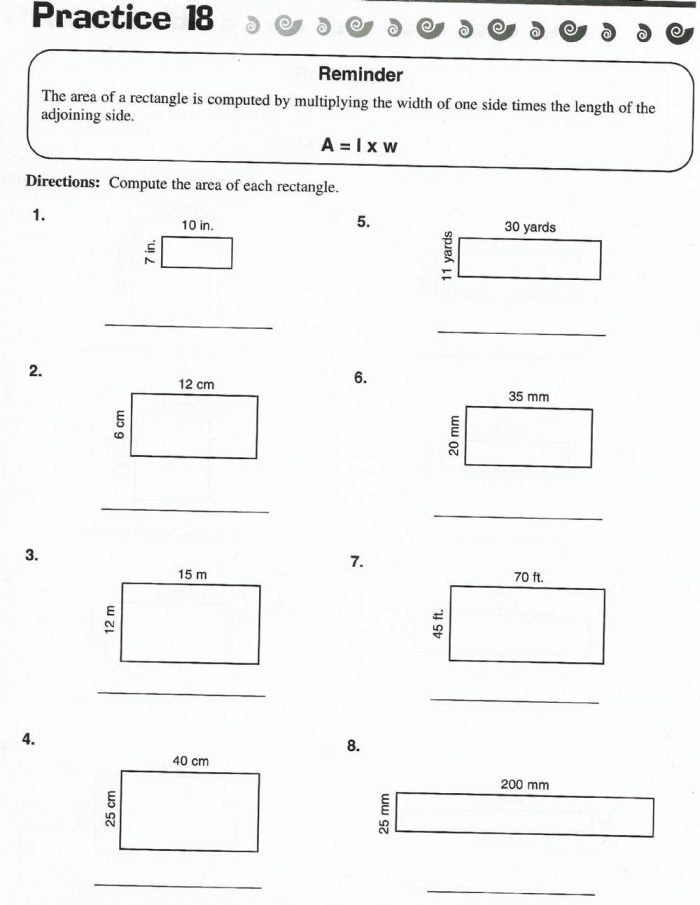
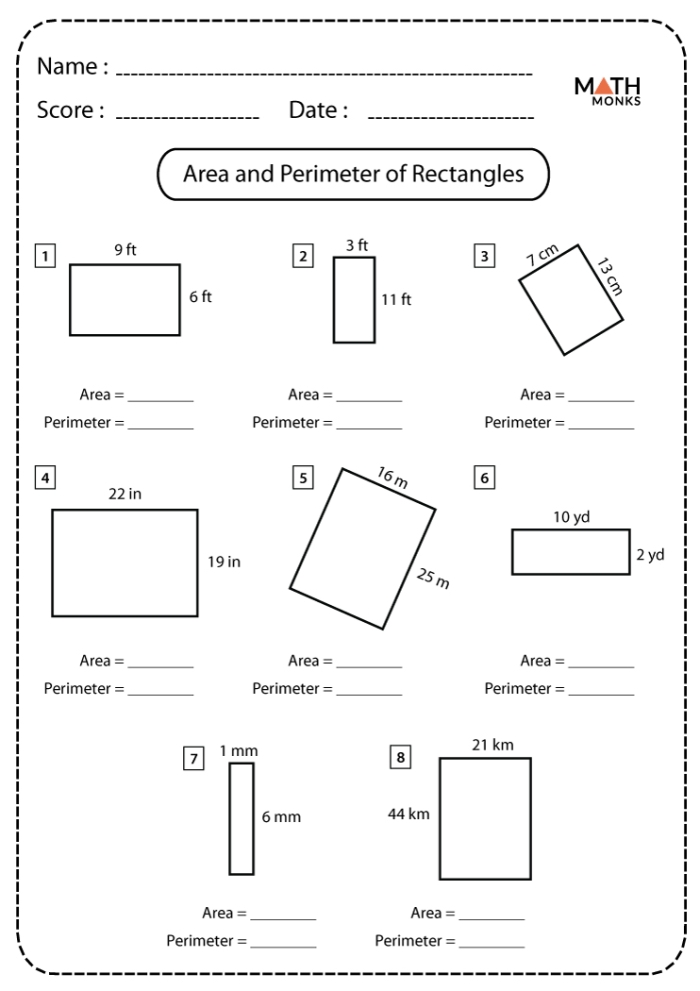
Understanding geometry is a vital part of a fourth grader’s education, especially when it comes to shapes like rectangles. In a well-designed worksheet, children learn to identify the length and width of a rectangle, which are key measurements needed to calculate the area. This basic concept forms the foundation for more complex mathematical ideas.
To begin, students measure the two dimensions of a rectangle: the length (the longer side) and the width (the shorter side). For instance, if a rectangle measures 5 inches in length and 3 inches in width, students will multiply these two numbers to find the area. In this case, 5 multiplied by 3 equals an area of 15 square inches. Understanding how to perform this calculation not only helps in geometry but also strengthens overall mathematical skills.
Worksheets that focus on calculating the area of rectangles are not just about numbers; they provide a practical application of math in real life. Children can visualize how these shapes appear in everyday objects, like books or tables, making learning more engaging. This hands-on approach to learning helps solidify their understanding of spatial relationships and measurement.
Moreover, these geometry worksheets can be a great resource for teachers and parents alike. For instance, worksheets like Break It Up: Distributive Property can complement the learning experience by integrating different mathematical concepts. Incorporating various subjects encourages a more rounded educational approach.
Ultimately, mastering the concept of area prepares fourth graders for future math challenges. As they progress, these foundational skills will aid in their understanding of more complex shapes and measurements. The journey from identifying rectangle dimensions to calculating their area marks an essential step in their mathematical education.
Download These Worksheets for Practice