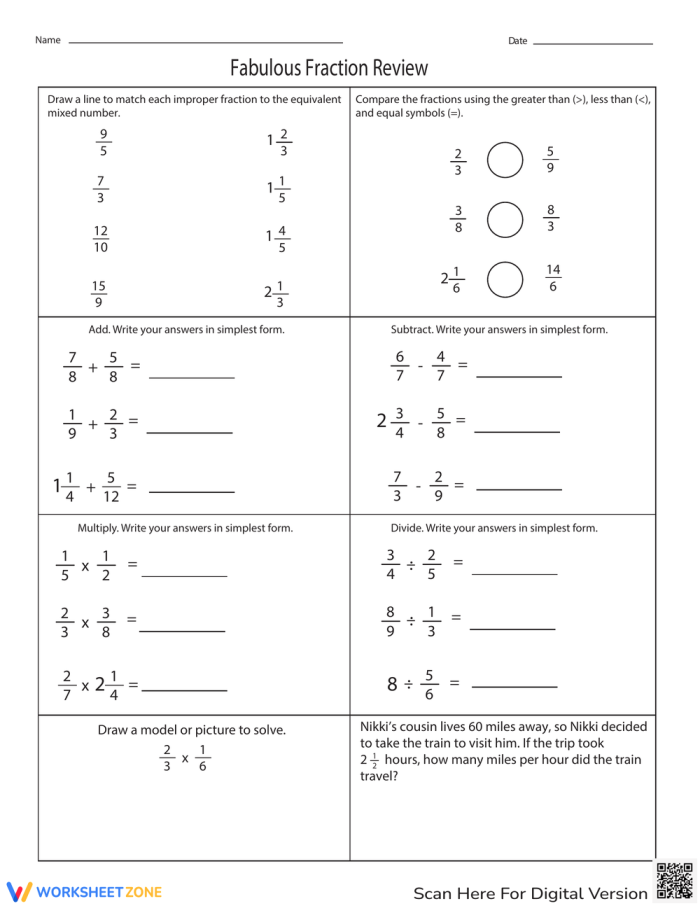
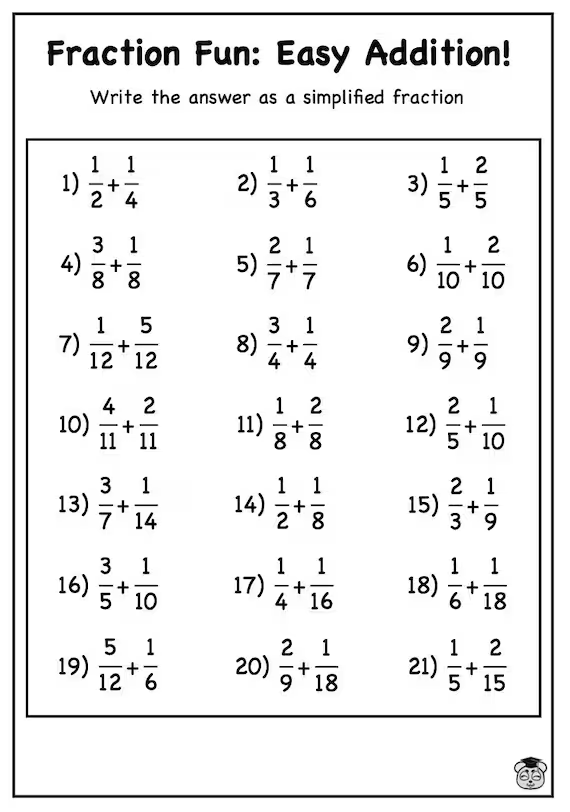
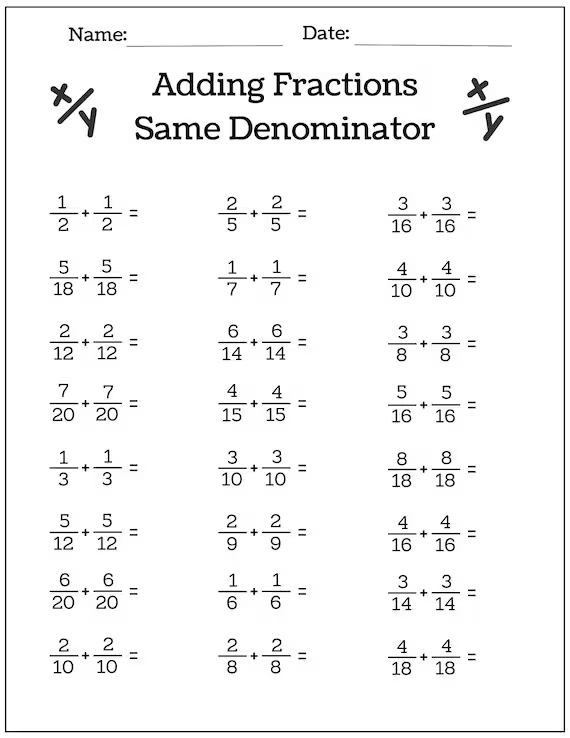
Fifth grade marks the year when fractions shift from abstract concepts to tools students actually use across their math work. By this point, your students should grasp more than just what a fraction represents. They need to compare fractions, add and subtract them with like and unlike denominators, and understand how fractions relate to division. Testing this knowledge thoroughly helps you spot gaps before students move into sixth grade, where fraction skills become prerequisites for everything else.
The challenge with assessing fractions lies in understanding where students truly struggle. Some fifth graders can identify that 3/4 is larger than 1/2, but they freeze when asked to add 1/3 and 1/4. Others understand equivalent fractions conceptually but can’t apply that knowledge when solving word problems. A solid assessment goes beyond simple recall questions and pushes students to demonstrate their reasoning.
When you assess fifth grade fraction concepts, focus on these core areas: understanding parts of a whole, identifying equivalent fractions, comparing and ordering fractions, and performing basic operations. Include visual representations alongside numerical problems. Many students benefit from seeing fraction strips or area models while solving, and their work with these tools reveals whether they truly understand or are just following memorized steps.
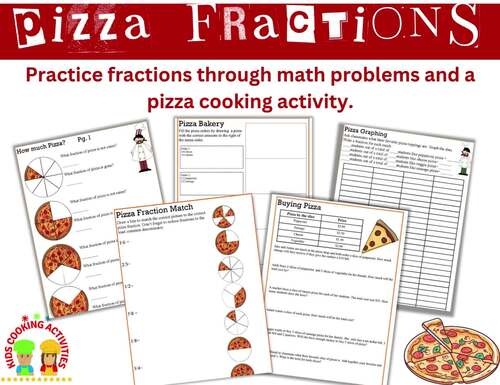
Real-world contexts matter too. When fractions appear in problems about sharing pizza or measuring ingredients, students engage differently than with isolated exercises. Consider incorporating scenarios where students explain their thinking in writing, not just select answers.
Beyond fractions, your fifth graders are developing broader reading and math skills. Pairing fraction assessments with other fifth grade reading activities strengthens overall comprehension. You might combine fraction word problems with vocabulary practice or have students work through cupcake word problems that blend math and language skills, or explore how volume problems with irregular shapes require both mathematical and reading comprehension.
Your assessment results should guide your next steps. If most students struggle with unlike denominators, you know where to focus instruction. If they grasp the concept but make careless errors, you might need to slow down and emphasize precision. Either way, a thorough fraction assessment gives you the clarity you need to move forward with confidence.
Start Practicing with These Worksheets