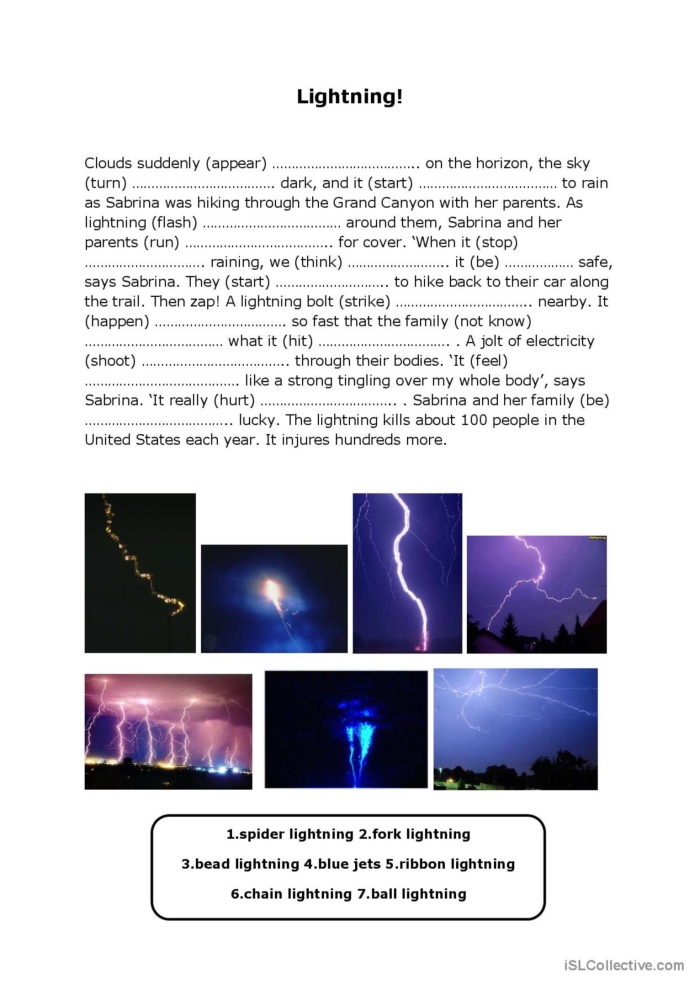
Lightning strikes in patterns most people never see, and sixth grade students often find themselves surprised by how strange atmospheric electricity can actually get. Beyond the typical jagged bolt that splits the sky, lightning comes in forms that challenge what we think we know about storms.
Ball lightning represents one of the most mysterious varieties. Unlike ordinary lightning, which lasts fractions of a second, ball lightning appears as a glowing sphere that drifts through the air, sometimes passing through solid objects before vanishing. Witnesses describe it as eerily silent and slow-moving compared to its violent cousins. Scientists still debate what causes ball lightning, though recent research suggests it might involve plasma and chemical reactions in the air.
Sheet lightning is another fascinating type. When lightning occurs inside a cloud rather than between cloud and ground, the entire cloud glows from within, creating a sheet-like appearance across the sky. This happens frequently during storms but goes unnoticed by people who aren’t looking up at the right moment.
St. Elmo’s fire, named after the patron saint of sailors, produces a bluish glow that appears on pointed objects like ship masts and aircraft wings during electrical storms. It’s not actually lightning but rather a form of electrical discharge that creates an eerie corona around metal surfaces.
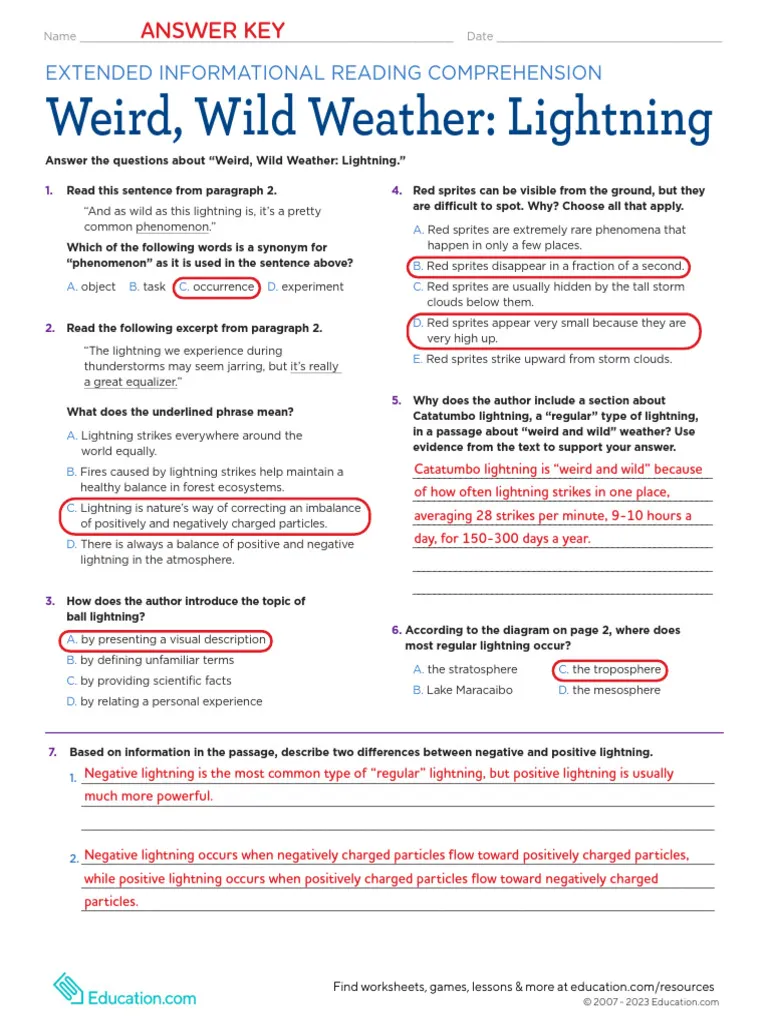
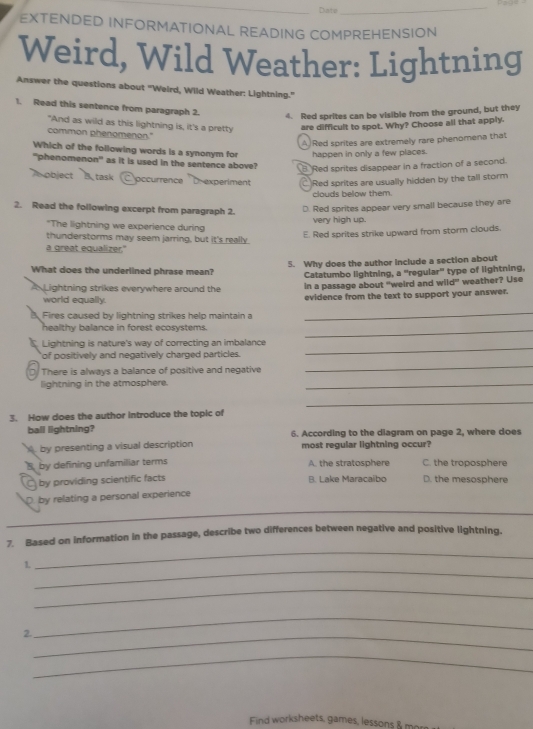
Teaching sixth graders about these phenomena through extended informational reading comprehension activities about weird, wild weather and lightning engages their natural curiosity about the world. Students develop stronger social studies skills by learning how weather shapes human understanding and history. A well-designed worksheet helps them connect atmospheric science to real-world observations, making abstract concepts concrete and memorable. This approach transforms weather study from memorizing definitions into genuine exploration of natural phenomena.
Printable Worksheets for Practice