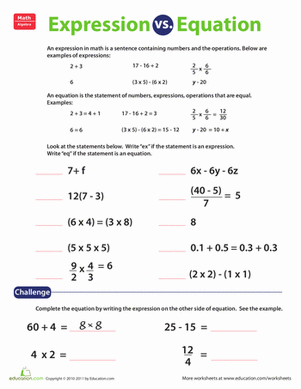
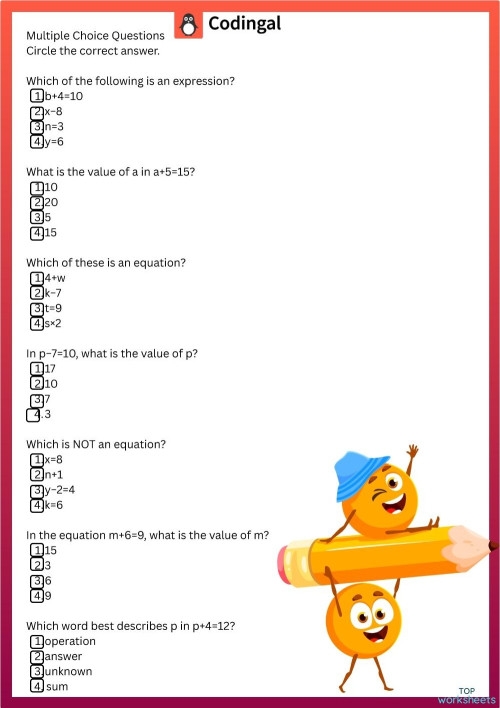
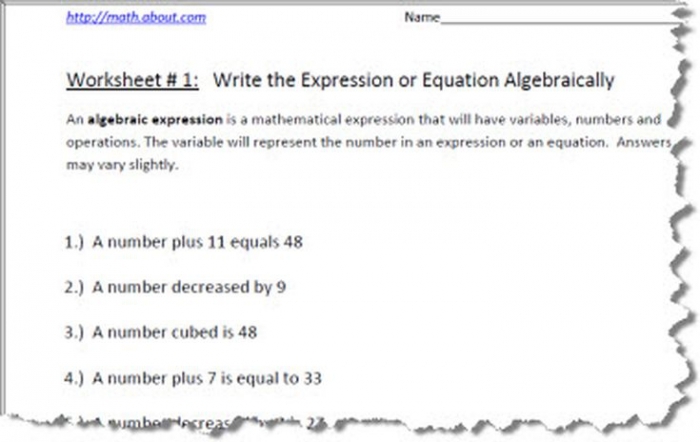
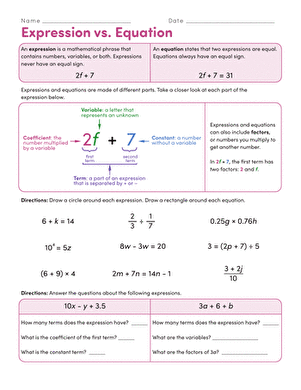
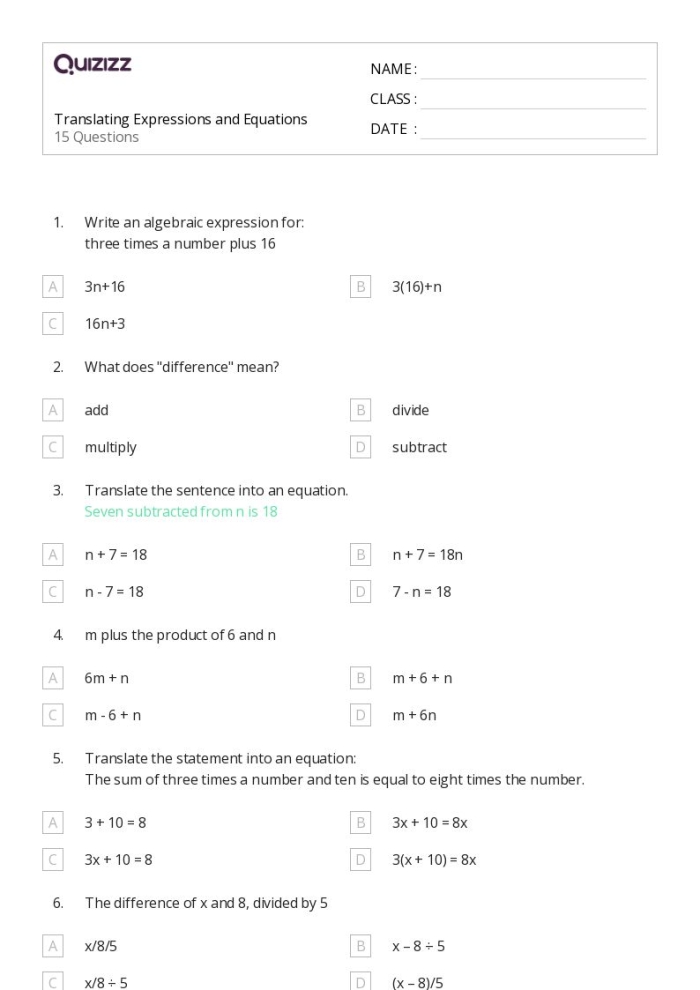
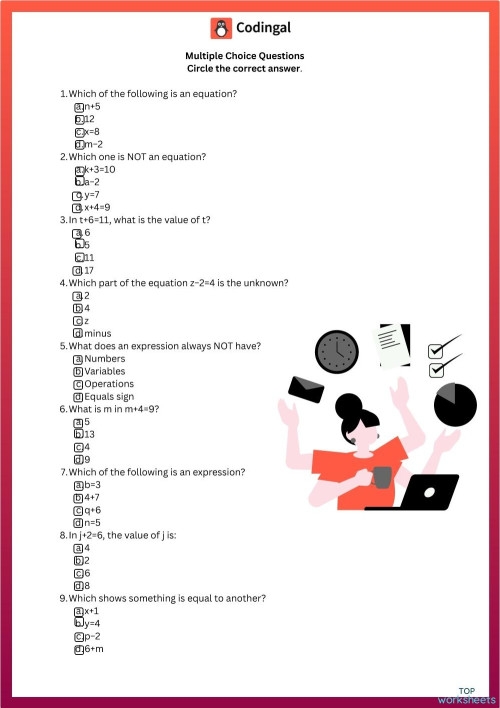
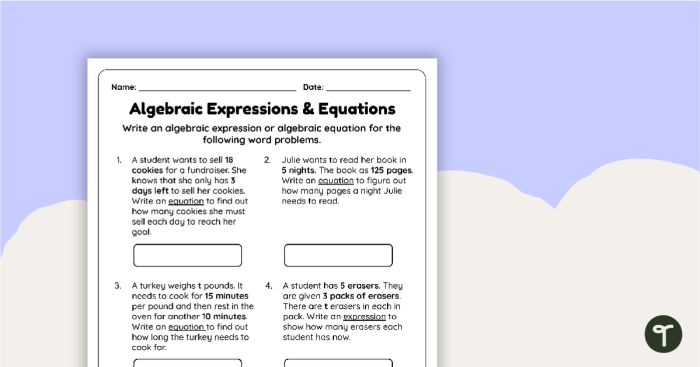
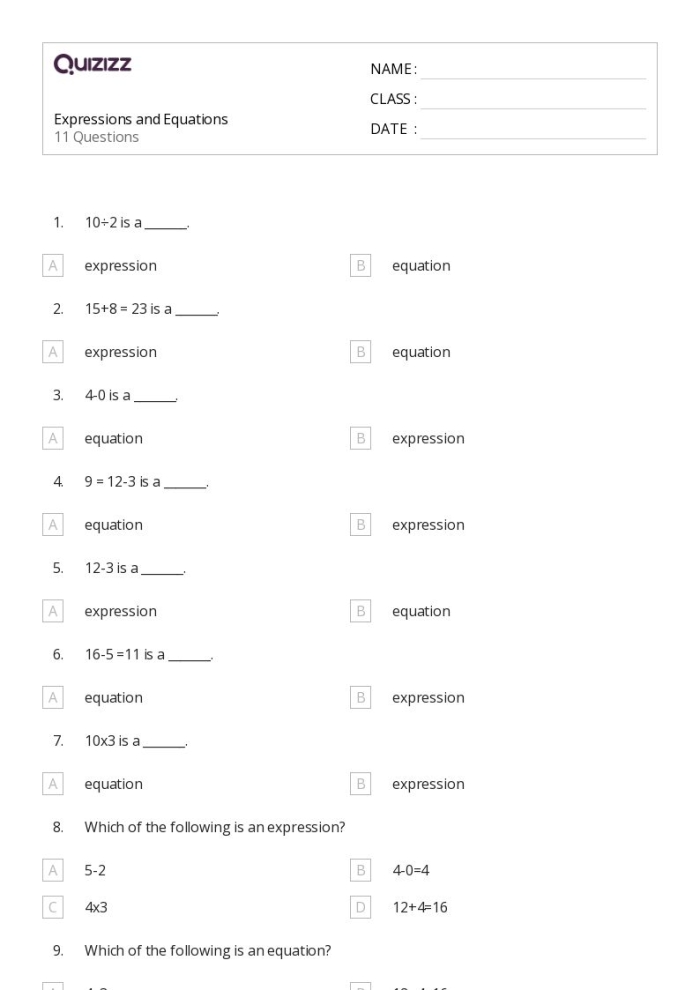
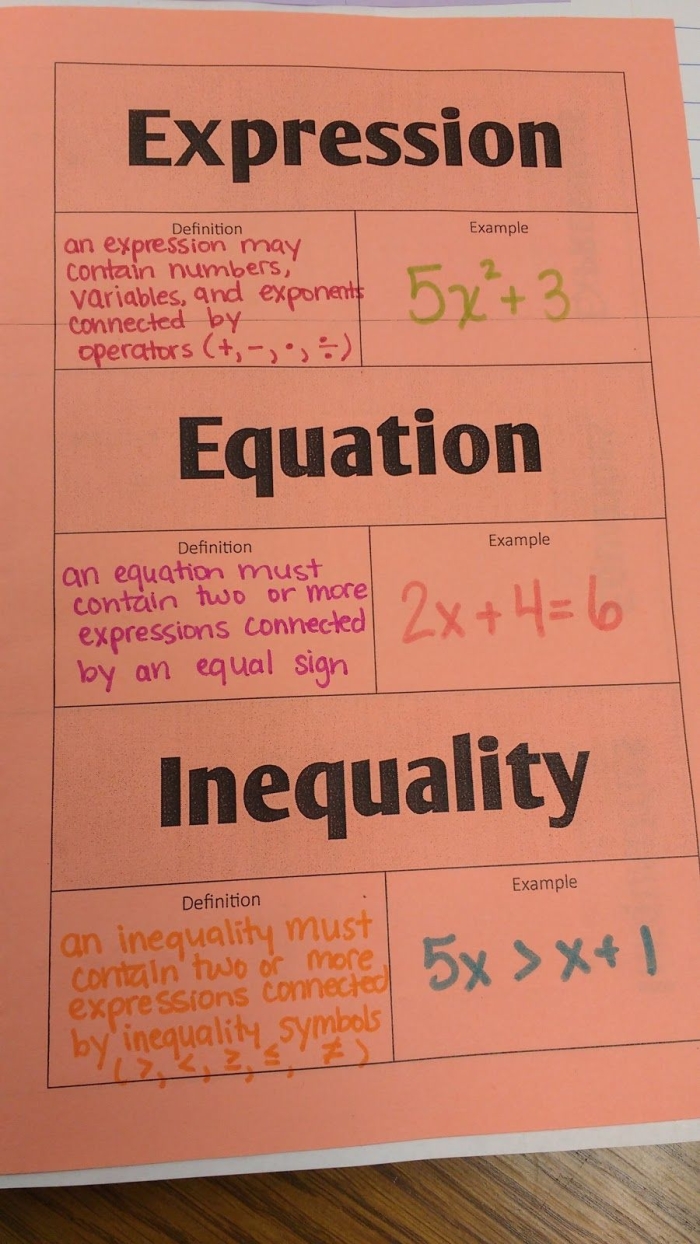
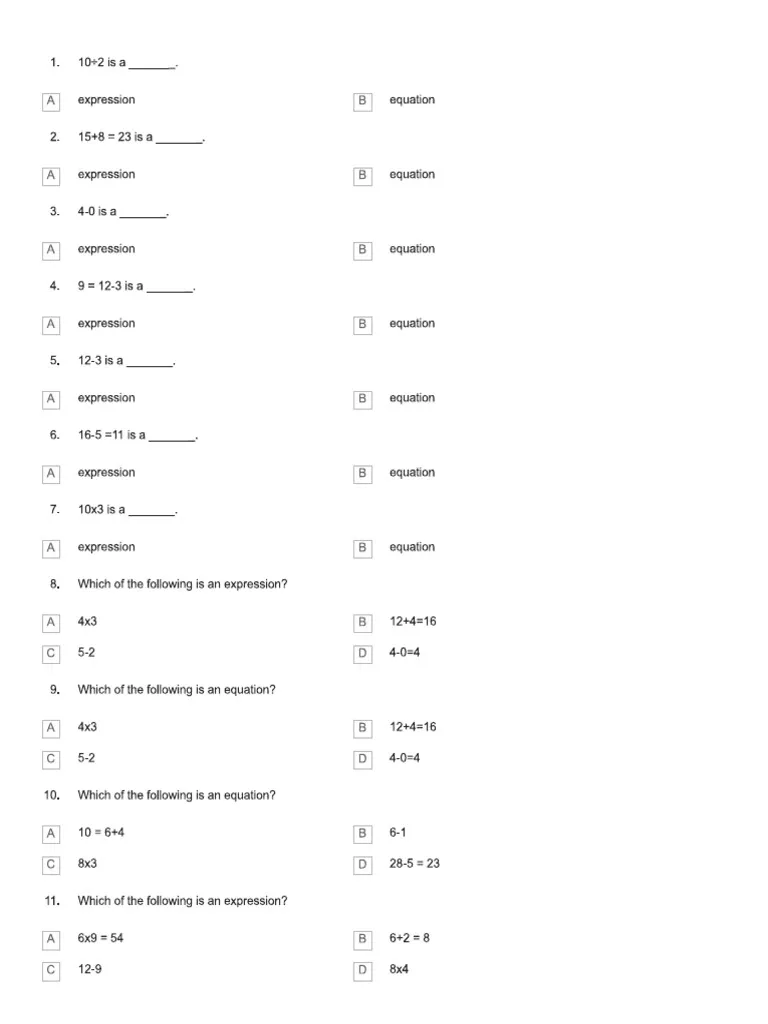
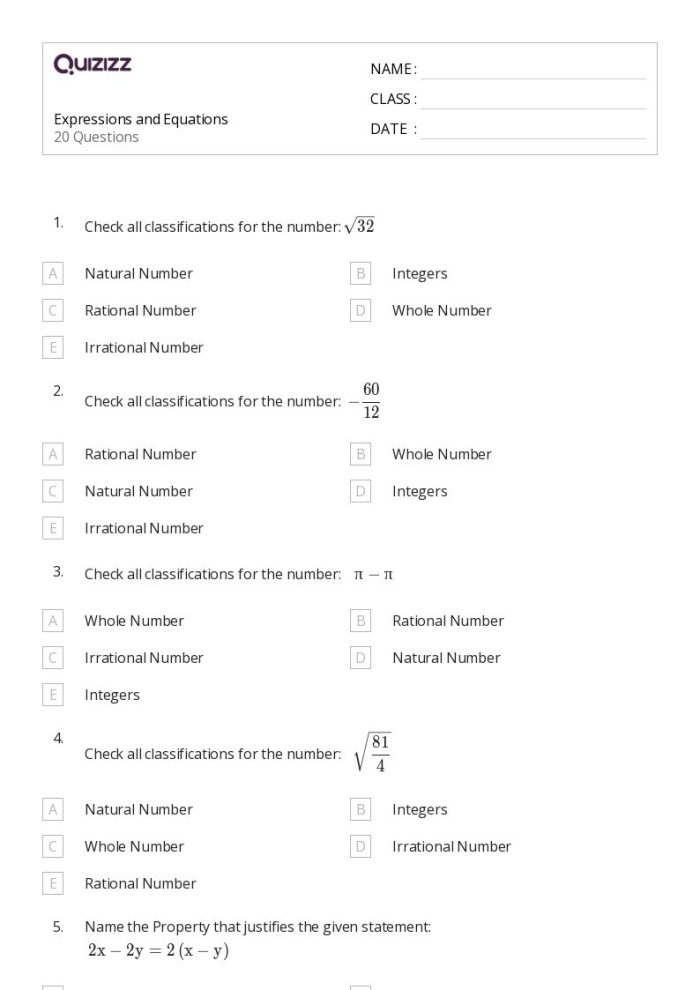
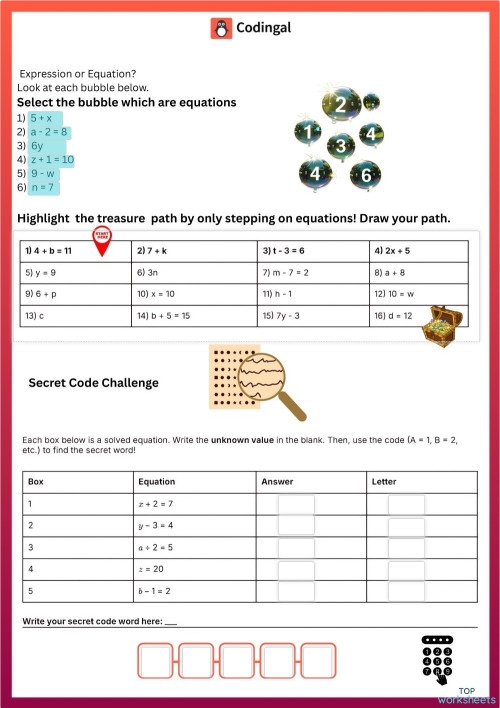
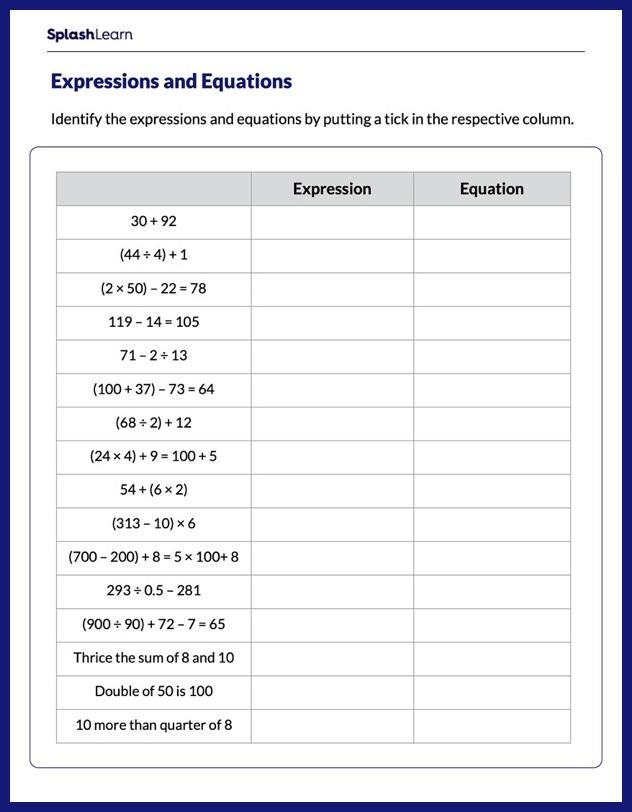
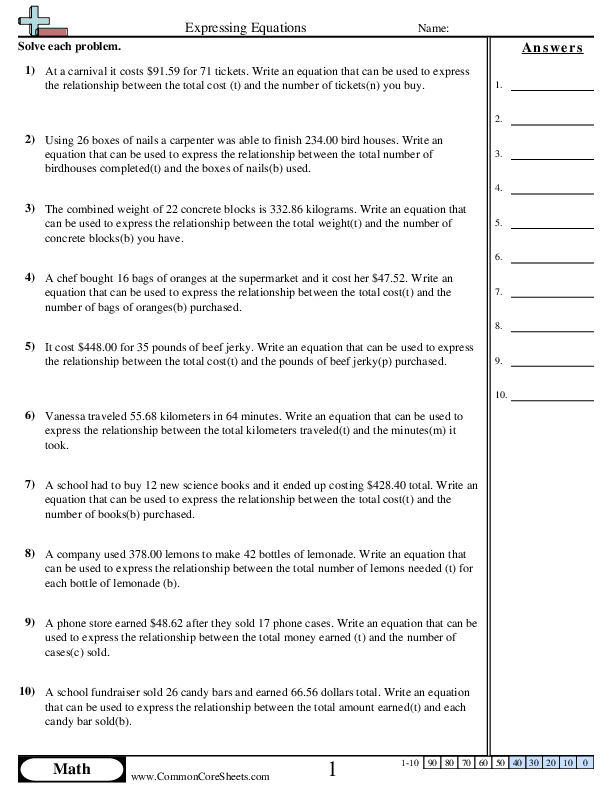
Understanding the difference between an expression and an equation is a foundational skill in sixth-grade algebra. Whether your learner is just starting or needs a refresher, a focused worksheet can make a world of difference. An expression is a combination of numbers, variables, and operators that represents a value, while an equation states that two expressions are equal, usually marked by an equals sign.
Take a closer look at the concept with a simple example. The expression 3x + 5 shows a value that depends on the variable x, while the equation 3x + 5 = 11 asserts that when x takes a specific value, the two sides will be equal. This distinction is crucial for students, as it lays the groundwork for more complex algebraic concepts.
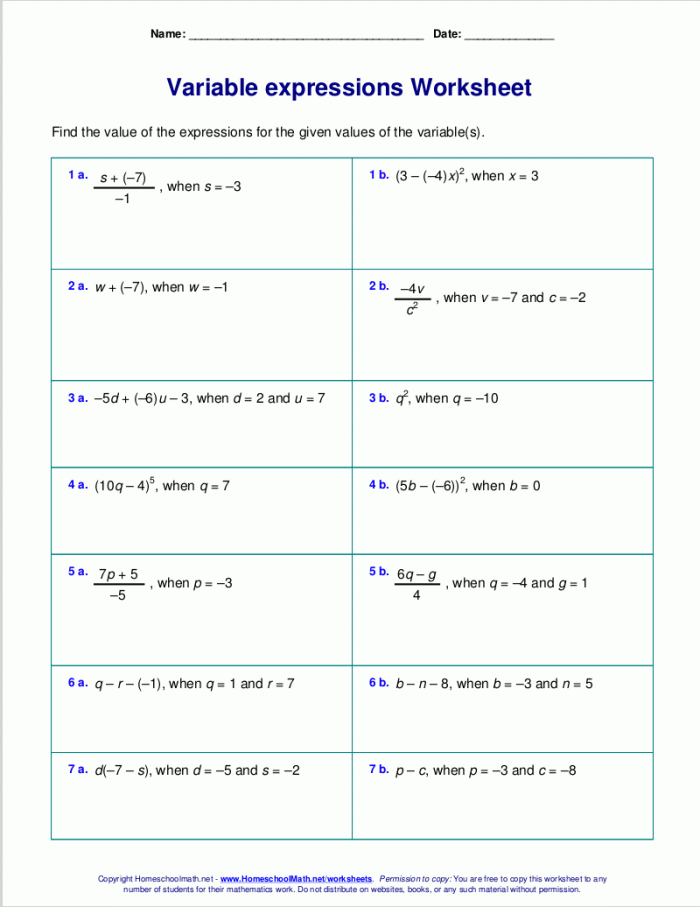
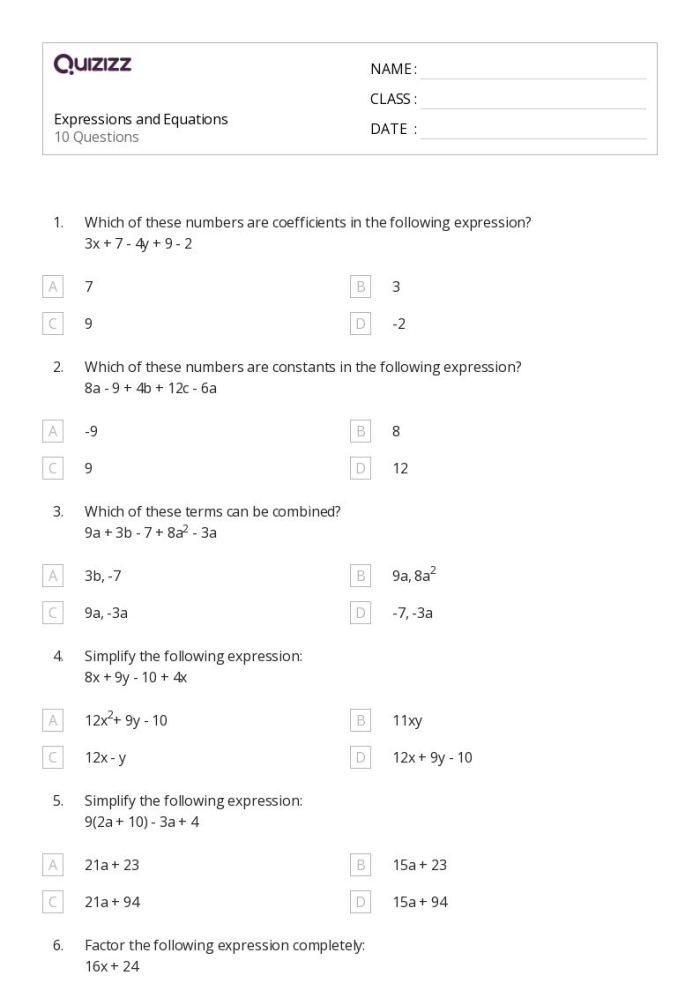
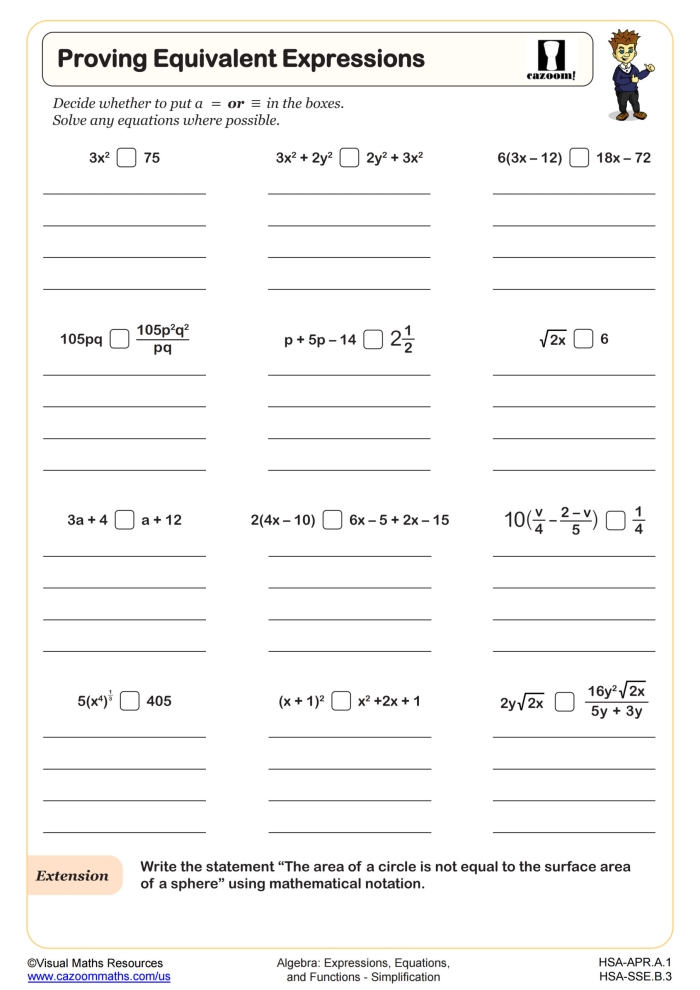
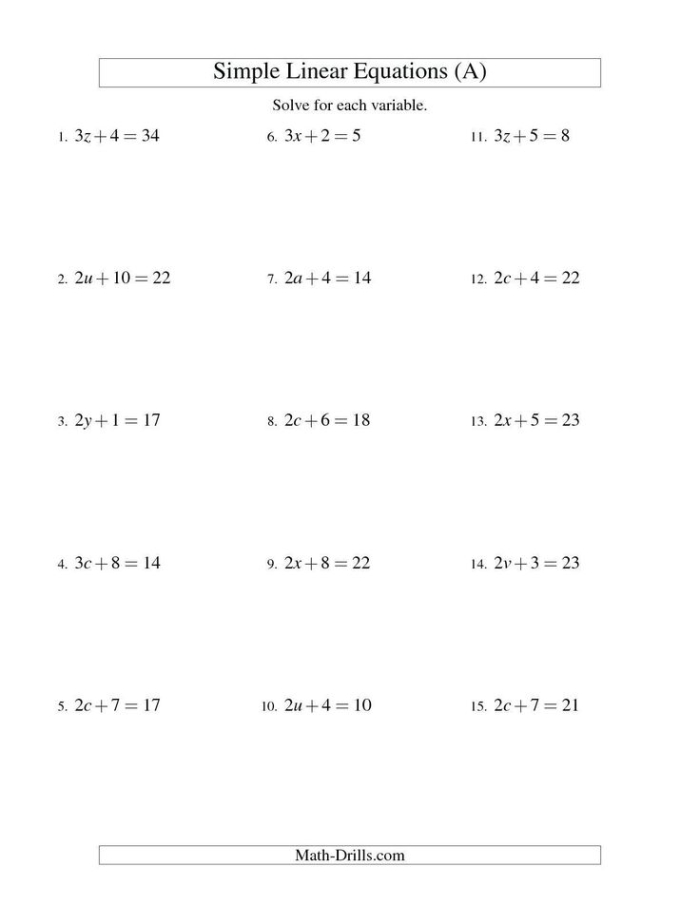
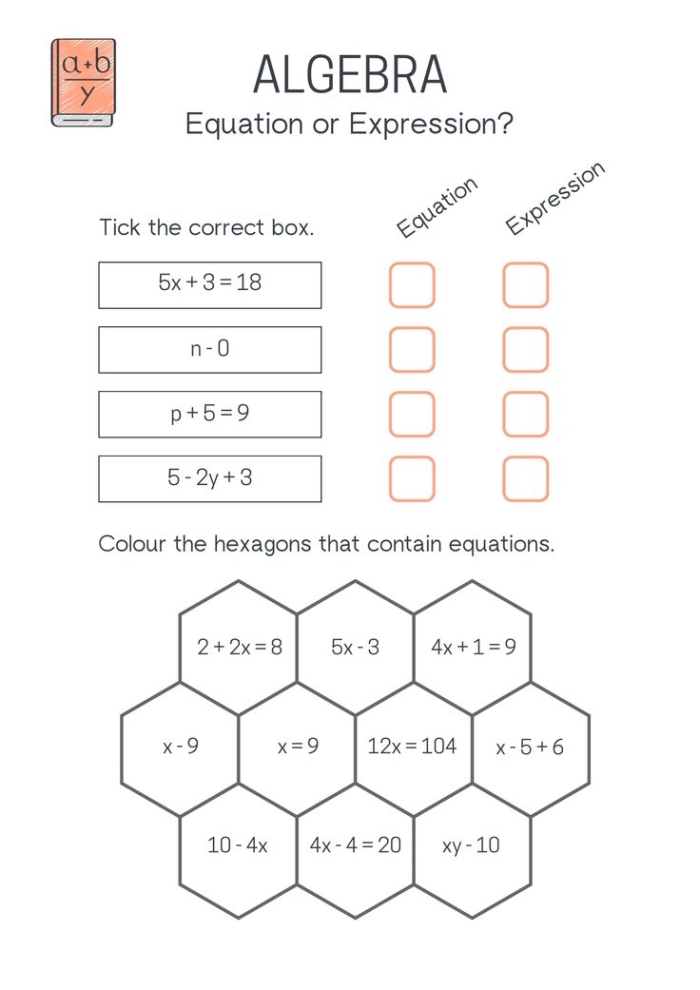
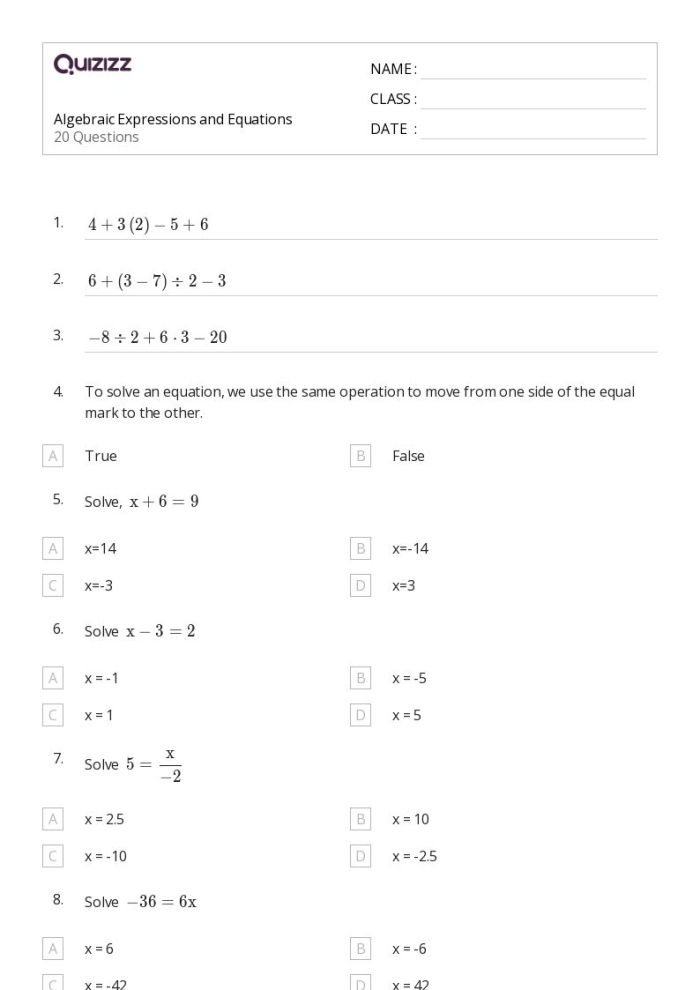
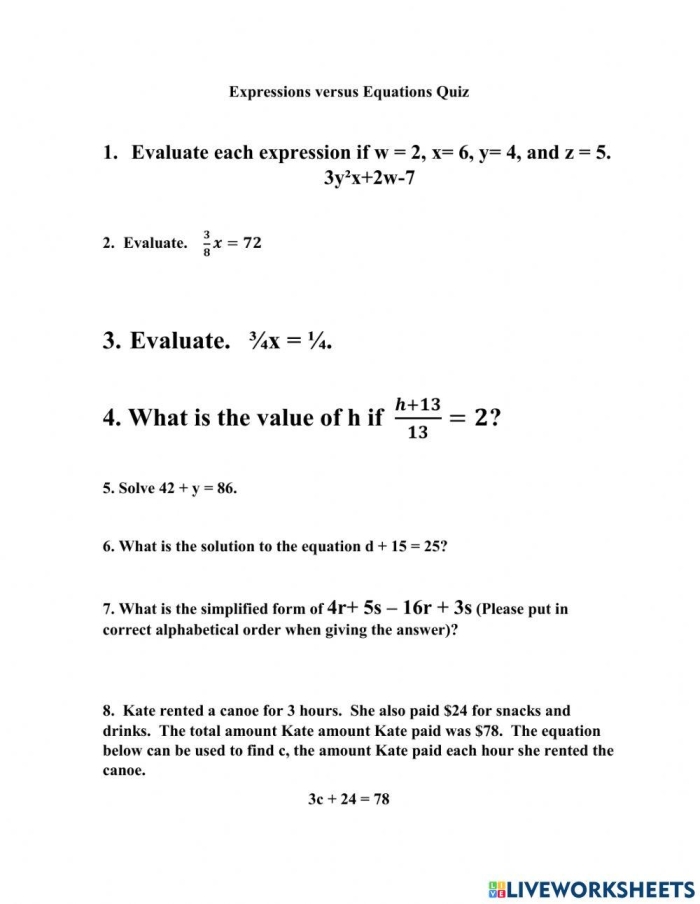
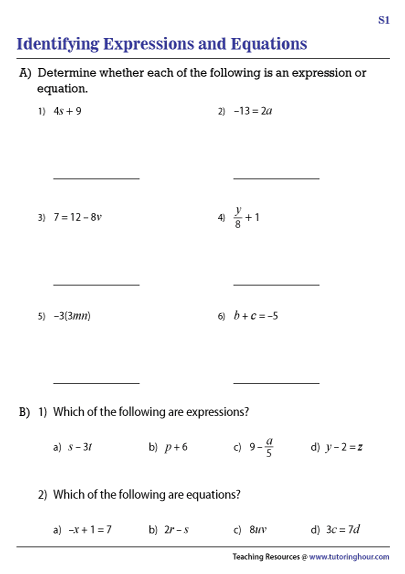
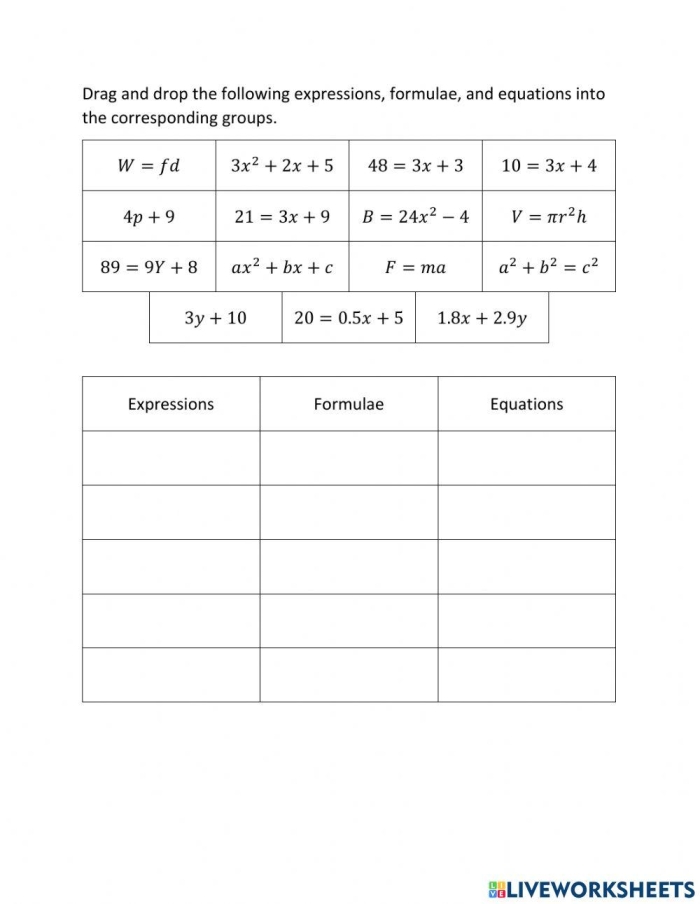
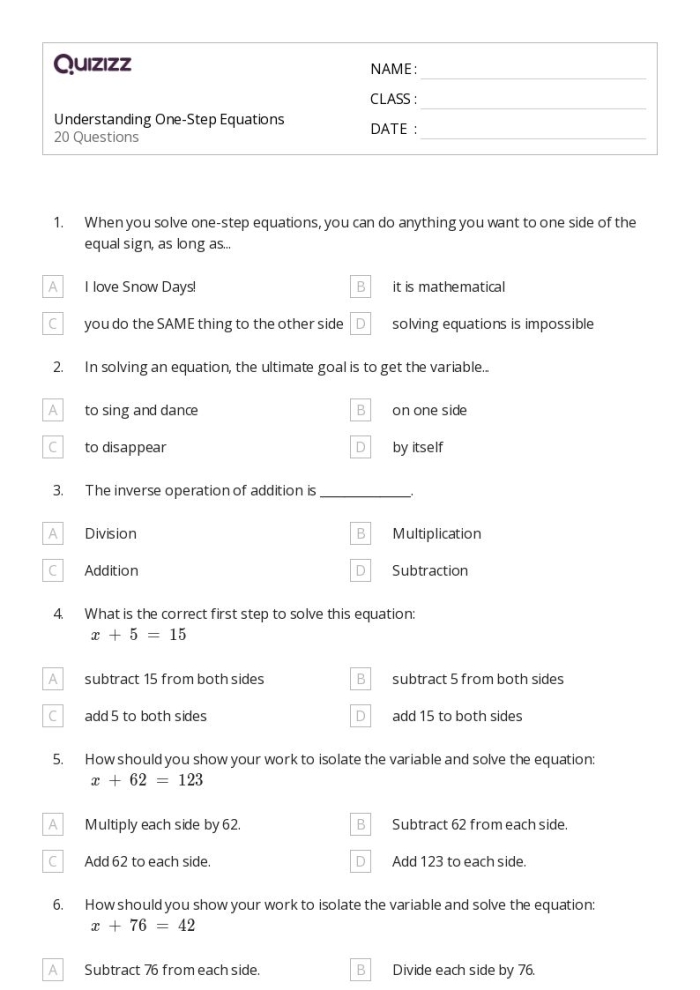
Using a worksheet designed for sixth graders can help learners practice identifying and solving both expressions and equations. By engaging with problems that require them to determine whether a given statement is an expression or an equation, students can strengthen their understanding. They can also benefit from exercises that ask them to evaluate expressions for specific values of variables, reinforcing their grasp of the subject.
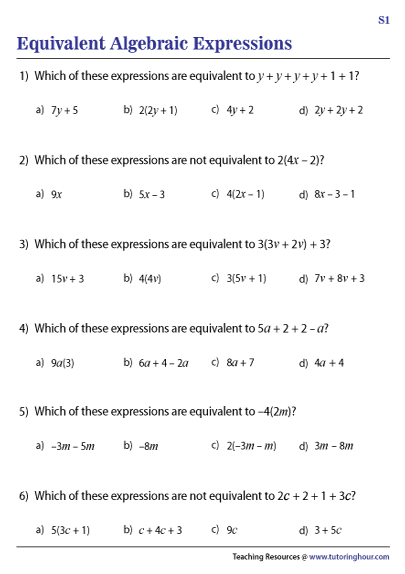
Worksheets like the one available on matching equivalent expressions can provide enriching practice. Additionally, activities that involve finding the median or differentiating between fact and opinion can also enhance critical thinking and analytical skills in a math context.
By integrating these practice materials into your learner’s study routine, you can help them build confidence in their algebra abilities. Understanding the difference between expressions and equations is a stepping stone to success in more advanced math topics. It’s essential that students feel comfortable navigating these concepts as they progress in their education.
Boost Skills with These Worksheets