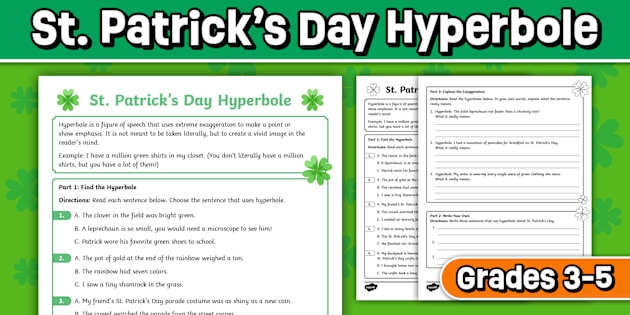
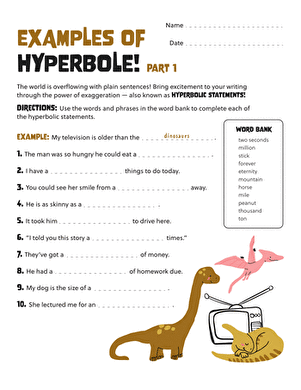
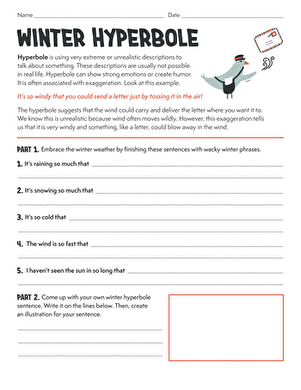
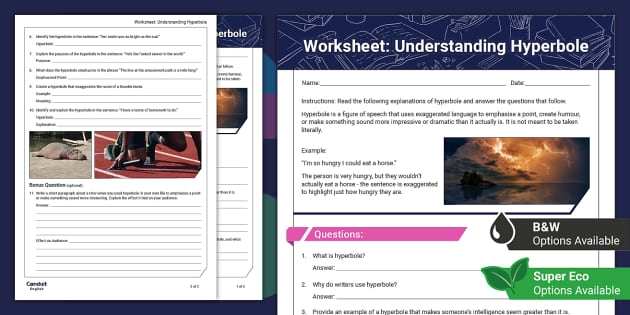
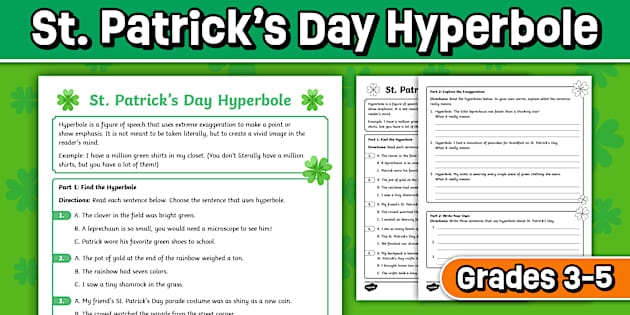
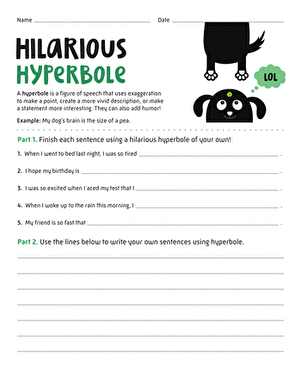
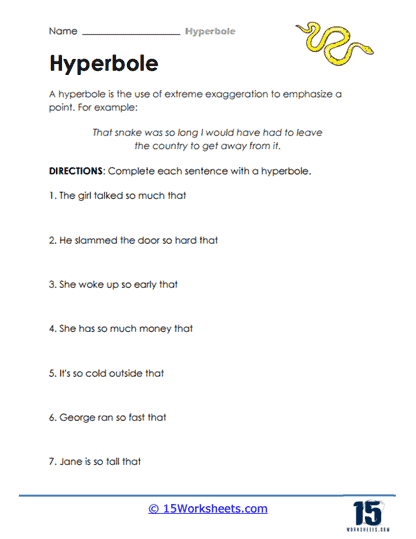
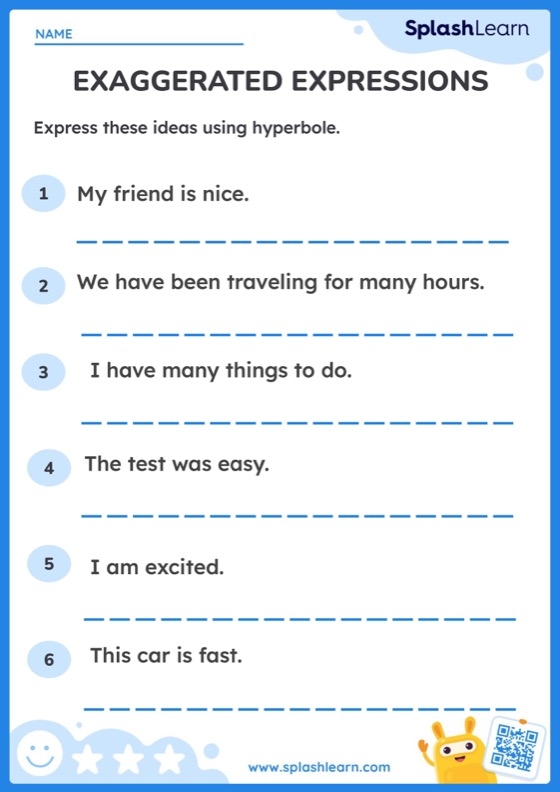
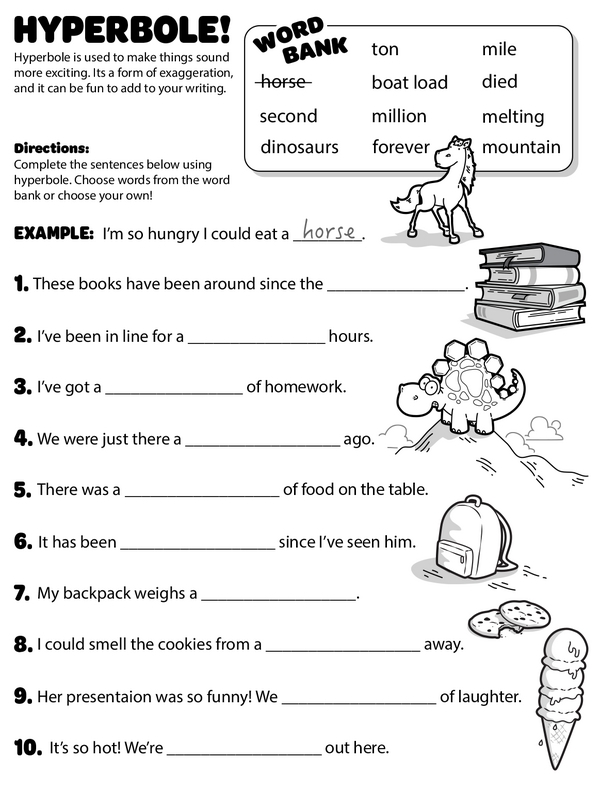
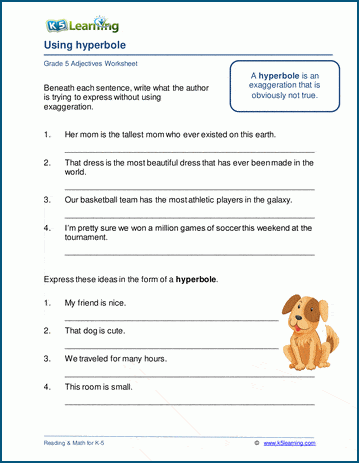
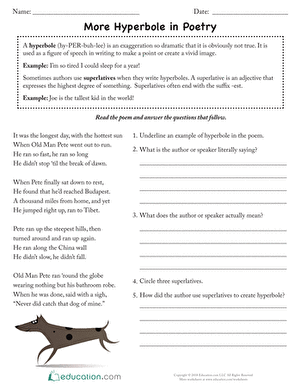
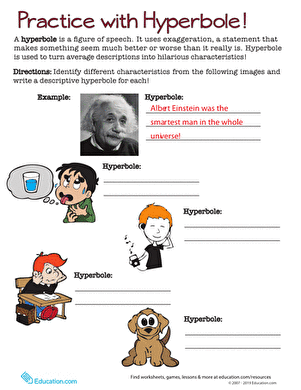
Getting fourth graders excited about writing means teaching them to use language in unexpected ways. Hyperbole does exactly that. When students learn to exaggerate for effect, their writing becomes more vivid, more entertaining, and honestly, more fun to read. This printable figurative language worksheet guides children through hyperbole examples while they practice crafting their own exaggerated statements.
Hyperbole is when you stretch the truth dramatically to create emphasis or humor. A student might write “I’ve told you a million times to clean your room” or “I’m so hungry I could eat a horse.” These aren’t meant to be taken literally. Instead, they punch up ordinary sentences and grab the reader’s attention. Fourth graders often use hyperbole naturally in conversation, but they don’t always recognize it as a writing tool they can control and refine.
Working through examples of hyperbole helps children see the pattern. They notice how the exaggeration connects to something real underneath. Once they spot that connection, they can create their own. A worksheet that walks through several hyperbole examples gives them a framework to follow. They see what works, then apply that same energy to sentences they write themselves.
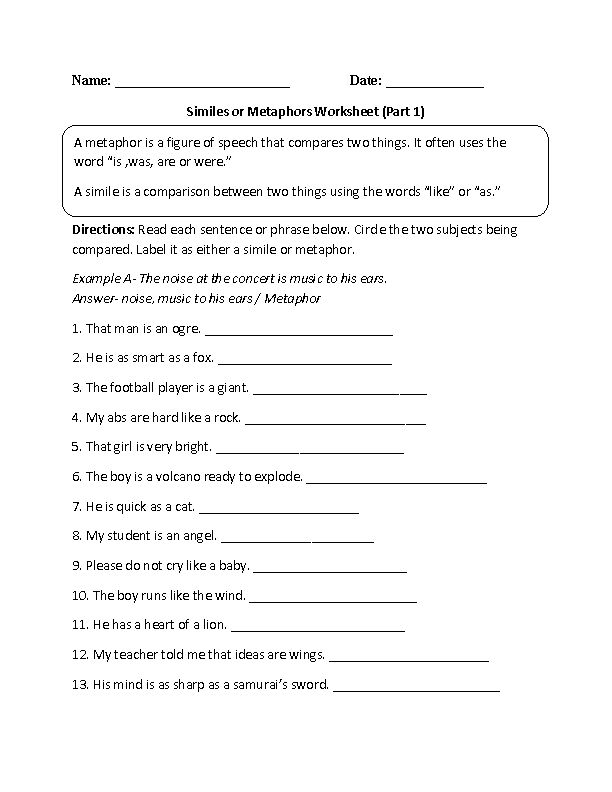
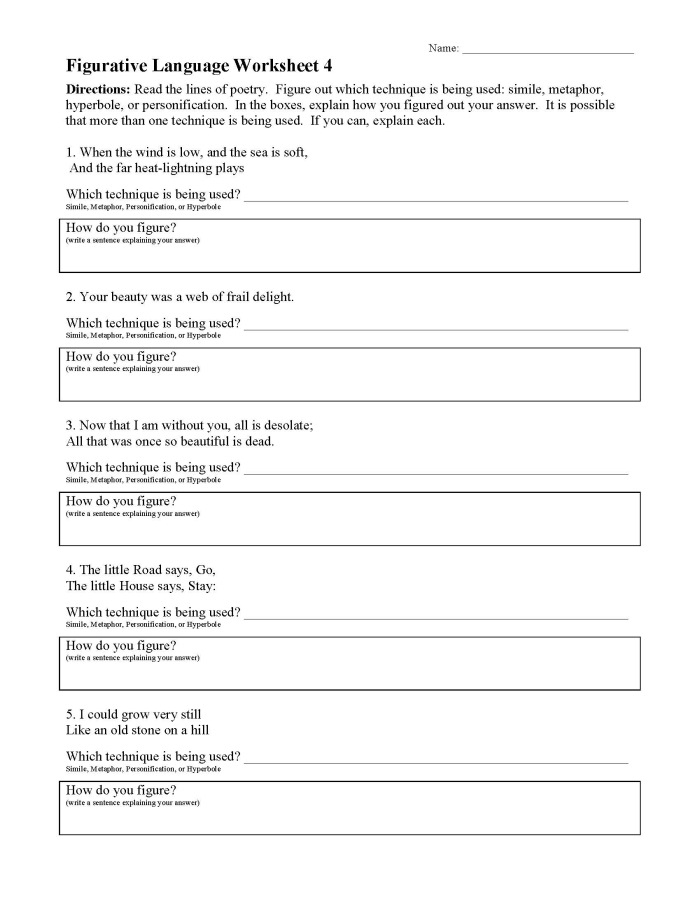
This kind of practice strengthens their overall writing voice. When students understand how to use hyperbole effectively, they also get better at recognizing other figurative language techniques. Many fourth graders benefit from seeing how hyperbole differs from other descriptive tools. You might pair this worksheet with activities like understanding parts of an argument or identifying themes, which help them think more deeply about how language shapes meaning.
The real payoff comes when students start using hyperbole in their own writing without being prompted. That’s when you know the skill has stuck. They’re not just following a worksheet anymore. They’re making deliberate choices to make their writing more engaging and memorable.
Worksheet Practice Section