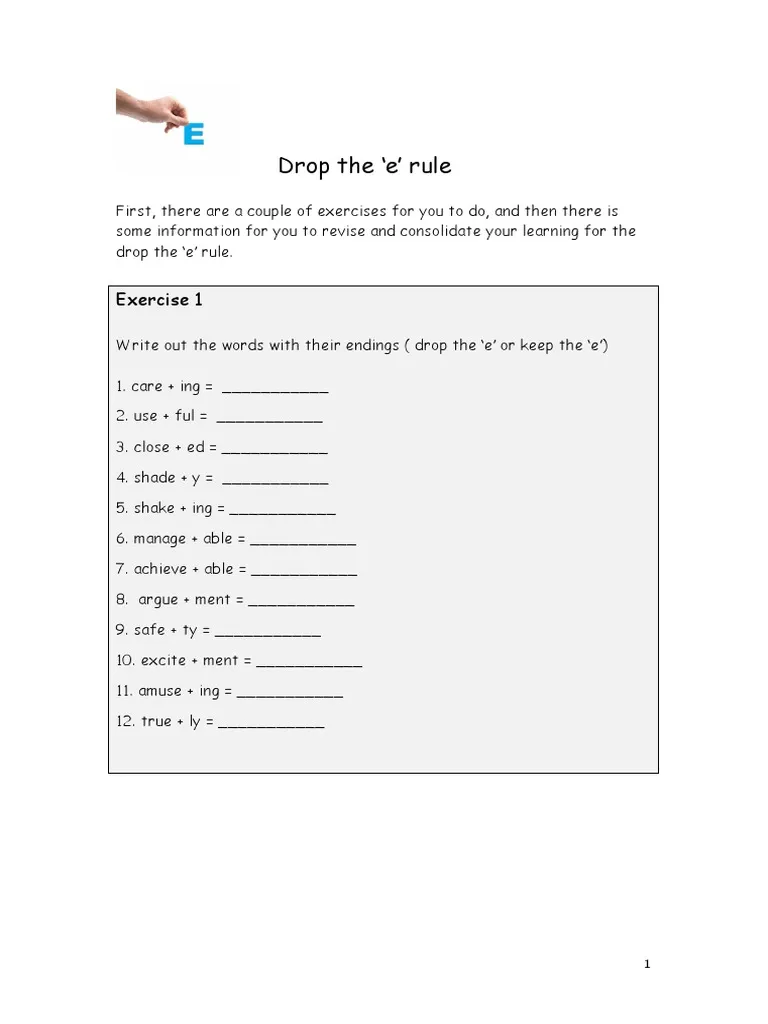
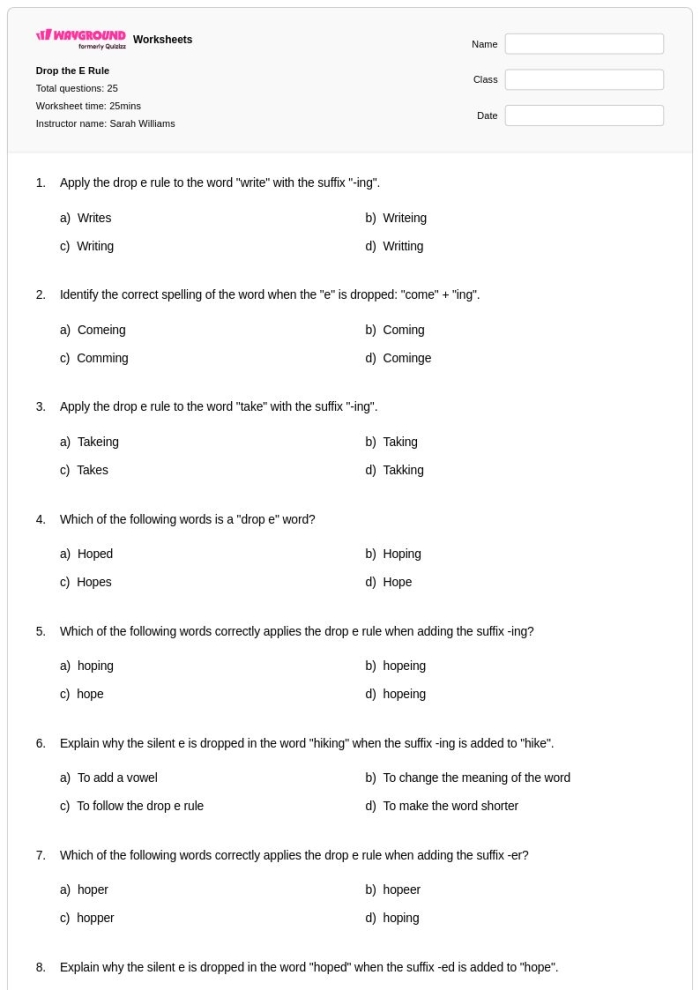
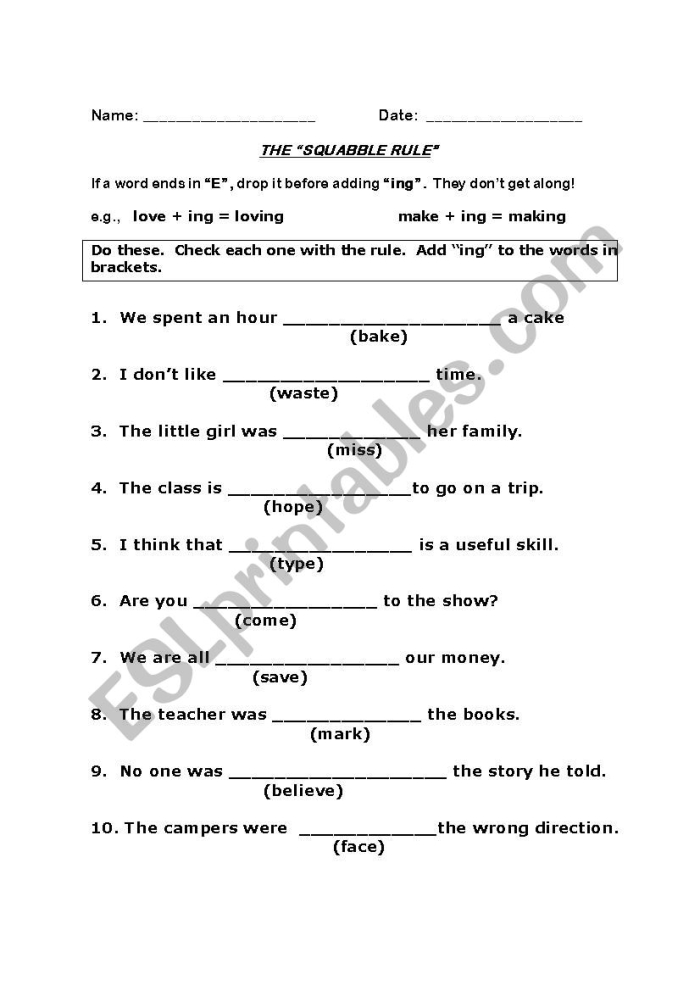
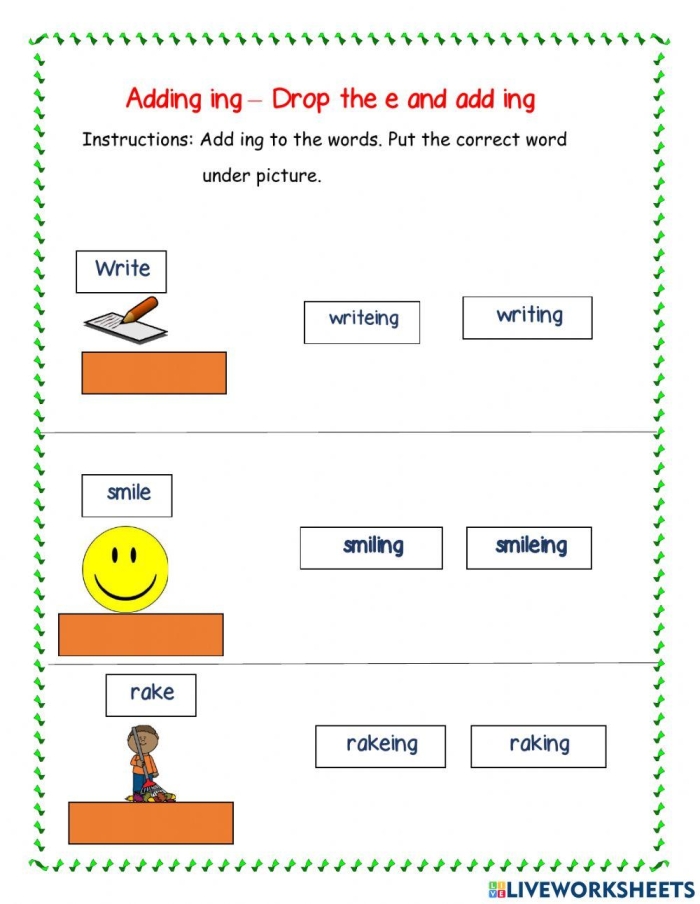
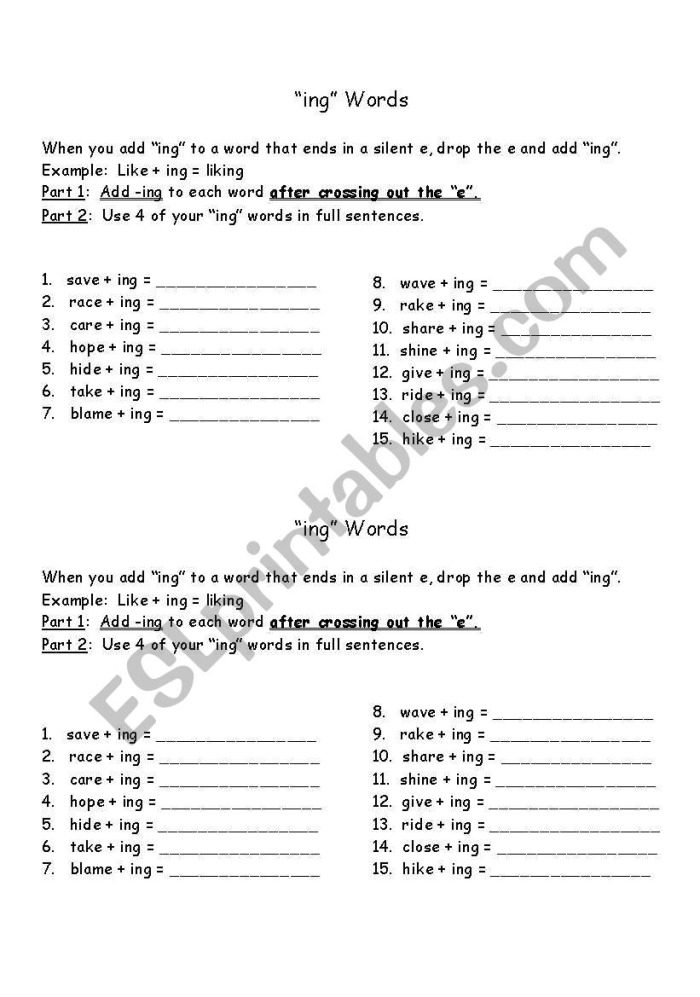
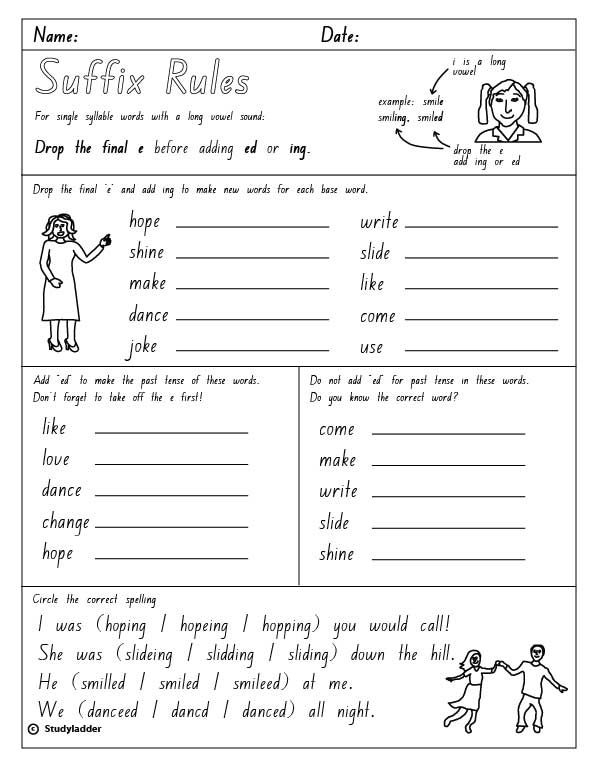
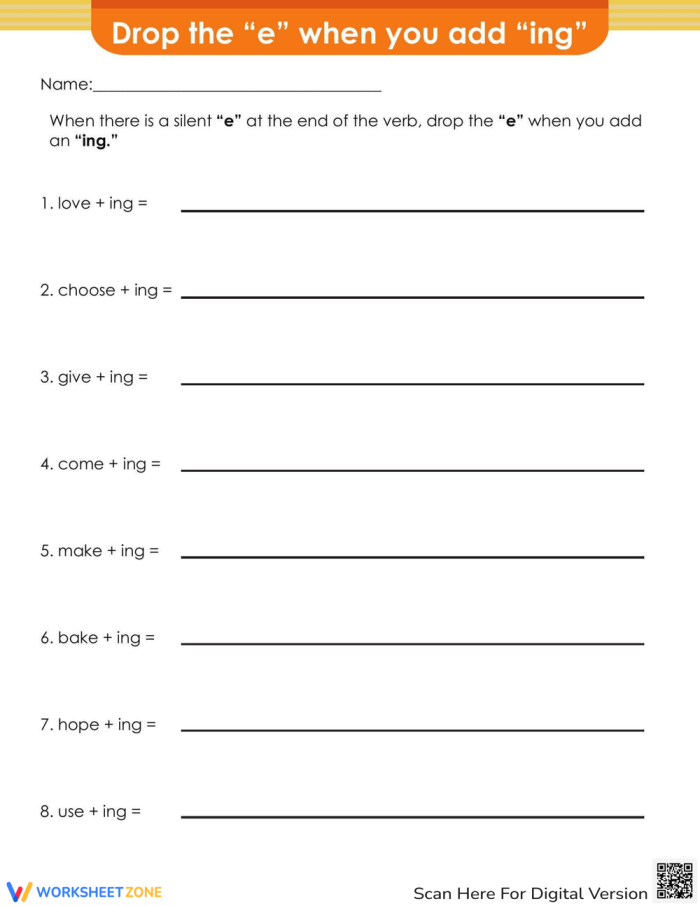
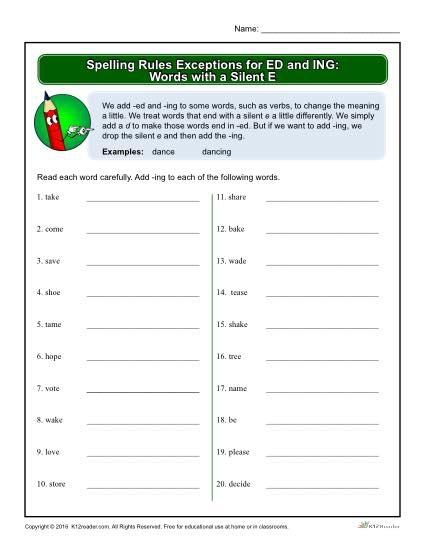
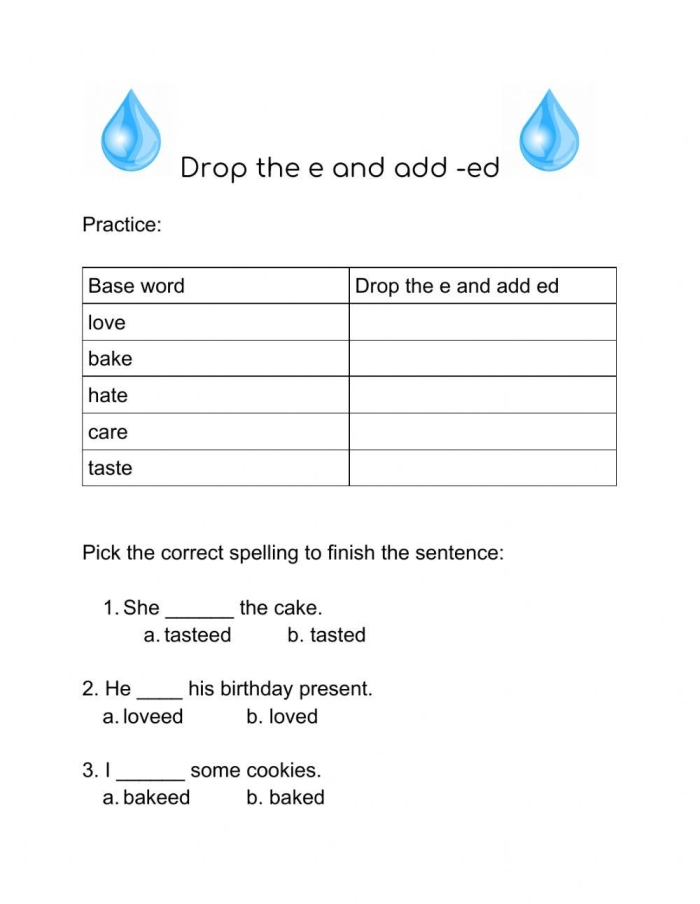
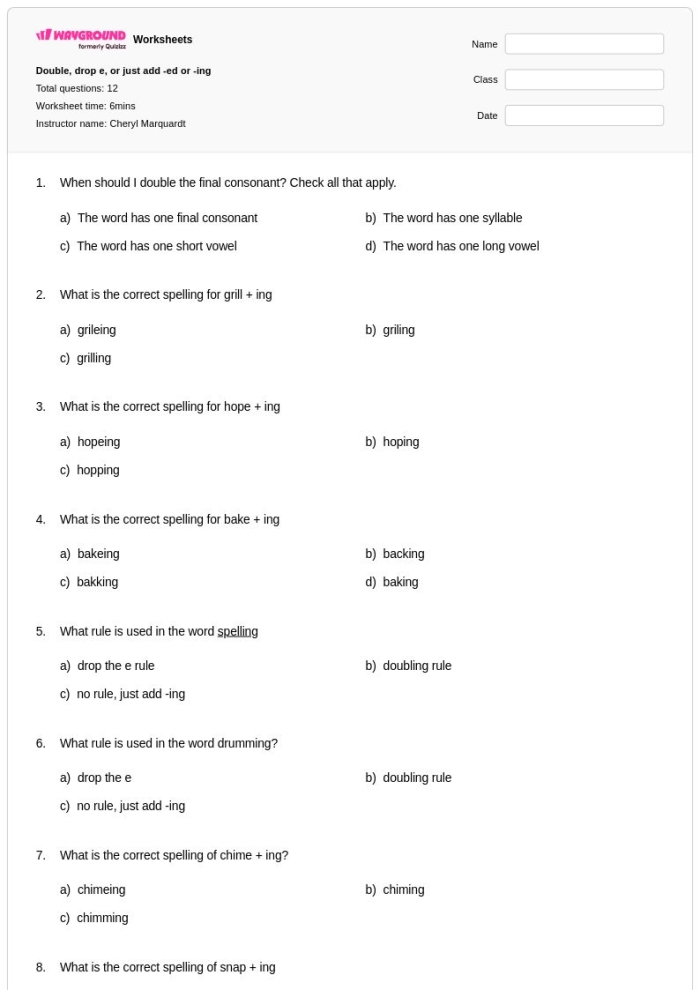
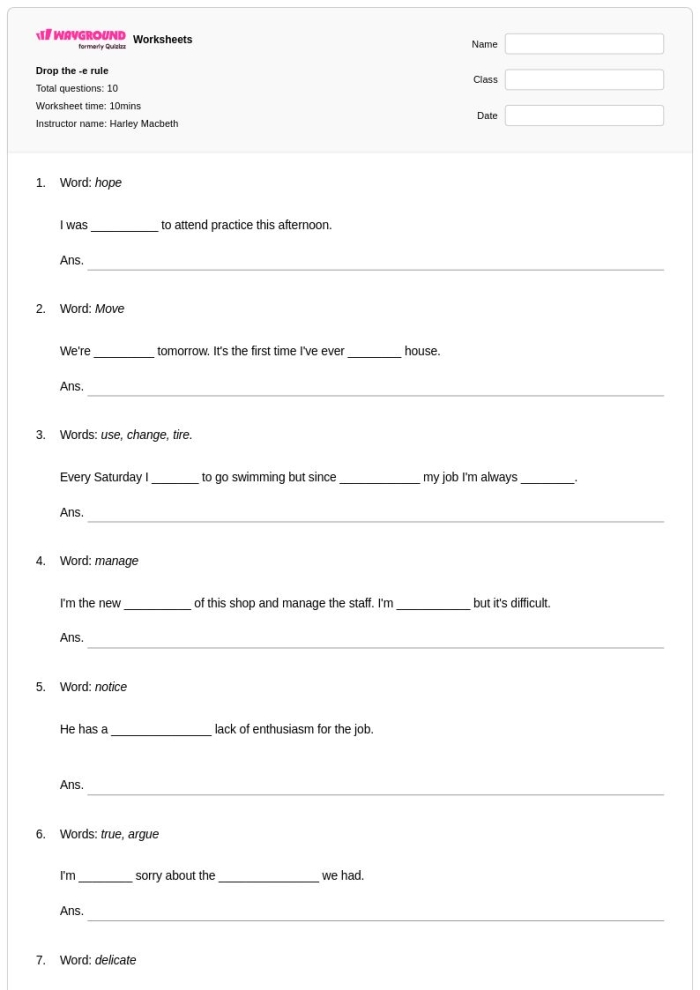
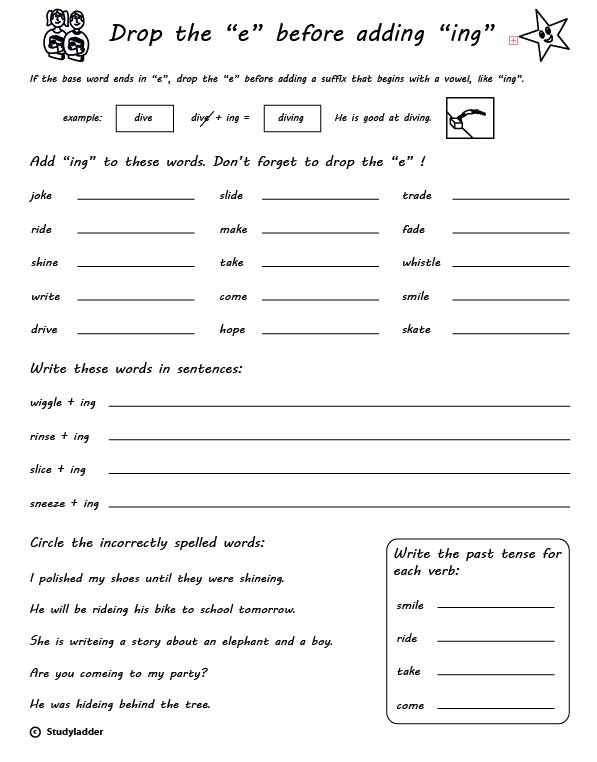
One of the trickiest spelling patterns in First Grade is knowing when to drop the silent E before adding -ing to a word. Students see words like “make” and “bake,” and they instinctively want to write “makeing” and “bakeing.” A focused spelling worksheet helps them internalize this rule through repetition and real examples.
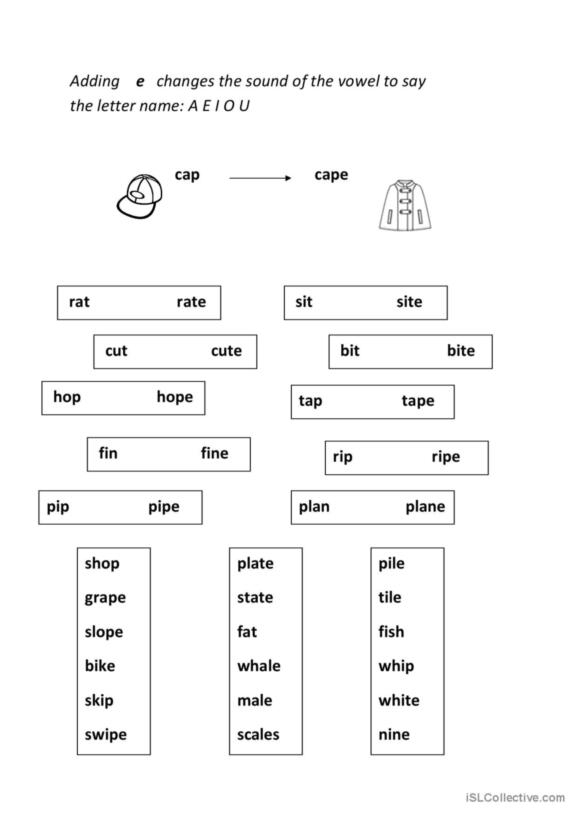
The silent E rule works because English words rarely end in two vowels followed by -ing. When a word ends in a consonant preceded by a single vowel, that final E serves to lengthen the vowel sound. Once -ing arrives, the E becomes unnecessary and actually creates pronunciation problems. Students who practice this pattern with concrete examples understand why “make” becomes “making,” not “makeing.”
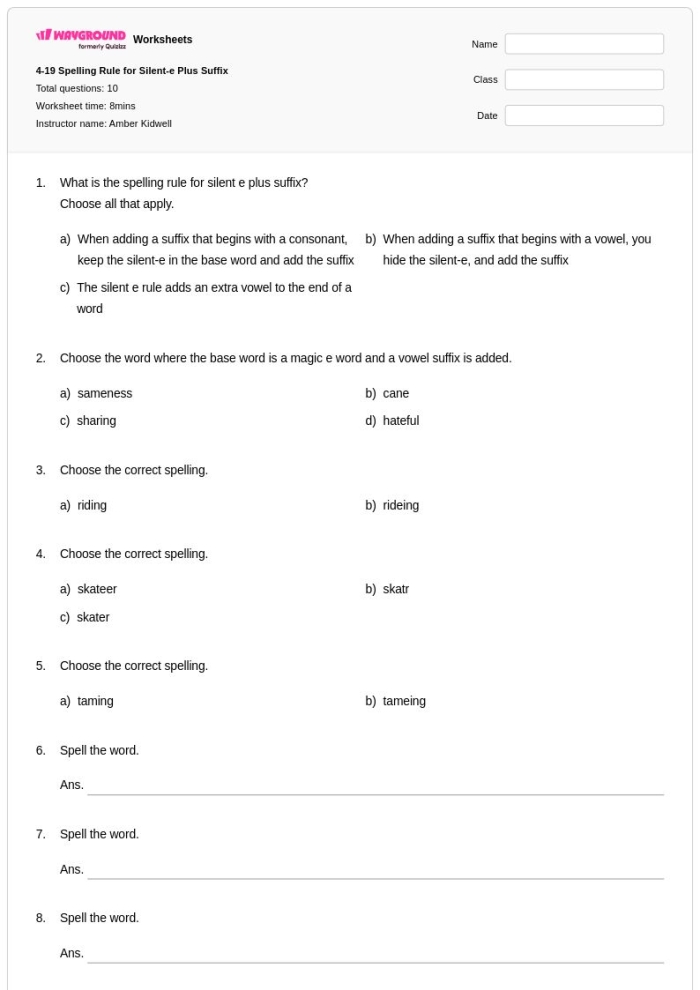
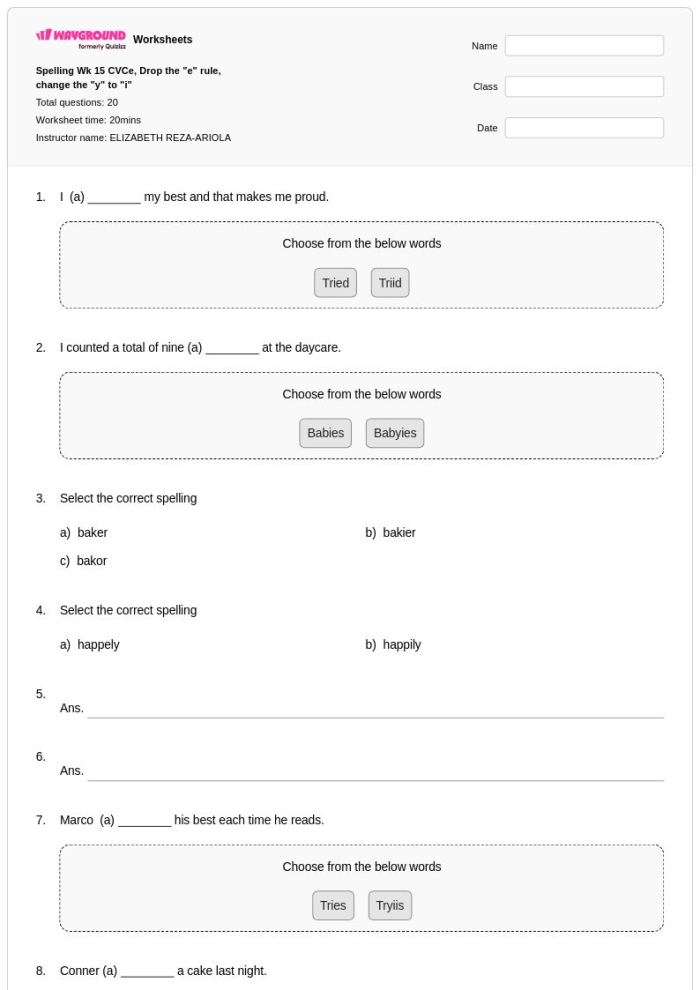
Effective worksheets include familiar words that First Grade students encounter regularly. Words like “take,” “like,” “ride,” “hope,” and “dance” appear frequently in early reading materials. By working through these words on paper, students build automaticity rather than guessing each time they write.
The best approach combines this focused practice with other foundational skills. While working on drop-the-E patterns, First Grade students benefit from simultaneous practice with related concepts. Worksheets that integrate consonant blends alongside spelling rules reinforce multiple skills at once. Similarly, incorporating measuring in inches into literacy activities helps students see how different subject areas connect.
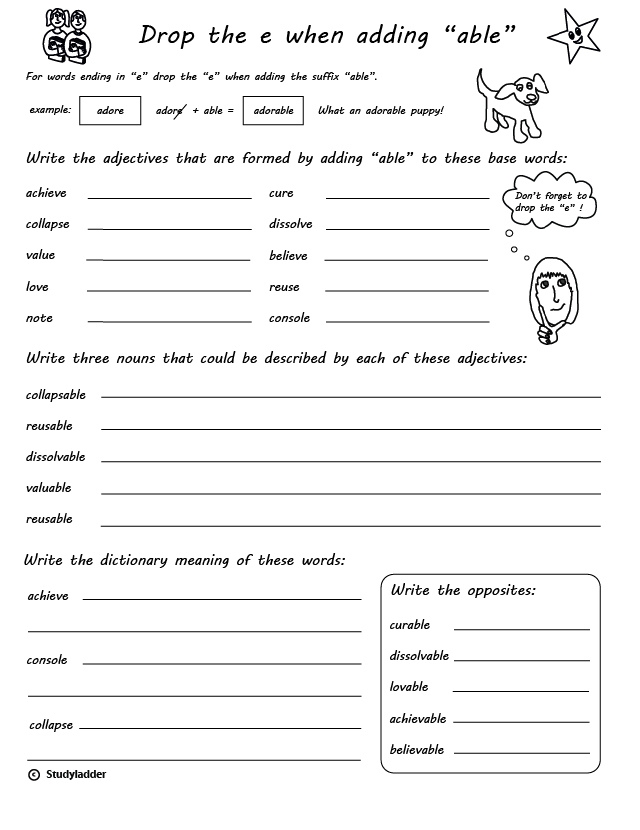
Printable drop-the-E worksheets work best when they include clear visual examples and plenty of space for writing practice. Students should see the before-and-after transformation of each word, then write their own examples. This combination of observation and production solidifies the pattern in their minds for future writing.
Download These Worksheets for Practice