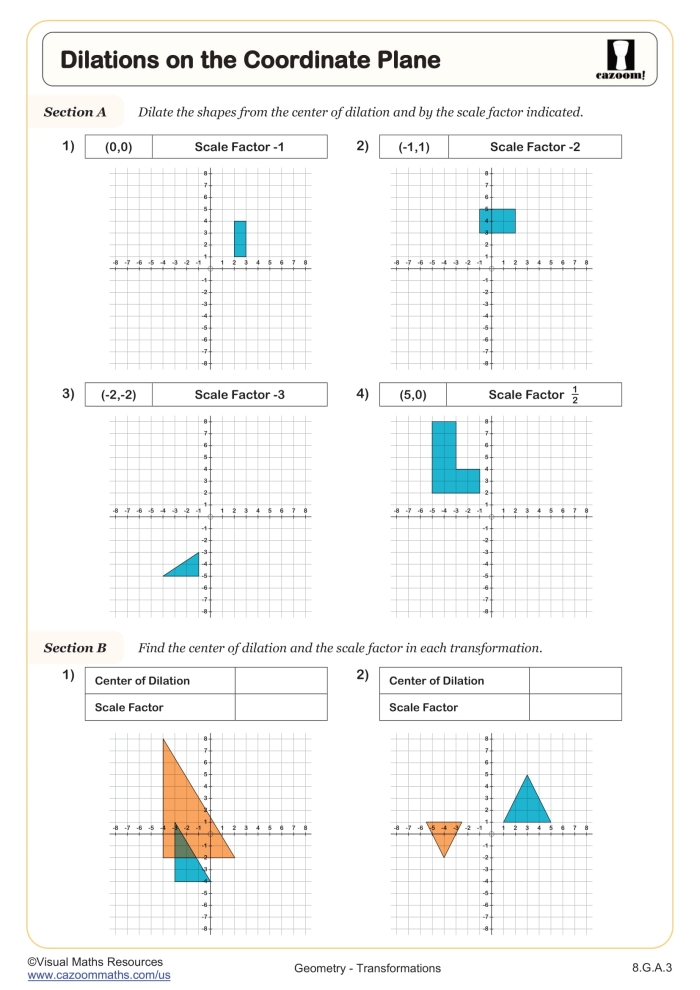
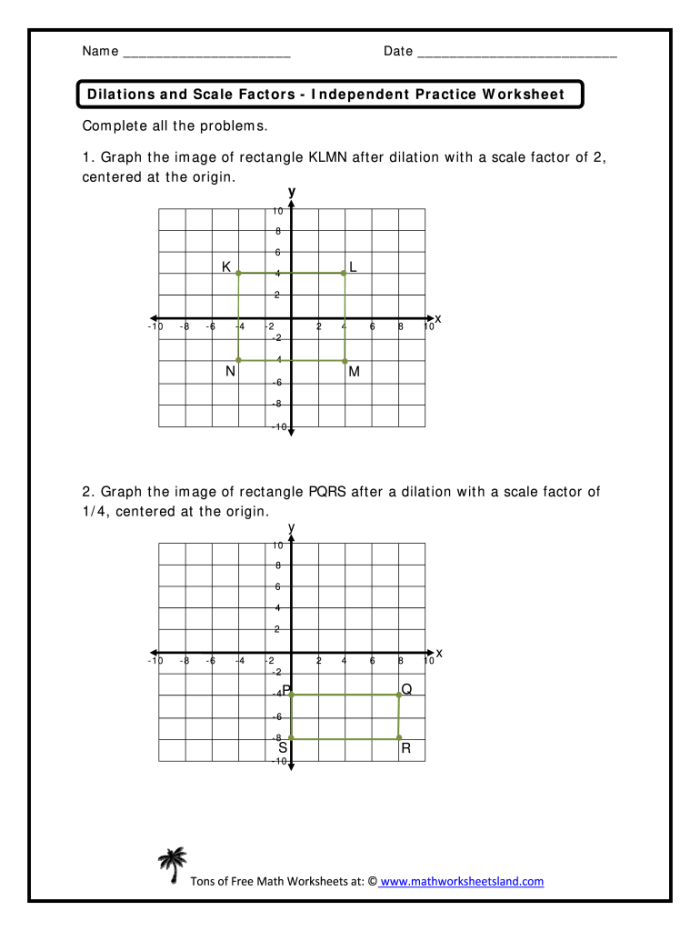
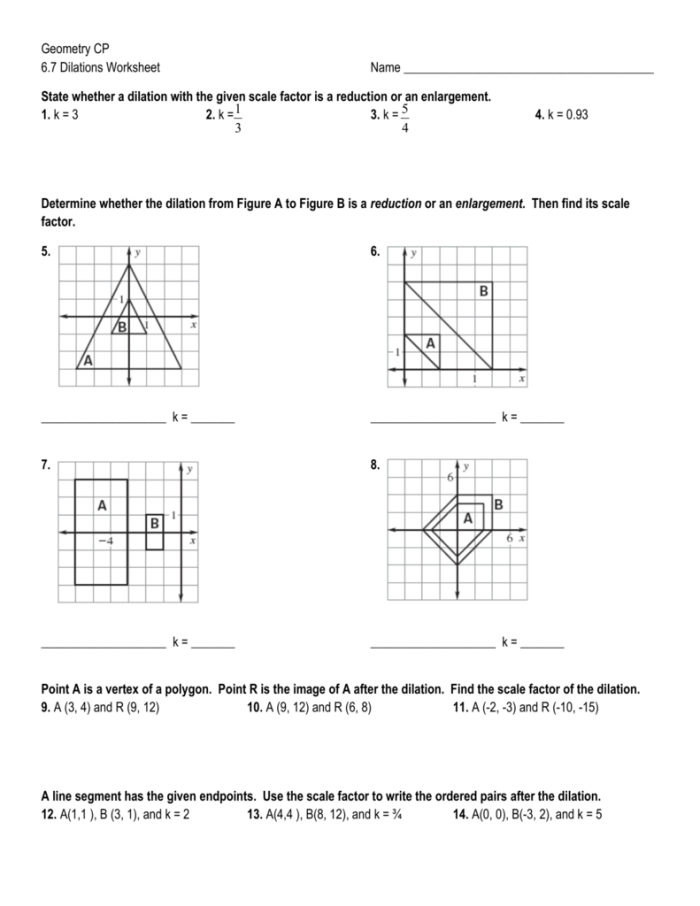
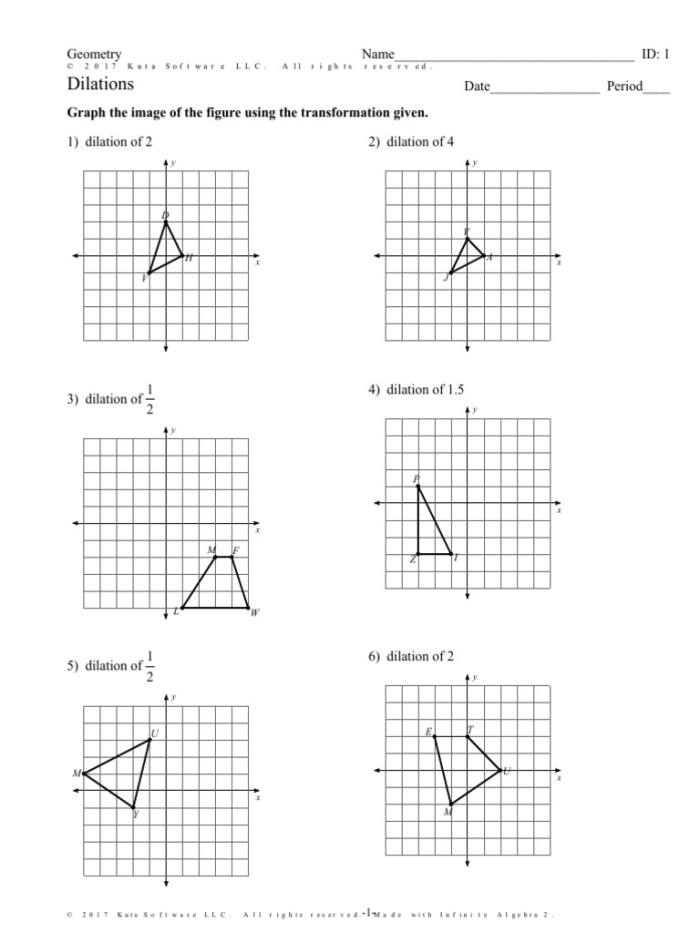
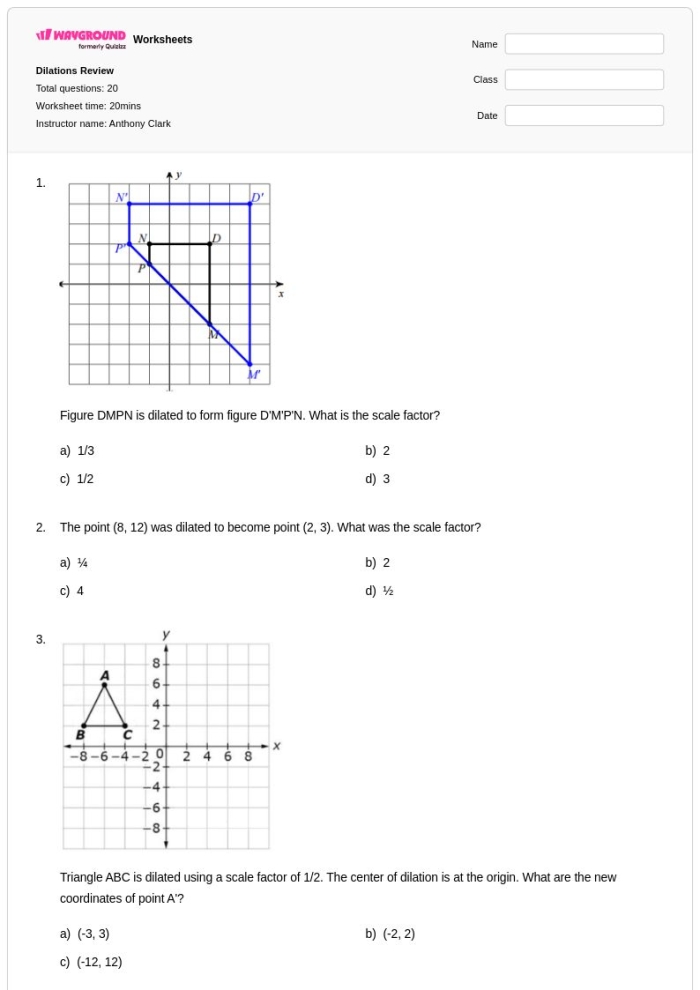
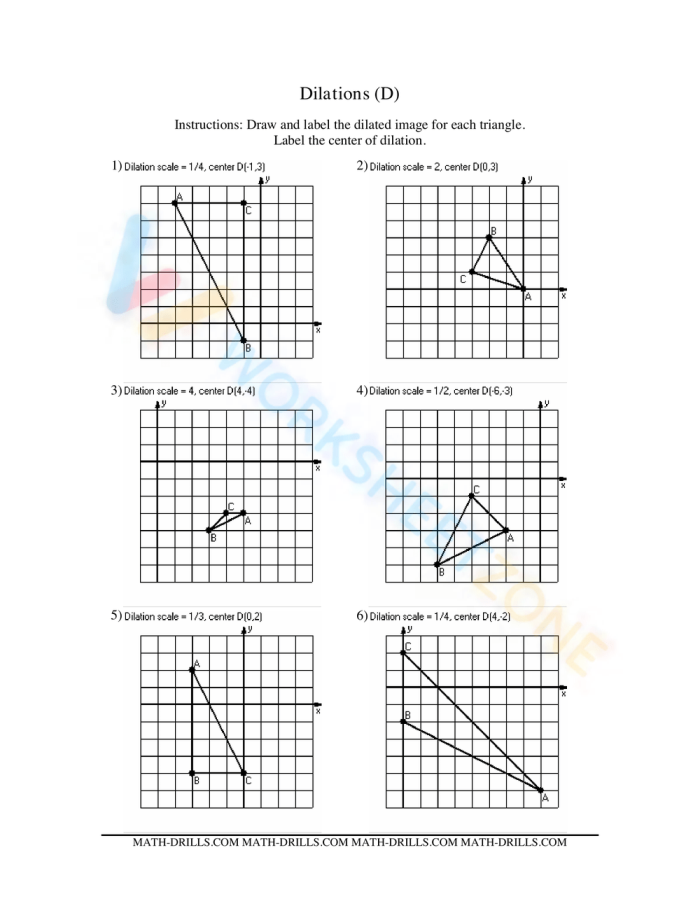
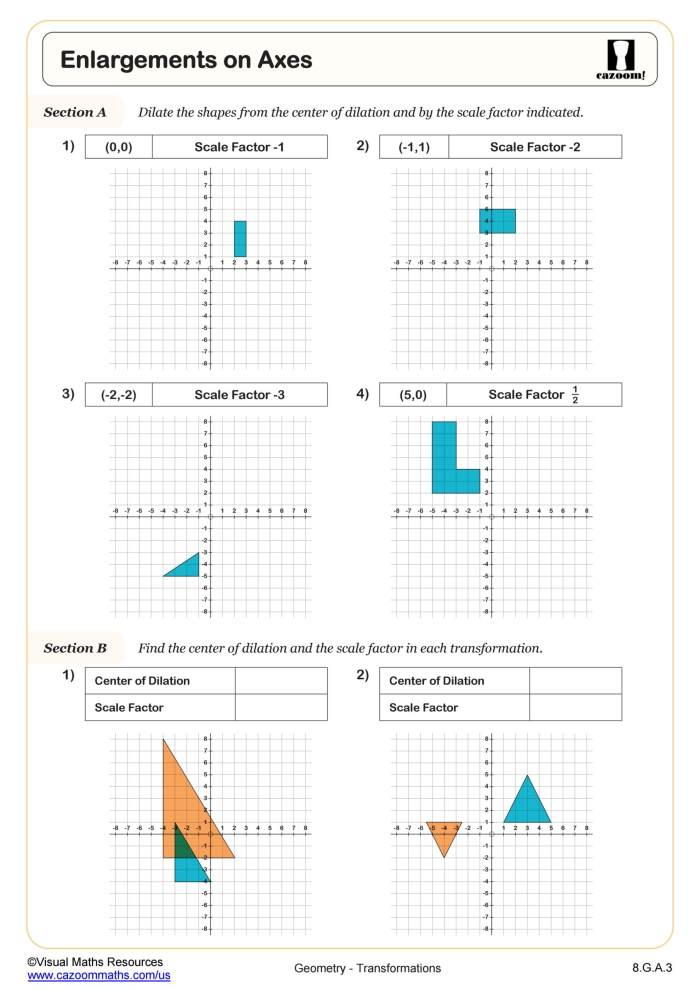
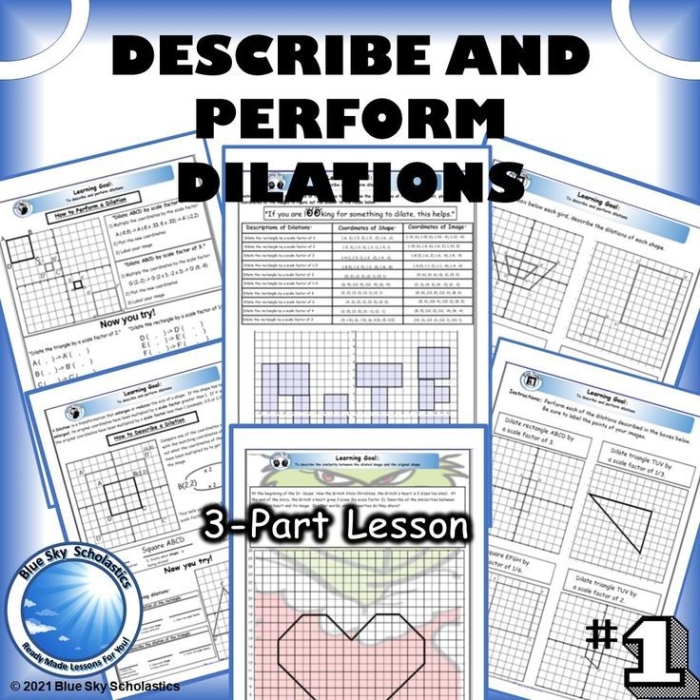
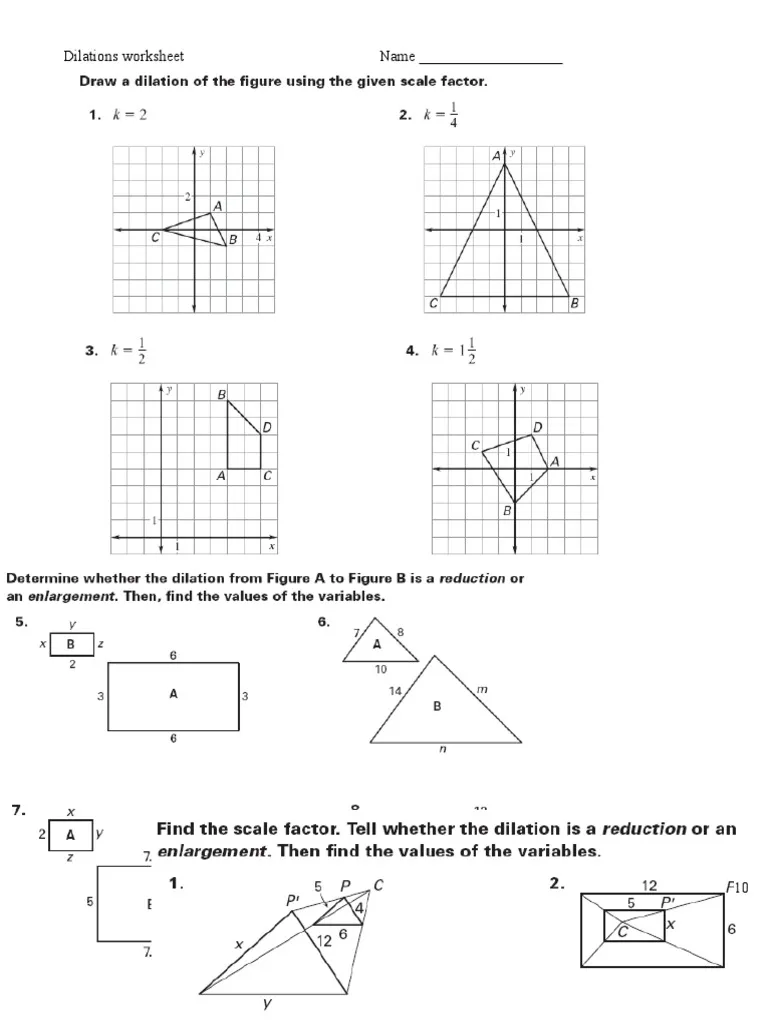
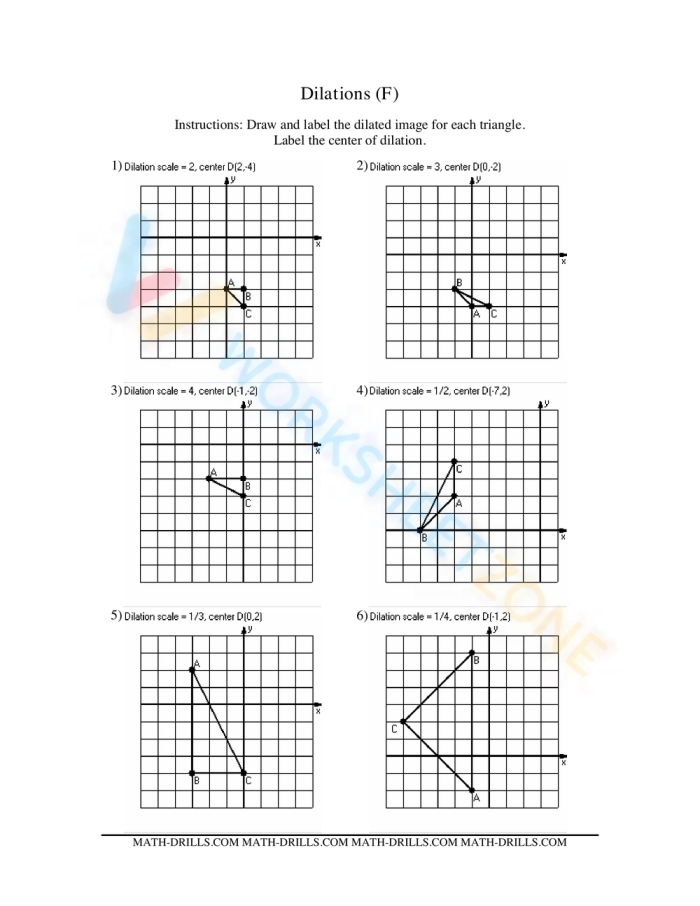
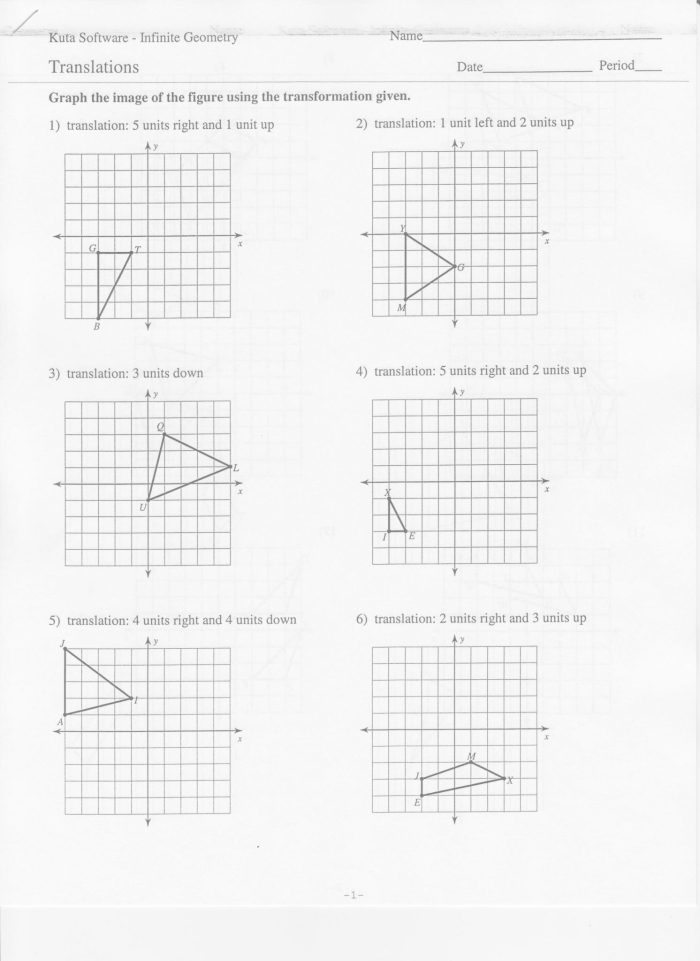
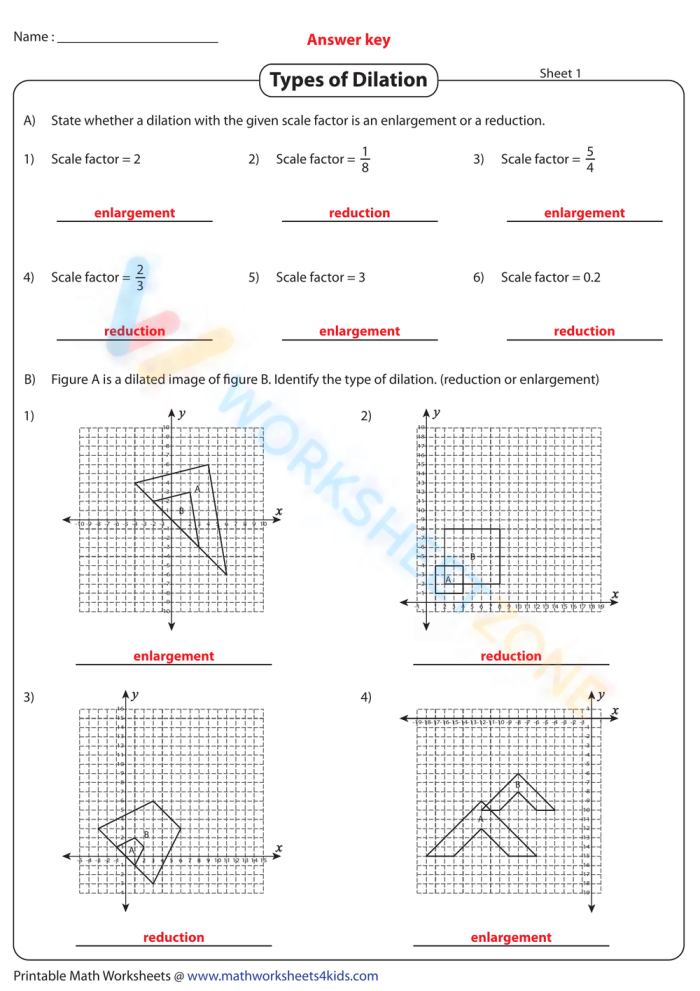
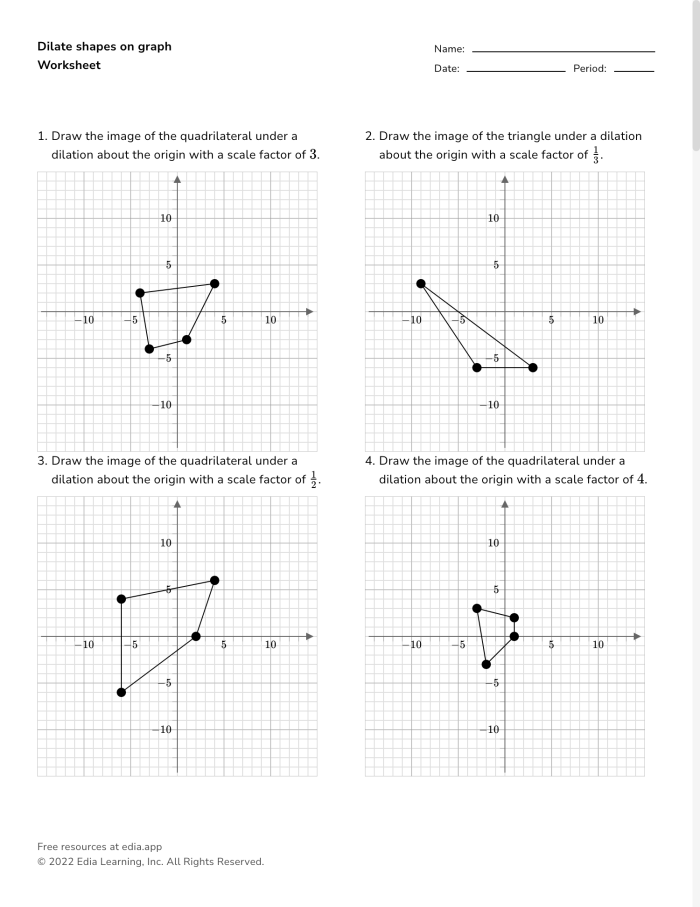
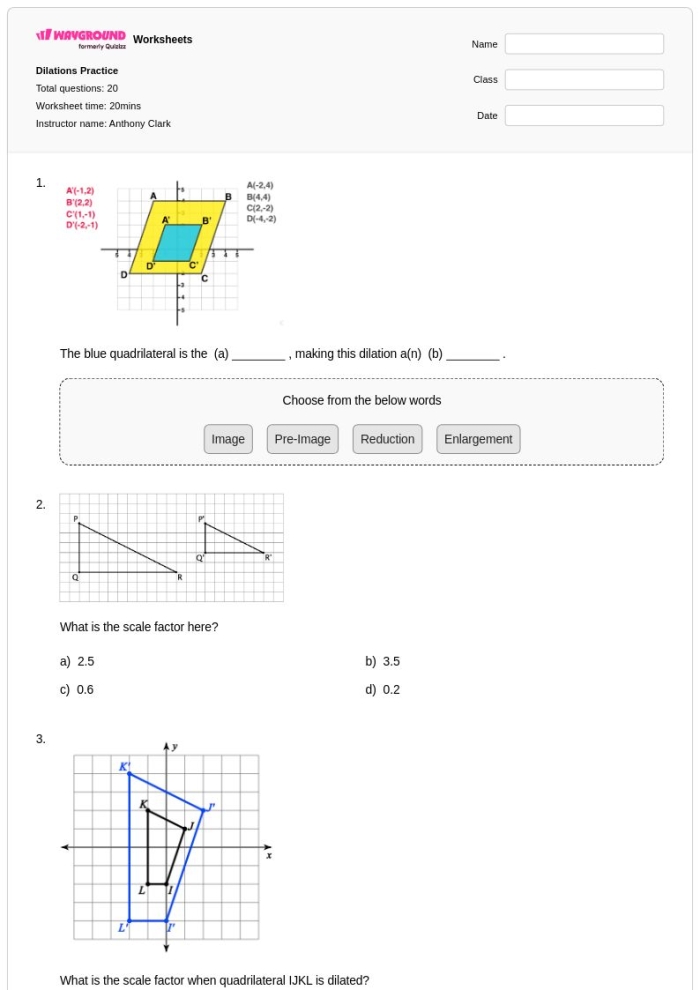
Dilations can feel abstract until students see how they actually work on a coordinate plane. This eighth-grade geometry worksheet gives learners a concrete way to understand what happens when shapes grow or shrink while maintaining their proportions.
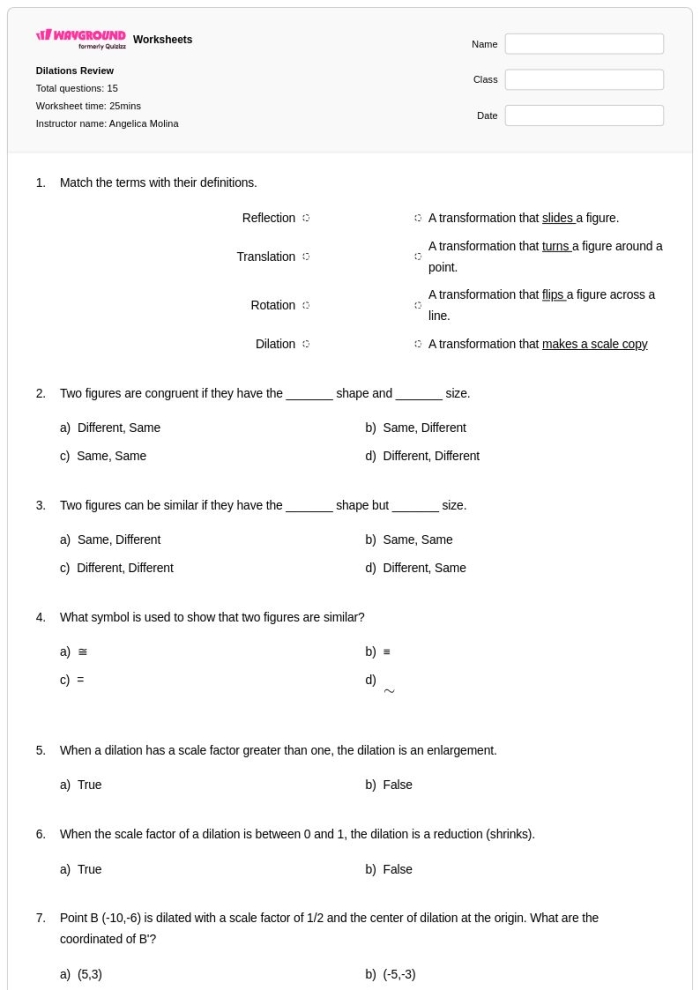
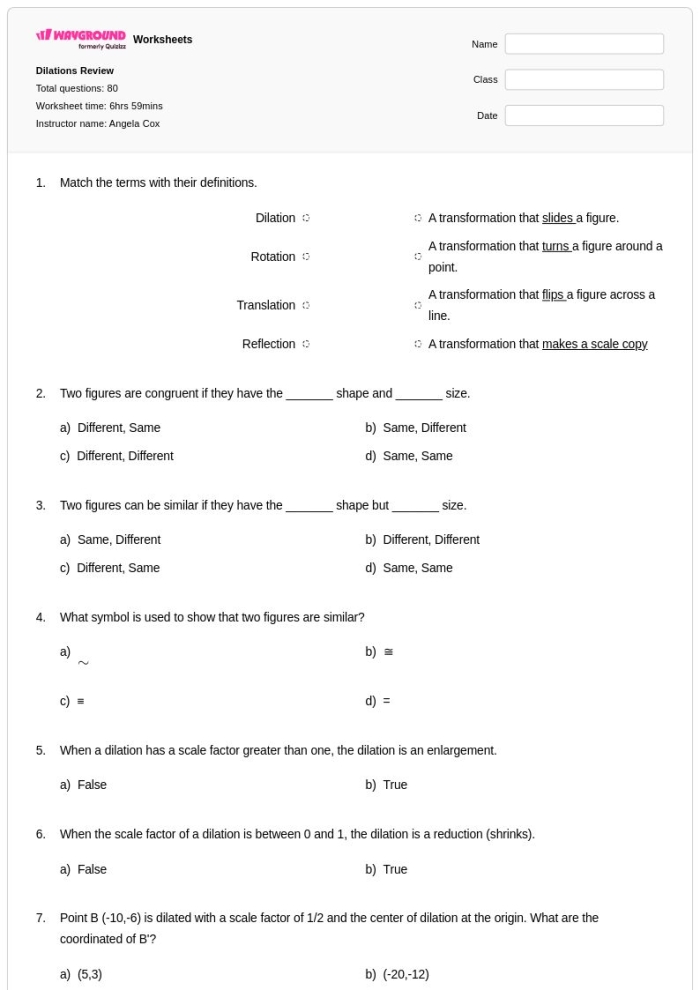
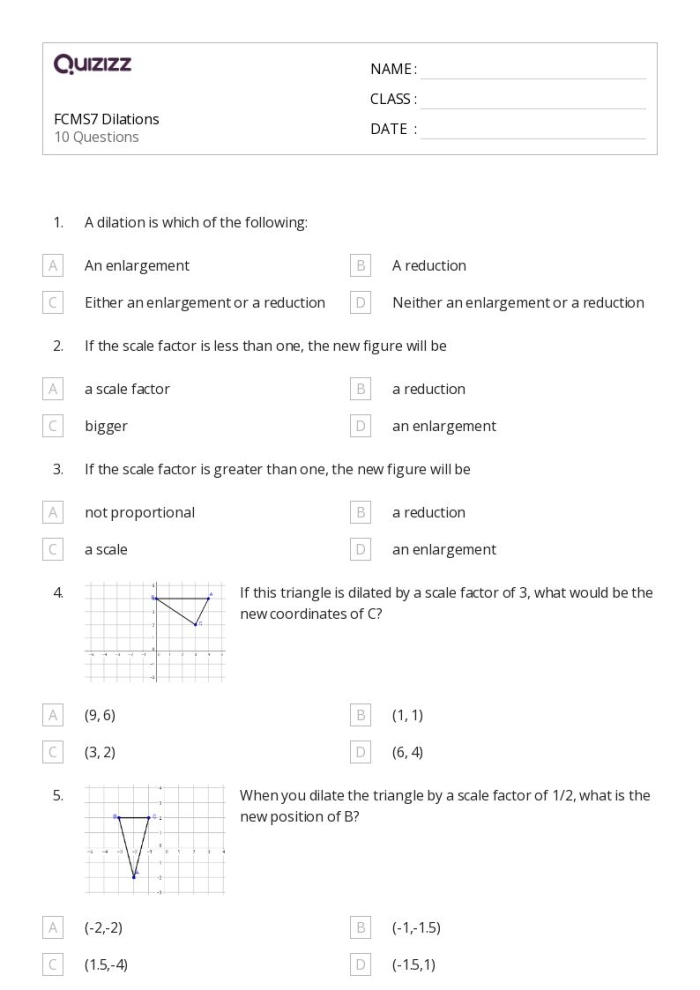
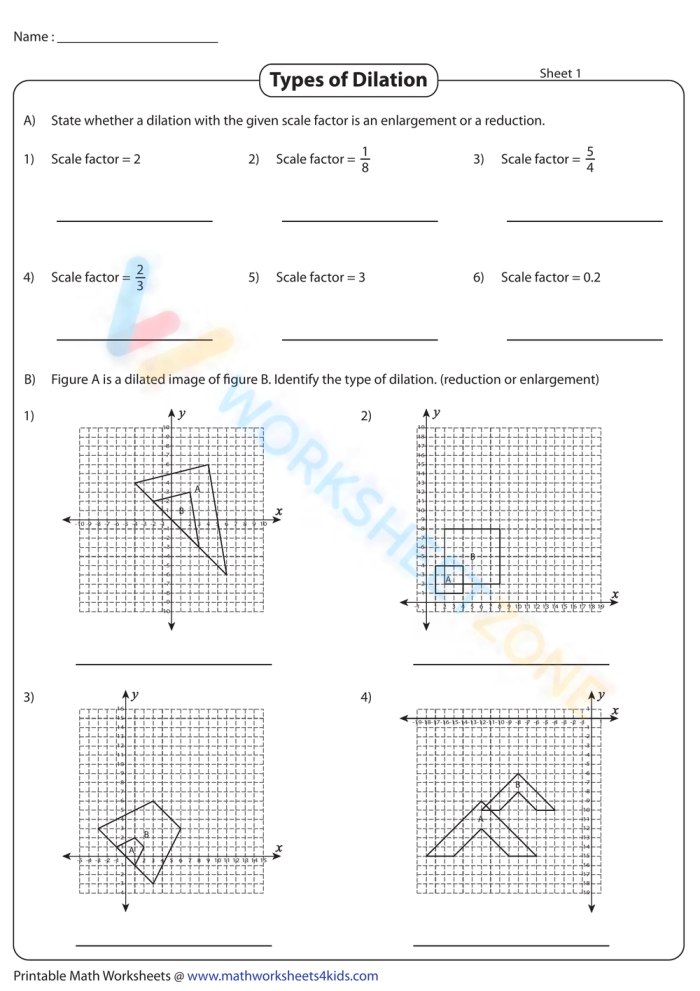
A dilation is a transformation that resizes a figure by a scale factor from a fixed point, usually the origin. When the scale factor is greater than one, the shape enlarges. When it falls between zero and one, the shape shrinks. The key insight students need to grasp is that dilations preserve the shape’s angles and proportional relationships, even though the size changes. This principle connects directly to similar figures, a foundational concept in geometry.
Working with dilations on the coordinate plane requires students to apply multiplication to coordinates. If a point sits at (2, 3) and you apply a scale factor of 2, the new point becomes (4, 6). This straightforward calculation helps students see the mathematical pattern behind what’s happening visually. Many eighth graders benefit from practicing this skill repeatedly across different scale factors and starting positions.
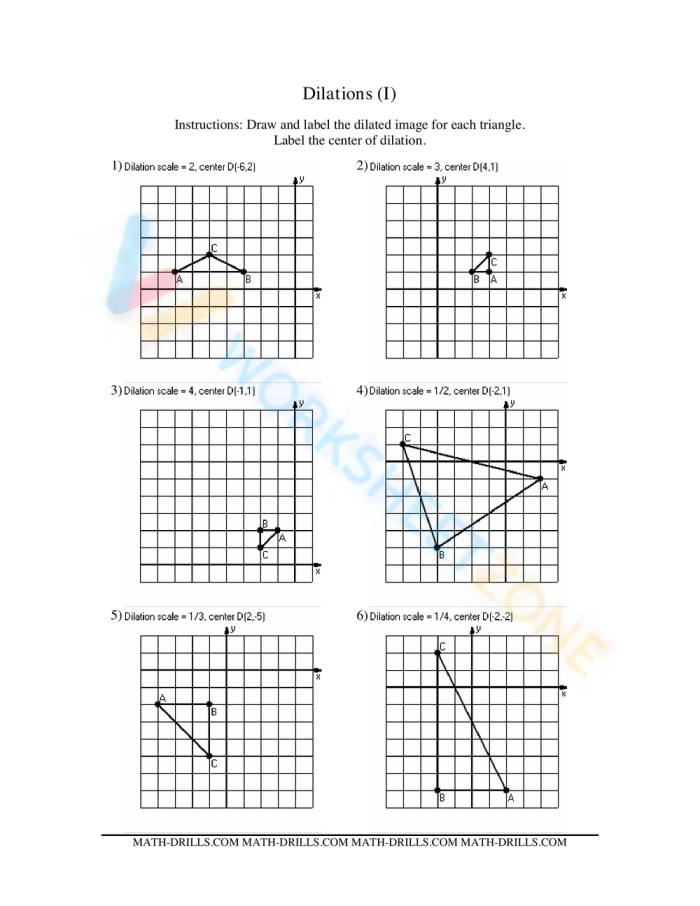
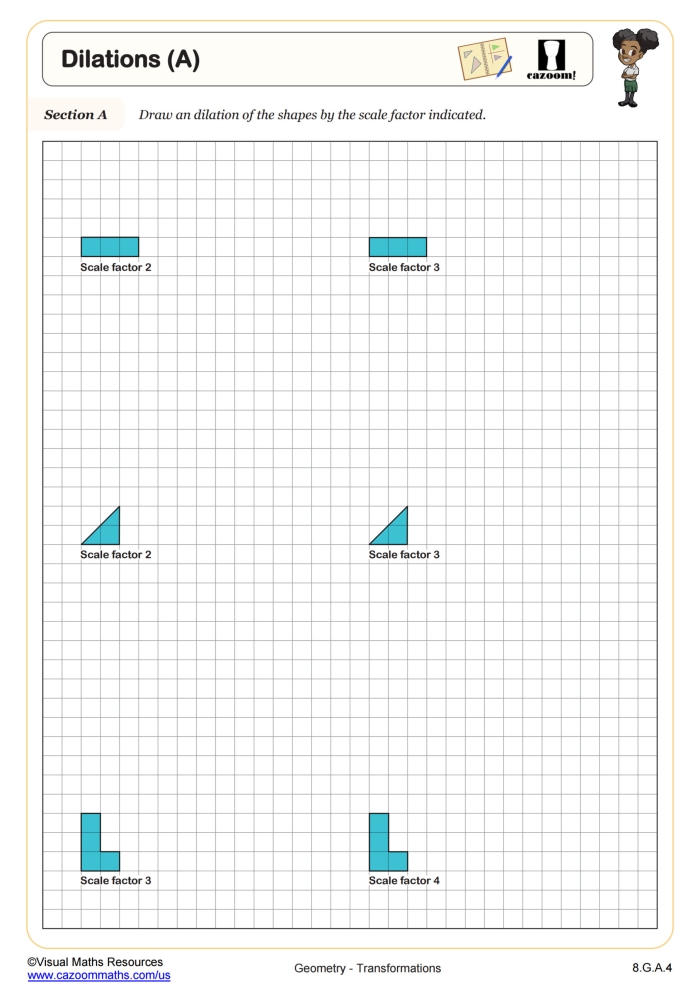
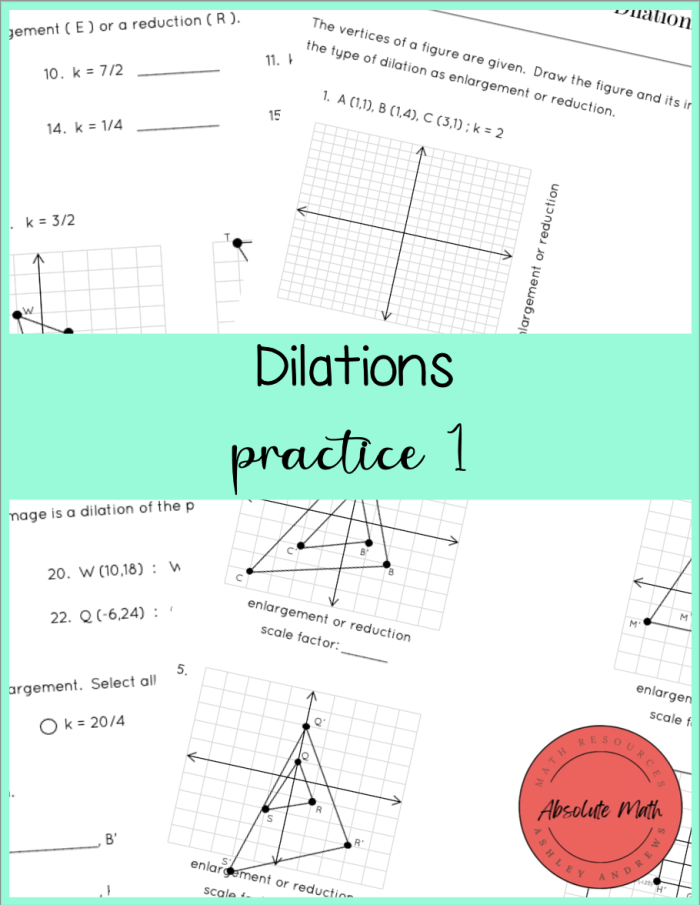
The worksheet format works well because it combines visual representations with calculation practice. Students can plot original figures, apply the dilation rule, and then plot the new image. This hands-on approach builds confidence and helps reinforce the grammar and mechanics of geometric notation and terminology.
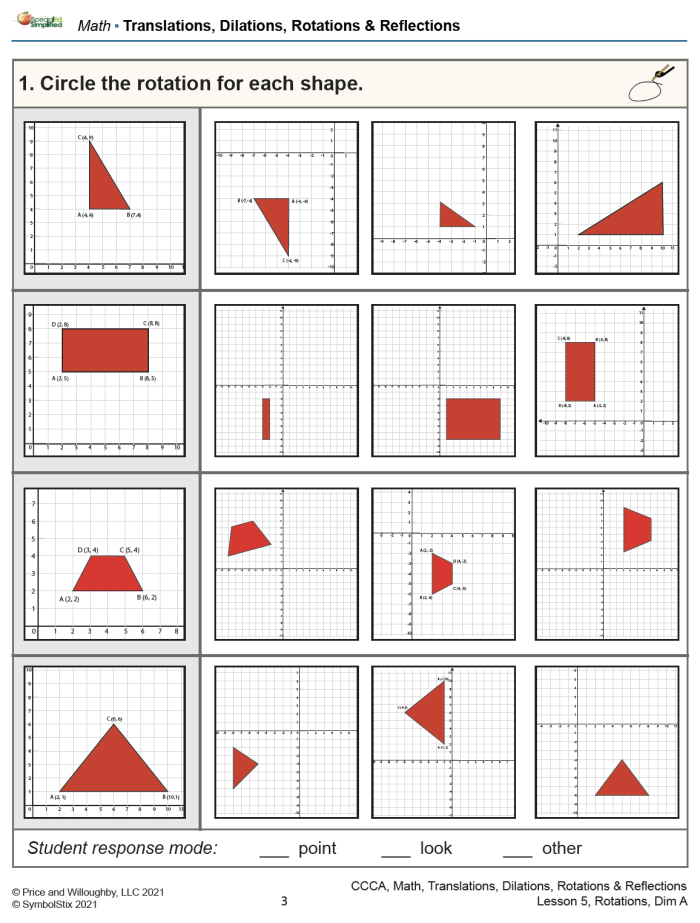
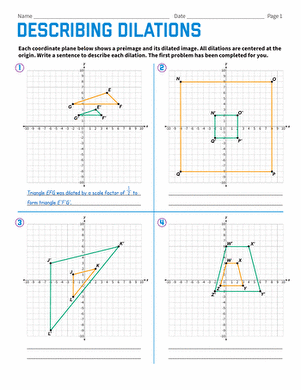
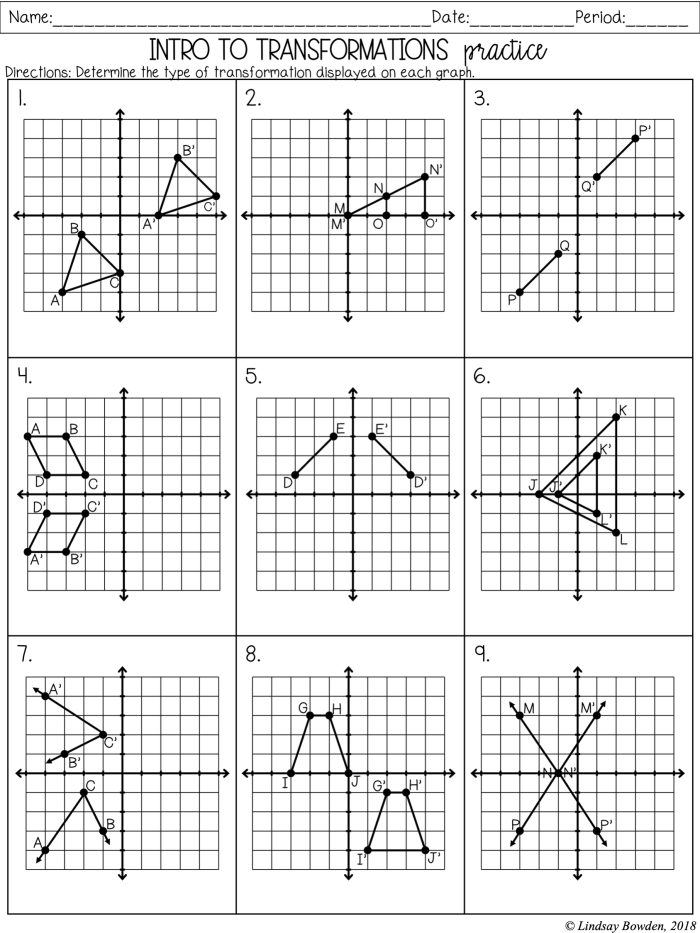
Teachers often pair dilation worksheets with activities that explore real-world applications, such as photograph enlargement or map scaling. When students understand that dilations appear in contexts beyond the classroom, the abstract concept becomes more meaningful. Having students practice with printable describing dilations worksheets ensures they develop fluency before moving on to more complex transformations like rotations and reflections.
Download These Worksheets for Practice